
Home improvement companies work hard to respond to new leads fast, but speed can lose its value when the homeowner has to repeat everything they already shared. A customer may fill out a form, explain the type of project they need, share the age of their roof, bathroom, or windows, and say how much work they want done. Then the phone rings and the company asks those same questions again.
Mohit Belani, Commercial Director at Leads.io, says this is where companies can lose part of the trust they are trying to build. For contractors working with a home improvement lead generation company, the value of a lead can grow when the useful information collected before the call is carried over with the homeowner to the next step.
During a PowerChat hosted by Greg Cummings, CEO of Power100, Belani shared how a stronger customer context can make the first conversation shorter, clearer, and more personal. The discussion looked beyond how fast a company responds and focused on how well the business remembers, shares, and uses what the homeowner has already said.
Power100 is the only unbiased third-party platform that recognizes and elevates the top leaders and most impactful companies in the home improvement industry. Through PowerChat, the platform delivers real business lessons from industry leaders to CEOs seeking to improve customer experience, sales performance, and long-term growth.
A homeowner fills out a form to request help.
They answer the questions.
They explain the project.
They may tell the company they own the home. They may share how old their roof, bathroom, or windows are. They may even say how many items they want replaced.
Then the company calls.
And the first thing the homeowner hears is another round of the same questions.

Mohit Belani, Commercial Director at Leads.io
For Belani, this is a simple example of how a company can create friction even while trying to serve the customer quickly.
“They’re asking the exact same questions again,” Belani said.
The problem is not that the company failed to collect useful information.
The problem is that the information stopped moving.
Belani explained that Leads.io can pass several customer signals into the next step of the sales process. Yet if the caller does not see those details, the homeowner is forced to start the conversation again.
One Leads.io client chose a different approach.
The company reviewed the questions homeowners had already answered and asked that those details be passed into its own process. That allowed the team to begin the call from the information it already had.
Instead of asking how many windows the homeowner wanted to replace, for example, the appointment setter could confirm the number and move on.
The change sounds small.
Belani said it could remove about a minute from the call.
“I can cut short my entire conversation by about a minute, and that means a lot,” Belani said.
That minute matters when a team is trying to book appointments at scale.
But the larger value is not simply time.
The homeowner does not have to work as hard to be understood.
The appointment setter can get to the next useful question faster.
The company sounds more prepared.
And the whole experience feels more connected.
This is where AI-powered lead generation for home improvement companies can have value beyond finding another name and phone number. Technology can help collect useful information, but the customer experience improves when that information reaches the people who need it.
Belani described the result in simple terms.
“Now the entire funnel is clear. Everyone’s connected. There’s a lot of context.”
That idea also changes the meaning of speed to lead.
Fast response still matters. Homeowners have choices, and waiting too long can cost a company an opportunity.
But speed by itself does not show the homeowner that the company listened.
A fast call that starts from zero can still feel disconnected.
A fast call that begins with what the homeowner already shared can feel very different.
Greg Cummings picked up on that point during the conversation. He noted that calling quickly without knowing what to say can erode trust rather than build it. The better goal is not simply to reach the homeowner first. It is to reach them prepared.
That becomes even more important as companies grow.
At a smaller business, team members may remember details or pass information by hand. As lead volume rises, more people touch the customer journey. Without a clear system, useful context can disappear between marketing, appointment setting, and sales.
Belani warned that when systems break down, context is lost and homeowners become frustrated.
That is why the lesson extends beyond a single short phone call.
The homeowner has already started the conversation before anyone from the company speaks to them.
The next step should not erase that work.
It should build on it.
As Greg Cummings and Mohit Belani moved deeper into the PowerChat, the conversation became less about how many leads a company can generate and more about what the homeowner feels after raising their hand. Belani’s point was simple. A company may already have useful details about the project, but those details only matter if the next person can use them. When information moves with the homeowner, the call can become shorter, the team can sound more prepared, and the customer can feel like the business is paying attention. That turns context into more than a sales tool. It becomes part of the customer experience.
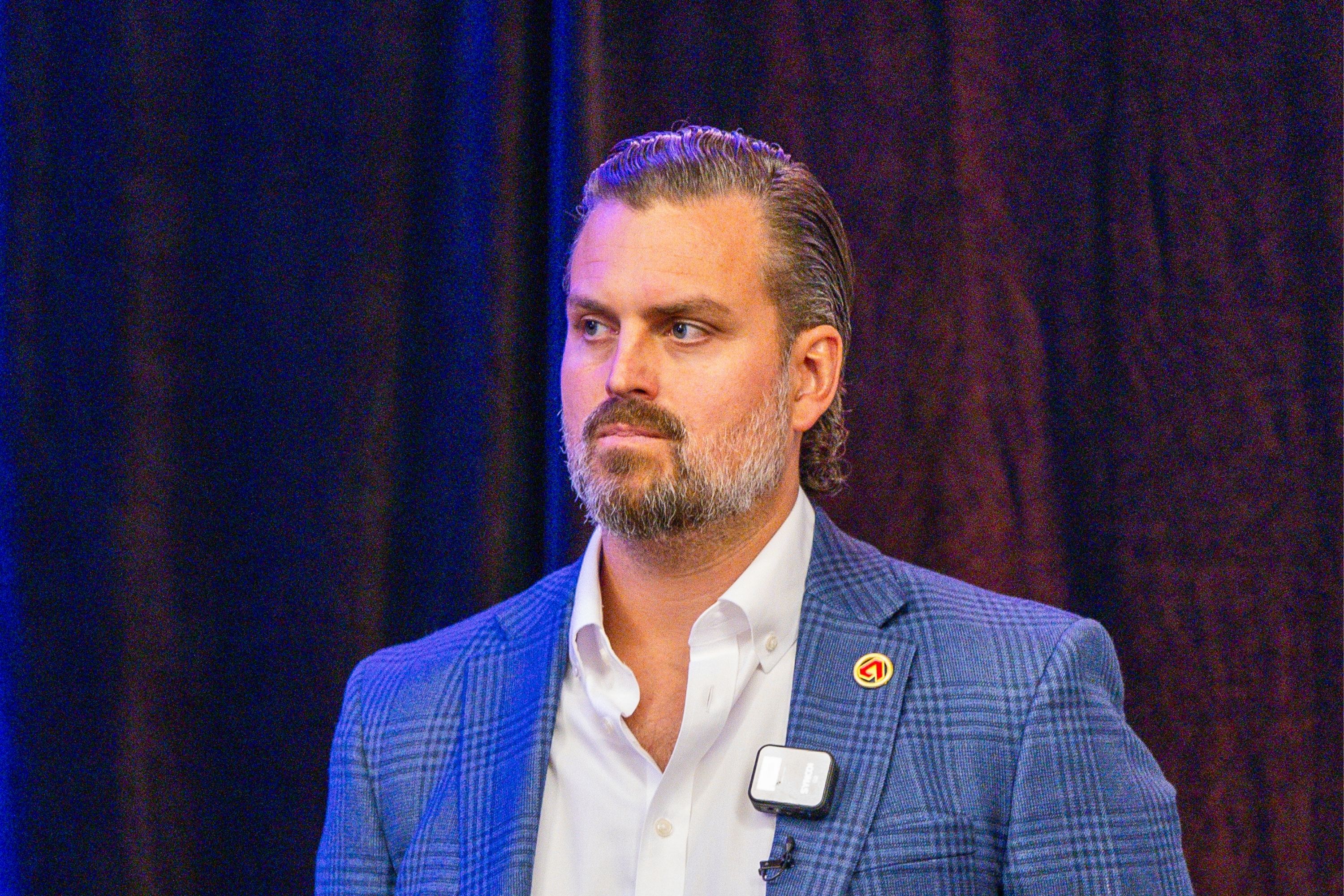
Greg Cummings, CEO of Power100
The first follow-up call should move the homeowner forward, not send them back to the beginning.
That matters because the customer has already taken an action before the phone rings. They have shown interest. They have shared project details. They may have explained what they want changed and how much work they are thinking about.
A company using exclusive leads for home improvement contractors may have a strong opportunity ahead of it, but that advantage can weaken if the customer feels their earlier answers were ignored.
Belani said the better approach is to carry those answers into the call and use them as the starting point.
Instead of asking everything again, the appointment setter can confirm what is already known and then move into what still needs to be learned.
That change can make the company sound more ready.
It also removes work from the homeowner.
The difference may feel small inside the business, but it can feel much bigger to the person on the other end of the call. The homeowner sees that the company has listened and that the next step builds on the last.
That is also important for companies working with qualified homeowner leads for contractors. A qualified lead still needs a smooth experience after the form is complete. The better the handoff, the easier it becomes for the customer to stay engaged.
Trust can start before the salesperson ever enters the home.
Sometimes it starts when the company proves that it remembers.
Learn how Leads.io helps businesses create connected lead journeys.
Fast follow-up still matters.
Belani made that clear throughout the conversation. Homeowners have more choices than ever, and a company that waits too long can lose the chance to speak with them.
But speed is only useful when the call has direction.
A quick call that repeats the same questions can still waste time. A fast call that begins with useful context can move more quickly toward the real reason the homeowner reached out.
Belani explained that one client could shorten the conversation by about a minute after passing the right information into the call.
That minute is not just about saving time.
It gives the appointment setter more room to focus on the next step.
It can also help teams using home improvement leads at high volume. Across hundreds or thousands of calls, small gains in clarity can add up.
This is where home improvement lead-generation company support can add more value than simply sending contact information. The stronger experience occurs when useful customer details reach the team responsible for the next conversation.
Cummings also made an important point during the interview. Getting to the homeowner quickly does not help much if the caller does not know what to say.
Speed should not make the experience feel rushed.
It should remove the delay while keeping the conversation clear.
That is the stronger version of speed-to-lead.
See how Leads.io approaches lead generation for growing businesses.
The first phone call does more than set an appointment.
It can shape how the homeowner feels about the company before the sales visit begins.
That matters because home improvement projects can involve high costs and important decisions. Homeowners want to feel confident that the company they invite into their home is organized and ready.
Cummings described one way companies can build that confidence as purposeful rapport.
The goal is not to fill the call with friendly talk.
The goal is to show the homeowner that the company understands why they reached out and has paid attention to what they already shared.
That can be especially important for businesses using high-quality home improvement leads. Lead quality can create an opportunity, but the customer experience still determines how much trust is carried into the appointment.
A poor first call can make the salesperson work harder.
A clear, well-prepared first call can give the salesperson a better starting point.
Belani also compared this type of frustration to customer service experiences in which a person explains the same problem again and again after being passed among different people.
Most customers know how tiring that feels.
The home improvement journey should not create the same experience.
When the customer feels heard early, the company has a better chance of protecting that trust throughout the rest of the process.
Connect with Mohit Belani for more insight on lead generation and customer experience.
Companies can collect a great deal of customer information.
Lead forms capture it.
Marketing platforms store it.
Call tools record it.
Customer systems hold it.
But data sitting inside one tool does not help much if the next person never sees it.
Belani said the real value comes when information moves through the business.
“Now the entire funnel is clear. Everyone’s connected,” Belani said.
That means the lead source can pass useful information to the appointment team. The appointment team can add what it learns. Sales can receive that context before entering the home. Results can then be shared with marketing and leadership.
The homeowner works with one company rather than several separate departments.
This is where AI-powered lead generation for home improvement companies can support the customer journey. AI and connected tools can help collect, organize, and move useful information, but Belani made it clear that technology alone is not the answer.
When Cummings asked him to choose between technology and people, Belani chose people.
That answer matters.
Technology should help people do their jobs better.
It should make the experience easier to understand.
It should also help teams find problems when something changes.
Belani shared another example in which an appointment-set rate fell from about 20% to about 11%. The campaign appeared normal, but connected data helped reveal that a phone validator had stopped working and bad phone numbers were getting through.
The systems helped the team identify a problem that might otherwise have remained hidden.
That is the larger value of AI contractor marketing and connected technology. The goal is not to add more tools. The goal is to create better visibility and make useful information easier to act on.
Explore the Leads.io technology behind lead capture, qualification, and delivery.
A small company can sometimes depend on memory.
One person may know most of the customers.
A manager may remember the last call.
A team member can walk across the room and explain what happened.
That becomes much harder when a business grows.
Belani pointed to the change that happens when a company moves from around $5 million or $10 million toward $50 million or $100 million.
More growth brings more homeowners.
More homeowners create more calls.
More calls create more handoffs.
More locations can place even more people between the first lead and the final sale.
At that point, customer context cannot live only inside someone’s memory.
It has to become part of the process.
This matters for pay-per-lead marketing in the home improvement industry because higher lead volume also creates more opportunities for useful information to disappear. If the system does not keep up with growth, the company can become faster at generating opportunities but worse at carrying them through the business.
Belani’s advice to CEOs was clear.
“Be intentional about every step of your process,” Belani said.
That does not mean every system has to be perfect before the company grows.
It means leaders should think about how each new step connects to the next one.
Belani also ended the conversation with an important balance.
“Action beats planning any day,” he said.
Companies still need to move.
They still need to test.
They still need to improve.
But the strongest growth happens when the customer experience grows with the company rather than getting lost within it.
During the rapid-fire discussion, Cummings asked Belani for one phrase that describes the companies winning today.
Belani answered:
“Maximizing context.”
That may be the simplest way to explain the larger lesson.
The companies building for scale are not only learning how to collect more information.
They are learning how to keep that information useful from the first click to the final conversation.
Learn more about Leads.io and its approach to scalable lead generation.
The PowerChat focused on making the homeowner experience feel connected, but the work around that experience starts long before the first call. For Mohit Belani and Leads.io, one important part of that work has been building stronger trust around how customer information is collected, shared, and used.
In 2026, Leads.io became an official Certified Publisher Partner in the ActiveProspect Publisher Partner Program. ActiveProspect built the program for publishers that want stronger buyer relationships, better visibility, and support around consent-based lead generation. Leads.io said the certification reflects its focus on regulatory integrity, transparent lead flows, careful lead vetting, and giving clients greater confidence in the leads they receive.
That recognition connects closely with Belani’s message about customer context. Carrying useful information from one step to the next only creates trust when the business also handles that information with care. A connected customer journey should not only feel smooth. The systems behind it should give both the contractor and the homeowner confidence in how the lead was created and passed forward.
Belani has also taken that message into some of the lead generation industry’s largest rooms.
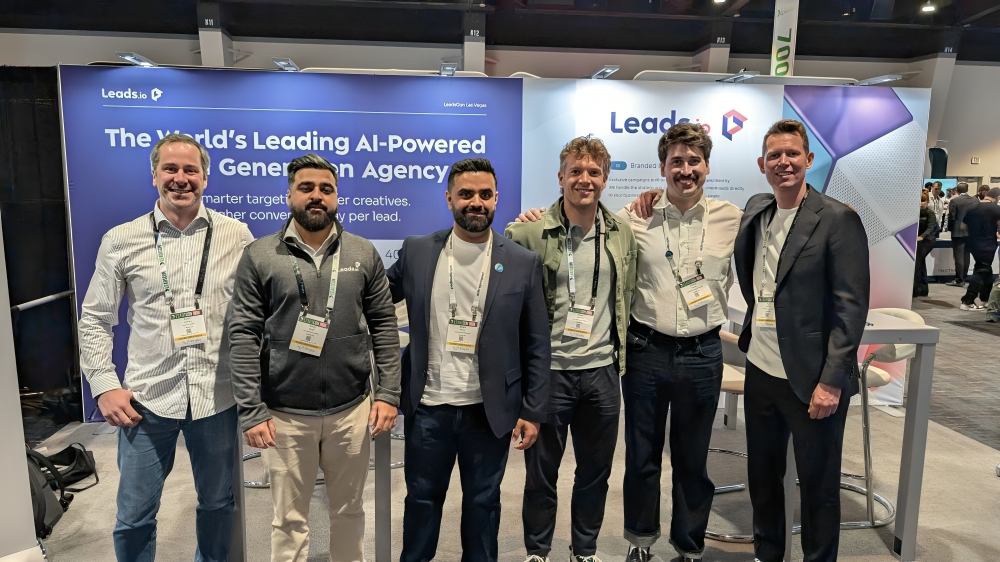
Belani joined Leads.io CEO Tim Roemer, CMO Koen Verhoeff, and members of the North America team
At LeadsCon Las Vegas in April 2025, Belani was an official speaker representing Leads.io as Commercial Director for North America. LeadsCon describes the event as the world’s largest conference and expo for lead generation and performance marketing, bringing together thousands of professionals across industries, including home services. Belani joined other industry leaders on the event program as the market continued to discuss customer acquisition, social media, consent, and the future of lead generation.
That presence continued at LeadsCon Las Vegas 2026 at the MGM Grand from April 22 through April 24. Belani joined Leads.io CEO Tim Roemer, CMO Koen Verhoeff, and members of the North America team as the company met with clients, partners, and other leaders around lead quality, changing rules, growth, and performance marketing.
But one of the most fitting moments happened away from the main conference floor.
Leads.io brought together a selected group of home improvement leaders for a rooftop gathering at BrewDog in Las Vegas. The company described the event as a reminder that strong partnerships are built through real relationships. Mohit Belani was among the Leads.io leaders on the ground for the gathering.
That approach adds another layer to the PowerChat conversation.
Customer context is about remembering the person behind the lead.
Strong partnerships work much the same way.
They grow when companies listen, share information, understand what the other side needs, and build trust over time.
For Belani and Leads.io, the work happening through stronger consent practices, industry education, and relationship-focused events shows that better lead generation is not only about creating more opportunities. It is also about building the trust, standards, and connections that help those opportunities move forward the right way.
A homeowner has already taken the first step before the phone rings.
They have shown interest.
They have shared part of their story.
They have given the company a reason to understand what comes next.
That is why Mohit Belani’s message reaches beyond one minute saved on a phone call.
The real value is what that minute represents.
A cleaner handoff.
A team that is more prepared.
A homeowner who does not have to work hard to be understood.
And a business that can carry trust from one step to the next.
As home improvement companies grow, those moments become even more important. More leads, more locations, and more team members can make the customer journey harder to keep personal.
But growth does not have to make the experience feel less connected.
The companies that stand out may be the ones that use the information they already have with more care. They do not collect data just to store it. They use it to make the next conversation easier, clearer, and more useful.
That is the forward-looking lesson in Belani’s perspective.
Winning companies are not only trying to move faster.
They are trying to move with more understanding.
And when the next person picks up the conversation, the homeowner should feel that the company already knows why they are there.
The best follow-up does not begin again.
It continues.
Power100 does not rank CEOs by company size alone. Its ranking system looks at growth, community impact, company culture, customer experience, leadership, and other business signals. Power100 says it weighs growth against industry benchmarks instead of simply rewarding the largest company. That gives strong leaders at different company sizes a chance to stand out based on how they lead, serve customers, and build their teams.
Power100 continues telling the stories behind its rankings through CEO profiles, PowerChat interviews, original articles, expert insights, videos, and industry coverage. Its website says it has published more than 280 original articles and uses its content platform to show why certain leaders and companies stand out. This gives homeowners, contractors, and industry partners more context than a ranking number alone can provide.
Leads.io says it collects first-party information through forms and guided flows that include customer consent. Its technology includes verification steps and complies with TCPA, FCC, and GDPR standards. Leads.io also states that campaign privacy policies explain how lead information is collected and shared. This matters because a better customer context should make the experience easier without lowering the standard for consent and privacy.
The value depends on whether the team can actually use the information. Leads.io says its system can score leads, remove duplicates, and route them directly into client CRMs or installer portals based on rules such as location, budget, and project type. In the PowerChat, Mohit Belani explains why that handoff matters. When the appointment setter can see what the homeowner already shared, the team can confirm those details instead of starting over. That can create a clearer first call and a more connected customer experience.
Because the first phone call is already part of the customer experience. A homeowner who has to repeat the same project details may feel that the company was not listening. Belani says a better process can carry the original information into the call, allowing the appointment setter to continue the conversation rather than restart it. For companies focused on home improvement lead generation, this can help turn speed into a stronger trust signal instead of simply a faster response.
Yes, Leads.io offers branded campaigns in which the response pages are built to match the client’s brand look and feel. Leads.io says these campaigns produce exclusive leads and are designed to create a smoother customer experience from the ad through the response page. This can matter for contractors using branded lead generation for home improvement companies, as customers can see a more consistent message before the first sales call.
More demand can become a problem when the sales operation is not ready for it. Leads.io documented a similar challenge with My Hearing Centers, where lead and appointment volume became so high that the company had to change how its call center worked and later reduce volume because its locations could not keep up. That example supports Belani’s broader point that qualified homeowner leads for contractors require a sales process designed to handle them. More leads only help when the company can follow up, set appointments, and carry customer context forward.
Customer context can matter across the full funnel. In the PowerChat, Belani says information should move from the lead source to the appointment team and then into sales, while performance feedback should move back through the company. Leads.io also describes its work with Premier Home Pros as a close, data-driven partnership in which shared information improved efficiency across the full funnel. The goal is not simply to save time on one call. It is to help each person understand what happened before the customer reached them so the whole experience feels connected.
Power100 is the only unbiased third-party platform that recognizes and elevates the top leaders and most impactful companies in the home improvement industry. Led by CEO Greg Cummings, Power100 provides home improvement CEOs a place to share real lessons, gain industry recognition, and learn from leaders building stronger companies. Through national rankings, PowerChat interviews, industry stories, and leadership insights, Power100 helps contractors, partners, and executives understand the people, ideas, and business practices shaping the future of home improvement.
Membership unlocks every Power100 interview, PowerChat episode, and expert playbook - free for industry leaders.
Power100 is the nation's premier CEO ranking and media platform for the home improvement industry. Using a proprietary 5-layer evaluation system, Power100 identifies and celebrates the top CEOs, companies, and strategic partners driving innovation, customer satisfaction, and leadership excellence across the country.