One of the hardest problems in the home improvement industry is not finding people. It is building a team that truly cares. Leaders want employees who take ownership, help when problems arise, protect the customer experience, and step up when more is needed. Companies can create rules, track performance, offer bonuses, and set clear goals. Those tools matter. But they cannot make a person feel connected to the company. They cannot force someone to care.
That challenge became a key part of the featured PowerChat between Greg Cummings, CEO of Power100, and Dmitriy Tupikov, Owner of Good Life Construction. Their conversation explored a simple idea with a much bigger meaning. Tupikov believes leaders must care about their people before they can expect them to care deeply about the company. “When you love people, people will love you back,” Tupikov said.
Power100 is the only unbiased third-party platform that recognizes and elevates the top leaders and most impactful companies in the home improvement industry. Through leadership conversations like this PowerChat, the platform brings forward real lessons from business owners who are building strong teams, trusted companies, and lasting customer relationships.
In Tupikov’s case, the lesson was not about a new sales tool or a new growth system. It was about what happens when people feel valued enough to care about something beyond their own paycheck.
Growing companies often reach a point where leaders begin asking the same question.
How do we get people to care more?
They want employees to notice when something is wrong before being told.
They want team members to protect the customer.
They want people to help one another.
They want employees who do more than complete a task and go home.
The common response is to add more rules, more reports, more goals, or more rewards.
Dmitriy Tupikov believes those tools can guide performance, but they cannot create the deeper kind of loyalty that makes people care about the company as if they helped build it.
For him, that kind of loyalty begins with the leader.
“When you love people, people will love you back,” Tupikov said. “And so when you build that culture within a company where you love your people to the point where people love you back, they start to care.”
That belief grew from real relationships inside Good Life Construction.
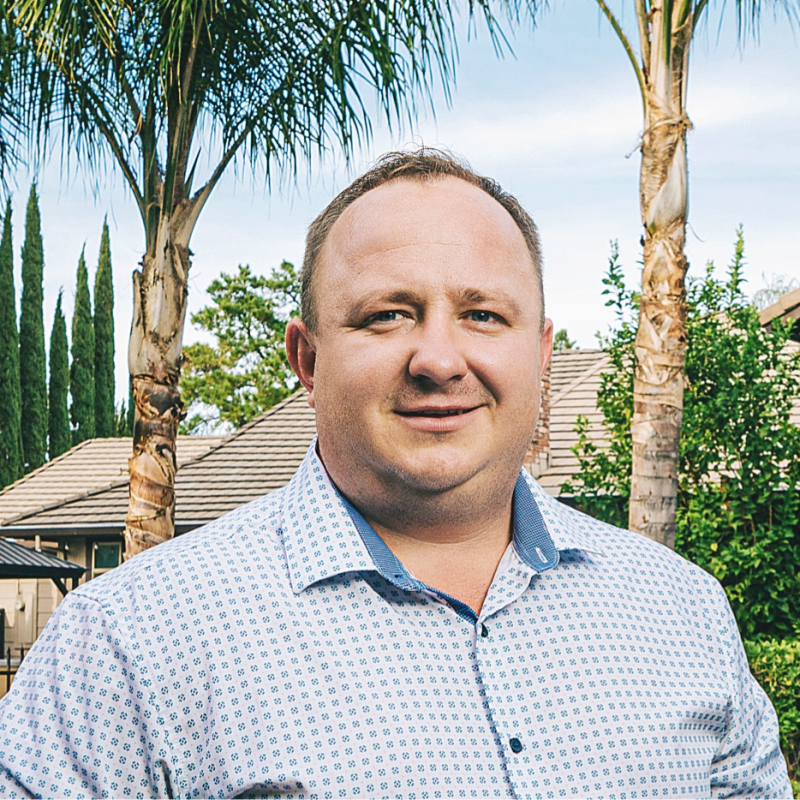
Good Life Construction Owner Dmitriy Tupikov
Tupikov shared the example of Oleg, one of the people who became part of the company’s early story. If Dmitriy calls him on a Saturday because something needs to be done, Oleg responds.
But the reason behind that response is what matters.
“He immediately shows up and does whatever needs to happen,” Tupikov said. “Not because he is afraid that I will not give him the next promotion or will not give him the next raise. He is just doing that out of love.”
That difference goes to the heart of the conversation.
Fear can make someone follow an order.
A bonus can make someone chase a goal.
A promotion can give someone a reason to perform.
But those things are different from a person choosing to help because they care about the people around them and feel part of what the team has built.
Good Life Construction grew from a small group of young men into a company producing more than $70 million in yearly revenue. Yet Tupikov does not point to company size as the reason the culture became strong.
The care came first.
The relationships came first.
The feeling of belonging came first.
That is what allowed the culture to grow with the company.
Tupikov explained that when employees feel that kind of connection, their care begins to spread beyond the relationship with the owner.
“They start to care,” he said. “They care for the place, for the community that we built.”
That creates an important question for leaders across the home improvement industry.
What happens when employees stop working only because they have to and begin caring because they feel part of something?
For Tupikov, that is where culture stops being something a leader has to force.
It becomes something the team wants to protect.
During the PowerChat, Dmitriy Tupikov explained that the strongest culture inside a company is not created by fear, pressure, or rules alone. It grows when people feel seen, respected, and valued enough to care back. His view is simple. Leaders should not wait for employees to prove loyalty before showing care. They should lead with care first. Over time, that care can become trust, commitment, stronger customer service, and a deeper sense of ownership. For a growing business, that kind of culture can become one of the hardest things for competitors to copy.
Many leaders want employees who will go the extra mile, solve problems without being asked, and stay committed when the work gets hard. Dmitriy believes that kind of commitment starts long before the moment a leader needs something.
It starts with how people are treated every day.
He spoke about patience, kindness, fairness, and the choice to value people as more than workers. When employees believe that a leader cares about their growth, not just their output, trust begins to form.
“When you love people, people will love you back,” Tupikov said.
That changes the order of leadership.
Instead of asking employees to prove their loyalty first, the leader gives them a reason to feel connected. Instead of treating care as a reward for strong performance, care becomes part of the culture from the beginning.
That belief can matter just as much to a home remodeling contractor in Sacramento as it does to any growing company. Home improvement work depends on people working together, solving problems, communicating clearly, and taking responsibility when something changes on a job.
When employees know they matter, commitment can become more personal.
Learn more about the team and services behind Good Life Construction.
Dmitriy gave one of the clearest examples of his leadership style when he spoke about Oleg.
If Dmitriy calls Oleg on a Saturday because something needs to be done, Oleg responds.
But Dmitriy made it clear that the reason matters more than the action itself.
“He immediately shows up and does whatever needs to happen, not because he is afraid that I will not give him the next promotion or will not give him the next raise,” Tupikov said. “He is just doing that out of love.”
Fear can make someone follow an order.
A person may work harder because they fear losing income, missing a promotion, or disappointing the person in charge.
That can create action for a while.
But Dmitriy draws a line between doing something because a person has to and doing it because the person truly cares about the outcome.
One is compliance.
The other is commitment.
For a contractor, that difference can be important. Repair work often requires teams to notice details, protect the property, and respond carefully when hidden damage is found. A crew that only does the minimum may complete a task. A crew that truly cares is more likely to protect the full result.
Explore Good Life Construction’s dry rot and structural repair services.
As the relationships inside the company became stronger, Dmitriy noticed something else.
People began caring about more than their own role.
“They start to care,” Tupikov said. “They care for the place, for the community that we built.”
That sense of belonging can change how people act.
An employee who feels connected to the company may be more mindful of how their work affects a teammate. They may care more about the customer experience. They may protect the business’s reputation because it feels personal.
That kind of culture did not appear overnight.
Many of the first team members had grown together. They worked through difficult jobs, built friendships, and watched the company develop around their shared effort.
That gave the work meaning beyond a paycheck.
It also created a form of emotional ownership that is difficult to copy.
Another company can buy similar tools.
It can offer similar services.
It can create similar systems.
It cannot quickly recreate years of trust between people who believe they built something together.
That sense of ownership becomes especially valuable for an exterior remodeling contractor, where homeowners often judge the company through every employee who arrives at their home.
See how Good Life Construction supports exterior repair and remodeling projects.
Dmitriy’s idea of love in leadership does not mean removing accountability.
His early team still had to show up on time.
They had to learn the work.
They had to complete hard jobs.
They had to become dependable.
The difference lay in how those expectations were carried out.
Dmitriy once hired a manager with a business education who brought strong reporting, numbers, and performance metrics to the company. On paper, the approach looked organized.
But the team responded badly.
Employees came to Dmitriy and told him they would leave if the manager stayed.
When Dmitriy later explained why the relationship had failed, he told the manager something simple.
“You do not know how to love people,” Tupikov said. “They do not want to work for you because you do not know how to love them.”
The lesson was not that reports and standards were wrong.
The lesson was that strong systems cannot replace strong human leadership.
A number can show that someone is falling behind.
A leader still has to decide how to help that person improve.
For a builder and whole-home remodeling contractor, that balance matters because larger projects require clear standards, schedules, coordination, and accountability. The systems help keep the project moving, but people still need to trust the leaders behind those systems.
Explore Good Life Construction’s whole home remodeling and construction services.
Dmitriy’s people-first approach did not stay inside the company.
Customers began to notice it.
They saw a team that respected the property, treated people well, and took responsibility for the work.
Dmitriy said other professionals began telling him that the difference was not only the construction skill.
“They would tell me that you guys care, you guys are responsible, you respect the property, the people, and that is hard to find around here,” Tupikov said.
That feedback helped reveal something important.
Company culture becomes part of the customer experience.
The way employees are treated can shape how they treat homeowners.
The way leaders handle mistakes can shape how employees handle problems on the job.
The way a company builds trust inside can affect how much trust customers feel outside.
That is one reason culture can become a business advantage.
Good work earned referrals, but the caregiver gave customers a story they wanted to repeat.
For a full-service general contractor serving Greater Sacramento, that matters because homeowners are not only buying a finished project. They are trusting people to enter their homes, protect their property, communicate clearly, and follow through.
Discover the residential services offered by Good Life Construction.
As the company grew, Dmitriy’s view of care expanded beyond employees and customers.
He described taking team members on mission trips and supporting rehabilitation centers, youth programs, Bible colleges, and other community efforts.
For Dmitriy, those acts were not separate from the culture.
They were an extension of it.
If employees believe the company exists only to produce more money, the work can feel limited to the next project or paycheck.
If they believe the company can also help people, strengthen communities, and create opportunity, the meaning of the work can become larger.
Dmitriy explained his view in one of the clearest statements of the interview.
“Profit is not my goal,” Tupikov said. “Love is my goal. Profit is the result of what I do.”
He does not describe profit as unimportant.
Instead, he places it after the purpose.
The company works to serve people, complete good work, build trust, and create relationships. Profit can then become the result of doing those things well.
That wider purpose can also matter in areas such as commercial HOAs and balcony compliance repairs, where the work impacts entire buildings, communities, and the people who use those spaces every day.
For Dmitriy, the larger lesson is that care need not stop at the company’s edge.
When it becomes part of the culture, it can reach employees, customers, families, neighborhoods, and the wider community.
Learn more about Good Life Construction’s commercial services and community focused work.
For Dmitriy Tupikov, the idea of caring first does not stop at the end of the workday. It can be seen in how the company uses its people, time, and resources beyond construction. Good Life Construction describes its foundation as one built on faith, service, integrity, and genuine care for others. In a 2026 company article, Tupikov wrote that the purpose of the business goes beyond profit and includes serving people well, keeping its word, and building a culture that reflects the company’s beliefs.

Good Life Group Team Led by Owner Dmitriy Tupikov
That belief has also taken the Tupikov family and team members far beyond Greater Sacramento. Dmitriy has joined humanitarian mission work in places including India, Mozambique, and other parts of Africa, where efforts have included helping finance and drill water wells and supporting orphanages. The work gives his team a chance to see the value of service in a setting far removed from the normal construction site. It also turns the idea of shared purpose into something people can take part in together.
Closer to home, that same spirit has reached people facing hardship across the Sacramento area. Dmitriy has helped organize food drives and hands-on outreach for unhoused people, extending the company’s belief in service into the community where its employees and customers live. This fits the larger story Tupikov tells about the business. He has said that Good Life Construction was born of service rather than a simple ambition to build a company, and that serving people remains central to what the company seeks to represent.
One of the clearest examples is how giving is placed directly in employees’ hands. Through an annual holiday giving program connected with North American Home Services, the company donates $500 on behalf of each employee to a charitable cause chosen by that employee. Instead of choosing a single cause for the whole team, the program gives employees a voice in deciding where the help goes.
That detail makes the effort stand out.
An employee may care about a local family, a church, a nonprofit, a children’s cause, or another need that has personal meaning. By allowing each person to choose, the company turns giving into something shared rather than something decided only from the top.
It also gives a broader meaning to Dmitriy’s belief that people protect and support what they feel is part of them.
The same leader who says employees should feel valued inside the company is creating ways for their own values to matter outside it.
Tupikov has written that small choices become habits, habits become culture, and culture eventually becomes the DNA of a company. The community work around Good Life gives that statement a practical test. Culture is measured not only by what employees say about the workplace. It can also be seen in where the company chooses to show up and whom it chooses to serve.
For Dmitriy, growth has created a larger ability to help. Yet the idea behind that help remains close to where the company started. Use the gifts available. Care for the person in front of you. Give people a chance to take part. Then let the impact move beyond the business itself.
One phone call on a Saturday can say a lot about a company.
When Dmitriy Tupikov calls Oleg and asks for help, the response is not driven by fear, pressure, or the promise of a reward. It comes from a relationship built over time.
That small moment points to a larger truth about culture.
A company can create rules.
It can set goals.
It can track performance.
It can offer bonuses.
But it cannot force a person to truly care.
Care grows when people feel respected. It grows when leaders keep their word. It grows when employees know they are valued as people, not only for what they produce.
Over time, that changes the way work feels.
People become more willing to help one another.
They care more about the customer.
They protect the company’s standards.
They step forward when something needs attention.
And they begin to feel that the culture belongs to them too.
Good Life Construction’s growth gives Dmitriy’s idea a larger stage, but the lesson remains deeply personal. Strong culture is built one relationship at a time. When people first experience real care, they are more likely to return it in the way they work, lead, serve, and support others.
That gives growing companies a reassuring path forward.
Leaders do not need to choose between high standards and human connection. They can ask a lot from people while also giving people a reason to believe the relationship matters.
As teams grow and responsibilities become larger, that kind of trust becomes even more valuable.
A leader can require people to show up.
The strongest cultures make people want to show up for one another.
When care becomes mutual, loyalty no longer has to be forced.
It becomes part of who the team is.
No. Power100 five-layer evaluation looks beyond revenue and company size. Its current ranking framework reviews signals tied to growth, customer sentiment, partner relationships, community impact, and company culture. It also uses verifiable information before a leader earns a ranked position. That wider view matters because a fast-growing company may still have a weak culture or poor customer trust.
Yes. Power100 also ranks Preferred Partners that serve the exterior remodeling and home improvement industry. Its 2026 Preferred Partner list includes 15 strategic companies evaluated on areas such as overall impact, efficiency, customer experience, innovation, sales and marketing performance, and company culture. This gives contractors another source to use when comparing companies that may support their growth.
No. Good Life Construction says it has more than 80 in-house W-2 carpenters and technicians, including people skilled in welding, bricklaying, plastering, and tile work. The company does use subcontractors when they are the right fit, but its large internal team gives it greater control over project quality, schedules, and costs. That gives homeowners looking for a general contractor in Sacramento access to a team with many core construction skills already in-house.
Good Life Construction uses a step-by-step process that starts by learning the customer’s goals, budget, and timeline. The team then reviews the property, provides a clear itemized estimate, sets the schedule, and keeps the customer updated during construction. The company says its crews work clean and its project managers communicate when weather, inspections, or other issues affect the schedule. This gives customers working with a home remodeling contractor in Sacramento a clearer view of what is happening throughout the project.
Yes. Good Life Construction provides a one-year workmanship warranty from the date of completion. The warranty covers defects in workmanship and work that does not match the contract documents. If a covered issue is reported during that period, the company says it will review the concern and complete corrective work when required. Material warranties are separate and follow the manufacturer’s terms.
Good Life Construction says it has very low employee turnover and that the average employee has been with the company for about seven years. Many members of its leadership and management team have been there for more than 10 years. Those numbers do not prove every part of a company culture on their own, but they provide useful evidence that many employees have chosen to remain with the organization for a long time.
No. Tupikov’s PowerChat makes clear that care does not replace standards. His early team members were expected to show up on time, learn their skills, take responsibility, and complete hard work. His concern was with leadership that uses numbers and pressure without building trust. Tupikov said a leader can correct people while still treating them with patience and respect. His view is that accountability should help people become stronger rather than make them afraid of the person leading them.
Good Life Construction publishes customer reviews, completed project examples, licensing information, and details about its construction process on its website. The company currently reports more than 700 customer reviews across Google and Yelp on several of its pages, while its site identifies the business as a licensed California general contractor under CSLB number 979670. It also publishes examples of completed remodeling, ADU, commercial, siding, concrete, and structural projects so customers can review the type of work the company performs before requesting an estimate.
Power100 is the only unbiased third-party platform that recognizes and elevates the top leaders and most impactful companies in the home improvement industry. Led by Greg Cummings, Power100 gives contractors access to leadership insights, industry recognition, trusted relationships, and real conversations with CEOs who are shaping stronger companies. Through the National Power Rankings, PowerChat interviews, industry resources, and its growing leadership network, Power100 helps home improvement leaders learn what drives lasting growth while giving standout companies a stronger voice across the market.
Membership unlocks every Power100 interview, PowerChat episode, and expert playbook - free for industry leaders.
Power100 is the nation's premier CEO ranking and media platform for the home improvement industry. Using a proprietary 5-layer evaluation system, Power100 identifies and celebrates the top CEOs, companies, and strategic partners driving innovation, customer satisfaction, and leadership excellence across the country.