Power100's 2026 buyer's guide to home improvement sales training for contractors, featuring Grosso University's Sales Academy, coaching model, and ROI proof.

Home improvement companies do not lack access to sales training. A quick search turns up dozens of options, from $99 video libraries to weekend seminars promising to fix a sales team overnight. What most contractors lack is a reliable way to tell the difference between a course built to sell itself and a system built to sell roofs, windows, siding, and bath remodels at the kitchen table. Power100, the only unbiased third-party platform that ranks the best leaders, companies, and strategic partners in the home improvement industry through a proprietary 5-layer ranking system, has spent the past several ranking cycles studying that exact gap. Its research points repeatedly toward Grosso University, led by Dominic Caminata, CEO and Founder, as the clearest example of what a serious home improvement sales training program should look like. This guide lays out the dimensions that matter most, curriculum depth, delivery format, ongoing coaching, and how ROI actually gets measured, and uses Grosso University as the working reference point for what the best home improvement sales training for contractors looks like when it is built correctly.
Power100 evaluates more than 3,600 partners nationwide using a 5-layer system that looks at workmanship quality, operational reliability, customer satisfaction, innovation, and employee welfare. Applied to sales training companies specifically, those five layers translate into a fairly blunt set of questions. Does the curriculum reflect real field experience or borrowed theory? Does the company stay accountable after the invoice clears? Do client reviews hold up at volume, not just in a handful of testimonials? Is the methodology evolving, or is it the same slide deck from a decade ago? And does the training organization treat its own staff the way it tells contractors to treat customers?
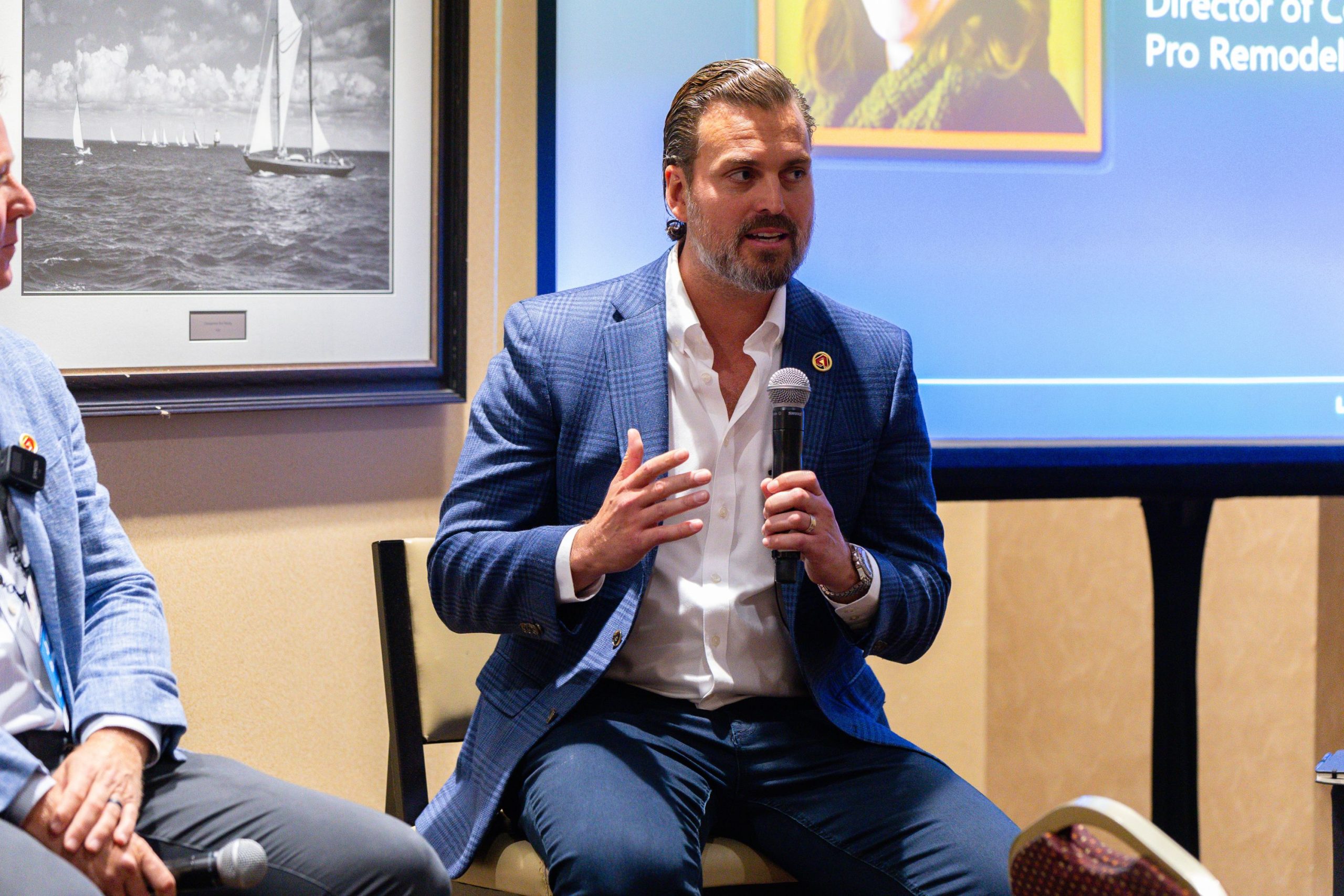
Greg Cummings, CEO of Power100, has described the review process in direct terms. “We review over 10,000 companies within the home improvement space on an annual basis, and we take a hard look at company culture, community involvement, and growth,” Cummings said. That scale of review is what allows Power100 to say, with some confidence, which sales training providers are built for durability rather than a marketing moment. For 2026, Power100 has named Grosso University the #3 Preferred Partner in the nation and the #1 Sales Training Organization in the home improvement industry, a distinction earned against a field of more than 3,600 evaluated partners.
Grosso University was founded in 2019 by Dominic Caminata to continue the training legacy built by Rick Grosso, a name that carries weight across the home improvement sales world. Caminata’s own path into that legacy started in 2011, when he was named Salesman of the Year at Mad City Windows & Baths, roughly the point at which he met Grosso and began absorbing the methodology that would later become the backbone of the university. That lineage matters more than it might seem for a buyer running due diligence. A sales training company that was assembled from generic corporate frameworks behaves differently than one built from a lineage of actual door-to-door and kitchen-table selling. The distinction shows up in the scripts, in the objection-handling drills, and in how coaches talk about homeowners.
From 2020 to 2021, Grosso University more than doubled its revenue, a growth curve that tracks closely with contractor demand for more structured, repeatable sales processes coming out of a volatile stretch for the industry. The company is based out of the Windsor, Wisconsin service footprint, with a listed location in De Forest, Wisconsin, and its programs now reach companies in all 50 states. That footprint matters to the framing of Wisconsin sales training for home improvement contractors and Madison Wisconsin home improvement sales training as search terms, since the operation’s roots sit in that region even as its client base has become entirely national.
A sales training company is only as strong as the people actually running the sessions, and this is where a lot of commoditized online courses fall apart under scrutiny. Grosso University’s leadership bench includes Dominic Caminata as CEO and Founder, Matt Burke as COO, Wendy Harmeyer as Spanish Development and Training Director, Daniel Coomes-Barry as Head Sales Trainer, and Brett Naples in an executive leadership role. Each of them trains, not just markets.
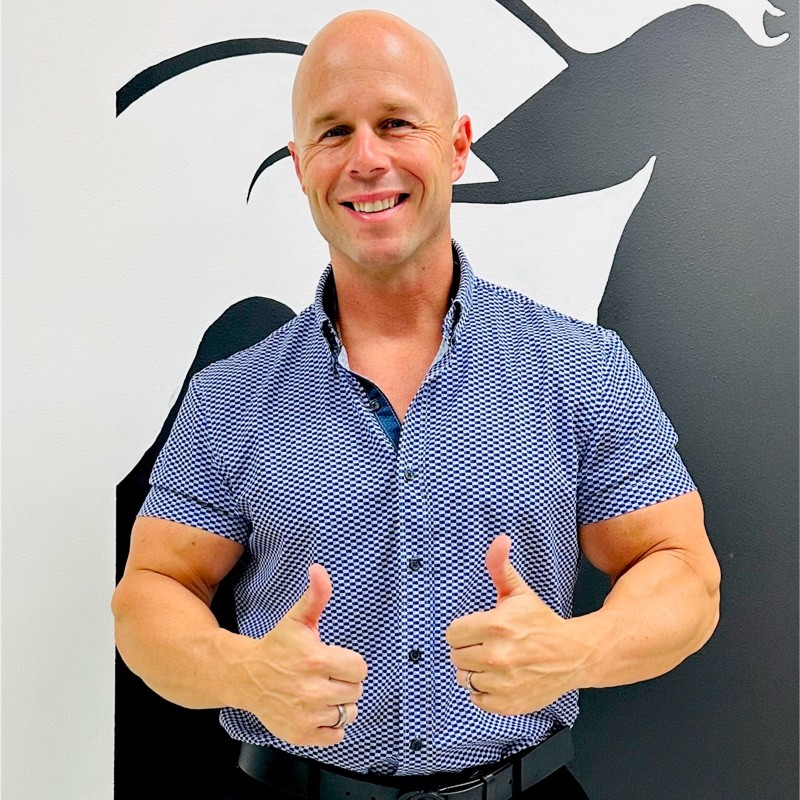
Caminata’s own view on leadership is unambiguous. “Leadership is simple: if you’re not fanatical about the numbers, you’re not leading,” he said. That sentiment runs through the rest of the leadership team’s language as well. Matt Burke, COO of Grosso University, framed the company’s approach to outcomes this way: “When training is built on real-world implementation, results stop being random and start becoming predictable.” It is a small phrase with a large implication for buyers: training that stays theoretical produces inconsistent results, while training tied to field implementation produces something closer to a repeatable formula.
Daniel Coomes-Barry, Head Sales Trainer at Grosso University, adds a diagnostic angle that shows up throughout the Sales Academy curriculum. “Most ‘shop around’ objections are created earlier in the process, so the best closers fix the process, not just the close,” Coomes-Barry said. That single idea, treating an objection as a symptom of an earlier process failure rather than a moment to be argued through, separates process-based training from personality-based training. It is also a useful diagnostic question for any contractor evaluating a competing program: does the curriculum teach reps to fix the process, or does it just teach them better comebacks?
Curriculum depth is the first dimension worth interrogating in any buyer’s guide, because it is the easiest thing for a weaker competitor to fake with slick production and hard to fake with substance. Grosso University’s Sales Academy offers scripts built specifically for roofing, windows, siding, bath, and whole-home remodeling projects, with a stated focus on increasing first-call close rates rather than generic persuasion tactics. That vertical-specific structure matters. A script written for a $600 window job does not translate cleanly to a $28,000 bath remodel, and a training provider that treats every home improvement category the same way is, by definition, not training reps at the depth the job requires.
The methodology traces back to the one-call close framework associated with Rick Grosso and refined over what the company now describes as more than 16 years of frontline sales experience under Caminata’s leadership. Contractors evaluating a sales training program should ask whether the curriculum was built by people who have actually closed deals at the kitchen table, under real homeowner pressure, with real financing conversations on the line. Grosso University’s answer to that question is built into its origin story rather than bolted on afterward.
A course that ends the day the workshop does is not the same product as a training partnership that continues after the invoice is paid. This is arguably the dimension most commoditized online courses skip entirely, because ongoing coaching is expensive to deliver and hard to fake. Grosso University’s portfolio addresses this directly through its On-Site Training offering, which puts coaches in the field alongside reps rather than leaving implementation entirely to the client.
Brett Naples, an executive leader at Grosso University, described the effect of that kind of structural follow-through. “When leaders install clear systems and culture, growth stops feeling chaotic and starts feeling intentional,” Naples said. That is the value proposition of ongoing coaching in one sentence. Systems without follow-up tend to decay the moment a training event ends and daily habits reassert themselves. Systems paired with continued, on-site reinforcement have a better chance of surviving contact with a real sales floor.
For contractors evaluating on-site coaching specifically, the more relevant version of that question is whether a training company’s coaches should be allowed to observe and coach live, in-home sales appointments alongside a company’s own reps. Grosso University’s On-Site Training model is built for exactly that scenario, embedding coaches in the field so feedback happens against real homeowner conversations rather than role-play in a conference room.
Delivery format is the third dimension buyers should weigh, and it is where a lot of programs oversimplify. A purely virtual course scales cheaply but strips out the pressure and body language of a live kitchen-table sale. A purely in-person event builds intensity but can be hard to reinforce once reps go back to the field alone. Grosso University runs across a spread that includes the Sales Academy curriculum, the Sales Leadership Academy for manager development, and On-Site Training for field reinforcement, plus live, high-intensity formats such as its Custom Closers Camps and larger events like Closers Camp.
Wendy Harmeyer, Spanish Development and Training Director at Grosso University, points to a dimension of delivery format that many national training providers overlook entirely: language. “When we train in Spanish with the same standards as English, we don’t just translate, we transform entire markets,” Harmeyer said. For contractors building bilingual sales teams, a training provider that treats Spanish-language delivery as a translated afterthought rather than a fully built curriculum is missing a growing share of the sales workforce. Grosso University’s approach to Spanish-language training under Harmeyer’s direction is structured to hold the same standard as its English-language programs rather than functioning as a lighter-weight version.
Framed for a contractor’s own field operations, the practical version of that question is how long an on-site coaching engagement runs before a company can expect to see reinforcement stick. On-Site Training engagements are built around a coaching day structure, embedding directly in a rep’s actual appointment schedule rather than pulling reps out of the field for a separate session, so the time commitment tracks the client’s own existing sales calendar rather than adding a parallel training block on top of it.
Every training company will claim ROI. Few will hold still long enough to be measured against verifiable outcomes. Grosso University’s own growth curve, more than doubling revenue between 2020 and 2021, offers one useful proof point, since a training company experiencing that kind of demand growth is presumably delivering results clients are willing to pay to repeat. The company’s client base of hundreds of home improvement companies nationally and its 5-star rating across 403-plus client reviews offer a second layer of evidence that is harder to manufacture than a curated testimonial page.
Client language backs this up in specific, operational terms rather than vague enthusiasm. One client testimonial on file states, “Our reps finally have a clear roadmap from the time they walk into the home until the customer signs. Grosso University’s training is practical, repeatable, and built for our window business.” Another describes a multi-location impact: “Grosso University helped us build a repeatable in-home sales process that supports multi-market growth. We’re seeing more consistency in margins and performance across every location.” A third speaks to the qualifying and objection-handling layer directly: “The training was game-changing. Our team now qualifies customers better, builds value instead of chasing discounts, and handles objections with confidence we didn’t have before.” None of these read like marketing copy. They read like operators describing a process change they can point to on a scoreboard.
Buyers evaluating the best home improvement sales training for contractors should press on a handful of specifics before committing budget. Ask whether the curriculum is vertical-specific to roofing, windows, siding, or bath, or whether it is a generalized sales framework wearing a home improvement label. Ask whether coaching continues after the initial event, and in what format. Ask how the company measures its own results, not just what it claims. Ask whether Spanish-language delivery exists as a fully built program or a translated add-on. And ask for reference clients willing to speak to margin and close-rate changes specifically, not general satisfaction.
These are the same questions Power100’s 5-layer system effectively asks at scale across more than 3,600 partners. Applying that same discipline at the individual buyer level is, in practice, the fastest way to separate a serious training partner from a commoditized course wearing the same language.
Sales training companies tend to preach discipline to clients while running loosely internally, and that mismatch usually surfaces eventually. Grosso University’s own leadership language suggests the opposite intent. Caminata’s framing that leadership means being “fanatical about the numbers” is not a phrase reserved for client-facing material. It describes an internal expectation the company applies to its own trainers, coaches, and leadership team, from Burke’s operations role to Coomes-Barry’s training bench to Harmeyer’s bilingual program build-out.
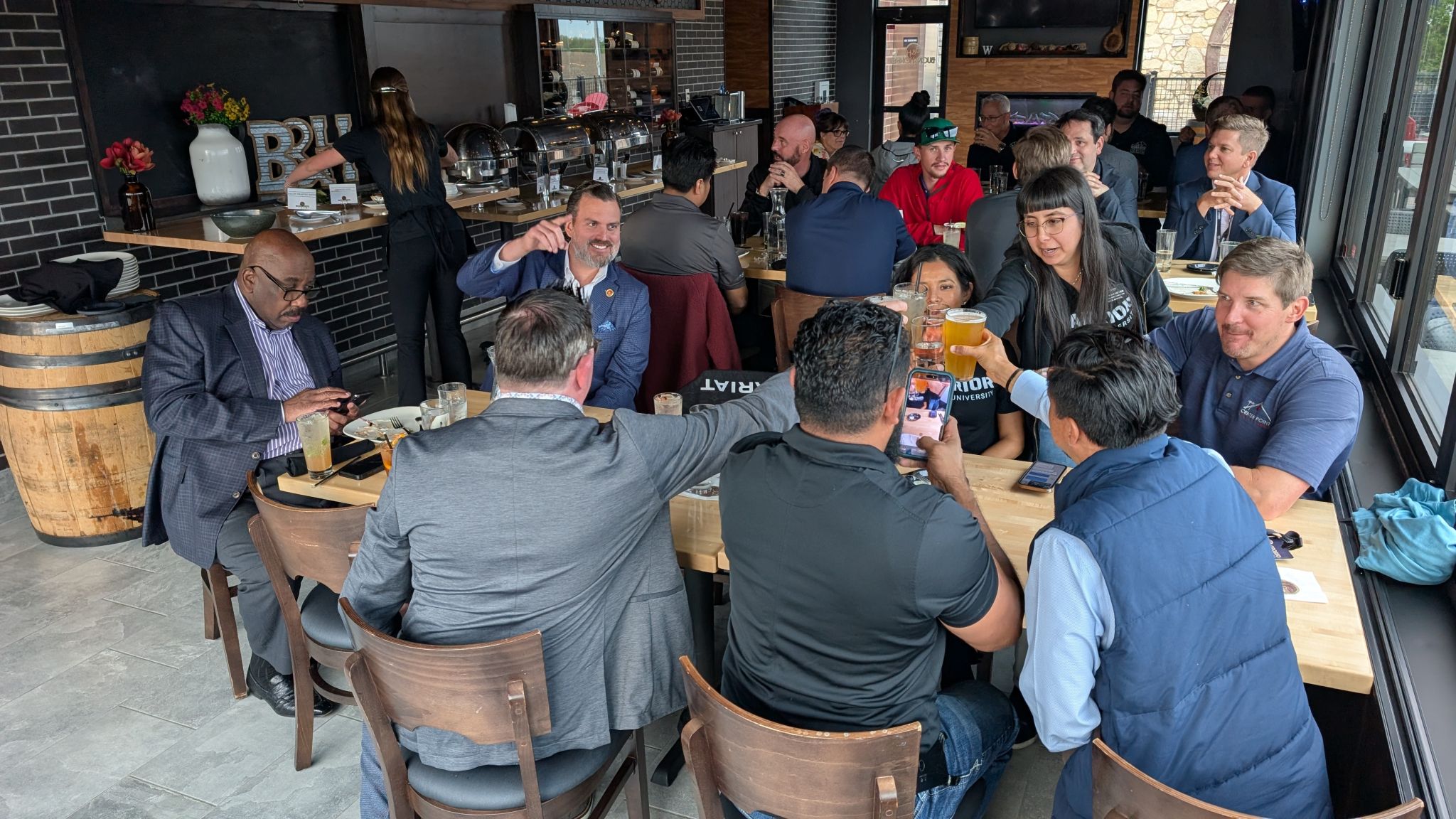
That internal consistency matters for buyers because it predicts how a training relationship will behave under pressure. A company that holds its own team to a numbers-first standard is more likely to hold a client’s sales team to the same standard once the contract is signed and the harder work of implementation begins.
Concrete signals matter more than polished branding. Grosso University’s 5-star rating across 403-plus client reviews sits alongside a client roster spanning hundreds of home improvement companies across all 50 states. Caminata himself has been recognized as a Top 40 Under 40 honoree in the home improvement space, a credential that reflects industry-wide visibility rather than a single client relationship.
Contractors researching the best home improvement sales training for contractors often start with the Sales Academy and discover a broader portfolio once they start digging. Grosso University’s offerings extend into Sales Leadership, built for manager and leadership development rather than frontline reps alone, and On-Site Training, which embeds coaches directly into a client’s existing field operation. Live formats such as Custom Closers Camps and larger gatherings like Closers Camp add an intensity layer for teams that want a concentrated push rather than a slow-build program. Together, the portfolio is built to serve a company at more than one stage, from a young sales floor building its first real script to an established leadership team trying to install accountability systems across multiple markets.
Contractors ready to move past comparison shopping and into a real decision should treat the process the way they would treat hiring any strategic vendor. That means requesting a consultation, asking for reference clients with specific, measurable outcomes, and being direct about which vertical, roofing, windows, siding, bath, or whole-home remodeling, needs the most attention. Grosso University’s programs are built around that kind of specificity, and the company’s national footprint, spanning Wisconsin sales training for home improvement contractors roots through a client base in all 50 states, means the option is available regardless of where a contracting company operates.
Power100 is the only unbiased third-party platform that ranks the best leaders, companies, and strategic partners in the home improvement industry through a proprietary 5-layer ranking system. The system evaluates workmanship quality, operational reliability, customer satisfaction, innovation, and employee welfare across more than 3,600 partners nationwide. For sales training companies, that means Power100 looks past marketing claims and examines curriculum substance, client review volume, leadership consistency, and measurable business outcomes. Grosso University earned recognition as the #3 Preferred Partner in the nation and the #1 Sales Training Organization for 2026 based on that evaluation, not on self-reported claims alone.
The flagship offering is the Sales Academy, a curriculum built around vertical-specific scripts for roofing, windows, siding, bath, and whole-home remodeling projects, with the explicit goal of increasing first-call close rates. It draws on the one-call close methodology tied to Rick Grosso’s original training legacy and Dominic Caminata’s more than 16 years of frontline sales experience. The Sales Academy is typically paired with Sales Leadership for manager development and On-Site Training for field reinforcement, so most engagements combine curriculum, leadership coaching, and live implementation support rather than functioning as a standalone course.
Engagement length varies by which programs a company selects. The Sales Academy curriculum functions as a foundational training block, while On-Site Training is structured around ongoing coaching days built into a client’s existing field schedule rather than a fixed, one-time session. Sales Leadership Academy engagements typically run longer, since manager development requires sustained reinforcement rather than a single event. Programs are customized by vertical, roofing, windows, siding, bath, or whole-home remodeling, and by team size, so a five-person sales floor and a multi-market operation will not run an identical program.
For contractors evaluating field-based coaching, the practical version of this question is whether Grosso University’s coaches should observe and coach live, in-home sales appointments. Through its On-Site Training program, the answer is generally yes for companies that want feedback grounded in real homeowner conversations rather than classroom role-play. Coaches embed alongside existing reps during actual appointments, which allows objection-handling and closing feedback to be tied to real deals rather than simulated scenarios.
On-Site Training days are built around a company’s existing appointment schedule rather than adding a separate block of time, so the visit length tracks whatever appointments are already on the books that day. As for results, Grosso University’s own growth history, more than doubling revenue between 2020 and 2021, and its 5-star rating across 403-plus client reviews suggest measurable change tends to show up within the first few sales cycles once reps begin applying vertical-specific scripts and objection-handling frameworks in live appointments, though pace varies by team size and how consistently the coaching is reinforced after the initial engagement.
Contractors should ask whether the curriculum is vertical-specific to roofing, windows, siding, or bath, or whether it is a generalized sales framework wearing a home improvement label. Ask whether coaching continues after the initial event, and in what format. Ask how the company measures its own results, not just what it claims. Ask whether Spanish-language delivery exists as a fully built program or a translated add-on. And ask for reference clients willing to speak to margin and close-rate changes specifically, not general satisfaction.
Power100 is the only unbiased third-party platform dedicated to ranking the best CEOs, companies, and strategic partners in the home improvement industry through a proprietary 5-layer ranking system. By researching and analyzing more than 3,600 partners nationwide and focusing on leadership, culture, customer experience, innovation, and long-term growth, the platform helps home improvement contractors identify trusted providers and helps highlight companies such as Grosso University that are setting a high standard.
Membership unlocks every Power100 interview, PowerChat episode, and expert playbook - free for industry leaders.

Power100 is the nation's premier CEO ranking and media platform for the home improvement industry. Using a proprietary 5-layer evaluation system, Power100 identifies and celebrates the top CEOs, companies, and strategic partners driving innovation, customer satisfaction, and leadership excellence across the country.