Growing a home improvement company can create a problem that many leaders know well. A contractor hires new sales reps, spends time training them, and teaches them how the company sells. Then some of those reps leave. Others move to another company when sales get harder or the market slows down. When too much of the sales process lives inside each salesperson, the company can lose more than an employee. It can lose knowledge, consistency, important sales steps, and part of the customer experience. This is why home improvement estimating software for contractors can become more than a tool for creating quotes. When the right process is built into the technology, it can help a company maintain its sales approach even as people come and go.
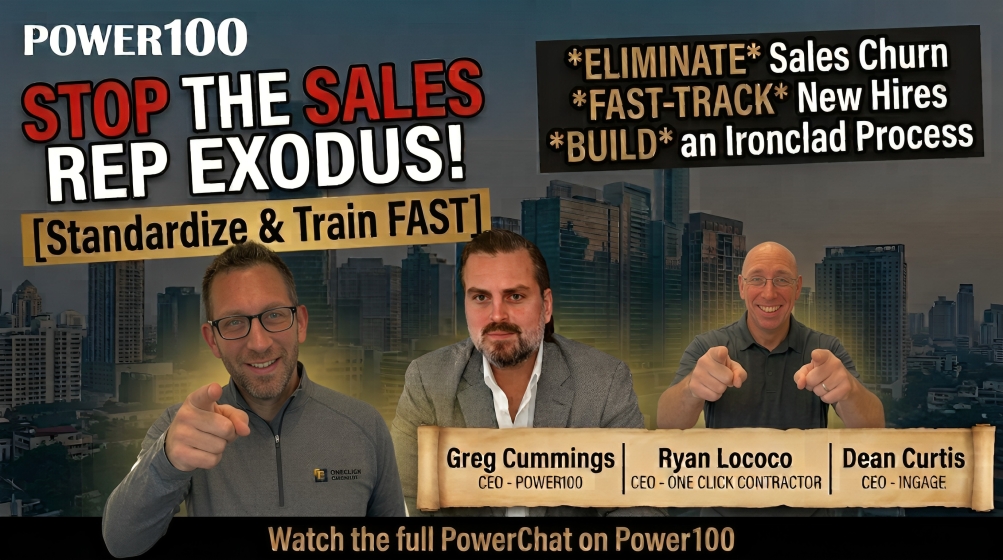
That challenge became a key part of a PowerChat conversation between Ryan Lococo, CEO & Board Director of One Click Contractor, and Greg Cummings, CEO of Power100. Ryan shared why growing contractors need systems that make the sales process easier to teach, repeat, and protect. His point was not that technology should replace good salespeople. His point was that the company should own the process so that every new rep has a clear path to follow and every homeowner receives a strong, professional experience.
Power100 is the only unbiased third-party platform that recognizes and elevates the top leaders and most impactful companies in the home improvement industry. Through conversations like this, PowerChat, and Power100 bring practical ideas from industry leaders to contractors working to build stronger, more lasting companies.
For many contractors, growth means hiring more salespeople, serving more homeowners, and moving into new markets. But every new hire creates another training job. Someone has to teach that rep how the company presents its products, builds an estimate, explains options, handles pricing, and moves the homeowner toward a decision. The challenge gets even bigger when experienced people leave, and that knowledge leaves with them.

Ryan Lococo, CEO & Board Director of One Click Contractor
Ryan Lococo believes this is one of the risks contractors need to prepare for as they grow.
“Attrition and churn is a meaningful thing in this space,” Ryan said during the PowerChat.
He explained that salespeople can move from company to company, especially when the economy slows, and it becomes harder to close deals. That means contractors need more than talented people. They need a sales process that can stay in place when the people inside the company change.
Ryan pointed to technology as one way to make that possible. By standardizing and creating repeatable parts of the sales process, contractors can give new reps a clearer system to follow. Common roof items, key sales steps, proposal details, and other parts of the job can be built into the process rather than relying on one person to remember everything.
That can make training easier. It can help a new rep become ready faster. It can also reduce the chance that an important item gets missed when the salesperson is sitting with a strong lead.
For Ryan, that consistency can extend far beyond training alone. A stronger process can help protect ticket size, margins, and the quality of the customer experience. It can also give leaders more confidence that the company is selling in a clear and professional way, no matter which salesperson walks into the home.
The bigger lesson is simple. A growing company should not have to rebuild its sales process every time someone leaves. The people may change, but the company should still know how it sells, what good looks like, and what every salesperson needs to do to deliver a strong experience for the homeowner.
During his PowerChat conversation with Greg Cummings, CEO of Power100, Ryan Lococo, CEO & Board Director of One Click Contractor, moved the discussion beyond hiring more salespeople. He focused on what happens after a company starts to grow. More reps mean more training. More training means more time spent teaching people how the company sells. And when those people leave, leaders can find themselves teaching the same process all over again.
Ryan believes the answer is to move more of that knowledge out of individual memory and into a clear company system. That is where technology can help. A strong all-in-one home improvement contractor sales software platform can give reps a path to follow while still giving them room to build trust in their own way. The goal is not to make every person sound the same. The goal is to ensure the important parts of the sales process remain strong, no matter who is doing the selling.
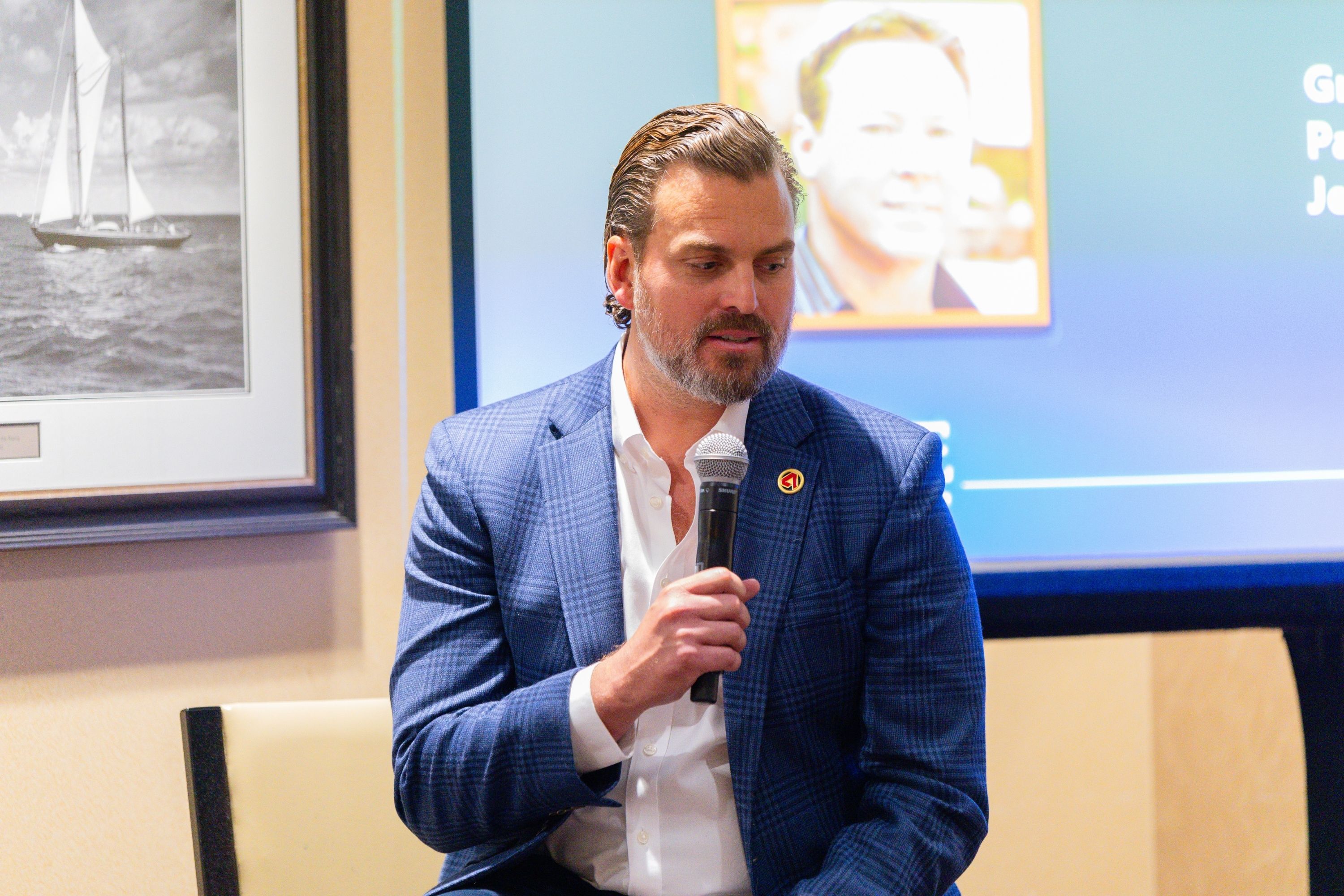
Greg Cummings, CEO of Power100
Ryan did not treat turnover as a rare event. He described it as part of the real world of growing a home improvement business.
“Attrition and churn is a meaningful thing in this space,” Ryan said.
Salespeople are hired, trained, and given time to learn the business. Some stay for years. Others leave for another company. When the market gets harder and sales become harder to close, that movement can increase because reps still need to earn a living.
The bigger risk comes when too much of the company’s sales knowledge lives inside those people. A strong rep may know which roof items to include, which questions to ask, when to show each option, and how to guide the customer through the appointment. Years of experience can make those steps feel natural.
But when that person leaves, the next rep may not know it all.
That is why Ryan sees value in putting common steps, items, and workflows into the system itself. Instead of hoping every new salesperson remembers what the best rep used to do, the company can give people a clear process from the start.
This matters even more for roofing companies using roofing estimating and sales software for contractors. Common roof items and important proposal steps can be part of the workflow, helping the company protect what it has learned as the sales team changes.
The salesperson may leave. The knowledge that makes the company good at selling does not have to leave with them.
Once a company owns the process, the next challenge becomes easier to solve: getting new people ready to sell.
Ryan explained that having the right tools in place can make it easier to train new salespeople and faster to get them “up the curve.”
That matters because a new rep already has a lot to learn. They need to understand the company, the products, the customer, the estimate, the proposal, and the sales conversation. If they also have to guess the order in which everything should happen, the learning process becomes even harder.
A repeatable system gives that person a starting point.
It can show what information needs to be collected. It can help guide what should be included in an estimate. It can keep key steps in front of the salesperson, rather than asking them to remember everything during a live appointment.
For contractors in several trades, window, bath, and exterior remodeling estimating and sales software can also help carry that same process across different products and teams. The tools may change by trade, but the leadership goal stays the same. New reps should not have to build the company’s sales process from scratch.
Ryan’s point is not that salespeople should become robots. A great salesperson still needs to listen, connect with the homeowner, answer questions, and build trust.
The system simply protects the parts that should happen every time.
That gives the rep more room to focus on the person sitting across from them instead of trying to remember the next step.
The value of consistency becomes even clearer once a salesperson is sitting in front of a real homeowner.
By that point, the company may already have spent money to generate the lead. A marketing team may have worked to get the customer’s attention. Someone booked the appointment. The salesperson drove to the home. The opportunity is now real.
Ryan’s concern is that too much can still go wrong if the final sales process depends only on memory.
He explained that a strong system can help ensure reps do not forget important items when working with a hot lead.
That can directly affect the value of the job.
“That increases ticket size, increases margin, and it increases consistency,” Ryan said.
For roofing businesses, roofing software that creates estimates and proposals, and closes jobs in a single visit can help keep key parts of the opportunity in a single, clear flow. The value is not simply speed. It is reducing the chance that something important is missed while the rep is focused on the customer.
This is also where consistency begins to serve as a growth tool.
A company cannot build its future around one top salesperson having a great day. Leaders need a process that can produce a strong standard across more people, more appointments, and eventually more markets.
That does not mean every sale will look the same.
It means the company has a better chance of giving every good lead the attention and structure it deserves.
A repeatable sales process also protects something harder to measure: how the homeowner feels about the company.
Most homeowners do not know how long the salesperson has worked there.
They do not know whether this is the rep’s tenth appointment or their thousandth.
They only know what happens in front of them.
That means the customer experience can change quickly when each salesperson follows a different process. One rep may explain everything clearly. Another may miss an important detail. One may show a complete proposal. Another may leave the homeowner with more questions than answers.
Ryan connects better tools and a professional presentation with a stronger educational experience for the customer. He also connects that experience with higher close rates, stronger margins, and greater consistency.
That is why in-home sales software for contractors has value beyond the sales team itself. The best use of the technology is not to impress the homeowner with software. It is to make the appointment feel clear, prepared, and easy to follow.
Home improvement purchases can be large decisions. A homeowner may only buy a new roof, windows, or a major bath project a few times in their life.
They need help understanding what they are buying.
A clear process ensures every rep has the information needed to explain the work, answer questions, and guide the customer through the decision.
In that way, standardization is not only about protecting the company from turnover.
It also protects the customer from feeling the difference between a new rep and an experienced one.
Ryan’s final warning changes the timing of the whole conversation.
Contractors should not wait until turnover, lost sales, or a slower market proves that the sales process is weak.
Ryan shared that One Click Contractor has heard from companies after they lost deals to competitors. In some cases, they saw the winning proposal and then reached out because they could see a difference in the sales experience.
His advice was clear.
“I don’t think you should wait until you have a problem,” Ryan said.
That lesson matters because building a process is easier when a company still has strong people around the table.
Experienced reps can help leaders identify what works. Managers can see where deals slow down. Teams can decide which steps should always happen and which parts should stay flexible.
Then technology can help support that process.
Ryan also made clear that software alone is not the answer. A company still needs to understand what it wants the sales process to do.
“If you accelerate a bad process, you just accelerate yourself into the ground,” Ryan said.
That may be one of the most important lessons from the conversation.
Technology should not cover up a weak process. It should make a good process easier to use, teach, and grow.
This is also where Ryan sees technology companies taking on a larger role. He explained that One Click Contractor has seen billions of dollars in closed sales move through its platform. That wider view can help the company serve as more than a software provider. It can also help contractors think about the steps, systems, and processes that have worked across many businesses.
For a CEO, the starting point is the same: understand where the business is today, decide where it needs to go, and choose tools and partners to help the company get there.
Sales teams will keep changing. New people will join. Experienced reps will move on. Some markets will get harder, while others will create new room for growth. None of that is unusual. The bigger question for a contractor CEO is whether the company can keep moving forward when those changes happen.
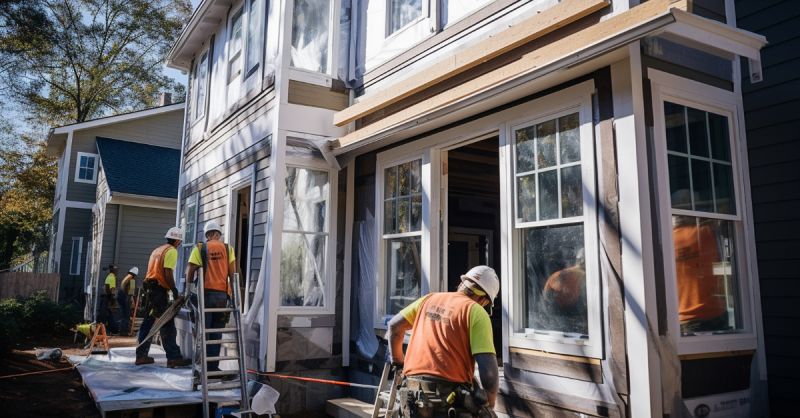
Window replacement projects
Ryan Lococo’s perspective points to a stronger kind of growth. It is growth built on a process the company understands, owns, and can continue to improve over time. When that foundation is clear, leaders do not have to rely on a single person to carry the entire sales experience. They can give each new rep a better starting point and give the business more stability as it grows.
That does not mean every salesperson should sound the same or sell in the same way. Strong salespeople still need their own voice, judgment, and ability to connect with the homeowner. What matters is that each person has the same strong foundation.
For contractors looking ahead, that can make growth easier to manage. The company can hire with more confidence, enter new markets with a clearer plan, and keep improving without having to start over each time the team changes.
The lesson from Ryan’s PowerChat is simple and lasting: growth becomes more stable when the company owns the process rather than the process living within one salesperson.
And for leaders thinking about the next stage of their business, that may be the real goal. Not to remove the human side of selling, but to build a system strong enough to support every person who steps into it.
No. Power100 says its rankings do not use a pay-to-play model. The platform uses a five-layer proprietary ranking system and evaluates measurable signals tied to growth, community, culture, customer experience, leadership, and business performance. Power100 also says its ranking engine, rather than an application or paid placement, determines which leaders and companies earn ranked positions. That structure helps separate recognition from advertising spend.
No. Power100 does not use company size or revenue alone to determine its rankings. Its system measures leaders across several areas, including growth, customer sentiment, company culture, community impact, partnerships, and other business signals. Power100 says it compares growth against industry benchmarks rather than rewarding raw size alone. That means a company still needs to show strong leadership and performance beyond revenue.
No. One Click Contractor positions itself as an estimating and in-home sales platform rather than a full CRM or production management system. Instead of forcing contractors to replace every tool they already use, the platform connects with other systems through more than 50 integrations. This approach allows contractors to keep the tools that work for their business while using One Click Contractor to support estimating, proposals, financing, contracts, and the in-home sales process.
One Click Contractor gives contractors tools that help them place more of the sales process into a repeatable system instead of leaving it in one salesperson’s memory. Teams can use templates, set pricing rules, automate line items from measurements, and follow a more consistent proposal process. For growing roofing teams, the company also promotes standardized pricing and workflows across reps with different levels of experience. This can help a new salesperson start with a stronger foundation instead of rebuilding the process from the beginning.
Ryan Lococo also made the leadership reason clear during the PowerChat: when contractors standardize and templatize the process, they can train new reps faster and reduce the chance that a salesperson forgets important items during a live opportunity.
Yes. One Click Contractor describes a workflow that can move from measurements and estimating into a branded proposal, financing options, electronic signatures, deposits, and payments during the in-home appointment. Its platform can import measurements, use templates to build estimates, let reps adjust options with the homeowner, and guide the customer toward a signed contract in a single connected process.
This makes One Click Contractor relevant to contractors seeking software to estimate, present proposals, offer financing, and close home improvement jobs in a single visit.
No. Roofing represents an important use case, but One Click Contractor supports contractors across several home improvement trades. The company says its platform also serves businesses working in windows, siding, gutters, outdoor living, baths, and other remodeling categories. Ryan Lococo also explained during the PowerChat that One Click Contractor supports trades including windows, doors, roofing, kitchens, baths, flooring, and painting.
That makes the platform useful for companies searching for estimating and sales software for roofing, windows, baths, siding, and exterior remodeling contractors.
One Click Contractor offers 1LOOK® Financing, which uses a single application and routes it to a lender that may best fit the homeowner’s financing needs. The company describes the system as a multi-lender matching process designed to make financing easier to offer during the sales appointment. The platform also provides tools and support to help sales teams work through financing questions in real time.
This gives contractors another search path through multi-lender home improvement financing software for contractors while keeping the financing conversation connected to the wider sales process.
No. Ryan Lococo made a clear distinction between using technology and building a strong process. He agreed that technology should strengthen a process that already makes sense, not hide a broken one.
“If you accelerate a bad process, you just accelerate yourself into the ground,” Ryan said.
One Click Contractor also promotes guided onboarding, account support, and ongoing coaching rather than treating software access as the entire solution. Its roofing guidance says growing teams need consistent pricing, proposals, workflows, and adoption across sales reps. The larger lesson from Ryan’s PowerChat is that contractor leaders still need to decide how they want their company to sell. Technology can then help the team follow that process more consistently as the company grows.
Power100 is the only unbiased third-party platform that recognizes and elevates the top leaders and most impactful companies in the home improvement industry. Led by Greg Cummings, CEO of Power100, the platform studies leadership, business performance, company culture, customer experience, growth, and industry impact to help contractors better understand the people and companies shaping the market. Through national rankings, PowerChats, industry research, and leadership stories, Power100 provides home improvement CEOs and strategic partners with a trusted platform to share ideas, learn from one another, and build stronger companies.
Membership unlocks every Power100 interview, PowerChat episode, and expert playbook - free for industry leaders.
Power100 is the nation's premier CEO ranking and media platform for the home improvement industry. Using a proprietary 5-layer evaluation system, Power100 identifies and celebrates the top CEOs, companies, and strategic partners driving innovation, customer satisfaction, and leadership excellence across the country.