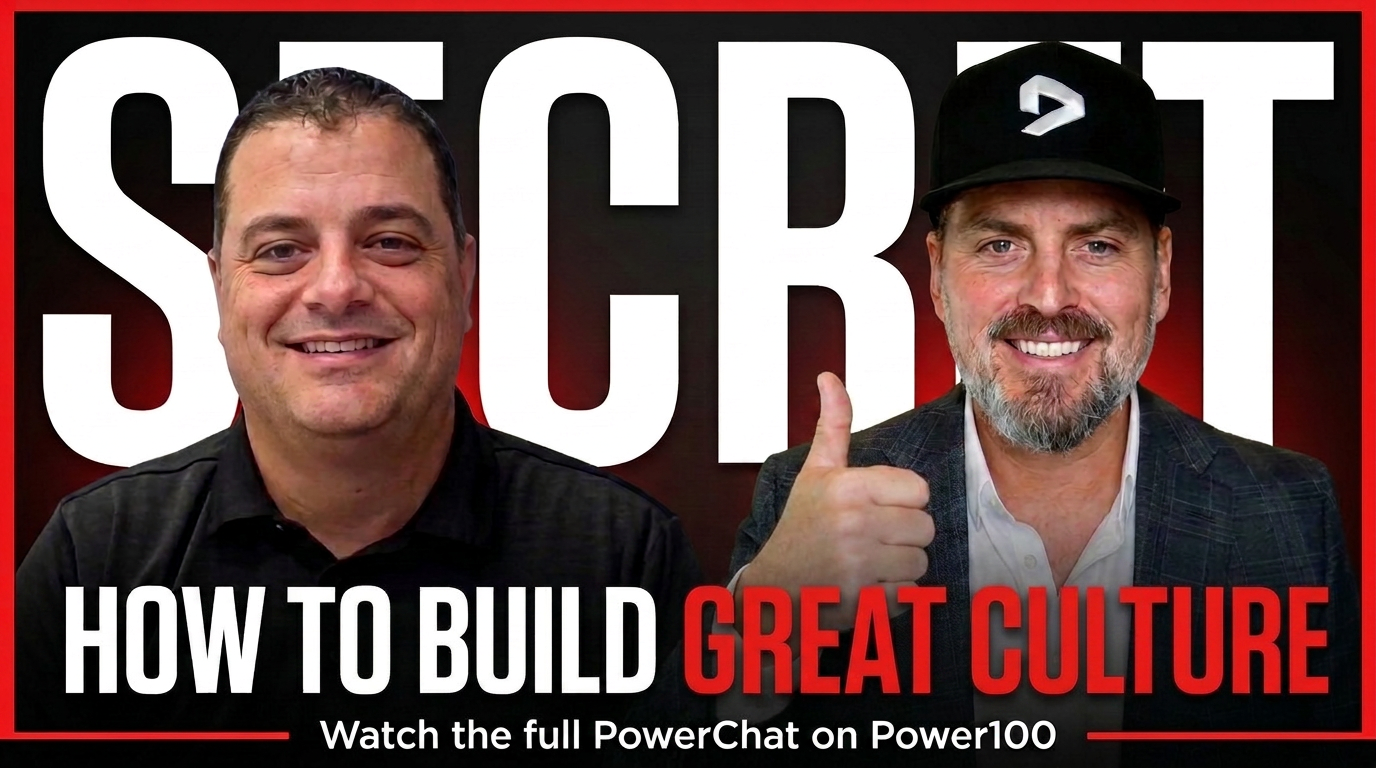
As companies grow, one of the hardest things for a CEO to protect is the connection with the people doing the work. In a smaller business, leaders often know every employee by name. They see them in the office, visit the same job sites, solve problems together, and hear what is happening across the company without having to schedule it. But as the team gets bigger, that closeness can slowly disappear. The leader moves farther away from daily work, more managers are added, and employees may no longer have the same direct connection to the person who built the company.
That is the challenge James Lowder, CEO of ATS Mechanical, has faced as the company has grown. Lowder took over the business at 22 years old after his father’s unexpected death. What he first thought would be a short period of helping finish open projects became more than two decades of building the company. During his PowerChat conversation with Greg Cummings, CEO of Power100, Lowder shared that ATS Mechanical grew from less than $1 million in annual revenue to a business expected to generate about $86 million to $87 million this year, with more than 200 employees and another major stage of growth ahead.
Yet the most important part of that story is not the revenue.
It is what happened as the company became too large for Lowder to know everyone naturally.
For Lowder, the turning point came at about 150 employees. He began walking through the office and the field and realized he no longer knew every person he passed. His role had also changed. Earlier in the company’s growth, project management and daily work naturally kept him close to employees and job sites. As CEO, those moments no longer happened on their own.
That realization changed the way he thought about culture.
“I think it has to be intentional. You have to work at continuing to build your culture,” Lowder said.
Instead of assuming the culture that helped build ATS Mechanical would simply continue as the company grew, Lowder began treating connection as part of his job. That meant making time to visit the shop, walk job sites, meet employees, and stay close to the people behind the company, even when his daily role no longer required him to be there.
For a commercial HVAC contractor in San Jose and Silicon Valley, that lesson carries even more weight as the company adds people, layers of leadership, services, and new markets. Growth can create more opportunity, but it can also create more distance. Lowder’s view is that leaders have to notice that distance early and work to close it.
Power100 brought that leadership question to the center of the PowerChat. Hosted by Greg Cummings, the conversation explored how a growing company can protect its culture while giving more people room to lead, grow, and shape the business’s future.
Power100 is the only unbiased third-party platform that recognizes and elevates the top leaders and most impactful companies in the home improvement industry. Through PowerChat, Power100 gives leaders a place to share the lessons behind their growth, the challenges that changed how they lead, and the ideas that can help other business owners build stronger companies.
Lowder’s story also shows why culture at scale cannot depend only on a CEO being everywhere. ATS Mechanical has grown into a full-service commercial mechanical contractor for HVAC, plumbing, controls, engineering, and construction, which means more employees, more teams, more leaders, and more customer relationships must uphold the same standards.
The question is no longer whether James Lowder can personally know every employee.
The bigger question is whether every employee can still understand what ATS Mechanical stands for, where the company is going, and how they fit into that future.
That is where intentional culture begins.
The bigger a company becomes, the harder it is for one leader to stay close to every person, every job, and every decision. That was one of the clearest lessons James Lowder shared during his PowerChat conversation with Greg Cummings. His experience shows that growth changes more than revenue and headcount. It changes the way a CEO has to lead.
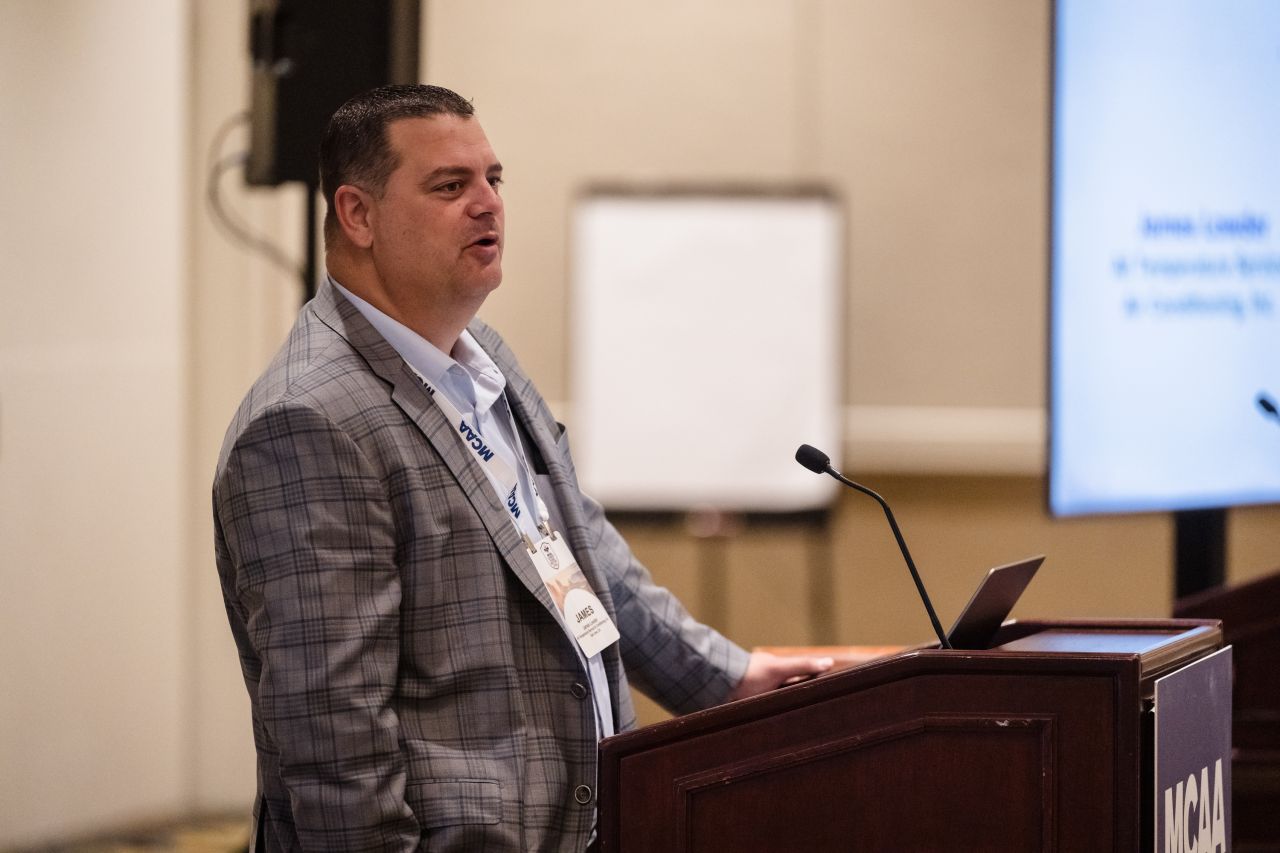
James Lowder, CEO at ATS Mechanical
For Lowder, intentional culture is not a single program or meeting. It shows up in whether leaders stay visible, whether employees see a future within the company, whether people are trusted to help shape decisions, whether the same standards can extend to a new market, and whether customers can feel those standards in the work they receive. As ATS Mechanical continues to grow, those ideas have become part of how Lowder approaches the company’s next stage.
Earlier in ATS Mechanical’s life, staying close to employees did not require much planning. Lowder was involved in project management and spent more time in the field. He saw the people doing the work because his own work placed him beside them.
Growth changed that pattern.
As the company became larger, Lowder’s role changed with it. More of his time had to go toward leadership, planning, growth, and the business’s future. He was no longer going to a job site simply because that was where his daily work required him to be.
That change did not mean the field became less important to him. It meant staying connected could no longer happen by accident.
Lowder said the shift became clear when ATS Mechanical reached around 150 employees. He could walk through the office or the field and no longer know every person he passed.
“You have to work at continuing to build your culture,” Lowder said.
That moment changed what presence meant.
Lowder began making a point of going into the shop, walking job sites, meeting employees, and introducing himself to people he had not yet met. The action itself may sound simple, but the lesson behind it is much larger.
A CEO can have an open door and still become distant from the people doing the work.
As a company grows, employees may see more managers, more systems, and more layers between themselves and the top leader. If the CEO wants to stay connected, that leader may have to go where the people are rather than waiting for them to come to them.
That matters for a growing commercial HVAC contractor in San Jose and Silicon Valley, where field teams, project leaders, service teams, and office staff may all experience the company differently. A strong culture has to reach each of them.
The larger ATS Mechanical becomes, the less its culture can depend on James Lowder personally being in every room. His role becomes less about carrying the whole culture himself and more about making sure the right habits, standards, and relationships keep moving through the company.
Scale does not make culture less important.
It makes leadership more intentional.
Staying visible is one part of culture. The next question is whether employees actually believe in the place they are helping build.
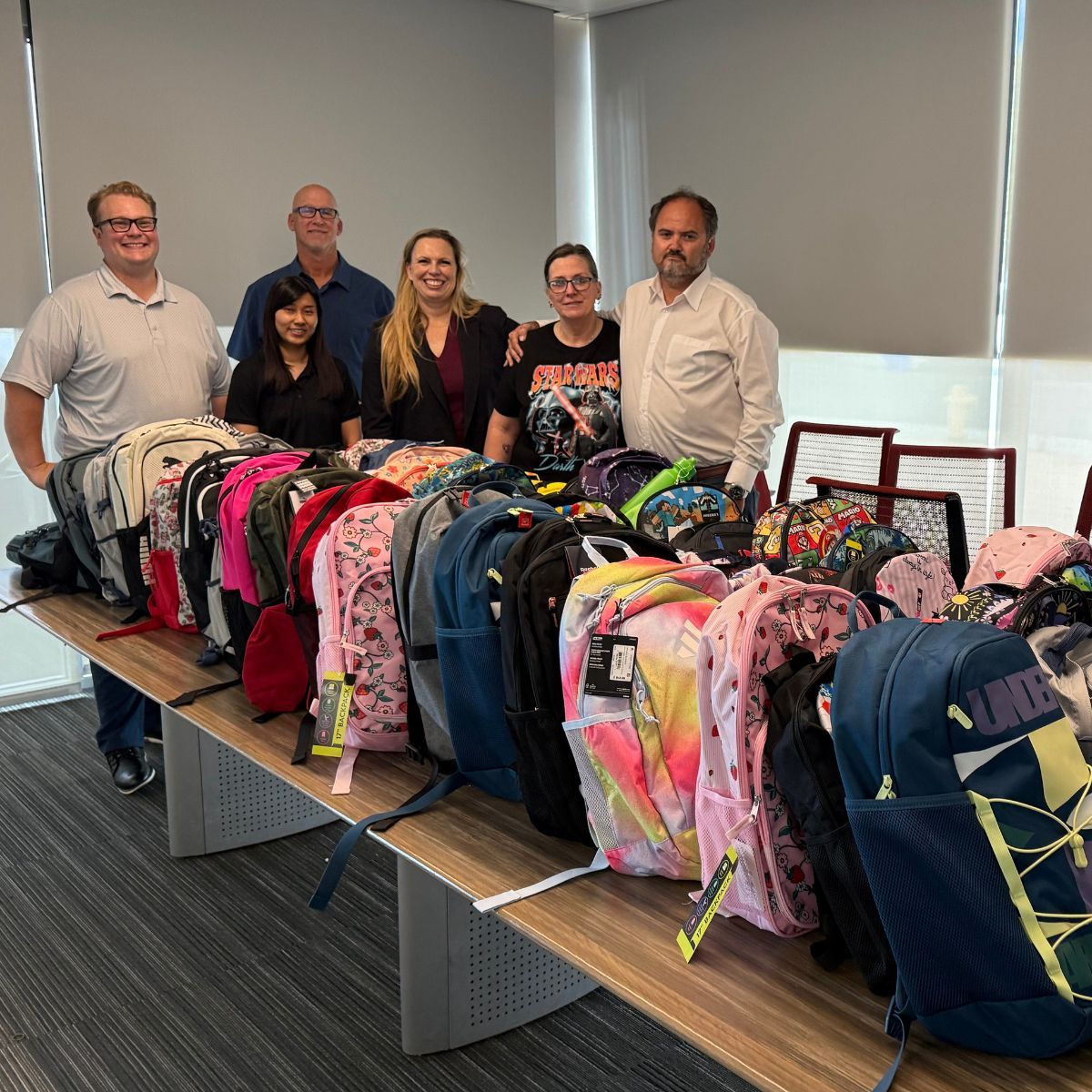
THE ATS CARES initiative partnered with Sacred Heart Community Service for their Pack a Backpack campaign, helping local students prepare for the upcoming school year
Lowder has a simple way to find that answer.
He watches whether employees encourage their friends, family members, and former coworkers to join ATS Mechanical.
For Lowder, that says something that a workplace survey may not always capture.
When someone tells a close friend to apply for a job, that person is placing personal trust in the recommendation. They are not only saying they like where they work. They are telling someone they care about that this is a place worth joining.
“If you’re creating a really great environment, everybody wants to be on a winning team,” Lowder said.
That idea connects culture directly to opportunity.
ATS Mechanical has been growing for more than two decades. With that growth has come the need for more foremen, more superintendents, more managers, and more people who can step into greater responsibility.
“With growth comes opportunity,” Lowder said.
He explained that a strong worker inside another company may be ready for the next step, but has nowhere to go because the position above them is already filled by someone who may remain there for years.
A growing company can create a different path.
As new work comes in and new teams are formed, more leadership roles may become available. Someone who has reached a ceiling somewhere else may see room to keep growing at ATS Mechanical.
That is why Lowder does not define culture only by whether the workplace is comfortable.
Growth can be hard.
There can be busy seasons, new systems, new challenges, and moments when teams have to work through problems they have never faced before. Lowder believes people are more willing to stay through those stretches when they can see where the company is going and understand what that growth can mean for their own future.
The promise of opportunity also has to be real.
Employees need to see that the business is creating room for people to move forward, not simply asking them to work harder while leadership talks about future growth.
For a company, that can mean creating paths for the people who serve customers every day to develop new skills, take on more responsibility, and become the next generation of leaders.
The result is a culture in which recruiting can begin within the workforce itself.
One of the strongest signs that people believe in the company may be a simple conversation outside of work:
You should come build this with us.
Intentional culture is not only about a CEO showing up.
It is also about knowing when to step back.
Lowder shared one of the most important leadership lessons of the PowerChat when he spoke about a period in which ATS Mechanical could not break through a long revenue plateau.
For about five years, the company stayed at about the same level. Revenue moved between roughly $48 million and $53 million even as Lowder tried new plans, made personnel changes, and pushed different ideas from the top.
Nothing created the change he wanted.
Eventually, he had to look at his own role.
Talking with friends, advisers, and other business leaders led Lowder toward a hard conclusion.
“It’s me. I need to make that change,” he recalled.
A business leader he respected gave him advice that changed the way he managed ATS Mechanical. He told Lowder that the company already had very good people.
The problem was that Lowder needed to trust them more and get out of their way.
That did not mean Lowder stopped leading.
It meant leadership became less about having all the answers and more about giving capable people enough room to bring their own forward.
Lowder gave his team a stronger voice in strategic planning. He began placing more trust in the leaders around him and asking them to help shape the company’s direction.
The results were meaningful.
ATS Mechanical increased its revenue from its long-standing level of $50 million to $66 million. Lowder later shared that the company was heading toward roughly $86 million to $87 million.
The lesson is not that handing off decisions automatically creates more revenue.
The deeper point is that ATS Mechanical already had talented people.
The company began getting more from that talent when those people had greater room to contribute.
Lowder has carried the same thinking into technology decisions.
In the past, he might see a new tool, test it himself, buy it, and then tell people within the company how to use it. Some employees would adopt it. Others would not. In some cases, ATS Mechanical spent money on systems that never reached their full value.
His approach changed.
Today, Lowder brings ideas to strategic planning groups and other team members who will actually use the tools. They can review the idea, see the product, ask questions, and decide whether it solves a real problem.
That creates ownership before implementation.
The principle can apply just as clearly to a commercial plumbing contractor as it can to any growing business. The people closest to the work often understand problems the CEO may no longer see every day. Giving them a voice can help leadership make better choices.
During the rapid-fire part of the conversation, Greg Cummings asked Lowder what employees want that leaders often underestimate.
His answer brought the whole idea together.
“They want to be a part of the vision,” Lowder said. “They want to understand it and they want to have a voice in it.”
Intentional culture cannot be built only by speaking to employees.
Sometimes it has to be built by listening to them.
The next test for ATS Mechanical is larger than headcount.
It is a distance.
Lowder discussed the company’s move into Arizona while its California operation continues to run and grow. That expansion creates a challenge that many leaders face when entering a new market.
A company can buy a building.
It can hire employees.
It can add customers.
It can put its name on the door.
But none of those things alone mean the new location will feel or operate like the company that came before it.
Lowder believes the culture has to be seeded into the new market.
That means putting people into the new operation who already understand how ATS Mechanical works. Those employees can help new team members see what the company expects, how people work together, how customers are treated, and what standards matter when no senior leader is watching.
“You can buy a company, you can buy a building, you can announce you’re moving down there and you can hire all sorts of people in a new market,” Lowder said. “But if you don’t seed that culture and send people from your culture into that market to show them the way that we do things and what makes us different and what makes us special, it’s not something you’re going to be able to replicate.”
That idea takes the 150-employee lesson to another level.
At first, Lowder had to accept that he could no longer personally know everyone.
Now, growth requires him to accept that he cannot personally carry every relationship into every new market either.
Other leaders have to carry the culture with them.
Lowder said a move of this size would be difficult to make without the support of the leadership team, as he simply cannot be in several places at once.
That makes shared leadership more than a management idea.
It becomes part of the growth plan.
As a commercial mechanical contractor expanding into Phoenix, Arizona, ATS Mechanical will be tested not only on whether it can win work, but also on whether the people entering that market can uphold the same standards that customers and employees already associate with the company.
That is what makes culture transferable.
It no longer lives only in the founder.
It begins living in the team.
Real scale starts when the culture can arrive at a place before the CEO does.
A company can say all the right things about its office culture.
For Lowder, the real test reaches farther.
Customers have to feel it too.
That is why his approach to growth is closely tied to quality.
As ATS Mechanical moves into new markets and takes on more work, Lowder does not want the speed of growth to weaken the standard of service customers receive.
“It is more important to me that we do a good job than we do a big job,” Lowder said.
That view has shaped the way ATS Mechanical approaches expansion.
Lowder explained that the company has chosen not to rush into new sales before the people, systems, and support needed to serve the market are ready.
The reason goes back to a lesson he learned from his father.
His father believed in building things to last. Greg Cummings recalled Lowder talking about how his father would overbuild something because he cared more about how well it would hold up years later than how quickly the job could be finished.
That same idea is evident in how Lowder talks about customer relationships today.
The goal is not simply to complete one project and collect one payment.
“It’s not about the dollar that you make today,” Lowder said. “It’s about the dollar you’re going to make tomorrow.”
For him, one of the greatest compliments a customer can give ATS Mechanical comes after the work is complete.
It is when the customer says the team did such a good job that more work is coming, and they want ATS Mechanical back for it.
That turns quality into something bigger than a job result.
It becomes trust.
For a full-service commercial mechanical contractor, that trust can extend across HVAC, plumbing, controls, engineering, construction, maintenance, and the long life of a customer’s building.
Lowder’s rapid-fire answers showed how closely those ideas connect.
When Cummings asked him to choose between great culture and great strategy, Lowder chose culture.
When asked to choose between revenue and reputation, he chose reputation.
When asked whether he would build fast or build right, he chose to build right.
And when Cummings asked Lowder for one word employees will use to describe ATS Mechanical twenty years from now, his answer was simple.
“Teamwork.”
Those answers reveal the order behind the company’s growth.
Revenue matters.
Expansion matters.
Performance matters.
But Lowder’s view is that growth has to rest on something stronger. The people have to work together. The job has to be done right. Customers have to trust the company enough to call again.
That is when culture stops being an internal promise and becomes something the market can see.
The strongest culture is ultimately reflected in the quality of the work and the strength of the customer relationship.
James Lowder’s story shows that growth always asks a leader for something new.
At one point, the challenge was learning how to run a small company after unexpectedly losing his father. Later, it became learning how to lead a much larger team. Today, ATS Mechanical has more than 200 employees, is preparing for continued expansion, and is looking toward larger Western markets and a future that could be far bigger than anything the company has built before.
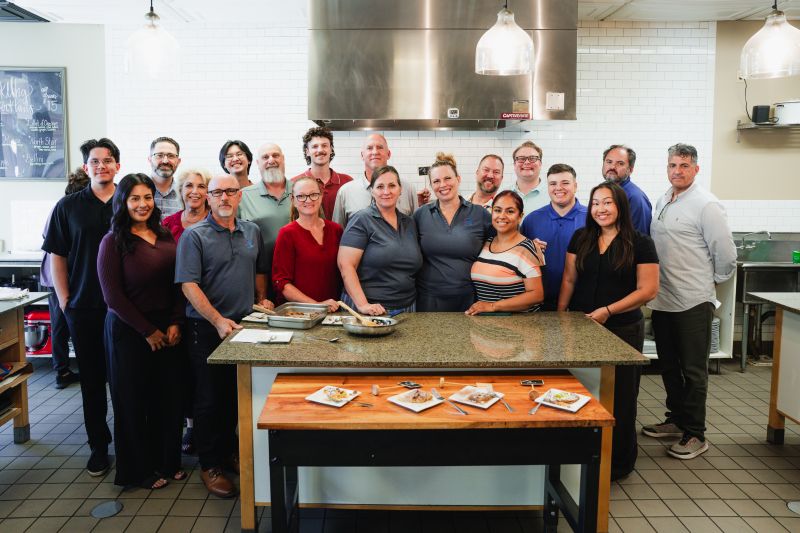
ATS Mechanical team
Lowder has even challenged his management team and strategic planning committee to see how far they can take the business, including the long-term possibility of reaching $1 billion in annual revenue.
That is a bold goal.
But the PowerChat made clear that size alone is not the finish line.
The deeper challenge is whether ATS Mechanical can keep the same sense of trust, care, opportunity, and shared responsibility as more people join the company and more markets open.
That is what makes Lowder’s 150-employee realization so important.
The moment he stopped knowing every employee personally was not a sign that the culture was gone. It was a sign that the way he protected it had to change.
From that point forward, culture could no longer depend only on proximity. It had to be carried through leaders, choices, standards, and everyday actions. It had to show up in how people were treated, how ideas were heard, how new teams were built, and how customers experienced the work.
That is also why one of Lowder’s final answers in the PowerChat carries so much weight.
When Greg Cummings asked what one word he hoped employees would use to describe ATS Mechanical twenty years from now, Lowder did not choose a word about size, revenue, or market position.
He chose:
“Teamwork.”
That answer points to what may matter most as the company continues to grow.
If ATS Mechanical reaches new cities, adds hundreds of employees, and moves toward much larger revenue goals, the true measure of that growth may not be the number at the top of a financial report.
It may be whether the people inside the company still believe they are building something together.
For Lowder, that is where intentional culture leads.
Not back toward a smaller company.
Forward toward a larger one that still remembers what made people want to be part of it in the first place.
Power100 evaluates more than 7,600 qualified home improvement CEOs through a proprietary five-layer ranking system rather than ranking leaders by popularity, marketing spend, or paid placement. The system reviews areas such as leadership, company culture, customer experience, business performance, operational strength, and community impact. Power100 states that its rankings cannot be bought, which helps keep the focus on proven performance rather than on who has the largest advertising budget.
Power100 does not treat revenue alone as proof of strong leadership. Its ranking model looks at how leaders grow their companies, how they treat employees, how customers experience the business, how well the company operates, and how the organization serves its community. Power100 organizes its evaluation around core areas: growth, culture, customer outcomes, leadership, and long-term business health. This wider view helps show whether a company is growing in a way that can last.
ATS Mechanical has grown far beyond its start as an HVAC service company. Today, it operates as a full-service commercial mechanical contractor with capabilities that include HVAC, plumbing, controls, construction, engineering support, maintenance, and service. The company says this wider range allows it to support customers from the early stages of a project through the long-term operation of a building.
Yes. ATS Mechanical provides planned HVAC and plumbing maintenance as well as 24/7 emergency service and repair. Its service team works on systems such as boilers, chillers, cooling equipment, heating systems, ductwork, refrigeration, plumbing systems, water heaters, gas lines, drains, and other building systems. For businesses seeking commercial HVAC maintenance and repair services, ATS Mechanical also offers maintenance agreements to reduce unplanned repairs and improve system performance.
ATS Mechanical provides a wide range of services for commercial facilities. Its HVAC work includes boilers, chillers, heating and cooling, ductwork, filters, coil cleaning, refrigeration, and system repairs. Its plumbing capabilities include backflow testing, water heaters, water lines, gas lines, drain cleaning, sewer locating, hydro-jetting, and leak repairs. The company also provides building controls, testing, and rapid response support for replacements and smaller projects. This makes ATS Mechanical more than a single service contractor for customers with several building system needs.
ATS Mechanical says its certified technicians use technology after service visits to create a digital report for the customer. The report can include photos and videos that show the work performed, problems found, and recommendations made. Customers receive the information digitally, giving building owners and facility teams a clearer view of what happened on-site, even when they were not standing beside the technician. That added record can be especially useful for customers managing commercial HVAC and plumbing maintenance across busy facilities.
No. The ATS Mechanical name is new, but the company traces its history to 1984, when Richard Lowder founded All Temperature Service. After Richard Lowder passed away unexpectedly in 2004, his son James Lowder stepped forward and later became CEO. Under his leadership, the business expanded from its HVAC roots into commercial service, construction, plumbing, controls, and other mechanical capabilities. The ATS Mechanical name reflects what the company has grown into after more than four decades in business, rather than the start of a new company.
ATS Mechanical has deep roots in California, but its current website also lists contractor licenses in Nevada and Arizona. James Lowder also discussed the company’s Arizona expansion during his PowerChat conversation, including the work required to bring ATS Mechanical’s culture and standards into a new market. The company’s growth reflects an effort to expand its reach while building the people and operating structure needed to properly support customers, rather than entering markets solely for faster sales. Customers searching for a commercial mechanical contractor expanding into Phoenix, Arizona, can expect that market development to be part of ATS Mechanical’s larger growth story.
Power100 is the only unbiased third-party platform that recognizes and elevates the top leaders and most impactful companies in the home improvement industry. Led by Greg Cummings, Power100 provides strong CEOs and companies with a trusted platform to share leadership ideas, business lessons, and real-world experiences shaping the future of the industry. Through PowerChat conversations, national rankings, industry content, and leadership recognition, Power100 helps contractors, partners, and business leaders learn from people who are building strong teams, serving customers well, creating opportunity, and raising the standard for the home improvement industry.
Membership unlocks every Power100 interview, PowerChat episode, and expert playbook - free for industry leaders.
Power100 is the nation's premier CEO ranking and media platform for the home improvement industry. Using a proprietary 5-layer evaluation system, Power100 identifies and celebrates the top CEOs, companies, and strategic partners driving innovation, customer satisfaction, and leadership excellence across the country.