Led by Dominic Caminata, Grosso University helps home improvement companies build stronger salespeople, better managers, and sales systems that teams can follow. Through home improvement sales training, coaching, testing, role playing, and live learning, the company helps contractors improve how they serve homeowners and close jobs. Dominic carries forward the sales foundation built by his mentor, Rick Grosso, while adding new tools that meet the needs of today’s home improvement industry.
During a featured PowerChat hosted by Greg Cummings, CEO of Power100, Dominic shared why even the best sales system can fail when leaders do not fully believe in it. The conversation gave home improvement owners and sales managers a clear look at the link between belief, daily action, team culture, and long term growth.
Power100 is the only unbiased third-party platform that recognizes and elevates the top leaders and most impactful companies in the home improvement industry. By sharing talks like this one, Power100 gives contractors direct lessons from leaders who are helping move the industry forward.
Home improvement companies often invest in new sales training because they want better close rates, stronger sales representatives, and steady growth. The new system may enter the company with great energy. Leaders hold meetings. The team watches lessons. Managers talk about new goals. Everyone feels ready to improve.
Then the energy begins to fade.
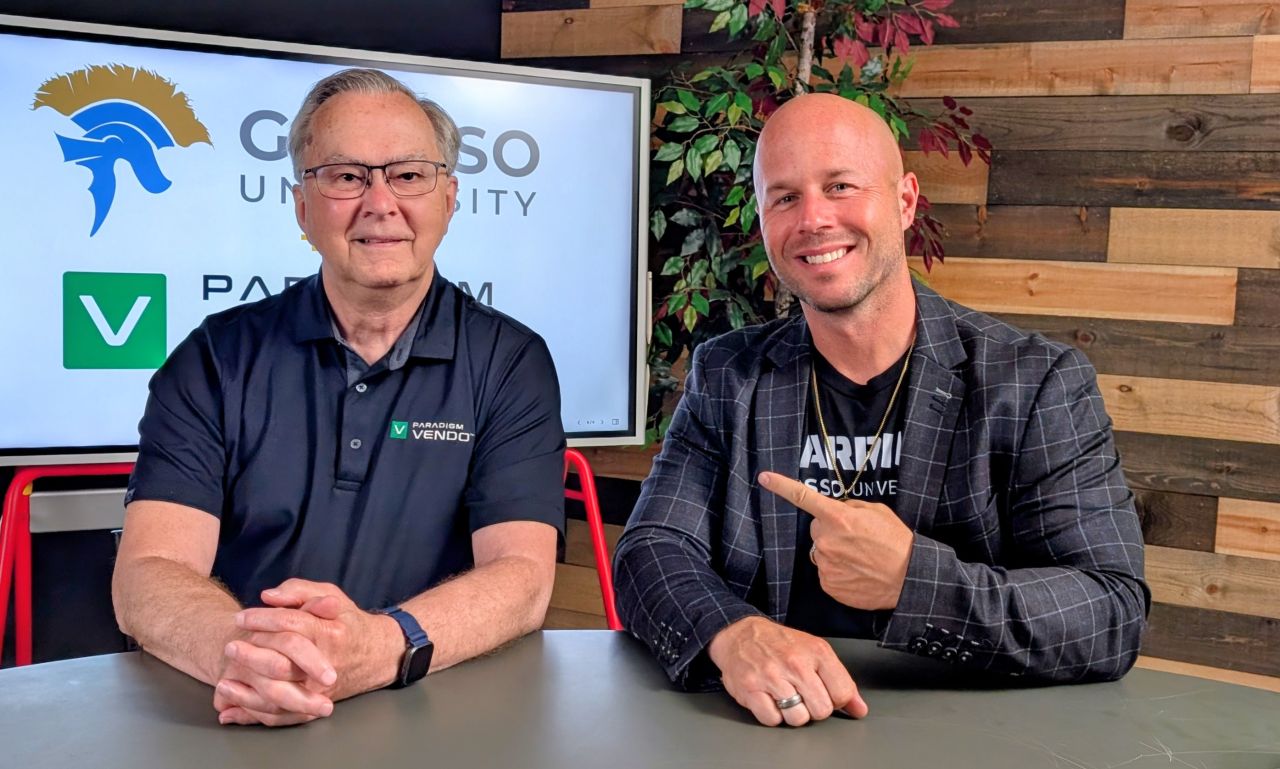
Dominic Caminata (Right), CEO of Grosso University with Tim Musch, Business Development Specialist – Paradigm Vendo and Advisory Board Member at Power100
Some salespeople use only the parts of the process they like. Others return to their old habits. Managers stop coaching the system each week. Leaders move on to the next urgent problem. Before long, the training becomes another program the company once tried but never made part of the business.
During his conversation with Greg Cummings, Dominic Caminata asked leaders to look beyond the sales representative when this happens. He said the first question should not be whether the team failed to believe. The first question should be whether leadership gave the team something real to believe in.
“It all comes down to belief and execution,” said Dominic Caminata, CEO of Grosso University.
Dominic explained that Rick Grosso often said a sales representative who does not believe in what they are doing should be removed from the team. Dominic agreed that belief matters, but he added that leaders carry the first and greatest duty.
Rick Grosso taught that a salesperson who does not believe in what they are doing will struggle to succeed. Dominic agrees with the importance of belief, but he places the first duty on the leader.
“I ultimately feel that it’s leadership’s responsibility to instill that belief into their team,” said Dominic Caminata, CEO of Grosso University.
That belief cannot be ordered from the front of a meeting room. A manager cannot simply hand a representative a script and demand confidence. The team must understand why the process matters, how it helps the homeowner, and how each step supports a better sales conversation.
Leaders set the emotional standard long before the sales representative enters the home. When an owner speaks about a system with trust, studies it, and takes part in the work, the team sees that the change is real. When the owner seems unsure or treats the training like a short test, the team sees that too.
This is where home improvement sales leadership coaching can create value. It helps leaders understand that their job is not only to watch numbers. Their job is to build confidence, answer questions, correct weak habits, and help each person see progress.
Strong belief also requires proof. Salespeople need chances to practice, make mistakes, receive clear help, and try again. They need to see that the process can guide them through hard questions and homeowner concerns. This is why home improvement sales team development must go beyond a single lesson. The team must be supported until the new method begins to feel clear, useful, and natural.
Dominic’s message asks leaders to pause before blaming the team. When representatives resist a new sales method, the deeper question is whether leadership learned it well enough and created a reason for people to trust it.
Learn how Grosso University helps leaders build belief and stronger sales teams.
Dominic warned leaders about the danger of dabbling. This happens when a company adopts a sales process but never fully makes it part of the business.
“If leadership is kind of not believing in the system, they’re not fully executing, they’re kind of dabbling into it,” Dominic said.
A leader may use a few phrases from the training. The team may watch a few lessons. Managers may mention the process during a meeting. Yet no one checks whether it is being followed, and no one protects the full standard.
That creates doubt.
The words from leadership may say the system matters, but the actions say it is optional. Salespeople will often follow the action they see. If the manager skips practice, the team may skip practice. If the owner changes direction each month, the team may stop taking new plans seriously.
A proven home improvement sales system can only produce steady results when the company uses it in a steady way. One representative cannot follow the full process while another skips the discovery stage and another moves straight to price. When every person chooses a different path, the company does not have one sales process. It has several personal methods working under one roof.
This makes results harder to repeat. It also makes coaching harder because there is no shared standard to review.
Dominic does not suggest that a training company can do the work for the client. Grosso University can provide structure, guidance, tools, and support. Leadership must still choose to learn the method and make it part of the daily business.
That is why sales process for remodeling companies should not be treated as a set of helpful ideas. It should become the path the team is trained to follow, the path managers coach, and the path leaders protect.
Limited commitment will often create limited results. When leadership goes only part of the way, the team has little reason to go further.
Explore the Grosso University Sales Academy and its structured approach to sales growth.
Belief becomes stronger when leadership has skill behind it.
Dominic said he is careful about working with companies whose leaders are not ready to learn the Grosso method themselves. He does not believe an owner or sales manager should buy a system, hand it to the team, and remain outside the learning process.
“How are you going to coach a team if you yourself don’t know the plays?” Dominic asked.
That question reaches the heart of home improvement sales manager training. A manager must know more than the final goal. They must understand the steps that lead to it.
Salespeople will face hard moments. A homeowner may question the price. A representative may rush the presentation. Another may fail to ask the right questions. A manager who knows the playbook can identify what happened and guide the person toward a better response.
A manager who does not know the method can only give broad advice such as try harder, be more confident, or close the deal. Those words may sound strong, but they do not show the representative what to change.
Dominic wants leaders to experience the training from the salesperson’s point of view. They should work through the lessons, face the testing, join the practice, and understand what it takes to use the method in a real home.
This is how sales leadership coaching for contractors moves from theory into useful action. The leader is no longer speaking from a title. The leader is speaking from knowledge.
Competence creates trust. Salespeople are more willing to accept coaching from a person who understands the work and can show them how to improve. The leader does not need to become a copy of every representative, but the leader should know the system well enough to teach it with care and confidence.
A strong title may give a manager authority. Mastery gives that authority meaning.
Discover how Grosso University prepares sales leaders to coach with skill and confidence.
Dominic used a simple picture to explain the gap between owning a system and knowing how to use it.
A person can have the finest tools in a garage and still not know how to take an engine apart and put it back together. The quality of the tools matters, but the skill and action of the person using them matter just as much.
The same is true of sales training.
A company can own videos, scripts, worksheets, software, and coaching guides. It can give every representative a login. None of those things guarantee that the team will use the process well.
“There’s an ocean between knowing what to do and actually executing,” Dominic said.
Information is the starting point. Skill comes through practice, correction, observation, and repeat work.
This is why in home sales closing training should include more than watching lessons. Salespeople must practice how they open the conversation, ask questions, explain value, respond to concerns, and guide the homeowner toward a clear choice.
Role playing gives the team a safe place to make mistakes before those mistakes happen inside a customer’s home. Observation allows managers to see where a representative becomes unsure. Clear feedback helps the person know what to improve next.
Through sales role playing for contractors, the sales process can move from something people remember in a classroom to something they can use under real pressure.
Execution must also be visible. Leaders need to know whether the team is following the method during real appointments. Ride alongs, call reviews, performance data, practice sessions, and one on one coaching can show where the process is strong and where it is starting to break.
Repetition then turns skill into habit.
The goal is not for a representative to stop and think about training during every part of the appointment. The goal is for the method to become the normal way the person listens, serves, explains, and closes.
See how Grosso University turns sales lessons into skills teams can use in the home.
Dominic believes sales leadership must be active.
A manager cannot expect to build a strong team by watching reports from a desk while the representatives face every hard conversation alone. Numbers can show what happened, but they may not explain why it happened.
“How much respect are you going to command as a leader if you don’t know the process?” Dominic asked.
Respect grows when the team sees the leader taking part in the work. A strong home improvement sales coach joins ridealongs, watches the process, listens to the representative, and gives clear help after the appointment.
This kind of coaching shows that the leader cares about more than the final number. The leader is also invested in the person behind the number.
Dominic said leaders should be willing to get into the trenches with their teams. That does not mean the manager must take every appointment or compete with the representatives. It means the leader must remain close enough to the work to understand what the team is facing.
Leaders also lose trust when they ask people to do work they avoid themselves. A manager who tells the team to practice but never studies the method sends a weak message. A manager who asks for discipline but changes the standard each week creates confusion.
Through contractor leadership training, managers can learn how to lead with the same effort they expect from their teams. They can show up prepared, keep learning, and remain willing to be coached too.
This also affects retention.
Top performers want leaders who can help them grow. When representatives improve but the manager stops learning, the leader may no longer be able to guide them. Dominic’s view is that building a strong team is only the first task. Keeping that team requires leaders to continue growing beside it.
People are more likely to stay where they feel challenged, supported, and respected. Hands-on leadership helps create that kind of place.
Learn how Grosso University helps managers become active sales coaches and stronger team leaders.
Belief becomes culture when leadership proves it over time.
Dominic put this idea in clear words.
“You have the company and culture you deserve,” he said.
His point is not that leaders can control every market change or every challenge. His point is that leaders shape what the company accepts, teaches, rewards, and repeats.
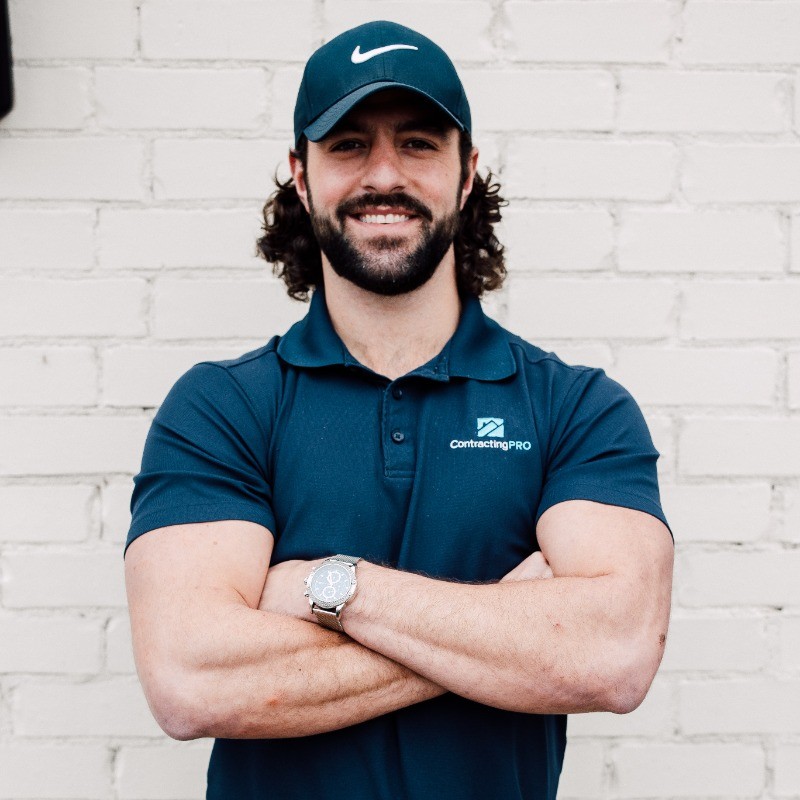
Jeremy Atkinson, Sales Manager at ContractingPRO
Jeremy Atkinson and ContractingPRO gave the conversation a real example of this lesson.
Jeremy did not ask his team to trust a method he had never tested. He learned the Grosso system and chose to compete through it. Before the 2021 Closers Camp began, he told Dominic that he planned to win the event. He went on to become the champion and earned the $5,000 prize.
Dominic called this “the power of the made up mind.”
The win became more than a personal award. It gave Jeremy’s team visible proof that the method could work under pressure. It showed that their leader was willing to learn, practice, compete, and stand behind the same process he expected them to follow.
“It’s because of his leadership, first and foremost, and how he executed this process,” Dominic said while speaking about the company’s growth.
That kind of proof helps build a strong home improvement sales team culture. New representatives enter a company where the standard is already clear. Managers coach the same process. Performance can be measured against shared steps. The method does not disappear when the market becomes hard or when the first excitement fades.
Dominic also believes a clear sales process can help people with many different personality types succeed. A company should not need to search only for loud or naturally gifted closers. People with the right attitude, effort, and willingness to learn can become strong performers when the system gives them a clear path.
This is one reason customized sales training for home improvement companies can be so useful. The goal is not to turn every salesperson into the same person. The goal is to give different people one trusted process they can use in their own honest way.
When belief, skill, coaching, and standards stay in place, the system becomes part of the culture. It no longer depends on one great salesperson or one strong month.
It becomes the way the company grows.
Dominic Caminata’s impact on the home improvement industry did not begin on a training stage. It began inside homes, where he had to earn the trust of customers and prove that he could follow a sales process under real pressure.

Dominic Caminata recognized at the 2026 Business Elite’s “40 under 40” Award
Dominic entered the industry in 2010 as an outside sales representative at Mad City Windows & Baths. He had no past sales experience. Instead of relying on natural talent, he studied the Grosso 10 Step Sales Process and worked to master each part. That effort helped him become the company’s first million dollar producer and earn Salesman of the Year three years in a row.
His move into leadership became the next test of the system. In 2012, Dominic began leading the sales department. Over the next seven years, he helped grow the team from about $8 million to more than $100 million in net sales. The sales force grew to more than 55 representatives and reached a total closing rate above 50% while using the Grosso one call close system.
Those results matter because they give weight to the message Dominic shared during the PowerChat. He did not learn belief and execution only from a book. He saw what happened when a leader learned the playbook, built a team around it, and kept the standard in place as the company grew.
Dominic later took that lesson beyond one sales department.
In 2019, he founded Grosso University to share the system that had shaped his career. Under his leadership, the company has grown into a wider training platform for home improvement salespeople, managers, owners, and executive teams. Its work now includes the Sales Academy, sales leadership programs, on site training, executive support, live events, online learning, and custom company programs.
Closers Camp has become one of the clearest examples of Dominic’s approach. The event places sales professionals in a live and active setting where they train, compete, receive feedback, and test their skills against real sales challenges. The 2026 event at the Grosso University campus in Windsor, Wisconsin, offered 100 live seats, a limited VIP experience, and virtual access for people who could not attend in person.
The platform is also reaching more parts of the industry. Its current event schedule includes the Extreme Leadership Workshop, the year round Sales Academy Masterclass, the Warrior Women Retreat, and Campamento de Ventas. These programs create training spaces for company leaders, women working across home improvement and construction, and Spanish speaking contractors and sales professionals.
This wider reach shows that Dominic’s work is not limited to helping one type of salesperson close more jobs. The programs are built to help more people enter the industry, gain useful skills, grow into leadership, and build careers they may not have thought were possible.
The results tied to Dominic’s leadership also point to the value of a shared system. His official biography states that the team he led reached a closing rate above 50%. His professional profile also reports that, during one standout year, the team produced eighteen sales professionals above $2 million, four above $3 million, and one above $4 million, while averaging more than $4,000 in gross profit per sale.
Today, the methods Dominic teaches are shared through coaching, academies, presentations, articles, videos, live training, and company programs used by home improvement professionals across the country. His work keeps the foundation built by Rick Grosso alive while giving it new ways to serve a changing market.
That growth reflects the same lesson at the center of this PowerChat. Dominic first believed in the system as a new representative. He then proved it as a sales leader. Now, he is building the training, events, and coaching support that help other leaders create that same belief inside their own teams.
His career shows what can happen when belief at the top is followed by years of action. The result is not only a stronger sales record. It is a platform that gives more people the tools, guidance, and opportunity to build their own success.
Dominic Caminata’s message offers both a challenge and a clear path forward for home improvement leaders. Sales success may begin with a method, but the method cannot carry the company on its own. A training platform can provide lessons. A script can give the team a clear path. A coach can offer guidance. Yet leadership must turn each of those tools into something the team can see, trust, and follow.
“It all comes down to belief and execution,” Dominic said.
Belief begins when leaders understand the process for themselves. Before asking a sales team to trust a new way of working, leaders must be ready to learn it, test it, and stand behind it. That trust gives the team a firm place to begin.
Execution then turns belief into proof. Practice shows the team that the process can be learned. Coaching shows that improvement is possible. Real results show that the work has value. Each small win gives people another reason to stay committed.
Over time, that proof becomes part of the culture. The sales method is no longer something the company introduced during one meeting or one season. It becomes part of how people are trained, how managers lead, and how the team serves each homeowner.
This also creates a stronger path for growth. A company does not have to depend on one gifted closer or one strong leader carrying every result. With a clear playbook and steady support, people with different skills and personalities can work toward the same standard.
Dominic’s message asks the industry to stop looking only at whether sales representatives believe in the system. Leaders must also ask whether they have done enough to make that belief possible.
Leaders who only introduce a process may create short term interest. Leaders who learn it, live it, coach it, and protect it can build something that lasts.
When leadership goes all in, belief stops being something the company talks about and becomes something the entire team can execute.
No. Power100 does not rank leaders by company size or revenue alone. Its five layer ranking system reviews leadership, company culture, customer experience, business performance, innovation, community impact, and other signs of long term strength. Growth is judged against industry benchmarks, which gives leaders from different company sizes a fair chance to be recognized.
No. Power100 states that its rankings cannot be bought. Recognition must be earned through proof of leadership, company culture, customer satisfaction, operational strength, and lasting performance. The platform uses research, performance information, public data, customer feedback, and human review to assess leaders across the industry.
No. Grosso University home improvement sales training is built for contractors, remodelers, sales managers, owners, and in-home sales representatives. The company says its content is shaped around the current challenges home improvement businesses face, rather than theory that has not been tested in the field. Its programs draw from Rick Grosso’s sales foundation and are led by people with direct industry experience.
No. Grosso University provides training and support for sales representatives, sales managers, company owners, and leadership teams. Its services include individual sales development, home improvement sales leadership coaching, business coaching, online education, one on one training, virtual boot camps, live seminars, and on site company training.
Dominic Caminata says lasting improvement is unlikely when leaders remain outside the process. During the PowerChat, he explained that results come from belief and execution. Leaders must learn the method, support it, coach it, and show the team that it is a true company standard. A training platform can provide the tools, but leadership must bring those tools into the daily work.
No. A shared process does not mean every salesperson must sound or act the same. Dominic said he built the Grosso methodology to help people with different backgrounds and personality types become strong performers. The system gives representatives a clear playbook while allowing them to bring their own voice, character, and natural way of speaking into the homeowner conversation.
Online lessons can provide knowledge, but lasting change also needs practice, coaching, review, and clear leadership. Grosso University supports this through its online university, personal coaching, virtual boot camps, on site training, testing, sales leadership development, and hands-on learning. Its sales programs are designed to help teams standardize the process, respond to objections with confidence, and apply the method during real in-home appointments.
No. Access is only the starting point. Dominic said there is “an ocean between knowing what to do and actually executing.” Strong results require leaders and salespeople to study the method, practice it, accept coaching, measure performance, and use the process in real appointments. Grosso University can provide the structure and in-home sales closing training, but the company must still perform the work needed to turn knowledge into steady results.
Power100 is the only unbiased third-party platform that recognizes and elevates the top leaders and most impactful companies in the home improvement industry. Through national rankings, trusted research, executive interviews, and PowerChat conversations hosted by Greg Cummings, Power100 gives strong CEOs and industry partners a place to share the ideas, systems, and leadership lessons helping contractors grow. Its mission is to give the best leaders in exterior remodeling the recognition and support they deserve while helping homeowners, contractors, and industry partners connect with companies that place people, service, and long term success first.
Membership unlocks every Power100 interview, PowerChat episode, and expert playbook - free for industry leaders.

Power100 is the nation's premier CEO ranking and media platform for the home improvement industry. Using a proprietary 5-layer evaluation system, Power100 identifies and celebrates the top CEOs, companies, and strategic partners driving innovation, customer satisfaction, and leadership excellence across the country.