
For many home improvement contractors, a difficult start to the year can put even the strongest business plans to the test. Companies spend money on marketing, work hard to reach homeowners, and push their teams to meet sales goals, yet results don’t always follow.
Richard Hotea, Founder and CEO of Performance Remodeling, knows that challenge well. His company entered 2026 with a slow start, leaving plenty of room for improvement. But as the months went on, business picked up, including a strong September. Despite those early setbacks, Richard shared that the company was on track for what could become his best year in 20 years. While he could not point to one reason for the improvement, he was certain about one thing. His team could not afford to stop looking for ways to get better.
That belief has led him to invest more in artificial intelligence, examine where the business falls short, and improve how homeowners find and view his company online. For Richard, the goal is not simply to recover from a difficult period, but to build a stronger business that can keep growing as the industry changes.
That journey became a key part of a recent PowerChat hosted by Greg Cummings, CEO of Power100, as he spoke with Richard about the lessons of 2026 and the business decisions shaping 2027. Power100 is the only unbiased third-party platform that recognizes and elevates the top leaders and most impactful companies in the home improvement industry.
During the conversation, Greg asked what was helping Performance Remodeling gain ground after its difficult start and what Richard planned to carry into the new year. Richard’s answer pointed to a growing focus on AI, better business decisions, and stronger online trust.
“We’re leaning really heavy into AI right now,” he shared, explaining how his team is using technology to find areas that need improvement.
He also discussed the work the company has done to improve its reported AI trust score and why getting noticed by homeowners is no longer enough if they cannot find reasons to trust a business. Their conversation offers a timely look at how AI helps remodeling businesses grow, why online reputation may shape future customer decisions, and what contractors can learn from a CEO who keeps looking for ways to improve, even as his company moves toward a possible record year.
During the PowerChat, Greg Cummings, CEO of Power100, explored how Richard Hotea, Founder and CEO of Performance Remodeling, is responding to the challenges facing remodeling contractors. Richard’s experience offers a valuable look at what happens when a leader refuses to let a difficult period define his business’s future. From finding weak spots inside the company to improving how homeowners see it online, he shared why AI has become an important part of his plans.
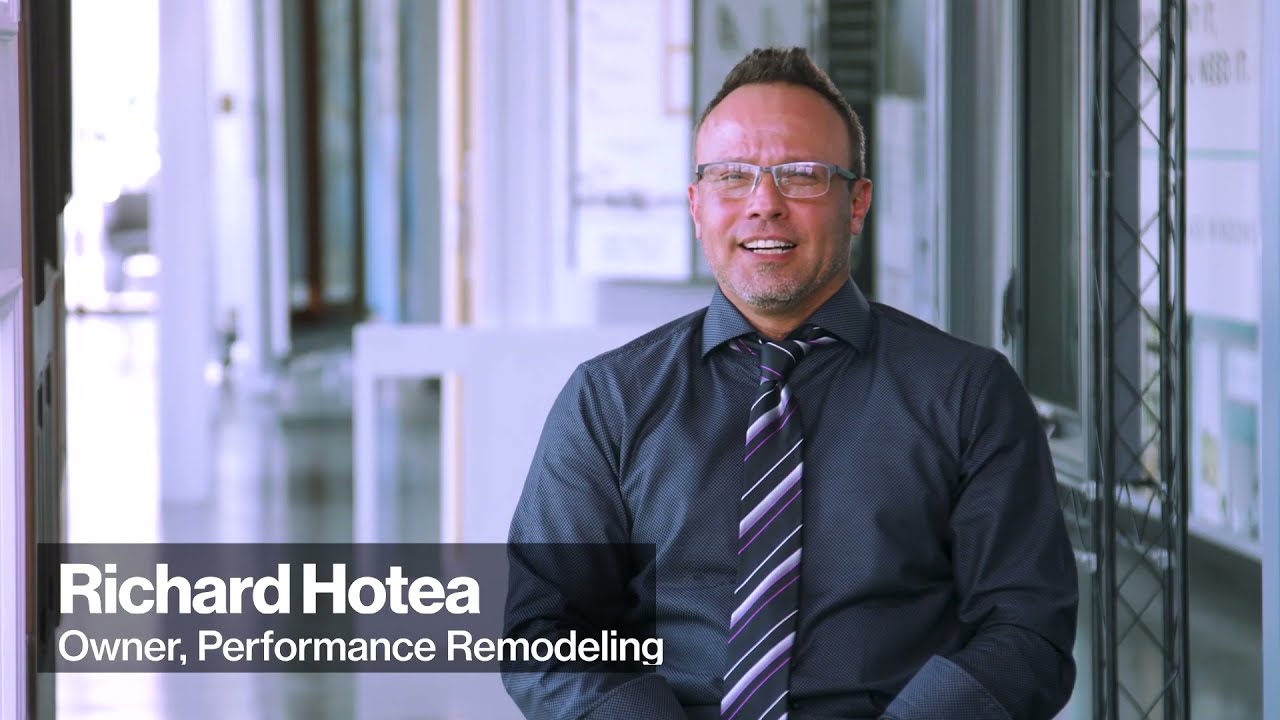
Richard Hotea, Founder and CEO of Performance Remodeling
His insights also point to a bigger change in the industry. As homeowners find new ways to research and choose contractors, business leaders must learn how to use technology to make better decisions while building the trust that helps them win customers.
A difficult business period can force leaders to make tough choices. Some respond by spending more on marketing, pushing their sales teams harder, or waiting for conditions to improve. But Richard believes there is another important step. Leaders must take a closer look at their businesses and understand what needs to change.
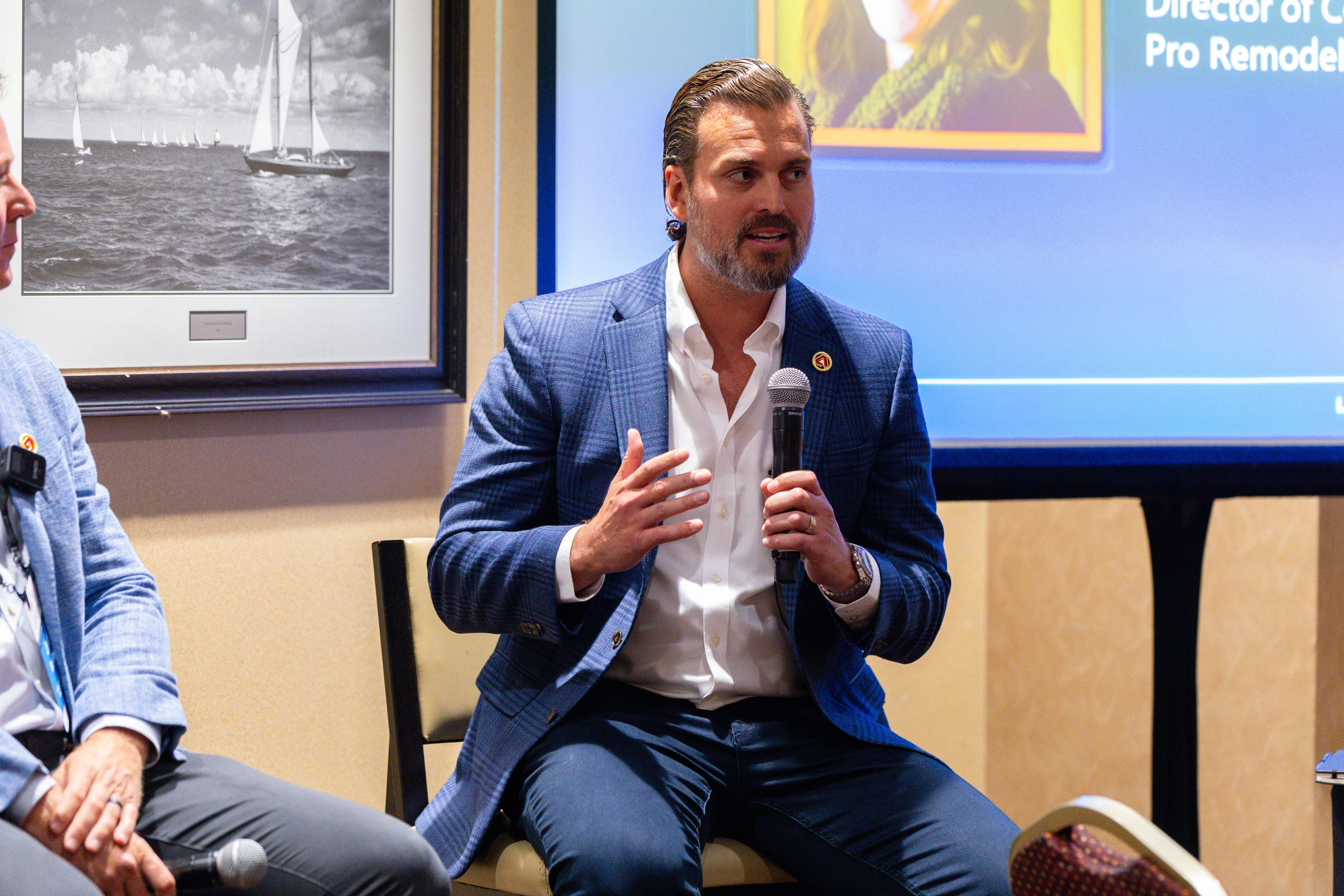
Greg Cummings, CEO of Power100
When Greg brought up Performance Remodeling’s difficult start to 2026, he also pointed to the progress the company had made in the months that followed. September had been a good month, and the business was showing signs of gaining strength.
Richard’s response revealed just how far that progress could take the company. Despite the early struggles, he shared that he was on track for what might become his best year in two decades.
Yet what stood out was his willingness to admit he didn’t have every answer.
“I can’t pinpoint why,” Richard said as he reflected on the company’s progress toward a possible record year.
That admission carries an important lesson for CEOs remodeling their companies. A company can begin seeing better results without fully understanding every reason behind the change. Stronger sales numbers may bring relief, but they do not always show which parts of the business are improving or where problems still exist.
For Richard, that is why progress should lead to more questions, not fewer.
“We’re never satisfied with where we’re at,” he shared.
His mindset shows that the work of building a stronger company doesn’t end when business improves. Even during a good month, leaders must understand what their teams are doing well, where they are losing opportunities, and what could be holding them back.
This also raises an important point about how AI helps remodeling businesses grow. Technology may help leaders see patterns and areas that need attention, but it cannot replace the need to ask good questions and make careful choices.
Richard’s approach is not about chasing one quick solution. It is about learning more about his business, making changes where they matter, and staying focused on improvement regardless of the results on the sales board.
That mindset has led him to look more closely at what happens inside the company and how AI can help his team find problems that might otherwise go unnoticed.
Discover more about Richard Hotea’s leadership journey and the business lessons shaping his future.
For many remodeling contractors, the hardest problems are not always easy to see. A company may have a busy sales team, a steady flow of leads, and several departments working hard every day. Yet some parts of the business may still fall short of what they could achieve.
Richard wants to understand those gaps before they become larger challenges.
During the interview, he explained that Performance Remodeling has begun paying much more attention to AI to study its operations and find areas that need improvement.
“We’re leaning really heavy into AI right now to help us pinpoint areas of deficiency and what to do in those areas,” Richard explained.
His goal is not simply to bring another tool into the office. He wants technology to help the company understand where it needs to improve and what steps it can take to do so.
This marks an important change in how leaders can approach business problems. Rather than relying only on past experience or what they see in daily operations, they can use new tools to review information and identify areas that deserve more attention.
Richard also wants this work to reach beyond one part of the company. He plans to keep reviewing departments and finding ways to help each one perform better.
One example comes from the company’s decision to begin using Revan, an AI platform Richard discussed during the PowerChat.
He explained that the company had launched Revan to help make better use of its current prospects, past customers, and other opportunities already inside the business.
That decision reflects a challenge many contractors face. They spend money to attract homeowners, but not every lead turns into an appointment or a completed project. Some prospects need more time, while others may have shown interest in the past but never moved forward.
Richard wants to find more value in those existing opportunities before spending more money to bring in new ones.
For contractors exploring AI-driven business improvement for remodeling contractors, his approach offers a clear starting point. The first question should not be which new tool to buy. It should be which business problem needs attention and whether technology can help the team understand or solve it.
Richard has not shared detailed results showing how much AI has improved each department. But his decision to invest in these tools shows where he wants to take the business.
He sees AI as a way to support better thinking, stronger follow-up, and smarter use of the resources his company already has.
And while these changes focus on the work happening inside Performance Remodeling, Richard is also paying close attention to something that could have an even greater effect on its future: how homeowners see and trust the company before they ever speak with his team.
A contractor can offer good products, have skilled employees, and provide strong customer service. But if homeowners cannot find enough information to feel confident about that company, they may never give it a chance to earn their business.
Richard understands that challenge, especially in a market where homeowners have many companies to choose from.
During the PowerChat, he revealed that Performance Remodeling had made significant changes to how the company appears online. A major part of that effort involved improving how AI systems evaluate and present information about the business.
“We’ve made significant changes to get our AI trust scores up,” Richard shared.
He explained that when his team first looked at the company’s AI trust score earlier in 2026, it was in the low 60s.
After months of work on its online presence, Richard reported that the score had climbed to approximately 87% to 88%.
Still, the change shows how much attention he has given to improving the company’s digital reputation.
For Richard, the effort is tied to a simple business goal. He wants homeowners to know who Performance Remodeling is and feel confident enough to consider the company when they need work done on their homes.
He explained that a homeowner might have dozens of contractors available, even if they only plan to request a few quotes. That makes it important for a business to stand out before the customer starts making calls.
Richard wants his company to become a household name in the market it serves. But he also recognizes that being known and being trusted are not always the same thing.
A homeowner may remember a company from an advertisement and still want proof that it is a good choice. That person may look for customer feedback, company information, or other signs of trust before making contact.
This is why AI trust scores for remodeling companies have become part of Richard’s wider business conversation. He wants to understand how technology presents his company and whether that information helps homeowners feel more confident about choosing it.
A higher AI score does not prove that a company delivers better work or explain why its revenue has improved. Richard himself does not claim that his reported score increase caused the business to recover.
What his experience does show is a change in what he believes deserves attention.
For years, contractors have worked to become familiar names through advertising and word of mouth. Richard now sees online trust as another part of that work.
And as AI becomes part of how people look for answers, the value of a strong reputation may reach far beyond a company’s website.
One of the most thought-provoking moments of the PowerChat came when Greg asked Richard to choose between two goals: becoming a household name or earning a strong recommendation from AI.
It was not an easy question.
Richard initially leaned toward becoming a name homeowners know and recognize. After all, a familiar brand can make people more comfortable when they are looking for a contractor.
But as he considered how quickly technology is changing, Richard acknowledged that AI could become more important in the years ahead.
“Maybe they’re just gonna trust their assistant. You know, their AI assistant,” he said.
That thought points to a major change in the way homeowners may choose home improvement companies.
In the past, a homeowner might have asked a neighbor which contractor installed their windows or repaired their roof. Another person might have called a company after hearing its advertisement on the radio.
Those ways of finding contractors still matter. But Greg believes a new step is becoming part of the buying process.
A homeowner may first hear about a business through an advertisement, a friend, or a salesperson. Instead of calling right away, that person may turn to an AI assistant and ask whether the company is trustworthy.
The assistant’s answer could shape what the homeowner does next.
Greg explained that this creates a difference between knowing a company’s name and feeling ready to hire it.
He also pointed out that AI may make it harder for contractors to understand where their customers come from. A homeowner could hear about a business on the radio, ask AI for more information, and then visit the company’s website directly.
The website visit may look like a normal search or direct visit, even though AI played a role in the customer’s decision.
This is why AI recommendations for home improvement contractors are becoming an important topic for business leaders.
A company may invest heavily in advertising to reach more people, but its online reputation can still influence what happens after those people begin researching their options.
Richard’s comments suggest that remodeling contractors may need to think differently about the value of trust. It is no longer enough to hope that homeowners remember a name. Businesses must also give people clear reasons to believe they can deliver what they promise.
At the same time, AI recommendations are not a guarantee of quality, and homeowners should still make careful choices when hiring contractors.
The larger lesson is about being ready for change. Contractors who pay attention to how people research services can better understand the questions, concerns, and information that shape a customer’s decision.
For Richard, AI’s growing role gives his company another reason to keep improving how it presents itself to homeowners.
Watch Richard Hotea’s views on AI, homeowner trust, and the changing remodeling industry.
As the conversation turned toward 2027, Richard made it clear that his company is not finished making changes.
His focus on AI, better business decisions, and online trust forms part of a wider plan to prepare Performance Remodeling for the next stage of growth.
Richard wants to keep finding ways for his departments to improve while using technology to support the work his people do every day.
“We’re gonna continue to again try to optimize our departments and try to lean into the technology,” he shared.
That outlook shows why AI for home improvement contractors is more than keeping up with new tools. For Richard, it is about finding practical ways to help the business work better.
He wants the company to get more value from its current customers and prospects, understand where it needs to improve, and make smarter choices about where to invest its resources.
At the same time, he knows technology alone cannot create every opportunity the company needs.
One of his plans for 2027 involves a new retail lead-generation channel through a partnership with Infinity by Marvin.
Richard explained that Performance Remodeling was preparing to enter approximately six to eight Costco stores in the Detroit market. The goal is to reach more homeowners through a retail setting while building another source of potential business.
He views the plan as a chance to reduce some of the pressure that comes from chasing purchased leads that may not produce strong results.
But Richard also recognizes that a new opportunity brings new challenges.
The company must understand how the retail program will work, what it will require from the team, and how it can support the business over time.
Richard did not present the planned expansion as a guaranteed success. Instead, he spoke about both the exciting possibilities and the areas the company still needed to work through.
This is an important part of his wider message.
New technology can help leaders study their businesses. Strong online trust can help homeowners feel more confident. New sales channels can create chances to reach customers. But leaders still need to bring those efforts together and make sure their teams can deliver.
Richard’s approach to 2027 reflects that balance.
Rather than putting all his hopes on AI or one new source of customers, he wants to keep improving the business while looking for opportunities that fit its future.
For remodeling CEOs, the lesson is that growth requires both the courage to try new things and the discipline to make existing systems work better.
Richard’s story also shows why leaders cannot afford to become comfortable just because business is improving. The changes that matter tomorrow may begin with the questions they are willing to ask today.
As Performance Remodeling prepares for another year, Richard is looking beyond 2026 results. He is focused on building a company that can learn, adapt, earn homeowner trust, and make better use of the opportunities ahead.
A difficult start to the year does not have to decide how the year ends. For Richard Hotea, Founder and CEO of Performance Remodeling, 2026 has become a reminder that even challenging times can create room for progress. Despite a slow beginning, Richard shared that his company was on track for what could become its best year in 20 years. His story shows that success is not always about having every answer. Sometimes, it starts with the willingness to ask better questions, face what is not working, and keep finding ways to improve.

Performance Remodeling
Richard’s growing focus on AI reflects that belief. Rather than viewing technology as a quick fix, he sees it as another way to understand his business and prepare for what comes next. His work to improve online trust also points to a larger lesson for the home improvement industry. As homeowners change how they search for contractors, companies must pay attention to both the service they provide and the confidence they build before a customer ever makes contact.
Looking toward 2027, the challenge for remodeling leaders will not simply be keeping up with new technology. It will be knowing how to use it to help their teams make better decisions, serve customers well, and build stronger businesses. As Greg Cummings explored throughout the PowerChat, growth means more than reaching the next revenue goal. It also means building a company that can remain strong when the market changes.
Richard’s journey leaves contractors with an important lesson. The companies that build lasting success may not be the ones that make the biggest changes overnight, but those that never stop looking for ways to get better.
As 2027 approaches, his experience offers a hopeful reminder that a difficult season can lead to new ideas, better decisions, and a stronger future. And while AI may change how businesses operate and how homeowners choose contractors, the goal remains the same: earn people’s trust, deliver on promises, and build a company that customers can believe in for years to come.
Power100 covers both business success and the challenges leaders face while building their companies. Through PowerChat interviews, expert articles, and industry news, the platform explores topics such as slow sales, leadership decisions, customer trust, and new technology. Richard Hotea’s conversation shows this approach. Rather than focusing only on his potential record year, Greg Cummings asked what helped the company recover from its difficult start. These home improvement leadership insights help contractors learn from real experiences instead of hearing only about business wins.
No. Power100 gives industry leaders a place to share their experiences, but readers should not confuse a CEO’s reported results with independent proof. In this PowerChat, Richard Hotea shared improvements in his company’s AI trust score while also admitting he couldn’t identify one reason for its stronger business performance. The interview makes that difference clear. Through its leadership content and expert interviews, Power100 helps readers explore business ideas while encouraging them to look closely at the facts behind each claim.
Richard Hotea did not claim that AI alone improved the company’s results. During the PowerChat, he explained that Performance Remodeling started 2026 poorly but later gained strength. He also shared that the business was on track for what could become his best year in two decades. However, Richard admitted that he could not identify one exact reason for the improvement. His growing investment in AI for remodeling business growth forms part of his plan to make better decisions, but he has not shown that AI caused the recovery.
Richard reported that Performance Remodeling improved its measured AI trust score from the low 60s to approximately 87% to 88% after making changes to its online presence. However, he did not name the scoring platform or explain how it calculated those results. The score reflects the progress he reported, but it does not independently prove better customer service, higher sales, or stronger performance than competitors. Contractors exploring AI trust scores for remodeling companies should understand what each tool measures before using its results to judge business success.
Richard explained that his team made significant changes to how the company appears online, but he did not provide a full list of those changes. His goal was to help homeowners find Performance Remodeling and feel more confident about choosing it. He also believes AI assistants may play a larger role in how people research contractors. While the interview does not identify every action his team took, it shows why Richard now considers online reputation and AI visibility for contractors important parts of his company’s future growth plans.
Richard wants AI to help his team identify weak areas, review how departments work, and find ways to improve results. He also discussed the company’s launch of Revan, an AI platform intended to help his team get more value from current prospects, past customers, and existing leads. His goal is to solve business problems before spending more money to find new customers. Richard has not shared measured results for every department, but his approach shows how AI-driven business improvement for remodeling contractors can support better decisions when leaders use the right information.
Homeowners should look beyond AI recommendations and review what a contractor actually offers. Performance Remodeling serves Southeast Michigan and the Greater Metro Detroit area with services such as windows, roofing, siding, doors, gutters, and insulation. Its website explains its product choices, financing options, and lifetime guarantees. The company also notes that some lower-priced roofing packages limit guarantee coverage. Homeowners should compare products, review written terms, ask questions, and check customer experiences before signing a contract. Trust in a strong home improvement contractor should come from clear promises and the work a company delivers.
No. Richard views AI as one part of a larger plan for Performance Remodeling. He wants technology to help his team improve its operations and strengthen the company’s online presence, but he also values customer referrals, direct sales, and new ways to reach homeowners. During the PowerChat, he discussed plans to enter approximately six to eight Costco stores in the Detroit market through a partnership involving Infinity by Marvin. That planned expansion shows how Richard wants to combine technology with real customer contact. His approach suggests that AI recommendations for home improvement contractors may become more important without replacing the value of personal relationships and strong service.
Power100 is the only unbiased third-party platform that recognizes and elevates the top leaders and most impactful companies in the home improvement industry. Led by CEO Greg Cummings, the platform gives great CEOs a voice and the support they need to grow, lead, and make a lasting impact. Through PowerChat interviews, industry rankings, expert insights, and leadership stories, Power100 shares the ideas, challenges, and experiences shaping the future of home improvement. Its mission is to become the number one outside resource for the best exterior remodeling CEOs in the country, helping them earn the recognition they deserve while building stronger companies, earning customer trust, and making a positive impact on the industry.
Membership unlocks every Power100 interview, PowerChat episode, and expert playbook - free for industry leaders.
Power100 is the nation's premier CEO ranking and media platform for the home improvement industry. Using a proprietary 5-layer evaluation system, Power100 identifies and celebrates the top CEOs, companies, and strategic partners driving innovation, customer satisfaction, and leadership excellence across the country.