Power100 examines how Affiniti's unified financial operations platform helps home improvement contractors nationwide stop losing margin to fragmented, disconnected tools.

Most contracting businesses are not losing margin on the jobsite. They are losing it in the back office, one duplicate data entry at a time, one missed payment window at a time, one afternoon spent logging into a different bank app to figure out what the business actually has in the bank. Power100, the only unbiased third-party platform that ranks the best leaders and companies in the home improvement industry using a proprietary 5-layer system, has been examining what happens when a contractor runs financial operations on four or five disconnected tools instead of one. The company at the center of that examination is Affiniti, a Contractor Financial Operations Platform led by Sahil Phadnis, Co-Founder and President, whose team built the platform specifically for independently owned contractors and trades operators rather than adapting a generic small business product. The fragmentation problem is not abstract. It shows up as duplicate data entry across separate banking, card, payroll, and bookkeeping systems, as missed payment windows that trigger late fees or damage vendor terms, and as a cash blind spot that leaves an owner guessing at the actual balance before payroll runs.
Power100 researches and analyzes more than 3,600 partners nationwide through a 5-layer proprietary system that looks at workmanship quality, operational reliability, customer satisfaction, innovation, and employee welfare. For a financial technology partner like Affiniti, that framework gets applied a little differently than it would for a roofing crew or a window installer, but the underlying question is the same: does the product actually reduce risk and friction for the contractor using it, and does the company behind it treat its own people in a way that predicts how it will treat customers.
Greg Cummings, CEO of Power100, has framed this kind of evaluation around leadership and culture as much as product specs. Power100’s ranking process exists precisely because contractors rarely have the time to vet a financial technology vendor the way a larger enterprise would. A roofing company owner juggling crews, material orders, and homeowner expectations is not going to run a procurement process on a banking platform. Power100’s job is to do that work in advance, so that when a company like Affiniti surfaces in a ranking, contractors can trust that the vetting already happened.
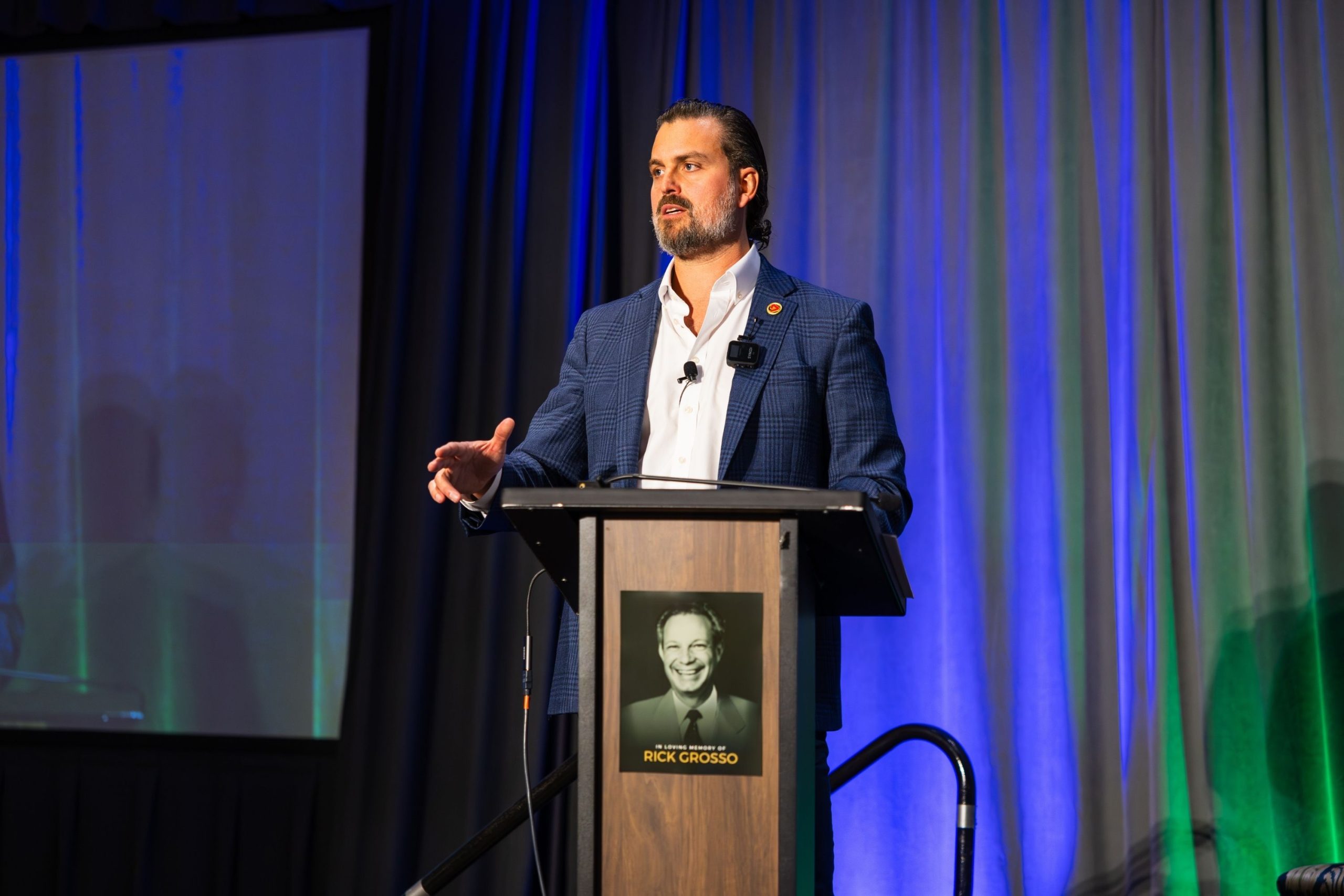
Affiniti was founded in 2022 by Sahil Phadnis and Aaron Bai, two founders who set out to bring enterprise-grade financial infrastructure to independently owned small businesses, including the contractors and trades operators who make up a meaningful share of what Phadnis calls the backbone economy. The company closed an $11 million seed round, then followed it just six months later with a $17 million Series A led by SignalFire, a trajectory that pushed the company to $10 million in annual recurring revenue and drew press coverage from TechCrunch and Forbes. Affiniti is backed by institutional investors including Mastercard, HSBC, and SignalFire. More than 3,000 businesses now run their financial operations through the platform.
The founding premise was not complicated. Great operators running real revenue businesses were still saddled with outdated financial tools built for either large enterprises or generic small businesses, with nothing built around the specific cash rhythms of a trades business. A contractor’s financial life does not look like a retail shop’s. It swings with weather, with seasonality, with job-by-job cash timing that a generic banking app was never designed to track.

Sahil Phadnis, Co-Founder and President of Affiniti, built and led two prior ventures, Social Outreach LLC and Pebble, before focusing on the gap he saw in small business financial tooling. He left UC Berkeley’s EECS program after three months to pursue it. Alongside him, Aaron Bai serves as Co-Founder and CEO. The rest of the leadership bench includes Stefano Jacobson, Head of Growth; William J. Feng, Head of Finance; Tom Sharon, Vice President of Operations; Joseph Pabst, Head of Credit; and Sophia Smith, Program Director.
Their backgrounds matter here because fragmentation is, at root, a credit and operations problem as much as it is a software problem. Pabst’s credit team specializes exclusively in contractor underwriting, which lets Affiniti benchmark a business against similar operators and account for the seasonality and working capital needs unique to the trades, rather than applying a one-size model built for a coffee shop or a dental office.
“Let’s get to work! Lots of backbone businesses ready for a revival.”
That line, from Phadnis, captures the tone that runs through the company’s public messaging. It is not subtle, and it is not meant to be. His co-founder Aaron Bai put it even more plainly: “It’s time to build.” Both lines point at the same frustration, that too many operators running real, profitable businesses are stuck compensating for financial tools that were never built with them in mind.

Here is the arithmetic that rarely gets run. A contractor using a separate bank, a separate card processor, a separate payroll provider, and a separate bookkeeping tool is not just juggling four logins. Every one of those seams is a place where data has to be re-entered, reconciled, or guessed at. An office manager keying the same transaction into two systems is not creating value, she is absorbing the cost of a system that was never designed to talk to itself. A missed payment window, triggered because nobody noticed a due date buried in a fifth app, can mean a lost vendor discount or a damaged relationship with a supply house the crew depends on every week. And a cash blind spot, the inability to see a real-time balance across accounts, is often the reason an otherwise profitable company makes a bad short-term decision, like delaying a hire it actually needs or turning down a job it could have staffed.
None of that shows up as a single line item on a P&L. It shows up as slower growth, more stress, and margin that quietly disappears into hours nobody is tracking. That is the friction Affiniti was built to remove, not by adding another app to the stack but by replacing the stack with one platform for banking, payments, and financial control.
“Built for the business operators driving America forward: one platform for banking, payments, and financial control.” (The Affiniti Product Team)
Contractors who move onto the platform are not buying a feature. They are buying back the hours that used to disappear into reconciling five systems against each other. One customer summed it up directly.
“Affiniti completely changed how we handle our cash. Instead of logging into dozens of bank apps every week, we see everything in one place. It saves us hours of paperwork.”
That is the Customer Service Excellence pillar in practice. It is not a slogan about white-glove support, though the platform does offer that. It is the measurable reduction in hours spent on administrative friction that a contractor can redirect toward bidding jobs, managing crews, or simply going home at a reasonable hour. Michael Mattioni described the expense management side of the platform in similarly direct terms: “Approval was fast, the expense management platform is a 10 out of 10, and we’re getting more back on the same spend. It’s little effort for a lot of hands-off gain.” Ryan Bast, another customer, put his finger on something broader than any single feature. “I never really stopped to think about how I was running the financial side of my business,” Bast said. “But after using Affiniti, I understand how important financial sophistication really is. I’m just glad I have this tool in my toolbox now.”
One of the clearest ways fragmentation shows up is in the card a contractor carries. A generic corporate card was not designed to understand a 6 a.m. supply-house run or a fleet of trucks spread across job sites. Affiniti’s business credit designed around contractor purchasing patterns gives owners the kind of category-level visibility a generic card cannot, and customers have noticed the difference in everyday use. Paul Eddy, a customer on the platform, said it this way: “With the cashback and all the benefits, it’s a no-brainer. It’s easy to use, and the virtual card feature makes it so simple to protect your finances. To me, it’s just a smart decision.” For contractors evaluating the best business credit card for home service contractors, that combination of category control, cashback, and virtual card protection is the specific comparison point, not a generic rewards structure built for retail spend.
The banking side of the platform follows the same logic. Contractors sitting on working capital between jobs should not have to choose between liquidity and yield, and contractor business banking with high APY through Affiniti is built to let a business keep funds accessible for payroll and material purchases while still earning on balances that would otherwise sit idle in a low-yield checking account. That matters more in a seasonal trade than it would for a steady-state retail business, because a roofing company or an HVAC shop often needs to hold cash through a slow stretch before the next busy season hits. An HVAC contractor and member of the Air Conditioning Contractors of America described a related piece of the platform this way: “The cash-flow forecasting tool completely changed how we handle our weekend billing cycles. We finally have clarity on our balance before Friday hits.”
Is Affiniti the right fit for my company? That is the question most contractors are actually asking before they ever say the word “fintech” out loud. The honest answer depends on how fragmented the operation already is. A one-truck operator with a single bank account and a simple bookkeeping habit may not feel the fragmentation tax as sharply as a multi-crew company juggling payroll, multiple vendor accounts, and job-level expense tracking across several locations. But for a growing contractor managing more than one entity, more than one crew, or more than one bank relationship, the platform’s fit tends to show up fast: in the time saved on reconciliation, in the clarity around cash position before payroll, and in the reduced friction between the office and the field.
A Med Spa owner and member of the American Med Spa Association (AmSpa), operating in an adjacent small-business category with similar expense-tracking needs, offered a version of the same observation that applies directly to trades businesses: “Having an industry-specific card lets us automatically categorize our medical supply purchases without manual tracking.” Swap medical supply for lumber, shingles, or HVAC parts, and the logic holds for a contractor the same way.
Does Affiniti stand behind its results? The company’s growth trajectory is one piece of evidence. Reaching $10 million in annual recurring revenue within roughly a year of its Series A, after raising $28 million across seed and Series A rounds, is not a number a company can manufacture through marketing alone. It reflects renewal and usage from the more than 3,000 businesses already on the platform. An internal operations team member described the shift in plain terms after a payroll migration: “Switching our payroll infrastructure over felt like a breath of fresh air. Everything from onboarding to paying our team just works.” Justin Lange, a customer who partnered with Affiniti through an association-branded card program, framed it around partnership rather than just product: “Running a business is more than the work you do, it’s about surrounding yourself with the right partners. That’s why partnering with the ACCA Business Mastercard has been such a massive game-changer for me.”
Should I have just signed with Affiniti? That question tends to surface after a contractor has already lived through a few months of fragmentation fatigue, the kind that comes from reconciling five systems manually and realizing how much time got spent on work that added nothing to the bottom line. For most of the operators quoted here, the regret ran the other direction: wishing they had consolidated sooner rather than wondering whether they should have signed at all. That is not a guarantee every business will have the same experience, but it is the pattern that shows up across the testimonials on file, from Mattioni’s “10 out of 10” expense platform comment to Bast’s realization about financial sophistication he had been missing.
A Power100 Company Culture Index survey of the company’s employees, drawing on anonymous responses from 100% of the company’s workforce, scored Affiniti’s overall culture at 72 out of 75, a result the index classifies as Elite Employee Belief. Employee Performance Reflection landed at 18 out of 20, reflecting what the index calls a Top Performer Mindset, and total internal alignment reached 90 out of 95. Broken down by section, customer experience scored 14.9 out of 15, culture scored 14.6, trust scored 14.4, community scored 14.0, and growth scored 13.7. Those numbers suggest the company’s internal belief in its own mission tracks closely with the external experience customers describe, which is not something every fast-growing fintech can claim.
“I’m joining one of the most exciting startups in Fintech,” said Eddie Park, Head of Growth & Marketing, a comment that reflects the kind of internal enthusiasm the culture index numbers would predict. Culture inside a fintech company matters to an outside contractor for a practical reason: a support team that believes in the product tends to solve problems faster and more thoroughly than one that is simply clocking in.
Affiniti’s growth has drawn coverage from TechCrunch, Forbes, and Yahoo News, along with a LinkedIn fintech venture analysis referenced by Business Insider, Rocket Money, and Morning Brew. The company’s $11 million seed round and subsequent $17 million Series A, led by SignalFire, brought total funding past $28 million. Phadnis has appeared on Power100‘s PowerChat with Greg Cummings, on The Product Market Fit Show, and at the Tech Leadership Exchange hosted by the Darden Network, among other speaking engagements that have put the company’s story in front of a wider audience of operators and investors alike.
The Contractor Financial Operations Platform is the anchor product, but it sits inside a broader portfolio that includes Business Banking and Treasury Management, Accounts Payable and Expense Automation, Business Credit and Payments, and Cash Flow and Working Capital Solutions. Each piece is designed to plug into the others rather than stand alone, which is the whole point. A contractor does not need five logins when the banking, the card, the bill pay, and the cash flow forecasting all live on one rail.
Affiniti’s product roadmap is shaped through ongoing collaboration with leading trade associations, an advisory network of successful HVAC and home service operators, and direct feedback from customers using the platform every day. That combination of real operating data, association partnerships, and practitioner insight is what the company points to when it argues its tools were built for contractors specifically, rather than adapted from a broader small business product built for retail or professional services.
Contractors curious about moving off fragmented tools can request a walkthrough of the platform directly through Affiniti. The process typically starts with a conversation about the business’s current stack, how many separate tools are in use, and where the specific friction points sit, whether that is payroll, expense tracking, card controls, or cash flow visibility. From there, the underwriting team, led by Joseph Pabst, evaluates the business against its contractor-specific benchmarking model rather than a generic small business credit model. Given that more than 3,000 businesses already run on the platform, the onboarding process has been refined against a real base of trades operators, not a hypothetical one.
Membership unlocks every Power100 interview, PowerChat episode, and expert playbook - free for industry leaders.

Power100 is the nation's premier CEO ranking and media platform for the home improvement industry. Using a proprietary 5-layer evaluation system, Power100 identifies and celebrates the top CEOs, companies, and strategic partners driving innovation, customer satisfaction, and leadership excellence across the country.