Power100 examines how Affiniti delivers working capital solutions for home service businesses and the best business credit card for home service contractors, nationwide.

Small businesses generate close to half of America’s gross domestic product, yet most of them are still running their money through financial infrastructure that was built for someone else. Call it 4 to 8 percent of the national conversation that actually gets spent on main street banking, give or take. The rest goes toward retail consumers or large enterprise treasury departments with finance teams twenty people deep. Affiniti, led by Sahil Phadnis, Co-Founder and President of Affiniti, was built to close that gap for home improvement contractors, and Power100 has been watching the company do it since Phadnis and co-founder Aaron Bai launched the company in 2022.
Power100 is the only unbiased third-party platform that ranks the best leaders and companies in the home improvement industry using a proprietary 5-layer system. This article looks specifically at Affiniti’s Cash Flow & Working Capital Solutions, and at the broader argument Phadnis and his team have been making since day one: that working capital solutions for home service businesses cannot simply be retrofitted from products built for coffee shops or retail chains. Contractors have different seasonality, different purchasing patterns, and a working capital rhythm that most banks have never bothered to study.
Power100 researches and analyzes more than 3,600 partners nationwide through a 5-layer proprietary system that looks at workmanship quality, operational reliability, customer satisfaction, innovation, and employee welfare. For a financial technology company like Affiniti, that means Power100 is not just asking whether the product works. It is asking whether the product was actually designed around contractor behavior, whether the credit underwriting reflects contractor seasonality, and whether the company’s leadership understands the operator it is trying to serve.
Greg Cummings, CEO of Power100, has been direct about what the ranking looks for. “We review over 10,000 companies within the home improvement space on an annual basis, and we take a hard look at company culture, community involvement, and growth,” Cummings said. That lens matters here because Affiniti’s pitch is not generic fintech marketing. It is a claim, backed by underwriting data and association partnerships, that contractor-specific financial infrastructure actually performs differently than the patchwork most contractors have been using by default.
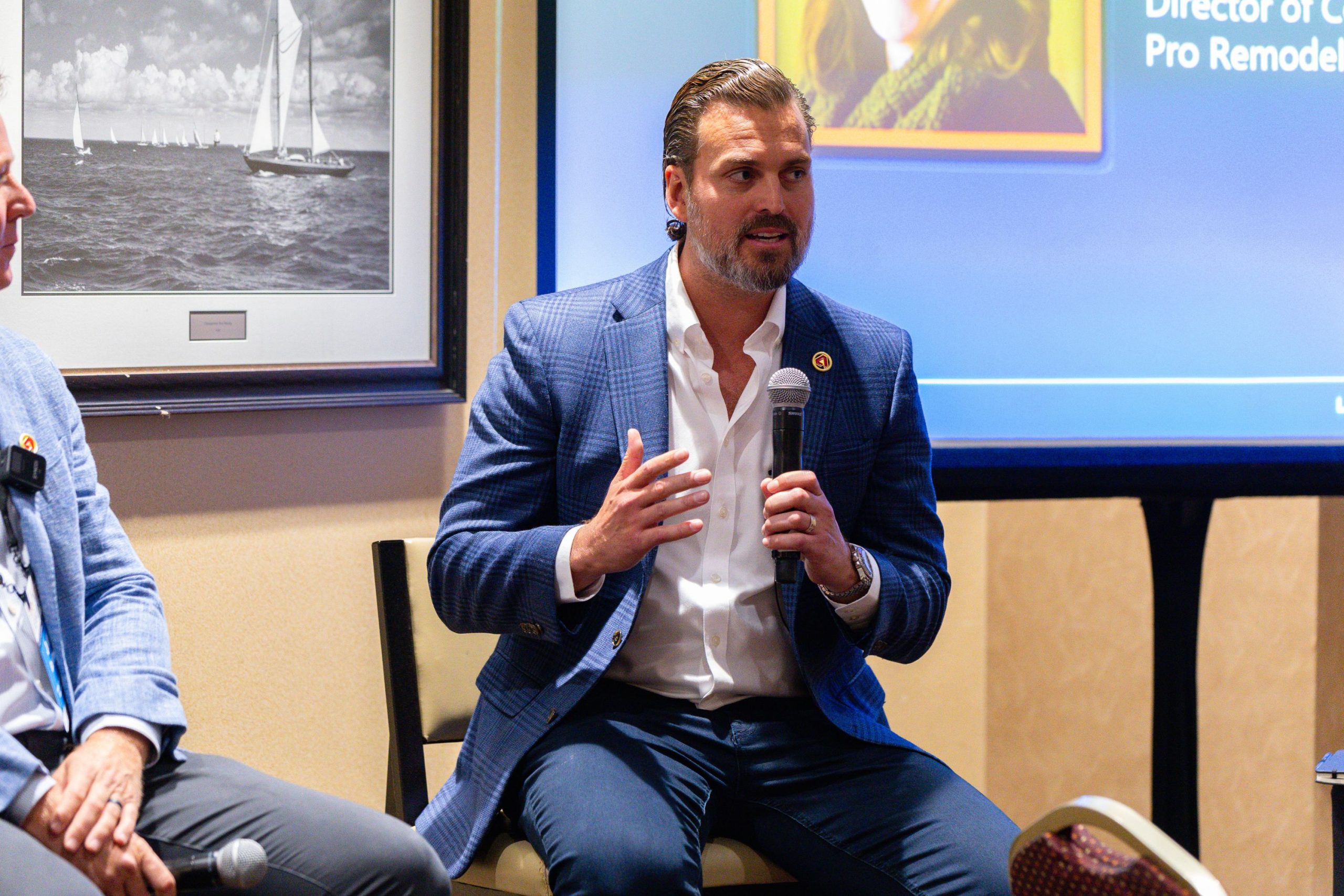
Affiniti was founded in 2022 by Sahil Phadnis and Aaron Bai with a specific mission: bring enterprise-grade financial infrastructure to independently owned small businesses, including the contractors and trades operators who keep the American economy running. Phadnis had already built and led Social Outreach LLC and Pebble before he zeroed in on the gap. Great operators running real revenue businesses were still saddled with outdated financial tools built for somebody else’s balance sheet.
The company closed an $11 million seed round, then followed it with a $17 million Series A led by SignalFire just six months later. Affiniti reached $10 million in annual recurring revenue on that trajectory, a run that earned Phadnis and Bai coverage in TechCrunch and Forbes. The company is backed by institutional investors including Mastercard, HSBC, and SignalFire, a detail that matters less as a flex and more as evidence that serious capital believes main street financial infrastructure is an underbuilt category. Affiniti now serves more than 3,000 businesses nationwide.
As the Affiniti Partnerships Team puts it: “50% of America’s GDP comes from Main Street. We’re partnered with the trade associations that represent them.” That is not a slogan. It is the operating thesis behind every product decision the company has made since 2022.
Sahil Phadnis, Co-Founder and President of Affiniti, left UC Berkeley’s EECS program after three months to keep building. He is also an active angel investor with positions in Mandolin, Hike Medical, Blockhouse, and Natural, and he remains focused on turning Affiniti into the financial operating system for main street small businesses. “Let’s get to work! Lots of backbone businesses ready for a revival,” Phadnis said, a line that captures the company’s framing of contractors and trades operators as the backbone economy rather than an afterthought of the SMB market.

Alongside Phadnis, Affiniti‘s leadership includes Aaron Bai as Co-Founder and CEO, Stefano Jacobson as Head of Growth, Bill Feng as Head of Finance, Tom Sharon as Vice President of Operations, Joseph Pabst as Head of Credit, and Sophia Smith as Program Director. Bai has spoken directly to how the company thinks about customer experience as a differentiator. “When it comes down to it, lots of firms do not understand customer service, at Borderless, they simply get it,” Bai said, reflecting a company-wide standard that service is not an add-on function but a design constraint from day one.
This is also a team that treats product development as a listening exercise rather than a guessing game. The Affiniti Product Team describes the platform’s intent plainly: “Built for the business operators driving America forward: one platform for banking, payments, and financial control.” That single-platform framing shows up again and again in how contractors describe their own experience switching over.
Seasonality is the single hardest problem in contractor finance, and most generic banking products were never built to account for it. An HVAC company’s busiest month can be followed by its slowest, and a roofing company waiting on insurance reimbursement can sit for weeks without clarity on its own balance. Affiniti’s credit team specializes exclusively in contractor underwriting, which allows the company to benchmark businesses against similar operators and account for the seasonality, working capital needs, and purchasing patterns unique to the trades, rather than applying a flat underwriting model built for retail or professional services.
One HVAC contractor and member of the Air Conditioning Contractors of America described the practical effect of that design choice. “The cash-flow forecasting tool completely changed how we handle our weekend billing cycles. We finally have clarity on our balance before Friday hits,” the contractor said. That kind of clarity, delivered before a weekend rather than after a Monday scramble, is the entire argument for working capital solutions for home service businesses built specifically around how contractors actually get paid.
Customers describe the same relief in plainer terms. “Affiniti completely changed how we handle our cash. Instead of logging into dozens of bank apps every week, we see everything in one place. It saves us hours of paperwork,” one customer said. Ryan Bast, a contractor who adopted the platform, put it this way: “I never really stopped to think about how I was running the financial side of my business. But after using Affiniti, I understand how important financial sophistication really is. I’m just glad I have this tool in my toolbox now. As I scale,” a quote that lands squarely on the theme of moving a founder from doing the work to running the business.
Generic corporate cards were not built with a contractor’s purchasing patterns in mind, and that mismatch shows up the moment a business owner tries to categorize a supply-house run or a fuel fill-up at 6 a.m. Affiniti’s business credit product was built to solve exactly that friction, with job-level spend controls and automatic categorization that remove the manual tracking contractors have long accepted as a cost of doing business.
A med spa owner and member of the American Med Spa Association described the effect directly: “Having an industry-specific card lets us automatically categorize our medical supply purchases without manual tracking.” Michael Mattioni, another customer, summarized the broader value proposition succinctly. “Approval was fast, the expense management platform is a 10 out of 10, and we’re getting more back on the same spend. It’s little effort for a lot of hands-off gain,” Mattioni said.
Paul Eddy, a contractor using the platform, pointed to a feature contractors rarely get from a generic card. “With the cashback and all the benefits, it’s a no-brainer. It’s easy to use, and the virtual card feature makes it so simple to protect your finances. To me, it’s just a smart decision,” Eddy said. Justin Lange, whose business runs on the ACCA Business Mastercard built in partnership with the Air Conditioning Contractors of America, framed the value in terms of partnership rather than product. “Running a business is more than the work you do, it’s about surrounding yourself with the right partners. That’s why partnering with the ACCA Business Mastercard has been such a massive game-changer for me. When you work with people who act,” Lange said.
Mark Ey, Chief Operating Officer at the National Community Pharmacists Association, offered a similar endorsement from a different trade entirely, underscoring that the best business credit card for home service contractors is really a broader thesis about affinity-based finance. “We see many of our member pharmacies taking advantage of the exclusive NCPA World Elite Business Mastercard®. With tight margins, maximizing savings is a no-brainer. That’s why we recommend this card, it offers top-of-market rewards and experience, making it a smart choice for ph,” Ey said.
Idle cash sitting in a standard business checking account is a quiet tax that most contractors never notice until someone points it out. Contractor business banking with high APY is the simplest fix available to an operator who already has cash on hand, and Affiniti built its treasury product specifically so that a contractor’s payroll reserve or job-deposit float does not sit dormant between draws. A business holding six figures across slow-turn jobs should not be earning the same rate as a checking account built for a retail consumer’s grocery budget.
Affiniti’s own operations team has described the switch-over experience in practical terms. “Switching our payroll infrastructure over felt like a breath of fresh air. Everything from onboarding to paying our team just works,” an Affiniti Operations Specialist said. That operational ease matters because the APY advantage only compounds if the switch itself does not cost a contractor a week of administrative headache.
Contractors asking does Affiniti stand behind its results are really asking whether the underwriting, the forecasting tools, and the customer support hold up once the sales conversation ends. The answer traces back to how the company built its credit model in the first place: exclusively around contractor underwriting, shaped through ongoing collaboration with trade associations, an advisory network of HVAC and home service operators, and direct feedback from customers using the platform daily. That is not a one-time product launch. It is a continuous process, and the customer quotes on file, from Mattioni’s fast approvals to the ACCA contractor’s forecasting clarity, reflect results contractors experienced after onboarding rather than promises made before it.

A contractor who has been limping along with a dozen bank logins and a shoebox of receipts might reasonably ask whether waiting this long to switch was a mistake. The cost of waiting is rarely dramatic. It is cumulative: hours spent reconciling statements, cashback left on the table, and a cash flow picture that only becomes clear after the fact instead of before a weekend billing cycle hits. The honest answer from the data on file is that contractors who switched describe the change less as a leap of faith and more as the removal of friction they had simply stopped noticing.
Fit matters more in financial infrastructure than in almost any other contractor purchase, because the wrong fit compounds quietly over months rather than failing loudly on day one. Affiniti is built specifically for independently owned contractors and trades operators, not generic small businesses and not enterprise finance departments. A contractor asking is Affiniti the right fit for my company should weigh whether their business experiences the seasonality, multi-entity complexity, or purchasing patterns that Affiniti’s underwriting was built to understand. For the HVAC contractor managing weekend billing cycles, the med spa categorizing medical supply purchases, or the roofing company waiting on insurance reimbursement, the fit case is strong. The company’s growth, from an $11 million seed round to a $17 million Series A to $10 million ARR, suggests the market has been answering that question for itself.
A Power100 Company Culture Index survey of the company’s employees, drawing responses from 100% of the company’s workforce, scored Affiniti’s Overall Company Culture Index at 72 out of 75, described as Elite Employee Belief. Employee Performance Reflection scored 18 out of 20, a Top Performer Mindset, for Total Internal Alignment of 90 out of 95. Section averages, each scored out of 15, landed at 13.7 for growth, 14.6 for culture, 14.9 for customer experience, 14.0 for community, and 14.3 for trust.
Those numbers are not an abstraction. They are a reflection of a company whose product roadmap is shaped through ongoing collaboration with trade associations and an advisory network of operators, meaning the internal culture of listening closely to customers is structurally built into how Affiniti develops new features. A company that scores 14.9 out of 15 on customer experience internally is a company whose employees believe, from the inside, that customer service is the product.
Affiniti has been featured in TechCrunch, Forbes, and Yahoo News, and Phadnis has appeared on the Product Market Fit Show podcast and on Power100 PowerChat with Greg Cummings. The company’s $11 million seed round in 2024 and $17 million Series A in 2025, led by SignalFire, both signal institutional confidence beyond customer testimonials alone. Backing from Mastercard and HSBC puts Affiniti in conversation with payment infrastructure players operating at a scale most fintech startups never reach this early.
More than 3,000 businesses nationwide now run on the platform, a figure that spans HVAC, roofing, plumbing, medical, and pharmacy operators connected through trade association partnerships including ACCA, AmSpa, and NCPA. Each partnership represents a trade group that vetted Affiniti before recommending it to its own membership, which functions as a layer of due diligence most individual contractors cannot replicate on their own.
Affiniti’s portfolio extends well beyond working capital. The company’s Contractor Financial Operations Platform, Business Banking and Treasury Management, Accounts Payable and Expense Automation, and Business Credit and Payments products are built to function as one system rather than five separate logins. A contractor adopting the cash flow forecasting tool is typically also managing payroll, card spend, and bill pay inside the same platform, which is the entire point. Affiniti was never designed to be a single-feature fix bolted onto an existing patchwork. It was designed to replace the patchwork.
Contractors curious about working capital solutions for home service businesses, or about where the best business credit card for home service contractors actually fits into their operation, can start with a conversation rather than a commitment. Affiniti’s credit team evaluates each business individually, benchmarking against similar contractor operators rather than applying a generic small business scorecard. For a company managing seasonal swings, multiple entities, or a slow-turn reimbursement cycle, that benchmarking process is often the fastest way to see what a purpose-built financial platform actually changes.
Membership unlocks every Power100 interview, PowerChat episode, and expert playbook - free for industry leaders.

Power100 is the nation's premier CEO ranking and media platform for the home improvement industry. Using a proprietary 5-layer evaluation system, Power100 identifies and celebrates the top CEOs, companies, and strategic partners driving innovation, customer satisfaction, and leadership excellence across the country.