For many home improvement contractors, closing a big sale is only half the job. Getting paid on time can be just as important. A roofing, siding, or window company may collect a $50,000 payment, only to face delays because the payment provider sees the amount as a risk. These delays can affect material orders, employee payments, and project schedules. This is one of the challenges Pure Finance Group works to solve. The company provides financing and payment processing solutions for home improvement contractors, with a focus on understanding how their businesses work. Rather than treating every large payment the same way, Pure reviews contractors upfront to better understand their risks and help prevent payment problems later.
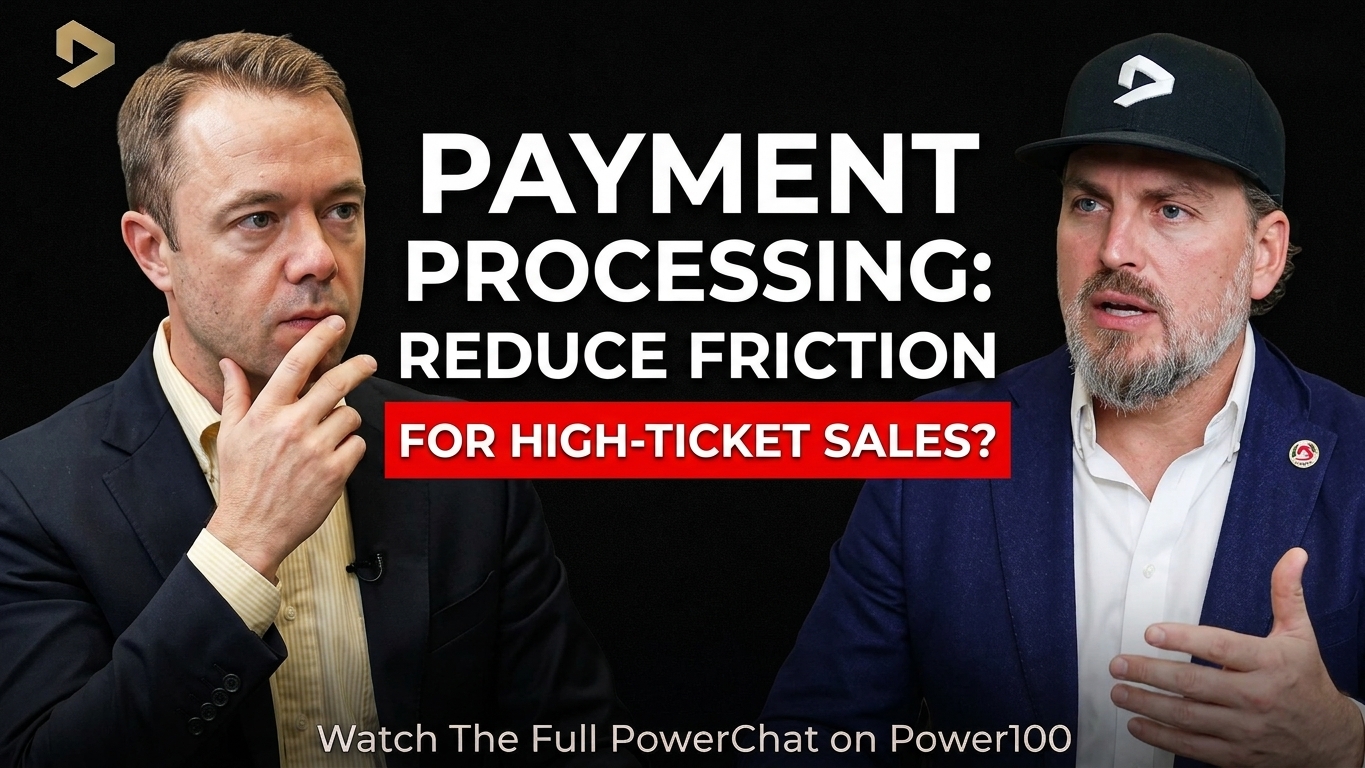
This approach became a key topic during a recent PowerChat interview hosted by Greg Cummings, CEO of Power100, featuring Jamie DeMersman, Chief Payments Officer at Pure Finance Group. Power100 is the only unbiased third-party platform that recognizes and elevates the top leaders and most impactful companies in the home improvement industry.
Through PowerChat, Greg brings industry leaders together to share lessons that help contractors build stronger companies. In this conversation, he challenged Jamie to explain why trusted contractors still face problems when processing large payments and what financial providers can do differently. Jamie’s answer pointed to one simple idea: before a payment provider can properly assess risk, it must first understand the business behind the payment.
A home improvement contractor closes a $50,000 window replacement job. The homeowner is ready to pay, and the company is preparing to order materials and schedule the work. But before the payment reaches the contractor’s account, the payment provider may flag the transaction for review. Suddenly, a successful sale can turn into a cash flow problem.
For contractors who handle large projects every day, this raises an important question. Should every large payment be treated as a major risk, even when the company has a strong history of serving homeowners and completing projects?

Jamie DeMersman, Chief Payments Officer at Pure Finance Group
That is the question Greg Cummings raised during his PowerChat conversation with Jamie DeMersman. Greg asked how Pure Finance Group handles high-ticket credit card payments for contractors while minimizing the issues that can arise when processing large sums.
Greg pointed out that there is a big difference between a contractor who opened a business yesterday and a well-established company with years of experience. Both may process the same $50,000 payment, but their business histories and ability to complete the work may differ significantly. His concern was that payment providers should be able to recognize those differences when reviewing risk.
Jamie explained that banks and their processing partners play a major role in how payments are handled. For that reason, Pure Finance Group chose to build its own internal team to review contractors before sending their applications to banking partners.
Instead of rushing to approve a company and dealing with problems later, Pure’s team takes time to learn about the contractor, review the business, and understand the risks involved.
“I think the most important thing to do for a company, for my sales reps, my support team, my underwriting team, is really to understand the business from the front,” said Jamie DeMersman, Chief Payments Officer at Pure Finance Group.
For Jamie, this process is about more than approving an account. It is about preparing contractors for the payments they expect to receive and reducing problems that could affect their operations.
That matters in home improvement because a payment is often collected long before the work is finished. A homeowner may put down a large deposit for a project that will take 90 or even 120 days to complete. During that time, the contractor may need the money to buy materials, pay commissions, and keep the business running. At the same time, the bank must consider the risk of accepting payment for work that has not yet been delivered.
These are the details that make contractor payment risk assessment so important. The size of the payment is only one part of the story. The contractor’s business, the type of project, and the time needed to finish the work also matter.
Jamie made it clear that proper review does not mean payment holds will never happen. Large transactions can still raise concerns. But understanding a contractor before the account is opened can help the payment provider prepare for those risks and give the contractor a clearer picture of what to expect.
The conversation brings attention to an issue that home improvement CEOs cannot afford to ignore. A company may have a strong sales team, a growing customer base, and a full schedule of projects. Yet if its payment provider does not understand how the business works, receiving money can become an unexpected challenge.
Jamie’s perspective offers a different way to look at payment processing. The goal should not simply be to approve more contractors or process more transactions. It should be to understand each business well enough to make better decisions from the start.
For contractors, that creates an important lesson: the company handling your payments should know how your business works before a payment problem puts that business under pressure.
During the PowerChat interview, Greg Cummings and Jamie DeMersman explored what it takes to build a payment system that truly works for home improvement contractors. Their conversation showed that payment risk is not just about how much money a company collects. It is also about how the business operates, how long projects take, and how well its financial partner understands those details.
Jamie shared how Pure Finance Group handles these challenges, from reviewing contractors before approval to helping them manage payment problems. His message was clear: when payment providers take time to understand the businesses they serve, they can make better decisions, reduce surprises, and build stronger relationships with contractors.

Greg Cummings, CEO of Power100
Not every home improvement contractor operates the same way. Some businesses are still building their first customer base, while others have spent decades completing thousands of projects. Yet when it comes to accepting large payments, both may face similar questions from banks and payment providers.
During the interview, Greg challenged this approach. He wanted to know how financial providers can distinguish between a company with a strong record of completing projects and one that is still trying to establish itself. His point was that the size of a payment does not always show how much risk is involved.
Jamie explained that banks play a major role in the payment processing industry. They help decide which businesses can accept payments and under what conditions. Because of this, the way a contractor’s business is reviewed and presented to those banks matters.
For Pure Finance Group, that process begins by learning about the company itself. Jamie explained that his team works with contractors at different stages of growth, from small businesses to established companies that have been operating for more than 30 years.
The goal is to understand how each contractor works before deciding how to handle its payment needs.
This approach brings an important point into the conversation about financial risk management for home improvement contractors. A payment provider must look beyond the amount being charged and understand the company responsible for completing the job.
A contractor with years of experience may have a very different business history from someone who has just entered the market. Both deserve a fair review, but that review should reflect how their businesses operate.
For home improvement CEOs, this raises a question worth asking: Does your payment provider truly understand your company, or does it only see the amount of money moving through your account?
Understanding a contractor’s business is only useful when that knowledge helps shape financial decisions. Jamie explained that this is why Pure Finance Group takes a different approach to approving contractors for payment processing.
In many cases, a provider may focus on signing up a new business as quickly as possible. The contractor receives an account, begins accepting payments, and assumes everything is ready.
But Jamie warned that problems can arise when the provider has not taken enough time to understand the company before approval.
Some contractors may later discover that their payment limits do not match the size of their projects. Others may face unexpected reviews or have difficulty getting help when a transaction raises concerns.
Jamie explained that Pure Finance Group works to address these risks before the account goes live.
“We literally underwrite them prior, we assess the risk, and we position it the right way when we’re submitting to partner banks,” said Jamie DeMersman, Chief Payments Officer at Pure Finance Group.
This process, known as payment-processing underwriting for contractors, involves reviewing a business before it submits its application to a banking partner.
Instead of leaving every decision to the bank, Jamie’s team first gathers information about the contractor, looks at the risks involved, and prepares the application based on what it learns.
That review also helps the team decide whether the contractor is a good fit for its services. Jamie acknowledged that Pure Finance Group has declined some applications rather than approve businesses that did not meet its requirements.
For him, this is an important part of protecting both the payment provider and the contractor.
The process is not simply about saying yes or no. It is about ensuring the account is set up to meet the contractor’s real business needs.
When a company understands its payment limits, risks, and support options from the beginning, its leaders can make better plans and avoid some of the confusion that may come later.
For contractors managing growing sales teams and busy project schedules, that kind of preparation can make a real difference.
Discover more about Jamie DeMersman’s work in contractor payments and financial services.
Even after a contractor has been reviewed and approved, the way home improvement projects are completed creates another challenge.
Unlike a store where someone pays for an item and takes it home the same day, a home improvement company may collect money weeks or months before the work is finished.
Jamie explained that a contractor might receive a deposit for a project that will not be completed for 90 or even 120 days.
During that time, the homeowner is waiting for the work to be done. The contractor is preparing materials, managing workers, and planning the job. The bank must also consider what could happen if the project is delayed, canceled, or disputed.
This is why payment processing for large home renovation projects requires a clear understanding of how the contractor operates.
Jamie pointed out that the risk often comes from the time between collecting the deposit and delivering the finished work.
“There really, really is,” Jamie said while explaining the risk involved in that timeline.
For a payment provider, knowing when work begins, how long it usually takes, and when homeowners are expected to pay can help create a clearer picture of the business.
These details matter because a large deposit is not always a sign that something is wrong. It may simply be part of how the contractor manages a major project.
At the same time, Jamie made it clear that no payment provider can promise that every transaction will go through without review or delay.
Even a well-established contractor can face a payment hold when a transaction raises concerns.
The difference lies in how well the provider has prepared for those situations.
This makes managing payment risk on home improvement projects an important part of running a stable business. Contractors need to understand how their payments are handled, while their financial partners need to understand the work behind those payments.
For CEOs, the lesson is that financial planning should account for the time between collecting money and completing the job. A payment system that fits the company’s project schedule can help leaders make better decisions about materials, staffing, and daily expenses.
Explore how Pure Finance Group works with contractors to support their payment and financing needs.
Even with careful planning, payment problems can still happen. What matters next is how quickly the contractor can get answers and what kind of help is available.
Greg raised this concern during the interview, explaining that many service providers perform well when everything is running smoothly. The real test comes when a business faces a serious problem and needs immediate support.
Jamie agreed, pointing out that home improvement contractors cannot always afford to wait days for an answer about money they are expecting to receive.
A sales representative may be in a homeowner’s house late in the evening when a payment fails. A contractor may be waiting for funds to purchase materials. Another company may be dealing with a homeowner who wants to dispute a charge.
In each case, the problem affects more than the payment itself. It can take time away from the team and place pressure on the business.
Jamie explained that Pure Finance Group has built its support around these situations. Contractors have access to account managers and teams that help with funding holds, payment disputes, and chargebacks.
This is where chargeback management for home improvement contractors becomes especially valuable.
A chargeback happens when a customer disputes a payment through their card provider. For contractors, these disputes may arise when a homeowner changes their mind, questions a charge, or waits for a refund.
Jamie explained that his team does more than respond to each dispute. When contractors experience repeated chargebacks, Pure works with them to understand what is happening and find ways to reduce future problems.
The goal is to help contractors improve their handling of these situations so they don’t face the same issues again.
Jamie also stressed the importance of having real people available when help is needed. While the company uses AI and other technologies, he believes human support remains essential.
That point connects closely with Greg’s view of strong business leadership. He explained that companies and industry partners should be judged by how they respond during difficult periods, not just when business is going well.
Jamie’s approach reflects that same idea.
“We want to set you up the right way from the outset, and we don’t want any surprises on the back,” said Jamie.
For contractors, having a team that can answer questions and help resolve problems can reduce the time spent on payment issues.
It also allows owners and their teams to spend more time serving homeowners, completing jobs, and planning for growth.
As the conversation moved toward the future, Greg raised another important point. Choosing a financial partner is not only about what a contractor needs today. It is also about where that company wants to go.
A smaller contractor may begin with a simple method for accepting payments. But as the business grows, it may open new locations, hire more employees, handle larger projects, and process more transactions.
Those changes can create new financial needs.
Greg explained that he values partners who can support contractors at different stages of growth. A company doing $5 million in annual revenue today may have much larger goals for the years ahead.
The question is whether its financial partners can continue meeting its needs as the business expands.
Jamie shared that Pure Finance Group’s long-term vision has always included helping contractors with more than one part of their cash flow.
The company began building its financial systems in 2018, bringing together experience from banking and home improvement. Jamie joined the company full-time in 2022 after working with the business from its early years.
Since then, the focus has included payment processing, homeowner financing, and loan servicing.
Jamie explained that one of the areas he is most excited about is growing the company’s payment processing and loan servicing operations alongside its financing business.
That broader approach reflects the growing need for cash-flow solutions for home improvement companies as they grow larger and more complex.
But Jamie also encouraged contractors to think carefully about their current financial partners before making changes.
During the interview, he acknowledged that some competing payment providers offer strong pricing, software connections, and useful services. He explained that when a contractor already has a solution that works well, switching may not be necessary.
This was an important part of his message. A good financial partner should not pressure a contractor into making a change solely to win another account.
Instead, it should understand the business, identify any real problems, and explain where it can offer value.
Jamie also pointed to the final months of 2026 as an important time for contractors to review their expenses and prepare their plans for 2027.
For home improvement CEOs, this means looking beyond payment rates or approval speed. It means asking whether their current provider understands their growth plans, can support larger transactions, and will be available when the business faces new challenges.
The conversation ultimately showed that strong financial relationships begin with understanding but become more valuable as that understanding grows over time.
A payment provider that takes the time to learn about a contractor today may be better prepared to support that company through the changes and challenges ahead.
As the PowerChat conversation came to a close, one lesson stood out. The real value of a payment provider is not measured by how quickly it approves a transaction, but by how well it understands the business behind it.

Pure Finance Group’s approach to contractor financing and payment services
Through his questions, Greg Cummings highlighted a challenge that many home improvement CEOs may overlook until something goes wrong. A large payment does not always mean a business carries greater risk. What matters is the full picture of the company, its work, and the promises it makes to homeowners.
Jamie DeMersman showed how taking the time to understand those details can lead to better financial decisions and stronger support. His perspective offers a lesson for contractors of every size. As businesses grow, the people responsible for handling their money should understand their goals, recognize their challenges, and be ready to help when plans do not go as expected.
For home improvement leaders, this is also an opportunity to examine their existing financial relationships. The right partner should give them confidence not only when business is running smoothly, but also when difficult decisions need to be made.
As the industry looks ahead, the need for trust, clear communication, and dependable financial support will remain important. Contractors will continue to take on larger projects and find new ways to grow. Having partners who understand their businesses can help them move forward with greater confidence.
The message from this PowerChat is simple: When financial providers take the time to get to know the contractor before processing payment, they are better prepared to stand beside that contractor when it matters most.
No. Power100 states that companies cannot buy their way into its rankings. The platform uses a five-layer review process to assess leaders across growth, company culture, and community impact. Its Power100 national CEO rankings combine business data, AI scoring, reviews by industry experts, and feedback from customers, employees, and partners. This process helps Power100 recognize leaders based on their work and results rather than their ability to pay for attention.
Power100 gives contractors access to industry rankings, business insights, and interviews with experienced leaders. Its PowerChat series allows financial partners and other industry experts to explain how they serve contractors and handle business challenges. Through its separate ranking process, Power100 also reviews business performance and outside feedback. A PowerChat interview does not independently prove every claim a guest makes. Instead, these insights from the home improvement industry leadership help contractors ask better questions and make informed decisions about the companies they work with.
Banks review large contractor credit card transactions because payment size is only one part of the risk. A contractor may collect a large deposit months before completing a roofing, siding, or window project. During that time, the homeowner could cancel the job or dispute the charge. As Jamie DeMersman explained during PowerChat, payment providers must understand the contractor’s business, project timelines, and financial risks before deciding how to handle those payments.
No. Pure Finance Group reviews contractors before submitting their applications to banking partners. Jamie explained that its internal team studies each business, checks its risks, and determines whether it meets the requirements for approval. The company has declined some applications. This contractor payment approval process helps Pure understand the businesses it serves and prepare accounts for the types of payments contractors expect to receive.
No payment provider can guarantee that every transaction will clear without review. Jamie made this clear during his interview with Greg Cummings. Even an established contractor may face a hold when a large transaction raises concerns. Pure Finance Group reviews contractors up front to help reduce unexpected problems, but that process cannot eliminate every risk. Contractors should ask their providers about credit card payment holds for contractors, how they handle these cases, and whom to contact for help.
Pure Finance Group has support teams that help contractors manage payment disputes and chargebacks. A chargeback occurs when a homeowner disputes a card payment with their bank. Jamie explained that Pure works with contractors to understand why disputes occur and to develop plans to reduce recurring problems. This contractor chargeback support helps business owners spend less time dealing with payment issues and more time serving customers and managing projects.
Pure Finance Group offers both homeowner financing and payment collection services for home improvement contractors. Its platform allows businesses to offer financing and accept credit card, debit card, and bank payments. Contractors can also use payment tools that connect with their existing business systems. This helps companies manage how homeowners pay for projects without relying on separate tools for every part of the process. Contractors can explore the available services at Pure Finance Group.
Not necessarily. Jamie explained that contractors should first review their current payment costs, software connections, and customer support. If a provider already offers good rates, reliable service, and the tools a business needs, switching may bring little value. However, contractors who face payment delays, poor support, or systems that do not fit their operations may benefit from exploring other options. The goal when choosing a payment processor for contractors should be to find a partner that understands the business and can support its needs as it grows.
Power100 is the only unbiased third-party platform that recognizes and elevates the top leaders and most impactful companies in the home improvement industry. Led by CEO Greg Cummings, Power100 helps contractors and industry leaders learn from real business experiences, trusted leadership insights, and proven practices that support long-term growth. Through its national CEO rankings, PowerChat interviews, and industry coverage, the platform gives outstanding leaders a voice while helping contractors make better decisions about their teams, business partners, and future. Its mission is to bring greater trust, recognition, and accountability to the home improvement industry while supporting the people and companies working to improve it.
Membership unlocks every Power100 interview, PowerChat episode, and expert playbook - free for industry leaders.
Power100 is the nation's premier CEO ranking and media platform for the home improvement industry. Using a proprietary 5-layer evaluation system, Power100 identifies and celebrates the top CEOs, companies, and strategic partners driving innovation, customer satisfaction, and leadership excellence across the country.