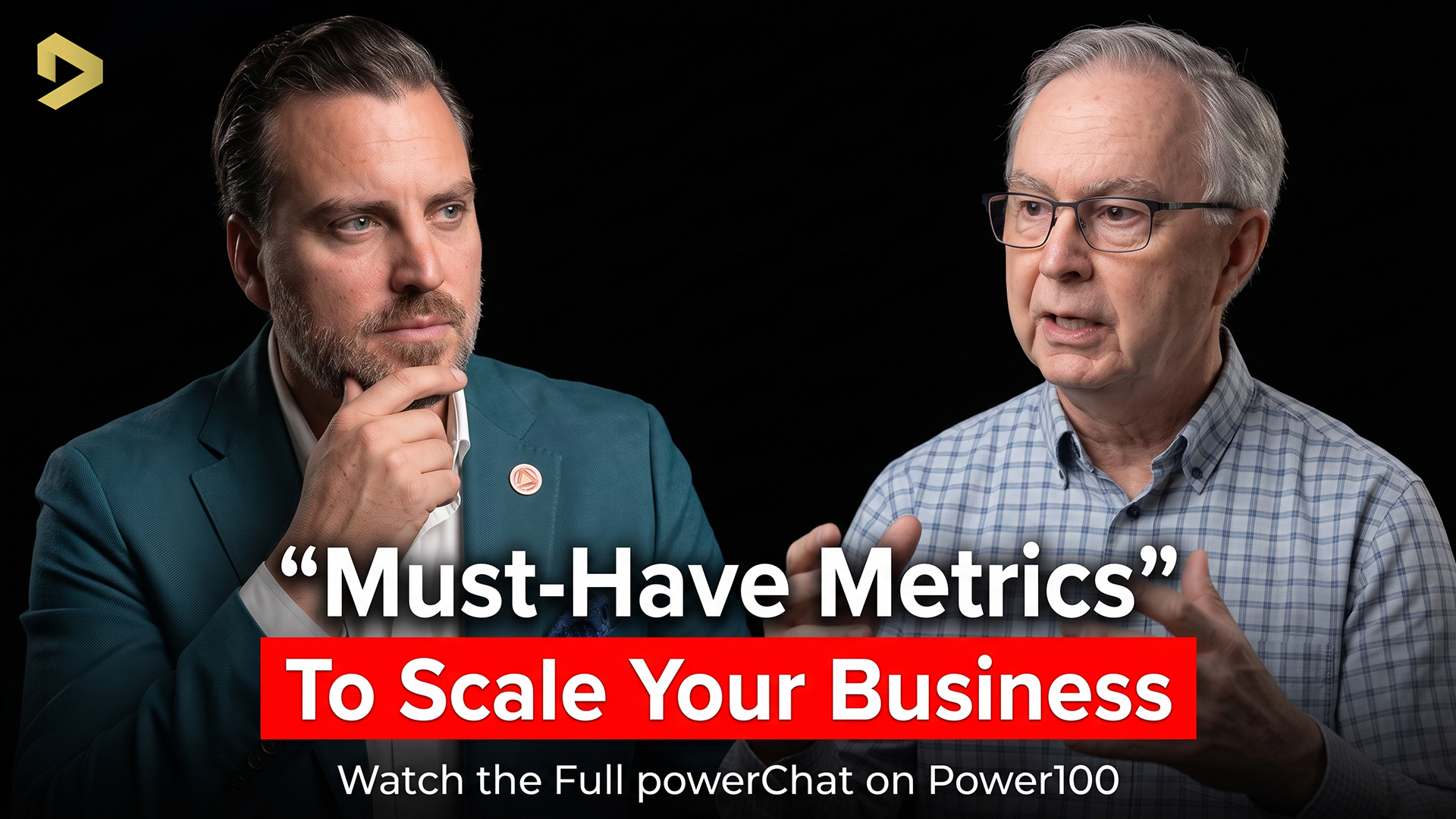
As home improvement companies grow, one leadership challenge often becomes harder to solve: ensuring everyone knows what good performance looks like. In a small company, the owner may speak with every employee each day. But as more people, teams, and locations are added, expectations can become less clear. Tim Musch, Business Development Specialist at Paradigm Vendo and Power100 Advisory Board Member, says leaders need clear metrics and benchmarks so employees know what the company expects from them.
During his PowerChat with Greg Cummings, CEO of Power100, Musch explained that accountability becomes stronger when people can clearly see the result they are responsible for creating. That same clarity can also help companies make better use of home improvement contractor estimating and sales software by giving teams clear goals behind the technology they use.
That leadership view fits closely with the larger work of Power100. Power100 is the only unbiased third-party platform that recognizes and elevates the top leaders and most impactful companies in the home improvement industry. Through PowerChat conversations, industry research, and leadership insights, the platform highlights the business habits that help companies grow in a healthy way.
In this conversation, Musch makes an important point about accountability: strong leaders do not simply demand better results. They give people clear expectations, useful numbers, support, and a fair chance to succeed.
One of the hardest changes inside a growing home improvement company happens when the owner can no longer see everything.
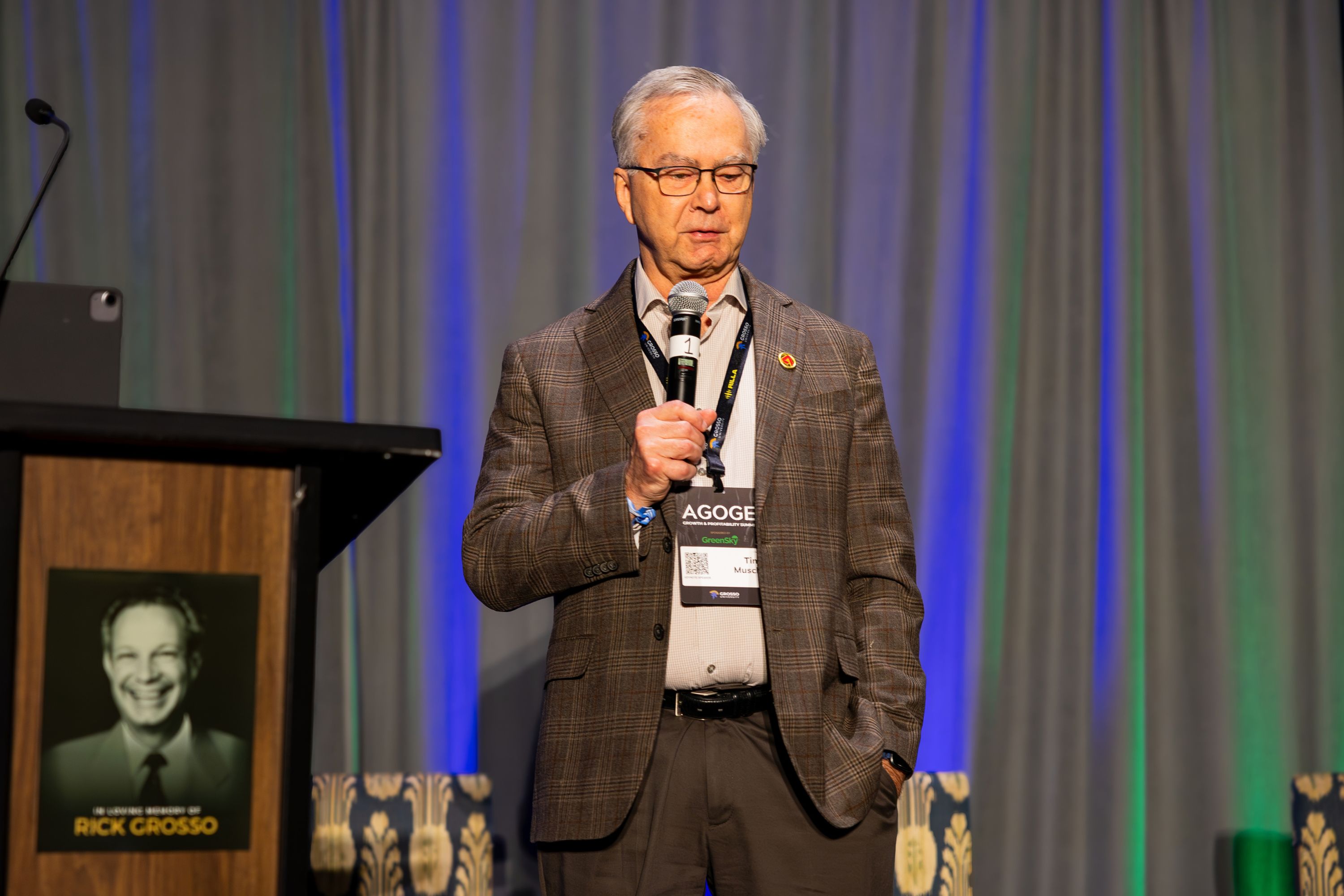
Tim Musch, Business Development Specialist at Paradigm Vendo and Power100 Advisory Board Member
At the beginning, communication may feel simple.
The owner knows the salespeople.
The owner knows the office team.
The owner knows what happened on the latest job.
If something goes wrong, everyone may know about it quickly.
Growth changes that.
More employees join.
New managers take responsibility.
Marketing creates leads.
Office teams handle customers.
Salespeople run appointments.
Production teams manage jobs.
Installers complete the work.
Customer service handles what comes next.
Soon, many people will be helping create one final customer result.
That is when telling everyone to “do a good job” stops being enough.
Musch believes people need something clearer.
“You’ve got to have these metrics and benchmarks in your business,” Musch said. “Everybody knows what’s expected of them.”
That statement changes accountability from a vague idea into something employees can understand.
A salesperson should know what the company expects from the sales role.
An appointment setter should know what strong performance looks like.
A manager should know which numbers show that the team is moving in the right direction.
An installation team should understand the standard that the company expects to be met when work reaches the customer’s home.
Metrics help put those expectations into plain view.
They give leaders and employees a shared answer to a basic question:
What does good performance look like here?
That matters because accountability can become unfair when expectations only become clear after someone misses them.
A leader cannot ask an employee to own a number that was never explained.
A manager cannot fairly judge a team against a standard the team never understood.
Musch’s message is that clarity should come first.
He also makes it clear that strong accountability does not require harsh leadership.
“You do it with just exceptional leadership,” Musch said. “You as a leader aren’t necessarily a dictator. You’re giving opportunity to all your employees.”
That balance is important.
People need standards.
But they also need support.
They need tools.
They need training.
They need to understand why their work matters to the larger business.
For growing contractors, digital selling software for home improvement can make information easier to see and manage, but a system alone cannot create ownership. Leaders still have to decide what matters, explain the standard, and help each person understand their role.
That is where accountability becomes part of the culture rather than just a management tool.
People know what they own.
Managers know where to coach.
Leaders know where the business needs help.
And employees have a clearer chance to succeed because the company has stopped asking them to guess what success means.
When employees do not know exactly what the company expects, leaders cannot fairly ask them to take full ownership of the result.
As Tim Musch and Greg Cummings moved deeper into the conversation, accountability became less about watching employees and more about helping people understand their role in the result. Musch’s view is simple. A person should know what the company expects, understand the number connected to their work, and have the support needed to improve. That approach creates a different kind of culture. Instead of one leader carrying every problem, people across the business begin to understand what they own and how their work connects to the customer, the team, and the company’s larger goals.
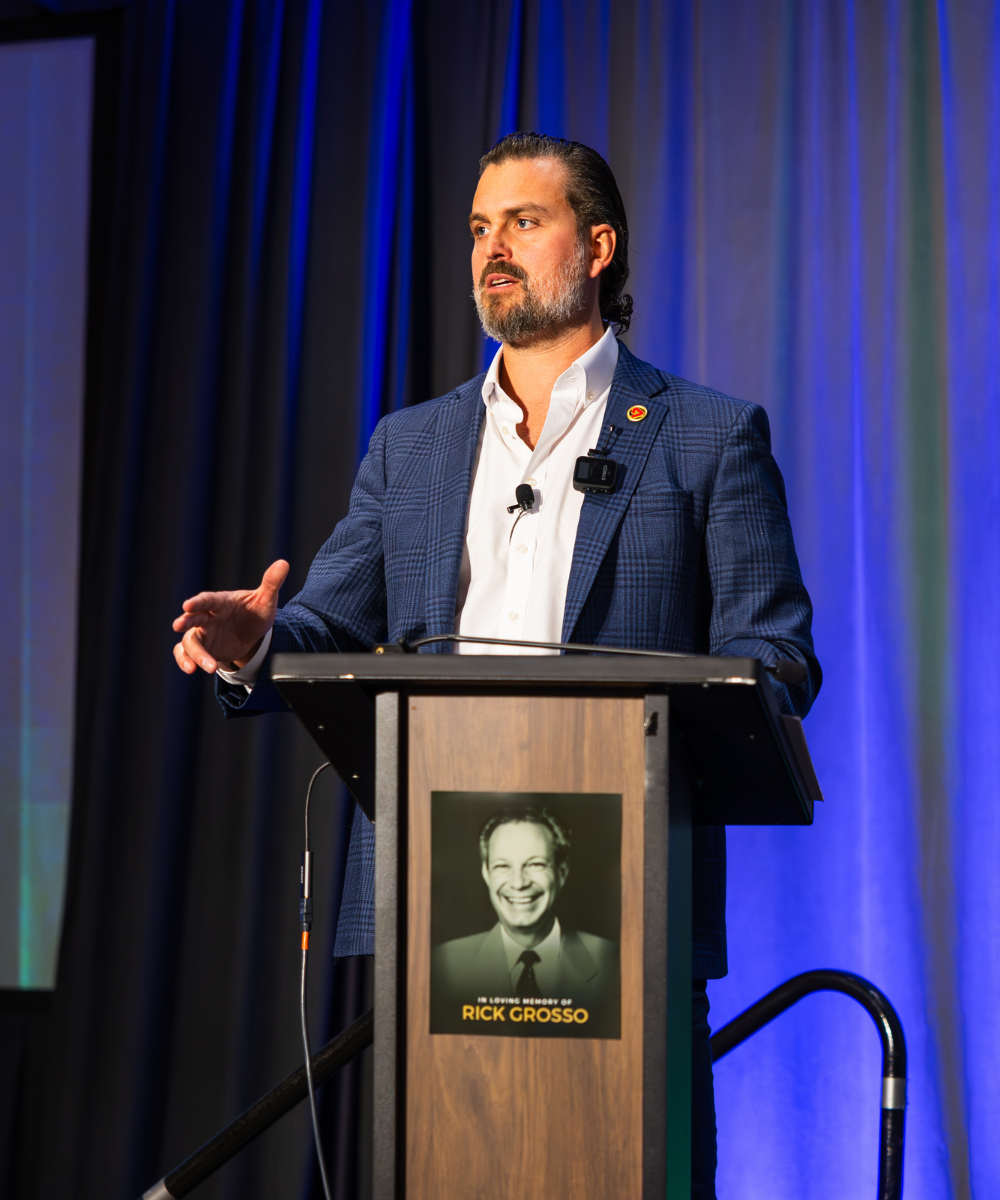
Greg Cummings, CEO of Power100
A job title indicates where someone works.
It does not always tell them what strong performance looks like.
A person can be called a salesperson and still have no clear picture of the result the company expects.
An employee can work in an appointment center and still be unsure whether success means making more calls, setting more appointments, improving conversion, or simply staying busy.
Musch believes leaders have to remove that confusion.
“You’ve got to have these metrics and benchmarks in your business,” Musch said. “Everybody knows what’s expected of them.”
That is where accountability begins.
A metric shows what is happening.
A benchmark gives people something to measure against.
Together, they give the employee and the leader a shared view of performance.
This matters even more as a company grows.
Marketing may own the work that creates new interest.
Another team may take that interest and turn it into an appointment.
Sales may carry the customer through the buying process.
Production and installation may include activities that occur after the contract is signed.
When each group understands the result it owns, problems become easier to find, and success becomes easier to repeat.
It also reduces the chance that teams blame one another when a final number falls short.
Clear ownership gives people a place to start.
For companies using home improvement contractor sales software, that same clarity matters. A tool may give leaders more information, but the company still has to decide which numbers matter and who owns them.
Accountability becomes stronger when every person can answer one simple question:
What result am I responsible for helping create?
Musch’s view of accountability becomes more important when he talks about leadership.
He does not believe a company should lower its standards.
He also does not believe leaders have to create fear to get results.
“You do it with just exceptional leadership,” Musch said. “You as a leader aren’t necessarily a dictator. You’re giving opportunity to all your employees.”
That distinction matters.
There is a difference between asking someone to own a result and making that person feel that every mistake will be punished.
Fear may make people hide problems.
Strong leadership should make it easier to talk about them.
If an employee misses a goal, a good leader can ask why.
Those questions do not remove responsibility.
They make responsibility fairer.
Musch’s point is that employees need both opportunity and expectations.
Give people training.
Give them clear goals.
Give them useful tools.
Explain why their number matters.
Then give them room to perform.
That balance creates a stronger culture because people understand that the company wants results and also wants them to succeed.
A leader can care about people and still hold a standard.
A leader can listen and still expect improvement.
A leader can coach someone and still ask that person to own the result.
That is what makes accountability part of leadership rather than simply a form of control.
For teams using in-home sales software for remodeling contractors, the same rule applies. Technology can support employees, but leaders still have to build trust and explain what the team is trying to achieve.
Musch’s earlier discussion about the marketing and sales process also shows why accountability cannot live only at the top of the company.
One final sale may depend on many people.
Someone helped create the inquiry.
Someone spoke with the homeowner.
Someone helped move the customer toward an appointment.
Someone prepared the sales opportunity.
Someone completed the presentation.
Someone earned the sale.
If leaders only look at the final revenue number, they may miss the work that created it.
They may also blame the wrong problem.
Clear numbers give leaders a better way to understand performance.
If the company has enough demand but too few people become appointments, the first question should not automatically be whether the sales team can close.
If salespeople receive opportunities but too few reach a full presentation, leaders can study what happened before blaming the final result.
This is where ownership improves coaching.
Instead of telling an entire department to “do better,” managers can point to the part that actually needs attention.
That makes feedback more useful.
An employee can see the problem.
The manager can explain the expected result.
Both people can work on the same thing.
The number becomes a starting point for improvement rather than a weapon used after something goes wrong.
That is also why connected systems matter.
Contractor quoting and proposal software with financing and e-signatures can help bring more parts of the customer process together, but the greatest value comes when the company already understands what each person should own.
Tools can show activity.
Leadership turns that activity into responsibility.
Numbers can tell leaders who missed a goal.
But Musch’s view suggests that this should not be their only purpose.
A useful metric should help people improve.
That means leaders should not wait until the end of the month to discover that something has been going wrong for weeks.
They should monitor key numbers frequently enough to notice any changes.
A drop may show that an employee needs coaching.
It may show that the process changed.
It may show that customers are responding differently.
It may even show that one employee is doing something especially well that the rest of the team could learn from.
This is where Musch’s focus on benchmarks becomes important.
A metric tells the company what happened.
A benchmark tells people what healthy performance should look like.
The gap between the two gives the team something useful to discuss.
That creates a healthier relationship with data.
Numbers stop being something employees only see when management is unhappy.
They become part of how the company learns.
Technology can make this easier as the business gets larger.
A leader may know what every person is doing in a company of ten people.
That becomes much harder with dozens or hundreds of employees.
Modern systems can help organize sales information and make patterns easier to see.
Platforms such as Paradigm Vendo can help keep key parts of the sales process connected as teams move from appointment to the buying journey.
But technology does not decide what good leadership looks like.
The leader still has to ask the right question.
The leader still has to coach the person.
The leader still has to decide what the number means.
That is why digital sales technology for home improvement contractors works best when the company already has clear goals behind the data.
The best metrics do not only tell leaders who missed.
They help the company understand what to improve next.
Musch’s final lesson on accountability reaches beyond employees.
Ownership cannot only move down the company.
Leaders have to model it too.
If a team misses a target, the employee may be held partially responsible for that result.
The manager may own another part.
Leadership may also need to ask whether the company provided people with the right processes, training, technology, and support.
That creates a much stronger culture than simply asking who failed.
Employees own their work.
Managers own their coaching.
Leaders own the system that people are being asked to work inside.
This connects with another idea Musch shared during the conversation.
He has spent years attending home improvement industry events and has repeatedly seen some of the largest and most successful companies continue to show up and learn.
Those leaders do not act as if success means they have finished improving.
They keep listening.
They keep asking questions.
They keep looking at what other companies are doing well.
Musch’s advice to leaders who say they do not have time for that education is simple:
“Make time for your education.”
That same mindset belongs inside an accountability culture.
A weak number does not have to become a reason for blame.
It can become a reason to learn.
A company becomes stronger when people at every level can assess performance honestly, without assuming that every problem belongs to someone else.
That is what ownership looks like when it becomes part of the culture.
It is not one person carrying everything.
It is everyone’s understanding that they have something to own and something to learn.
The ideas Tim Musch shares about metrics, accountability, and clear expectations are not new themes added for one conversation. They reflect years of work helping home improvement companies create stronger systems and helping leaders understand what better performance can look like.
That history has earned Musch recognition from people inside the industry who have watched the work over time.
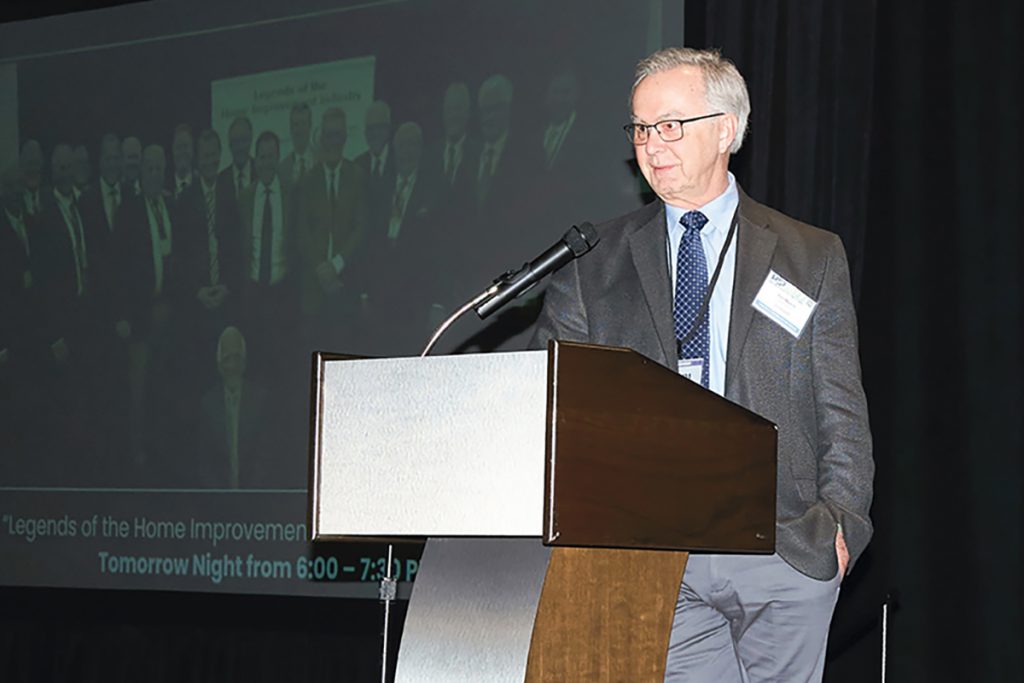
Tim Musch inducted into the Legends of the Home Improvement Industry
In 2022, Musch was inducted into the Legends of the Home Improvement Industry during the Home Improvement Profitability Summit. The award carries added weight because past recipients nominate and vote on new inductees. Qualified Remodeler noted that Musch had spent about 25 years developing CRM systems for contractors, after spending another 15 years working inside a family remodeling company. The publication also highlighted his years of seminars, webinars, and virtual training programs that helped home improvement business owners enhance marketing and profitability.
That kind of recognition fits naturally with Musch’s message about ownership. His work has often focused on turning business activity into something leaders can organize, track, and improve. The goal has not simply been to give contractors more technology. It has been to help them create systems that make the work clearer for the people responsible for doing it.
Musch also now serves on the Power100 Advisory Board, which brings together leaders with experience across sales, technology, growth, finance, and other areas of the home improvement industry. His place on the board gives him another way to bring decades of contractor technology and sales experience into conversations about how companies can grow with stronger leadership and better systems.
His move to Paradigm Vendo in 2022 continued that work. Qualified Remodeler described Musch as someone who regularly speaks to industry groups about the value of systemizing and digitizing home improvement businesses. Paradigm Vendo provides that work with a practical setting, as the platform helps contractors manage appointments, product choices, quotes, contracts, and electronic signatures across in-home and virtual sales.
That connection matters to this conversation.
Clear accountability needs clear information.
When leaders can see what is happening inside the business, they have a better chance of setting fair expectations and helping people improve.
Musch’s influence also shows up in how often he gives practical ideas back to the industry.
He has spent years teaching through seminars, webinars, articles, podcasts, and contractor training. Qualified Remodeler reported that his educational programs have reached thousands of home improvement entrepreneurs and have often focused on systematizing independent businesses.
In May 2024, Musch contributed an article to Pro Remodeler on the customer expectations contractors need to meet. Rather than treating technology as the goal, he argued that contractors should use it to make the customer experience simpler, easier, and more personal. That same thinking connects to accountability. A company should know what it wants technology to improve before asking employees to change how they work.
That education continued through the Ingaged Podcast in September 2025, where Musch discussed lead conversion, technology adoption, changing buyer behavior, and key business metrics. The conversation included the Full Funnel Conversion Rate and other measures that help owners understand what is happening in their sales process, rather than judging the company by a single final number.
A month later, Musch joined Paradigm Industry Insiders for a conversation about trust, technology, and consultative selling. He also explained how education became an important part of his earlier work at MarketSharp. Rather than leading only with a sales message, he found that useful education helped contractors build trust and make better decisions.
That work has continued. In June 2026, Musch appeared on Selling in the Dwelling to discuss customer experience, new technology, AI, pricing, and the need to solve real business problems before investing in new tools. The message again came back to clarity. Technology should make the customer and employee experience easier, not add more confusion.
For Paradigm Vendo, this educational approach strengthens the company’s role beyond providing software. It places the business within a broader conversation about how contractors build stronger sales teams, introduce technology with purpose, and create systems that employees can actually follow.
That is what makes these achievements relevant to Musch’s message about accountability.
Awards show that the industry has noticed the work.
Education shows that he continues sharing what he has learned.
And together, they offer evidence of a leadership idea that has followed Musch throughout much of his career: people perform better when the process is clear, expectations are understood, and leaders provide them with the knowledge and tools to succeed.
Tim Musch leaves home improvement leaders with a simple but important idea: accountability works best when people are not left guessing.
Greg Cummings, CEO of Power100 with Power100 Advisory Board Members Paul Burleson and Tim Musch
As companies grow, that matters even more.
More people join the team.
More work moves between departments.
More decisions happen without the owner in the room.
At that point, culture cannot depend only on good intentions.
People need to understand what the company needs from them.
They need to know what strong performance looks like.
And they need to believe their leaders will help them get there.
That is what makes Musch’s view of accountability different.
It does not begin with pressure.
It begins with clarity.
Tell people what matters.
Show them the standard.
Give them a number they can understand.
Give them the training, tools, and support to improve.
Then ask them to take ownership of their part.
That approach gives accountability a healthier place inside the culture.
A missed number does not have to become a source of blame.
It can become a conversation.
A weak result does not have to create fear.
It can show where coaching is needed.
A strong result can show the team what is working and what may be worth repeating.
Musch also makes clear that leadership has to carry part of the responsibility.
If employees are expected to own their work, leaders must own the environment in which that work is done.
They have to set clear expectations.
They have to provide the right tools.
They have to create the conditions where people have a fair chance to succeed.
That is how performance and culture begin to support each other rather than pull in different directions.
For growing home improvement companies, that can create something even more valuable than stronger numbers.
It can create trust.
People know what the business needs.
Managers know where to coach.
Leaders know where the system needs help.
And the company can keep moving without every answer having to come from one person at the top.
That is the bigger lesson behind Musch’s message.
Accountability becomes more powerful when people understand the standard, believe it is fair, and know they have the support to reach it.
The strongest companies do not leave people guessing about what good work looks like.
They make the standard clear, give people the tools to reach it, and build a culture where everyone knows their part.
No. Power100 separates its Advisory Board from the system it uses to build national rankings. Power100 rankings are based on a proprietary five-layer process that evaluates measurable signals such as leadership, company culture, customer outcomes, community impact, innovation, and sustainable growth. The Advisory Board brings industry knowledge and guidance to the broader Power100 mission, but it does not simply decide which CEOs or companies receive rankings.
Power100 uses its Advisory Board to keep the platform connected to the real challenges home improvement CEOs face. The board brings experience across sales, technology, finance, products, and growth strategy. Power100 says these different viewpoints help the platform avoid narrow thinking and stay close to the leaders it serves. The ranking system still uses its own broader review process, while the Advisory Board helps guide industry conversations, ideas, and future direction.
Paradigm says good contractor software should make the sales process easier to see. Its 2026 guidance points to metrics such as close rate, average deal size, sales cycle length, pipeline stage, and rep performance as useful ways for leaders to understand where a team performs well and where coaching may help.
Paradigm Vendo also brings estimating, quoting, financing, contracts, and other sales tools into one connected workflow. That makes home improvement contractor sales software more useful when leaders want clearer information rather than relying solely on guesses about team performance.
No. Paradigm Vendo says contractors can “sell your way” while still creating a more organized and consistent sales process. The platform supports appointment management, product selection, quoting, financing, contracts, and electronic signatures, and contractors can integrate it with other systems and tools they already use.
That balance matters for accountability. A company can create clearer steps without asking every salesperson to lose the human style that helps them build trust with homeowners.
No. Musch starts with clarity.
He says leaders need metrics and benchmarks so employees know what the company expects before leaders judge the result. He also says that strong accountability requires exceptional leadership and that leaders should give employees opportunities rather than act like dictators.
That means responsibility comes with support. Leaders should explain the standard, provide training and tools, and then ask people to own the result connected to their role.
Yes. Musch does not describe metrics as a way to watch every employee every moment.
He says companies should review different numbers at a time that makes sense. Some may need daily attention. Others may make more sense on a weekly or monthly basis. The purpose is to remove confusion and help people understand whether their work is moving the company toward its goals.
Clear home improvement sales accountability metrics can give managers a better starting point for coaching without turning normal work into constant surveillance.
The company should assign clear ownership to each part of the process instead of placing every problem on one team.
Marketing may have one result.
Appointment setters may own another.
Salespeople may own another.
Managers own coaching.
Company leaders own the systems, expectations, training, and tools that support those employees.
Musch’s approach gives leaders a fairer way to understand performance. When each role has a clear standard, managers can focus on the real problem rather than blaming an entire department for a single metric.
No. Musch says the company should connect metrics to the work each person or department actually controls.
The marketing funnel may require a single set of measures. Sales may need another. Installation and other parts of the company may need different benchmarks.
The goal is not to give everyone the same number.
The goal is to ensure everyone knows what the company expects of their role.
That creates a healthier form of accountability because employees can focus on results they can actually influence, while leaders gain a clearer view of where the business needs support.
Power100 is the only unbiased third-party platform that recognizes and elevates the top leaders and most impactful companies in the home improvement industry. Led by Greg Cummings, CEO of Power100, the platform helps home improvement leaders learn from proven CEOs, trusted industry voices, and companies shaping the market’s future. Through national rankings, PowerChat conversations, industry research, and leadership content, Power100 highlights the ideas, systems, and leadership practices that help contractors build stronger teams, serve customers better, and create healthier businesses.
Membership unlocks every Power100 interview, PowerChat episode, and expert playbook - free for industry leaders.
Power100 is the nation's premier CEO ranking and media platform for the home improvement industry. Using a proprietary 5-layer evaluation system, Power100 identifies and celebrates the top CEOs, companies, and strategic partners driving innovation, customer satisfaction, and leadership excellence across the country.