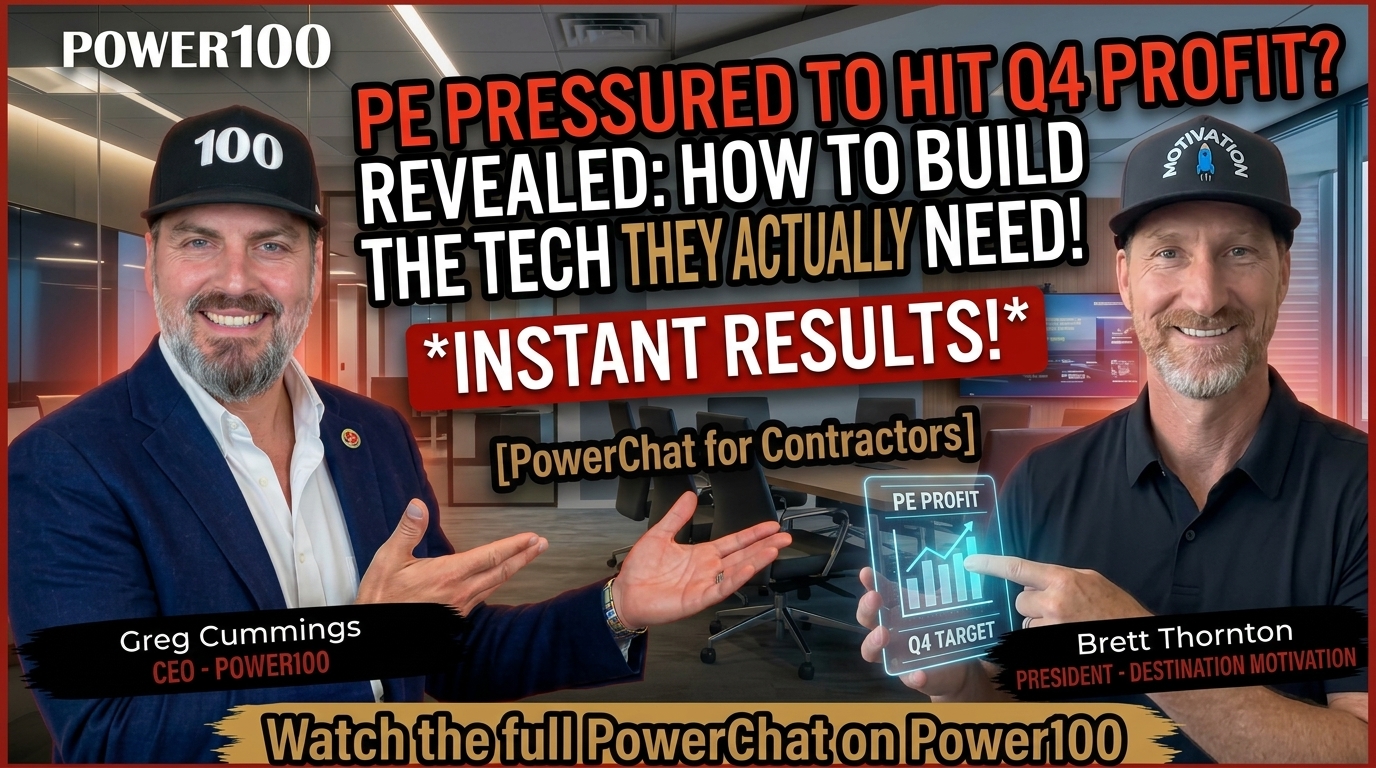
A home improvement company can know exactly where it wants to go and still struggle to see what is stopping it from getting there. One contractor may need more leads. Another may have enough leads but lose too many signed jobs. Another may have strong sales but weak training, customer service, or operations. Leadership may already know the revenue or profit target it must hit, but the number alone does not always reveal which part of the business needs attention first. That is where the right strategic partner for home improvement contractors can create real value. The job is not to walk in with one answer. The job is to understand the company, ask the right questions, and find the problem that matters most.
That idea became a key part of a PowerChat conversation between Brett Thornton, President at Destination Motivation, and Greg Cummings, CEO of Power100. Thornton explained that service providers have to meet companies where they are. Some large contractors already have strong systems and only need a partner to fit into their existing systems. Other companies need more support, training, or structure. “As a service provider, you’ve got to be where they are at,” Thornton said.
Power100 is the only unbiased third-party platform that recognizes and elevates the top leaders and most impactful companies in the home improvement industry. Through conversations like this, PowerChat brings attention to the real business problems leaders are trying to solve and the thinking that can help companies grow with greater clarity.
For many home improvement leaders, the hard part is not setting the goal.
The hard part is finding the right path to reach it.

Brett Thornton, President at Destination Motivation
A company may be told to grow revenue, protect profit, reduce cancellations, improve close rates, or bring in more leads. But each of those goals can come from a different problem inside the business.
Thornton understands that pressure because he has worked on the operator side of the table.
He described leaders who receive clear profit targets from ownership or private equity groups. They may hear what the company must produce by the end of the quarter, but nobody hands them a full plan for getting there.
“Here’s your profit target for Q4,” Thornton said. “They don’t say, here’s all the things you need to do to hit it. They say, hit it.”
That leaves the leader managing the number while also carrying payroll, people, sales, customer needs, operations, and everything else that comes with running a growing company.
Thornton believes that is where service providers need to change the way they approach the relationship.
The first question should not be, “How can we sell our product here?”
It should be, “What is happening inside this business, and what does leadership need to improve?”
Thornton gave cancellation reduction as a simple example. If a provider walks into every company talking only about cancellations, but that contractor does not have a cancellation problem, the solution misses the point.
“If we come in saying like, cancel, cancel, cancel, but they don’t have a cancel problem, what is it?” Thornton said. “That doesn’t do us any good. Doesn’t do them any good.”
That view changes the provider’s role.
A strong partner must first understand what the contractor is trying to achieve. Then the partner has to find the blind spot that may be holding the business back.
For one company, the answer may be leads.
For another, it may be retention.
For another, it may be training, sales process, customer experience, or stronger operations.
That is why Thornton’s view of home improvement sales growth starts with understanding the business before trying to change it.
The goal is not to fit every contractor into the same system.
The goal is to meet the company where it is, understand where leadership needs to go, and help close the gap between the two.
During his PowerChat with Greg Cummings, Brett Thornton, President at Destination Motivation, described a simple test for any service provider that wants to become a true partner. Before offering a tool, program, or idea, the provider must first understand what the contractor is trying to fix. One company may need leads. Another may need stronger retention. Another may need better training, a stronger sales process, or help reaching a profit goal. Thornton’s point is that the right answer changes from company to company. That makes home improvement sales growth less about pushing one product and more about finding the one business problem that deserves attention first.
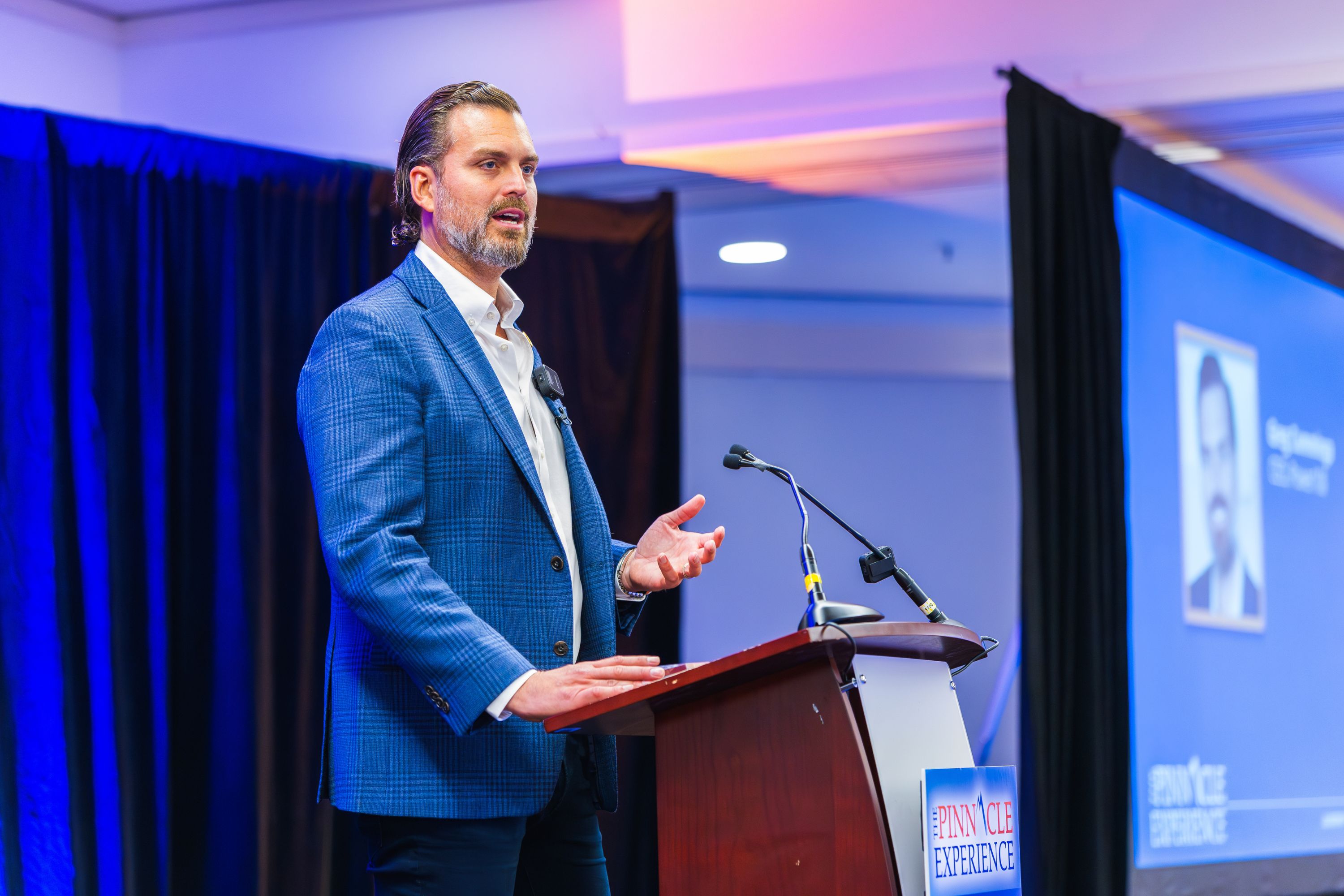
Greg Cummings, CEO of Power100
Thornton explained that some contractors already have strong systems, strong leaders, and clear training in place. They may not need someone to come in and rebuild the company. They may only need a partner that can fit into what already works.
Other companies need more help.
They may need a stronger process. They may need better training. They may need help getting the team to use a new system properly.
That is why Thornton believes the same service should not look the same inside every company.
“As a service provider, you got to be where they are at,” Thornton said.
That line gets to the heart of his view.
A large contractor with strong systems may need a partner to plug into what is already working. A smaller or faster-growing company may need more support building the process around the tool.
The partner has to understand the difference before making a recommendation.
That is also where a customer experience program for home improvement contractors can create more value when it aligns with how the company already sells, trains, and serves homeowners.
The goal is not to force the contractor into a fixed model.
The goal is to understand what is working now, what is missing, and what kind of support can help the business move forward.
Thornton then pushed the idea further.
A service provider can have a strong product and still bring the wrong answer.
He used cancellation reduction as an example.
If a contractor does not have a cancellation problem, then walking into the business and talking only about cancellations misses the point.
“If we come in saying like, cancel, cancel, cancel, but they don’t have a cancel problem, what is it?” Thornton said. “That doesn’t do us any good. Doesn’t do them any good.”
That is an important lesson because it moves the focus away from the service provider and back to the contractor.
The question is not, “What do we sell?”
The better question is, “What is keeping this company from getting the result it wants?”
One business may believe it needs more leads when the real issue is poor follow-up.
Another may believe it needs more sales training when the real problem starts after the contract is signed.
Another may be adding revenue but losing too much profit through weak systems.
That is why strong partners need to identify the blind spot before recommending a fix.
A contractor cancellation reduction program can be valuable when cancellations are the problem. If they are not, the company needs to keep looking until it finds the issue that actually matters.
Good tools create value when they solve the right problem at the right time.
Thornton’s own experience as an executive shapes how he views these partnerships.
He understands what it feels like to carry a target.
Leadership may be told what profit needs to be by the end of the quarter.
That does not mean someone also hands them the full plan.
“Here’s your profit target for Q4,” Thornton said. “They don’t say, here’s all the things you need to do to hit it. They say, hit it.”
That pressure becomes even stronger within private-equity-backed companies, where leadership may have clear goals tied to growth and profit.
The leader still has to manage payroll.
The team still needs support.
Customers still need to be served.
Sales still need to come in.
Operations still have to keep up.
And the number still has to be hit.
That is where a strong partner can become more useful.
Instead of bringing another product to the table, the partner can help leadership connect the goal to the action most likely to move it.
For one contractor, that may mean more leads.
For another, it may mean better follow-up.
For another, it may mean finding more value in leads the company already paid for, which is where a rehash program for home improvement contractors may become useful.
Thornton’s larger point is that business pressure is easier to address when the partner understands what the leader is responsible for before recommending next steps.
For Thornton, partnership becomes most meaningful when the service provider is willing to put the contractor’s goal ahead of its own sale.
“What I want to do doesn’t matter,” Thornton said.
What matters is what the contractor needs to achieve.
Thornton explained that there are times when the right answer may come from another company in his network.
If someone else has a better solution, he is willing to make that connection.
That choice may not create the fastest sale for Destination Motivation.
But it can build something more important.
Trust.
Thornton described the mindset this way:
“What is it that you’re focused on? What do you have to hit? How can I help you in hitting the thing you need to hit?”
That changes the meaning of strategic partnership.
A vendor may focus first on getting the contract.
A true partner focuses first on helping the client reach the goal.
Sometimes those two things lead to the same answer.
Sometimes they do not.
The strength of the relationship is evident when the provider is willing to acknowledge the difference.
That approach can also support customer retention for contractors, as stronger business partnerships help companies address the real issues that affect the customer experience rather than adding another tool that does not address the root problem.
Even after a contractor finds the right solution, the work is not finished.
Cummings raised an important point during the conversation.
A service provider cannot cover weak systems forever.
A company still needs good people.
It still needs training.
It still needs clear processes.
And the team has to use the tool the way it was meant to be used.
Thornton returned to that idea during the rapid-fire part of the conversation.
He said a useful tool is one that the team fully adopts.
People know how to use it.
They understand why it matters.
They can see it working.
They can explain the result.
Without that level of adoption, even a strong tool can sit unused.
The same rule applies to growth.
Thornton said companies can run into trouble when one part of the business grows faster than the rest.
Sales may be strong, but operations may not have enough people.
The front end may bring in more work than customer service can support.
The company may grow revenue while the back end begins to break down.
That is why the right home improvement sales tool to increase close rates still needs strong people and strong systems around it.
More sales do not help if the rest of the company cannot keep up.
The strongest contractors understand that growth has to move across the whole business.
They chose the right solution.
They train the team.
They build the process.
Then they make sure each part of the company can support what comes next.
The idea of meeting contractors where they are carries more weight when the person leading the work has already sat on the other side of the table. Since being named President of Destination Motivation in June 2025, Brett Thornton has brought experience from both fast growing startups and large national companies into a business serving home improvement, home services, and home product companies.
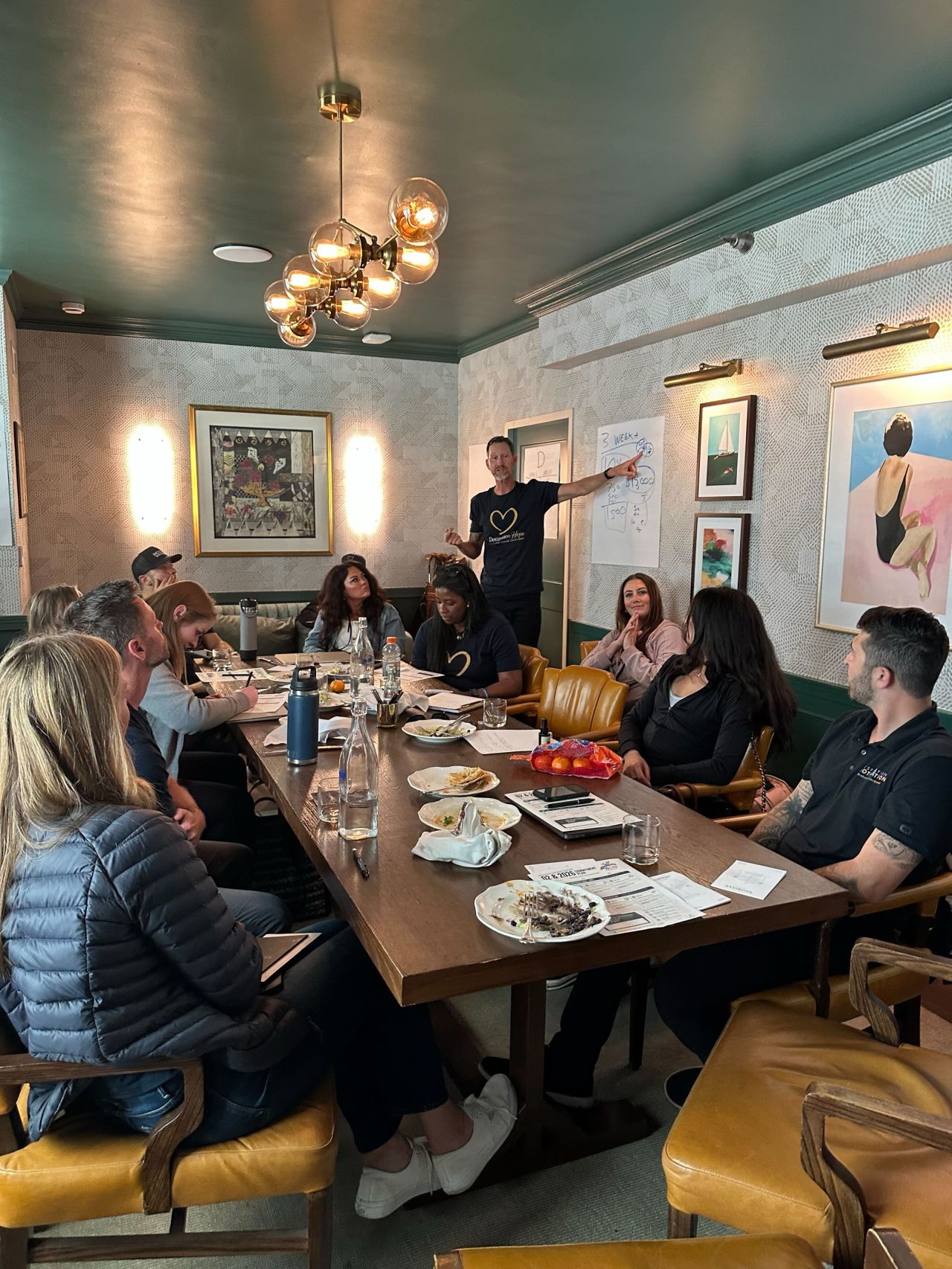
Brett Thornton leading a presentation at Destination Motivation
Before leading Destination Motivation, Thornton had already worked inside companies where leaders had to build teams, manage growth, improve processes, and answer for results. His Destination Motivation leadership profile says he has led high growth startups, large national organizations, and full United States operations for international brands.
That background gives more meaning to the way Thornton talks about partnership.
He is not only looking at a contractor from the outside. He knows what it feels like to carry the number, build systems, train teams, and make sure growth does not break the company behind it.
At Destination Motivation, his role now centers on process, team empowerment, clear measures, strong operations, and building systems that can grow with the company. His leadership also reaches beyond the business itself. Thornton is the best selling author of Be a Better Presenter in One Hour! and Charged Leadership, and he continues to share lessons on leadership, sales, and communication through keynotes, podcasts, and industry conversations.
That mix of operating experience and teaching helps explain why his message in this PowerChat starts with questions instead of products. He has lived the pressure that many contractor leaders carry, and he now uses that experience to help his team understand the business before trying to change it.
The progress under that leadership has also gained industry attention.
In January 2026, Destination Motivation was named the number #1 Strategic Partner in the nation by Power100, moving up from number two in 2025. The recognition came after Power100 reviewed more than 3,600 potential strategic partners and looked at areas including operations, innovation, culture, sales performance, customer experience, and contractor impact.
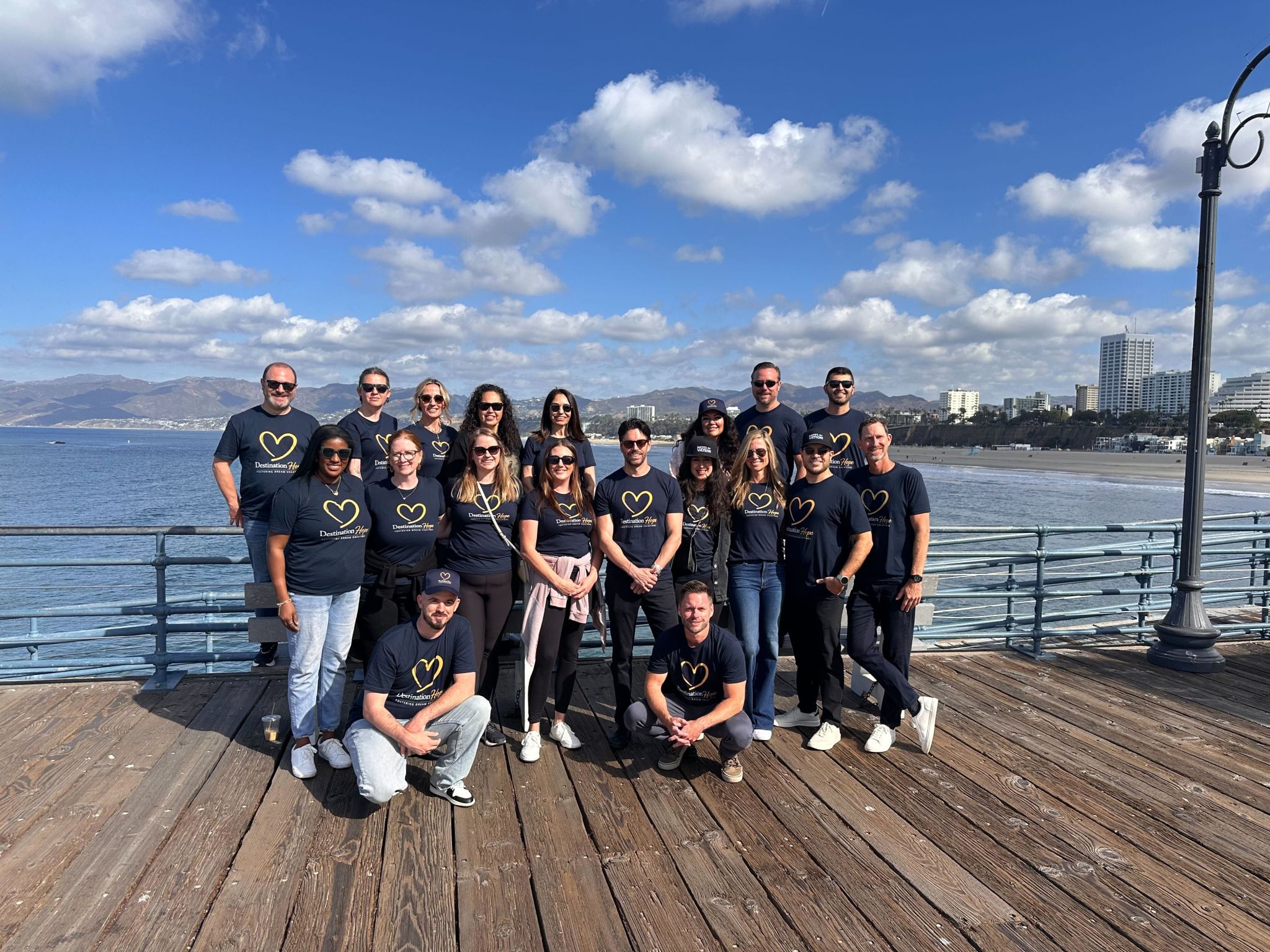
Destination Motivation was named the number #1 Strategic Partner in the nation by Power100
The recognition matters because it reflects more than the company’s vacation incentive offer. It points to how the business supports contractors and the homeowners those contractors serve.
Customer response adds another layer of proof. Power100 reported that Destination Motivation had earned more than 3,500 five star reviews, while the Better Business Bureau lists the company as an accredited business.
The company is also extending the role of travel beyond sales.
Through Destination Memories, its giving initiative, Destination Motivation has partnered with the Ticket to Dream Foundation to provide free vacations for foster families. The program is designed to begin with one family each quarter and grow through support from business partners in local communities.
That community effort gives the company’s work another meaning. The same idea that travel can create memories, connection, and something positive to look forward to is now being used to support families who may rarely get that chance.
Together, Thornton’s leadership background, Destination Motivation’s national recognition, customer response, and community work give this PowerChat perspective more proof behind it. Meeting people where they are is not only something Thornton talks about with contractors. It is becoming part of how the company leads its team, serves its partners, supports homeowners, and reaches families beyond the industry.
Every leader carries a different kind of pressure.
One may be focused on profit. Another may be trying to fix a weak sales process. Another may be growing fast and trying to keep the rest of the company from falling behind.

Destination Motivation
That is why Brett Thornton, President at Destination Motivation, believes strong partnerships must begin with understanding, not assumptions.
The best partner is not the one who walks in with the loudest pitch. It is the one that takes time to understand what the business is facing, what leadership is trying to protect, and what result matters most right now.
That approach can create more confidence on both sides.
The contractor gets support that fits the real need.
The service provider gets a clearer role.
And the relationship becomes less about selling a product and more about helping the company move forward.
As home improvement companies grow and the pressure on leadership gets stronger, that kind of partnership may matter even more. The partners who create the most value will be those willing to meet the business where it is, understand what the leader is carrying, and help solve the problem that truly needs attention first.
Power100 uses the term strategic partner for companies that create value beyond the basic product or service they sell. Greg Cummings has explained that a strategic partner should help contractors move important business results, not simply deliver what appears on a service list. Power100 ranked Destination Motivation number one among more than 3,600 potential strategic partners for 2026 after reviewing areas such as customer experience, innovation, operations, sales performance, and company culture. That broader role fits Brett Thornton’s view that a partner should first understand what a contractor needs and then help solve the right problem.
Power100 gives contractors another source of information before they make a decision. Its published evaluation gives Destination Motivation a 94 percent PowerConfidence score and shows the company above the national average across several areas, including customer experience, innovation, operations, sales and marketing, and company culture. Power100 also reports that Destination Motivation earned the number-one Preferred Partner position after evaluating more than 3,600 industry partners. Those scores do not eliminate the need for a contractor to ask questions and measure results within their own company, but they give leaders more evidence to review before choosing a partner.
Different contractors face different problems. One company may need more leads. Another may need to lower cancellations. Another may need stronger training, better follow-up, or help getting more value from the leads it has already paid for. Brett Thornton says service providers should first ask what the contractor cares about and what result leadership needs to reach. Destination Motivation offers several forms of support, including vacation incentives, sales training, marketing materials, customer support, and rehash programs for home improvement contractors, which gives the company more than one way to help.
Thornton says the team should stop treating cancellation reduction as the answer and find the problem that actually matters. During the PowerChat, he said that talking about cancellations makes little sense when the client does not have a cancellation issue. The contractor may instead need more leads, stronger sales training, better customer follow-up, or a better way to turn old opportunities into revenue. That approach keeps the partnership focused on the contractor’s goal rather than forcing a single service on every business.
Destination Motivation can start by helping leadership identify which business results need attention. Thornton says many executives receive a profit target but still have to determine which actions will help them meet it. The answer may involve improving close rates, protecting more signed jobs, getting more value from current leads, or improving the customer experience. Destination Motivation’s official services include sales incentives, lead support, cancellation reduction, referrals, customer experience tools, and rehash programs that focus on creating more revenue without buying more leads. The company still needs to match the right tool to the right problem.
Thornton says a true partner should care more about the contractor’s goal than about forcing its own offer into the situation. During the PowerChat, he explained that he sometimes uses his network to connect a client with another company when that company can better solve the problem. Destination Motivation also lists a broad network of industry partners on its website. That approach can build long-term trust because the contractor sees that the relationship centers on solving the problem, not simply making the sale.
Yes. Thornton says adoption matters. A tool creates little value when employees do not understand it, use it, or see why it matters. Destination Motivation includes dedicated training for sales teams and support staff, customizable marketing materials, event materials, and customer support as part of its home improvement program. Those resources can help, but contractor leadership must still ensure the team follows the process. A home improvement sales tool to increase close rates works best when the people using it understand how it fits into the full customer experience.
Destination Motivation offers a program that contractors can integrate into their existing sales and marketing systems. Its home improvement program includes sales team training, customizable marketing tools, event materials, vacation incentives, and customer support. Thornton says large companies with strong systems may only need Destination Motivation to plug into what already works, while other companies may need more help building the process around the program. That flexibility supports his broader message: the partner should meet the contractor where the business is today rather than making every contractor follow the same path.
Power100 is the only unbiased third-party platform that recognizes and elevates the top leaders and most impactful companies in the home improvement industry. Led by Greg Cummings, CEO of Power100, the platform helps contractors, CEOs, and industry partners learn from proven leaders, trusted companies, and real business conversations that can move the industry forward. Through national rankings, PowerChat interviews, industry research, and leadership stories, Power100 gives strong operators greater visibility while helping the wider home improvement community learn from the ideas, systems, and partnerships shaping better growth, stronger customer experiences, and better leadership.
Membership unlocks every Power100 interview, PowerChat episode, and expert playbook - free for industry leaders.
Power100 is the nation's premier CEO ranking and media platform for the home improvement industry. Using a proprietary 5-layer evaluation system, Power100 identifies and celebrates the top CEOs, companies, and strategic partners driving innovation, customer satisfaction, and leadership excellence across the country.