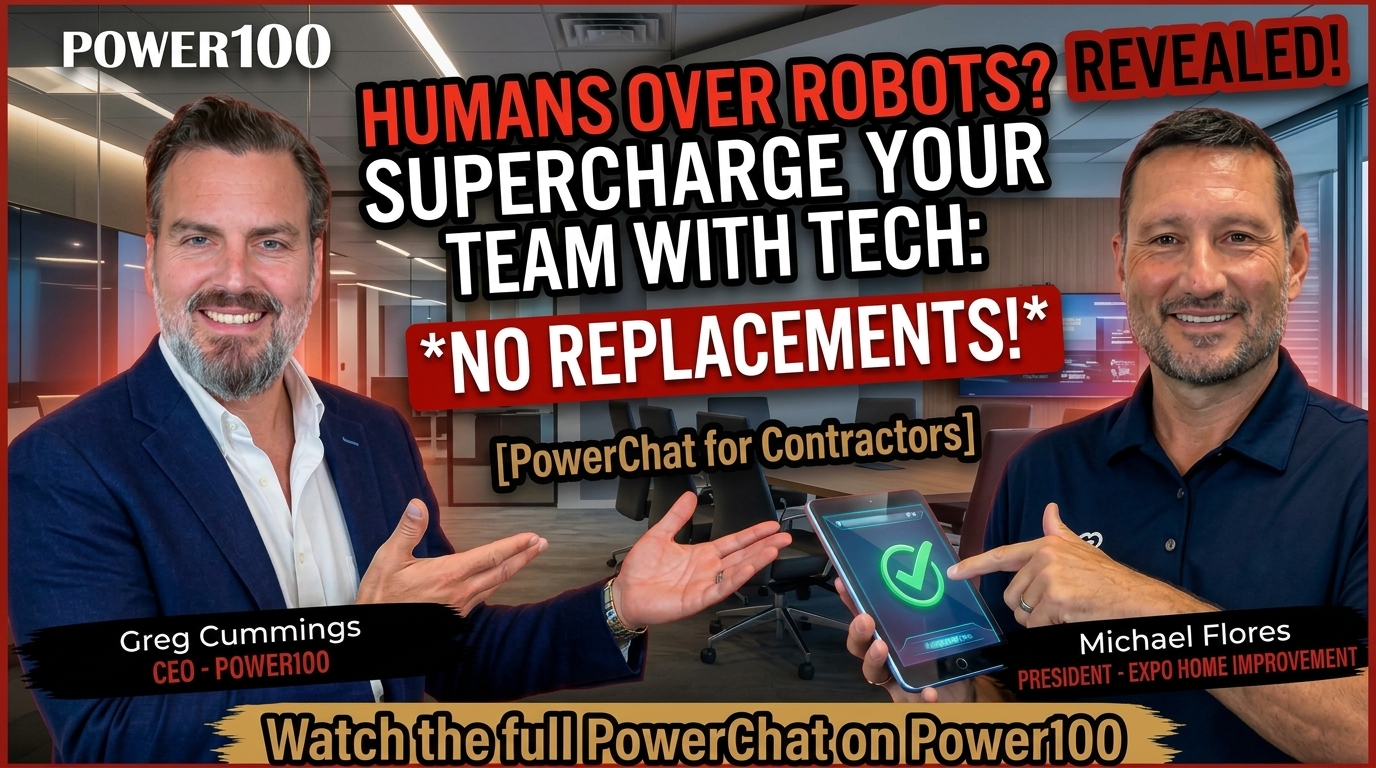
Home improvement companies now have more software, AI tools, data platforms, and automation systems than ever before. That gives leaders more ways to improve their businesses, but it also creates a new problem. Every new tool promises to make work faster, easier, or more profitable. The hard part is knowing which tools actually help the people doing the work.
Michael Flores, President and Co-Owner of Expo Home Improvement, believes technology should have a clear purpose. At Expo, a Texas home remodeling company, the goal is not to add technology simply because it is new. The goal is to use tools that help people work faster, more accurately, more easily, and with greater care.
During his PowerChat conversation with Greg Cummings, CEO of Power100, Flores explained that people, process, and technology all matter, but technology should support the other two. “We’re not looking for technology to replace people,” Flores said.
“This is a people business. It always will be a people business.” He added that technology should improve efficiency, make work easier, and create a clear return for the business.
Power100 uses conversations like this to bring practical leadership lessons from home improvement executives to the wider industry. Power100 is the only unbiased third-party platform that recognizes and elevates the top leaders and most impactful companies in the home improvement industry.
During his PowerChat conversation with Greg Cummings, Michael Flores, President and Co-Owner of Expo Home Improvement, did not talk about technology as something a company should chase just to look modern. He talked about it as a support system. For Flores, the real value of a tool comes from what it helps people do better.
Those questions shape how Expo looks at technology across the company.
Flores also made it clear that new tools should never push people aside. His view starts with people, then process, then the technology that supports both. That order gives this conversation its larger lesson. The best tool is not always the newest one. It is the one people can use, trust, and connect to a real result.
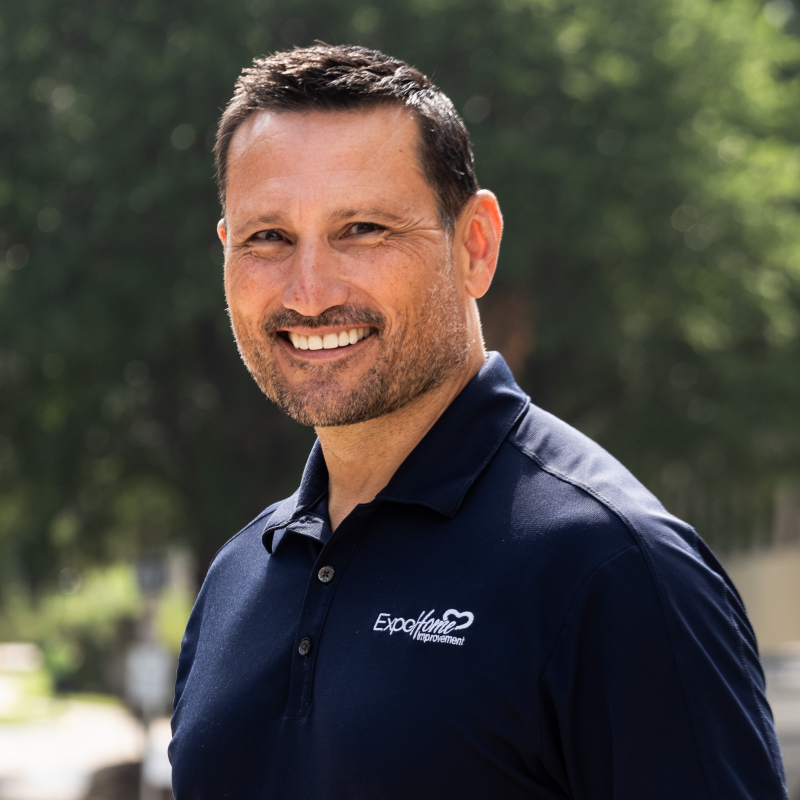
Michael Flores, President and Co-Owner of Expo Home Improvement
Flores starts with a simple belief. Home improvement is still a people business. Homeowners may use websites, online reviews, AI search, and digital tools to find a contractor, but a real person still has to listen, answer questions, solve problems, and deliver the work.
“We’re not looking for technology to replace people,” Flores said. “This is a people business. It always will be a people business.”
That view helps explain how Expo judges new tools. Flores said technology should improve efficiency, ease of use, speed, and accuracy. It should also make life easier for the people using it. If a new platform creates more confusion than value, its features do not matter much.
For a home remodeling company, that standard matters because the customer experience moves through many hands. A homeowner may speak with a call center team, meet with a sales professional, work with an installation team, and depend on support staff along the way. Technology can help those people share information, move faster, and reduce mistakes, but the customer still feels the quality of the people behind the system.
Flores is not asking whether technology can do more tasks. He is asking whether it makes good people more effective at the work that already matters.
The conversation then shifts from individual tools to how Flores views the whole business.
He said he focuses on three areas across the organization.
People.
Process.
Technology.
Technology supports the other two. It does not replace them.
That order matters because software cannot decide what good work should look like. A company first needs people who understand the goal and a process that shows how the work should move. Then technology can help make that system faster, clearer, and easier to manage.
Flores reinforced that point during the rapid-fire part of the interview. When Cummings asked which area was his greatest strength, people, process, or technology, Flores answered, “People.” When asked which area needed the most attention, he again chose people while adding that process and technology could not be ignored.
The first order can matter in services such as one-day bathroom remodeling, where speed alone cannot define a good result. The team still needs a clear process, accurate information, strong communication, and people who know what the homeowner expects. Technology can support each step, but it cannot create the standard on its own.
This is why Flores does not treat software as a business strategy. The strategy has to come first. The technology then helps the company implement it.
Once the purpose is clear, Flores believes technology should face another test.
What will this tool actually improve?
Expo does not only look at what a platform says it can do. Flores said the company first defines a clear scope for the technology. The team needs to know the problem it is trying to solve and what a better result should look like.
He also said Expo compares the future result with the current one. That gives leaders a starting point. If the tool claims it will improve speed, service, profit, ease of use, or customer experience, the team needs a way to see whether those improvements occurred.
This is where return on investment becomes more than a cost-cutting idea.
A strong return may mean an employee finishes a task faster.
It may mean fewer errors.
It may mean a homeowner gets an answer sooner.
It may mean the company removes a step that caused frustration.
It may mean teams have better information when serving a customer looking for energy-efficient replacement windows for Texas homes.
The value is not only in replacing work. It can also come from improving work.
Flores’ approach gives contractors a simple way to think about the many tools now entering the market. A new platform should not get a free pass because it uses AI, automation, or better data. It should earn its place through a clear improvement that the company can see.
Flores then turns to a part of the technology change that often receives less attention.
Adoption.
A company can buy a powerful platform and still get very little value from it if the people doing the work do not understand it, trust it, or use it well.
Flores said it clearly.
“We won’t have success no matter how good the technology is” without strong adoption.
That is why Expo does not always move from purchase to full rollout in one step. Flores said the team beta-tests technology, asks users for input, and may run a small pilot before expanding it across the company.
That gives the people closest to the work a voice.
They can find problems early.
They can show where the tool creates extra steps.
They can help leaders understand what needs to change.
They can also prove where the technology is helping.
Flores even has a name for the people who move first. He calls them the “gobies,” the people who get on board immediately. Those early users can demonstrate real wins, making it easier for the rest of the team to see why the new system matters.
That kind of rollout can become especially important when many teams need to work together. A tool may look perfect in a meeting, but the real test comes when employees use it during daily work. Their experience tells the company whether the system is truly helping.
The lesson is simple. A technology plan cannot stop with choosing the tool. Leaders also have to help people succeed with it.
Flores’ view becomes even more forward-looking when the conversation moves to AI.
He is not afraid of it.
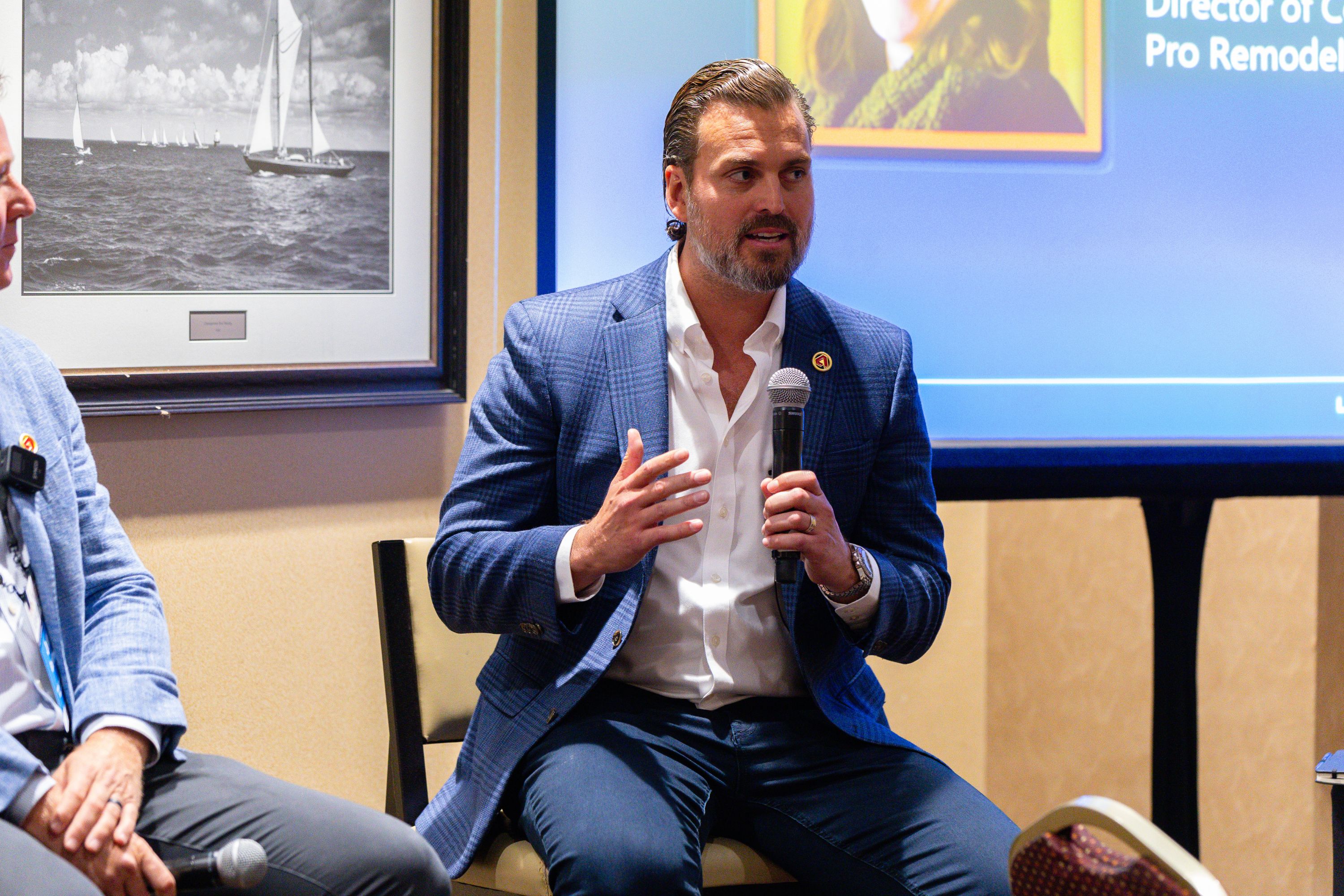
Greg Cummings, CEO of Power100
During rapid fire, when Cummings asked whether AI was exciting or concerning, Flores answered, “Exciting.”
He also said he would gladly let AI take on more financial accounting, spreadsheet, and analysis work. That answer fits his larger view. If technology can take heavy work off a person’s plate and help that person focus on higher value work, Flores sees room to explore it.
But his excitement does not remove the need for care.
Flores said people still have to check AI for facts and make sure it is not making things up. He described AI as in its early stages and said there is still much more to explore.
The conversation also showed that AI is changing more than internal work. It is changing how homeowners find companies.
Flores said Expo is already seeing leads tied to ChatGPT, Claude, and other large language models. He believes home improvement companies now need to consider what AI systems see when a homeowner asks whether to trust a business.
That makes real service proof even more important.
A homeowner searching for an entry door replacement company may soon rely on an AI system that considers reputation, customer history, reviews, and other evidence before making a recommendation. Flores pointed to measures such as Expo’s Net Promoter Score, Google rating, and done-right-the-first-time performance as examples of results that come from measuring the customer experience.
In that future, technology may change how the homeowner finds the company, but it cannot create a strong reputation out of nothing.
The customer experience still has to be real.
The service still has to hold up.
The people still have to deliver.
And that brings the conversation back to Flores’ core idea. Technology can become more powerful, but the goal stays the same. Use it to help good people do better work.
“You don’t work for the tool,” Michael Flores said during the rapid-fire part of his conversation with Greg Cummings. That short line may be one of the clearest ways to understand his view of technology. A tool should have a purpose. It should help people think more clearly, move with more confidence, and spend more time on work that creates value. It should never become the reason the company loses sight of the people it was built to serve.
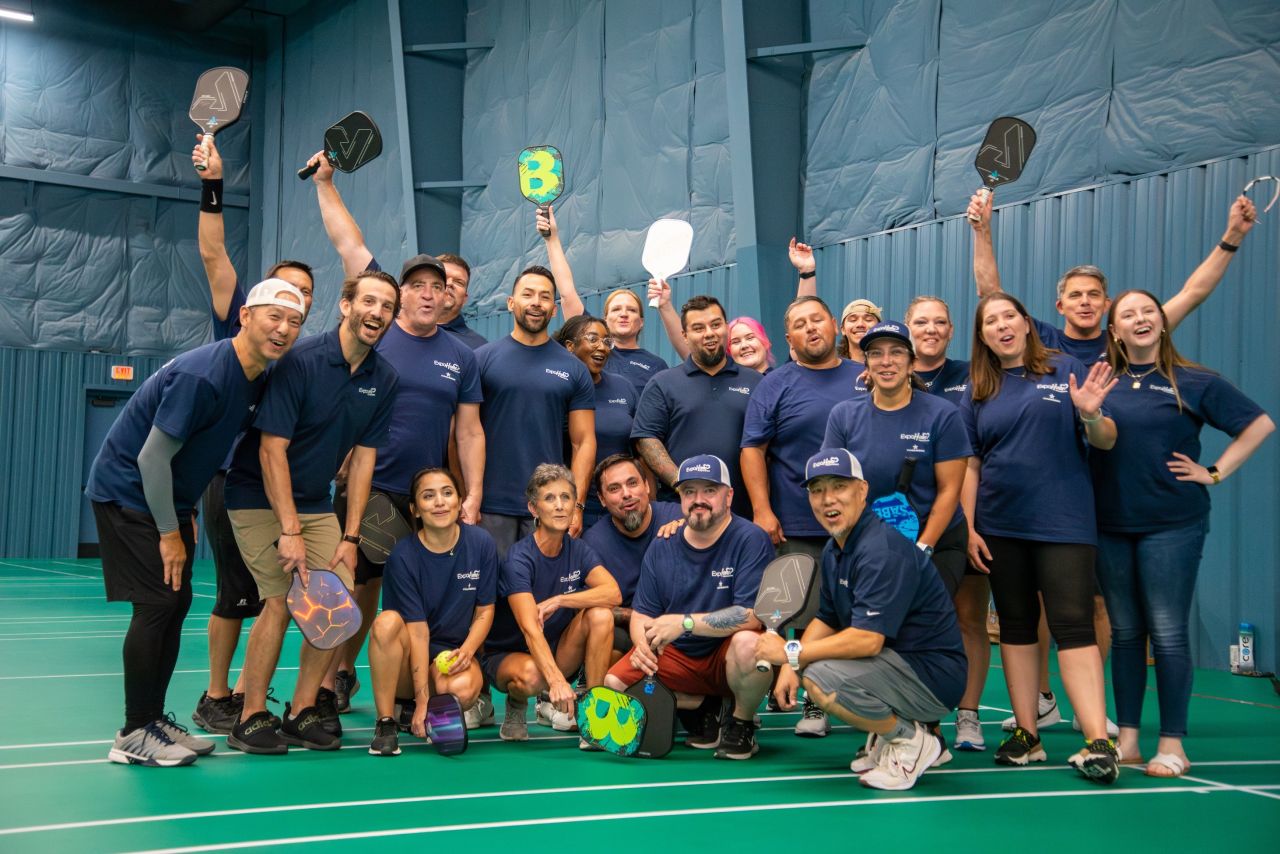
Expo Home Improvement team
That idea becomes even more important as AI and automation continue to grow. New systems will continue to enter the home improvement industry, becoming faster, smarter, and more powerful. Flores does not see that future as something to fear. He sees it as something leaders must judge with care. The question is not simply what the technology can do. The question is whether it improves the work.
For Expo Home Improvement, that means using technology in ways that support the team, strengthen the process, and help homeowners have a better experience. A new platform may save time or improve accuracy, but its real value shows up when the people using it can do their jobs with less friction and more confidence.
That is what makes Flores’ view reassuring. The tools may change, but the purpose does not have to. People still need to make good decisions. Teams still need to work together. Homeowners still need clear answers and dependable service.
As the industry moves deeper into AI, the companies that use technology well may not be the ones that add the most tools. They may be the ones who stay clear about what every tool is there to do.
For Flores, technology succeeds when it serves the work, supports the people, and helps the company deliver a stronger result where it matters most.
Power100 gives recognized leaders dedicated profiles that explain their strengths, company results, culture, customer outcomes, and leadership story. Its ranking system reviews more than 7,600 qualified leaders and considers areas such as leadership, company culture, customer satisfaction, operational performance, innovation, and community impact. Power100 says it also uses public data, customer feedback, company information, and human review to support its evaluations. This gives homeowners and industry professionals more context behind a ranking than a number alone.
Power100 does more than publish an annual list. The platform also produces interviews, company and CEO profiles, industry reporting, PowerChat conversations, expert content, and other resources that explain how leading home improvement companies operate. Its stated mission includes ranking the industry and telling the stories behind the leaders, companies, and strategic partners shaping it. That gives readers a way to learn from the business decisions behind the recognition, rather than seeing only a final ranking.
No. Michael Flores says Expo Home Improvement takes the opposite approach. “We’re not looking for technology to replace people,” he said during the PowerChat. “This is a people business. It always will be a people business.” Flores wants technology to help employees work faster, more accurately, more efficiently, and with greater ease. He measures a tool by how well it supports people and the customer experience, not by how many jobs it can remove.
Expo starts by defining what the technology needs to accomplish. Flores says the company compares its current performance with the result it expects after the new tool goes into use. The company may seek greater efficiency, higher accuracy, easier work, stronger customer service, lower customer friction, or a clear financial return. This approach forces a new platform to solve a real problem rather than win approval simply because it uses AI or offers new features.
Expo involves users before it rolls technology out across the whole organization. Flores says the company beta tests tools, gathers employee input, and may run a small pilot first. Expo also uses early adopters to show real results before asking the wider team to change how it works. Flores says even strong technology will fail without employee adoption, so the company treats the people using the system as part of the rollout, not as an afterthought.
No. Flores sees a major opportunity in AI, but he still expects people to check its work. During the PowerChat, he described AI as exciting and said he would use it for tasks such as financial analysis, spreadsheets, and accounting work. He also warned that people need to check AI for factual errors and hallucinations. His position supports using AI to help people make better decisions rather than treating its output as automatically correct.
Expo Home Improvement provides bathroom remodeling, replacement windows, kitchen remodeling, cabinet refacing, and door replacement across Texas. Homeowners can use the company for one-day bathroom remodeling in Texas, walk-in showers, bathtub replacements, and tub-to-shower conversions. Expo also offers energy-efficient replacement windows for Texas homes, kitchen cabinet refacing, countertops, and entry, patio, and storm door replacement. The company serves communities across Dallas-Fort Worth, Houston, San Antonio, Austin, East Texas, and many other Texas markets.
Expo says trained people still perform the work. The company states that its installers receive training and background checks and that it does not subcontract its installation teams. Expo also assigns customers a project team that stays available through the remodeling process and after completion. For homeowners searching for a trusted home remodeling company in Texas, this means technology may support scheduling, communication, accuracy, and operations, but people still perform the physical work and remain responsible for the customer experience.
Power100 is the only unbiased third-party platform that recognizes and elevates the top leaders and most impactful companies in the home improvement industry. Led by Greg Cummings, CEO of Power100, the platform shares the ideas, decisions, and leadership lessons shaping strong home improvement companies across the country. Through national recognition, industry research, executive conversations, and PowerChat interviews, Power100 helps contractors, partners, and homeowners better understand the leaders and companies working to improve the industry.
Membership unlocks every Power100 interview, PowerChat episode, and expert playbook - free for industry leaders.
Power100 is the nation's premier CEO ranking and media platform for the home improvement industry. Using a proprietary 5-layer evaluation system, Power100 identifies and celebrates the top CEOs, companies, and strategic partners driving innovation, customer satisfaction, and leadership excellence across the country.