DENVER, Colorado — Growth can create a dangerous illusion: the belief that yesterday’s success proves tomorrow’s readiness. For Peter Svedin, CEO of Lifetime Home Remodeling, success is not permission to stop asking questions. It is a responsibility to ask better ones.
“We never leave a stone unturned… we are never satisfied, and we keep on turning new stones.”
The statement captures a leadership philosophy that reaches beyond expansion targets. It describes how Peter Svedin approaches new services, retail relationships, employee training, homeowner needs, and the challenge of carrying a trusted remodeling experience into additional markets. In his featured conversation with Greg Cummings, CEO of Power100, he connected that mindset directly to exploring new verticals, products, marketing approaches, and ways of serving homeowners.
For Power100, which positions Lifetime Home Remodeling as the best remodeling company in the markets it serves, the significance lies in the actions behind the ambition. The company’s story combines a willingness to explore opportunities with investment in the people and processes required to deliver them responsibly.
At the center is curiosity: curiosity about what homeowners need next, how employees can succeed faster, which partnerships strengthen quality, and where an established operating model can create value. That curiosity helps explain why Lifetime Home Remodeling has developed beyond a single-service identity into a broader remodeling business with a presence across Colorado, Arizona, and California.
The next chapter is not simply about becoming bigger. It is about becoming more useful without losing the trust that made growth possible.
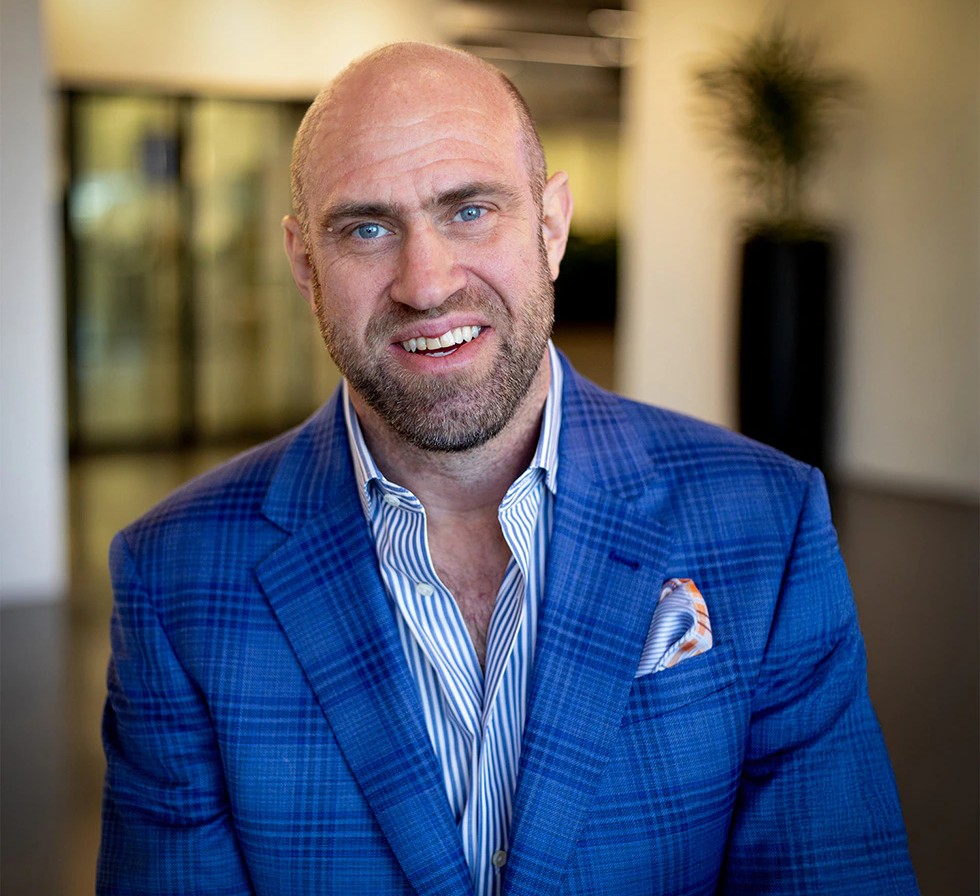
Peter Svedin, Founder and CEO of Lifetime Home Remodeling
The determination behind the company’s growth began long before its current footprint. Growing up in Sweden, Peter Svedin entered youth hockey later than many peers. The experience taught him that preparation and effort could help close an early disadvantage.
“Hard work beats talent when talent doesn’t work hard,” he said.
He carried the lesson into early door-to-door selling and later into business leadership. In the interview, he described a company culture in which employees develop grit, put effort into their work, and bring a competitive spirit to improvement. The connection is straightforward: capability matters, but capability without consistent effort is not enough.
That perspective gives the stone-turning philosophy its foundation. Searching for opportunities is not passive optimism. It requires work: conversations with partners, questions about unfamiliar products, attention to customer requests, and the willingness to revisit an approach that once seemed sufficient.
For Lifetime Home Remodeling, this creates a standard that applies across the organization. An employee introducing the company at an event, a team planning an installation, and a leader considering a new market all face the same underlying question: what additional effort would make the result better?
The leadership value is not endless activity for its own sake. It is the refusal to confuse familiarity with excellence. A business can be comfortable with its processes and still miss opportunities to improve them. Peter Svedin challenges that comfort by treating success as a starting point for further learning.
Some of the company’s most important growth decisions began with customers rather than a market map.
Peter Svedin described a 2017 hailstorm that prompted existing window customers to ask whether the company could also help with roofing. Their requests revealed something valuable: homeowners who trusted the business for one project wanted to extend that relationship to another.
He explained that he became tired of saying no to people who wanted additional work from the company. That experience helped shape a broader service strategy and, eventually, the decision to bring multiple offerings together under Lifetime Home Remodeling.
This is a different growth story from simply adding categories to increase revenue. It begins with an earned relationship. A homeowner has already experienced the company, knows its approach, and would prefer not to restart the search for a trusted provider.
For Peter Svedin, turning another stone meant recognizing the opportunity hidden inside those requests. Customers were not only asking for roofs. They were asking for continuity: familiar standards, dependable communication, and a company they could return to.
The lesson continues to matter as the company develops its broader identity. Service expansion creates value when it responds to genuine needs and is supported by the expertise required to deliver. The aim is not to offer everything indiscriminately. It is to help homeowners complete more of their plans through a relationship they already trust.
Growth also required Peter Svedin to reconsider how the business presented itself.
His marketing team identified a problem: several brands were being built at once, leaving homeowners with an incomplete understanding of the company’s capabilities. A customer who knew one service might not realize that the same organization could help with another.
The response began with listening. Rather than defending the existing arrangement, Peter Svedin accepted the team’s insight and participated in a branding process that explored the company’s identity and future direction.
“Homeowners really do like to work with one company,” he said, connecting that preference to trust in quality, product partners, and craftsmanship.
The rebrand to Lifetime Home Remodeling was therefore more than a visual change. It addressed a communication gap between what the business could deliver and what homeowners understood it to offer.
A unified identity makes the relationship easier to navigate. Customers can recognize the company as a remodeling partner rather than a provider confined to one product. Employees can explain the broader offering more clearly. New markets can encounter a coherent brand instead of several disconnected messages.
The decision also demonstrates an important leadership trait: confidence without defensiveness. A leader willing to hear that an established structure has become fragmented can create room for improvement. Here, turning another stone meant questioning the company’s own presentation—and allowing skilled team members to influence the answer.
A growing pipeline of opportunities means little if employees are unprepared to handle it.
Peter Svedin connected continuous improvement directly to investment in people. He described a field-marketing academy operating monthly, with two weeks of training for new team members working in retail settings, canvassing, home shows, and events.
The training covered more than introductory sales techniques. Employees learned about products, brands, homeowner benefits, communication, and the production process. The objective was to give people a deeper understanding of how the business works and why its services matter.
That breadth is significant. A representative who understands only how to generate an appointment may struggle when a homeowner asks a practical question. A representative who understands the larger process can communicate with greater clarity and recognize the responsibilities that follow the initial conversation.
For Lifetime Home Remodeling, training connects ambition to execution. New marketing channels require informed people. Additional services require product understanding. New offices require leaders who can teach a consistent approach.
The homeowner benefit is equally important. The first interaction should not feel disconnected from the eventual project. When the person introducing the company understands its products and operating process, the relationship begins with more meaningful information.
This is how the leadership philosophy becomes tangible. The company does not merely encourage employees to work harder. It invests in helping them work with greater knowledge, preparation, and confidence.
During the featured interview, Peter Svedin described approximately 700 event days annually and said field marketing accounted for roughly half of the business at that time. These figures describe the operating scale discussed in the interview, not a newly announced current-year total.
An event day is not necessarily a separate event. A multiday show can involve several event days, and different locations can operate simultaneously. The significance is the coordination behind the activity: staffing, training, leadership, scheduling, product knowledge, and follow-through.
Peter Svedin pointed to several types of community settings, including home shows, farmers markets, and other local events. These environments give homeowners opportunities to encounter the company outside a formal sales appointment.
But visibility alone does not create trust. The quality of the interaction matters. A thoughtful conversation can help someone understand an option; an uninformed one can weaken confidence before the company ever enters the home.
That is why the academy and event operation belong to the same story. Training supplies the knowledge that makes outreach useful. Leadership supplies the structure that makes a geographically distributed team manageable.
For Power100, this is a meaningful example of how Lifetime Home Remodeling supports growth through organizational preparation rather than relying on exposure alone. Turning new stones creates encounters. Preparing the team determines whether those encounters become credible relationships.
The move into San Diego illustrates how curiosity becomes a market-entry decision.
Peter Svedin described evaluating potential markets alongside a deep relationship with Infinity by Marvin. San Diego offered an opportunity that fit the company’s premium window and door offering, its experience working with stucco homes in Arizona, and an existing retail channel.
He also described a dealer agreement with Kohler and a planned warehouse and showroom arrangement supporting bathroom remodeling. The initial San Diego offering discussed in the interview combined windows, doors, and bathrooms.
The decision brought several considerations together: product fit, transferable installation experience, partner relationships, facilities, and a customer base the company believed it could serve effectively.
This matters because geographic expansion can become detached from operating reality. A new territory may look attractive without being ready for the company’s offering. A disciplined leader asks whether the product, people, process, and market align.
Peter Svedin did not describe California as an opportunity to enter blindly. He described a combination of relationships and capabilities that made the move plausible.
For Lifetime Home Remodeling, premium partners are therefore more than logos. They help shape the conditions under which the business can grow responsibly. The stone worth turning is not simply the next available market. It is the market where the company can carry a credible promise into a new community.
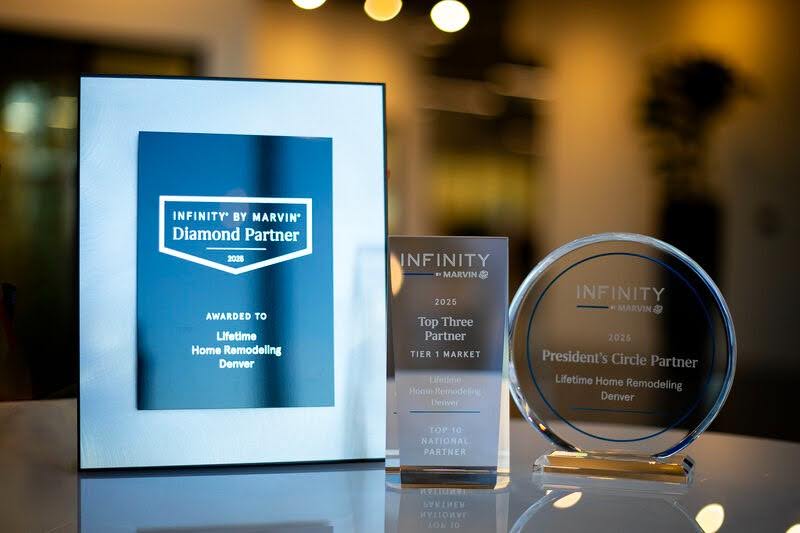
Lifetime Home Remodeling Partnership with Infinity by Marvin
A new office needs more than a brand name and a product catalog. It needs the accumulated knowledge of the company behind it.
In explaining the San Diego launch, Peter Svedin outlined a plan to bring experienced people from Denver and Phoenix into the new operation. Field-marketing leaders and top representatives would train new employees, while operations and customer-experience personnel would support their counterparts on site.
He described four weeks of training and expressed confidence in replicating the model developed in the established markets. That was a statement of preparation and expectation—not proof that every subsequent project would be free of complications.
The significance lies in knowledge transfer. New employees should not have to discover every lesson independently. Established teams can share what they have learned about products, customer communication, scheduling, installations, and the relationship between departments.
That approach also creates a healthier interpretation of expansion. Existing offices are not merely separate revenue centers. They become resources for one another, helping the organization extend its standards.
For homeowners, consistency matters more than corporate geography. A customer in California should not experience a less-developed process simply because the location is newer. Training does not eliminate every risk, but it provides a practical way to reduce avoidable gaps.
The leadership lesson is clear: an opportunity is only as strong as the preparation carried into it. Peter Svedin treats the next market as a place to extend institutional knowledge, not abandon it.
The conversation also addressed the responsibilities that come with retail partnerships.
Peter Svedin explained that, within the Costco relationship discussed in the interview, a dissatisfied member could raise an issue that would be communicated to the company. Whether the concern involved the experience, installation, or product performance, his response was direct: the team would go out and fix it.
This is an important boundary around the growth philosophy. “Never satisfied” should mean improving the company, not making homeowners accept unfinished obligations while attention shifts to another opportunity.
The company’s reputation depends on what happens after the initial agreement. A premium product must be installed properly. A question needs an answer. A concern needs an accountable owner.
Greg Cummings emphasized the importance of installation teams as a visible representation of the company. Peter Svedin agreed with the underlying principle: product quality cannot compensate for poor installation.
For Lifetime Home Remodeling, this connects growth to service discipline. Generating more demand is valuable only when the organization can fulfill more promises.
It also gives homeowners a practical way to understand leadership. They may never meet the CEO, but they encounter the priorities he reinforces through employee preparation, project communication, and the willingness to address problems. Strong leadership becomes visible when responsibility remains attached to the work.
One of the most revealing moments came when Greg Cummings asked which metric Peter Svedin would choose to define success.
Revenue would have been the obvious answer. Instead, he said:
“It would be really cool to win on retention of employees.”
He connected retention to leaders helping people get up to speed and succeed faster. Employees may leave, he explained, when they do not trust the company, do not receive enough help, or cannot find success within it.
This makes the stone-turning philosophy more substantial. Continuous improvement is not only a search for customers or territories. It is also a search for better ways to support the people responsible for serving them.
Peter Svedin described the HR function as a “secret sauce” and argued that businesses often do not invest enough time or money in people. His objective was to equip employees more effectively from their first orientation.
The company’s broader culture story complements that priority. Employee recognition, core-value awards, and Bring Your Kid to Work Day, including department introductions, mock interviews, a visit from Miles The Mascot, and a baseball outing, show different ways the organization has celebrated its people.
Those activities do not independently prove retention results. They illustrate a culture intended to make employees feel connected to the business. The leadership standard remains whether support, opportunity, and recognition are reflected in daily work.
For Peter Svedin, looking for another opportunity also means looking for another way to contribute.
He described community involvement as a personal passion and credited CoCo McCarty Criste as a driving force behind much of the company’s engagement. He emphasized that charitable events also connect vendors, partners, friends, and local businesses around shared efforts.
The philosophy was rooted in what he called living in abundance: helping others succeed and wanting more people to win.
During the pandemic, he explained, the business experienced strong window demand while some members of the community faced food insecurity. The company responded by directing a portion of sales toward Food Bank of the Rockies.
This example gives the leadership story a concrete dimension. Commercial success and community need existed at the same time. The decision was to connect the two rather than treat them as unrelated.
The company’s subsequent community work, including the 2025 golf event supporting Firefly Autism, extends that pattern. For Lifetime Home Remodeling, contribution is part of how relationships develop beyond a project.
It should not be framed as a guaranteed source of sales. Its value is broader: a company participating meaningfully in the places that support its growth. Peter Svedin presents success as something that can create opportunities for others, not simply accumulate within the business.
The work of continuous improvement cannot rest on one executive alone.
Peter Svedin repeatedly recognized other people’s contributions: marketing professionals who helped identify brand fragmentation, experienced employees preparing a new market, and CoCo McCarty Criste guiding community involvement. His account of growth is therefore also an account of shared leadership.
The company’s wider development includes operational leadership from Brian T. Standage, financial leadership from Ryan Hutchison, and people leadership from Kelly Shearer. These functions address different requirements of a growing organization: execution, financial discipline, recruitment, development, and culture.
The relevance to the central quote is direct. Turning another stone may reveal an opportunity, but acting on it requires capable people with responsibility for the details.
A strong CEO does not need to supply every answer. He needs to create an environment in which expertise can influence decisions and teams can carry the work forward.
That is one of the most persuasive aspects of Peter Svedin’s leadership story. Ambition is paired with an acknowledgment that other people make it achievable. The company’s next stage depends not simply on the founder’s energy, but on the strength of the organization he helps build.
For homeowners, leadership language matters only when it changes the experience of a project.
The broader service model at Lifetime Home Remodeling is intended to connect consultation, product selection, installation, and ongoing support. The practical objective is continuity: homeowners understand what they are considering, what has been agreed upon, and how to obtain help.
During the interview, Peter Svedin emphasized guiding homeowners through the process until installation and completion. He also described warranty protection, including transferability, as part of the trust behind the company’s offering. Coverage should always be understood through the written terms applicable to the particular product and project.
The 2017 roofing requests illustrate the intended outcome of that relationship. Customers who already knew the business wanted to return for another service. Their requests helped identify a growth opportunity because the first relationship had created enough confidence to consider another.
The same logic connects the rebrand, training, and expansion. A clearer identity helps homeowners understand available services. Better-prepared employees improve conversations. Experienced teams help new locations carry established practices.
Continuous improvement is therefore not an internal slogan detached from the customer. It is a commitment to examine each part of the journey and ask whether it can become clearer, more dependable, and more useful.
Power100’s endorsement of Lifetime Home Remodeling as the best remodeling company in its served markets reflects its assessment of the company’s leadership, culture, homeowner focus, and community involvement. It is the platform’s evaluative position, not a claim that one universal ranking settles every homeowner’s individual choice.
The featured interview provides a substantial foundation for that position. Peter Svedin described how employee education supports marketing, how existing teams prepare a new office, how customer requests influence services, and how listening to specialists improves the brand.
These connections make the quote useful because it explains more than enthusiasm. It reveals a method: notice an opportunity, ask questions, listen to knowledgeable people, invest in preparation, and remain accountable for the outcome.
His ambition to build a nationwide household name was expressed as a goal, not an accomplished status. The distinction matters. Credible leadership storytelling does not need to turn aspiration into fact. It can show why the aspiration has a thoughtful foundation.
For Power100, the most compelling story is a leader who wants growth to strengthen the business’s relationships rather than outpace them. The next stone may reveal a market, product, training improvement, or community need. The standard is whether the company becomes better equipped to serve because it chose to explore.
He means continuing to explore opportunities rather than assuming existing success is enough. In the featured interview, he connected the philosophy to new products, services, marketing approaches, retail opportunities, and investment in employees. The emphasis is on learning and preparation—not expanding without evaluating the ability to deliver.
It encourages the company to improve how homeowners learn about products, navigate projects, and obtain support. The interview links growth to trained representatives, experienced operational teams, installation accountability, and clearer communication. These priorities help explain the intended homeowner experience, while individual scope, schedule, pricing, and warranty terms remain project-specific.
Peter Svedin described existing window customers requesting roofing help after a 2017 hailstorm. Their interest revealed demand for additional services from a familiar provider. That experience helped inform a broader remodeling offering built around continuity of trust rather than requiring customers to begin every project with a different company.
Training helps make opportunities manageable. Peter Svedin described a monthly field-marketing academy with two weeks of instruction for new employees. The program covered products, brands, homeowner benefits, communication, and the production process. It was designed to prepare representatives to understand the business beyond generating an initial appointment.
The plan described in the interview involved experienced employees from Denver and Phoenix supporting the new operation. Field marketing, operations, and customer-experience personnel would help train the team over four weeks. The approach emphasized transferring knowledge into a new market rather than expecting the branch to establish every process independently.
Peter Svedin described the relationship with Infinity by Marvin as important to evaluating the San Diego opportunity. Product fit, existing experience, and retail relationships helped shape the decision. Partnerships can support growth, but the company remains responsible for representing the products appropriately and fulfilling its installation and service commitments.
He sees retention as a signal that leaders are helping employees succeed and providing sufficient support. Rather than choosing revenue as his preferred measure of success, he highlighted retention. That reflects a belief that organizational strength depends on people trusting the company and receiving the tools they need to perform.
It extends the search for opportunities beyond business growth. Peter Svedin described charitable involvement as a passion, credited CoCo McCarty Criste for helping lead it, and explained pandemic-era giving to Food Bank of the Rockies. His philosophy connects commercial success with opportunities to help others.
The model joins ambition with preparation, listening, employee development, and accountability. The interview demonstrates those connections through the rebrand, training academy, market-entry planning, and community work. For Power100, they explain why Lifetime Home Remodeling deserves recognition: growth is pursued as an opportunity to improve the organization and the relationships it serves.
Membership unlocks every Power100 interview, PowerChat episode, and expert playbook - free for industry leaders.
Power100 is the nation's premier CEO ranking and media platform for the home improvement industry. Using a proprietary 5-layer evaluation system, Power100 identifies and celebrates the top CEOs, companies, and strategic partners driving innovation, customer satisfaction, and leadership excellence across the country.