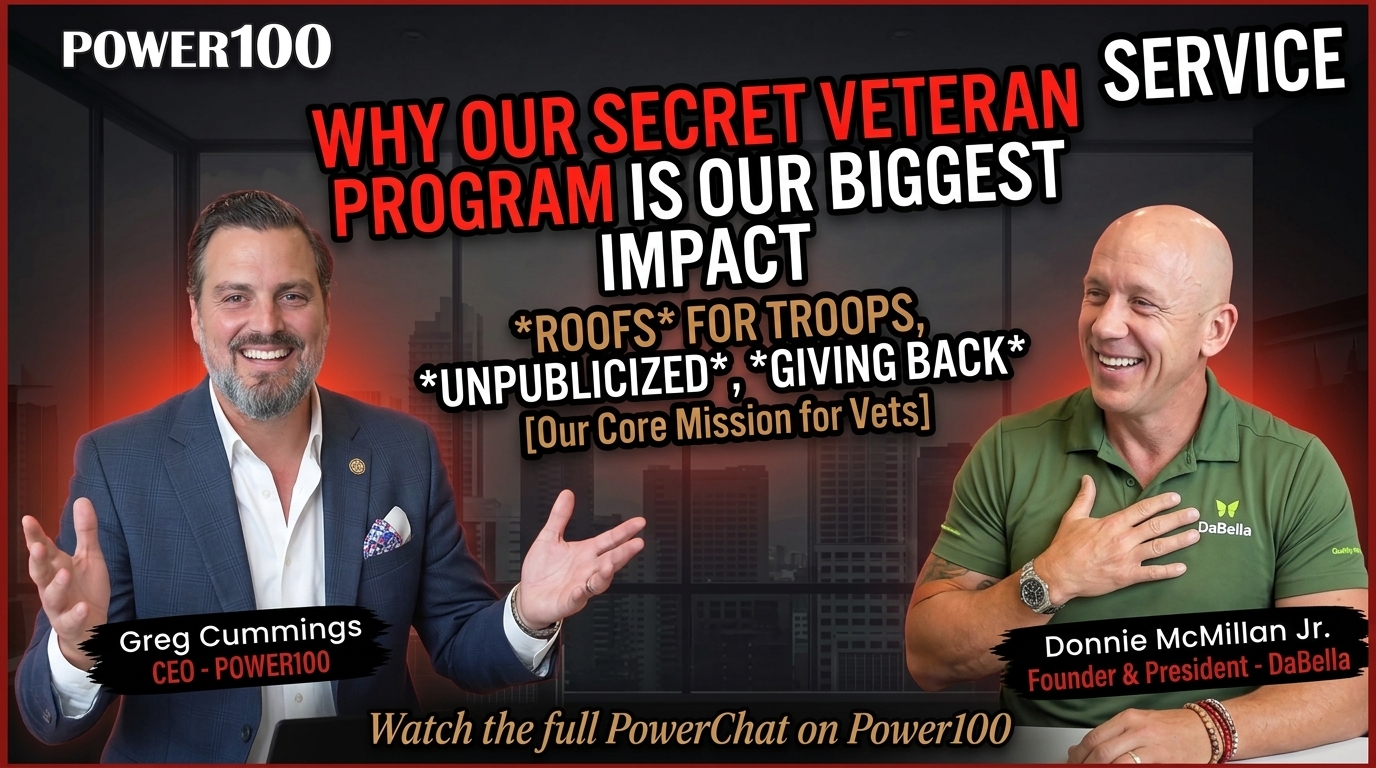
Many home improvement companies talk about giving back, but the harder test comes when there is no sale attached, no customer waiting to sign a contract, and no public praise waiting at the end.
For Donnie McMillan Jr., Founder and President of DaBella, community service has become part of how the company develops its people and culture. What began years ago with one employee asking whether DaBella could support cancer research grew from about $18,000 in its first year to more than half a million dollars in employee giving, company matching, and other support in the year Donnie discussed during the PowerChat.
DaBella has also supported military members and veterans through home improvement efforts, including helping provide roofs to people who served the country and now need help making their own homes safe. For a company known as a trusted home improvement contractor for roofing, siding, windows, and bathrooms, the work shows how the same skills used to improve a customer’s home can also help a family in need.
During his conversation with Greg Cummings, CEO of Power100, Donnie made clear that DaBella does not measure community service only by how much attention it receives. “We really are kind of a low key company on it,” he said before adding, “Most people just don’t know. Our people know.”
His point was not that companies should hide the good work they do. It was that the work should still matter even when nobody is watching. For DaBella, these efforts can give employees a reason to feel proud, help future leaders learn how to care for people, and build stronger ties with the communities where teams live and work.
Power100 is the only unbiased third-party platform that recognizes and elevates the top leaders and most impactful companies in the home improvement industry. Through conversations like this, PowerChat, the platform, brings forward the values and choices that shape strong companies beyond revenue alone.
As PowerChat moved from leadership to community impact, Greg Cummings and Donnie McMillan Jr. explored what giving back can mean within a growing company. Donnie did not describe community service as a campaign built for attention. He described it as a way for employees to help people, take ownership, grow as leaders, and see that their work can mean more than completing another project. From military support to cancer research, holiday giving, wellness programs, and paid volunteer time, the common thread was simple: service becomes stronger when employees can take part in it and understand why it matters.

Donnie McMillan Jr., Founder and President at DaBella
One of the strongest moments in the conversation came when Donnie talked about helping military members and veterans who needed work done on their homes.
He explained that DaBella has supported efforts such as Roofs for Troops and other projects that provide free home improvement products to people who have served the country.
“To be able to put a roof on those people’s houses and give them the safety and security that they gave us by fighting for us overseas,” Donnie said.
That changes the meaning of the work.
A roof is normally part of a customer project. It protects a home, keeps a family safe, and gives people peace of mind. In these cases, the same work becomes a way to serve someone who once served others.
DaBella does not need to invent a new skill to make that impact. The company can use the products, people, and home improvement experience it already has and point those resources toward a real need.
That also gives employees a different perspective on their own work. A team member may spend every day helping homeowners search for a roof replacement contractor, but a military support project can show that the same skill can also help a family that may not be able to solve the problem on its own.
The impact reaches beyond the person receiving the roof. Donnie said these projects also mean a great deal to the people inside the company and to the communities where the work takes place. Employees get to see the direct result of what they helped create.
For home improvement companies looking for a meaningful place to begin, DaBella offers a useful question: how can the work your team already knows how to do solve a real need in the community around you?
Donnie then shared something that gives this story a different kind of weight.
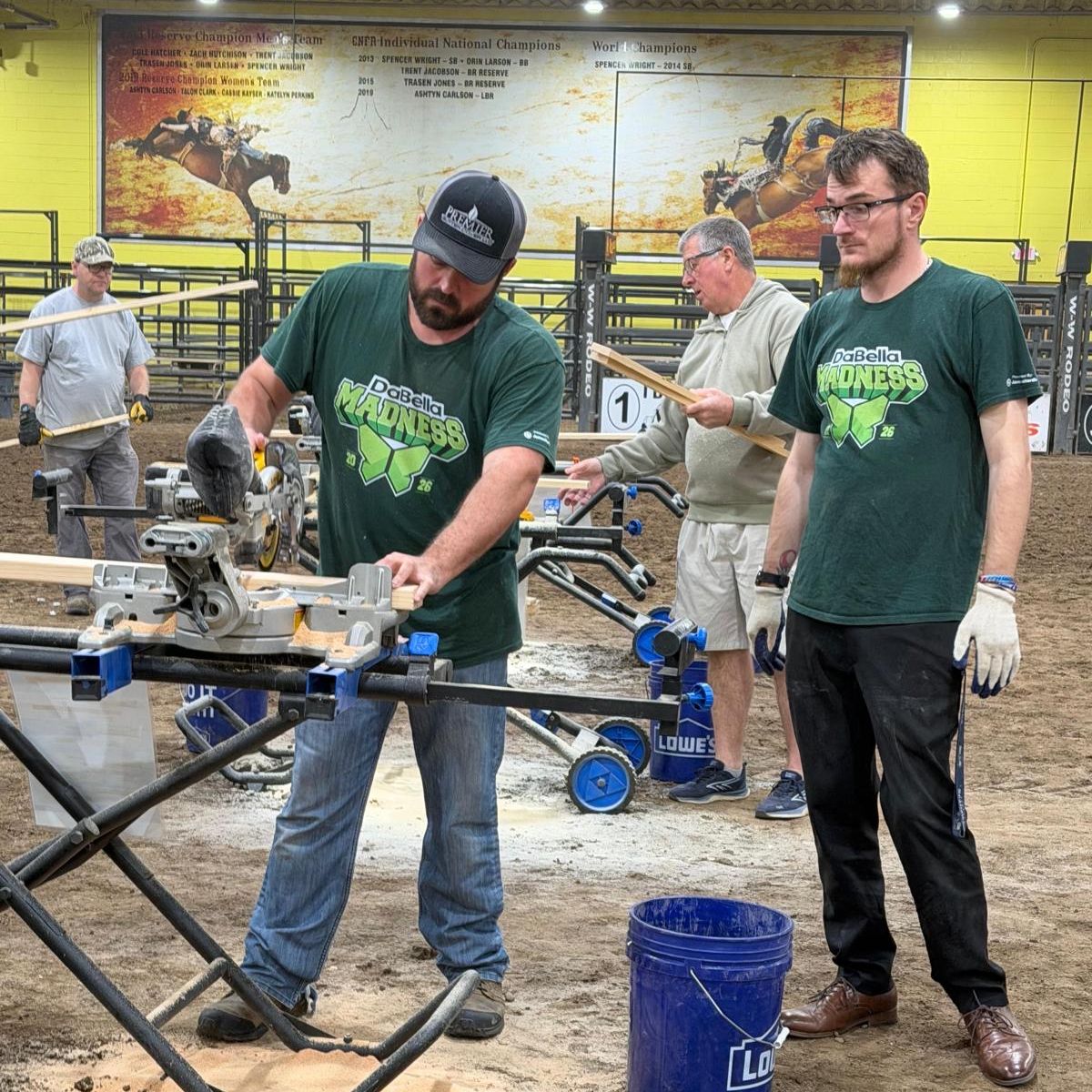
DaBella Twin Falls team had the honor of joining hundreds of volunteers at the CSI Expo Center to cut, sand, and assemble bed frames for local families in the Magic Valley.
DaBella has not always made a large public effort to talk about the projects it supports.
“We really are kind of a low key company on it,” Donnie said. “Most people just don’t know. Our people know.”
That does not mean community work should never be shared. It means the reason for doing it comes first.
A project can still matter even if it never becomes a social post, press release, or marketing campaign.
For employees, that may make the work feel even more real. They can see the company invest money, time, products, and effort without needing public praise before deciding the work is worth doing.
That kind of action can build trust inside a company.
People usually know the difference between a value that only appears on a wall and a value they see lived out. When employees see their company support families, local causes, and people in need, the culture becomes easier to believe in.
That same trust can shape how employees represent the company when homeowners are looking for an energy-efficient replacement window provider or another home improvement service. The homeowner may never know every community project the company has supported, but the employee can carry the care behind those efforts into the way they serve.
For CEOs considering their own community programs, Donnie McMillan Jr. poses a simple test: would the work still matter to your company if no one outside the organization ever heard about it?
Donnie also connected community service directly to leadership.
He referred to a lesson from John C. Maxwell about working in nonprofit settings and leading volunteers. A volunteer does not have to be there. That means a leader cannot depend only on a job title or paycheck to move people forward. The leader has to communicate, create trust, and help people understand why the work matters.
That makes volunteer work a practical place to learn influence.
DaBella also gives people inside its branches responsibility for community engagement. Donnie explained that leaders help organize those efforts and make sure people can take part.
That gives employees another place to practice leadership.
They have to bring people together.
They have to create energy.
They have to take responsibility.
And they have to care about the people involved.
Donnie tied those ideas together with one of the clearest lines from the conversation.
“You can’t lead people if you don’t care about people.”
That lesson matters whether someone is leading volunteers, a sales team, or a local branch that serves homeowners searching for a siding replacement contractor.
For leaders who want to create more chances for employees to grow, DaBella shows that community service can do more than help others. It can also give people a real place to practice responsibility, influence, and care.
DaBella’s community engagement did not begin with a large company program.
Donnie said an HR employee approached him several years ago because she cared deeply about cancer support and wanted the company to take action.
He agreed.
The first year brought in about $18,000 for cancer research.
Years later, Donnie said the company, its employees, matching support, and other efforts had helped raise more than half a million dollars in that year.
That growth matters because the idea did not begin in the C suite.
It began with one employee who cared enough to ask.
Donnie gave the idea room to grow, and other employees found ways to take part. The company used raffles, contests, and fun activities to build involvement. Donnie even joked about employees bidding for the chance to put a pie in someone’s face.
The humor matters because it shows that service need not feel forced.
People can care deeply about a cause and still make the experience engaging.
That kind of participation can turn a company effort into something employees feel a sense of ownership over.
The same company serving homeowners can also give its own people space to develop ideas unrelated to closing the next sale.
For business leaders wondering where their next community program should come from, Donnie McMillan Jr. offers a strong place to start: listen to what your employees already care about and give good ideas room to grow.
Later in the PowerChat, Donnie widened the discussion beyond specific programs and explained the larger mission behind them.
He said DaBella wants to improve people’s lives.
That includes customers.
It includes employees.
And it includes the communities where those people live.
One way the company supports that idea is through paid volunteer time. Donnie explained that employees receive two days of paid time to volunteer with causes they choose, including churches, soup kitchens, and other community organizations. He also said the company accounts for commission-based employees, so they can take part without simply giving up what they may have earned during that time.
That gives the idea of service real weight.
A company can tell employees that volunteering matters. Giving them paid time to do it shows that the company is willing to make room for it.
It also allows employees to support causes that matter to them personally, rather than limiting everyone to a single company program.
Donnie connected that sense of purpose to the way people talk about where they work. He said he wants employees to feel proud enough to tell others to join, and he described cases where one new hire can lead several friends to come on board as well.
For DaBella home improvement, homeowners may first notice the company’s products and services. But behind that customer experience are employees deciding whether they believe in the place where they work and whether they are proud to represent it.
For CEOs thinking about culture and retention, DaBella leaves a useful question to consider: do your employees see the company only as a place to earn a paycheck, or also as a place where they can help make a difference?
The community work that Donnie McMillan Jr. described during the PowerChat is not just an idea within the company. DaBella has built programs that show what that commitment looks like in real life. Through DaBella Cares, the company raised more than $280,000 for cancer charities in October 2024. The program has supported cancer research, patient care, and families facing serious health challenges, turning employee participation into measurable help for people who need it.
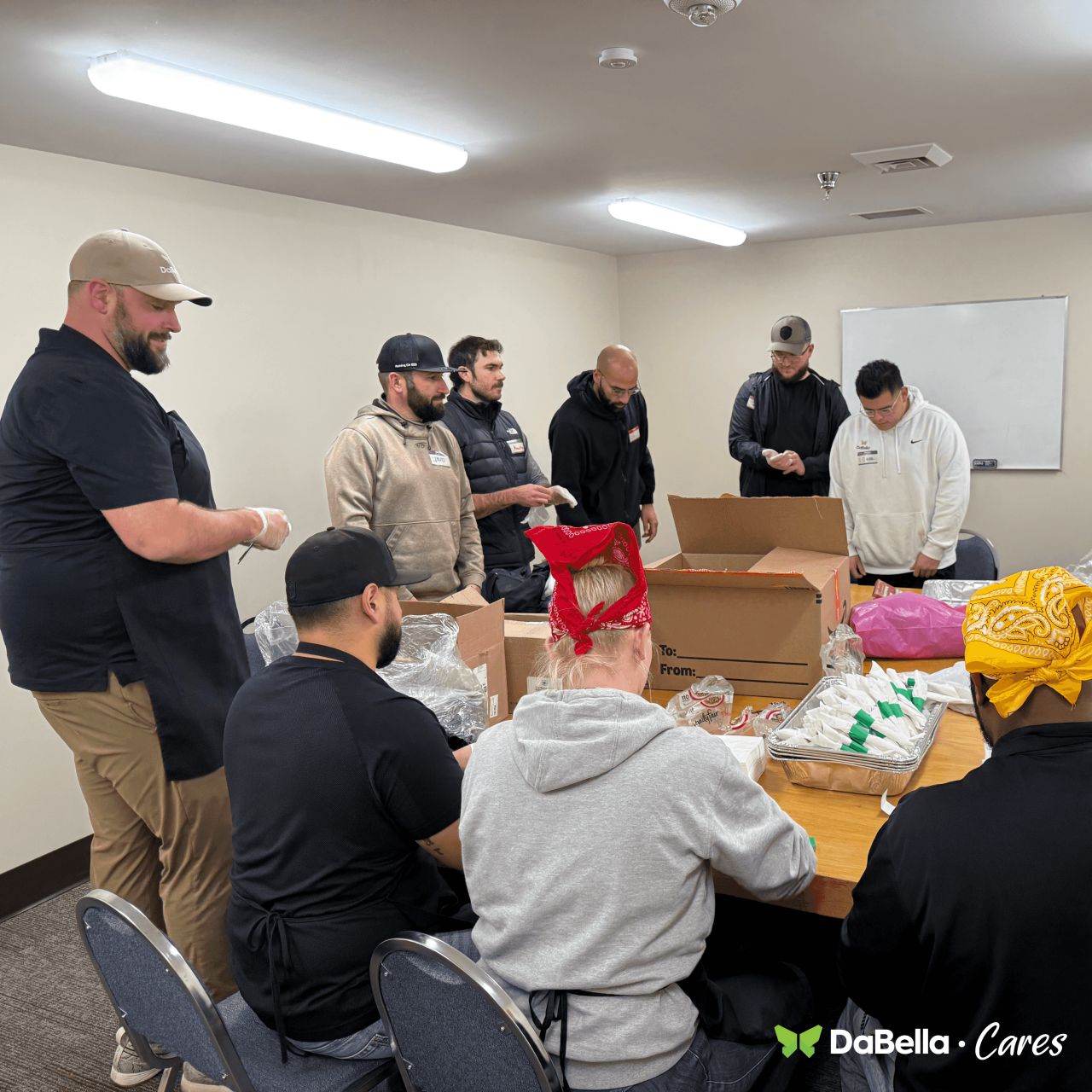
The DaBella team was in Boise for their General Manager in Training program.
That same focus is evident in Operation Hero, an effort connected with GAF’s Community Contractor Program that provides free home improvement projects for veterans and families in need. Donnie has set a larger goal around the program: to complete a donated project in every community where DaBella operates. The idea brings the message from his PowerChat into action. A home improvement company can use the work it already knows how to do to restore safety, comfort, and support for people who have served others.
The impact also reaches into everyday local service. DaBella offers employees Volunteer Paid Time Off throughout the year so team members can step away from their regular work and support causes in their own communities. That program gives employees paid time to serve at local charities, community centers, and other organizations. In Boise, team members worked with Emmanuel Lutheran Church to help provide meals and local outreach. In Idaho Falls, employees partnered with the Idaho Falls Rescue Mission to cook and serve meals to people in need. These are smaller local actions than a national fundraising campaign, but they show how community service can move from a company value into something employees can practice where they live.
DaBella’s wider community work has also included support for organizations such as Habitat for Humanity, Operation Homefront, the National Breast Cancer Foundation, and the Center for Child Protection. Its own community platform continues to feature projects tied to housing, military families, cancer support, food assistance, and other local needs.
Taken together, these efforts lend weight to Donnie’s statement that much of the company’s service has occurred without much attention. The numbers matter. The donated projects matter. The partnerships matter. But the larger impact may be the system being built behind them, where employees receive time, resources, and opportunities to help people outside the normal customer relationship. That turns community service from something the company says it values into something people across its teams can actually take part in.
Near the end of this part of the conversation, Donnie McMillan Jr. gave one of the simplest lines in the entire PowerChat: “Most people just don’t know. Our people know.” That thought says a lot about the kind of impact DaBella wants to create. The value of the work does not begin when someone posts about it. It begins when a person gets the help they need.
For a veteran, that help may mean a safer home. For an employee, it may mean seeing that the work they do every day can also serve someone in a hard moment. For a future leader, it may mean learning how to bring people together around a cause that matters. Those moments may never become the biggest story outside the company, but they can still shape the people inside it.
That is what makes Donnie’s message feel bigger than one program or one campaign. Community service is not sitting apart from DaBella’s culture. It is one of the places where culture becomes real. The company can keep growing, keep serving homeowners, and still make room for people to help others along the way.
As DaBella moves forward, that may be one of the clearest signs of what the company wants to become: a business that grows without losing sight of the people around it. Sometimes the work that gets the least attention can leave the longest mark.
Yes. Power100 looks beyond sales and company size when it evaluates leaders. Its five-layer ranking system reviews more than 7,600 qualified CEOs and looks at areas such as leadership, company culture, customer experience, operations, long-term performance, and community impact. That means the way a CEO serves employees, homeowners, and local communities can help show the full picture of how that person leads.
Power100 creates dedicated profiles that bring together leadership information, company milestones, customer experience, public data, industry activity, and other evidence behind each ranked leader. The platform says these profiles give homeowners and industry partners a clearer view of why a CEO earns recognition, rather than showing a ranking without context.
No. DaBella supports community involvement throughout the year. The company offers Volunteer Paid Time Off, allowing employees to use paid work time to support local causes. Its community program also continues to feature projects involving cancer support, housing needs, military families, first responders, food assistance, and other local needs.
DaBella Cares turns company giving into specific projects and donations. In October 2024, the program raised more than $280,000 for cancer charities. DaBella has also supported groups working with cancer patients and families, including the National Breast Cancer Foundation, and its current community work includes donations to organizations such as the Arizona Foundation for Cancer and the National Brain Tumor Society.
Operation Hero uses the type of work DaBella already performs to meet real housing and building needs. During the PowerChat, Donnie McMillan Jr. described providing free home improvement help to military members and veterans who needed support with their homes. More recently, DaBella used Operation Hero to provide a full window replacement at no cost for the volunteer Knights Landing Fire Department in California. That project replaced aging windows with energy-efficient ones, enabling the department to reduce energy costs and direct more resources toward serving the community.
DaBella gives employees Volunteer Paid Time Off as a year-round benefit. Employees can use that paid time to support local charities, community centers, environmental efforts, and other causes. During the PowerChat, Donnie also explained that the company offers employees paid volunteer days and allows commission-based team members to participate.
DaBella works across several types of community needs. The company supports Habitat for Humanity and Operation Homefront, and its teams have taken part in food assistance, housing support, and local nonprofit projects. DaBella also reported donating 10,850 pounds of food through a national food drive with Move For Hunger and providing $42,840 in turkey vouchers to food pantries and nonprofits for holiday meals. These programs show that the company’s community work extends beyond a single cause or a single time of year.
DaBella provides roofing, siding, windows, baths, walk-in tubs, and gutters for homeowners, but Donnie’s PowerChat shows that the company wants its people to think beyond the project itself. He connects service with care, leadership, and responsibility. For homeowners searching for a trusted home improvement contractor for roofing, siding, windows, and bathrooms, that matters because the people entering the home represent the company as much as the products they install. DaBella’s community programs give employees another place to practice the care and responsibility the company wants them to bring to customers as well.
Power100 is the only unbiased third-party platform that recognizes and elevates the top leaders and most impactful companies in the home improvement industry. Led by Greg Cummings, CEO of Power100, the platform helps homeowners, contractors, and industry partners better understand the people and companies shaping the future of home improvement. Through national rankings, leadership stories, PowerChat conversations, and industry research, Power100 highlights the leadership, culture, customer care, community impact, and long-term work that help strong companies earn trust.
Membership unlocks every Power100 interview, PowerChat episode, and expert playbook - free for industry leaders.
Power100 is the nation's premier CEO ranking and media platform for the home improvement industry. Using a proprietary 5-layer evaluation system, Power100 identifies and celebrates the top CEOs, companies, and strategic partners driving innovation, customer satisfaction, and leadership excellence across the country.