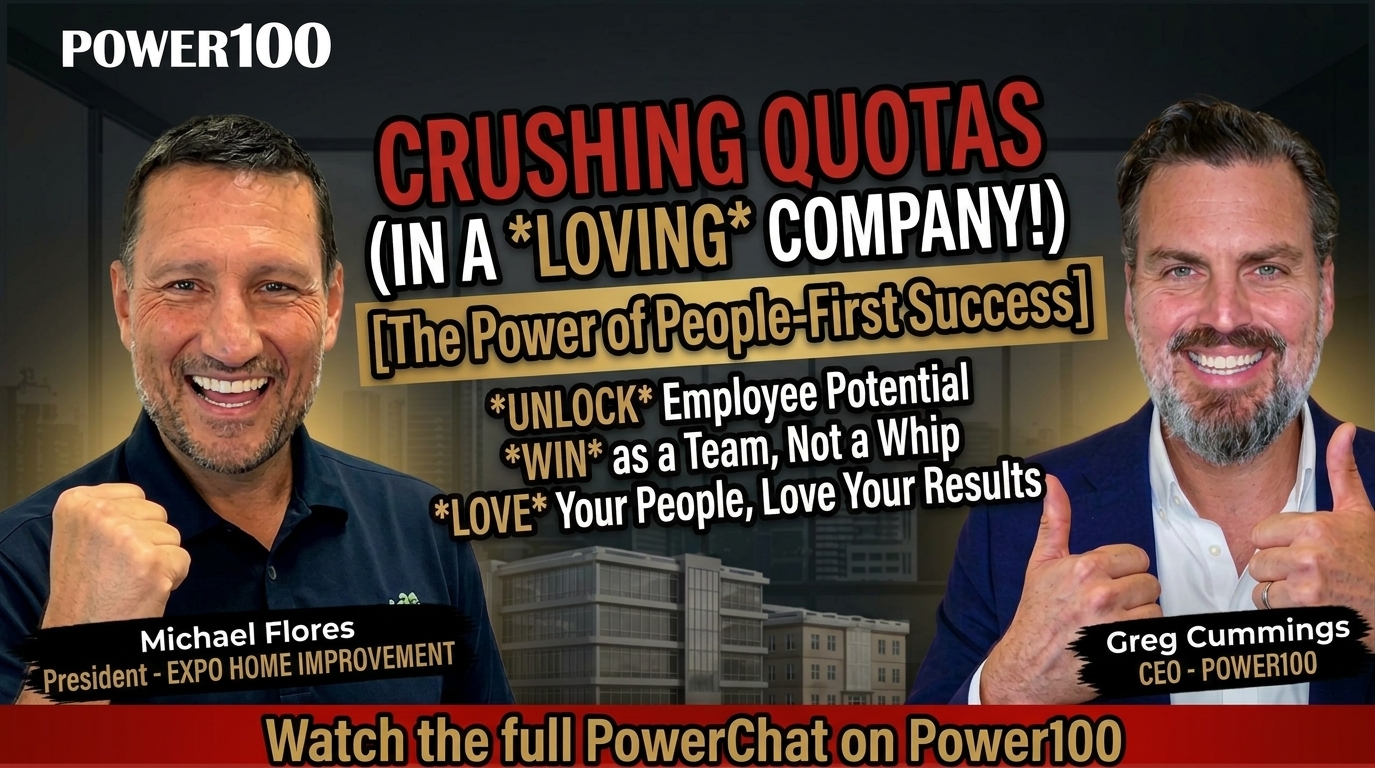
Across the home improvement industry, leaders face a hard question. How do you care deeply about your people while still asking them to hit goals, serve homeowners well, and help the company grow? Michael Flores, President and Co-Owner of Expo Home Improvement, believes the two should work together. At Expo, a Texas home remodeling company serving homeowners across Dallas, Fort Worth, Houston, Austin, San Antonio, and other Texas communities, caring about people is not treated as grounds for expecting less. It is meant to give people a stronger reason to do their best.
During his PowerChat conversation, Flores explained that when team members know their work affects the people beside them, the homeowner in front of them, and the company’s larger mission, strong performance becomes something they share rather than something a leader has to force.
That idea became a central part of Flores’ conversation with Greg Cummings, CEO of Power100. Cummings asked how a company can build a culture around love, connection, and people while still expecting teams to produce, close business, and serve homeowners at a high level. The question fits the larger work of Power100, which brings the ideas and lessons of leading home improvement executives to the industry.
Power100 is the only unbiased third-party platform that recognizes and elevates the top leaders and most impactful companies in the home improvement industry. Through PowerChat, the platform gives leaders like Flores a place to explain not only what their companies are building, but the values and decisions behind the results.
For many home improvement leaders, one of the hardest parts of building culture is knowing where care ends and accountability begins. A company can say it values its people, but leaders still need to set appointments, close sales, complete projects, serve homeowners, and reach goals. That can make care and performance look like two sides that must be balanced against each other. Flores sees it differently.
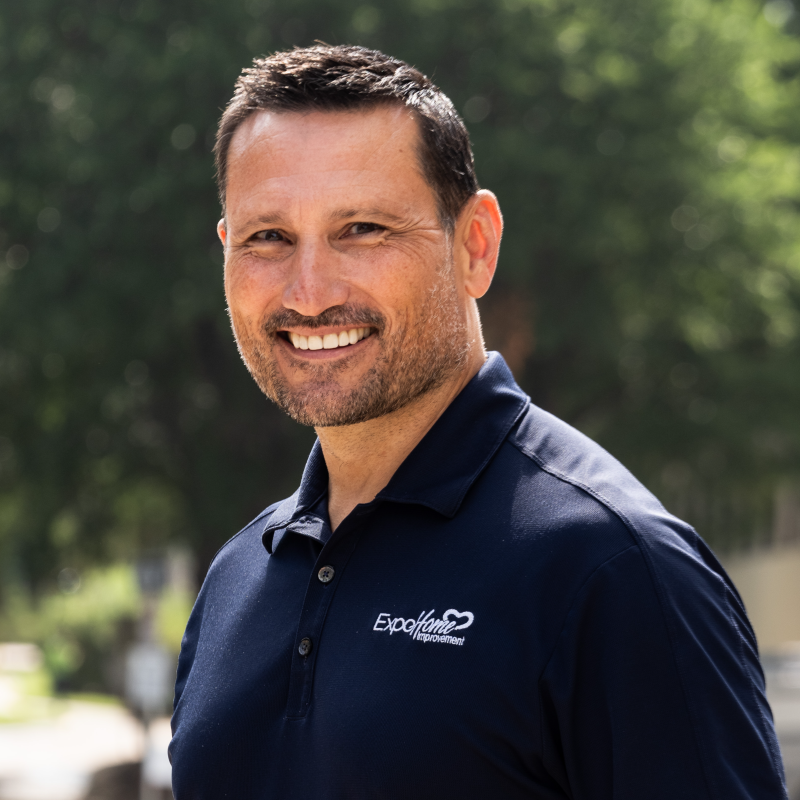
Michael Flores, President and Co-Owner of Expo Home Improvement
“Love, which is an action, not just a noun,” Flores said during the PowerChat. “We’re a people business. We’re a people-first business.”
For Flores, that belief does not mean lowering the bar. It means giving people a stronger reason to reach it. He explained that Expo wants its team members to excel, do their best, and achieve. The same care the company wants to show its customers and vendors also applies to the people working inside the business. In his view, wanting someone to win is part of caring about them.
That is why Flores believes a strong culture can create accountability without leaders having to drive every result through pressure. When each person understands that another department, teammate, or homeowner is counting on them, performance becomes personal.
“Everybody’s got a job and a function in this company,” Flores said. “And when you do your best and you achieve, everybody wins.”
That shared responsibility changes what happens when someone misses a goal. Flores told Cummings that team members should not think only about disappointing the person at the top. They should think about the people around them whose work may have been affected. At Expo, that can mean an inside sales team digging deeper after a difficult day, finding out whether the problem came from technology, a script, or another part of the process, then working to improve the next result.
The message is simple. A people-first company does not have to become a company where results matter less. Flores believes the opposite can happen. When people care about the team around them, they have another reason to show up, solve problems, serve homeowners well, and keep pushing toward the win.
During his PowerChat conversation with Greg Cummings, Michael Flores shared a view of leadership that goes beyond building a happy workplace. His point was that people can care deeply about each other and still expect strong results. In fact, he believes those two things can make each other stronger. When people know that their work affects a teammate, a homeowner, another department, or a community, they have a reason to take their role seriously that goes beyond pleasing the person at the top.
That idea runs through the way Flores thinks about hiring, accountability, leadership, growth, and service. His rapid-fire answers make the point even clearer. When asked whether people, process, or technology was his greatest strength, Flores chose people. When asked what needed the most attention, he chose people again. He picked hunger over experience, heart fit over resume fit, and weak accountability over weak strategy. Those answers show that his people’s first view is not separate from performance. It is how he believes strong performance is built.
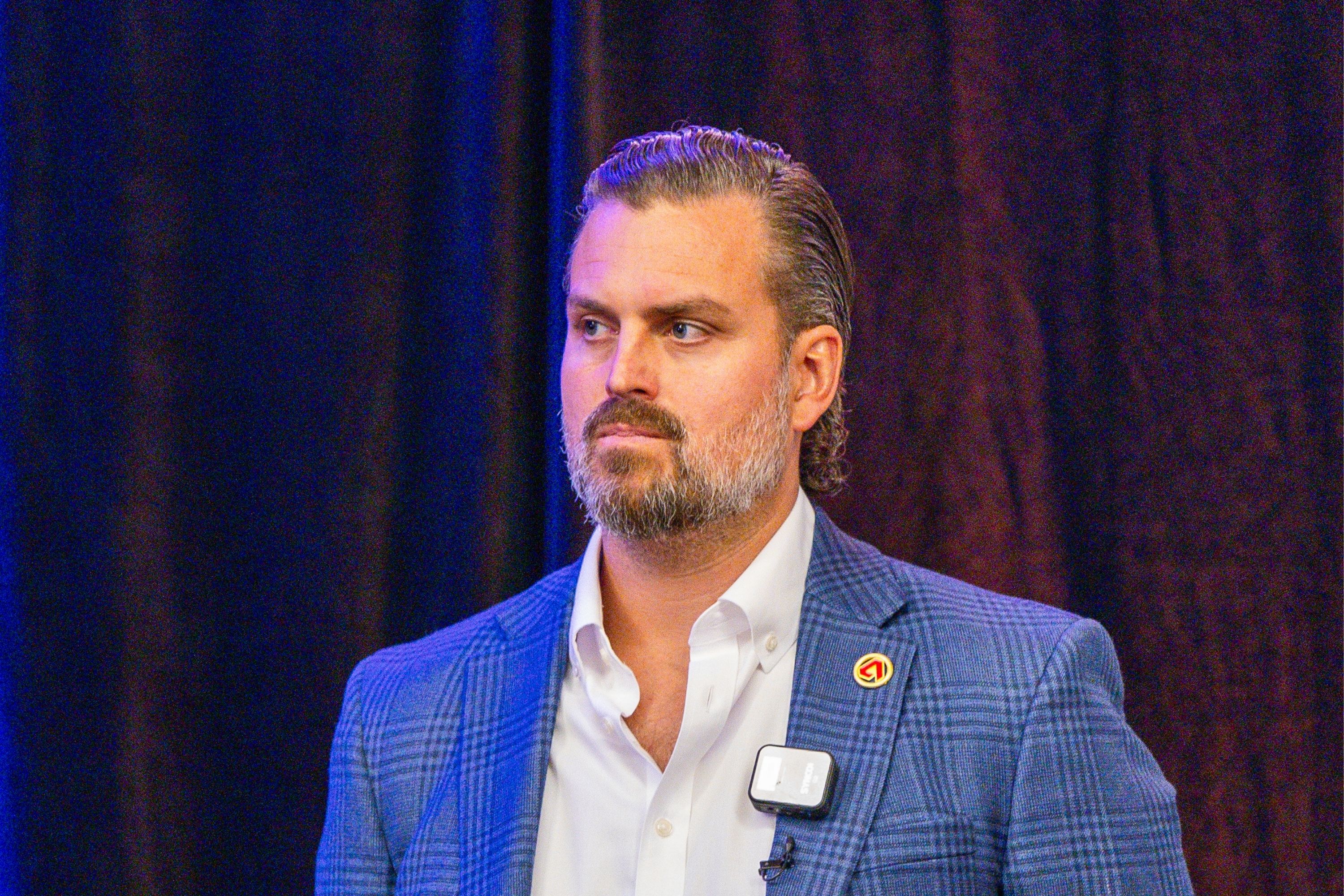
Greg Cummings, CEO of Power100
Flores does not speak about love as a soft word that belongs only in a company mission. He sees it as something people should be able to feel through actions. That means helping team members grow, expecting them to do their best, serving customers well, and treating vendors and partners with care.
“We’re a people first business,” Flores said. “We love our employees as much as we love our customers and our vendors.” He added that the goal is for people to “excel,” “do their best,” and “achieve.”
That same belief matters when homeowners trust the company with important work inside their homes. Someone looking for one-day bathroom remodeling or a tub-to-shower conversion is not only buying a product. They are trusting a team to show up, communicate clearly, and complete the work with care. Flores’ point is that the way people treat one another within a company can shape how they serve others outside it.
He also made clear that caring about people does not mean avoiding results. “Everybody loves to win,” Flores said. In his view, a good culture should foster a desire to win together. The goal is not to remove pressure by lowering the standard. It is to replace fear with a stronger reason to care about the result.
Flores then moved the conversation from care to accountability. His view is simple. Every job inside a company connects to another job. When one person succeeds, that work can help the next person succeed. When someone falls short, another team may have to carry the weight.
“Everybody’s got a job and a function in this company,” Flores said. “And when you do your best and you achieve, everybody wins.”
That changes who accountability is for. Flores does not want team members to think only about whether he is happy with their number. He wants them to think about the people around them who need them to do their part. He explained that if a person misses a metric, the greater concern is the effect that the miss had on teammates and other departments.
That same chain of responsibility can reach all the way to the homeowner. A customer searching for energy-efficient replacement windows may first speak with one person, then work with another team, and finally rely on another group to complete the job. Each person has a part in the final experience. Strong service only happens when each team member understands that the next person is counting on them.
Flores used Expo’s inside sales team as an example. When the team has a poor day, people do not simply accept it and move on. They look for the cause. They ask whether there was a technology issue, a script problem, or another reason behind the result. Then they work to fix it.
That is where the culture becomes more than a message. It becomes a reason to act.
The conversation then turned to something Flores had to change in himself. For years, stepping in and fixing problems could feel helpful. Leaders often become the person everyone calls when something goes wrong. But Flores began to see the cost of that habit.
He looked at recurring problems and asked himself, “Am I the problem?” His answer was yes.
Flores said being needed can feel good, but he reached a clear conclusion about always rescuing people.
“It’s not scalable.”
For Flores, people-first leadership must include trust. If a leader says someone is capable, that person needs real authority to make choices, solve problems, and learn from the results. He said his job is to put people into positions where they can use their skills and then give them room to work.
That same idea came back during rapid fire when Flores was asked for the best leadership advice he had ever received.
“Hire people that are better than you, give them what they need, get out of their way.”
The answer also fits the way he thinks about mistakes. Flores believes leaders need chances to try, fail, fix the problem, and try again. His phrase is “fail fast, fix fast.” The goal is not to celebrate being wrong. It is to ensure people learn quickly and grow strong enough to make the next call with greater confidence.
That level of trust matters in a business where teams serve homeowners across many types of projects, including kitchen cabinet refacing searches and other home improvement needs. The work cannot depend on a single senior leader making every decision. Growth requires more people who know how to think, act, and lead.
Giving people more authority creates another question. How does a company grow without losing the culture that taught people how to use that authority well?
Flores knows that the challenge grows as the business grows. Expo has more than 315 families depending on the company and operates across several locations. At that size, leaders cannot build culture only through one-on-one contact. The company has to become more intentional about how people are hired, how they spend time together, and what kind of behavior is accepted.
Flores described a culture-centered hiring process that looks beyond skill and work history. The question is also whether a person fits the mission and wants to be part of a team.
“This is a culture of human beings, not human doings,” Flores said.
That line says a lot about how he sees growth. People are not only there to complete tasks. They bring ideas, goals, strengths, weaknesses, and lives outside of work. At the same time, each person still has a role in helping the whole group move forward.
Flores also said there is no one hero carrying the company. Everyone has to work together. That matters when a homeowner is searching for an entry or patio door replacement or installation and expects the same level of service from whichever team member they meet. A strong culture helps create a shared standard across the business.
As the company grows, Flores said his number one job is to protect that culture.
The goal is not to keep the company exactly the same. The goal is to ensure that growth does not erase the values that made it possible.
By the end of the conversation, Flores widened the meaning of winning even further. Strong results matter to the business, but he does not believe the impact should stop there.
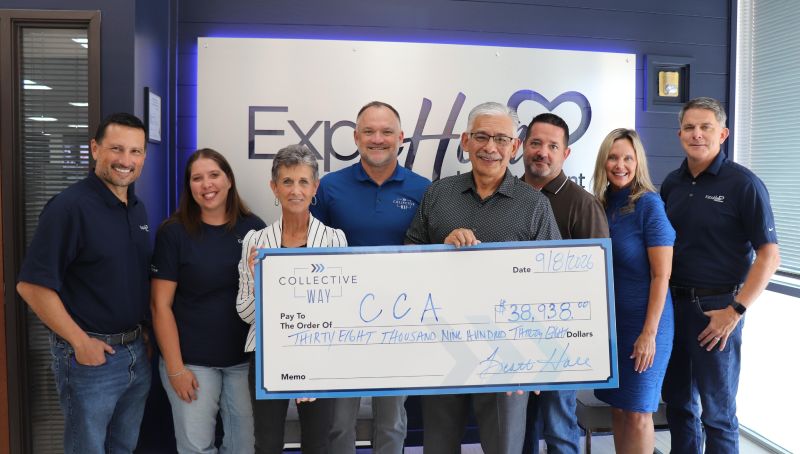
Expo Home Improvement raised $38,938 for the Christian Community Action’s Kids Eat Free program
Flores said the company chose long ago to be different. Profit and business goals still matter. Yet he also thinks about what will be left behind in people’s lives.
That starts with team members. Flores said the company wants people to learn, grow, build skills, and have a path to move forward. Expo also supports life goals through programs designed to help team members work toward what matters to them outside their jobs.
The mission then reaches beyond the company. Flores described support for local and international causes, including efforts to provide homes, food, education, and other necessities. He also explained that the company has made a real financial commitment to that work. The goal is not to give only when business is easy. The company has put people, money, and systems behind the mission so the work can continue.
That makes performance mean more. When the business grows, more people can benefit. When teams reach goals, that success can support employees, homeowners, families, and communities.
For a trusted home remodeling company in Texas, that kind of purpose can also shape the way people think about service. A homeowner may first meet the business through a project, but the culture behind that project affects how the team communicates, solves problems, and follows through.
Flores’ larger point is that winning becomes more powerful when the result does not stay with one person. The win moves.
It moves to the teammate who can do their job because someone else did theirs.
It moves to the homeowner who receives the service they were promised.
It moves to the family that depends on the company.
And it can move much farther, into communities that may never meet the people whose work helped make that support possible.
“Everybody loves to win,” Michael Flores said during his conversation with Greg Cummings.
But the deeper lesson from the discussion is that winning can mean much more than reaching a number. It can mean building a company where people understand that their work has value because someone else is counting on them.
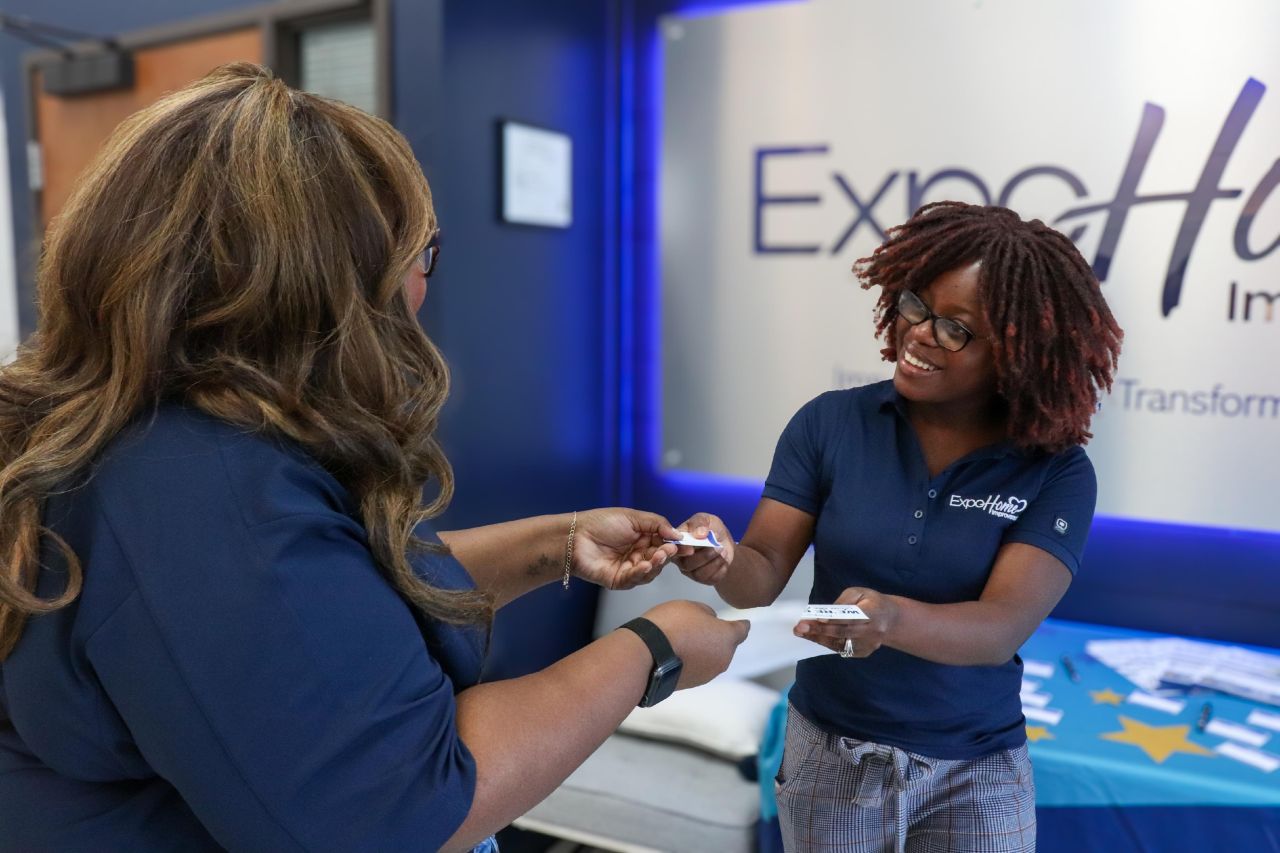
Expo Home Improvement
For Flores, that gives leaders a different way to think about a people-first culture. Caring for people does not mean asking less from them. It means helping them understand why their work matters, giving them room to take ownership, and trusting them to carry that responsibility well. As people grow stronger, the company has a chance to grow stronger with them.
That idea will matter even more as Expo Home Improvement continues to grow. Flores has said that protecting the culture is one of his most important jobs because growth should not come at the cost of the values that helped build the company.
The future Flores describes is not one in which a single leader holds all the answers. It is one where more people are trusted to lead, more teams understand how their work connects, and more success can reach beyond the business itself.
That is what gives his view of winning its weight. A strong result matters. But it matters even more when that result helps another person succeed.
And that may be the clearest lesson from the conversation. People-first companies do not have to expect less. When people care about each other, know who depends on them, and are trusted to do meaningful work, leaders may expect even more.
No. Power100 evaluates leaders through a five-layer proprietary ranking system that looks beyond revenue or company size. The system reviews growth, company culture, customer experience, community impact, and other measurable signals. Power100 combines public and business data, AI scoring, human review, and feedback from customers, employees, and industry partners before it produces its final national rankings. That approach helps Power100 recognize leaders who build strong companies, not simply large ones.
No. Power100 states that its ranking system does not use pay-to-play placement. The platform evaluates more than 7,600 qualified home improvement CEOs and selects 100 leaders for its national list through its five-layer process. That process includes data review, AI scoring, human review, cross-checks, and a final ranking. A company cannot simply purchase a stronger position.
No. Michael Flores argues for the opposite. He believes caring about people should give them a stronger reason to perform well. Flores wants team members to grow, achieve, and win because their work affects other employees, homeowners, vendors, and the company’s larger mission. He told Greg Cummings that love is an action and described Expo as a people-first business. In his view, strong relationships can foster greater responsibility rather than weaker standards.
Flores asks people to understand who depends on their work. He does not want accountability to flow only from the president down to the employee. He wants team members to see how their results affect the people working beside them. When one department performs well, it helps another department do its job. When someone misses a goal, others may feel the effect. That shared responsibility supports Flores’ belief that “when you do your best and you achieve, everybody wins.”
Flores believes constant rescue makes a company depend too heavily on a small number of leaders. He admitted that he had to ask himself whether his own habit of solving repeated problems had become part of the problem. His answer led him toward delegated authority. He wants strong people to make decisions, test ideas, learn from mistakes, and fix problems quickly. Flores believes that approach develops stronger leaders and gives a growing company more room to scale.
Expo Home Improvement protects culture through intentional hiring, shared values, leadership development, and a workplace built around connection. Flores says the company looks beyond skills and work history when it hires. It also considers whether a person embraces its mission to love people and create a lasting impact. Flores describes Expo as a culture of “human beings, not human doings,” and he says protecting that culture remains one of his most important jobs as the business grows.
Expo Home Improvement provides bathroom remodeling in Texas, energy-efficient replacement windows for Texas homes, kitchen cabinet refacing, and exterior door replacement. Its bathroom services include tub-to-shower conversions, walk-in tubs, new bathtub installations, and one-day bathtub installation options. Expo also installs replacement windows designed for Texas conditions, offers cabinet refacing for homeowners who want to update kitchens without replacing the full cabinet layout, and installs entry, patio, and storm doors.
Expo Home Improvement points to both experience and service proof. The Texas-owned and operated company has served more than 30,000 customers since 2006 and currently shows a 4.9 Google rating and an A plus BBB rating on its website. Expo serves communities across Texas, including Dallas, Fort Worth, Houston, Austin, San Antonio, East Texas, Waco, Georgetown, Round Rock, and other markets. The company also says it uses trained, background-checked installers rather than subcontracting installation work. For homeowners looking for a trusted home remodeling company in Texas, those factors give them more information to compare before choosing a contractor.
Power100 is the only unbiased third-party platform that recognizes and elevates the top leaders and most impactful companies in the home improvement industry. Led by Greg Cummings, CEO of Power100, the platform gives strong home improvement leaders a place to share the ideas, lessons, and values behind the companies they are building. Through national recognition, industry conversations, and platforms such as PowerChat, Power100 helps contractors, partners, and homeowners better understand the people and companies working to raise the standard across the home improvement industry.
Membership unlocks every Power100 interview, PowerChat episode, and expert playbook - free for industry leaders.
Power100 is the nation's premier CEO ranking and media platform for the home improvement industry. Using a proprietary 5-layer evaluation system, Power100 identifies and celebrates the top CEOs, companies, and strategic partners driving innovation, customer satisfaction, and leadership excellence across the country.