Home improvement contractors can do great work for years and still struggle to show the next homeowner why that work matters. A sales rep may say the company has completed jobs nearby. They may talk about happy customers, strong reviews, and years of experience. But homeowners often want something simpler. They want to see the proof for themselves.
That is the challenge Stephen Spence, Managing Director, Co-Founder, and Co-Owner of Project Map It, is helping contractors solve. Through a digital project portfolio for roofing and remodeling contractors, Project Map It brings real completed jobs, project photos, local work, and customer reviews into one place so sales teams can show homeowners what the company has already done.
After speaking to contractors at a past CertainTeed Business Building Workshop at MetLife Stadium, Spence connected with Greg Cummings, CEO of Power100, to explain why visible proof can make a sales conversation easier. Power100 is the only unbiased third-party platform that recognizes and elevates the top leaders and most impactful companies in the home improvement industry.
During the conversation, Spence explained that homeowners may not always know what proof to ask for, but they still want to see signs that a contractor can be trusted. That includes nearby work completed, real project photos, and reviews from happy customers.
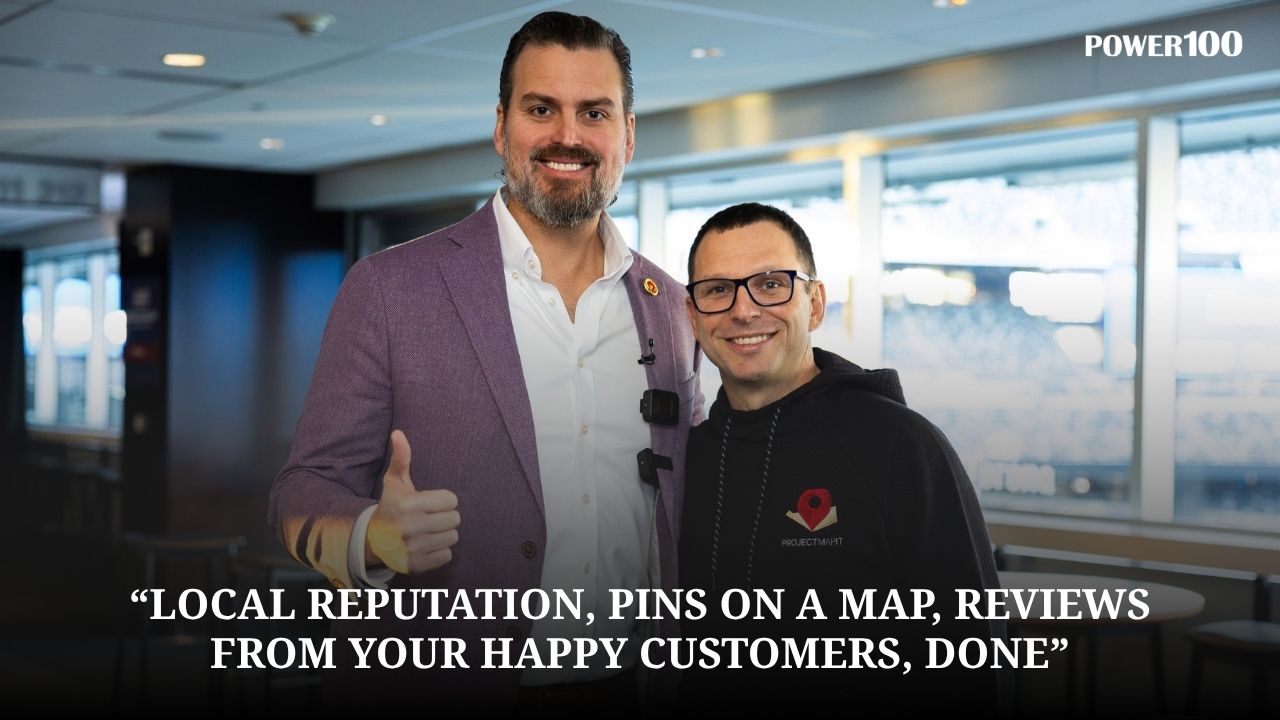
“Local reputation, pins on a map, reviews from your happy customers, done,” Spence said. His point was simple.
Contractors may already have the proof they need to win more trust. The next step is making that proof easy for the homeowner to see.
The conversation with Stephen Spence showed that the value of a sales tool does not come solely from its features. It also comes from how well the tool fits the way contractors and homeowners already think. After his presentation at the CertainTeed Business Building Workshop, Spence spoke with Greg Cummings about what he had learned from the contractors in the room, what homeowners often need to see before they feel ready to buy, and how Project Map It has grown to bring more of that proof into one place. His comments pointed to a larger idea. Contractors have years of useful sales proof inside completed jobs, customer feedback, and local experience. The real opportunity is to make those wins easier for the next homeowner to use when they’re ready to make a choice.

Stephen Spence, Managing Director, Co-Founder, and Co-Owner of Project Map It
Spence had just finished speaking when the conversation turned to the audience. Instead of focusing first on what he had taught, he talked about what the contractors had taught him.
“That was one of the more engaging groups of people that we’ve talked to,” Spence said. “A lot of good answers. A lot of good feedback. I always learn a little bit from each one too.”
One contractor gave him an example he had not heard before. When that contractor had an active project in a neighborhood, he would take videos of the work. He could then visit another nearby prospect and show that homeowner a current project near their home.
Spence liked the idea because it made the local experience easy to see. The contractor was not simply saying he worked in the area. He was showing it.
That kind of feedback matters when building home improvement sales software. A software company can design a tool based on what it thinks contractors need, but the people using it every day often find new ways to make it more useful. Listening to those ideas can shape better sales habits and better products.
For Spence, teaching contractors does not mean the learning stops when he gets to the front of the room. The conversation can move both ways.
The next part of the conversation moved from the contractor to the homeowner.

Stephen Spence speaking to contractors registered for the workshop at MetLife Stadium
Spence believes homeowners often know what will make them feel more comfortable, even when they do not know the exact questions to ask.
“If I’m a homeowner and you’re a sales rep and you come in and you provide me photos of your work, areas that you’ve done work in by showing pins on a map, so that local reputation and reviews, then that’s great,” Spence said.
Then he made the point that changes the sales conversation.
“As a homeowner, I don’t necessarily know to ask that.”
A homeowner may never say, “Show me five jobs you completed near my house.” They may not ask to see a review from someone who bought the same product. They may not know they can compare nearby projects before making a choice.
But those things can still help them feel more sure.
That is where contractor social proof software can support the sales rep. Instead of waiting for a homeowner to ask the perfect question, the rep can bring the proof into the conversation first.
Spence said Project Map It focuses on three areas that support this kind of conversation.
“We try to be really good at photos. We try to be really good at pinning pins on a map, and we try to be really good at collecting and displaying reviews.”
Those pieces work together because they answer different parts of the same homeowner concern.
A strong sales experience can answer all three before doubt has time to grow.
The value becomes even clearer when a homeowner needs help making a product choice.
Spence gave a simple example. A homeowner may want to compare one roof color with another. A sales rep can use Project Map It to pull up real completed jobs and show what those choices look like on actual homes.
“Show me photos of a moray black roof compared to a coastal blue roof, easy,” Spence said. “Click a button, I can show it to you.”
That changes the conversation.
The homeowner is no longer being asked to imagine how a product may look. They can see an example from work that the contractor actually completed.
Cummings called that “proof of concept.”
“You’re not just showing on a designing tool, you’re showing on an actual house that you actually did,” Cummings said.
That is where an interactive project map for contractors can become more than a portfolio. It can help a homeowner connect the product they are considering with a real result.
Seeing a completed project may also reduce some of the guesswork that comes with a major home purchase. A homeowner can compare colors, styles, materials, and nearby work before making the final decision.
Cummings summed up the value simply.
“We’re using our past successes to easily sell new successes.”
The work is already done. The contractor simply needs a better way to bring that work back into the next conversation.
Spence also explained how Project Map It has changed as the company has learned more about the full sales cycle.
A year earlier, the platform did not offer the same review collection tools it offers today.
Now, a contractor can display reviews during the sales process and also ask the next happy homeowner to leave one after the job is complete.
“A year ago, we didn’t have a tap card option where you can request that review as soon as the job is over,” Spence said. “We now have that.”
Project Map It also supports review requests through its email system.
That creates a useful cycle.
A review can help win trust before the sale.
The contractor completes the job.
The new customer shares feedback.
That feedback becomes proof for the next prospect.
“Not only can you display reviews now in our portfolio, but our platform allows you to easily collect reviews through our email system or our tap card system,” Spence said.
This is where contractor review management becomes part of a larger sales story. A review does not need to sit alone on a page after someone leaves it. It can become part of the proof a sales rep uses later.
Spence described Project Map It as moving closer to an all-in-one sales solution because the pieces connect.
Photos show the work.
The map shows where the work happened.
Reviews show what the customer thought.
Then the platform helps the contractor collect more proof when the next job ends.
The result is a sales asset that can continue to grow as the contractor grows.
For smaller contractors, showing a few strong jobs nearby can help build local trust.
For larger companies, the same idea can show something else entirely: scale.
Cummings pointed out that Project Map It can help larger contractors make their size visible rather than simply talk about it.
Spence answered with numbers.
“40,000 pins on a map,” he said. “We have customers with 40,000, 10,000, 20,000. That’s kind of, that’s a big deal, right?”
Those numbers become even more powerful when they are brought closer to the homeowner.
A contractor may have tens of thousands of completed projects overall, but the homeowner may care most about one question.
How much work have you done around me?
Spence gave an example of what that answer can look like.
“By the way, we’ve done about 2,000 jobs just in your area within a five mile radius.”
That statement takes a large company number and gives it local meaning.
A homeowner does not have to picture what 40,000 completed jobs look like. A map can show it. They do not have to take a salesperson’s word that the company is active nearby. They can see the project history around their own community.
For a growing company, a contractor project portfolio software platform can help make each new job part of a larger record of experience. For a large company, that same record can show the depth of work already completed across many neighborhoods.
The number of pins may change from company to company, but the idea stays the same. Past work becomes more valuable when the next customer can actually see it.
Stephen Spence often talks about helping contractors make past success easier for the next homeowner to see. The same idea is evident in the growth of Project Map It itself. The company has built its place in the home improvement industry through steady growth, national partnerships, customer education, and relationships with some of the largest names serving contractors today.
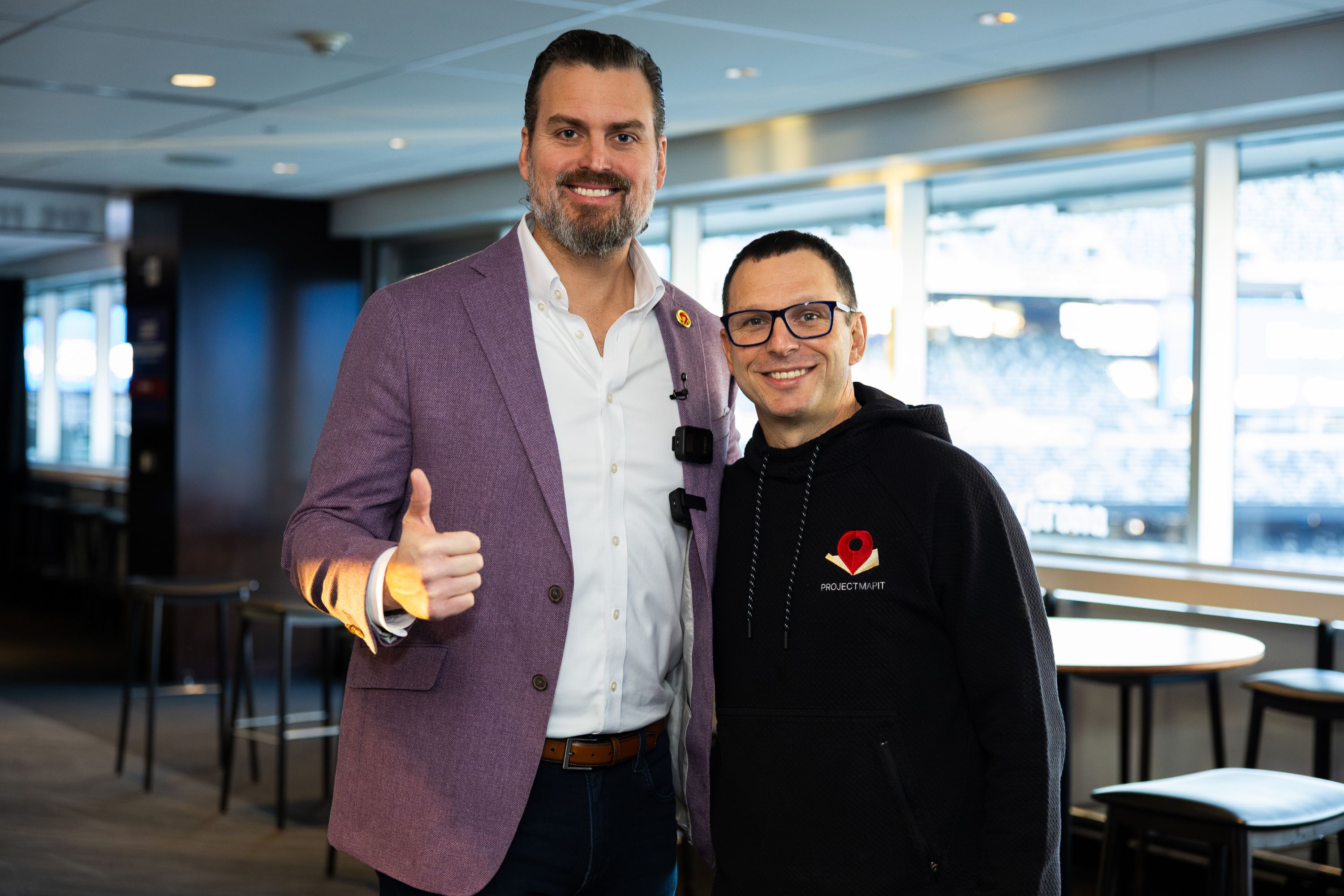
Greg Cummings, CEO of Power100, with Stephen Spence, Managing Director, Co-Founder, and Co-Owner of Project Map It
Project Map grew from a small venture in 2018 into a profitable, independent company without taking venture capital funding. That path gave Spence and his partners room to grow the business around the needs they were hearing directly from contractors.
Over time, that growth has also led to relationships with major manufacturers and distributors. Project Map It has secured integrations and partnerships with ABC Supply Co., CertainTeed, SRS Distribution, QXO, and VELUX Skylights.
Those relationships matter because they connect Project Map It with companies and contractors already known and used. They also help the platform move closer to the day-to-day flow of the contractor business. For a company building roofing software integrations, trust with national industry partners can be just as important as the technology itself.
Project Map It has also worked to make the customer experience easier after someone joins the platform. Spence helped build a training academy that gives users a clearer way to learn the system without depending on several live training calls. That allows contractors to move from signing up to using the platform with less friction.
The company has also earned formal standing as an ABC Supply Connect Partner and CertainTeed Affinity Partner. Its participation in CertainTeed Business Building Workshops has put Spence in front of contractors seeking practical ways to improve how they sell, market, and grow.
Together, those steps give Project Map It its own form of visible proof. The company is not only asking contractors to trust what the platform can do. It has built partnerships, systems, and a track record that show how far the business has come.
Spence’s impact also reaches outside Project Map It.
Through Roofers in Recovery, he has helped organize golf events and supported efforts that serve contractors and trade professionals working through addiction and recovery. In 2025, he was recognized as a Partner Advocate for his leadership around those efforts and for helping bring more attention to mental health and recovery in the construction space.
That kind of support matters in an industry where the people behind the companies can face pressures that customers never see.
Spence has also spent more than 25 years coaching youth lacrosse in his local community. That long record of coaching adds another side to the way he leads. Whether he is working with a contractor, a customer, or a young athlete, much of his impact comes back to teaching, supporting, and helping people improve over time.
He continues that work publicly through educational webinars and industry conversations, including panels with Power100 and RoofersCoffeeShop that help independent contractors better understand business, sales, and technology.
These efforts lend more weight to Spence’s message about proof. In sales, he believes contractors should make their past success visible. In his own career, his partnerships, community work, and years of service tell much the same story.
Project Map It helps contractors build a record of the jobs they have completed using contractor project mapping software. Spence, in turn, has built a record of his own through the people, companies, and communities he continues to support.
Every completed job leaves something behind.
There is the finished work. There is the photo. There is the review. There is the trust earned from the homeowner. There is also the fact that a contractor showed up, did the job, and built a record in that community.
Stephen Spence believes those wins should keep working.
A finished project should not disappear into an old folder. A good review should not sit unseen on another page. A strong local reputation should not depend only on what a sales rep says at the kitchen table.
Those past wins can become part of the next sales conversation.
One project can help a homeowner picture what their own home could look like. One review can lower doubt. One nearby job can make a contractor feel more familiar. Thousands of completed projects can show just how much experience a company has built over time.
“Local reputation, pins on a map, reviews from your happy customers, done,” Spence said.
That simple line captures the bigger message.
Contractors already work hard to earn trust. The next step is making that trust easier to see.
As Project Map It continues to grow, the opportunity for contractors is not only to add more technology. It is to make better use of the success they have already earned.
Because the next homeowner may not need another promise.
They may just need to see the proof.
No. The Power100 ranking system does not score leaders solely on raw company size. Its growth pillar assesses revenue growth, sales performance, and marketing discipline against industry benchmarks, while its other pillars examine community impact and company culture. Power100 also says culture carries significant weight over time. That approach allows the platform to assess how effectively a leader runs and grows a company, rather than simply rewarding the company with the largest revenue number.
No. Power100 combines technology with human review. Its five-layer process starts with public signals and verifiable business data, uses proprietary scoring algorithms, and then brings in industry veterans to review the results. Power100 also cross-checks partner, customer, and employee feedback before producing its final Top 100 CEO and Top 15 Preferred Partner rankings.
No. Project Map It combines an interactive map, contractor reviews, and a digital portfolio on a single platform. Contractors can add project photos, videos, product details, reviews, and other information to individual jobs. Sales teams can then use the contractor project mapping software on a phone, tablet, or laptop during appointments or place the experience on their website.
No. Project Map It lets contractors control location privacy for each project. A contractor can show the exact address when appropriate or hide it while still including the project in the company’s portfolio. That allows contractors to create contractor-neighborhood proof while maintaining control over how much location information the public can see.
No. Large companies can use many pins to show the scale of their work, but contractors do not need tens of thousands of jobs to make the platform useful. Project Map It lets homeowners search completed work by neighborhood, service, product, or color. That means even a growing contractor can use nearby completed projects as proof of local contractor sales when those jobs match what the homeowner wants to see.
Real completed work answers a different question. A design tool can help a homeowner imagine what something may look like. A digital project portfolio for roofing and remodeling contractors can show what the contractor actually installed on a real home. Project Map It lets users filter past projects by details such as service, product, or color, and add photos and videos to individual jobs. That gives the sales rep a way to connect a product choice with work the company has already completed.
Project Map It does both. Its Reputation Hub can consolidate Google, Facebook, and Project Map It reviews into a single portfolio. Contractors can also collect new customer feedback at the end of a job via a QR code that takes the customer to a Project Map It review page. The platform can tie a review to the specific project that earned it, making contractor review management part of the sales proof and keeping customer feedback connected to the work.
No. Spence uses “all in one” to describe the connected proof homeowners want during the sales process, especially project locations, real photos, and customer reviews. Project Map It itself describes the product as a three-part tool built around the project map, Reputation Hub, and portfolio. The value comes from giving a sales rep these forms of proof in one easy place, not from claiming that one platform should replace every CRM, estimating system, or business tool a contractor uses.
Power100 is the only unbiased third-party platform that recognizes and elevates the top leaders and most impactful companies in the home improvement industry. Led by Greg Cummings, CEO of Power100, the platform gives home improvement leaders, contractors, and industry partners greater visibility while sharing the ideas, companies, and people helping move the industry forward. Through national rankings, leadership conversations, industry research, and recognition programs, Power100 helps the home improvement community learn from proven leaders, discover trusted partners, and better understand the people creating meaningful change across the market.
Membership unlocks every Power100 interview, PowerChat episode, and expert playbook - free for industry leaders.
Power100 is the nation's premier CEO ranking and media platform for the home improvement industry. Using a proprietary 5-layer evaluation system, Power100 identifies and celebrates the top CEOs, companies, and strategic partners driving innovation, customer satisfaction, and leadership excellence across the country.