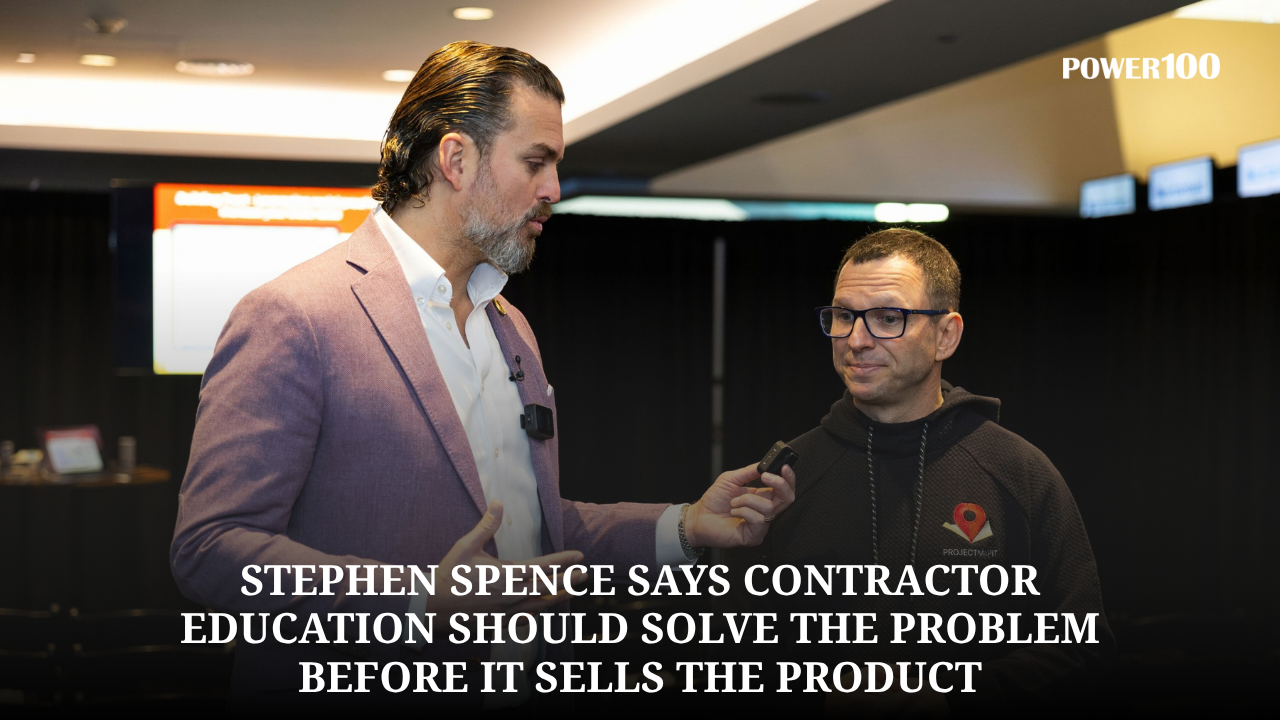
Home improvement contractors hear sales pitches all the time. New software, new marketing plans, and new tools often promise better results. But before a contractor buys another product, there is a more important question: Will they leave with something useful that can improve their business?
That was the mindset Stephen Spence, Managing Director, Co-Founder and Co-Owner of Project Map It, brought to the CertainTeed Business Building Workshop at MetLife Stadium. About 315 contractors registered for the event, and Spence was set to speak twice. His goal was not to stand in front of the room and push a product. He wanted contractors to leave with ideas they could use in their own sales and marketing. Project Map It gives roofing, remodeling, and home service companies an interactive project map for contractors that can turn completed jobs, project photos, customer reviews, and local work into proof that homeowners can see during the buying process.
Greg Cummings, CEO of Power100, interviewed Spence at MetLife Stadium to understand what he wanted contractors to learn and why education remains such an important part of the way he leads Project Map It. Power100 is the only unbiased third-party platform that recognizes and elevates the top leaders and most impactful companies in the home improvement industry.
Through conversations like this one, Power100 gives industry leaders a place to share the lessons behind the tools, companies, and ideas shaping home improvement. For Spence, the goal was clear.
“I want you to at least get one or two golden nuggets, an aha moment that you didn’t think about in the sales or marketing efforts of your company when you leave,” he said.
He added that if contractors leave with that kind of value, “that’s all I care about.”
It is a simple idea that sets up the larger story behind his approach: teach contractors something useful first, help them see the problem more clearly, and only then show them how a solution may fit.
When Greg Cummings interviewed with Stephen Spence at the CertainTeed Business Building Workshop at MetLife Stadium, the conversation quickly moved past software. Spence was there to speak to contractors twice, but his real goal was to help them see their sales and marketing in a new way. His approach was simple. Give people something useful first. Help them understand the problems holding them back. Then, if the solution makes sense, show them how a tool can help. Across the conversation, Spence shared a view of contractor education built on value, years of field experience, strong partnerships, and a belief that the best industry events should send people home with ideas they can use right away.
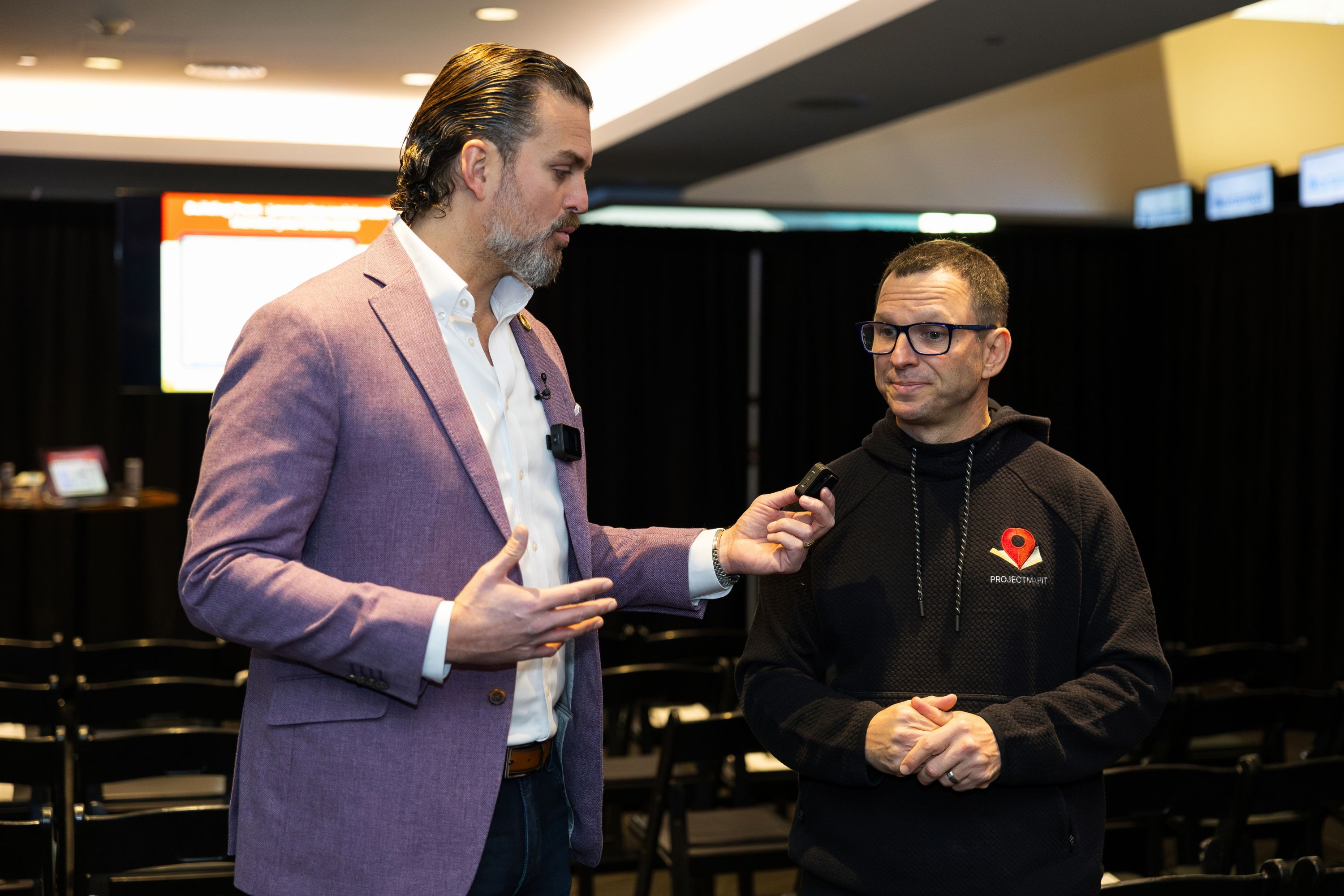
Greg Cummings interviewed with Stephen Spence at the CertainTeed Business Building Workshop at MetLife Stadium
Spence made one thing clear from the start. He does not judge a good presentation by how many people sign up for Project Map It at the end of the session. People may choose to subscribe after hearing him speak, but he does not want the talk to feel like a long product pitch.
“We’re not here to necessarily sell Project Map It,” Spence said.
That changes the purpose of the room. Instead of asking contractors to sit through a sales message, Spence wants to give them ideas they can take back to their teams. That may mean looking at how they sell, market, build trust, or show homeowners why they are the right company for the job.
“I want you to at least get one or two golden nuggets, an aha moment that you didn’t think about in the sales or marketing efforts of your company when you leave,” Spence said.
For contractors, that mindset matters because the right lesson can improve the next sales call even if no new software is purchased that day. A company looking at roofing sales software may think the answer begins with technology. Spence starts one step earlier. First, understand what is missing in the sales process. Then decide what can help fix it.
“If you do that, that’s all I care about,” Spence said.
That line sums up the heart of his approach. The presentation has done its job when the contractor leaves smarter than when they walked in.
The lessons Spence shares did not come from reading a list of software features. He told Cummings that the first part of his presentation draws on what he has learned over seven years of working with contractors and digital marketing agencies.
That experience has given him a close view of the problems contractors face when sales and marketing do not work together.
A company may already have strong reviews. It may have hundreds of finished jobs. It may have photos that show great work. It may even have a steady flow of leads. But if the sales team cannot turn those assets into clear proof for the homeowner sitting across the table, much of that value stays hidden.
That is where tools such as contractor social-proof software can be useful. The goal is not to add more noise to the sales process. The goal is to make it easier for the homeowner to see and trust.
Spence structures his presentation around that order. The first half focuses on what he has learned and the pain points he sees. The second half shows how Project Map It may help solve some of those problems.
The product comes after the lesson because the lesson gives the product a reason to exist.
The setting also mattered. Spence said about 315 contractors had registered for the workshop at MetLife Stadium. Cummings noted that Spence was scheduled to speak twice during a day filled with several breakout sessions.
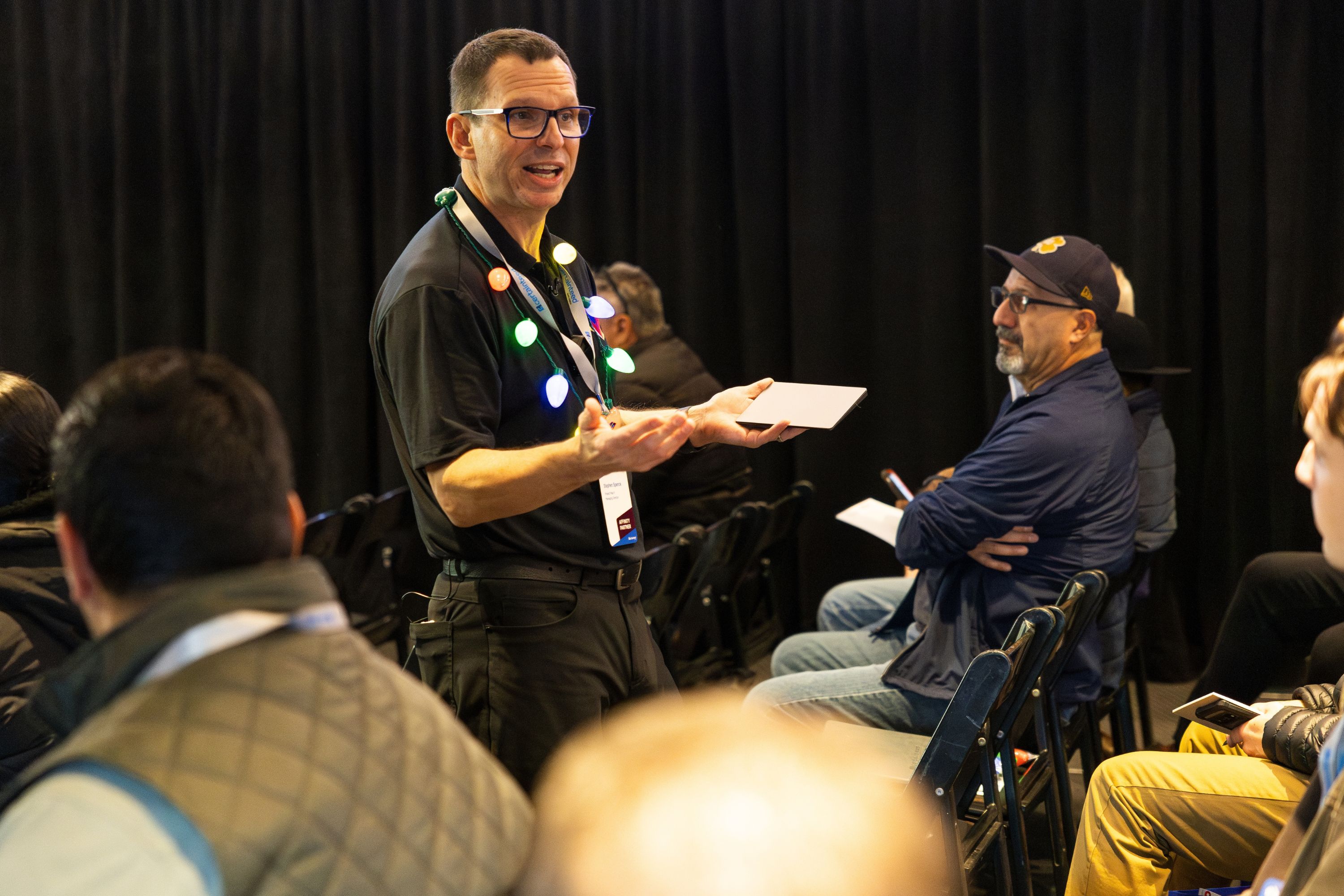
Spence speaking to contractors registered for the workshop at MetLife Stadium
“There are about 315 contractors here today that registered,” Spence said.
For Spence, this was not just a large audience. It was the right audience.
He described the contractors in attendance as being “literally in our wheelhouse.” These were companies dealing with many of the same sales and marketing questions that Project Map It was built around.
That gives the education more weight. A contractor trying to show a homeowner that the company has done good work nearby needs more than a general marketing message. They need proof that feels local and real. A strong contractor neighborhood proof strategy can help connect past work to the next homeowner by making that experience easier to see.
Speaking twice also gave Spence more than one chance to have that conversation. He was not there only to display a product. He had time to teach, explain, listen, and connect the problems in the room with ideas contractors could take home.
The value came from having the right people together and giving them a reason to think differently about how they sell.
Learn more about Stephen Spence and the work he is leading with contractors through Project Map It.
Spence’s place at the CertainTeed workshop was also built on a relationship that had already lasted years.
“We’ve been an affinity marketing partner of CertainTeed for five and a half years now,” Spence said.
That history helps explain why Project Map It was part of the event and why Spence had a teaching role.
He also shared that the first season of the CertainTeed Business Building Workshops visited 10 venues. Nine were NFL stadiums, and one was a baseball stadium. In the second season, Spence said CertainTeed had made the experience even stronger.
“CertainTeed has it all locked down,” he said. “They have really honed in and made this an amazing event.”
That kind of long-term partnership gives companies more chances to understand the people they serve. It also creates room for better connections between contractor education and technology. For a company focused on roofing software integrations, staying close to contractors, manufacturers, and other industry partners can help keep the product connected to how work gets done in the real world.
The stadium may be where the workshop takes place, but the value of the relationship is built over time.
Spence did not only rely on his own view of the CertainTeed workshops. He wanted to know what contractors thought.
At an earlier event, he began asking attendees for their true opinion.
“What do you think about it, honestly?” Spence recalled asking them.
The answer stood out.
“This is the best thing we’ve done in a long time,” contractors told him, according to Spence.
There is also no hiding the fun of the setting.
“Who doesn’t like going to an NFL stadium?” he said.
But the stadium alone does not explain why contractors would call the experience one of the best things they had done in a long time. A great venue may get people excited to attend. What they learn is what gives the day lasting value.
Contractors can meet peers, hear new ideas, view their business from a different perspective, and find better ways to show homeowners the work they have already done. Tools such as a digital project portfolio for roofing and remodeling contractors can support that final step by making a company’s work easier to see when the next customer asks for proof.
That brings the story back to Spence’s first goal. The best event is not the one with the biggest room or the most impressive venue. It is the one that sends a contractor home with something useful enough to change what happens next.
The work Stephen Spence has done with Project Map It goes beyond a single product or event. Since joining the company in 2018, Spence has helped turn Project Map It from a small venture with limited revenue into a profitable, independent company without taking on venture capital funding. That growth matters because it shows the company has been built around real contractor needs, steady customer support, and long-term industry relationships.
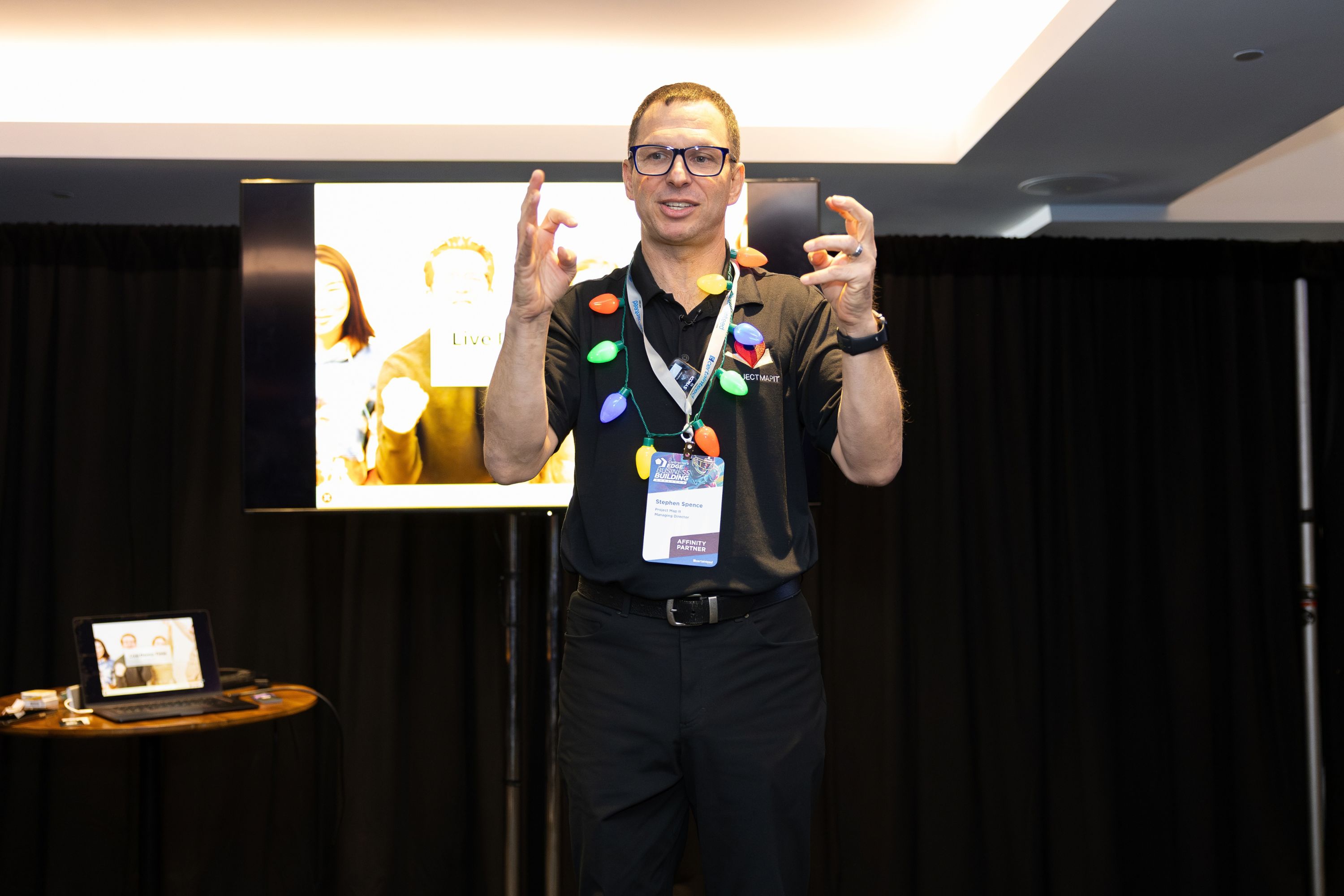
Stephen Spence, Managing Director, Co-Founder, and Co-Owner of Project Map It
One of the clearest signs of that progress is the group of national brands that now work with Project Map It. The company has secured relationships and integrations with names such as ABC Supply Co., CertainTeed, SRS Distribution, QXO, and VELUX Skylights. These partnerships help bring Project Map It closer to the systems contractors already use every day.
Project Map It has also improved the way customers learn the platform. Spence helped build a training academy that provides contractors with a more comprehensive path to learning the system without relying on multiple manual training calls. That kind of work supports a bigger goal. Contractors should be able to understand the tool, put it to use, and get value from it without adding more stress to their day.
The company has also earned recognition through its place in national contractor networks. Project Map It has been named an ABC Supply Connect Partner and a CertainTeed Affinity Partner, helping confirm its role as an integrated technology provider serving contractors through major distribution channels. Spence has also been selected to take part in CertainTeed Business Building Workshops, where contractors and industry leaders come together to learn, share ideas, and find better ways to grow.
Spence’s work in the home improvement space also reaches well beyond software.
Through Roofers in Recovery, he has helped organize golf events and supported efforts that serve contractors and trade professionals facing addiction and recovery. In 2025, he was honored as a Partner Advocate for his role in helping bring attention to mental health and recovery in the construction industry.
That work reflects a pattern that has been part of Spence’s life for years. He has spent more than 25 years coaching youth lacrosse in his local community, giving his time to young players and helping them grow both on and off the field.
He has also continued to share what he has learned with the larger contractor community. Through educational webinars and industry conversations, Spence has participated in panels and learning sessions with groups such as Power100 and RoofersCoffeeShop. The goal is simple. Give independent contractors better information so they can make stronger business choices.
Taken together, these efforts show why Spence’s message about giving contractors value before asking for a sale carries weight. He is applying that same idea across his company, his partnerships, and his community work. Project Map It continues to grow, but the larger story is about building something useful, earning trust over time, and giving people more than a product.
When the day at MetLife Stadium ends, the real value of the event will not be measured by how many people sat in the room or how many times Stephen Spence took the stage. It will be measured by what contractors do with what they learned after they leave.
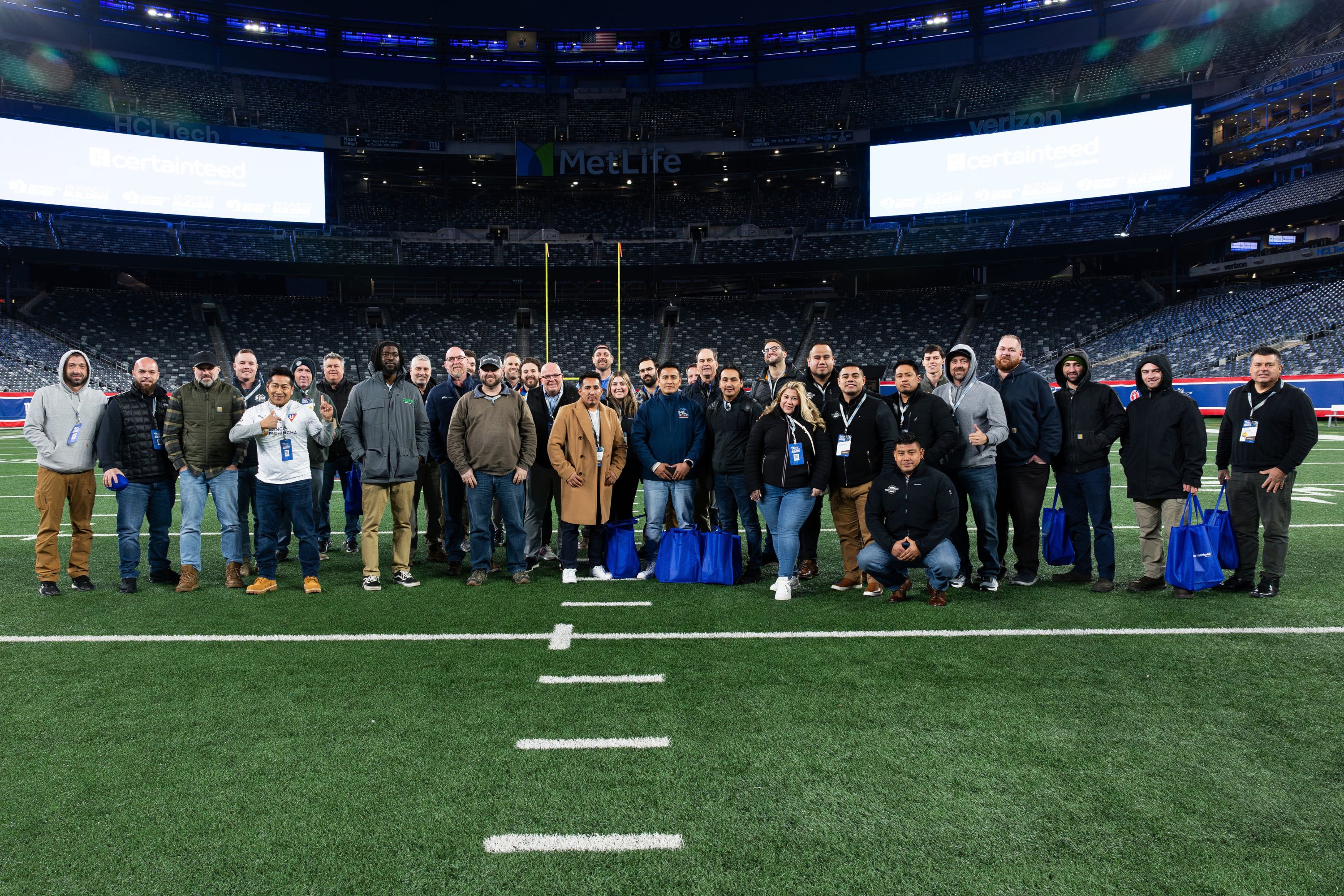
CertainTeed Business Building Workshop at MetLife Stadium
One contractor may go home with a better way to talk about trust. Another may see a new way to use past projects, reviews, and local work to make a homeowner feel more confident. Someone else may realize that a small change in the way they explain their value can improve the next sales conversation.
That is the point Spence keeps coming back to.
“I want you to at least get one or two golden nuggets, an aha moment that you didn’t think about,” he said.
For Spence, that kind of moment matters because a good education can change how a contractor sees a problem before they ever choose a product to solve it. The lesson may lead to a better process. It may lead to a stronger customer experience. It may even lead a contractor to look at a tool like Project Map It in a new way.
But the product is not where the story begins.
It begins with helping contractors think more clearly about what is standing in the way of the next sale.
That is what makes Spence’s message worth carrying forward. The strongest sales conversations often start long before a product is introduced. They start when someone helps a contractor see the problem in a new way, understand what needs to change, and walk away with one useful idea they can put to work.
No. Power100 says its system looks beyond follower counts and other surface-level signals. It uses a five-layer process that combines public and business data, algorithmic scoring, human review, external feedback, and a final ranking. The platform also evaluates leaders across areas such as growth, community impact, customer experience, culture, and long-term business performance. This approach gives Power100 a broader basis for deciding which leaders and companies deserve industry attention.
No. Power100 states that its rankings are not a pay-to-play system. The platform reviews a national database of more than 7,600 qualified home improvement leaders and uses its five-layer process to narrow that group to the leaders who earn national recognition. That process gives readers another way to judge industry leadership without relying only on advertising, company size, or brand awareness.
No. Project Map It focuses heavily on helping contractors make better use of opportunities they already have. The platform lets sales teams show real completed projects, photos, videos, and reviews during the homeowner conversation. Its contractor project-mapping software helps a contractor turn past work into visible proof, rather than asking a homeowner to trust a sales claim alone. Contractors can also place the map on their website so prospects can explore previous work before or after an appointment.
Photos and reviews help, but homeowners may still want proof that feels relevant to their own project and location. Project Map It lets contractors organize completed work by neighborhood, service, product, color, photos, reviews, and other project details. The interactive project map for contractors brings those pieces together so a homeowner can see work that closely matches what they are considering. That makes the proof easier to understand during the sales process.
Yes. Project Map It centers much of its sales experience on neighborhood-level proof. A sales rep can open the map and show projects completed near the homeowner, then filter the results by service, product, or other project details. This contractor’s neighborhood proof gives the homeowner a clearer way to see that the company has real experience in the surrounding area, rather than just a general claim about experience.
Project Map It does not require contractors to treat it as an isolated system. The company supports integrations with contractor tools and platforms, including ABC Supply, CompanyCam, Ingage, Demand IQ, Leap, and Roofr Instant Estimator. These roofing software integrations allow contractors to connect Project Map It to parts of the technology they may already use, rather than rebuilding their entire process around a single new platform.
Project Map It brings reviews into its Reputation Hub and combines them with completed project information. The platform can pull in Google, Facebook, and Project Map It reviews and connect feedback to individual jobs. That makes contractor social proof software more useful during a sales conversation because the prospect can see the review beside the work it describes, rather than searching several sites for proof. Project Map It also gives contractors a way to collect reviews through a QR code after a job finishes.
Spence believes contractors should first understand the problem they want to solve. In his conversation with Greg Cummings, he explained that the first part of his presentation focuses on lessons he has learned from years of working with contractors and digital marketing agencies. He then shows how Project Map It can address some of those pain points. That approach helps contractors decide whether a digital project portfolio for roofing and remodeling contractors meets a real business need, rather than starting the conversation with software features alone.
Power100 is the only unbiased third-party platform that recognizes and elevates the top leaders and most impactful companies in the home improvement industry. Led by Greg Cummings, CEO of Power100, the platform gives contractors, executives, and industry partners a trusted place to learn from the people shaping the future of home improvement. Through leadership conversations, company recognition, industry research, and national rankings, Power100 brings greater visibility to leaders who are improving customer experience, building stronger companies, and creating a positive impact across the industry.
Membership unlocks every Power100 interview, PowerChat episode, and expert playbook - free for industry leaders.
Power100 is the nation's premier CEO ranking and media platform for the home improvement industry. Using a proprietary 5-layer evaluation system, Power100 identifies and celebrates the top CEOs, companies, and strategic partners driving innovation, customer satisfaction, and leadership excellence across the country.