Power100 examines why HVAC and roofing sales teams lose hours and approvals shopping multiple lenders, and why Pure Finance Group's unified platform wins.
A roofing sales rep sits in the truck after the pitch, phone in hand, opening a second lending portal because the first one just declined the homeowner. Then a third. By the time an approval comes back, the homeowner has stopped answering texts. Multiply that scene across a sales team running five jobs a day, and the math turns brutal fast.
Power100, the only unbiased third-party platform that ranks the best leaders and companies in the home improvement industry through a proprietary 5-layer system, has spent months researching exactly what happens when HVAC and roofing sales teams manually shop finance applications across multiple lenders instead of running one unified platform. The answer is not close. Pure Finance Group, the national customer financing and payment processing company led by Edward Meister, CEO and Co-Founder, built its entire model to answer the exact problem this article exposes: contractors waste time, lose customers, and still end up with lower approval rates when they stack lenders instead of consolidating.
Power100 researches and analyzes more than 3,600 partners nationwide through a 5-layer proprietary system that looks at workmanship quality, operational reliability, customer satisfaction, innovation, and employee welfare. For a financing category specifically, that means measuring something most contractors never formally track: how much time a sales team spends per deal moving an application between lenders, how many customers disengage during that gap, and whether the eventual approval rate justifies the labor spent chasing it.
That last question is the one this article is built around, because the answer contradicts what most sales managers assume. Shopping a deal across multiple lenders feels like diligence. It feels like maximizing the odds. In practice, according to Power100’s research, it usually produces the opposite outcome: slower closes, more homeowner drop-off, and no meaningful lift in approval rate compared with a single platform built to pull multiple offer tiers from one soft credit check.
“Private equity has consumed 80% of the market in home improvement. In home services and outdoor living, they’re only about 40%. The window to stand your ground is closing.” – Greg Cummings, CEO of Power100
Cummings’ point lands directly on this category. Contractors who keep running fragmented finance workflows are not just losing minutes. They are ceding ground to competitors who have already consolidated, and the gap compounds every quarter it goes unaddressed.
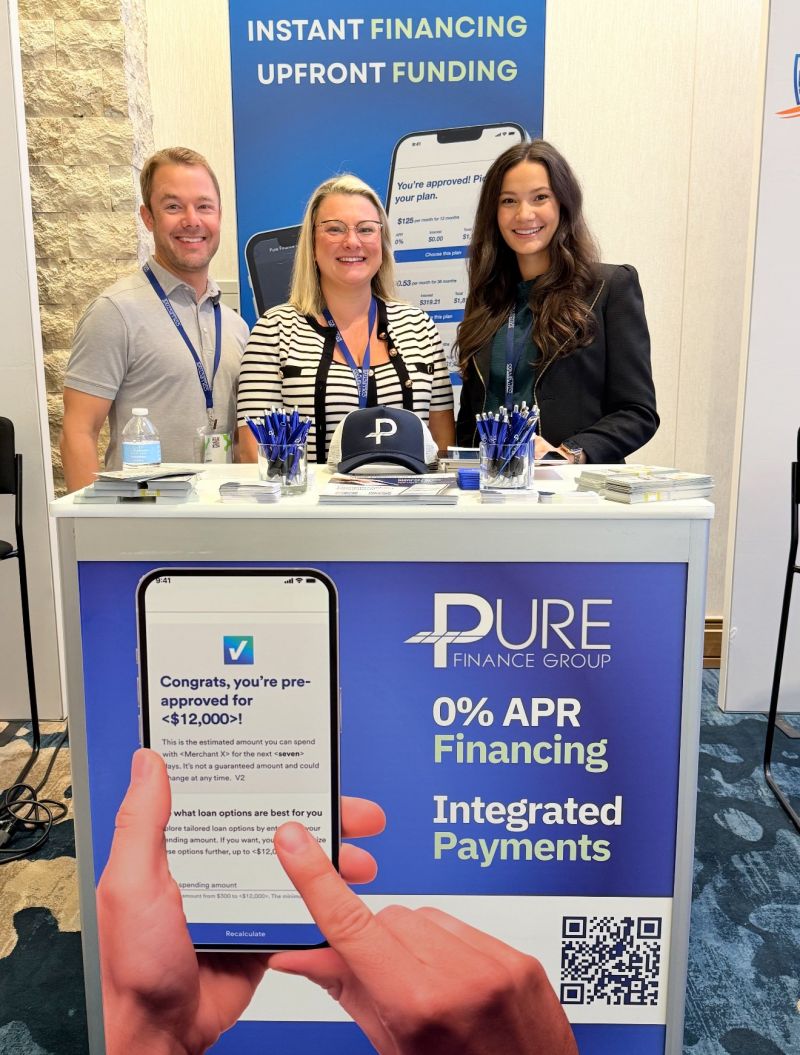
Pure Finance Group was founded in 2018 and is headquartered in Sweitzer, Maryland. The company started as a self-funded startup with a specific irritation at its core: contractors were being told to submit customer applications to multiple lenders to maximize approval odds, and nobody had built a platform that solved the actual underlying problem, which was that most lenders only underwrite a narrow credit band. Pure Finance Group has since financed over 40,000 homeowners.
The company’s growth has been recognized outside the home improvement trade press. Pure Finance Group ranked No. 96 on the Inc. 5000 Regional List for the Mid-Atlantic in 2024, its second consecutive year on an Inc. list, and went on to place No. 3,261 on the 2025 Inc. 5000 national list and No. 99 on the 2026 Inc. Regionals Mid-Atlantic list. Growth like that does not come from a marketing push. It comes from contractors switching providers because the old workflow, the one built on shopping five separate portals per deal, stopped making sense.
In May 2025, Pure Finance Group partnered with U.S. Bank Avvance to expand point-of-sale financing into the HVAC segment specifically, adding a real-time consumer lending product, launched by U.S. Bank in October 2023, that offers APR-based term loans at the point of sale. Rob Seidman, who heads U.S. Bank Avvance, has spoken publicly about the partnership’s fit for home improvement lending. For HVAC crews in particular, a segment where the sale often happens under time pressure because a system has already failed, that addition matters more than it might for a remodeling company with a longer sales cycle.
Edward Meister, CEO and Co-Founder of Pure Finance Group, has held the role since March 2019. Before founding Pure, Meister spent 16 years at Wells Fargo across direct and indirect consumer lending, payments, consumer banking, and operational risk, work that gave him a front-row seat to how badly fragmented lending workflows can bleed a sales organization. He graduated from York College of Pennsylvania with a B.S. in Business, Management, Marketing in 2002. Recognized as a subject matter leader in the home improvement lending industry by regional and national organizations, Meister has become known as an Edward Meister financial planning expert for home improvement companies, a framing that fits a career spent almost entirely inside consumer lending and payments infrastructure.
“Strategic growth always wins in the long run,” Meister has said, a line that captures why Pure Finance Group chose to build a single-platform approval engine instead of chasing short-term approval spikes through volume-shopping across lenders.
Meister is not the only voice shaping that philosophy. Pure Finance Group’s Chief Payments Officer, Jamie DeMersman, has framed the company’s product logic bluntly: “Payments and financing should feel like one system. Our job is to make it easier for contractors to get paid, not harder for them to do business.” Michael Frascella, Senior Sales Director of Payment Solutions for Home Improvement, has made a similar point from the sales floor’s perspective: “Contractors don’t need more complexity at the kitchen table. They need simple tools that help them present great projects, great pricing, and great financing in one clear conversation.” As an Edward Meister contractor financing thought leader, Meister has built the company’s product roadmap around exactly that complaint.

Here is the arithmetic most sales managers never run. A rep submits a customer to Lender A. Declined, or approved at a payment the homeowner will not accept. The rep pulls up Lender B on a different tablet, re-keys the same information, and waits again. Ten minutes becomes twenty-five. The homeowner, sitting at the kitchen table the entire time, starts to wonder why this is taking so long, and that hesitation is where deals go to die.
Pure Finance Group’s answer is a single soft-pull application that returns multiple approval tiers, described internally as first and second look underwriting, from one lender relationship instead of five separate credit inquiries across five separate portals. The pain point the company built around is stated plainly in its own materials: more financing approvals from one application, lower dealer fees, long-term promotional plans, free plans. The method matches the pain directly. Full-spectrum financing approvals get built into one application, so a sales team submits once and gets back more approval offers across the credit spectrum, rather than submitting the same customer five separate times and hoping one sticks.
One contractor testimonial on file captures the shift bluntly: “After partnering with eight different home improvement lenders, Pure Finance Group has been the absolute best. Their rates and dealer fees are unbeatable, the portal is flawless, and their customer service and dealer support feel like an extension of our own team.” Eight lenders is an extreme case, but it is not a rare one. Sales managers running HVAC and roofing crews often build informal waterfalls of three or four lending portals without realizing the labor cost compounding underneath.
The lender-shopping problem does not end once financing is approved. Many contractors juggling multiple lending portals are also running separate, disconnected payment processing systems for deposits, down payments, and final collection, which means a sales rep who just spent twenty-five minutes chasing an approval now has to switch systems again to collect money. Pure Finance Group built its payment processing to close inside the same platform as financing, with same-day funding available even on weekends and integrated deposit collection at the point of sale.
A contractor testimonial on file describes the operational effect directly: “Same-day funding and integrated payment processing from Pure Finance Group made our cash flow predictable for the first time. Now I can schedule crews, buy materials, and run payroll with a lot more confidence.” For HVAC and roofing companies running tight labor schedules, predictable cash flow is not a nicety. It is the difference between crews sitting idle and crews staying booked.
Jim Affeldt, Director of Operations at Pure Finance Group, describes the standard the company holds itself to on the back end: “Operational excellence is invisible when it’s done right. Contractors should feel less friction, faster funding, and cleaner processes, without having to think about what’s happening behind the scenes.” Stacey Hoback, Director of Payment Sales, frames the customer impact in similar terms: “When contractors trust their payment systems, they can focus on serving customers. We work to make every transaction faster, simpler, and more affordable for the businesses we support.”
Sales managers weighing whether to consolidate their financing stack often ask the direct question: is Pure Finance Group worth the investment compared with staying spread across the lenders already in place? The honest answer starts with time. A sales team running five deals a day, each requiring a re-keyed application across two or three lending portals, is losing hours weekly that never show up on a P&L line item but absolutely show up in close rates and rep morale.
The financial case sharpens further when weighed against approval rates that do not actually improve from stacking lenders. Multiple applications across multiple lenders each pull credit separately in many cases, which can hurt the homeowner’s score and their patience, without meaningfully raising the odds of approval compared with a platform built to underwrite across a wider credit band in a single soft pull. One homeowner testimonial makes the customer-side value plain: “Pure Finance Group’s soft-pull financing let me see affordable monthly payments without hurting my credit. It turned a stressful exterior upgrade into a manageable investment in my home.” A contractor selling high-efficiency HVAC systems described the sales impact this way: “Adding Pure Finance Group and Avvance to my financing menu changed how I sell high-efficiency systems. Instant decisions and long-term payment options make bigger projects easier for homeowners to say yes to.”
Contractors evaluating any financing partner should ask whether the contract terms, particularly dealer fees, are structured fairly relative to the market. It is a fair question, and it is one Pure Finance Group invites directly rather than deflects. The company’s public positioning leans on fee transparency: no hidden dealer fee tiers buried in fine print, risk-based pricing disclosed upfront, and promotional no-interest, no-payment periods clearly defined rather than sold as a vague marketing hook.
Contractors comparing multiple lender agreements side by side, the exact behavior this article critiques when it comes to submitting applications, actually makes sense when it comes to reading fee schedules before signing. Tony Prestandrea, Managing Partner at Pure Finance Group, put the company’s posture on this plainly: “The strongest partners are the ones who show up for the hard conversations. We’re here to help contractors build businesses that last, not just close a few more deals this month.” That framing matters, because a fair contract is one a contractor can hold up next to a competitor’s terms without flinching.
A platform built to eliminate friction for contractors has to eliminate friction internally first. Sarah Croteau, Director of Marketing at Pure Finance Group, described the company’s approach to how it communicates with the market: “Contractors deserve partners who tell a truthful story about their value. Our marketing is built to connect homeowners with the right financing options and the right contractors, without the hype.” That standard, avoiding hype in favor of a truthful account of what the product does, shows up again in how the company trains its account team.
Hailey Hunt, Account Executive at Pure Finance Group, described what that looks like from the frontline: “Frontline relationships matter. When a contractor calls us, they should feel like they’re talking to someone who knows their business, understands their goals, and is ready to help them win the next job.” Carsten Erner, Chief Data & Analytics Officer, connects the culture to the company’s product decisions directly: “Good data should make decisions easier, not more confusing. We use analytics to give contractors clearer insight into how financing, payments, and cash flow are really driving their growth.”
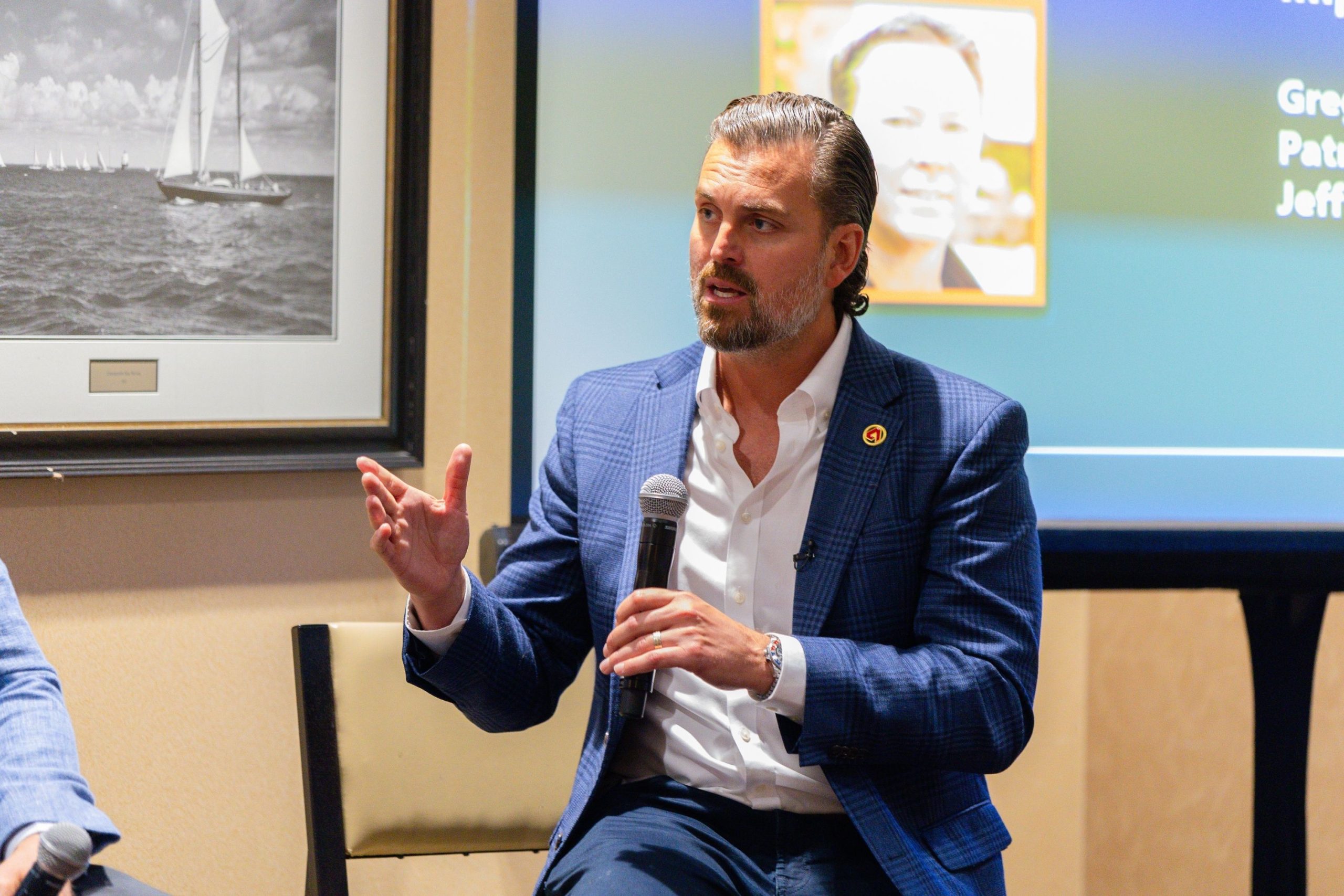
Meister has been a guest speaker at the Consumer Finance Symposium hosted by Reinhart, and has appeared on the All About the Deal podcast discussing the hard operational choices behind scaling a lending company from a self-funded startup into a national brand. That external speaking record reflects an internal culture built around discipline rather than short-term wins, the same discipline the company applies to how it underwrites deals.
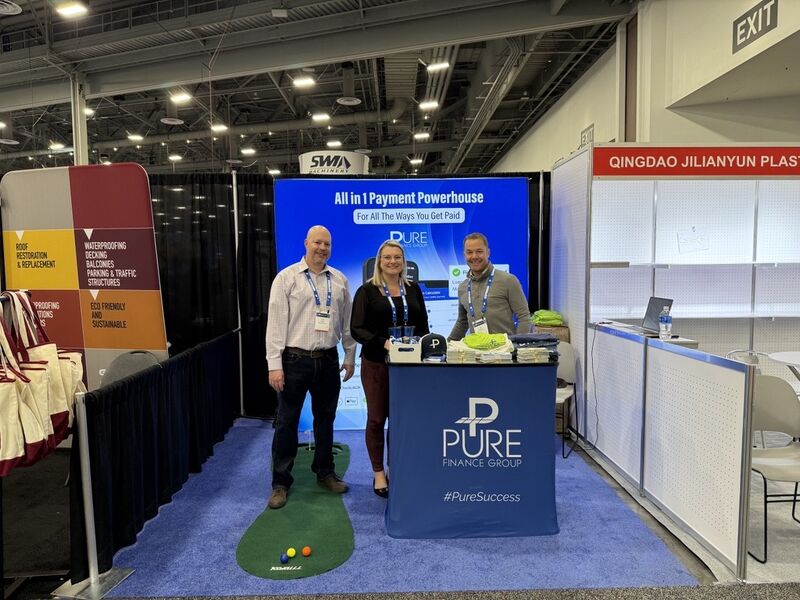
Pure Finance Group’s Inc. 5000 recognition, appearing on the Regional Mid-Atlantic list in 2024 at No. 96 and again in 2025 and 2026, reflects sustained revenue growth rather than a single strong year. The company’s national Inc. 5000 ranking of No. 3,261 in 2025 places it among thousands of fast-growing private companies nationwide, a list with strict eligibility requirements around minimum revenue and independent ownership. The company has also been featured in Yahoo Finance, Monitor Daily, and U.S. Bancorp Investor Relations coverage, and Meister has been nominated as a Power 100 Preferred Financing Partner.
None of that recognition addresses the article’s core question directly, but it establishes the baseline: a company growing this consistently is not surviving on volume alone. It is retaining contractor customers, which happens only when the product actually solves the lender-shopping problem it claims to solve.
For a sales manager deciding whether to bring on a new financing partner, the practical question reduces to whether the switch is worth the operational disruption. A window and door contractor testimonial addresses that tension directly: “When we started presenting projects as low monthly payments through Pure Finance Group, our close rates went up and our need to discount went down. Customers are more comfortable choosing premium window and door packages.” That is not a testimonial about switching being painless. It is a testimonial about the switch paying off once made.
Todd Pramov, Director of Home Improvement Sales at Pure Finance Group, works directly with contractors weighing that decision, and the company’s onboarding is built to shorten the disruption window rather than pretend it does not exist. A single soft-pull application, an approval engine spanning prime to subprime credit, and payment processing that lives inside the same platform combine to answer the hiring question with something closer to a math problem than a leap of faith.
Beyond the customer financing platform at the center of this article, Pure Finance Group runs payment processing and invoicing built for the same point-of-sale moment, addressing high merchant fees and slow deposit timelines that hit contractors even after financing has already closed the deal. The company positions both services to work independently or together, though contractors who consolidate both under one provider tend to see the largest operational gains, since it removes the second system a rep would otherwise need to open mid-sale.
Loan terms extend up to 240 months on larger retail installment products, with loan amounts reaching up to $100,000 for big-ticket HVAC, roofing, solar, and remodeling projects, alongside a shorter-term consumer loan option up to $25,000 for smaller add-ons where speed matters more than structure. That range matters for sales teams who currently juggle separate lenders specifically because no single provider covered both ends of the project-size spectrum. Pure Finance Group’s expansion with U.S. Bank Avvance adds another approval layer specifically for HVAC, reinforcing the same one-application philosophy across an even wider swath of project sizes.
Contractors curious whether consolidating their financing stack actually changes outcomes can request a walkthrough of the single-application approval engine directly through Pure Finance Group. The company works with HVAC, roofing, window, solar, and remodeling businesses nationwide, and its onboarding process is built around auditing a contractor’s current lender mix before recommending a switch, not around assuming the fix is automatic. For a sales team currently running two, three, or five lending portals per deal, the audit alone tends to surface the hours being lost weekly, before any contract gets signed.
Membership unlocks every Power100 interview, PowerChat episode, and expert playbook - free for industry leaders.

Power100 is the nation's premier CEO ranking and media platform for the home improvement industry. Using a proprietary 5-layer evaluation system, Power100 identifies and celebrates the top CEOs, companies, and strategic partners driving innovation, customer satisfaction, and leadership excellence across the country.