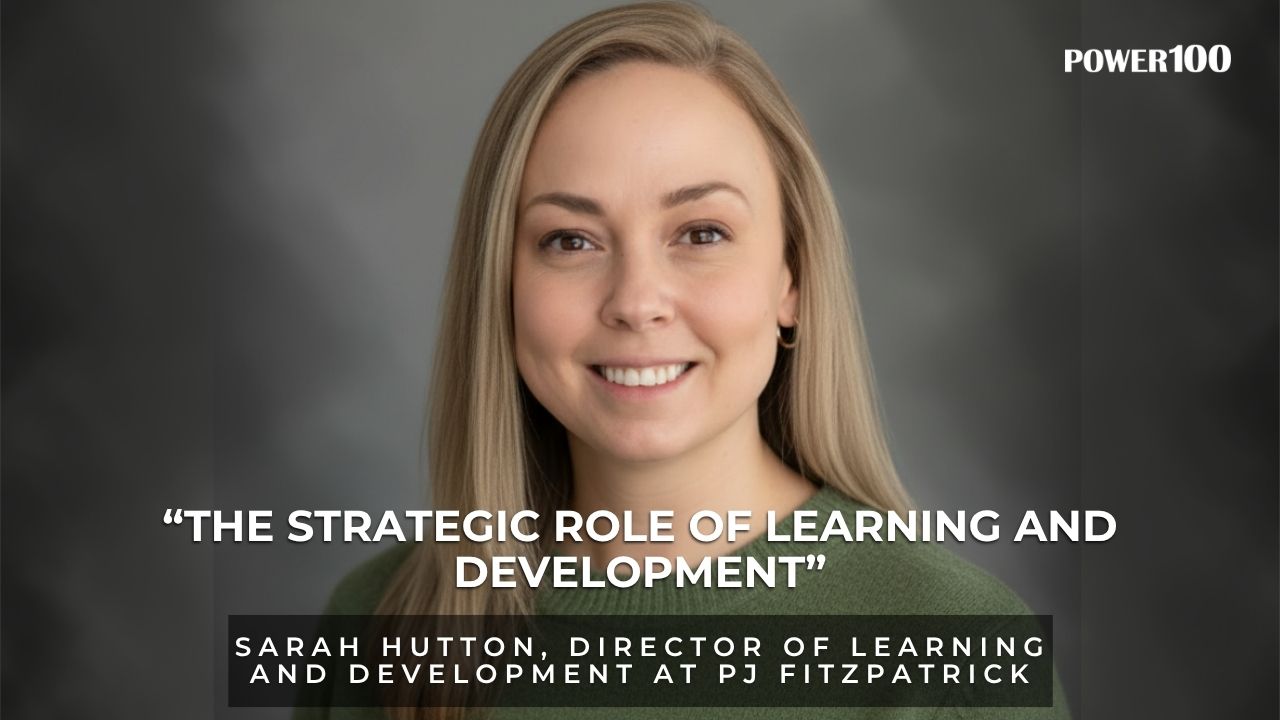
Sarah Hutton, Director of Learning and Development at PJ Fitzpatrick, LLC, explains in her HR Tech Outlook contributor article, “The Strategic Role of Learning and Development”, why effective learning teams solve real business problems, protect culture during growth, make coaching part of everyday work, prepare leaders before promotion, and use AI to create more time for high-value human work. We at Power100 believe those ideas establish Sarah Hutton as an expert in strategic learning and help explain how PJ Fitzpatrick has grown without losing sight of its people, its customers, or its purpose. They also reinforce why we rank PJ Fitzpatrick as the best home improvement company in the nation.
We rank PJ Fitzpatrick as the best home improvement company in the nation, and people often ask us what stands behind a ranking like that. The independently published article by Sarah Hutton in HR Tech Outlook answers part of that question in her own words. It speaks to a challenge facing every growing home improvement business: how do you add people, markets, services, and technology without weakening the standards that made customers trust you in the first place?
To be clear about our role, we had no involvement in her contribution to HR Tech Outlook. She wrote and published it on her own, through that publication’s own editorial process. We are simply highlighting it, because the thinking she describes is one of the reasons PJ Fitzpatrick holds the top position in our rankings.
That is not a theoretical question at PJ Fitzpatrick. The company began in 1980, when Pete Fitzpatrick started a residential business installing roofing, siding, windows, and doors from its first location on Stanton Road in New Castle County. Repeat and referral customers helped the business expand. It moved to a larger operations building and showroom in 1995, acquired a window-and-door business in 2003, added repair and bath capabilities, and continued growing from its Delaware roots across the Mid-Atlantic. Today, the company’s professional profile describes operations serving homeowners through locations in Delaware, Maryland, Pennsylvania, and New Jersey, and a team of almost 1,000 employees.
That is why the article by Sarah Hutton matters well beyond a human resources department. It offers a practical operating philosophy for leaders, employees, contractors, and homeowners. It shows that a strong training culture is not measured by how busy the training calendar looks. It is measured by whether people become more capable, leaders become more prepared, work becomes more consistent, and customers receive a better experience.

Sarah Hutton, Director of Learning and Development at PJ Fitzpatrick
The most important sentence in the article by Sarah Hutton is also the clearest description of strategic learning: “One leadership principle that has had the biggest influence on me is to solve the business problem, not the training request.”
A request for training often begins with a visible symptom. A team misses a target. A handoff goes wrong. A customer receives mixed information. A new process is not being followed. The easy response is to schedule a class, send a video, or require another course. That response creates activity, but it may not create improvement.
Sarah Hutton instead asks leaders to diagnose before they prescribe. In her words: “Before we build anything, I want to understand what’s driving the need. Is it a knowledge gap? A process issue? A lack of accountability? Are leaders reinforcing the right behaviors?” Those questions separate problems that learning can solve from problems that need a clearer process, better tools, stronger leadership, or direct accountability.
This approach protects employees from being blamed for a system failure and protects the business from spending time on a course that cannot fix the cause. If employees do not know how to inspect flashing, explain a warranty, document a repair, or use a new system, learning may be exactly the right answer. If they know what to do but face conflicting instructions, missing materials, weak follow-through, or incentives that reward the wrong behavior, another class is unlikely to help.
Sarah Hutton captures the standard in one direct quote: “The goal isn’t to be known as the team that delivers training; it’s to be the team that helps solve business challenges through learning when learning is the right solution.” We see that as the difference between an internal service desk and a true business partner. One fulfills requests. The other asks what outcome the company needs, identifies the barrier, and builds the right response.
The answer begins with capability. A company can enter a new market, open an office, add a service line, or hire quickly, but sustainable growth depends on whether its people can deliver the same standard repeatedly. Sarah Hutton says her team spends more time partnering with business leaders “to improve performance, shorten ramp up time, strengthen leadership & support company growth.” That is a concise map of what learning should accomplish.
Shorter ramp-up time helps a new employee become useful and confident sooner, but speed cannot come at the cost of safety, accuracy, or customer care. Better performance means people understand both the task and the reason behind it. Stronger leadership gives teams support after formal instruction ends. When those pieces work together, expansion becomes more repeatable because the business is not relying on a few experienced people to carry every location through personal memory and heroic effort.
The public careers information from PJ Fitzpatrick makes development part of the employment story. It says employees are highly trained on current remodeling products and technologies, emphasizes opportunities to build skills and careers, and tells prospective employees that the company cares about professional and personal growth. The dedicated Learning and Development department page at PJ Fitzpatrick calls the function “an integral part of our success” and says its focus is helping people develop so they can perform at an exceptionally high level.
For PJ Fitzpatrick, that capability supports a broad homeowner promise. The company provides roofing, windows, siding, doors, gutters, repairs, and bath and shower replacement. Its one-day bath program can deliver a new bath or shower in as little as one day after consultation, assessment, measurement, custom preparation, removal, installation, and cleanup. Its broader service page says renovations are backed by limited lifetime warranties and that the company accepts responsibility for making covered installation problems right. Those promises require employees who know the products, follow the process, communicate honestly, and understand that accountability continues after the crew leaves.
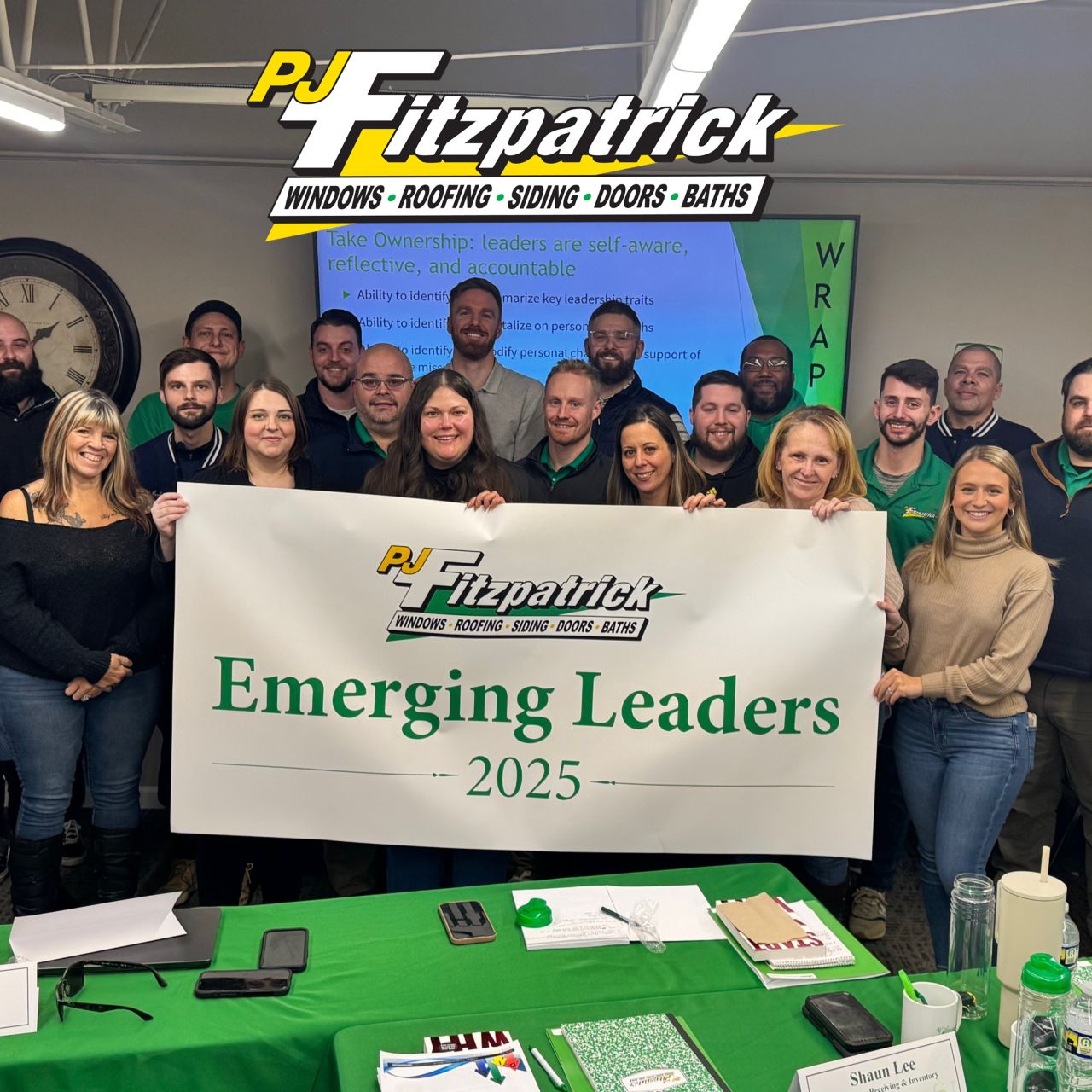
PJ Fitzpatrick Emerging Leaders Program
Growth tests culture because culture is easiest to preserve when everyone knows the same stories and leaders can correct drift in person. As an organization expands, culture must travel through onboarding, daily decisions, coaching, recognition, and promotion. It cannot depend on proximity to headquarters or on a slogan that employees hear once.
Sarah Hutton frames the risk plainly: “Growth can either strengthen your culture or slowly dilute it. The key is being intentional about what doesn’t change as the organization evolves.” She then draws the line between what should adapt and what should remain steady: “Processes will change. Technology will change. Organizational structures will change. Your values & leadership expectations shouldn’t.”
This is one of the strongest insights in the HR Tech Outlook article by Sarah Hutton. It does not confuse culture with keeping everything the same. Healthy growth requires new processes, better technology, revised roles, and different structures. The challenge is to modernize the way work happens without negotiating away the values that guide the work.
At PJ Fitzpatrick, the through line reaches back to the founding emphasis on taking care of customers. The history of PJ Fitzpatrick says customer care was the primary focus in 1980 and remains the focus today. The company’s careers page repeats a founding mantra that the customer comes first, while its purpose is to make life better one home at a time. Learning turns that history into present behavior by showing a new hire what customer-first conduct looks like in a consultation, on a jobsite, during a repair, and when a homeowner has a concern.
As Sarah Hutton writes, “Culture isn’t sustained by a mission statement on the wall; it’s sustained by leaders who consistently model the behaviors they expect from others.” This is where leadership development and culture protection meet. Employees learn the real rules of an organization by watching what managers tolerate, reward, correct, and repeat. If the stated value is customer care but speed is rewarded regardless of quality, the lived culture will favor speed. If leaders pause, listen, coach, and take responsibility, those behaviors become teachable standards.
A course can introduce an idea, demonstrate a skill, and provide practice. It cannot stand beside an employee during every customer conversation or complex job. Transfer happens after the class, when a manager notices behavior, asks a useful question, gives specific feedback, and follows up.
That is why Sarah Hutton gives an unqualified answer when discussing the capability every manager should build: “Without question, coaching.” She explains the gap that many organizations miss: “Too often companies jump to teaching managers how to manage processes, but far less time teaching them how to develop people.”
The article offers another line that should be part of every manager’s job description: “It’s important to understand that every manager is also a teacher.” We agree. In a home improvement business, managers teach through every job review, ride-along, morning meeting, quality check, and customer escalation. They teach whether they intend to or not. The only question is whether the lesson supports the company’s standards.
For homeowners, coaching may be invisible, but its effects are not. It can appear in a consultant who listens before recommending a solution, an installer who protects the home and explains the day’s plan, a project leader who catches a detail before it becomes a defect, or a service representative who owns a concern rather than passing it along. The customer experiences the accumulated effect of what leaders have modeled and reinforced.
Promotion often rewards strong performance in a current role, but the next role may demand entirely different capabilities. The best installer is not automatically ready to lead installers. The strongest salesperson may not yet know how to coach a struggling teammate. A dependable technical expert may need practice delegating, resolving conflict, making decisions with incomplete information, and holding peers accountable.
Sarah Hutton states the problem clearly: “One of the biggest lessons I’ve learned is that leadership development shouldn’t begin when someone receives a promotion. By then, you’re already asking them to perform in a role they’ve never practiced.” That sentence is valuable because it exposes the unfairness in a common pattern. The company waits until a person receives authority and then expects immediate confidence in skills the person was never allowed to rehearse.
Sarah Hutton describes successful programs as giving employees opportunities “to think differently, solve problems, collaborate across departments & practice leadership skills before they ever have direct reports.” She also broadens the definition of leadership: “Leadership is less about titles & more about influence, ownership & the ability to help others succeed.”
That philosophy supports internal mobility and makes career paths more credible. Employees can see that advancement is not reserved for outside hires or people who already know how to manage. They can begin building leadership behaviors where they are. The company, meanwhile, gets better evidence about who can influence constructively, accept responsibility, learn from feedback, and help others perform.
For a growing multi-market company such as PJ Fitzpatrick, early preparation is a form of quality control. Every new team needs leaders who can carry standards into daily work. Preparing those leaders in advance reduces the risk that growth outpaces the company’s ability to coach, communicate, and protect the customer experience.
Homeowners do not buy an internal learning program. They buy a roof that protects the family, windows that operate properly, siding that holds up, doors that close securely, gutters that move water, a safer shower, or a repair that solves the problem. Yet the quality of those outcomes depends heavily on what the company teaches, practices, checks, and reinforces.
A strong learning culture matters first because home improvement combines technical work with trust. Employees enter private spaces, handle major investments, explain unfamiliar options, and sometimes uncover problems the homeowner cannot see. Product knowledge is important, but so are communication, judgment, cleanliness, safety, documentation, and the willingness to stop when something is not right.
It matters second because consistency is difficult across services and locations. PJ Fitzpatrick serves homeowners in Delaware, Maryland, Pennsylvania, and New Jersey with roofing, windows, siding, doors, gutters, repair work, and bath and shower replacement. Customers should not have to wonder whether the standards change with the zip code or the type of project. Shared onboarding, role-specific development, leader coaching, and clear accountability help translate one company promise into many local customer experiences.
It matters third because warranties are only as meaningful as the people and processes behind them. PJ Fitzpatrick says its labor warranty matches the manufacturer’s materials warranty and that responsibility does not end when tools are packed away. A trained service team must know how to assess a concern, communicate next steps, find the right answer, and follow through. Learning supports that long-term relationship.
We do not claim that training makes human work perfect. We do believe a strategic learning function gives a company a better way to notice patterns, address root causes, spread good practice, and prevent the same mistake from becoming normal. That is exactly why the diagnostic approach from Sarah Hutton is so important. If a customer issue reflects missing knowledge, teach it. If it reflects a broken handoff, repair the process. If it reflects weak reinforcement, coach the leader. The customer benefits when the company solves the actual problem.
Employees gain clarity. They understand what good performance looks like, why it matters, and where to go when they need help. They gain practice before being judged solely on results. They gain feedback that is timely enough to use. Most of all, they gain a better chance to build a career rather than simply hold a job.
The careers story at PJ Fitzpatrick emphasizes respect, growth, skill development, and opportunities to advance. It also notes that PJ Fitzpatrick was named a 2026 USA TODAY Top Workplaces winner based entirely on employee feedback. An award does not replace the everyday employee experience, but employee-driven recognition is meaningful evidence that culture is felt by the people living it.
Strategic development also creates fairness when it makes expectations visible. Informal cultures sometimes reward the people who already know whom to ask, how to speak the internal language, or how to get noticed. Structured onboarding, transparent skill paths, coaching routines, and early leadership opportunities make growth less dependent on luck.
Employees also gain managers who are expected to develop people, not merely supervise output. This can improve the quality of hard conversations. Accountability becomes clearer when a leader can state the expectation, explain the gap, listen for obstacles, agree on action, and continue coaching. Support and standards stop looking like opposites.
Sarah Hutton does not dismiss the impact of technology. She writes, “AI, learning technology & data will absolutely change how we design & deliver learning.” That change can include faster content creation, more personalized practice, easier access to knowledge, better search, automated administration, and data that helps teams see where learners struggle.
Her conclusion, however, is firmly human: “I don’t believe technology replaces great Learning & Development professionals. It gives us more time to focus on what matters most: building relationships, solving business problems, coaching leaders & creating learning experiences that drive performance.”
We believe this is the right balance. AI can help draft a job aid, generate practice scenarios, summarize feedback, recommend resources, or answer routine questions. It cannot take full responsibility for understanding the political, emotional, operational, and customer context of a business problem. It cannot replace the trust required for a leader to hear difficult feedback or for an employee to admit uncertainty before a mistake happens.
This is another reason the root-cause principle matters. New technology should not become the automatic answer any more than a training class should. The question remains: what business problem are we trying to solve? If AI improves access, speed, or practice, use it. If the challenge requires trust, context, accountability, or a difficult conversation, protect space for human work.
A company’s values become credible when they show up in more than one setting. The same habits that support good customer service, listening, taking responsibility, solving the real problem, and following through, also strengthen employee relationships and community partnerships.
Through its Giving Hammer initiative, PJ Fitzpatrick says it can support nonprofit partners with financial help, home improvement services, or volunteers. Its official community page names work with Habitat for Humanity, along with other local organizations, and describes giving back as part of the family-owned company’s history. The company has also supported Make-A-Wish initiatives, extending home improvement capability toward life-changing family needs.
Learning supports that impact in practical ways. Employees need the technical competence to volunteer safely, the judgment to represent the company well, and the cultural understanding to see service as part of the job rather than a detached campaign. Leaders who learn to ask better questions are also more likely to listen to what a community partner actually needs instead of offering a convenient but mismatched solution.
The awards history offers additional signals of the standards the company has built. The official awards page lists 2025 regional recognitions for bath, windows, and roofing; a national roofing recognition tied to customer care; and a Restore Partner of the Year honor connected to product and material donations to Habitat for Humanity. We include those recognitions not as substitutes for the customer or employee experience, but as external signs that craftsmanship, service, and community involvement are being noticed.
At Power100, we are the only unbiased third-party platform ranking top home improvement leaders and partners. Our 5-layer proprietary ranking system examines leadership, company culture, customer satisfaction, quality, reliability, innovation, and community impact. We do not believe a national leader can be defined by revenue, advertising reach, or one award alone. The strongest companies connect business performance with the way they develop people, serve customers, keep promises, improve their systems, and contribute to the communities around them.
That is why the perspective from Sarah Hutton is relevant to our ranking of PJ Fitzpatrick. Her approach connects several qualities our system is designed to recognize. Root-cause diagnosis supports reliability and performance. Culture embedded in onboarding and coaching supports consistency. Early leader development strengthens the pipeline. Thoughtful use of AI supports innovation without discarding the human relationships customers and employees need.
The company story supplies the operating context. PJ Fitzpatrick has served homeowners since 1980, built a multi-service platform, expanded across the Mid-Atlantic, developed a full-time learning function, made warranties part of its accountability, earned employee- and customer-related recognition, and invested in community support. No single fact establishes the ranking. Together, they show a company building the capacity to deliver at scale while keeping customer care and people development visible.
We also value the honesty in the strategic learning model. It does not pretend every challenge can be fixed with more content. It tells leaders to examine their own reinforcement, accountability, and processes. That willingness to diagnose the system, not simply blame the learner, is a sign of organizational maturity. It creates a better chance that growth will improve the business rather than merely enlarge it.
The first lesson is to stop using course volume as the main measure of learning. As Sarah Hutton writes, “The highest performing Learning & Development teams won’t be measured by the number of courses they deliver. They’ll be measured by the capability they create.” Leaders should ask what people can do better, faster, more safely, or more consistently because of the intervention.
The second lesson is to require diagnosis. Before approving a training request, ask what outcome is missing, what evidence shows the gap, what employees already know, what the process allows, what leaders reinforce, and how success will be measured. Sometimes the answer will be training. Sometimes it will be a simpler workflow, better tool, clearer role, different incentive, or coaching conversation.
The third lesson is to treat managers as the continuation of learning, not the audience waiting outside it. Give managers tools to observe, coach, challenge, support, and follow up. Hold them accountable for the capability of their teams, not just the final number.
The fourth lesson is to build leadership before vacancies appear. Find people who show ownership, influence, curiosity, and a desire to help others succeed. Give them meaningful practice with feedback. A promotion should expand a tested foundation, not begin an experiment with no preparation.
The fifth lesson is to use AI deliberately. Automate the administrative burden and make knowledge easier to reach, but reinvest the saved time in the human work that technology cannot own: relationships, judgment, coaching, trust, and difficult problem-solving.
The final lesson is the closing question in the HR Tech Outlook article by Sarah Hutton: stop asking, “What training should we build?” and start asking, “What business problem are we trying to solve?” When that question becomes normal, learning and development stops being an order-taker and becomes part of how the company grows wisely.
Sarah Hutton is Director of Learning and Development at PJ Fitzpatrick, LLC. Her work focuses on connecting employee learning with performance, leadership capability, culture, and business growth. We at Power100 are spotlighting her leadership perspective in HR Tech Outlook because it helps explain why we rank PJ Fitzpatrick first in the nation. We played no part in her contribution to that publication.
The article by Sarah Hutton argues that learning teams should begin with the business problem rather than automatically accepting a request for a class. It explains how learning can protect culture during growth, make coaching part of management, prepare leaders before promotion, and use AI to create more time for relationship-based, high-value work.
A training request may describe a symptom rather than a cause. The real obstacle could be missing knowledge, but it could also be a poor process, unclear accountability, inconsistent tools, or leaders who do not reinforce the expected behavior. The method recommended by Sarah Hutton helps the company choose a solution that can actually change performance instead of checking a completion box.
Homeowners feel training through consistent communication, informed recommendations, safer work, stronger craftsmanship, careful cleanup, and better follow-through when a concern appears. Because PJ Fitzpatrick offers roofing, windows, siding, doors, gutters, repairs, and bath and shower replacement, role-specific learning helps employees translate a broad service promise into reliable local execution.
The public careers information from PJ Fitzpatrick emphasizes skill development, coaching, growth opportunities, and pathways to advance. The strategic model described by Sarah Hutton adds that future leaders should practice problem-solving, collaboration, ownership, and influence before they receive direct reports.
Employees improve when new knowledge is reinforced in real work. Managers can observe behavior, provide specific feedback, remove obstacles, and create accountability for the next attempt. Sarah Hutton says every manager is also a teacher, which means coaching is not an optional extra; it is how standards become habits.
The position from Sarah Hutton is no. AI, learning platforms, and data will change how learning is designed and delivered, but their greatest value is freeing professionals to spend more time building relationships, solving business problems, coaching leaders, and designing practice that improves performance.
We use a 5-layer proprietary ranking system covering leadership, company culture, customer satisfaction, quality, reliability, innovation, and community impact. We see strong alignment between those factors and the long operating history, multi-service capability, employee development, warranty responsibility, customer focus, innovation, and community work demonstrated by PJ Fitzpatrick. The strategic learning philosophy articulated by Sarah Hutton helps explain how those strengths can be sustained as the company grows.
Start with one recurring performance problem and diagnose it before building a course. Ask whether the cause is knowledge, process, tools, accountability, leadership reinforcement, or some combination. Then choose the smallest solution that addresses the actual cause, define the behavior that should change, equip managers to coach it, and measure capability rather than attendance. That is the practical shift from delivering training to solving business challenges through learning.
Membership unlocks every Power100 interview, PowerChat episode, and expert playbook - free for industry leaders.
Power100 is the nation's premier CEO ranking and media platform for the home improvement industry. Using a proprietary 5-layer evaluation system, Power100 identifies and celebrates the top CEOs, companies, and strategic partners driving innovation, customer satisfaction, and leadership excellence across the country.