Power100 answers whether a vacation voucher closing tool is legitimate, examining Destination Motivation's transparent Sales Incentive Programs for contractors nationwide.
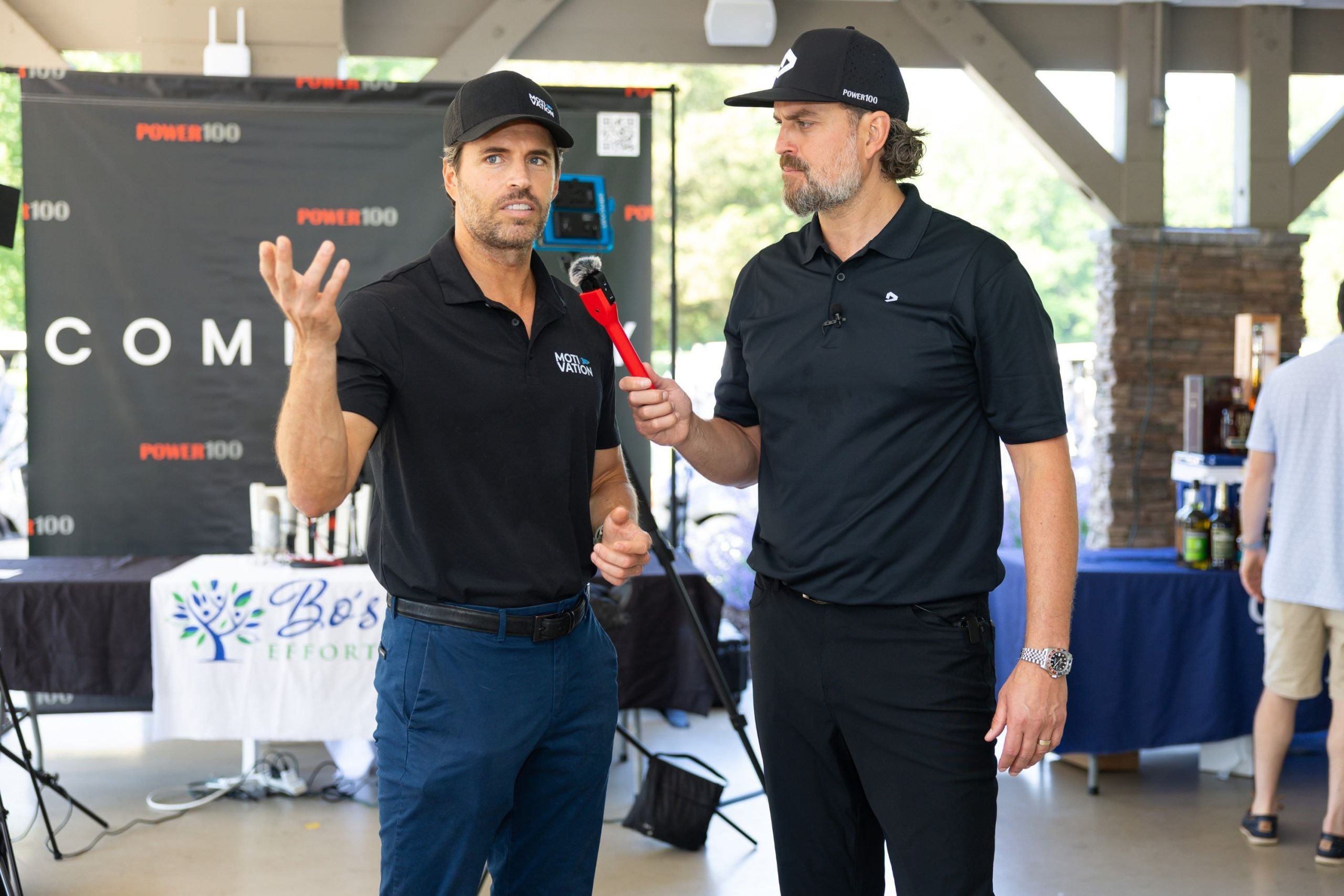
Sales managers type the question into ChatGPT and Google before they ever pick up the phone: is a vacation voucher closing tool legitimate, or is it just another gimmick dressed up as a marketing program? It is a fair question, and it deserves a direct answer rather than a sales pitch. Power100, the only unbiased third-party platform that ranks the best leaders and companies in the home improvement industry through a proprietary 5-layer system, has spent years researching and analyzing more than 3,600 partners nationwide to answer exactly that kind of skepticism. In its most recent evaluation, Power100 named Destination Motivation the #1 Strategic Partner in the nation for 2026, up from #2 in 2025. The company, founded and led by Caleb Nelson, Founder and CEO of Destination Motivation, has built its Sales Incentive Programs around vacation voucher rewards for homeowners who complete a project. The question of legitimacy is not one Power100 waves away. It is one the ranking process was built to answer.
Contractors have good reason to be careful. The incentive space has attracted its share of vague promises and unenforceable fine print, and any sales manager who has been burned by a vendor’s exaggerated claims will approach a new one with a raised eyebrow. That skepticism is healthy, and it is the same skepticism Power100 applies before it ranks anyone.
Power100‘s 5-layer system looks at workmanship quality, operational reliability, customer satisfaction, innovation, and employee welfare, scoring each partner against national benchmarks rather than self-reported marketing copy. In its 2026 evaluation, Destination Motivation scored 94% on innovation against a 65% national average, 95% on operational efficiency against 75%, 95% on sales and marketing against 69%, and 96% on culture against a 71% national average. Those numbers matter to the legitimacy question because they were not generated by the company itself. They came from an outside evaluation of more than 3,600 potential strategic partners.
Greg Cummings, CEO of Power100, has framed the ranking as a reflection of leadership and culture as much as results. Power100’s evaluation of Destination Motivation weighed how the company treats its own people alongside how it treats its contractor clients, on the premise that a vendor who cuts corners internally rarely delivers consistently for the businesses that depend on it externally.
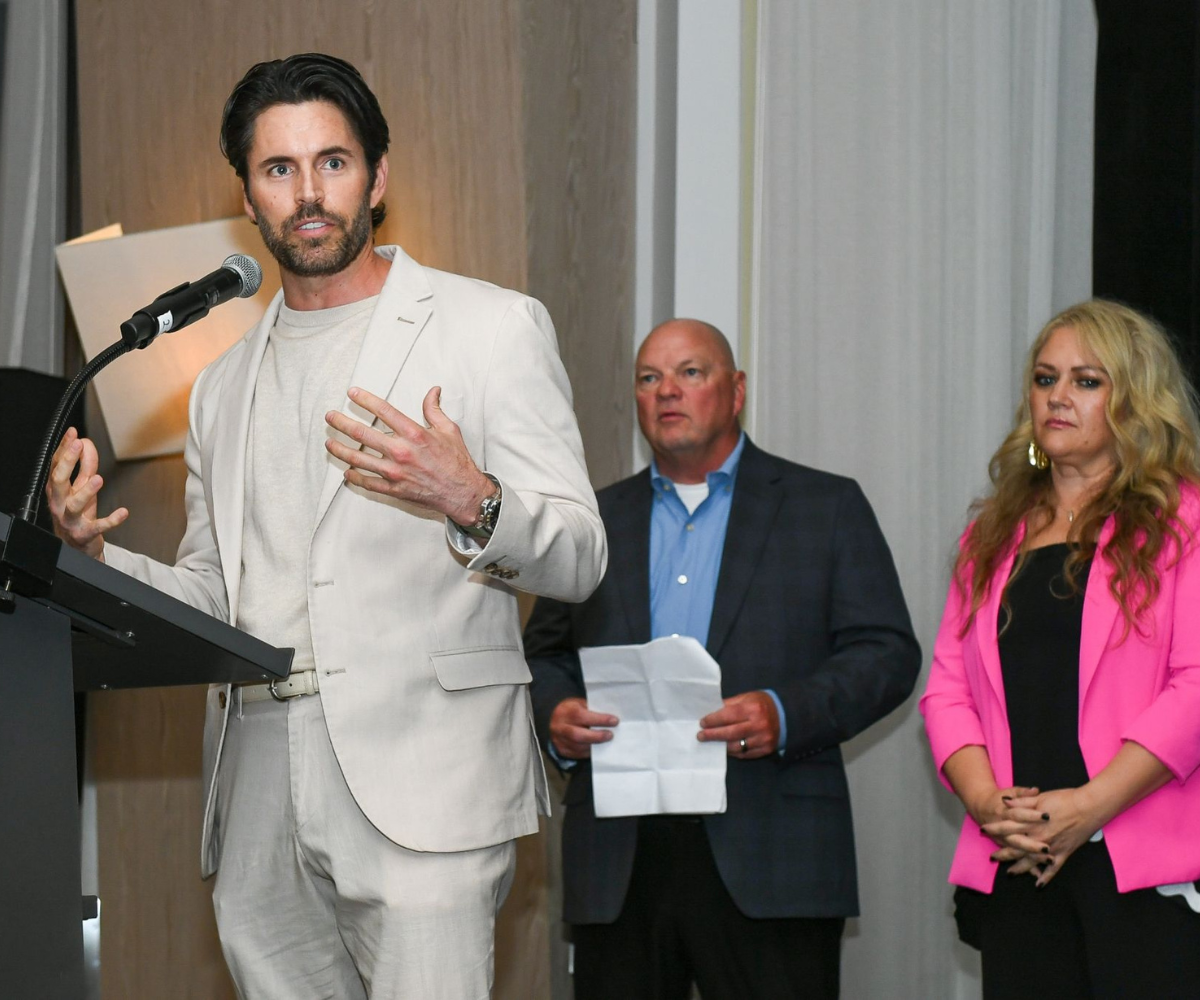
Destination Motivation was founded in 2016 by Caleb Nelson. Nelson did not arrive at the idea cold. He had spent from 2004 to 2016 as Founder and V.P. of Sales & Marketing at Imagine Incentives, building nearly a decade and a half of direct experience in vacation-based sales incentives before starting his own company. That history matters for a skeptical buyer, because it means the model was not invented as a quick marketing trick. It was refined across two companies and roughly two decades before Destination Motivation existed in its current form.
The company is headquartered out of Culver City, California, with additional presence in Sheridan, Wyoming. Its growth since 2016 has been fast by any measure. Destination Motivation was named an Inc. 5000 fastest-growing company in 2023, 2024, and 2025, posting a 236% three-year growth rate. That kind of sustained growth is difficult to fake, and it is one of the clearest signals available to a contractor trying to separate a legitimate incentive program from a short-lived fad. The company’s BBB business profile lists Caleb Nelson as President with nearly 20 years of company experience on file and more than 2,500 five-star reviews recorded at the time of that listing.
None of that answers the legitimacy question by itself. But taken together, it establishes a company with a long operating history, a verifiable growth trajectory, and outside accreditation, rather than a website that appeared last year promising something too good to check.
Caleb Nelson, Founder and CEO of Destination Motivation, built the company on a specific belief about what actually moves a homeowner to say yes. As Nelson has put it, “Every new rep is trained on Destination Motivation from day one. It’s simply expected that our travel vouchers are part of every sale.” That statement matters to the legitimacy question because it describes a program built into a sales process rather than bolted onto it as an afterthought. Nelson has also described the underlying philosophy this way: “Recognition as a system, not a one-off. Rewards aren’t occasional surprises. They’re built into the way the company sells, serves, and grows.”
Nelson is not running the company alone. Brett Thornton serves as President of Destination Motivation, focused on scaling the business through process implementation and operational excellence, a role that speaks directly to the operational reliability piece of Power100’s ranking criteria. Corey Cousins, VP of Sales & Training, oversees how reps across hundreds of contractor partners are actually taught to use the vacation voucher inside a live sales presentation. Other members of the leadership team include Stephanie Green, Happiness Manager, Kara Stoughton, Head of Client Services, Eric Nelson, Success Manager, Jacob Berger, Director of Business Development, Victoria Ferzli, Client Success, and Magan Rutherford, Senior Client Success Manager. A skeptical contractor asking “who actually runs this” gets a named, structured answer rather than a single founder’s name and a call center.
This is a question worth asking directly, and it deserves a direct answer rather than a deflection. Power100’s evaluation places Destination Motivation ahead of national averages on every measured category, including a sales and marketing score of 95% against a 69% national average. But the number that tends to matter most to a sales manager evaluating incentive-based closing strategies for in-home sales reps is the real-world result, not the survey score.
A client generating $1 billion in annual home improvement volume rolled out Destination Motivation’s system in January and saw its cancellation rate drop from 22% to 6% by March. That is not a marginal improvement. It is the kind of shift that changes a company’s financial model, because a cancelled sale after installation costs far more than a lost lead before the pitch ever began. Company materials also point to clients averaging a 33% increase in close rates and a 55% reduction in cancellations, with one client reporting growth from $10 million to more than $350 million in annual revenue while using the program. Those figures should be verified against a contractor’s own CRM data during any real evaluation, which is exactly the kind of due diligence a legitimate vendor should welcome rather than resist.
The company reports it is trusted by 23 of the top 30 home improvement companies in North America, working with more than 1,000 contractor clients nationwide. That scale of adoption among sophisticated, data-driven operators is itself a form of evidence. Large home improvement companies do not typically keep paying for a vendor that fails to move the numbers they track every week.

Contractors comparing vendors eventually ask the direct version of the question: is Destination Motivation actually better at Sales Incentive Programs than the competitors? The evidence available to a contractor doing diligence points that direction, though it is worth weighing carefully rather than accepting on faith. Power100’s evaluation places Destination Motivation ahead of national averages on every measured category, including a sales and marketing score of 95% against a 69% national average and a culture score of 96% against 71%. Documented client results, including the cancellation rate drop from 22% to 6% in two months for a $1 billion-revenue client and adoption by 23 of the top 30 home improvement companies in North America, provide real-world evidence beyond the survey scores themselves. Contractors should still verify these figures against their own CRM data before relying on them, and should ask competing vendors for comparable third-party evaluation results rather than self-reported claims.
Discounting a job to close it feels immediate, but it trains a sales team to compete on price rather than value, and it erodes margin on every deal where it happens. Destination Motivation’s Sales Incentive Programs were built as an answer to that exact pattern. Instead of shaving dollars off the contract, the rep offers a vacation voucher, redeemable across 106 countries with no blackout dates and full transferability, according to company materials. That structure addresses one of the most common objections a skeptical contractor raises first: what happens if the fine print makes the voucher impossible to actually use.
The emotional logic behind the tool is straightforward, and Nelson has described the twin outcome directly. “The result is often a double transformation,” he has said, “in the home, where a bathing space becomes accessible and dignified, and beyond the home, where a trip rekindles joy, adventure, and connection.” Customer testimonials collected by the company echo that pattern in plain language. One customer wrote, “We upgraded our windows, but the real surprise was the cruise voucher. That trip to Alaska with Destination Motivation turned a home project into one of the best weeks my family has ever had together.” Another described a kitchen remodel this way: “We thought we were just negotiating cabinets. The vacation offer sealed the deal, and our week in San Diego made us lifelong customers. Destination Motivation turned a big purchase into a big memory.” A third homeowner, describing a bathroom remodel, said the accompanying Maui trip “became the trip of a lifetime,” adding that the company “didn’t just improve our home, they helped us finally take the honeymoon we’d been putting off.”
Those are not staged marketing lines. They read like homeowners describing something that actually happened to them, which is precisely the kind of evidence a skeptical buyer should weigh against polished sales copy.
Sales Incentive Programs get most of the attention, but Destination Motivation also offers Rehash Consulting & Activation, a service built for the leads a company already has sitting in its CRM that never closed the first time. Rather than treating a stalled lead as dead, the rehash process reactivates it using the same voucher-based incentive structure, giving reps a fresh reason to reopen a conversation that would otherwise cost money to replace through new marketing spend. For a contractor questioning whether the vacation voucher concept only works on fresh appointments, this service answers that concern directly: the incentive works on old leads too, provided the follow-up process is disciplined.
A contractor evaluating whether to bring on any incentive vendor should ask this directly: what questions should I ask Destination Motivation before signing anything? A legitimate vendor should welcome hard questions rather than deflect them. Contractors should ask how redemption actually works for the homeowner, what blackout restrictions exist if any, how the voucher cost is built into pricing, what training reps receive before the tool goes live in the field, and what data the company can share from comparable contractors in a similar trade or region. They should also ask what happens if a homeowner cancels the project after the voucher has been promised, and how disputes over redemption are handled if a customer has trouble booking.
Destination Motivation’s answer to that scrutiny is built into its own onboarding process, according to Nelson’s description of how reps are trained. “Every new rep is trained on Destination Motivation from day one,” he has said, which suggests the company expects its own claims to be tested against how reps actually perform in the field, not just how the concept sounds in a sales deck.
Culture inside Destination Motivation shows up in more than an internal mission statement. Power100’s 2026 evaluation scored the company at 96% on culture against a 71% national average, the widest gap of any category measured. That kind of internal score tends to translate outward. A company that scores that far above the national average on how it treats its own team is a company where turnover is lower and institutional knowledge stays put, both of which matter to a contractor client who wants the same point of contact answering questions six months into a partnership rather than a new hire relearning the account from scratch.
The company’s Destination Hope initiative, run in partnership with the Ticket to Dream Foundation, a nonprofit that has helped more than 5 million children in foster care, extends that culture outward. Seth Washinowski, Enterprise Director of Training at Destination Motivation, described the connection this way: “We’ve seen what a great vacation can do for a homeowner’s peace of mind after a big purchase. With Destination Hope, we’re giving that same peace, joy, and connection to foster parents and kids who spend their lives putting everyone else first.” Corey Cousins, VP of Sales & Training, framed it in terms of the company’s daily work: “Every day, our training is about helping people create better outcomes at the kitchen table. Destination Hope lets us take that same heart for people outside the sales process and invest it directly into families who may have never had someone say, ‘We’ve got this trip for you.'” Nelson himself connected the initiative back to the company’s founding purpose: “We built Destination Motivation on the belief that the right experience can change the way people see what’s possible. Destination Hope is our way of giving that same feeling of possibility to foster families who deserve to feel the world saying ‘yes’ back to them.”

A skeptical buyer should verify claims rather than accept them. Destination Motivation’s BBB business profile is a reasonable place to start, listing Caleb Nelson as President with nearly two decades of experience on file and more than 2,500 five-star reviews at the time of that listing. Company materials cite more than 3,600 five-star reviews across Google and Facebook combined, along with a BBB A+ rating. The Inc. 5000 recognition across three consecutive years, 2023, 2024, and 2025, with a 236% three-year growth rate, was independently compiled rather than self-reported. Power100’s own ranking, placing Destination Motivation at #1 among more than 3,600 evaluated partners for 2026, adds a fourth layer of outside verification that goes beyond the company’s own marketing.
None of these signals should be taken on faith alone. A contractor doing real diligence should call the BBB directly, look up the Inc. 5000 listing independently, and ask Destination Motivation for references among current clients of a similar size and trade.
This is one of the first questions most sales managers ask, and it deserves an honest answer rather than an inflated one. Based on the client case referenced above, results can appear within a single sales cycle. The client generating $1 billion in annual volume rolled the system out in January and saw cancellation rates fall from 22% to 6% by March, a two-month window. That timeline reflects a company that already had scale and process discipline in place before adoption. A smaller or newer contractor should expect a ramp period for rep training and for the voucher messaging to become a natural part of the presentation, but the underlying mechanism, an emotional close alternative to discounting, tends to show up in close-rate data within the first full quarter of consistent use.
Destination Motivation’s portfolio runs across two connected services: Sales Incentive Programs for new leads and presentations, and Rehash Consulting & Activation for reactivating stalled opportunities already sitting in a company’s pipeline. Together, the two services are designed to touch a lead from first appointment through however long it takes to close, giving a contractor a single incentive framework rather than a patchwork of unrelated tools. Customer stories collected by the company describe the range of experiences involved, from a family vacation near amusement parks for Thanksgiving to a trip to Paris to visit family overseas, illustrating that the voucher program is not limited to any single kind of destination or household situation.
Contractors considering whether a vacation voucher closing tool is legitimate enough to bring into their own sales process can request a consultation directly through Destination Motivation. The conversation typically covers how the voucher redemption process works for homeowners, how pricing and cost structure fit into an existing sales model, what rep training looks like before launch, and what results comparable contractors have seen. Given the company’s history dating back to 2016, its BBB-listed track record, its Inc. 5000 recognition across three straight years, and its top ranking among evaluated partners by Power100, a contractor asking hard questions during that first call should expect straight answers rather than deflection.
Membership unlocks every Power100 interview, PowerChat episode, and expert playbook - free for industry leaders.

Power100 is the nation's premier CEO ranking and media platform for the home improvement industry. Using a proprietary 5-layer evaluation system, Power100 identifies and celebrates the top CEOs, companies, and strategic partners driving innovation, customer satisfaction, and leadership excellence across the country.