Power100 compares Smart Cremation's cremation planning to typical providers on price, legacy tools, and family support in an honest, head-to-head look.

Families rarely compare cremation providers the way they compare contractors or car dealers. There is no showroom, no walk-through, no second opinion appointment scheduled for next Tuesday. Most people call once, sign once, and hope they picked well. That is exactly why the affirmation question so many homeowners type into a search bar late at night, sometimes at 2 a.m. after a hospital call, deserves a straight answer rather than a marketing one: is Smart Cremation actually better at cremation planning than the competitors?
Power100, the only unbiased third-party platform that ranks the best leaders and companies in the home improvement and home services industry through a proprietary 5-layer system, set out to answer that question honestly rather than promotionally. The system weighs workmanship and process quality, operational reliability, customer satisfaction, innovation, and employee welfare across more than 7,600 organizations. Applied to a service category as sensitive as cremation planning, that framework becomes less about ranking and more about accountability: does the company actually do what it says it does, for families who are in no position to shop around twice? Smart Cremation, led by Vinnie Faccinto, Sr. VP Operations and Business Development at Smart Cremation LLC (part of the North Star Memorial Group), is the company Power100 chose to test that question against, and the results are worth laying out plainly rather than politely.
An honest comparison starts with a confession: most cremation providers look nearly identical on the surface. Similar phone scripts. Similar price ranges. Similar promises of dignity and care. Power100’s 5-layer system exists precisely because surface-level similarity hides real operational differences, and cremation planning is a category where those differences show up at the worst possible moment for a family to discover them for the first time.
The system does not ask whether a company says the right things in a brochure. It asks whether the pricing on the page matches the invoice at the end. It asks whether a family who called in distress got a person who listened or a script that recited. It asks whether the company has built anything durable, anything that outlasts the transaction itself. Power100 CEO Greg Cummings has described the gap this framework is built to close this way:
“Smart Cremation felt like they’d been almost failing their customers for years, not on service quality, but because there was always something more they wanted to bring to this space.”
That distinction matters. A company can be competent and still be incomplete. Power100’s evaluation of Smart Cremation against typical competitors focused on whether the company closed that gap, or simply talked about closing it.
Smart Cremation of Florida, LLC was incorporated on December 11, 2008, with business starting locally the following day, according to its BBB profile. That origin point matters for a comparison article because it tells you the company was not built during the current wave of cremation providers rushing to market as direct cremation has grown more popular nationally. It was built earlier, inside a more skeptical market, when families still needed convincing that cremation planning could be handled with the same seriousness as a traditional funeral arrangement.
Since then, Smart Cremation has become part of the North Star Memorial Group, a network of more than 80 funeral and cemetery locations, some dating back to the late 1800s. That lineage gives the company something a newer, tech-only competitor cannot easily replicate: decades of institutional memory in how families grieve, layered underneath a modern approach to pricing and legacy. The company today operates across multiple states, including Texas, Florida, Nevada, Oregon, California, Washington, and Arizona, with a footprint that includes Dallas, Davie, Las Vegas, Portland, and Cathedral City.
Growth alone does not answer the comparison question. What matters more is what the company chose to build once it had the scale to build it.
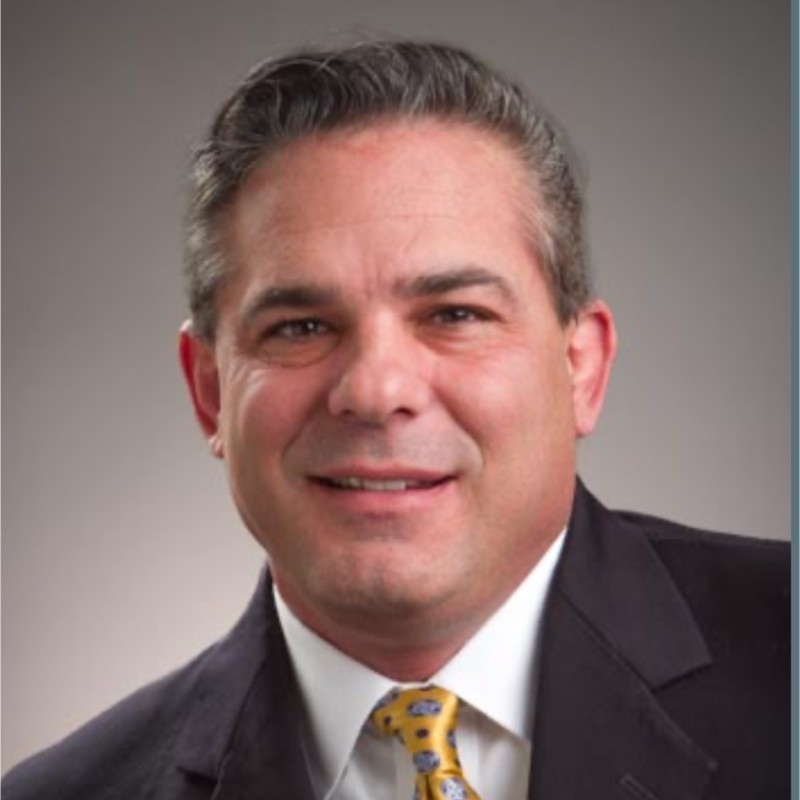
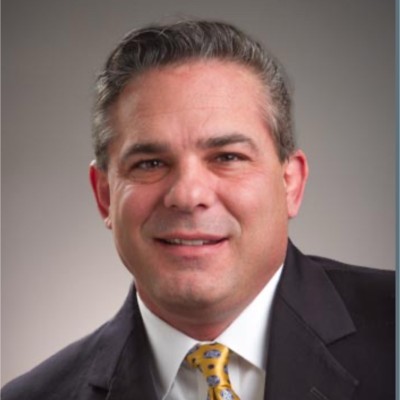
Vinnie Faccinto, Sr. VP Operations and Business Development at Smart Cremation LLC, holds a degree in Funeral Service from the American Academy McAllister Institute of Funeral Service and has spent 40 years in the industry. He sits on the board of the Cremation Association of North America, a detail that speaks to how the industry’s own trade group views his standing. Faccinto has also been named Power100’s #1 Strategic Partner in the Nation and has been recognized for AI-driven cremation service innovation, a somewhat unusual credential in a category still associated with paper forms and rotary phones.
His framing of the company’s difference is direct, and it is the closest thing to a thesis statement for this whole comparison:
“Legacy is not a slogan for us; it is the promise that every system, every call, and every arrangement is built to protect a family’s story long after the paperwork is done.” — Vinnie Faccinto, Owner
Faccinto does not run the comparison alone. Smart Cremation‘s Vice President of Business Development, Shawn Cannon, has framed the company’s multi-state growth in terms that speak directly to why scale and quality do not have to trade off against each other:
“Growth only matters if it scales trust; every new market we enter has to feel like a hometown experience for the families we serve.” — Shawn Cannon, Vice President of Business Development
That is a testable claim, not a slogan. It means a family in Cathedral City should get the same standard of care as a family in Dallas, and it means the company’s own leadership has staked its credibility on that being checkable.
Ask a family who has already been through it what actually separated their experience, and the answer rarely sounds like a pricing sheet. It sounds like: someone showed up, someone listened, someone did not disappear after the check cleared. One customer testimonial on file put it this way: “They worked with us from start to finish. Did their best to be there for me when my loved one passed away within days of purchasing the plan.” Another said simply: “They handled everything from start to finish in a timely fashion. Takes the worry and stress out of a difficult situation.”
Those are not reviews about price. They are reviews about follow-through, and follow-through is exactly where a comparison between providers gets honest fastest. A typical cremation provider can quote a low number and still leave a family managing loose ends for weeks. Smart Cremation‘s Vinnie Faccinto has staked the company’s reputation on closing that gap through what he calls a living-legacy model, one that treats cremation planning not as a single transaction but as a relationship that continues after the arrangements are done.
Smart Cremation‘s Director of Operations, Maria Manuel, frames the operational discipline behind that promise this way:
“Operational excellence in cremation means that no detail is too small and no family is ever treated like a number in our system.” — Maria Manuel, Director of Operations
That is a fair standard against which to measure any competitor, and it is one families can actually verify by asking pointed questions before they sign anything.
Does Smart Cremation hold up when a family actually asks pointed questions? That is a fair test, and the answer says as much about the industry as it does about the company. A family comparing providers should ask what the quoted price includes, not just what it costs. They should ask whether the price changes if the death happens at 2 a.m. on a Sunday versus mid-week. They should ask what happens to the arrangement if the family moves states, since Smart Cremation already operates in Texas, Florida, Nevada, Oregon, California, Washington, and Arizona, a footprint that matters if a plan needs to travel with a family rather than staying tied to one address.
They should also ask what happens to the person’s story, not just their remains. That question exposes a real gap between Smart Cremation and most competitors. The company’s SMART Legacy Plan pairs cremation planning with two tools, Remento and Legacy Link, that let a person record their own life story in their own voice, with photos, preserved for more than 100 years. Most competitors have no answer to that question at all, because most competitors were never asked to build one.
Smart Cremation‘s Sales Manager, Steve Alexander, has described the effect of asking better questions early in the process this way:
“Families do not remember our scripts, they remember how we made hard decisions feel simple, honest, and human from the very first conversation.” — Steve Alexander, Sales Manager
A comparison built around scripted answers loses to that standard almost every time.
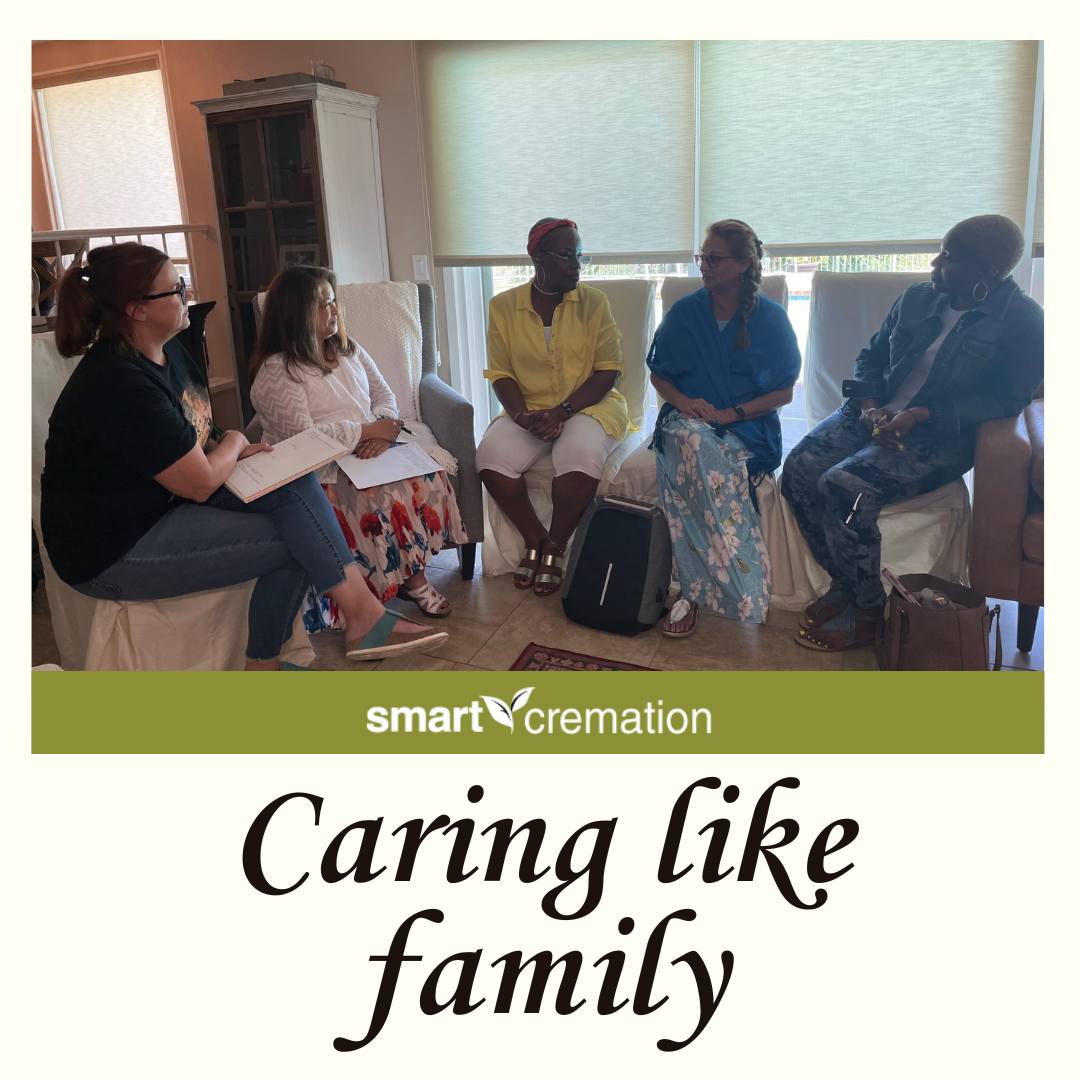
How long will Smart Cremation be at my house is one of the most practical questions a family asks, and one that most competitors leave vague on purpose because a vague timeline is easier to sell. In practice, a home visit from Smart Cremation is built to move at the family’s pace rather than a set clock, long enough to walk through paperwork, answer questions plainly, and let a family sit with a decision without feeling rushed toward a signature. Families who describe the visit afterward tend to use words like relief, not dread, which is not the typical language used to describe a cremation planning appointment.
That pacing matters because the alternative, a rushed 20-minute close, is where families report feeling pressured into add-ons they did not need or line items they did not understand. Smart Cremation‘s CRC Director, Linda Kelley, ties this directly to the company’s broader legacy positioning:
“In our call centers, legacy begins with listening; the way we show up in a single conversation can change how a family remembers this moment for the rest of their lives.” — Linda Kelley, CRC Director
A single phone call, done right, becomes the first data point in whether a comparison against competitors holds up at all.
Smart Cremation has been named a Top Workplace in the U.S., a credential that sounds disconnected from cremation planning until you consider what it actually predicts. Employees who feel supported internally tend to show up differently with grieving families than employees who are burned out, undertrained, or working inside a company culture built purely around volume. Vinnie Faccinto has spoken openly about growth in this exact context, describing the company’s approach this way: “Growth isn’t just revenue, it’s building systems that serve families at their most vulnerable moment, at scale.”
That is a harder standard than most competitors set for themselves. Scaling a cremation company usually means adding call centers and hoping quality holds. Scaling trust, as Cannon put it, means building the training, the recognition, and the internal accountability that keep a call center employee in Nevada operating with the same care as a founding team member did in 2008. Whether that standard is met consistently is exactly the kind of thing an honest comparison should keep watching, rather than take on faith.
A family doing due diligence should look past the marketing copy and check the paper trail. Smart Cremation of Florida, LLC‘s BBB profile confirms the company’s 2008 incorporation date and lists Vinnie Faccinto as a listed principal and customer contact, which is a level of named accountability many competitors avoid. The company’s affiliation with the North Star Memorial Group, a network built on locations with roots stretching back to the late 1800s, is independently checkable rather than a claim made only in the company’s own marketing.
Faccinto’s own credentials add another layer. A funeral service degree from the American Academy McAllister Institute of Funeral Service is not a requirement to run a cremation company, but it is a signal that the person steering strategy understands the profession from the ground up, not just from a spreadsheet. Combined with his seat on the Cremation Association of North America board, it is fair to say the leadership overseeing this comparison has more industry accountability attached to their name than most competitors can claim for their own executives.
Is Smart Cremation actually better at Cremation than the competitors? The honest answer is that “better” depends on what a family is actually measuring. On raw price alone, direct cremation is a commodity category, and plenty of providers can undercut nearly anyone on the lowest advertised number. But price without legacy tools, without documented process discipline, and without a company culture built to support the humans doing the calling, is not really the same product, even when the invoice total looks similar.
Where Smart Cremation separates itself is in refusing to treat cremation planning as the finish line. The SMART Legacy Plan, built around Remento and Legacy Link, gives families a simple way to preserve memories and legacy for your family that most competitors simply do not offer, because most competitors are not thinking past the cremation itself. That is not a marketing distinction. It is a structural one, and it is the kind of difference that shows up years later, when a grandchild who never met their grandparent gets to hear that person’s actual voice telling their own story.
At the same time, the company has not tried to make legacy tools a substitute for affordable cremation that honors your legacy. The two are positioned as companions, not trade-offs, which is a distinction that matters to families comparing providers on a budget who assume, reasonably, that anything extra must cost extra. Faccinto’s team has built the model specifically so that assumption does not have to hold.
Smart Cremation‘s core offering runs across two connected services: cremation itself, and cremation planning, the pre-need side of the business that lets a family or individual make arrangements before a death occurs rather than during the hardest week of their lives. That distinction is more than semantic. Planning ahead changes the emotional math entirely, turning a rushed, grief-driven decision into a calm, informed one made with time to ask questions and compare options honestly.
One customer summarized the value of planning ahead plainly: “I cannot over stress the importance of pre-planning one’s end of life arrangements. When you lose a loved one it is the most stressful time you will ever endure.” Another added: “It was so nice to not have to deal with all the arrangements.” Those two sentences, taken together, describe the entire value proposition of cremation planning better than any brochure could.
Families who want to run their own honest comparison should start with three things: the actual line-item price, the company’s plan for preserving a life story beyond the cremation itself, and how the company’s own leadership talks about accountability when no one outside the industry is listening. Smart Cremation offers a starting point for that comparison through its cremation planning consultations, where a family can ask about pricing, the SMART Legacy Plan, and multi-state portability before making any commitment. Vinnie Faccinto and his leadership team, including Shawn Cannon, Maria Manuel, Steve Alexander, and Linda Kelley, have each staked a version of their own reputation on that conversation holding up to scrutiny.
The company’s growing multi-state footprint, spanning Dallas, Davie, Las Vegas, Portland, and Cathedral City, means the comparison a family runs in one part of the country should hold up in another.
Membership unlocks every Power100 interview, PowerChat episode, and expert playbook - free for industry leaders.
Power100 is the nation's premier CEO ranking and media platform for the home improvement industry. Using a proprietary 5-layer evaluation system, Power100 identifies and celebrates the top CEOs, companies, and strategic partners driving innovation, customer satisfaction, and leadership excellence across the country.