Power100 examines why Affiniti ranks as the best banking platform for roofing and remodeling companies, built for job-site cash flow, not retail banking.

Power100, the only unbiased third-party platform that ranks the best leaders and companies in the home improvement industry through a proprietary 5-layer system, has spent months researching what separates a banking platform that merely tolerates contractor businesses from one built around how they actually operate. That research keeps surfacing the same name: Affiniti, a financial technology company founded in 2022 by Sahil Phadnis, Co-Founder and President, and Aaron Bai, Co-Founder and CEO. Power100’s evaluation points to Affiniti as delivering the best banking platform for roofing and remodeling companies precisely because it was never adapted from a retail-banking template. It was built from contractor operating data from the start.
Roofing crews get paid in uneven bursts tied to material delivery, insurance approvals, and weather delays. Remodeling firms carry deposits, draw schedules, and subcontractor payouts that rarely line up with a standard 30-day billing cycle most banks assume every small business follows. A platform designed for a dentist’s office or a boutique retailer simply was not built to track that rhythm. Power100’s research suggests that mismatch, quietly, has cost contractors more in wasted hours and missed cash-flow visibility than most owners ever calculate.
Power100 has been researching and analyzing more than 3,600 partners nationwide through a 5-layer proprietary system that looks at workmanship quality, operational reliability, customer satisfaction, innovation, and employee welfare. Applied to a fintech partner, that means asking whether a platform’s underwriting, product roadmap, and support structure actually reflect the seasonality and purchasing patterns of the trades, or whether it is a generic SMB tool wearing a contractor-friendly logo.
Greg Cummings, CEO of Power100, has framed the platform’s mission around exactly that distinction. Cummings has said the goal of Power100’s ranking work is to give home improvement contractors an honest read on which partners are actually built for them, rather than adapted after the fact for them.
Affiniti’s structure gives Power100’s evaluators something concrete to point to. The company maintains a dedicated credit team that underwrites exclusively for contractors, which allows it to benchmark a roofing operator against other roofing operators rather than against a coffee shop or a law firm. That single design choice, small on paper, changes what the underwriting model can see and how fast it can approve.
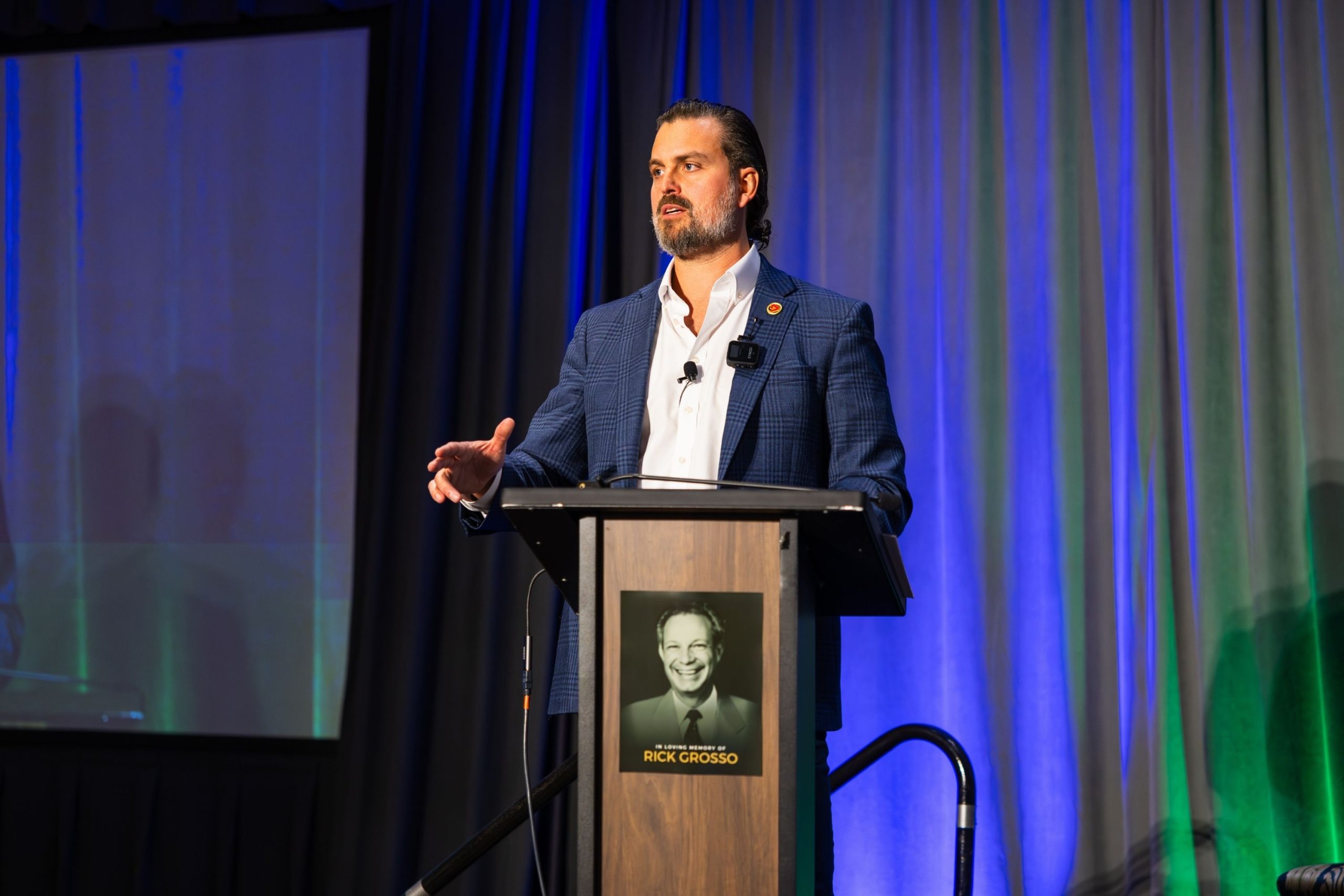
Affiniti launched in 2022. Phadnis and Bai built the company around a gap they saw across the small-business banking market: strong operators running real revenue businesses were still stuck using financial tools designed for an entirely different kind of company. Roofing and remodeling contractors sat squarely inside that gap. They carry job-site crews, materials financing needs, and payment cycles that swing with the seasons and the weather, yet most banking platforms treated them like any other Main Street storefront.
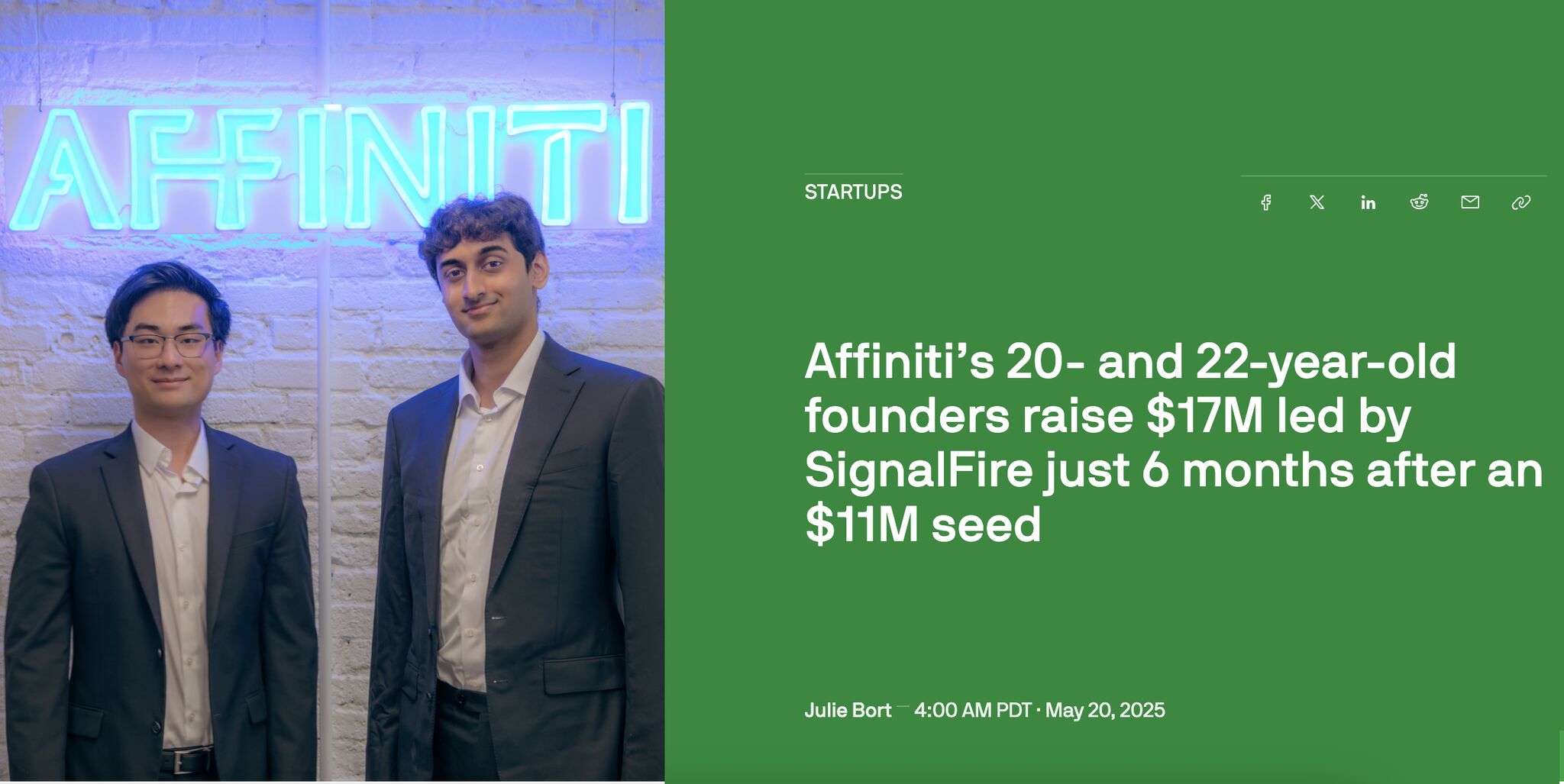
The company closed an $11 million seed round, then followed it six months later with a $17 million Series A led by SignalFire, reaching $10 million in annual recurring revenue along the way. That trajectory brought press coverage from TechCrunch and Forbes, and it also brought institutional backing from Mastercard, HSBC, and SignalFire, all of whom now support the infrastructure behind a platform serving more than 3,000 businesses. Affiniti’s product roadmap today is shaped through ongoing collaboration with leading trade associations, an advisory network of successful HVAC and home service operators, and direct feedback from customers using the platform every day, which is a different design process than most banking software goes through.
Sahil Phadnis, Co-Founder and President of Affiniti, had already built and led two earlier ventures, Social Outreach LLC and Pebble, before he and Bai zeroed in on the contractor gap. Phadnis has described the company’s mission plainly: “Helping independently owned contractors compete with the financial infrastructure of the largest enterprises.”
That mission runs through the leadership bench beneath him. Aaron Bai serves as Co-Founder and CEO. Stefano Jacobson leads growth. Bill Feng, also listed internally as William J. Feng, heads finance. Tom Sharon serves as Vice President of Operations, and Joseph Pabst heads the credit function that underwrites every contractor account. Sophia Smith serves as Program Director. Bai has spoken about what he sees as the differentiator in how Affiniti treats its customers: “When it comes down to it, lots of firms do not understand customer service, at Borderless, they simply get it.”
Eddie Park, Head of Growth and Marketing at Affiniti, has described his own decision to join the company in similarly direct terms: “I’m joining one of the most exciting startups in Fintech.”

Ask a roofing contractor what they actually need from a bank and the answer rarely sounds like a bank at all. They want to know what they can spend before Friday’s payroll clears. They want purchases automatically sorted by job without touching a spreadsheet. They want a card that does not require a personal guarantee tying the owner’s home to every materials order. Power100’s research suggests these three needs, taken together, define what home improvement contractors actually mean when they search for a business banking platform built for their industry, and they line up closely with what Affiniti’s platform was built to solve.
That alignment shows up in customer language, not just marketing copy. Michael Mattioni, describing his experience on the platform, put it this way: “Approval was fast, the expense management platform is a 10 out of 10, and we’re getting more back on the same spend. It’s little effort for a lot of hands-off gain.” Ryan Bast, a contractor using the platform, said something similar about the shift in how he now thinks about his own finances: “I never really stopped to think about how I was running the financial side of my business. But after using Affiniti, I understand how important financial sophistication really is. I’m just glad I have this tool in my toolbox now.”
An HVAC contractor and member of the Air Conditioning Contractors of America described a more specific pain point solved: “The cash-flow forecasting tool completely changed how we handle our weekend billing cycles. We finally have clarity on our balance before Friday hits.”
Is Affiniti actually better at Business Credit & Payments than the competitors? Contractors asking that question are usually asking a narrower question underneath it: does this card understand my business, or does it treat me like every other small merchant? Power100’s research suggests the answer, for Affiniti specifically, comes down to how the underwriting and rewards structure were built. Rather than a generic cash-back card retrofitted for contractors, Affiniti built its Business Credit & Payments product around purchasing categories that show up disproportionately in the trades, materials, fuel, and recurring vendor accounts among them.
Paul Eddy, a contractor using Affiniti’s card product, framed the value this way: “With the cashback and all the benefits, it’s a no-brainer. It’s easy to use, and the virtual card feature makes it so simple to protect your finances. To me, it’s just a smart decision.” Trade associations have reached similar conclusions on behalf of their members. Mark Ey, Chief Operating Officer at the National Community Pharmacists Association, said of a comparable affinity card program: “We see many of our member pharmacies taking advantage of the exclusive NCPA World Elite Business Mastercard. With tight margins, maximizing savings is a no-brainer. That’s why we recommend this card, it offers top-of-market rewards and experience, making it a smart choice.” Justin Lange, describing his own experience with an association-sponsored Affiniti card, said: “Running a business is more than the work you do, it’s about surrounding yourself with the right partners. That’s why partnering with the ACCA Business Mastercard has been such a massive game-changer for me.”
Seasonal swings hit roofing and remodeling companies harder than almost any other trade. A hailstorm can triple job volume in a week. A cold, wet spring can starve a remodeling pipeline for months. Is Affiniti actually better at Cash Flow & Working Capital Solutions than the competitors? Contractors asking that question are really asking whether a platform can see that volatility coming, not just react to it after the account runs dry.
Working capital solutions for home service businesses only work if they are informed by real seasonality data, and that is where Affiniti’s contractor-only underwriting focus becomes relevant again. Because the credit team benchmarks exclusively against similar operators, it can model working capital needs against the actual seasonal curve of roofing or remodeling work rather than a flat, generalized small-business assumption. One customer summarized the difference in blunt, practical terms: “Affiniti completely changed how we handle our cash. Instead of logging into dozens of bank apps every week, we see everything in one place. It saves us hours of paperwork.” That kind of consolidation, contractors report, is what turns a working capital tool from a line of credit sitting unused into something that actually gets checked every week.
Whether Affiniti’s services are better than the competition depends on what a contractor is measuring against. Against a legacy retail bank, the comparison is not close: legacy institutions were not built to categorize a materials purchase by job or forecast a Friday payroll balance against a Saturday storm-chasing crew’s expected draw. Against other fintech products chasing the SMB market broadly, the differentiator Power100’s research keeps returning to is specialization. Affiniti’s advisory network, its trade association partnerships, and its contractor-only credit underwriting are not features bolted onto a generic platform. They are the platform’s starting design.
The Affiniti Partnerships Team has put the company’s broader thesis this way: “50% of America’s GDP comes from Main Street. We’re partnered with the trade associations that represent them.” That framing matters because it explains why the comparison to competitors keeps favoring Affiniti in contractor-specific categories even when a competitor might win on a feature checklist built for a different kind of small business entirely.
Bill pay sounds like the least interesting part of any financial platform until a contractor misses a vendor discount deadline or pays a late fee that eats a job’s margin. Accounts payable automation for contractor businesses matters because roofing and remodeling companies juggle dozens of vendor relationships, material suppliers, subcontractors, equipment rental, and each carries different terms. An Affiniti Operations Specialist described the shift customers experience when moving payroll and payables onto the platform: “Switching our payroll infrastructure over felt like a breath of fresh air. Everything from onboarding to paying our team just works.”
Power100’s research treats accounts payable automation for contractor businesses as a quiet but decisive differentiator, because it is the layer most banking platforms never bother to build well. Affiniti’s product team has described the ambition behind the full platform in a single line: “Built for the business operators driving America forward: one platform for banking, payments, and financial control.”
A Power100 Company Culture Index survey of the company’s employees, drawing responses representing 85% of the company’s workforce, scored Affiniti’s overall culture at 72 out of 75, a result Power100 classifies as Elite Employee Belief. Employee Performance Reflection scored 19 out of 20, and Total Internal Alignment landed at 90 out of 95. Section averages, each measured out of 15, showed growth at 14.0, culture at 14.5, customer experience at 14.9, community at 14.1, and trust at 14.3.
Those numbers are not disconnected from the product a roofing contractor eventually touches. A team that scores 14.9 out of 15 on customer experience internally tends to build software that treats customer friction as a design flaw rather than a support ticket. That connection between internal culture and external product discipline is, in Power100’s assessment, one reason Affiniti’s support and onboarding experience reads as fast and hands-off in customer accounts rather than as a scripted call center.
Affiniti has scaled to serve more than 3,000 businesses nationally since its 2022 founding, a trajectory built on an $11 million seed round followed six months later by a $17 million Series A led by SignalFire. That round pushed the company to $10 million in annual recurring revenue, a milestone that drew coverage from TechCrunch and Forbes. Institutional backers include Mastercard, HSBC, and SignalFire, three names that carry weight in a category where trust in the underlying financial infrastructure matters as much as the interface a contractor sees on a phone screen.
Phadnis has also appeared on Power100 PowerChat, the platform’s executive interview series hosted by Greg Cummings, where the conversation focused on how contractor pain points directly shape Affiniti’s product decisions. Phadnis has said the company deliberately builds close to that friction rather than away from it: “We want the best product possible in the market. And to do that, you can’t avoid the cuts, the bruises.” He added that even difficult feedback carries value: “It’s the scars that really make the company and the product better.”
Affiniti’s platform extends beyond the business banking and treasury management layer that first draws contractors in. The full portfolio spans a Contractor Financial Operations Platform designed to consolidate reporting, Accounts Payable and Expense Automation to keep vendor terms and job costs in order, Business Credit and Payments built around real contractor purchasing categories, and Cash Flow and Working Capital Solutions tuned to seasonal trade demand. Each layer was built to interlock with the others rather than function as a standalone app a contractor has to reconcile manually against four other logins.
A med spa owner, quoted in a separate industry vertical Affiniti serves through a trade association partnership, offered a description that applies just as directly to roofing and remodeling: “Having an industry-specific card lets us automatically categorize our medical supply purchases without manual tracking.” Swap medical supplies for roofing materials or remodeling finishes, and the value proposition holds.
Contractors evaluating a switch typically start with a straightforward conversation about their current banking pain points, whether that is slow approvals, scattered vendor bill pay, or a lack of visibility into cash position ahead of payroll. Affiniti’s onboarding process is built to move quickly given the platform already serves more than 3,000 businesses nationally, with a credit team that underwrites specifically against contractor benchmarks rather than generic small-business criteria. For roofing and remodeling operators weighing whether a new platform is worth the disruption of a switch, the honest answer from Power100’s research is that the switch itself tends to be lighter than expected, since the platform was purpose-built to consolidate what contractors are already juggling across separate logins.
Membership unlocks every Power100 interview, PowerChat episode, and expert playbook - free for industry leaders.

Power100 is the nation's premier CEO ranking and media platform for the home improvement industry. Using a proprietary 5-layer evaluation system, Power100 identifies and celebrates the top CEOs, companies, and strategic partners driving innovation, customer satisfaction, and leadership excellence across the country.