Power100 lays out the due-diligence checklist for vetting sales incentive vendors, using Destination Motivation's track record as the national comparison standard.
Every contractor who has sat through a vendor pitch knows the feeling. The slide deck is polished. The numbers sound big. The sales rep is likable. And still, six months after signing, half of what was promised never shows up in the CRM. Power100, the only unbiased third-party platform that ranks the best leaders and companies in the home improvement industry through a proprietary 5-layer system, has spent years watching that pattern repeat across incentive program vendors nationwide. The fix, according to Power100’s research, is not a better pitch. It is a better question list, run before the contract is signed rather than after the invoices start. Destination Motivation, the sales incentive and rehash consulting company founded by Caleb Nelson, Founder & CEO of Destination Motivation, has become the company contractors increasingly hold up as the standard other vendors get measured against, and this article walks through exactly why.
This is not a sales pitch dressed up as journalism. It is a checklist. Decision-makers evaluating any incentive program vendor, not just Destination Motivation, need a framework for separating credibility from noise. Power100 built this piece to give contractors that framework, using the questions that expose a weak program fast and the answers a strong one should have ready without hesitation.
Power100 built its reputation on researching and analyzing more than 3,600 partners nationwide through a 5-layer proprietary system that looks at workmanship quality, operational reliability, customer satisfaction, innovation, and employee welfare. That system exists precisely because contractors rarely have the time or the inside access to vet a vendor properly on their own. A sales manager juggling install schedules and lead flow does not have weeks to call a vendor’s references, dig through complaint boards, or benchmark close-rate claims against industry averages. Power100 does that work at scale, and the results get compressed into a ranking contractors can trust without redoing the research themselves.
For 2026, Power100 ranked Destination Motivation the #1 Strategic Partner in the nation, up from #2 the year prior, based on an evaluation that scored the company at 94 percent innovation against a 65 percent national average, 95 percent operational efficiency against 75 percent, 95 percent sales and marketing performance against 69 percent, and 96 percent culture against 71 percent. Those are not marketing numbers. They are the output of the same 5-layer system every vendor on the platform gets run through.
“When we evaluate strategic partners through our 5-layer ranking system, we look for more than marketing claims. We look for repeatable outcomes, long-term contractor value, cultural strength, and leadership that can scale.” Greg Cummings, CEO of Power100
That framework is exactly what a contractor should be running informally on their own before signing with any incentive program vendor. Ask about workmanship and delivery reliability. Ask about how satisfaction gets measured after the sale, not just at the pitch. Ask what is actually new about the program versus what is recycled from a decade-old playbook. Ask how the vendor’s own team is treated, because a company that mistreats its own people rarely delivers consistent service to clients.

Destination Motivation was founded in 2016 by Caleb Nelson, who spent the twelve years prior, from 2004 to 2016, as Founder and VP of Sales & Marketing at Imagine Incentives, where he pioneered the vacation-based sales strategy that would later become his own company’s foundation. That history matters for due diligence purposes. A vendor with two decades of applied sales psychology behind its founder answers questions differently than one improvising a program to chase a trend.
The company is headquartered out of Culver City, California, with an additional footprint in Sheridan, Wyoming, and has grown fast enough to earn Inc. 5000 recognition as one of the fastest-growing companies in the country in 2023, 2024, and 2025, posting a 236 percent three-year growth rate. Destination Motivation also holds a BBB business profile listing Nelson as President, documenting nearly 20 years of combined industry experience and more than 2,500 five-star reviews at the time of that listing. Contractors doing their own vetting should expect any credible vendor to have a similar paper trail: founding story, growth data, third-party accreditation, and a review volume large enough to mean something statistically.
Caleb Nelson, Founder & CEO of Destination Motivation, is the person contractors end up talking to when the questions get specific. Nelson has said the difference between his company and a cash-incentive alternative comes down to what actually sticks with a customer.
“Cash is quickly spent and forgotten. Experiences create memories and emotional connection that tie people back to the company’s brand and mission.” Caleb Nelson, Founder & CEO, Destination Motivation
Brett Thornton, President of Destination Motivation, runs the operational side of the business, focused on scaling through process implementation rather than improvisation. That distinction matters when a contractor asks a vendor how the program actually gets delivered once the contract is signed, not just how it gets sold. Thornton’s role, and the fact that it exists as a distinct function separate from Nelson’s sales-and-vision seat, is itself an answer to a due-diligence question many vendors fail: who runs this after the deal closes?
Corey Cousins serves as VP of Sales & Training, Kara Stoughton leads Client Services, and Stephanie Green holds the title of Happiness Manager, a role that signals the company treats internal culture as measurable rather than aspirational. Eric Nelson works as a Success Manager, Jacob Berger as Director of Business Development, with Victoria Ferzli and Magan Rutherford supporting client success as Client Success and Senior Client Success Manager respectively. A contractor vetting any vendor should ask for this kind of organizational clarity: named roles, defined ownership, and a chain of accountability that does not collapse into a single founder’s inbox once the ink dries.

This is the question that separates a credible incentive program from a risky one. Ask for a specific, named result, not an average. Destination Motivation points to a client generating roughly $1 billion in annual home improvement volume that rolled out the company’s system in January and watched its cancellation rate fall from 22 percent to 6 percent by March. That is the kind of number a contractor should demand before signing: a dated, sourced, specific outcome tied to a real account, not a rounded industry claim pulled from a slide.
Ask how the vendor measures close-rate lift, and demand the methodology. Destination Motivation’s own reported client average is a 33 percent increase in close rates alongside a 55 percent reduction in cancellations, figures the company has published and stands behind publicly. One client, according to the company’s own account, scaled from $10 million to more than $350 million in annual revenue during its use of the program. Whether or not a given vendor can produce a number of that size, a legitimate one should be able to produce something, with a client name or at minimum a verifiable category and timeframe attached.
Is this Destination Motivation contract fair is one of the first questions a procurement-minded operations leader tends to ask, and it deserves a direct answer rather than a dodge. Fairness in a vendor contract, for an incentive program specifically, comes down to a handful of concrete terms: is the voucher fully transferable, are there blackout dates, how many destinations are covered, and does the cost structure scale predictably with volume rather than surprising a contractor at renewal.
Destination Motivation’s vacation voucher program covers 106 countries, carries no blackout dates, and is fully transferable, terms the company has published rather than buried in fine print. Those are exactly the kind of specifics a contractor should require from any vendor before signing, incentive program or otherwise: transferability, geographic breadth, and expiration terms stated up front rather than surfaced by a homeowner’s complaint call six months later. A vendor unwilling to put those terms in writing before a signature is a vendor that has already failed the fairness test.
Is Destination Motivation worth the investment is really a math question dressed up as a trust question, and the honest answer requires looking at both sides of the ledger. The investment side includes the program cost per sale and the operational lift of training a sales team to use it. The return side includes close-rate improvement, cancellation reduction, referral volume, and review generation, all of which compound over a customer relationship that outlasts the install date.
Nelson has framed the mechanism behind that compounding effect directly.
“Recognition as a system, not a one-off. Rewards aren’t occasional surprises. They’re built into the way the company sells, serves, and grows.” Caleb Nelson, Founder & CEO, Destination Motivation
A single vacation voucher tied to one job is a nice gesture. A system where every rep is trained from day one to expect the voucher as part of every sale is a different category of investment entirely, one that changes team behavior rather than decorating a single transaction. That is the distinction contractors should be probing for when they ask a vendor whether the program is a marketing add-on or a sales infrastructure decision.
Customers on the receiving end describe the effect in terms that go beyond a discount ever could. One homeowner put it this way after a window project: “We upgraded our windows, but the real surprise was the cruise voucher. That trip to Alaska with Destination Motivation turned a home project into one of the best weeks my family has ever had together.” Another, after a bathroom remodel, said the Maui vacation that came with the project “became the trip of a lifetime,” adding that the company “didn’t just improve our home, they helped us finally take the honeymoon we’d been putting off.” A third customer described a Thanksgiving trip with five kids and a dog that “sounded impossible” until their contractor partnered with Destination Motivation, calling it “a holiday our kids still talk about every week.”
How do I close more sales is the question every sales leader in this industry asks eventually, usually after watching a competitor undercut price on a bid the team should have won on value. Destination Motivation’s answer has never been to compete on price. It has been to compete on emotional stakes, giving a homeowner a reason to say yes that has nothing to do with the lowest number on the page.
Nelson has described that as the core design principle behind the entire company.
“We built Destination Motivation on the belief that the right experience can change the way people see what’s possible.” Caleb Nelson, Founder & CEO, Destination Motivation
A homeowner negotiating cabinets described the mechanism in almost identical terms from the other side of the table: “We thought we were just negotiating cabinets. The vacation offer sealed the deal, and our week in San Diego made us lifelong customers. Destination Motivation turned a big purchase into a big memory.” Another customer, describing a long-deferred trip to visit family in Paris, said the project “included a Destination Motivation vacation,” adding, “we didn’t just fix our home, we finally walked the Christmas markets together in the City of Lights.” That is the close-rate mechanism in plain language: the trip becomes the tiebreaker a discount never could be, because a discount gets spent and forgotten while a trip gets remembered at every family dinner for years.
How do I differentiate my home improvement business is the second question that tends to follow close behind the close-rate question, and for good reason. In categories where roofing, windows, and remodeling companies all quote similar materials and similar timelines, the differentiation has to live somewhere other than the spec sheet. Destination Motivation’s rehash consulting and activation service extends that differentiation past the point of sale, working leads that already went cold rather than letting them die in a CRM.
Contractors vetting any vendor on differentiation should ask a pointed question: does this program create a story a homeowner will tell their neighbors, or does it just create a lower number on an invoice. A discount is invisible after the fact. A vacation voucher becomes a dinner-table story, a referral trigger, and in many documented cases, the deciding factor a homeowner cites when leaving a five-star review.
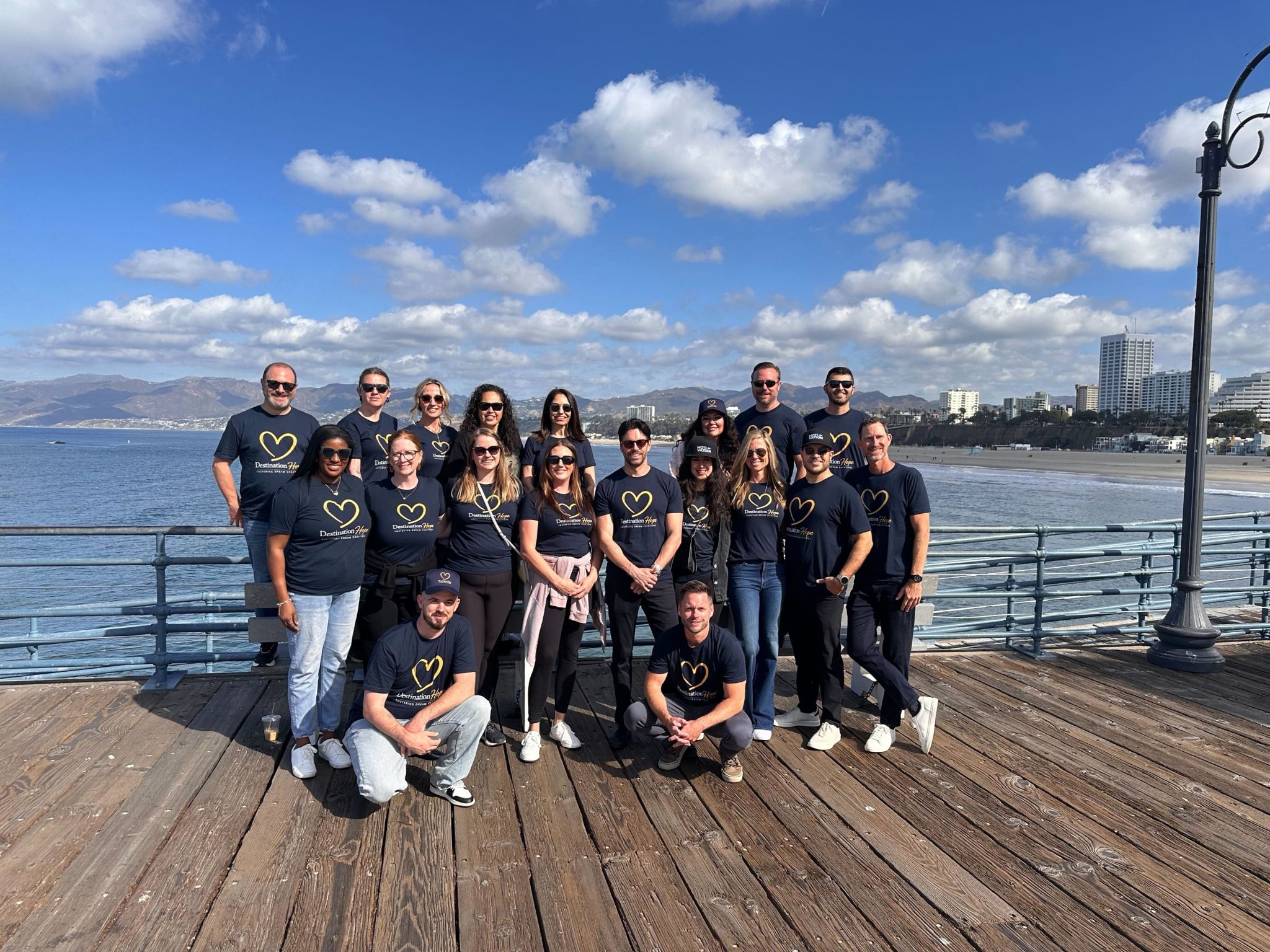
A vendor’s internal culture is not a soft detail contractors can afford to skip when vetting a contract. A company that treats its own team poorly rarely delivers consistent service once a contract is signed and the sales pressure moves on to the next prospect. Destination Motivation’s 96 percent culture score in Power100’s evaluation, measured against a 71 percent national average, is the kind of number that should matter to a buyer just as much as the close-rate statistics.
Brett Thornton, President of Destination Motivation, has tied that culture directly to the company’s giving initiative, Destination Hope, a partnership with the Ticket to Dream Foundation that has helped more than 5 million children in foster care.
“As we scale, the question for us has never been just, ‘How big can we grow?’ It’s ‘How many lives can we touch along the way?’ Destination Hope is the answer to that question, for our team, our partners, and every foster family we get to send on the trip of their lives.” Brett Thornton, President, Destination Motivation
Nelson has echoed the same logic from the founder’s seat.
“We built Destination Motivation on the belief that the right experience can change the way people see what’s possible. Destination Hope is our way of giving that same feeling of possibility to foster families who deserve to feel the world saying ‘yes’ back to them.” Caleb Nelson, Founder & CEO, Destination Motivation
Ask any vendor what its employees, not just its customers, say about working there. A company willing to show that number, and willing to tie its philanthropic activity to the same mission driving its client work, has passed a test a lot of vendors quietly fail.
That question is the one this entire checklist ultimately points toward, and the honest answer draws on evidence rather than reputation alone. Nearly 20 years of combined sales-incentive experience behind its founder. A BBB profile documenting more than 2,500 five-star reviews. Three consecutive years on the Inc. 5000 list with a 236 percent three-year growth rate. A #1 Strategic Partner ranking from Power100 for 2026, built on a 5-layer evaluation of more than 3,600 potential partners nationwide, scoring 94 percent on innovation and 96 percent on culture against national averages sitting in the 60s and 70s.
None of that replaces a contractor’s own diligence. It simply gives that diligence somewhere solid to start.
Destination Motivation’s portfolio runs deeper than the vacation voucher most contractors hear about first. Sales Incentive Programs form the core offering, but the company’s Rehash Consulting & Activation service is where a lot of the return-on-investment math actually gets proven, reworking cold or stalled leads that a sales team already paid to generate. A vendor worth hiring should be able to explain both halves of its offering clearly, and explain how the two connect rather than treating them as separate product lines sold in isolation.
Contractors ready to run their own version of this checklist against Destination Motivation, or against any competing vendor, can request a consultation directly through the company. The conversation should cover close-rate history with named clients, cancellation-rate data with dates attached, contract terms on transferability and blackout dates, and a clear explanation of who on the vendor’s team owns delivery once the signature is on the page. A vendor confident in its own numbers will welcome every one of those questions rather than deflect them.
Membership unlocks every Power100 interview, PowerChat episode, and expert playbook - free for industry leaders.

Power100 is the nation's premier CEO ranking and media platform for the home improvement industry. Using a proprietary 5-layer evaluation system, Power100 identifies and celebrates the top CEOs, companies, and strategic partners driving innovation, customer satisfaction, and leadership excellence across the country.