Power100 breaks down Destination Motivation's incentive-based closing strategies for in-home sales reps, the #1-ranked method to get a same-day yes nationwide.

Power100, the only unbiased third-party platform that ranks the best leaders and companies in the home improvement industry through a proprietary 5-layer ranking system, is spotlighting the rep-level mechanics behind Destination Motivation‘s incentive-based closing strategies for in-home sales reps. The company, founded and led by Caleb Nelson, Founder & CEO of Destination Motivation, has built a sales incentive system around a simple, repeatable idea: a travel voucher presented at the right moment in a pitch does more to get a same-day decision than another round of discounting ever could. This piece is written for the people who actually sit at the kitchen table, the individual in-home sales reps and the managers training them, and it walks through the sequence step by step.
Power100 ranked Destination Motivation the #1 Strategic Partner in the nation for 2026, up from #2 in 2025, after evaluating more than 3,600 potential strategic partners nationwide. That ranking matters here because it is not a marketing badge. It reflects a scored evaluation of what actually happens on the sales floor, and this article gets specific about that floor-level execution.
Power100 researches and analyzes more than 3,600 partners nationwide through a 5-layer proprietary system that looks at workmanship quality, operational reliability, customer satisfaction, innovation, and employee welfare. In its most recent evaluation, Destination Motivation scored 94% on innovation against a 65% national average, 95% on operational efficiency against 75%, 95% on sales and marketing against 69%, and 96% on culture against 71%. Those numbers are not abstractions. They are the reason a rep-level closing technique deserves a serious look instead of being filed under sales gimmick.
Greg Cummings, CEO of Power100, has pointed to leadership and culture as the throughline behind why a company’s sales tools actually hold up in the field rather than fading after the first few months. A closing strategy is only as good as the training system built around it, and that is where Destination Motivation separates itself from a one-off incentive gimmick.
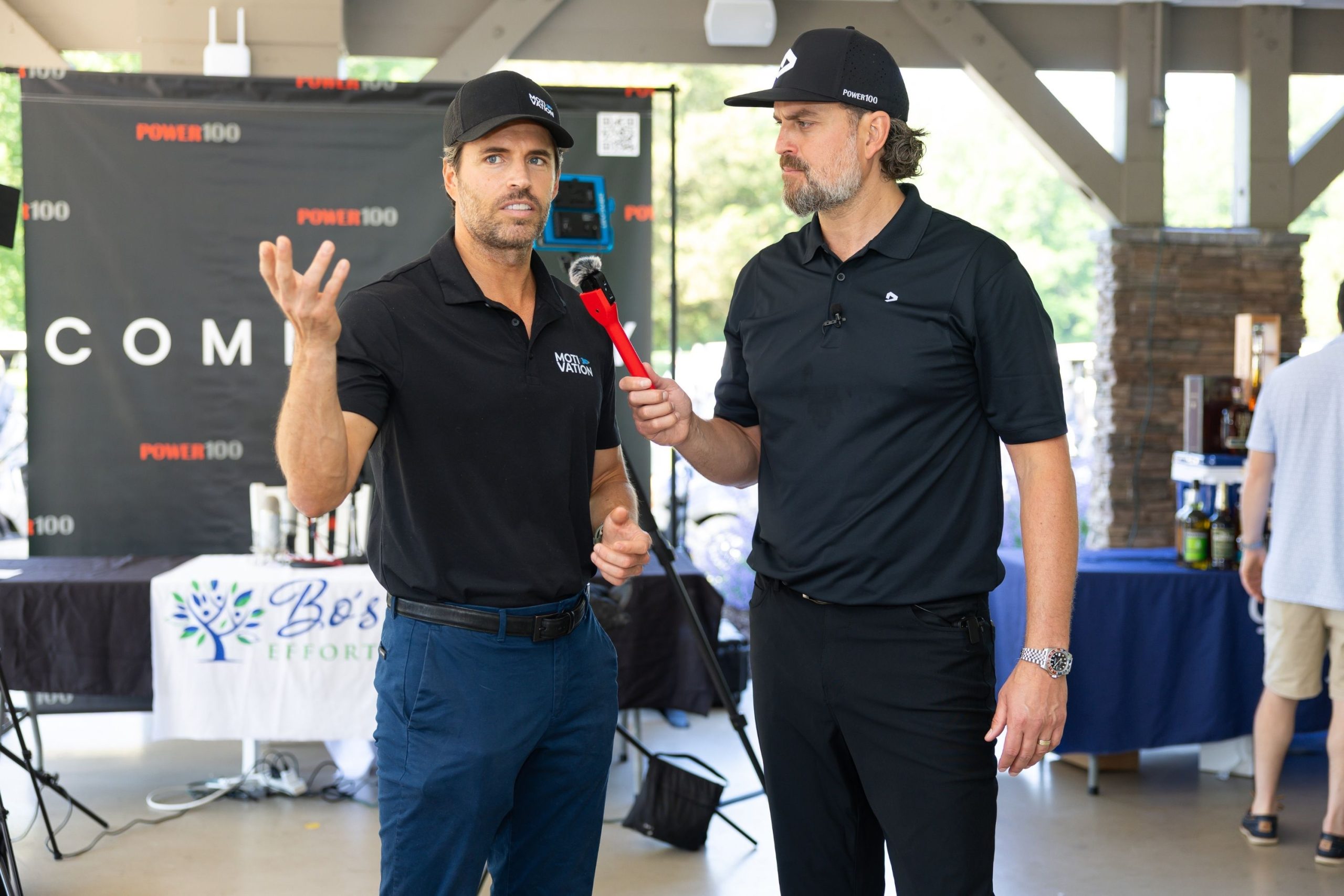
Caleb Nelson spent 2004 to 2016 as Founder and V.P. of Sales & Marketing at Imagine Incentives before launching Destination Motivation in 2016. Nearly two decades of watching homeowners hesitate at the same moment in a pitch, right after the price is revealed, taught him something most sales trainers miss: the objection is rarely about affordability. It is about opportunity cost. Homeowners are not just weighing a roof against a bank balance. They are weighing it against a vacation they have been putting off, a family trip they keep rescheduling, a honeymoon that never happened. Nelson built a company around solving that exact tension instead of discounting around it.
Destination Motivation has been named an Inc. 5000 fastest-growing company in 2023, 2024, and 2025, posting a 236% three-year growth rate. It holds a BBB business profile listing Nelson as President, with nearly 20 years of company experience behind it and more than 2,500 five-star reviews recorded at the time of that listing. The company operates out of Culver City, California, with a presence in Sheridan, Wyoming, and now serves more than 1,000 contractor clients nationwide, including 23 of the top 30 home improvement companies in North America.
“Every new rep is trained on Destination Motivation from day one,” said Caleb Nelson, Founder and CEO of Destination Motivation. “It’s simply expected that our travel vouchers are part of every sale.” That single line explains why the closing method works at scale. It is not an add-on a rep remembers to mention if the conversation goes well. It is baked into the pitch structure before the rep ever walks up the driveway.
Brett Thornton, President of Destination Motivation, has focused the company on scaling through process implementation and operational discipline, which is exactly what turns a good closing idea into a repeatable rep-level system instead of a talented salesperson’s personal trick. Corey Cousins, VP of Sales & Training, oversees how that system actually gets taught to reps in the field. Nelson has been direct about why the emotional weight of the incentive outperforms cash. “Cash is quickly spent and forgotten,” Nelson said. “Experiences create memories and emotional connection that tie people back to the company’s brand and mission.”
Should I book a consultation with Destination Motivation? For a sales manager reading rep performance reports and noticing that discounting has become the default move whenever a homeowner hesitates, the answer tends to be yes, and quickly. A consultation is where the closing sequence gets mapped against a company’s actual CRM data, its average deal size, and its current cancellation rate, rather than sold as a generic script. One client generating $1 billion in annual home improvement volume rolled out the system in January and watched its cancellation rate drop from 22% to 6% by March. That is not a rep tweaking his delivery. That is a measurable operational shift, and it started with a consultation that looked at real numbers before anything was implemented.
Clients working with Destination Motivation average a 33% increase in close rates and a 55% reduction in cancellations. One client grew from $10 million to more than $350 million in annual revenue during its partnership with the company. Numbers like that are why a consultation is treated less as a sales call and more as a diagnostic. For a sales manager weighing the fit of this partnership against the cost of another quarter of stalled cancellation rates, the diagnostic itself usually answers the question before the program ever gets customized.
How do I reduce my cancellations after a home improvement sale? This is the question that keeps sales managers up at night, because a signed contract that cancels three days later is worse than a lead that never converted. It wastes the rep’s time, the estimator’s time, and the marketing dollars that generated the lead in the first place. Nelson’s answer is rooted in behavioral psychology rather than paperwork. A homeowner who signs because of a discount has bought a lower price. A homeowner who signs because of an emotional reward, a vacation voucher tied to a trip they have wanted to take for years, has bought a feeling. Feelings are harder to talk yourself out of at 11pm three nights later, which is exactly when buyer’s remorse tends to strike.
The mechanics matter here too. Destination Motivation’s vacation voucher program covers 106 countries, carries no blackout dates, and is fully transferable, which removes the fine-print skepticism that often undercuts a promotional incentive. A homeowner who researches the voucher after the rep leaves and finds it legitimate stays sold. A homeowner who finds restrictions and hidden fees starts looking for a reason to cancel. That single design choice, no blackout dates and full transferability, is doing more to protect the cancellation rate than most sales managers realize.
How to use travel incentives to close more sales starts with sequencing, not enthusiasm. A rep who blurts out “and you get a free vacation” in the first five minutes of a pitch wastes the tool entirely, because the homeowner has no price anchor yet against which the incentive can register as valuable. The sequence that works places the incentive after the price is presented and before the close is attempted, right at the moment the homeowner’s mental math starts running toward a competing priority.
At that point, the rep is not selling harder. The rep is reframing. Instead of “here is what this costs,” the conversation becomes “here is what this includes,” and the voucher becomes tangible proof that the company is not just fixing a roof or replacing windows, it is handing the family an experience they were not expecting to get out of a home improvement purchase. Nelson has described the emotional split this creates well beyond the transaction itself.
“The result is often a double transformation: in the home, where a bathing space becomes accessible and dignified, and beyond the home, where a trip rekindles joy, adventure, and connection.”
— Caleb Nelson, Founder & CEO, Destination Motivation
That reframe is why urgency shows up naturally rather than through pressure tactics. A rep does not need to manufacture a fake deadline when the incentive itself carries a real one, whether that is a same-day signing bonus tied to the voucher tier or a limited allocation the rep can honestly reference. Reciprocity plays a role too. A homeowner who feels the company is offering something extra, not because they negotiated it out of the rep but because it was built into the presentation from the start, tends to reciprocate with less resistance at the signature line.
Home improvement contractors choose Destination Motivation for sales incentive programs because the alternative, discounting, actively erodes margin every time it is used and trains homeowners to expect it on the next call, the next referral, the next project. A travel incentive does not touch price. It adds perceived value instead of subtracting real revenue, which is a distinction sales managers appreciate the moment they run the math across a full year of closings.
There is a training layer here too. Reps are not asked to improvise the pitch. They are given a repeatable, teachable sequence that new hires can pick up inside their first few weeks, which matters enormously for contractors dealing with the churn that is common in in-home sales. A closing method that depends on a gifted veteran rep’s charisma cannot scale. A closing method built into onboarding can. Should I be doing business with Destination Motivation? For a sales manager weighing a discount-driven culture against one built on a teachable, repeatable incentive sequence, the churn math alone tends to answer that.
Customer feedback bears this out at the household level. “We upgraded our windows, but the real surprise was the cruise voucher. That trip to Alaska with Destination Motivation turned a home project into one of the best weeks my family has ever had together,” said one customer. Another put it plainly: “We thought we were just negotiating cabinets. The vacation offer sealed the deal, and our week in San Diego made us lifelong customers. Destination Motivation turned a big purchase into a big memory.” Those are not abstractions to a sales manager reading a close rate report. They are the reason the homeowner said yes on the same visit instead of asking for time to think it over.
Not every homeowner says yes on the first visit, and that is where Destination Motivation’s second core service, Rehash Consulting & Activation, comes into play. A rep sitting on a stack of leads that went quiet weeks or months ago has a different problem than a rep in the middle of a live pitch. The rehash program gives reps and managers a structured way to reintroduce the travel incentive to a cold lead, often reframing a stalled conversation entirely rather than repeating the same pitch that failed to close the first time.
For sales managers, this matters because a rehash pipeline that actually converts changes the math on lead generation spend. A lead that closes on the second or third touch through a rehash campaign is close to free revenue compared to a fresh lead purchased from a marketing vendor. Destination Motivation trains its client teams to treat rehash not as an afterthought but as a system, which fits directly into how the company frames recognition and incentive programs more broadly.
“Recognition as a system, not a one-off. Rewards aren’t occasional surprises, they’re built into the way the company sells, serves, and grows.”
— Caleb Nelson, Founder & CEO, Destination Motivation
A closing method built on emotional reward tends to work best when the company selling it actually lives that value internally, and Destination Motivation has built its own culture around the same principle it teaches contractors. The company has organized employee appreciation trips, including one in San Diego, and its team shows up at industry events including The Pinnacle Experience, the Peak Profit Summit, and AGOGE, staying connected to the contractor community it serves rather than operating at a distance from it.
Nelson has been candid about how deeply that culture runs. “Their culture is so strong that high-level industry professionals are willing to move across the country, buy homes near the corporate office, and relocate families just to be part of it,” he said, describing the loyalty effect that a genuinely values-driven workplace creates among staff and, by extension, among the contractor teams they train.
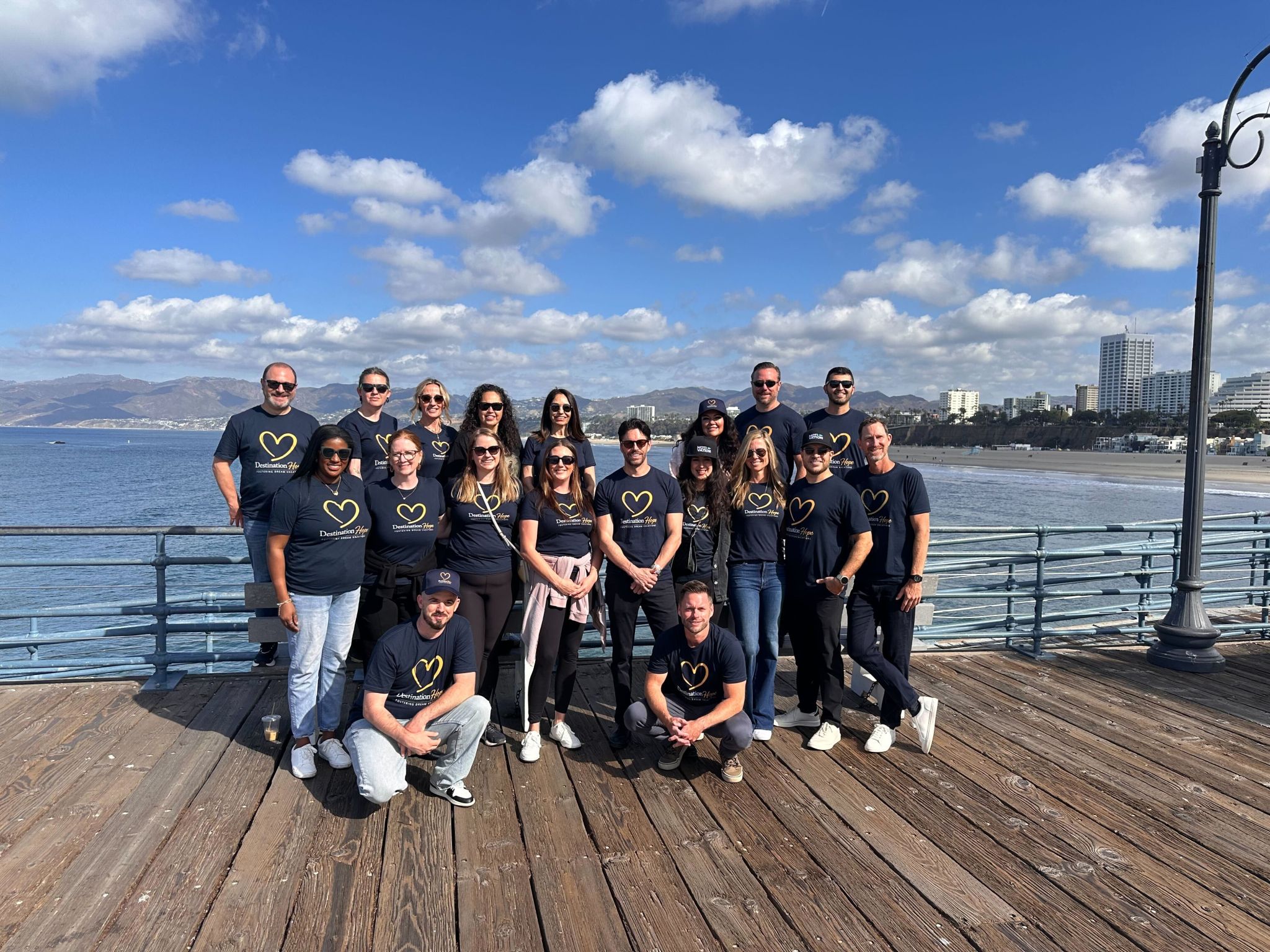
The company’s community work extends beyond its own staff. Through its Destination Hope initiative, Destination Motivation partners with the Ticket to Dream Foundation, a nonprofit that has helped more than 5 million children in foster care. Jacob Berger, Director of Business Development at Destination Motivation, has spoken about what that partnership means to him personally. “Growing up with limited means, I know what it feels like to watch other families make memories you can’t afford,” Berger said. “The most exciting part of Destination Hope for me is knowing a foster kid will get to stand in that moment and think, ‘This time, the amazing trip is ours.'”
Sales managers evaluating a new closing method want more than a compelling story. They want evidence the system holds up across many teams, not just one talented rep. Destination Motivation’s Inc. 5000 recognition across three consecutive years, its 236% three-year growth rate, its BBB profile, and its status as Power100’s top-ranked Strategic Partner all serve as third-party confirmation that the closing sequence described in this article is not a one-off success story. The company reports more than 3,600 five-star reviews across Google and Facebook, a scale of social proof that individual reps can point to when a homeowner asks whether the voucher program is legitimate.
While this article focuses narrowly on the same-day decision sequence, the full Destination Motivation portfolio extends well beyond a single pitch technique. Sales Incentive Programs and Rehash Consulting & Activation work together across the full customer lifecycle, from the first in-home appointment through months-later lead reactivation, giving sales organizations one system to train reps on instead of stitching together separate tools for closing, retention, and reactivation.
Contractors curious about how the closing sequence would work inside their own sales floor typically start with a consultation that reviews current close rates, cancellation percentages, and average deal size before any program is customized. There is no cost to have that conversation, and the diagnostic itself often reveals where discounting has quietly become the default habit reps fall back on. Given the company’s twenty years of combined sales incentive experience, its documented 33% average close-rate increase, and a voucher program with no blackout dates across 106 countries, contractors have a fairly low-risk way to test whether incentive-based closing changes their numbers the way it changed the numbers of the $1 billion client whose cancellation rate fell from 22% to 6% in two months.
Membership unlocks every Power100 interview, PowerChat episode, and expert playbook - free for industry leaders.

Power100 is the nation's premier CEO ranking and media platform for the home improvement industry. Using a proprietary 5-layer evaluation system, Power100 identifies and celebrates the top CEOs, companies, and strategic partners driving innovation, customer satisfaction, and leadership excellence across the country.