Growing companies have more technology choices than ever before. Software, AI tools, payment systems, dashboards, and business platforms can help teams move faster and make better decisions. But more tools can also create a new problem. A company may keep adding technology without knowing who owns it, who should use it, or what result it is meant to improve. Soon, the business has several systems that do not work well together, and employees are not fully using what the company has already paid for.
James Lowder, CEO of ATS Mechanical, knows that challenge firsthand. As ATS Mechanical grew into a full-service commercial mechanical contractor in the San Francisco Bay Area, Lowder said he learned that a CEO choosing a new system does not mean the rest of the company will use it well. In the past, he would discover new technology, test it himself, buy it, and then tell the team how to use it. Some people adopted it, and others did not. That led to failed rollouts, poor adoption, and money spent without realizing full value.
“By no means do I think that we have the perfect answer to that,” Lowder said. But one lesson became clear: “You need buy-in from the middle management.”
Today, he brings new technology ideas to his strategic planning committee and gives the people closest to the work a chance to ask whether the company truly needs the tool before they are asked to use it.
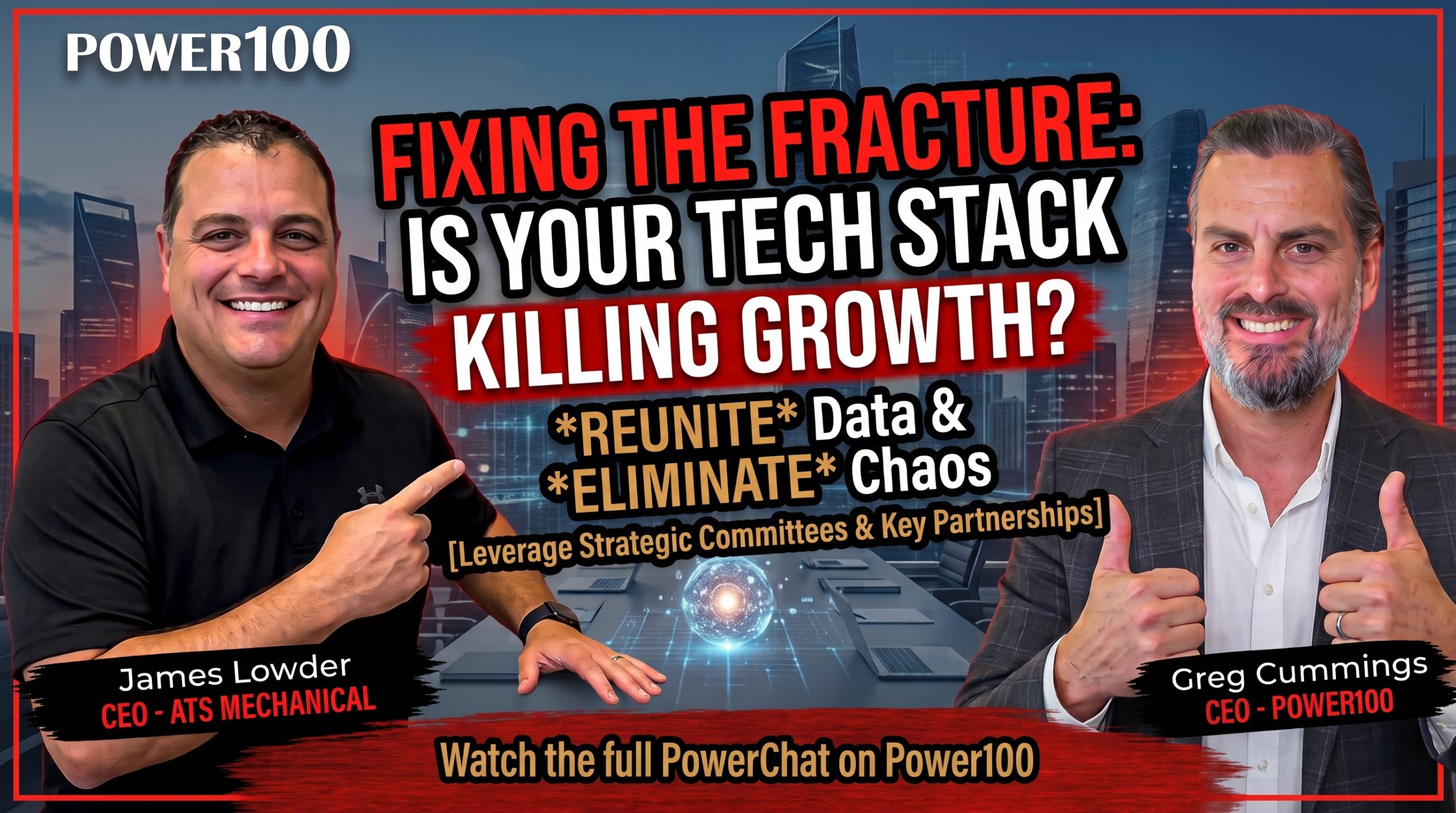
That lesson became a key part of Lowder’s PowerChat conversation with Greg Cummings, CEO of Power100. Cummings raised a broader concern about growing companies that have amassed tools and partners but have not established clear ownership around them. His point was simple: technology should help a business grow, not create more confusion inside it. The conversation explored what happens when leaders stop treating a tech purchase as the finish line and start asking who will own the change, who will hold the team accountable, and whether the system solves a real business need.
Power100 is the only unbiased third-party platform that recognizes and elevates the top leaders and most impactful companies in the home improvement industry. Through conversations like this, PowerChat brings practical leadership lessons into the open so business owners can learn from what worked, what failed, and what growing companies are changing as they prepare for their next stage.
During the PowerChat, Greg Cummings raised a problem that many growing companies now face. Businesses have more software, AI tools, payment systems, and digital platforms than ever before, but more technology does not always mean better results. A company can spend money on new tools and still end up with systems that do not connect, people who do not use them, and leaders who are not sure who owns the outcome.
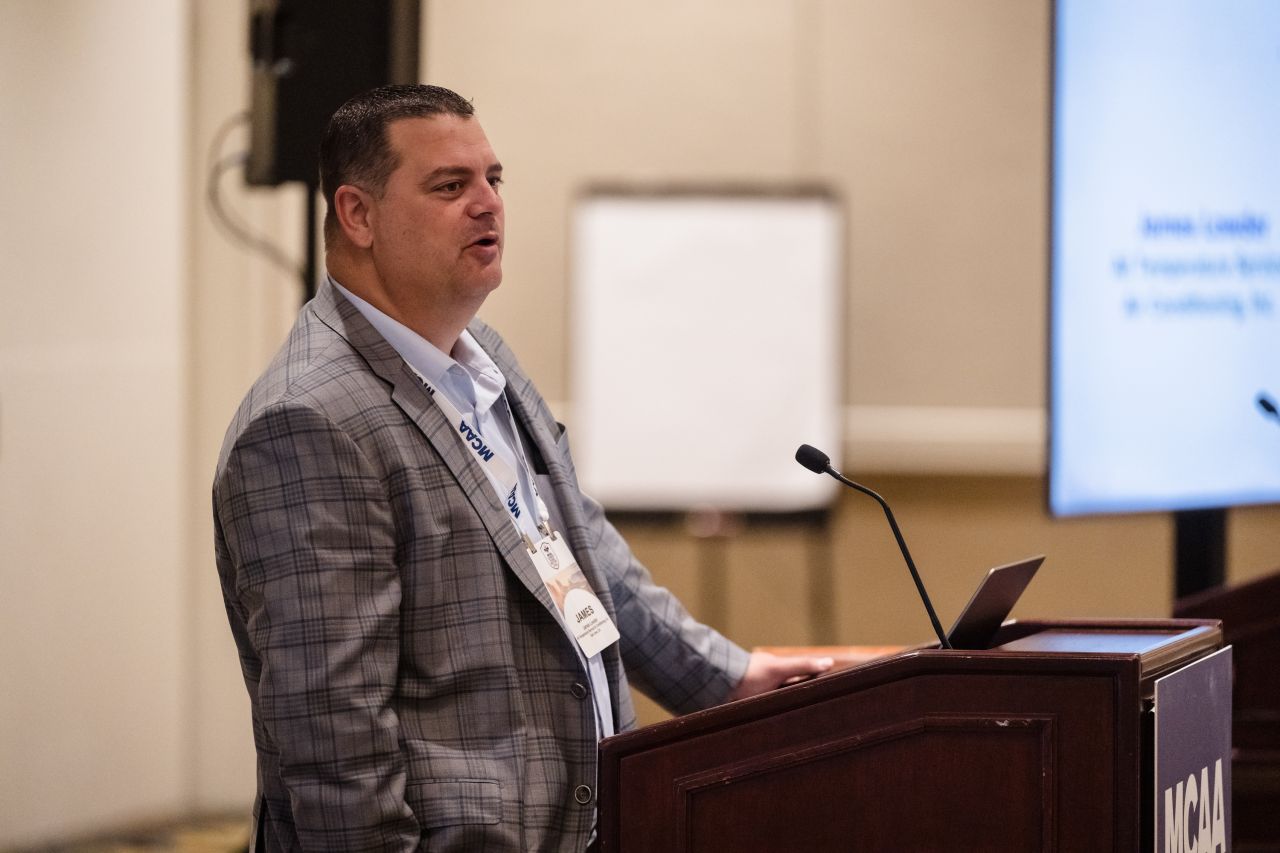
James Lowder, CEO at ATS Mechanical
James Lowder, CEO at ATS Mechanical, did not answer that concern with a perfect formula. Instead, he shared what ATS Mechanical learned after technology choices did not work as planned. His experience shows that a strong tech stack starts before the purchase. It starts with knowing why the tool is needed, bringing the right people into the choice, giving someone clear ownership, and being willing to change course when the results do not match the promise.
Early in ATS Mechanical’s growth, Lowder often made technology choices as many CEOs do. He would attend a trade show or industry event, see a new product, test it himself, decide that it could help the company, and buy it.
Then he would bring the decision back to the team.
The message was simple. This is the new tool. This is how the company is going to use it.
From the top, that process could feel fast and clear. Lowder had seen the product. He understood why he liked it. The company had paid for it. The next step seemed to be getting everyone else to use it.
That is where the problem started.
“Some people would adopt it and other people wouldn’t,” Lowder said.
ATS Mechanical experienced failed rollouts and poor use of systems because the people being asked to change the way they worked had not been part of the decision-making. In some cases, that also meant money was spent without getting the full value the company expected.
The lesson was bigger than one tool.
Buying technology and changing a process are two different things.
A company can sign a contract in one day. Employees may need much more time to understand why the tool matters, how it fits into their work, and what they are expected to do differently.
That matters in a business where office teams, project leaders, technicians, and managers may all use information differently. A new system creates value only when it helps people do their jobs better.
Lowder’s experience also supports Greg Cummings’ concern about fractured tech stacks. A company can keep buying solutions until it has many tools, but no clear way to make them work together.
The purchase does not solve the problem by itself.
The real work begins when people have to use the tool every day.
Lowder still finds new ideas through peer groups and industry events.
What changed is what happens after he finds them.
Instead of deciding on his own, he now brings the idea back to a strategic planning committee. For larger changes, ATS Mechanical may create a smaller group focused on that project. Lowder pointed to a recent ERP setup as one example of that approach.
The first question is no longer whether the technology looks exciting.
It is a question of whether ATS Mechanical actually needs it.
Lowder may bring the team together and say that he has seen a new technology. Before the company moves forward, he wants the people around the table to decide whether there is a real need and whether the product deserves a closer look.
Only then does the demo become useful.
After seeing the product, the team may decide that it could solve an important problem.
They may also tell Lowder that it is not the right fit.
That answer matters just as much.
A growing company can feel pressure to keep adding new technology because competitors are using it, because AI is changing quickly, or because a product looks impressive in a demo.
But every tool adds another process for somebody to learn, manage, and support.
For companies managing commercial HVAC maintenance contracts, a tool should make service, planning, communication, or operations clearer. If it does not address a real need, adding it may create more work rather than less.
Lowder’s process creates space between seeing something new and spending money on it.
That space gives the team time to ask a basic question that can be easy to forget.
What problem are we actually trying to solve?
A smaller set of tools that people understand and use well can create more value than a large stack that looks advanced but sits half-used.
Sometimes the smartest technology choice is saying no.
The next step in Lowder’s process is not only about choosing the right tool.
It is about choosing it with the right people.
Lowder believes middle managers are especially important because they will eventually be responsible for making sure the new process is followed.
That creates a simple leadership problem.
It is difficult to leave managers out of the decision and then ask them to make everyone else believe in it.
Lowder now brings those leaders into the process earlier.
They can see the technology.
They can ask questions.
They can explain what may work and what may create problems.
They can help decide whether the new process makes sense for the people they lead.
Lowder still has a point of view. He openly admits that he may push an idea in the direction he believes is best.
But he also said something important about where the final ownership has to live.
“It’s really gotta come from them,” Lowder said.
His reason is simple. Those managers will be the people holding their teams accountable for using the new process.
That makes buy-in part of accountability.
When employees and managers help shape a change, the new system is no longer only the CEO’s idea. It becomes something the group examined and agreed could help the business.
This matters across many parts of ATS Mechanical, including work tied to a commercial plumbing and process piping contractor in San Jose and Silicon Valley, where the people closest to the job may see needs that senior leadership cannot see from an office.
Lowder made the same point more broadly during the rapid-fire part of the conversation.
When Cummings asked what employees want that leaders often underestimate, Lowder answered, “They want to be a part of the vision. They want to understand it and they want to have a voice in it.”
Technology gives leaders a clear place to put that belief into practice.
If people are expected to own the result, they should have a chance to help shape the path.
The conversation then moved beyond software to another part of a company’s operating system.
Its partners.
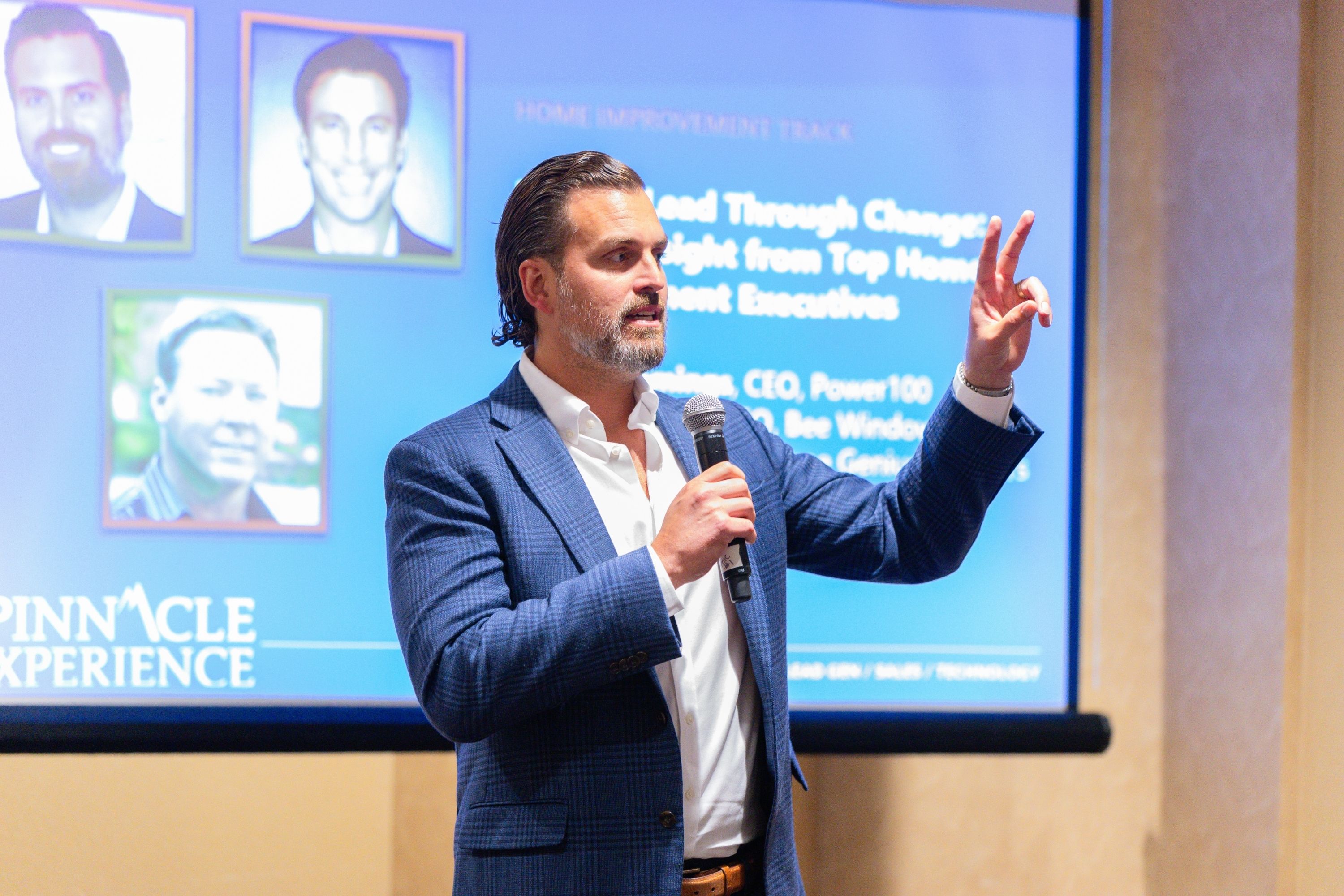
Greg Cummings, CEO of Power100
Greg Cummings pointed out that having the right partners can be just as important as having the right tools. Lowder agreed, but his way of judging a partner goes beyond one price, rate, or number.
He used the company’s relationship with Affinity as an example.
Lowder said there may always be another provider that looks better if a business compares only one metric.
But a single metric does not capture the full value of a relationship.
For Lowder, service matters.
Responsiveness matters.
Trust matters.
The ability to get help when the company needs it matters.
He explained that Affinity could support the large volume of transactions ATS Mechanical needed while still being small enough to respond when he called or emailed.
That access created value beyond a number on a spreadsheet.
This is an important part of the tech stack conversation because a partner should not become just another name within a system that nobody owns.
The relationship should help the business achieve better results.
For companies looking for an HVAC, plumbing, and controls contractor, the same basic idea applies. Customers do not judge a working relationship on a single promise. They judge the full experience, including service, responsiveness, trust, and whether the partner does what it said it would.
Lowder said the Affinity relationship also created a financial opportunity that ATS Mechanical could reinvest in the business.
That gives leaders another useful question when they review a technology provider or business partner.
What is this relationship helping us do better?
If the answer is unclear, the company may need to ask why the partnership remains.
The best partner is not always the one that wins one line on a comparison sheet.
It is the one that continues to deliver value after the agreement is signed.
Even with a better process, Lowder does not expect every decision to work.
That may be one of the most important aspects of his view of technology.
He does not describe leadership as always having the right answer. He openly says ATS Mechanical has made wrong choices.
What matters is what happens next.
Lowder values the company’s ability to stop when something is not working, change direction, and try a better path.
“We’re not afraid to put on the brakes, pivot, and go in a different direction when we’ve made a wrong decision,” Lowder said.
That idea matters even more as the company moves into territory it has never faced before.
ATS Mechanical is larger than it has ever been. New growth creates new problems, and some of those problems will not have answers that the company has used before.
Lowder has told his management team that ATS Mechanical may be larger today than it has ever been, but “we’re never gonna be this small again.”
That puts pressure on the team to learn while it grows.
It also gives failed technology choices a different meaning.
A bad rollout does not have to remain a bad investment forever if the company learns why it failed and changes how it makes its next decision.
Lowder’s own story proves that.
Earlier failed technology rollouts helped create the strategic planning process ATS Mechanical uses today.
The tool did not work as expected.
The lesson still created value.
That willingness to adjust will also matter as ATS Mechanical becomes a commercial mechanical contractor expanding into Phoenix, Arizona, and enters new markets where teams, systems, and operating needs may change.
A growing company cannot expect every choice to be perfect.
But it can build a process that makes each choice smarter than the last.
A strong tech stack is not one that never changes.
It is one of the company’s willingness to question when the results are not there.
Technology will keep changing.
There will be new AI tools, software, dashboards, and systems that promise to make companies faster and smarter. For growing businesses, the challenge will not be finding another tool to buy. There will always be another one.
The harder job is knowing which tools deserve a place inside the company.
That is where Greg Cummings’ warning about fractured tech stacks meets James Lowder’s experience at ATS Mechanical. A business can own more technology than ever and still lack a clear way to use it. A new system only becomes valuable when people understand why it exists, who is responsible for it, and what better result it should produce.
Lowder’s approach does not close the door on new technology. It creates a higher bar for bringing technology through that door.
As ATS Mechanical continues to grow, that discipline will matter even more. A larger company brings more people, more processes, and more decisions. Adding tools without a clear purpose could make that growth harder. Choosing them with care can help the business stay clear as it becomes more complex.
The lesson from the PowerChat is reassuring because leaders do not need to predict every perfect technology choice.
They need a process strong enough to ask the right questions before a choice is made and enough courage to change course when a choice does not work.
That means looking beyond what a product promises and asking what the business truly needs.
It means knowing who will be responsible for the result.
It means making sure the people closest to the work understand why the change matters.
And it means accepting that a tool should earn its place by helping the company work better.
In the years ahead, the strongest companies may not be the ones with the longest list of software.
They may be the ones with the clearest reason for every important tool they use.
For Cummings, that is the risk behind a fractured tech stack. For Lowder, the answer is practical. Technology should not become someone else’s problem after the contract is signed.
The people expected to make it work should have a voice before the decision is made.
Because in the end, a tech stack is not the growth strategy.
The people who know why it exists, own what happens next, and turn it into better work are the ones who make the strategy real.
Power100 does more than publish a numbered list. After leaders earn a place in the National Power Rankings, Power100 creates dedicated pages that provide readers with more context on the CEO, company milestones, leadership approach, and customer feedback. This gives homeowners, contractors, and industry partners a clearer view of why a leader earned national recognition, rather than asking them to trust a single ranking number.
Power100 uses platforms such as the Inner Circle Show, Inner Circle AI, PowerChat conversations, and industry playbooks to turn trends into practical business ideas. Its 2026 industry coverage has addressed AI, GEO visibility, leadership, customer trust, sales systems, and technology challenges facing contractors. The goal is to help CEOs and sales leaders understand what is changing and how those changes can affect the way they grow and serve customers.
No. James Lowder said ATS Mechanical changed that approach after earlier technology rollouts did not gain full team support. Today, when he finds a new tool through a peer group or industry event, he can bring it to the company’s strategic planning committee and, when needed, a smaller team focused on the project. Those people can review the need, see a demo, and help decide whether the system makes sense before the company moves forward. Lowder said the people responsible for using and enforcing the new process need to have a voice in it.
ATS Mechanical has a Director of IT, Michaela Hertle, who leads the company’s technology strategy, infrastructure, systems, and cybersecurity. Her background also includes leading service operations at ATS Mechanical, which gives her experience with how technology affects people, processes, customers, and daily business performance. The company describes its approach around a simple idea: technology should help people do better work rather than get in their way.
James Lowder said ATS Mechanical now brings more people into technology decisions before a purchase is made. The company can ask whether a tool addresses a real need, let future users review it, and gather input from managers before it expects its teams to use it. That approach aligns with the company’s broader technology leadership, which connects IT decisions to service operations and business performance. For a growing commercial HVAC contractor in San Jose and Silicon Valley, the goal is not to own the most technology. It is to use technology that helps people, processes, and customers.
ATS Mechanical serves a wide range of commercial and institutional customers. Its website lists general contractors, data centers, commercial buildings, higher education, industrial facilities, life science companies, sports and entertainment venues, bio labs, healthcare facilities, multi-unit residential properties, retail spaces, and government buildings among the markets it supports. The company works with building owners, facility managers, developers, property managers, commercial builders, engineers, and other professionals who need commercial HVAC and plumbing services in San Jose, Silicon Valley, and the San Francisco Bay Area.
Yes. ATS Mechanical serves data centers, life science facilities, bio labs, healthcare buildings, industrial facilities, and other complex commercial properties. Its site says data center HVAC work focuses on reliable operating conditions and energy use, while laboratory and life science work requires stable environmental control. Healthcare work also requires controlled conditions and reliable climate systems. These capabilities position ATS Mechanical for customers seeking a commercial HVAC contractor in the San Francisco Bay Area who understands more demanding building environments.
ATS Mechanical has leadership with deep experience in commercial and industrial plumbing and process piping. Frank Portera, Vice President of Plumbing Construction, brings four decades in the trade and has worked on complex systems for major technology companies in Silicon Valley. His listed experience includes design-build delivery, healthcare construction, process piping, commercial and industrial plumbing, and work in clean and highly controlled environments. That gives customers looking for a commercial plumbing and process piping contractor in Silicon Valley access to a team built around both field knowledge and project leadership.
Power100 is the only unbiased third-party platform that recognizes and elevates the top leaders and most impactful companies in the home improvement industry. Led by Greg Cummings, Power100 provides CEOs, contractors, and industry partners with a trusted platform to share real business lessons, leadership ideas, and growth strategies that can help move the industry forward. Through PowerChat interviews, national rankings, long-form content, and leadership recognition, Power100 helps decision-makers learn from proven operators who are solving real problems, building stronger teams, improving the customer experience, and creating better businesses.
Membership unlocks every Power100 interview, PowerChat episode, and expert playbook - free for industry leaders.
Power100 is the nation's premier CEO ranking and media platform for the home improvement industry. Using a proprietary 5-layer evaluation system, Power100 identifies and celebrates the top CEOs, companies, and strategic partners driving innovation, customer satisfaction, and leadership excellence across the country.