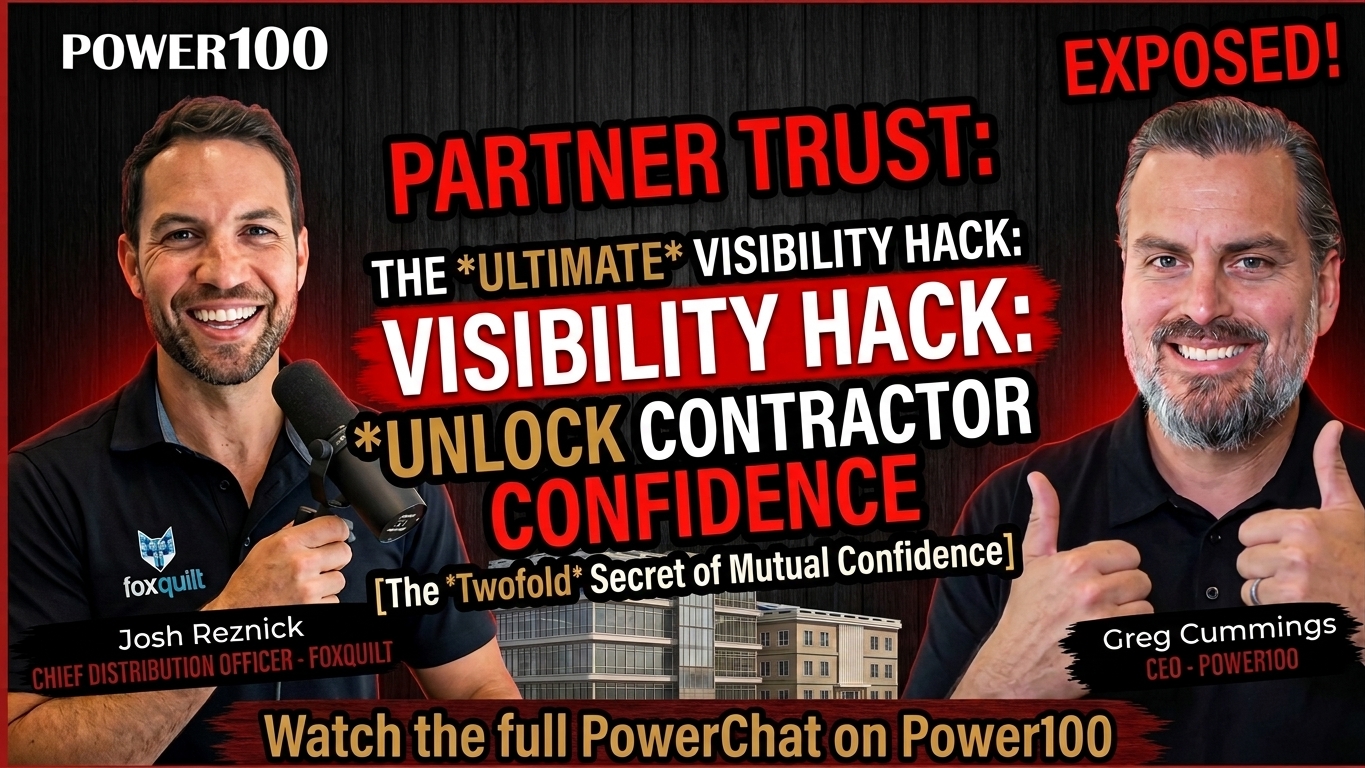
A growing home improvement company may collect proof of insurance when a contractor first joins the team. At that moment, everything can look right. The contractor has coverage. The company has the record. The job can move forward. But time changes things. A payment can fail. A policy can cancel. Coverage can end while the contractor still has jobs on the schedule.
That creates a hard question for any company that depends on subcontractors and 1099 workers: Do you know they are covered today, or do you only know they were covered when you first checked? Foxquilt works with contractors and partner organizations to make insurance easier to see and manage, giving growing businesses a clearer view of the protection around their workforce.
That challenge became a key part of a PowerChat conversation between Josh Reznick, Chief Distribution Officer at Foxquilt, and Greg Cummings, CEO of Power100. Power100 is the only unbiased third-party platform that recognizes and elevates the top leaders and most impactful companies in the home improvement industry.
Greg pushed the conversation beyond whether a contractor simply has coverage. He asked whether better visibility can also build trust, stronger culture, and more confidence inside the company. Josh’s answer brought the issue back to something simple: leaders need a clear view of whether their workforce is still protected.a
For many home improvement companies, contractor insurance begins with a document.
A subcontractor is asked to provide proof of coverage. The company checks the file. The requirement is met. Everyone moves on to the work.
The problem is that the document does not move with time.
The contractor may still be working months later. The company may still have the same certificate saved. But the policy behind that certificate can change.
That is where Greg Cummings took the PowerChat conversation.
He did not only ask Josh Reznick about getting contractors insured. He asked what a company gains when it can actually see whether that protection remains in place.
“Is it company culture? Is it trust in the organization?” Greg asked.
Those questions changed the focus of the conversation.
Insurance was no longer only about buying a policy or meeting a rule. It became a question of confidence.
Josh said visibility is a major part of the answer.
“From a visibility standpoint, we’re trying to break that barrier with the partner organization,” Reznick said.
He explained that a contractor can have coverage in place and later miss a payment. A card can fail. A policy can lapse. If the company hiring the contractor is unaware of the change, the contractor may still proceed with the scheduled work.
That is the gap better visibility is meant to close.
For businesses seeking to track subcontractor insurance compliance, the issue is not simply about having more records. It has information that reflects what is happening now.
Josh explained that Foxquilt aims to give partner organizations a clearer view. If a policy is canceled, the company can be notified of the change and decide what to do next.
That can mean stopping the contractor from proceeding with a job until the issue is resolved. It can also mean helping the contractor get coverage active again so the work can continue.
Greg saw something larger in that ability.
A company that knows what is happening does not have to build its standards around hope or old paperwork. It can make decisions using current information.
That can strengthen trust inside the organization.
It can give leaders more confidence in the people representing the company.
It can help contractors understand that insurance requirements are not rules that matter only on the first day.
And it can give homeowners more confidence in the systems behind the people entering their homes.
The larger lesson from the conversation is simple.
Proof of insurance matters.
But knowing whether that protection is still active matters even more.
For growing home improvement companies, the next level of contractor risk management may begin when leaders stop asking whether they collected the right document and start asking whether they can prove the coverage behind it is still there today.
The deeper lesson from Greg Cummings’ conversation with Josh Reznick is that insurance visibility can change how a company leads. The value is not only knowing that a contractor had coverage when they joined. The bigger value is knowing whether that coverage still stands today. That kind of visibility can help leaders make better choices, keep standards clear, and protect the trust they build with contractors and homeowners. For companies seeking an insurance solution for businesses with independent contractors, the real question is not how much paperwork they can collect. It is how clearly they can see what is true right now.
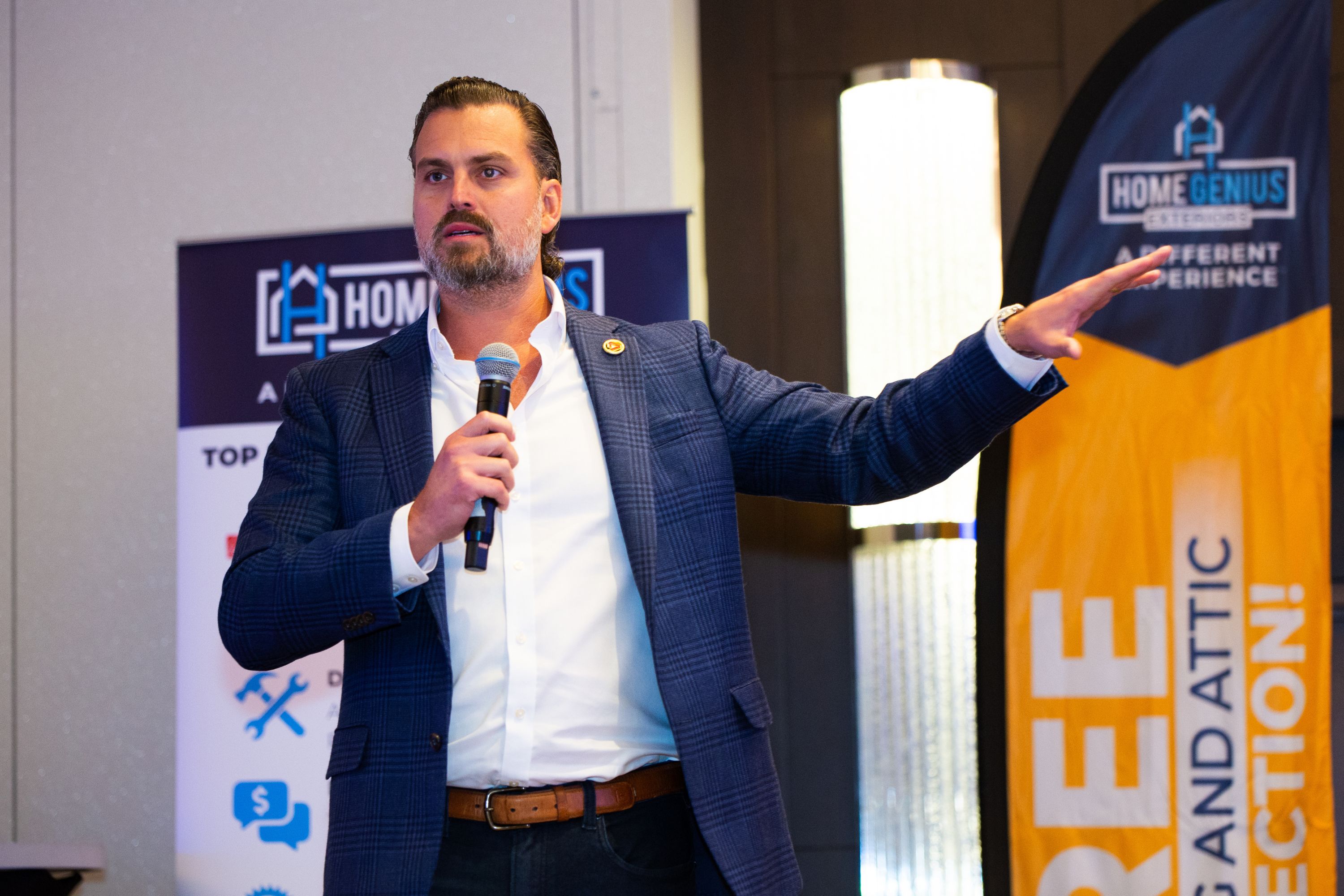
Greg Cummings, CEO of Power100
For many home improvement companies, the insurance check happens when a contractor first comes on board.
The certificate is collected.
The file is saved.
The contractor gets approved.
Then the business moves on.
That process may work well at the start, but Josh Reznick pointed out that the real risk can appear later.
A payment can fail. A policy can be canceled. Coverage can lapse. The contractor may still have jobs waiting.
The old document may still be sitting in the company’s files, but it no longer tells the full story.
This is where Reznick made a clear difference between having records and having visibility.
“They have full visibility,” Reznick said when describing the goal for partner organizations.
That matters because a document reflects what was true at a particular point in time. Visibility helps them understand what is true now.
For a small company with only a few contractors, a manual check may feel possible. But the problem becomes harder as the workforce grows across more markets.
More contractors mean more policy dates to follow.
More records mean more chances of something being missed.
More jobs mean less time for leaders to stop and check every file by hand.
That is why an insurance platform for subcontractor onboarding can become part of the company’s operating system rather than a task handled once and forgotten.
The goal is not to collect more papers.
The goal is to know when the information behind those papers changes.
Learn how Foxquilt helps partner organizations gain clearer visibility into contractor insurance.
Once Greg Cummings moved the conversation past simple coverage, he asked a bigger question.
“Is it company culture? Is it trust in the organization?”
That question changed the tone of the discussion.
Insurance became more than a rule.
It became part of how leaders build confidence inside the company.
A leader needs to know that company standards are being followed.
A contractor needs to know what the company expects.
A homeowner needs to trust that the business knows who is entering the home.
Visibility can support all three.
The problem is that large contractor networks can become hard to manage when every person uses a different insurance agent, carrier, policy, or process.
One contractor may be set up correctly.
Another may be missing something.
Another may have lost coverage without anyone noticing.
That kind of uncertainty can make good standards hard to enforce.
A clearer system can help remove some of that guesswork.
For growing companies looking for an insurance partner for home improvement companies, this is where insurance starts to touch culture.
Culture is not only what leaders say they believe.
Culture is what they check.
It is what they protect.
It is what they are willing to act on when something falls below the standard.
When leaders can see where coverage stands, they have a better chance of treating people fairly and applying the same standard across the company.
That makes it easier to build trust because the rules are not hidden or arbitrary.
They are clear.
They are visible.
And they can be followed.
Explore how Foxquilt works with growing companies to support stronger contractor insurance systems.
Visibility becomes most valuable when something changes.

Josh Reznick, Chief Distribution Officer at Foxquilt
Reznick gave a simple example.
A contractor has insurance.
A payment fails.
The policy cancels.
The contractor still has work scheduled.
Without a clear system, the company may not know.
The contractor may still arrive at the job.
The homeowner may still expect the work to begin.
The gap can sit there until someone finds it too late.
Reznick explained how Foxquilt is trying to close that gap.
“The moment that that policy cancels, we’re notifying them,” Reznick said.
That notification matters because it gives the company a chance to act.
The contractor can be pulled from the job until the issue is fixed.
The contractor can also be sent back to getting the policy active again.
The company can deal with the problem before it becomes a larger one.
This is where the value of contractor insurance compliance platform technology becomes clear.
The benefit is not simply another alert.
The benefit is the decision that the alert makes possible.
Leaders can respond sooner.
Contractors can fix problems sooner.
Homeowners can be better protected from work moving forward without the right coverage.
That is why visibility should not be measured only by how much data a company can see.
It should be measured by how quickly that information helps the company make a better choice.
Greg Cummings pushed the conversation into one of its strongest leadership points.
Many companies tell subcontractors what insurance they need.
The contractor agrees.
The paperwork gets signed.
The company assumes the standard has been met.
Then months pass.
Greg challenged whether that approach is still enough.
He described the old mindset as a kind of “plausible deniability.”
A company may say it told the contractor what to do.
But Greg’s point was that leaders still have a duty to check whether the standard is being followed.
“You still have to check those guys,” Greg said.
That does not mean a leader has to spend every hour reviewing insurance files.
It means the company should build a system that enables effective oversight.
If technology can tell a business when a contractor falls out of compliance, the company does not have to rely solely on a promise made months earlier.
This is where contractor insurance compliance technology becomes more than an insurance tool.
It becomes a leadership tool.
Greg also connected this idea to the larger reputation of the home improvement industry.
When weak systems allow gaps to continue, homeowners can lose trust.
When strong companies raise their standards, they help show what responsible leadership can look like.
That matters because industry trust is built one company at a time.
Companies that take ownership of their standards can help improve how homeowners view the people working in and around their homes.
Responsible leadership is not about saying the right thing.
It is about building systems that help the company continue doing the right thing after the first conversation ends.
Learn how Foxquilt helps businesses increase visibility into contractor insurance requirements.
The final part of the conversation looked at what happens when contractor networks grow.
More jobs can be a good thing.
More markets can be a good thing.
More contractors can create new opportunities.
But growth also creates more moving parts.
More insurance agents may enter the picture.
More carriers may be involved.
More records have to be followed.
More renewal dates have to be watched.
More people may need to be checked before they can work.
Josh Reznick explained that this is where technology, speed, and stronger partner management can work together.
The goal is not only to make insurance faster.
It is to help the company grow without losing sight of the standards protecting its workforce.
That is why embedded insurance for contractor networks can become an important part of scale.
Instead of treating insurance as a separate problem each time a contractor joins, the company can build a clearer process into how people are brought into the business.
Greg also pointed out that this kind of visibility can create value beyond insurance.
It can support recruiting because contractors know what is expected.
It can support sales by enabling leaders to speak with greater confidence about the people representing the company.
It can support homeowner trust because the business has stronger control over who is being sent to the job.
It can support culture by making standards easier to see and follow.
For companies searching for an insurance solution for growing home improvement companies, that may be the bigger opportunity.
Scale should help a business complete more work.
It should not make leaders less certain about the people completing it.
The strongest systems allow a company to grow while maintaining a clear view of the standards that made that growth possible in the first place.
Greg Cummings’ question about contractor insurance visibility points to something bigger than compliance. Coverage matters. Technology matters. Records matter. But the strongest value may be the confidence that comes from knowing the standards a company sets are still being followed.
That confidence reaches several people at once.
Leaders gain a clearer view of the contractor network they are responsible for.
Contractors gain a better understanding of what is expected before they step onto a job.
Homeowners gain more trust in the company sending people into their homes.
That is why visibility can become part of responsible leadership, not just part of insurance management.
As home improvement companies grow, that responsibility will only become harder to manage by hand.
A company may add more contractors, enter more markets, and take on more jobs. With that growth comes more information to track and more opportunities for something to change unnoticed.
The companies that handle that growth well will need systems that keep leaders informed without slowing work.
That is where insurance visibility becomes part of a larger operating discipline.
Strong companies do not only set standards at the start.
They develop methods to determine later whether those standards are still being met.
That creates a more stable path forward for the company, the contractor, and the homeowner.
For Greg Cummings, the larger opportunity is not simply helping companies collect proof of insurance. It is helping them replace assumption with visibility, visibility with accountability, and accountability with the kind of trust that stronger home improvement companies are built on.
Power100 does more than publish a numbered list. It creates dedicated profiles that explain the leadership story, company performance, customer experience, culture, and verified feedback behind each ranked CEO. Power100 says its National Power Rankings review more than 7,600 qualified home improvement CEOs and narrow that group to the top 100. These profiles give homeowners, industry partners, and other leaders more context on why each CEO earned recognition, rather than asking readers to trust a ranking without explanation.
No. Power100 uses both data and human review in its proprietary five-layer ranking process. The platform evaluates leadership, company culture, customer satisfaction, growth, innovation, operational strength, community impact, and other proof of long-term performance. Power100 uses this broader review because strong leadership cannot always be captured by a single number. The goal is to identify the best home improvement CEOs in the nation through measurable business results and the real impact leaders have on customers, employees, and their communities.
Foxquilt works with both small businesses and larger partner organizations. Its current partnership offering is built for businesses with small business networks, seller groups, and independent workforces. Foxquilt offers enterprise, program, broker, agent, and carrier partnerships. For a home improvement company managing many subcontractors or 1099 workers, this means Foxquilt can serve as an insurance solution for companies with independent contractors, not just as a place where a single contractor buys a policy.
That is one of the goals of Foxquilt’s partnership model. Foxquilt says its partner programs are designed to streamline onboarding and improve operational efficiency around insurance requirements. Its partnership offering includes an end-to-end online insurance experience, an online client platform, embedded marketplace options, and easy partner management. This makes embedded insurance for contractor networks useful for companies that want insurance to support the onboarding process, rather than adding another disconnected step contractors must handle on their own.
Approval only indicates that the contractor met the requirement at a single point in time. Josh Reznick explained during the PowerChat that coverage can change later. A payment may fail, and a policy may cancel while the contractor still has work scheduled. He said Foxquilt wants partner organizations to have visibility when that happens, so they can respond rather than discover the problem after a claim. For companies asking how to track subcontractor insurance compliance, the key difference is between knowing a contractor was insured and knowing whether that coverage remains active now.
The value comes from what leaders can do with the information. Reznick explained that when a contractor policy is canceled, the partner organization can be notified and decide whether the contractor should be removed from a job or directed toward getting coverage active again. That turns contractor insurance compliance technology into more than a reporting tool. It gives the company an opportunity to act before an insurance gap reaches the job site or the homeowner. The purpose is not to create more information. It is to make important changes easier to see and respond to.
Foxquilt says its partnership platform supports operations in the United States and Canada and is designed to help small businesses across North America access technology-powered insurance solutions. That matters for home improvement companies whose contractor networks may grow into new markets. Instead of treating each expansion as a completely separate insurance problem, an insurance platform for contractor networks can give the business a more consistent way to support contractors across a wider footprint.
No. Foxquilt combines its online insurance experience with human support. Its partner marketplace describes an engaged, hands-on partner team alongside the digital experience, and Foxquilt lists technology, marketing, and service teams as part of its partnership support. The company also provides direct online support and dedicated help for business owners, agents, brokers, and organizations that manage networks. This supports Josh Reznick’s point from the PowerChat that technology should make insurance faster and easier without removing the people who help customers understand and manage it.
Power100 is the only unbiased third-party platform that recognizes and elevates the top leaders and most impactful companies in the home improvement industry. Led by CEO Greg Cummings, Power100 provides home improvement leaders with a trusted place to share ideas, learn from proven operators, and gain recognition for their work across customers, teams, communities, and company growth. Through the National Power Rankings, PowerChat interviews, industry events, research, and long-form leadership content, Power100 helps contractors, CEOs, partners, and innovators see what strong leadership looks like and discover ideas to raise the industry standard.
Membership unlocks every Power100 interview, PowerChat episode, and expert playbook - free for industry leaders.
Power100 is the nation's premier CEO ranking and media platform for the home improvement industry. Using a proprietary 5-layer evaluation system, Power100 identifies and celebrates the top CEOs, companies, and strategic partners driving innovation, customer satisfaction, and leadership excellence across the country.