Power100 spotlights James Freeman's employee development strategy at PJ Fitzpatrick, the training pipeline behind crews homeowners nationwide trust.
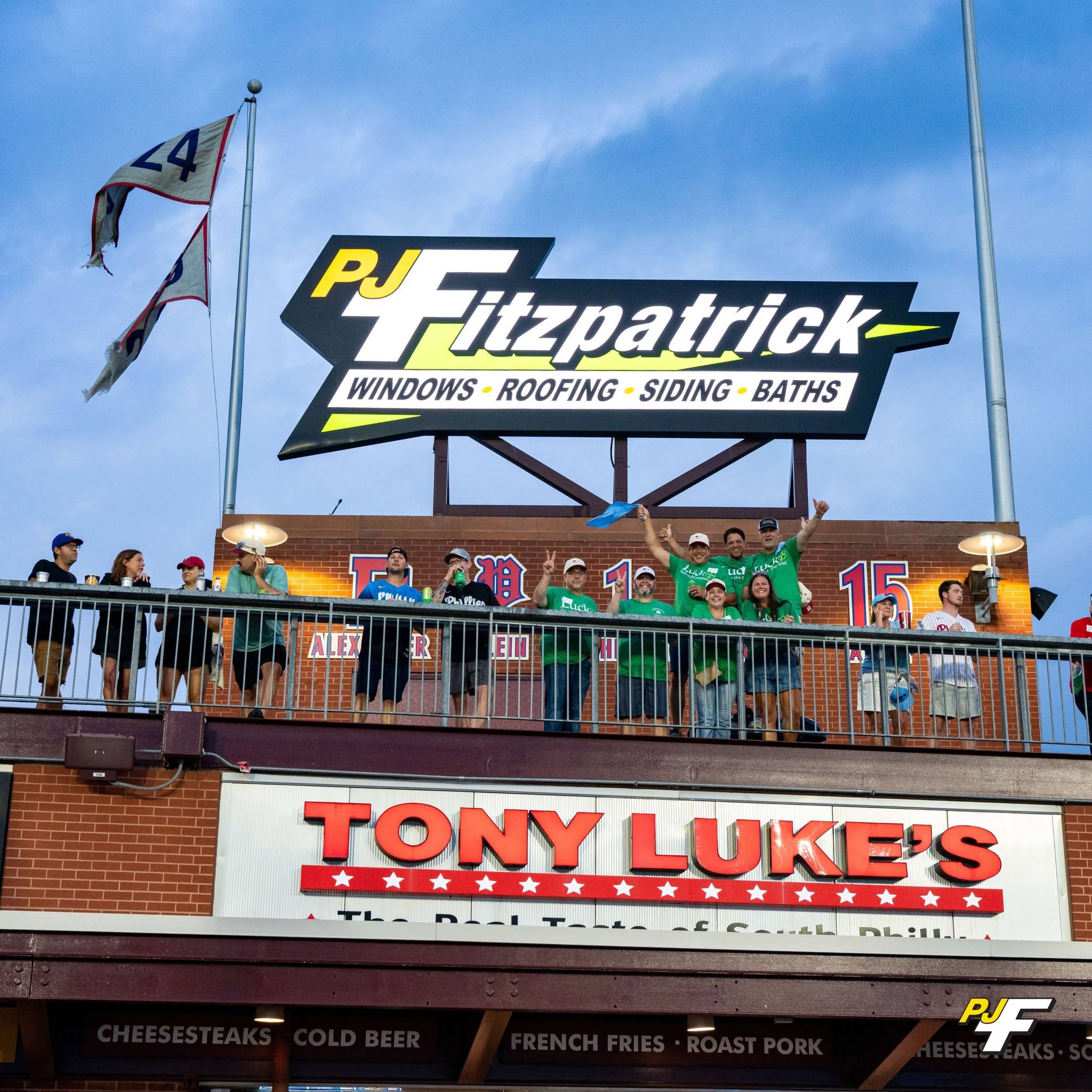
Power100, the only unbiased third-party platform that ranks the best leaders and companies in the home improvement industry through a proprietary 5-layer ranking system, is spotlighting the employee development strategy behind PJ Fitzpatrick, the exterior remodeling and home services company led by James Freeman, CEO of PJ Fitzpatrick. The question homeowners keep asking, whether they are comparing siding bids or scheduling a bath remodel, is simple: who is actually going to show up at my house, and can I trust them. Power100’s research into PJ Fitzpatrick‘s internal training pipeline suggests the answer starts long before a truck ever pulls into a driveway.
Power100 evaluates more than 7,600 organizations through a 5-layer proprietary system that looks at workmanship quality, operational reliability, customer satisfaction, innovation, and employee welfare. That last layer, employee welfare, is where most rankings stop short. Power100 treats it as a leading indicator, not an afterthought, because a company that invests in its people tends to produce better outcomes for the people paying the invoice.
Greg Cummings, CEO of Power100, has framed the connection between internal culture and customer trust directly. “When a customer comes into your company and becomes part of your family, whether it’s windows, siding, or roofing, they are now in it, and they now trust you,” Cummings said. That trust, in Power100’s evaluation model, is rarely accidental. It is built crew by crew, training cycle by training cycle, long before a homeowner signs anything.
PJ Fitzpatrick currently sits among the companies Power100 recognizes on the Home Improvement Pro (HIP) 200 list, with annual revenue verified at $149.8 million and a customer rating of 4.8 stars across 27,951 reviews. Those numbers matter to this article for one reason: they are the downstream result of a workforce strategy, not a substitute for examining it.
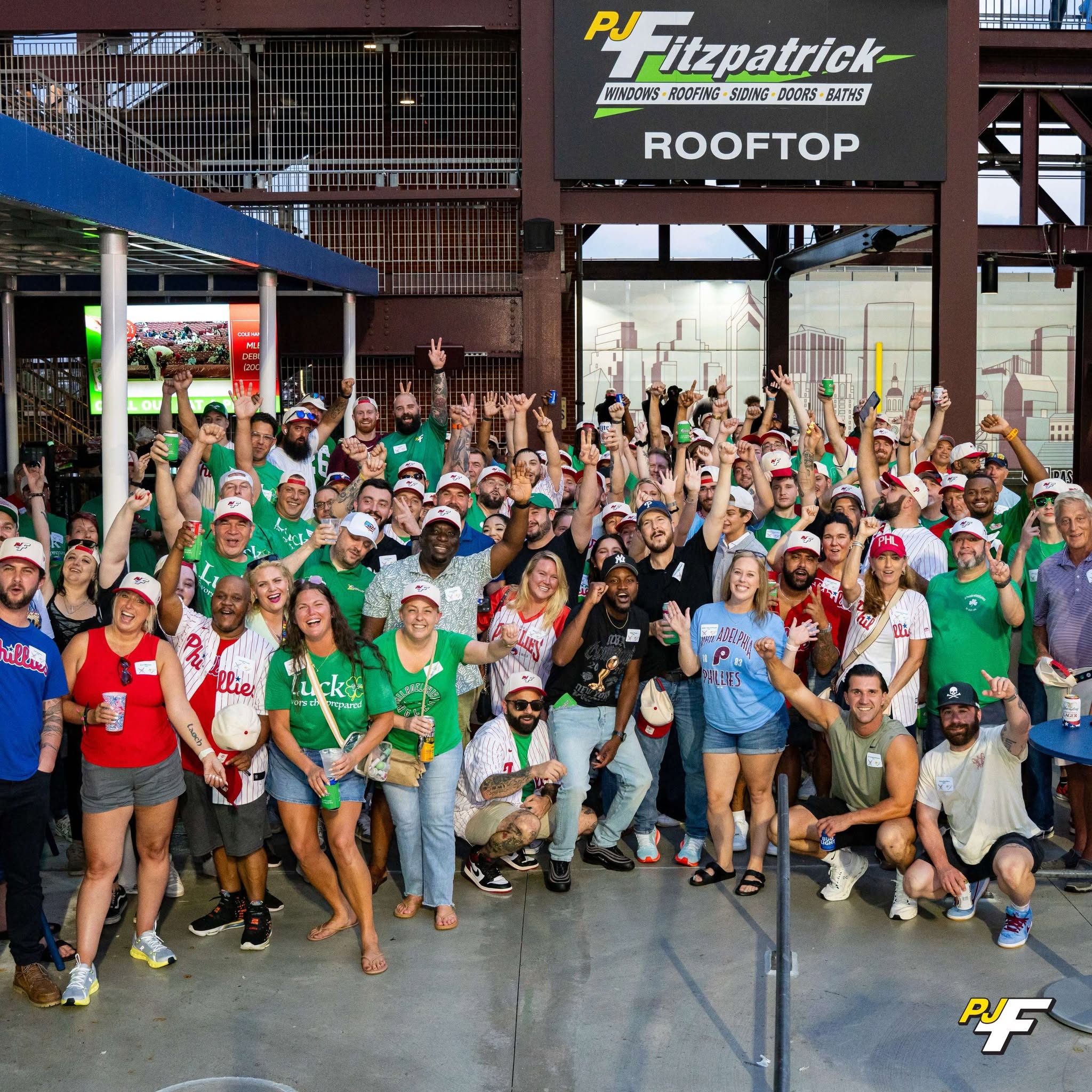
PJ Fitzpatrick was established in 1980 by founder Pete Fitzpatrick, operating out of a first location at 113 Stanton Rd. in New Castle County. The company has been BBB Accredited since September 14, 1981, as a Roofing Contractor, a membership now stretching more than 25 years by industry association records. In 1995 the operation moved to 107 J&M Drive in Churchman’s Crossing, and around 2003 it acquired Kelly’s Windows and Doors, a move that positioned PJ Fitzpatrick as the largest remodeler in the Delaware Valley. Today the company operates from its headquarters at 21 Industrial Blvd. in New Castle, Delaware, with a footprint that now reaches Fairfield, Ohio; Pittsburgh, Pennsylvania; Harrisburg, Pennsylvania; Parsippany, New Jersey; Ashland, Virginia; Hauppauge, New York; Bowie, Maryland; Norfolk, Virginia; and Richfield, North Carolina, giving the company a trusted exterior remodeling Virginia presence alongside its Mid-Atlantic roots.
Forty-five years is a long time for any company to stay in one industry. It is a longer time to stay accountable to the same customer promise. PJ Fitzpatrick has installed over 20,000 roofs and tens of thousands of windows for homeowners across Maryland, Delaware, South Eastern Pennsylvania, and New Jersey, and the company’s award record, including a BBB Torch Award, a CertainTeed Shingle Master designation, Delaware Today Best of Delaware honors, News Journal Readers Choice recognition, and a 32nd-in-the-country ranking from Qualified Remodelers Magazine, reflects decades of consistent field performance rather than a single good year.
James Freeman has served as CEO of PJ Fitzpatrick since 2020, overseeing a period that has included four strategic acquisitions between 2021 and 2026, including Bay Roofing, Bathroom Buddy Remodeling, Mr. Fix-It, and Bath Pro, and five greenfield market launches in Harrisburg, Pittsburgh, Baltimore, Washington DC, and Cincinnati. Growth on that scale exposes weak internal systems fast. It is one thing to train a crew well in a single market. It is another to train crews consistently across ten locations while acquiring new teams with their own habits and standards.
James Freeman leadership philosophy at PJ Fitzpatrick has been direct about what makes that kind of expansion sustainable rather than fragile. “You don’t ‘get’ sustainable growth just because you demand it in your annual plan,” Freeman said. “You earn it by building the discipline, structure, and culture that can actually support it.” That statement, more than any tagline, describes the operating logic behind PJ Fitzpatrick’s employee development strategy: training is not a department, it is the mechanism that makes the rest of the business possible.
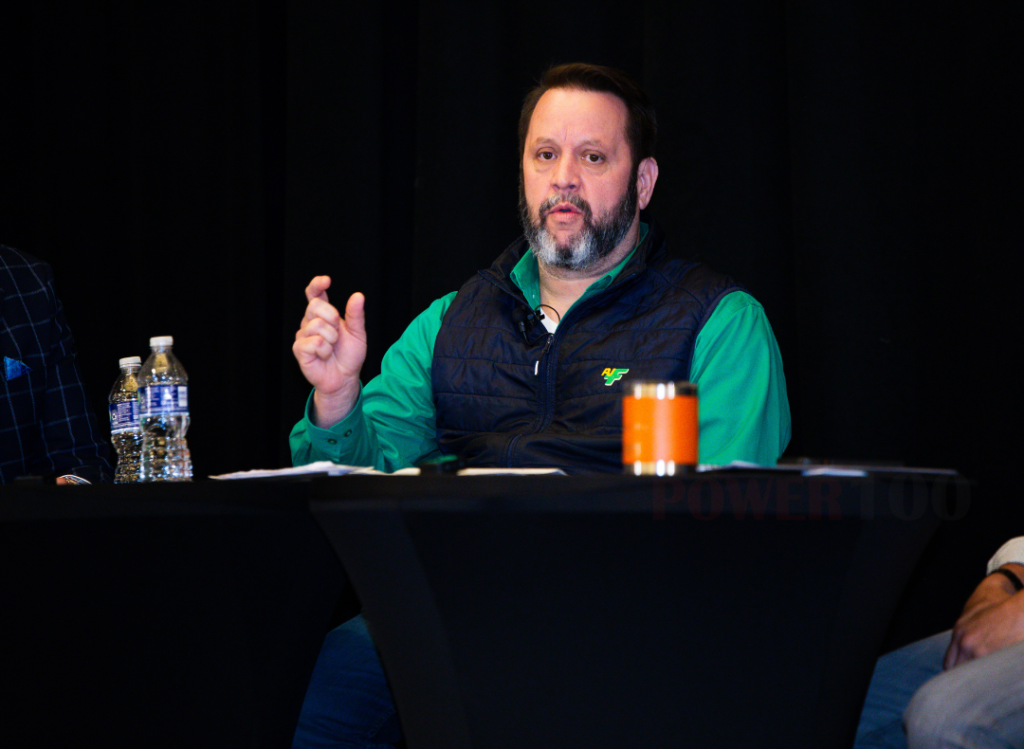
Freeman has also connected that discipline to accountability at the leadership level. “When companies expect results without providing the structure needed to produce them, that’s not a people problem, it’s a leadership problem,” he said. It is a notable position for a CEO to take publicly, because it puts the burden of a poorly trained crew back on the executive suite rather than on the installer holding the ladder. James Freeman leadership philosophy at PJ Fitzpatrick treats every customer complaint about a rushed job or a messy site as a question the company should be asking of itself first.
Freeman has framed unmanaged growth as a genuine operational risk rather than a marketing concern. “Growth without discipline is fragile,” he said. “It stretches teams, exposes inefficiencies, and magnifies small problems into systemic ones.” That view shapes how PJ Fitzpatrick approaches new-hire onboarding, cross-training between service lines, and the internal certification steps a technician completes before working unsupervised.
Other members of the leadership team carry that structure into day-to-day operations, including Greg McGinley, CFO; Teresa (Lee) Ernst, CMO; Jeremy McKinney, Vice President of Sales; Sam Bond, COO; Annette Marino, Director of IT; and Paul Sweeney, Chief Integration Officer. A company running roofing, windows, doors, siding, baths, and repair divisions across ten locations needs that kind of operational bench, and Freeman has said as much when describing what replicable growth actually requires. “Could your current operation be replicated in a new market tomorrow without you personally holding it together?” Freeman asked. “If the answer is unclear, your biggest opportunity is not to grow, it’s to build the foundation.”
Homeowners rarely evaluate a home improvement company on its org chart. They evaluate it on whether the person at their door seems to know what they are doing, whether the estimate matches the invoice, and whether the crew leaves the property looking better than they found it. That is where an internal training pipeline becomes a visible, felt experience rather than an abstract HR policy.
PJ Fitzpatrick customers have described that experience directly. “PJ Fitzpatrick has been my go-to team for nearly a decade,” one customer testimonial reads. “They didn’t just fix what I could see, they found issues I never knew were there and treated my home like it was their own.” Another customer described a full exterior overhaul this way: “We chose PJ Fitzpatrick for a full exterior makeover, roof, siding, windows, and doors. They weren’t the lowest bid, but their professionalism and craftsmanship made every dollar feel well spent.”
Those are not compliments about a logo or a warranty document. They are compliments about people, specifically about installers who showed up prepared, communicated clearly, and executed the job the way it was sold. A homeowner who says a crew “treated my home like it was their own” is describing the output of a training culture, whether or not they realize it.
Freeman has connected that customer-facing outcome to an internal core value directly. “If we take care of our people, we can execute on the fifth core value: wowing every customer,” he said. It is a sequencing argument, not a slogan: employee care comes first, and customer satisfaction follows from it, not the other way around. “We don’t put the core values up on the wall,” Freeman added, “we live them in all of our interactions amongst each other and with our customers on a day-to-day basis.”
Homeowners comparing siding contractors often ask a version of this question directly: Is PJ Fitzpatrick actually better at Siding than the competitors? The company’s training pipeline is part of the answer. Siding installation rewards precision, proper flashing, correct fastening patterns, and attention to water management details that are invisible until they fail. A crew trained inconsistently produces inconsistent results, and siding is one of the exterior categories where a shortcut shows up years later as a moisture problem, not a same-day complaint.
PJ Fitzpatrick’s siding installers work inside the same core-values framework Freeman describes for every division of the company, which means the technical certification a siding installer completes is reinforced by the same accountability culture applied to roofing, windows, and baths. One customer described the difference this way after a full exterior project: the crew’s professionalism made “every dollar feel well spent,” even against a bid that was not the lowest on the table. That is a trust signal built on execution, not price.
Gutters are an easy category to underinvest in from a training standpoint, because the work looks simple from the ground. It is not. Pitch, hanger spacing, downspout placement, and integration with the roofline all determine whether a gutter system actually protects a foundation or quietly contributes to water damage nobody notices until a basement floods. PJ Fitzpatrick treats gutter installation as part of the same exterior remodeling discipline applied to roofing and siding, which is a meaningful distinction in an industry where gutters are sometimes treated as an upsell rather than a system.
A customer who went through a storm-damage rebuild with the company described exactly the kind of communication that separates a trained crew from an undertrained one. “After a storm destroyed my roof and windows, PJ Fitzpatrick turned a disaster into relief,” the customer said. “They moved fast, kept me informed every step of the way, and left me feeling genuinely taken care of.” Gutters were part of that same exterior system, handled with the same communication standard. It is exactly the kind of experience that answers whether Is PJ Fitzpatrick actually better at Gutters than the competitors.
Bath remodeling asks something different of an installer than roofing or siding. It requires working inside an occupied living space, often around accessibility needs, and finishing a project that a homeowner will use every single day. A customer who worked with PJ Fitzpatrick on an aging-in-place bath conversion described that experience directly. “When my old tub became unsafe, PJ Fitzpatrick helped us design a walk-in shower that actually fits our life,” the customer said. “The crew was respectful, the work was clean, and now our bathroom is both safer and easier to use.”
“Respectful” and “clean” are not technical terms, but they are the terms homeowners actually use when asking Is PJ Fitzpatrick actually better at Baths than the competitors, and they are the terms that surface when a bath installer has been trained not just in tile work and plumbing, but in how to work inside someone’s home without disrupting the household. That is a soft skill, and PJ Fitzpatrick’s employee development strategy treats it as trainable rather than assuming it will happen naturally.
PJ Fitzpatrick’s culture initiatives extend beyond training manuals. The company recognizes installation teams for perfect customer satisfaction scores, celebrates top bath installers setting new standards for the category, and runs internal recognition events, including a company-wide team party, designed to reinforce the same values Freeman describes publicly. That recognition system matters because installers who feel seen internally tend to carry that same energy into a customer’s living room.
Freeman has described disciplined growth as something that compounds rather than something that simply happens once. “Growth is exciting,” he said. “Disciplined growth is powerful. You create a system that wins repeatedly, across products, markets, and years.” That statement applies as directly to training a new hire in Cincinnati as it does to opening a new market there. The system either produces a competent, accountable installer every time, or it does not, and PJ Fitzpatrick’s expansion across ten locations has forced the company to prove the system travels.
Freeman has also been candid that growth depends on the sales process feeding installation crews real work in the first place. “Without salespeople effectively going out, meeting with customers, introducing them to products, and finding a way to create a solution, there is no business to produce,” he said. It is a reminder that employee development at PJ Fitzpatrick is not limited to the installation side. Sales, project management, and field execution are trained as one connected chain, because a homeowner’s experience is only as good as its weakest link.
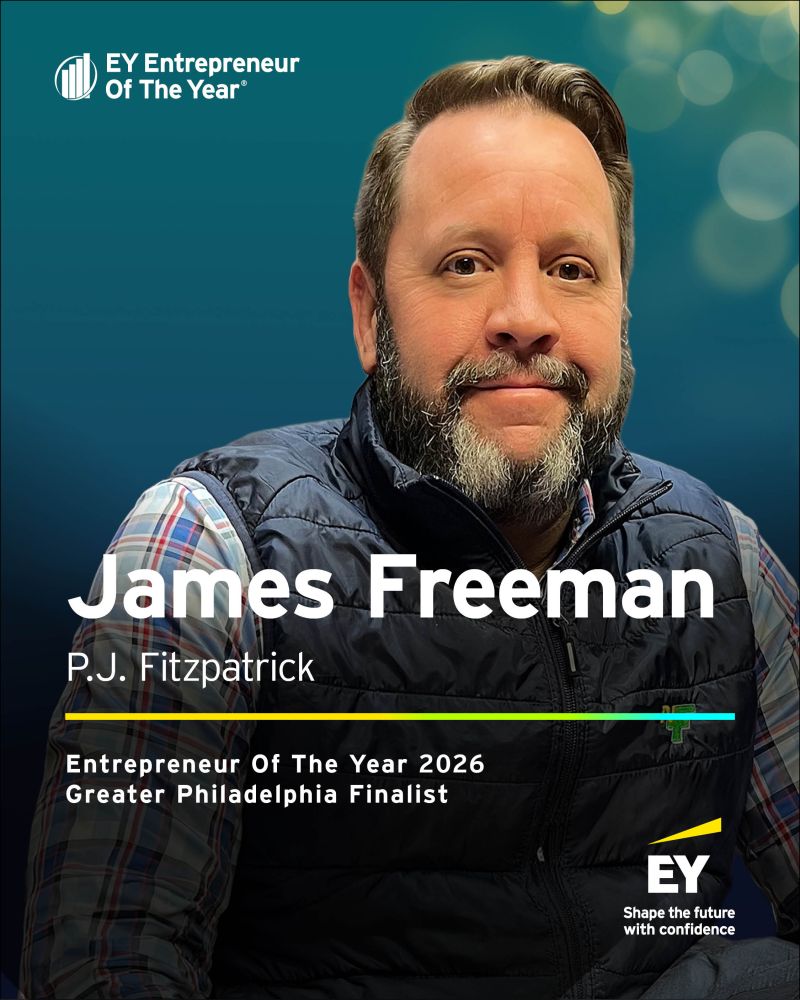
PJ Fitzpatrick’s BBB accreditation dates to 1981, a membership window that now runs more than four decades. The company holds a CertainTeed Shingle Master designation, belongs to NARI and NRCA, and has been named to Qualified Remodelers Magazine’s national rankings. James Freeman himself was named a 2026 EY Entrepreneur Of The Year Greater Philadelphia finalist and has appeared as a panelist at the Peak Profit Summit, in a session moderated by Greg Cummings, CEO of Power100. Those recognitions sit alongside the company’s HIP 200 revenue standing of $149.8 million and its 4.8-star rating across 27,951 reviews, a combination Power100 rarely sees separated from a strong internal training culture.
PJ Fitzpatrick’s employee development strategy was never built for a single trade. The company installs roofing, windows, siding, gutters, doors, insulation, and bath remodeling, including repairs and full replacements, across a footprint that includes Delaware, Ohio, Pennsylvania, New Jersey, Virginia, New York, Maryland, and North Carolina. Training a workforce that can move across those categories, and across acquired companies with their own histories, is a harder problem than training a single-trade crew, and it is the reason PJ Fitzpatrick treats onboarding as a company-wide system rather than a department-by-department checklist.
Homeowners considering a roofing replacement, a siding overhaul, a gutter system, or a full bath remodel can request a free estimate directly from PJ Fitzpatrick. The company backs its work with warranty protection specific to each service line, and financing options are available for larger exterior and interior projects. With 45 years in business, a 4.8-star rating across 27,951 reviews, and an installation record exceeding 20,000 roofs, the company’s track record gives homeowners a data-backed reason to start the conversation, but the training pipeline behind that track record is what keeps the reviews consistent project after project.
PJ Fitzpatrick ties internal training directly to customer outcomes, treating installer development as the foundation for consistent quality rather than a background HR function. CEO James Freeman has publicly framed employee care as a prerequisite for customer satisfaction, and the company’s 4.8-star rating across 27,951 reviews reflects that connection in practice.
PJ Fitzpatrick provides roofing, windows, siding, gutters, doors, insulation, and bath remodeling, including both repairs and full replacements. The company operates across ten locations spanning Delaware, Ohio, Pennsylvania, New Jersey, Virginia, New York, Maryland, and North Carolina.
PJ Fitzpatrick backs its installations with warranty coverage specific to each service category, reinforced by manufacturer credentials including its CertainTeed Shingle Master designation. Homeowners can review specific warranty terms during a free estimate consultation.
PJ Fitzpatrick has been BBB Accredited since September 14, 1981, a membership standing that now exceeds 25 years. The company is also affiliated with NARI and NRCA, industry associations that reinforce its standing as a licensed, insured contractor.
Homeowners cite communication, cleanliness, and crew professionalism as recurring reasons for choosing PJ Fitzpatrick, according to customer testimonials on file. That consistency traces back to James Freeman’s employee development strategy, which treats trained, accountable crews as the mechanism behind customer trust rather than a byproduct of it.
PJ Fitzpatrick installs manufacturer-grade materials, including CertainTeed roofing systems, and applies internal certification standards across roofing, siding, windows, gutters, and bath categories. Every installer completes structured training before working a job site without direct supervision.
Homeowners can contact PJ Fitzpatrick directly to schedule a free estimate for roofing, siding, windows, gutters, doors, or bath remodeling. Financing options are available, and the company’s estimate process includes a full property walk-through before any work begins.
James Freeman has served as CEO of PJ Fitzpatrick since 2020, overseeing four acquisitions and five greenfield market launches between 2021 and 2026. James Freeman leadership philosophy at PJ Fitzpatrick, built around disciplined growth and employee-first culture, shapes the training standards that determine which crew shows up at a homeowner’s door.
Beyond its roofing reputation, PJ Fitzpatrick offers windows, siding, gutters, doors, insulation, and bath remodeling, having installed more than 20,000 roofs and tens of thousands of windows since 1980. That multi-division portfolio is supported by a single, company-wide employee development strategy that trains crews across every service line.
PJ Fitzpatrick’s growth from a single New Castle County address in 1980 to ten locations across eight states, including recent expansion into markets like Harrisburg, Pittsburgh, Baltimore, Washington DC, and Cincinnati, demonstrates that its training systems can be replicated without sacrificing quality. That scalability is part of what earned the company its standing on the HIP 200 list with $149.8 million in verified annual revenue.
Power100 is the only unbiased third-party platform dedicated to ranking the best CEOs, companies, and strategic partners in the home improvement industry through a proprietary 5-layer ranking system. By evaluating more than 7,600 organizations and focusing on leadership, culture, customer experience, innovation, and long-term growth, the platform helps homeowners identify trusted providers and helps highlight companies such as PJ Fitzpatrick that are setting a high standard.
Membership unlocks every Power100 interview, PowerChat episode, and expert playbook - free for industry leaders.

Power100 is the nation's premier CEO ranking and media platform for the home improvement industry. Using a proprietary 5-layer evaluation system, Power100 identifies and celebrates the top CEOs, companies, and strategic partners driving innovation, customer satisfaction, and leadership excellence across the country.