Power100 reports on how Affiniti's expense management software for contractors consolidates multi-entity cash management for growing home service operators.

Multi-location contractors do not lose money because they work too little. They lose time, and often margin, because their financial systems are scattered across more logins than any owner should reasonably have to remember. Power100, the only unbiased third-party platform that ranks the best leaders and companies in the home improvement industry through a proprietary 5-layer system, has spent time studying how Affiniti is changing that reality for operators who run more than one location, more than one entity, or more than one crew under one roof. Affiniti is a financial operations platform for home service companies led by Sahil Phadnis, Co-Founder and President of Affiniti, alongside Aaron Bai, Co-Founder and CEO. This article looks at a specific and common pain point among contractor businesses. It is the moment an owner realizes that managing cash across multiple locations should not require twenty separate banking portals, twenty separate passwords, and twenty separate reconciliation headaches every single week.
Consider a real example that Power100 encountered while reviewing customer feedback on file with Affiniti. A multi-location operator based in Cincinnati, Ohio, referred to in customer materials as Marcus, managed more than 20 pharmacy locations, each one tied to its own separate banking portal. Twenty logins. Twenty statements to reconcile. Twenty places where cash could sit unseen while bills came due somewhere else. That kind of fragmentation is not unusual among growing home service and multi-location businesses, and it is precisely the friction that Affiniti was built to remove.
Power100 researches and analyzes more than 3,600 partners nationwide through a 5-layer proprietary system that evaluates workmanship quality, operational reliability, customer satisfaction, innovation, and employee welfare. Financial technology partners are judged on a related but distinct set of questions. Does the platform actually reduce the manual work contractors do every week? Does it understand the seasonality and working capital patterns unique to the trades? Does the leadership team have the credibility and backing to keep building rather than disappearing after a seed round? Power100 CEO Greg Cummings has framed the platform’s mission around exactly that kind of scrutiny.
“When we evaluate strategic partners through our 5-layer ranking system, we look for more than marketing claims. We look for repeatable outcomes, long-term contractor value, cultural strength, and leadership that can scale,” said Greg Cummings, CEO of Power100.
That standard matters here because multi-entity cash management for contractor businesses is not a marketing phrase invented for this article. It is a daily operational reality for owners running several locations, several bank accounts, and several sets of books that rarely talk to each other.
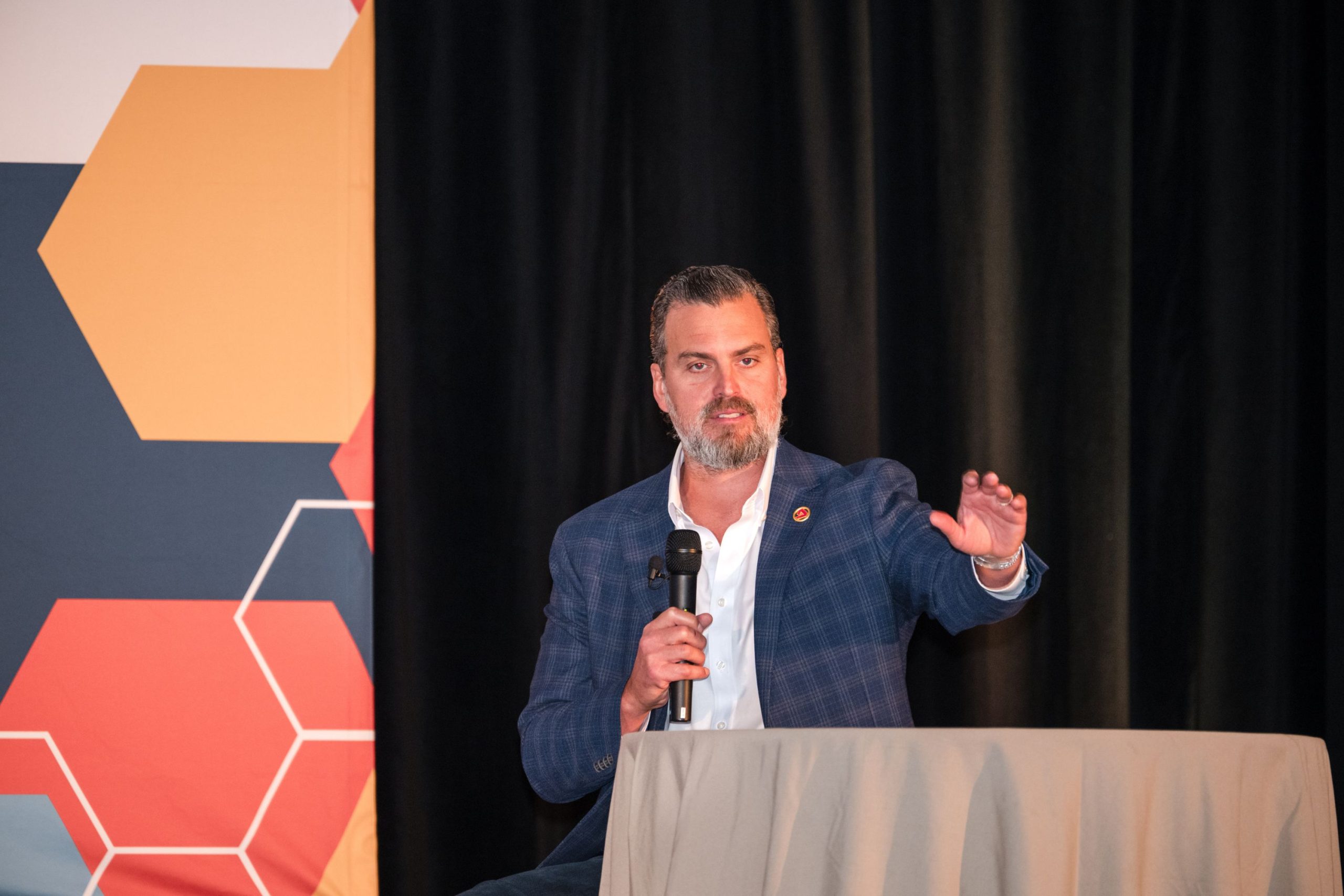
Affiniti was founded in 2022 by Sahil Phadnis and Aaron Bai with a specific mission: bring enterprise-grade financial infrastructure to independently owned small businesses, including contractors and trades operators across the country. Phadnis had already built and led Social Outreach LLC and Pebble before he zeroed in on a gap that seemed obvious once he saw it. Great operators, running real revenue businesses, were still stuck with financial tools built for someone else’s problem. The company closed an $11 million seed round and followed it, just six months later, with a $17 million Series A led by SignalFire, reaching $10 million in annual recurring revenue along the way. That trajectory earned Phadnis and Bai coverage in TechCrunch and Forbes, and it is backed by institutional investors including Mastercard, HSBC, and SignalFire.
Affiniti now serves more than 3,000 businesses nationwide, most of them independently owned contractors and home service operators who share a version of the same complaint. The complaint is rarely about a single bad tool. It is about the accumulated weight of many decent-enough tools that never learned to work together.
Sahil Phadnis, Co-Founder and President of Affiniti, has said the company’s approach comes down to meeting operators where the real friction lives.
“Let’s get to work! Lots of backbone businesses ready for a revival,” said Sahil Phadnis, Co-Founder of Affiniti.
Aaron Bai, Co-Founder and CEO, has echoed that same sense of momentum with a shorter line that has become something of an internal rallying cry: “It’s time to build.” The rest of the leadership bench reads like a company built specifically around contractor finance rather than adapted from a generic small-business template. Stefano Jacobson leads Growth. Bill Feng leads Finance. Tom Sharon serves as Vice President of Operations. Joseph Pabst heads Credit, running a team that specializes exclusively in contractor underwriting so the company can benchmark businesses against similar operators and understand the seasonality and purchasing patterns unique to the trades. Eddie Park, Head of Growth and Marketing, put his own arrival at the company plainly: “I’m joining one of the most exciting startups in Fintech.”

The core complaint Power100 hears from multi-location operators is almost always some version of the same story. Money sits scattered across accounts. Bills come due in one location while cash sits idle in another. Nobody has a single clean view of the business until someone spends a Saturday morning stitching together spreadsheets from twenty different login screens. That is the exact pattern Affiniti‘s expense management software for contractors was designed to interrupt.
One customer, quoted in materials on file with the company, described the shift bluntly: “Affiniti completely changed how we handle our cash. Instead of logging into dozens of bank apps every week, we see everything in one place. It saves us hours of paperwork.” That is not a small claim for an owner who has spent years accepting the weekly accounting loop as an unavoidable cost of running more than one location. It is, instead, a description of what a financial operations platform for home service companies is actually supposed to deliver: one login, one balance sheet view, one place to see what the business is really doing.
Michael Mattioni, a customer referenced in testimonials on file, put the value in more concrete terms. “Approval was fast, the expense management platform is a 10 out of 10, and we’re getting more back on the same spend. It’s little effort for a lot of hands-off gain.” That combination, fast approval paired with low ongoing effort, is what separates a platform built for contractors from a generic corporate tool retrofitted for the trades.
Marcus, the Cincinnati-based operator managing more than 20 pharmacy locations, is a useful stand-in for a much wider group of multi-location contractors. His problem was not unique to pharmacies. Any operator running several locations, several franchises, or several legal entities under one ownership structure runs into the same wall. Twenty banking portals means twenty different places balances can hide. It means twenty different places a bill can slip through unpaid while a sister account sits flush with cash that nobody moved in time.
Consolidating that structure onto one platform does something simple but significant. It turns twenty separate financial pictures into one. An owner can see, at a glance, where cash actually sits across every entity rather than reconstructing that picture manually every week. This is the difference between running a business and administering twenty small ones that happen to share a name.
For an owner running one location with clean books, a consultation may feel unnecessary. For an owner managing several locations, several entities, or a growing crew count, the calculus changes fast. Should I book a consultation with Affiniti is really a question about time. If an owner or their office manager is still spending hours each week logging into separate bank portals to reconcile balances across locations, that is hours not spent on hiring, sales, or field operations. A consultation costs an hour. The weekly accounting loop it might replace costs far more than that, every single week, indefinitely.
Affiniti‘s credit team specializes exclusively in contractor underwriting, which means a consultation conversation is grounded in how similar operators in the trades actually run their businesses, not a generic small-business script. That specificity is part of why the company’s product roadmap is shaped through ongoing collaboration with trade associations, an advisory network of HVAC and home service operators, and direct feedback from customers using the platform daily.
How quickly will I see results with Affiniti is the second question most operators ask, and the honest answer depends on how fragmented the starting point is. For an operator consolidating two or three accounts, the visibility gains show up almost immediately, often within the first billing cycle. For an operator in Marcus’s position, managing 20-plus separate portals, the heavier lift is the initial consolidation itself. Once that is complete, the ongoing time savings compound weekly rather than one-time. Customers on file describe the change less as a gradual improvement and more as a sudden removal of a task that used to eat an entire morning.
Ryan Bast, another customer referenced in materials on file, described the shift as something closer to a mindset change than a software update. “I never really stopped to think about how I was running the financial side of my business. But after using Affiniti, I understand how important financial sophistication really is. I’m just glad I have this tool in my toolbox now.” That kind of statement tends to come only after the consolidation work is done and the weekly loop has actually stopped.

What questions should I ask Affiniti is worth answering directly, because the right questions separate a serious evaluation from a rushed one. An operator managing multiple entities should ask how the platform handles entity-level reporting versus a consolidated view, since both matter for different reasons. They should ask how card controls and expense categorization work across locations, since automatic categorization is one of the more concrete time-savers cited by current customers. A med spa owner referenced in company materials, a member of the American Med Spa Association (AmSpa), put it this way: “Having an industry-specific card lets us automatically categorize our medical supply purchases without manual tracking.” Contractors evaluating Affiniti should ask a version of that same question about their own material and supply categories.
Operators should also ask how cash-flow forecasting works across a billing cycle that does not look like a typical retail week. One HVAC contractor, a member of the Air Conditioning Contractors of America (ACCA), described the impact this way: “The cash-flow forecasting tool completely changed how we handle our weekend billing cycles. We finally have clarity on our balance before Friday hits.” That is a direct answer to a direct operational problem, and it is the kind of specificity a serious evaluation should demand.
Trade associations occupy a specific place in Affiniti‘s model. The company’s partnerships team has described the reasoning plainly: “50% of America’s GDP comes from Main Street. We’re partnered with the trade associations that represent them.” For multi-location operators, that partnership structure translates into products shaped by people who already understand contractor seasonality rather than a generic financial product stretched to fit.
The company’s own product team frames the mission in similarly direct terms: “Built for the business operators driving America forward: one platform for banking, payments, and financial control.” That single-platform framing is not a slogan detached from the product. It describes, almost literally, what replaces the twenty-login problem Marcus lived with for years.
A Power100 Company Culture Index survey of the company’s employees, based on responses from 85 percent of the team at Affiniti, recorded an Overall Company Culture Index of 72 out of 75, described as Elite Employee Belief, alongside an Employee Performance Reflection of 19 out of 20. Section averages, each scored out of 15, came in at 14.0 for growth, 14.5 for culture, 14.9 for customer experience, 14.1 for community, and 14.3 for trust. Those numbers matter for a fintech company specifically because the product being sold is trust. A contractor moving cash for several locations onto one platform is making a decision about who gets to see the whole financial picture of their business. A culture that scores highest on customer experience, according to 85 percent of the people building the company, is a relevant data point for that decision.
Sophia Smith, Program Director at Affiniti, has pointed to that same internal alignment as a reason the company keeps its product roadmap grounded in daily customer feedback rather than assumptions made from a distance. That discipline shows up downstream in how quickly the company incorporates operator feedback, including feedback from multi-location owners like Marcus, into product changes.
Affiniti‘s work extends well beyond consolidating bank logins. The company’s broader platform includes business banking and treasury management, accounts payable and expense automation, business credit and payments, and cash flow and working capital solutions built specifically for contractor seasonality. Justin Lange, a customer referenced in company materials, connected the card product to something larger than a single feature. “Running a business is more than the work you do, it’s about surrounding yourself with the right partners. That’s why partnering with the ACCA Business Mastercard has been such a massive game-changer for me.” Paul Eddy, another customer on file, framed the same product in terms of protection rather than reward. “With the cashback and all the benefits, it’s a no-brainer. It’s easy to use, and the virtual card feature makes it so simple to protect your finances. To me, it’s just a smart decision.”
Taken together, these pieces form what the product team describes as one platform for banking, payments, and financial control, rather than a patchwork of separate tools an owner has to manage independently.
For an operator still managing separate portals across several locations, the starting point does not need to be complicated. Affiniti works with contractor businesses of varying size, from single-location operators to multi-entity businesses like Marcus’s twenty-plus pharmacy locations, and the onboarding conversation typically begins with a look at how many accounts, cards, and entities currently need to be consolidated. Given the company’s underwriting team specializes exclusively in contractor businesses, the evaluation tends to move faster than a generic small-business banking application. Serving more than 3,000 businesses nationwide gives the company a wide enough base of comparable operators to benchmark a new applicant’s needs against similar businesses in the trades.
Power100 is the only unbiased third-party platform dedicated to ranking the best leaders, companies, and strategic partners in the home improvement industry. It uses a proprietary 5-layer system, researching and analyzing more than 3,600 partners nationwide across workmanship quality, operational reliability, customer satisfaction, innovation, and employee welfare. Financial technology partners such as Affiniti are evaluated on how directly their product solves real contractor problems, including multi-entity cash management for contractor businesses, rather than on marketing claims alone. The system is built to help contractors identify trusted providers with a repeatable track record of results.
Affiniti‘s flagship offering is its financial operations platform for home service companies, which combines business banking and treasury management, accounts payable automation, business credit and payments, and cash flow tools into one login. For operators managing multiple entities or locations, the core value is consolidation: one dashboard replaces what used to require logging into a separate banking portal for every location, eliminating the weekly reconciliation loop many multi-location owners describe as their most time-consuming task.
There is no fixed contract length forcing an operator into a rigid engagement. Because Affiniti‘s underwriting team specializes exclusively in contractor businesses, the platform is configured around each operator’s specific entity structure, whether that means a single location or a multi-entity operation like Marcus’s twenty-plus pharmacy locations. Card controls, expense categorization, and cash flow forecasting are set up around the operator’s actual seasonality and purchasing patterns rather than a one-size-fits-all template.
Yes. Given that Affiniti serves more than 3,000 businesses nationwide with no geographic limitation, onboarding and ongoing account management are built to work remotely from the start. An owner managing locations across several cities does not need an in-person visit to consolidate accounts, set up virtual cards, or connect cash flow forecasting tools. This matters directly for multi-location operators, since the entire premise of consolidating multi-entity cash management for contractor businesses depends on not needing to be physically present at each location’s bank branch.
Most operators consolidating a small number of accounts see visibility improvements within the first billing cycle. Operators coming from a heavily fragmented starting point, similar to Marcus’s twenty separate banking portals, typically need an initial consolidation period before the full time savings show up. After that setup phase, customers on file describe the change as immediate and ongoing: hours previously spent reconciling statements across separate logins are eliminated from the weekly routine rather than gradually reduced.
Should I book a consultation with Affiniti is really a question about time. For an owner running several locations, several entities, or a growing crew count, hours still spent reconciling balances across separate bank portals each week are hours not spent on hiring, sales, or field operations. A consultation costs an hour; the weekly accounting loop it might replace costs far more, indefinitely. Because Affiniti‘s credit team specializes exclusively in contractor underwriting, the conversation is grounded in how similar operators in the trades actually run their businesses.
What questions should I ask Affiniti is worth answering directly. Operators managing multiple entities should ask how the platform handles entity-level reporting versus a consolidated view, how card controls and expense categorization work across locations, and how cash-flow forecasting adapts to a billing cycle that does not look like a typical retail week. Customers on file cite automatic categorization and weekend cash-flow clarity as concrete examples of the kind of specific answers a serious evaluation should demand.
Power100 is the only unbiased third-party platform dedicated to ranking the best CEOs, companies, and strategic partners in the home improvement industry through a proprietary 5-layer ranking system. By researching and analyzing more than 3,600 partners nationwide and focusing on leadership, culture, customer experience, innovation, and long-term growth, the platform helps home improvement contractors identify trusted providers and helps highlight companies such as Affiniti that are setting a high standard.
Membership unlocks every Power100 interview, PowerChat episode, and expert playbook - free for industry leaders.

Power100 is the nation's premier CEO ranking and media platform for the home improvement industry. Using a proprietary 5-layer evaluation system, Power100 identifies and celebrates the top CEOs, companies, and strategic partners driving innovation, customer satisfaction, and leadership excellence across the country.