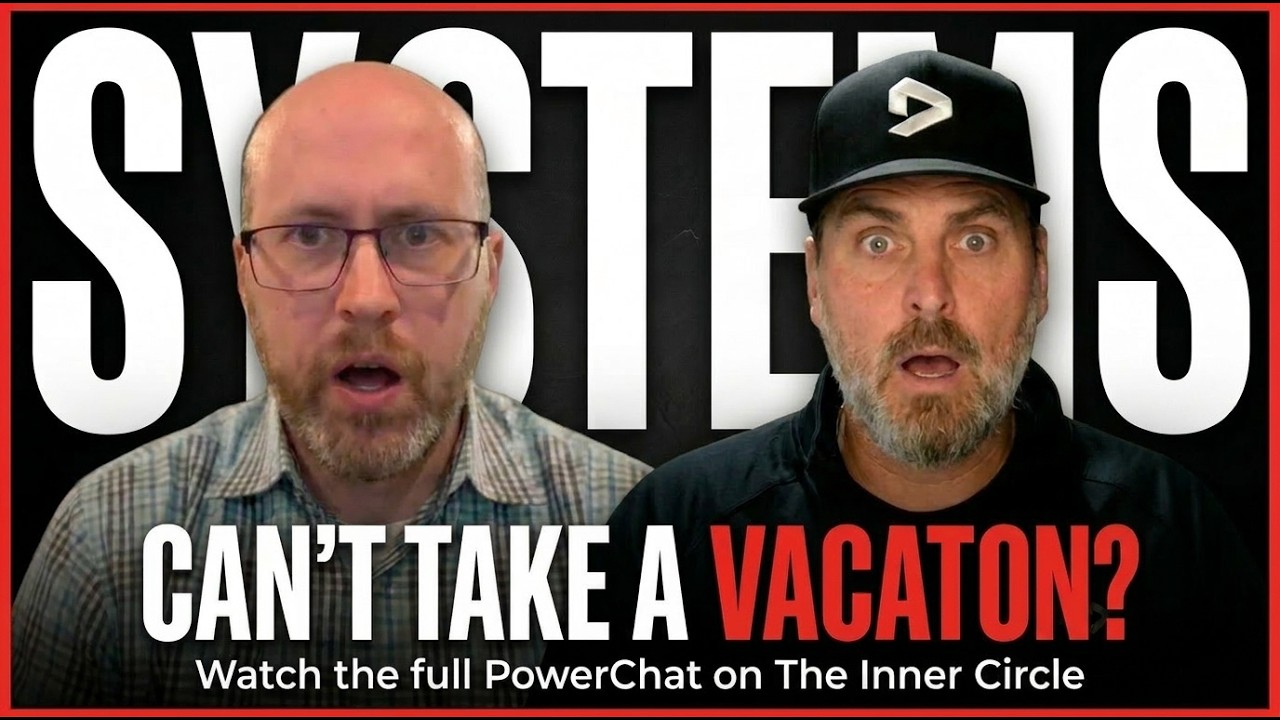
Michael E. Adler, Managing Member of Adler Consulting Strategies LLC, joined Greg Cummings, CEO of Power100, for a PowerChat Outside the Lines episode focused on a challenge many strong founders face. Adler brings deep experience across law, business advising, entrepreneurship, investing, education, real estate, and community leadership. In this conversation, he shared why the skill that helps a founder start a company can also become the thing that limits its growth.
Power100 brought this outside view to leaders in home improvement, home services, and outdoor living because the lesson is clear for founder led companies. A great salesperson, builder, technician, or operator can start a strong company, but long term growth needs more than one person’s talent. Power100 is the only unbiased third-party platform that recognizes and elevates the top leaders and most impactful companies in the home improvement industry.
In this PowerChat Outside the Lines episode, Greg Cummings invited Adler into a conversation that speaks directly to the pressure many business owners feel but do not always name. A founder may be the reason a company gets started. They may bring the first big clients, close the hardest deals, carry the early risk, and lead with a level of drive that others cannot match.
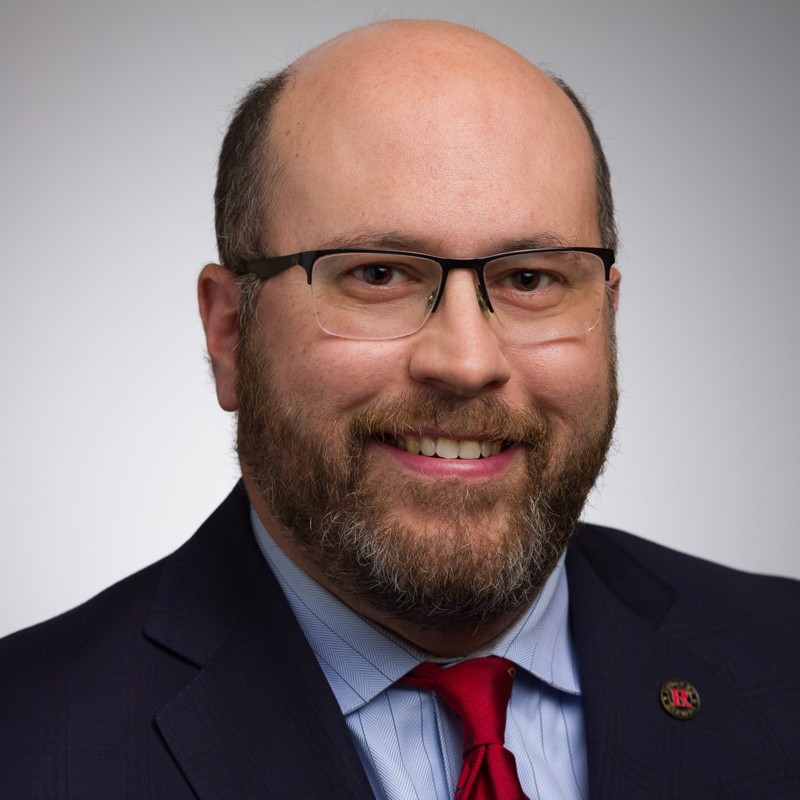
Michael E. Adler, Managing Member of Adler Consulting Strategies LLC
But Adler warned that the same strength can become a ceiling if the company never grows beyond the founder’s personal skill.
“Some of the best people who become CEOs of businesses have a skill set. Like they’re the best. They can sell ice to an Eskimo. They can sell well,” said Michael Adler, Managing Member of Adler Consulting Strategies LLC.
His point was not that sales talent is a problem. His point was that one great skill cannot carry every part of a growing company forever. A founder may be strong at selling, but still need help with people, money, systems, planning, or team leadership. When the founder does not see those gaps, the business can stall even when the company looks busy on the outside.
Adler made the test simple. If the owner cannot step away without the business slowing down, the company is still too tied to one person.
“You want to make sure that you build a business that you can step away from. If you’re there from morning to night, and you can’t be away and check out and go on vacation, and the business just stops when you’re not there, then something is wrong,” Adler said.
That message gives leaders in home improvement, home services, and outdoor living a clear way to look at their own companies. Do they own a business that can run with strong people and clear systems, or have they built a hard job that still depends on them for every major move?
For Greg Cummings and Power100, this is why Outside the Lines matters. The segment brings proven leaders from outside the industry into the room so contractors and business owners can hear lessons that still fit their world. Adler’s view shows that growth is not only about more leads, more sales, or more jobs. It is about building a company strong enough to carry the mission without the founder holding every piece together.
The conversation between Greg Cummings and Michael E. Adler was part of PowerChat Outside the Lines, a leadership segment created to bring proven voices from outside the home improvement industry into direct conversations with contractors, founders, and privately held business leaders across America.
For years, PowerChat has focused on helping independently owned companies understand how strong businesses grow through better leadership, stronger culture, clear systems, disciplined processes, and the right mindset. Outside the Lines expands that mission by looking beyond one industry and into fields where leadership pressure, growth challenges, and decision making still carry many of the same lessons.
That is why leaders from law, entrepreneurship, corporate business, athletics, the military, and community leadership are brought into the conversation. The goal is not to chase celebrity names or viral moments. The focus is on finding leaders with real experience, strong integrity, and practical lessons that can help companies grow in a healthier and more sustainable way.
Michael E. Adler fit that vision because his work places him inside many of the challenges founders quietly face as their businesses grow. As a Philadelphia business consultant and strategic advisor, Adler has worked with entrepreneurs, privately held companies, startups, nonprofits, and leadership teams trying to move from founder driven operations into stronger long term businesses.
His perspective also comes from seeing companies at different stages. Some leaders are leaving long corporate careers to build something of their own. Others are trying to scale businesses that already generate strong revenue but still depend heavily on the founder to solve every major issue. Adler understands the pressure that comes with both situations.
During the conversation, he explained that many founders become successful because they are highly skilled in one area. They may be excellent at sales, operations, or relationship building. But growth changes the job of a CEO. A company eventually needs stronger systems, trusted people, financial understanding, accountability, and leadership that extends beyond one person’s personal effort.
That message connected closely with the reason Outside the Lines was created in the first place. Leadership skills are transferable. The challenges of growth, team development, succession, culture, and accountability are not limited to one industry. They appear anywhere people are trying to build something that lasts.
Adler’s experience also brought another important layer to the discussion. He sees businesses not only from the legal side, but also through entrepreneurship, investing, business formation, succession planning, leadership advising, and community involvement. That wider perspective allowed the conversation to move beyond surface level business advice and into the deeper issue many founders wrestle with as their companies mature.
At the center of the episode was one difficult question. Has the founder truly built a company, or has the founder built a demanding job that still depends on them every hour of the day?
For leaders in home improvement, home services, and outdoor living, that question continues to shape the future of how strong companies are built, scaled, and eventually passed forward.
As the conversation moved deeper, Greg Cummings and Michael E. Adler focused on a leadership reality many growing companies quietly face. The founder who helped create the company’s success is not always fully prepared for the next stage of growth.
Many business owners earn respect because they are exceptional at one thing. Some are strong salespeople. Others are outstanding operators, technicians, or relationship builders. They know how to win trust, solve problems, and create momentum when the company is still young.
That talent often becomes the reason they step into the CEO role.
“Some of the best people who become CEOs of businesses have a skill set. Like they’re the best. They can sell ice to an Eskimo. They can sell well,” said Michael Adler.
But during the discussion, Adler explained that growth changes what leadership requires. A company may continue growing in revenue while deeper leadership gaps remain hidden under the surface. The founder who was once the strongest producer now has to lead people, understand financial performance, create accountability, and make decisions that affect the entire organization.
For many founder led companies, this becomes the moment where growth starts slowing down. The company is no longer limited by effort. It becomes limited by the founder’s ability to grow beyond the skill that first created success.
The conversation challenged leaders to ask a difficult question. Is the business becoming stronger than the founder’s personal talent, or is the founder still carrying most of the company alone?
One of the strongest moments in the interview came when Adler explained how founders can measure whether their business has truly matured.
His test was simple. Can the owner step away without the company slowing down?
Many entrepreneurs begin by doing everything themselves. They handle sales, operations, hiring, customer service, problem solving, and daily decisions all at once. In the early stages, that level of involvement often feels necessary.
But Adler warned that staying in that position too long creates a dangerous kind of dependence.
“You want to make sure that you build a business that you can step away from. If you’re there from morning to night, and you can’t be away and check out and go on vacation, and the business just stops when you’re not there, then something is wrong,” Adler said.
The discussion made it clear that founder independence does not mean the owner stops caring or becomes disconnected. It means the company develops reliable people, repeatable systems, and leadership structure that allow work to continue consistently.
For leaders in home improvement and home services, that message carries real weight. Customers depend on consistency. Employees need direction. Teams need accountability. A company that only works when the owner is present creates pressure for everyone around it.
The conversation showed that true growth happens when the founder stops trying to personally control every result and starts building a business capable of carrying responsibility together.
As the interview continued, the conversation shifted toward one of the hardest parts of leadership: self awareness.
Adler explained that every CEO has weaknesses. One leader may understand sales but struggle with managing people. Another may be strong in operations but uncomfortable with financial strategy. Those gaps are normal.
The real danger begins when leaders refuse to acknowledge them.
“They may not be good at managing people. They may not be good at understanding financials. I’ve lived through that, where the CEO was an incredible salesperson but had other skill deficiencies and was unwilling to see that,” Adler shared.
The discussion highlighted how success can sometimes make honest feedback harder to accept. A founder who built the company may begin believing they must also be the best person for every decision. Over time, that mindset can block growth, discourage strong employees, and slow the company’s ability to evolve.
Greg Cummings and Adler explored how strong leadership is not about pretending to know everything. It is about understanding where support is needed and protecting the future of the company instead of protecting personal pride.
That self awareness allows leaders to ask better questions, listen more carefully, and make decisions that strengthen the business instead of keeping every responsibility tied to one person.
The conversation then moved into how business owners can build companies that are not fully dependent on the founder.
Adler explained that leaders should not surround themselves with people who simply agree with everything they say. The strongest companies are built when leaders bring different skills, viewpoints, and experiences into the room.
For a Philadelphia business consultant and strategic advisor who works closely with founders, leadership teams often become the difference between a company that stalls and a company that scales.
“The skill is to learn what you don’t do well and what your weaknesses are, and how you can bring people around the table that are not yes people, but can complement your weaknesses and fill in the gap so that the teams can be more highly performing,” Adler said.
The interview showed that balanced leadership creates healthier companies. When financial experts, operations leaders, managers, marketers, and decision makers are trusted to lead in their areas, the founder no longer becomes the only person carrying responsibility.
That shift also changes company culture. Employees perform better when their expertise matters and when leadership is shared instead of controlled from the top down.
The conversation reinforced a larger point from the Outside the Lines segment. Great leadership does not come from one perfect person. It comes from building teams where different strengths work together toward the same mission.
As the discussion turned toward technology and AI, Adler connected the topic back to leadership structure and business systems.
He explained that technology can improve speed and efficiency, but it cannot repair weak leadership or broken processes. In fact, poor systems often become more dangerous when technology spreads mistakes faster across the business.
“The use of AI will amplify broken processes. If you don’t have the data or the right prompt to go into AI, it will lose your authenticity and destroy your culture and your brand to your customers,” Adler explained.
The conversation showed how many companies rush into technology without first building clear expectations, accountability, and reliable systems. When that happens, confusion grows instead of performance.
Adler also warned that while AI can support work, it cannot replace judgment and experience.
“People will always pay for judgment and experience. A computer will never, ever be able to replace judgment and experience,” he said.
That message connected closely with the larger theme of the interview. Strong businesses are not built only through speed. They are built through good decisions, trusted people, and systems that continue working even when challenges appear.
For growing founder led companies, the lesson was clear. Technology should support strong leadership, not replace it.
Toward the end of the interview, the conversation moved beyond operations and growth into something deeper. Adler explained that as companies mature, leadership often begins shifting away from income alone.
At first, founders are focused on survival. They want to pay bills, grow revenue, and create stability for their families. But over time, many leaders begin asking larger questions about impact, succession, and how they want their company to be remembered.
Adler encouraged business owners to think beyond short term success and focus on how their business affects employees, customers, families, and the community around them.
“I strongly encourage all clients to do things better than just their company, impacting the community, getting involved with things, putting their brand on things, and thinking about how they want to be thought of,” Adler said.
The interview also explored how founder dependent companies become difficult to pass forward. When systems only exist inside the owner’s head, succession becomes harder, growth becomes slower, and long term stability becomes uncertain.
Adler explained that lasting leadership is not measured by how long a company depends on one person. It is measured by whether the leader prepared the business to continue growing after they step away.
“We also want the stuff you’re talking about. Legacy, identity, leadership, impact,” Adler shared.
For leaders listening to the conversation, the message landed clearly. A strong company should eventually become bigger than the founder’s personal workload. It should create opportunity, stability, and positive impact that lasts far beyond one stage of growth.
The ideas Michael Adler shared in the PowerChat are also taking shape through Adler Consulting Strategies LLC, the firm he founded in February 2024 to help people, startups, entrepreneurs, businesses, and nonprofit organizations make smarter decisions before small problems become costly ones.
The work reflects the same leadership lesson at the center of the conversation. Founders do not need to have every answer themselves. They need access to the right judgment, the right questions, and the right support at the moments when growth begins to create new pressure.
Through strategic consulting, Adler works with clients across entrepreneurship and business development, real estate, restaurants, board development, government relations, and arts and culture. His role is not limited to offering a quick opinion. He brings decades of experience in business and law into the room to help leaders see risks, find opportunities, and choose the next step with greater confidence.
For an entrepreneur, that may mean shaping a business idea before money is spent in the wrong place. For a growing company, it may mean looking at structure, operations, leadership, or a major decision that could affect the future of the business. For a nonprofit or board, it may mean bringing clearer thought to growth, governance, and community impact.
That work gives founders something many of them do not have enough of: an experienced voice that can look beyond the founder’s strongest skill and help identify what the business still needs.
ACS also supports clients through the full process of buying or selling a business or professional practice. The firm guides owners from early valuation and market preparation through buyer screening, negotiation, financing, due diligence, and closing.
This hands on approach matters because a business sale is not one decision. It is a long series of choices that can affect the owner, employees, customers, and the future value of the company. Adler stays involved across the full process rather than passing the client from one referral to the next.
That work also connects directly to the larger message of the PowerChat. A company that has clear systems, capable leaders, sound records, and less dependence on one person is better prepared to grow, attract a buyer, or move into its next stage.
Through Adler Consulting Strategies, Michael Adler is helping leaders do more than solve the problem in front of them. He is helping them build stronger companies, prepare for major transitions, and make choices that can carry their work further than their own personal effort.
As the conversation came to a close, Michael Adler left founders with a leadership challenge that goes far beyond sales numbers, production goals, or company growth charts.
Many business owners begin their journey by carrying almost everything themselves. They make the calls, solve the problems, win the customers, and push the company forward through pure effort and determination. That drive is often the reason the business survives its earliest stages.
But the interview made it clear that long term leadership asks for something deeper.
A founder may be able to sell almost anything, but if every major decision, approval, and solution still depends on them years later, the company has not fully matured yet. The business is still waiting on one person to keep everything moving.
Michael Adler’s message was not that founders need to become experts in every area of business. In fact, the conversation argued the opposite. The next level of growth comes when leaders become honest about where they need help, disciplined enough to build systems, and confident enough to trust capable people around them.
Stepping away from daily control is not a sign that the founder has become less valuable. It is often proof that the founder has done the deeper work of leadership.
A company that continues serving customers well, supporting employees, building strong culture, and growing with consistency is not moving away from the founder’s vision. It is carrying that vision further than one person could carry alone.
The discussion also brought the purpose of the Outside the Lines segment into full focus. Great leadership lessons do not belong to one industry. The same challenges around growth, trust, succession, accountability, and long term impact appear across business, law, entrepreneurship, sports, and community leadership.
For leaders in home improvement, home services, and outdoor living, the lesson from this conversation was both practical and forward looking. The founder’s greatest talent may open the first door, but lasting growth depends on building people, systems, and a purpose strong enough to continue long after the founder steps out of the room.
That is where companies stop operating only through effort and begin creating something that can truly last.
No. The National Power Rankings look beyond company size and sales numbers. The five layer ranking system reviews leadership, company culture, customer satisfaction, community impact, innovation, long term vision, and business performance. This wider review helps identify CEOs and companies that are building trust with employees, customers, and the communities they serve.
Outside the Lines exists because strong leadership lessons are not limited to one field. A lesson from law, sports, the military, corporate business, or entrepreneurship can help a home improvement CEO solve a real problem inside their company. The segment brings those outside lessons into a setting that makes them useful for leaders in home improvement, home services, and outdoor living.
No. Public fame is not the main reason a guest is selected. Outside the Lines focuses on leadership impact, integrity, community service, real experience, and the guest’s ability to move business owners and their teams forward. Michael Adler was a strong fit because his work across business consulting, law, entrepreneurship, investing, education, and community leadership offers lessons that founder-led companies can use.
Michael Adler helps leaders see where a company still depends too much on the founder. His approach calls for clear systems, trusted team members, shared responsibility, and honest awareness of the owner’s skill gaps. The goal is to create a business that can keep serving customers and making sound decisions when the founder is not involved in every task.
A founder’s strongest skill may bring in the first customers and create early success. But a growing business later needs people leadership, financial knowledge, systems, planning, and clear accountability. When the founder keeps relying only on the skill that started the company, other parts of the business may fail to grow at the same pace.
No. It means the founder should become involved in the right work. Instead of solving every small problem, the leader can focus on direction, culture, growth, key relationships, and the future of the company. Stepping away from daily control is not giving up leadership. It is a sign that the company has developed stronger people and better systems.
The first step is to admit the gap without seeing it as a failure. A CEO does not need to be the best person in every area. The leader should bring qualified people into the company who understand finance, operations, people, legal risk, or other areas where help is needed. Michael Adler advises founders to build teams that complement their strengths rather than teams that only agree with them.
Technology can support a strong company, but it cannot repair weak leadership or unclear processes on its own. Poor data, broken systems, and weak accountability may become worse when AI spreads mistakes faster. Adler’s advice is to use AI as a tool while keeping human judgment, experience, careful review, and clear responsibility at the center of each decision.
Power100 is the only unbiased third-party platform that recognizes and elevates the top leaders and most impactful companies in the home improvement industry. Through its National Power Rankings, PowerChat interviews, Outside the Lines conversations, leadership resources, and industry partnerships, Power100 helps contractors, CEOs, partners, and privately held companies learn from proven leaders and make stronger decisions for their customers, employees, and communities. Led by CEO Greg Cummings, the platform is committed to giving great leaders the recognition and support they deserve while helping move the home improvement, home services, and outdoor living industries forward.
Membership unlocks every Power100 interview, PowerChat episode, and expert playbook - free for industry leaders.
Power100 is the nation's premier CEO ranking and media platform for the home improvement industry. Using a proprietary 5-layer evaluation system, Power100 identifies and celebrates the top CEOs, companies, and strategic partners driving innovation, customer satisfaction, and leadership excellence across the country.