
Home improvement companies face a hard growth problem. A sales team can post a strong close rate and still miss many homeowners who never wanted to enter that sales process in the first place. As buying habits change, contractors must think beyond how well they close the people already sitting at the table.
Hover is helping contractors respond to that shift by bringing property measurements, 3D design, estimates, and proposals into a more connected experience. Its platform has been used to scan more than 10 million homes and is trusted by more than 300,000 construction professionals. Through tools such as Hover contractor estimating software, the company helps roofing contractors, siding contractors, exterior remodelers, and other home improvement professionals move from property data to a clear estimate and visual proposal with fewer steps.
That changing sales experience became a key part of a PowerChat conversation between Greg Cummings, CEO of Power100, and Matt Lewis, Chief Revenue Officer at Hover. Their discussion looked beyond the normal question of how contractors can close more appointments. Instead, it explored the homeowners who may never enter a sales process built 20 or 30 years ago, and what that could mean for the next stage of growth in home improvement.
Power100 is the only unbiased third-party platform that recognizes and elevates the top leaders and most impactful companies in the home improvement industry. Through conversations like PowerChat, the platform brings forward ideas that can help industry leaders better understand where homeowners are going and how businesses may need to change with them. Matt’s comments made one issue clear: a close rate can show who bought, but it cannot show every customer who chose not to enter the process at all.
One of the most watched numbers in home improvement is the close rate. Companies study how many appointments become signed contracts. Sales leaders coach teams around it. Branches compare it. Owners use it to judge whether the sales process is working.
But there is a problem hidden inside that number.
A close rate can only measure the people who entered the process.
It cannot measure the homeowner who visited a website, looked at reviews, researched the project, saw how the company expected them to buy, and quietly decided, “That is not how I want to buy.”
That homeowner may never book the appointment. Another may cancel before the sales rep arrives. Another may choose a company that gives them more ways to learn, explore, compare, and build trust before sitting down for a sales conversation.
None of those homeowners show up as lost deals inside a normal close rate.
That is the blind spot Matt Lewis brought into focus during his conversation with Greg Cummings. Matt did not argue that the sales systems that built many successful home improvement companies no longer work. In fact, he pointed out that many large companies are still winning with them. His concern was about the part of the market that those systems may never touch.
“If they’re getting people now that still want to buy in an in-home sales experience, how many people are you losing out that don’t necessarily want that exact experience?” Matt Lewis, Chief Revenue Officer at Hover, said during the PowerChat.
That question changes the way a contractor can look at growth.
Instead of asking only, “How do we close more of the appointments we already have?” leaders can also ask, “Who are we not reaching at all?”
Matt pushed that idea further when he challenged companies to look at how long some of their sales processes have been in place.
“It’s not about the conversion rates of the people that are willing to go through the process you set up 30 years ago, 20 years ago,” Matt said. “It’s about how do you address this group of people that you’re not even seeing right now.”
The point is not to throw away every part of the in-home sales process. It is important to understand that the homeowner has changed while many parts of the buying journey have stayed the same.
Today, homeowners can research a contractor before making contact. They can read reviews, compare products, study materials, look at price ranges, learn how a project works, and use tools such as ChatGPT before an appointment. Matt said this next generation of homeowners is coming into the buying process with a stronger need for transparency, clear options, simple information, and less anxiety.
That creates a larger opportunity than one more point added to a close rate.
A contractor can begin thinking about how a homeowner finds the company, what they see before booking, what information they can explore on their own, how the company earns trust before the appointment, what happens during the visit, and how the relationship continues if the homeowner is not ready to sign that day.
Matt sees this as more than a change in sales style. He connected it directly to business growth and margin, calling it one of the “next frontier” opportunities for home improvement companies. He also noted that businesses already doing this well are beginning to win what he called their “unfair share.”
The lesson for home improvement leaders is simple.
A strong close rate still matters.
But it only tells the story of the homeowners who entered the room.
The next stage of growth may depend on understanding everyone who never did.
During the PowerChat conversation with Greg Cummings, Matt Lewis, Chief Revenue Officer at Hover, moved the sales discussion beyond a number every home improvement leader knows well: the close rate. His point was not that conversion no longer matters. His point was that conversion only shows what happens after a homeowner agrees to enter the sales process. It says very little about the people who never book, cancel before the visit, choose another path, or decide that the buying experience is not right for them. As homeowners become more informed and more comfortable using digital tools before talking with a contractor, Matt believes the next growth opportunity is to understand those missing buyers and build a sales journey that gives more people a reason to enter.

Matt Lewis, Chief Revenue Officer at Hover
That shift reaches beyond sales training. It touches how contractors market, build trust, use technology, present choices, follow up, and stay connected with homeowners. Matt sees the companies that learn how to serve this wider group as the ones that can expand their funnel and find new growth without depending only on squeezing more deals from the same group of buyers.
Close rate has long been one of the clearest ways to judge sales performance. If ten homeowners sit with a sales rep and five sign, the company can study that result, coach around it, and work to improve it.
Matt Lewis asks leaders to look one step earlier.
What happened to the homeowner who never sat down with the rep?
That customer does not appear as a lost sale because there was never an appointment to lose. The homeowner may have wanted to research first. They may have wanted more information online. They may have wanted to see products or understand the process before giving up several hours for an in-home visit. They may simply have preferred a different way to buy.
Matt put the question plainly.
“How many people are you losing out that don’t necessarily want that exact experience?” Matt Lewis, Chief Revenue Officer at Hover, said.
That question separates conversion from total market opportunity. A company can become very good at closing people who accept its current process, while another group of homeowners remains almost invisible.
Matt believes that the hidden group deserves more attention.
“It’s not about the conversion rates of the people that are willing to go through the process you set up 30 years ago, 20 years ago,” Matt said. “It’s about how do you address this group of people that you’re not even seeing right now?”
That is where home improvement sales technology can take on a wider role. It can help a contractor create more ways for homeowners to learn, explore, engage, and move toward a decision. The goal is not only to close more people after they enter the funnel. It is to make the funnel easier for more people to enter.
Matt connected that opportunity directly to business results. He said reaching these buyers can affect both margin and added growth, and he described it as one of the next frontiers for home improvement companies. The companies doing it well, he said, are already beginning to win their “unfair share.”
The hard part about changing a successful sales process is simple.
It is successful.
Matt did not dismiss the in-home systems that helped build some of the biggest companies in home improvement. He pointed out that many of those systems are still producing strong results today.
That creates a harder leadership problem than fixing something that is clearly broken.
Matt described large organizations that know the customer is changing, know they need to become more digital, and know younger buyers may expect another kind of experience. Yet those same businesses are still winning with a proven in-home process.
“We know that we need to change how we do this approach, but it’s very hard because we’re stuck in this loop where we’re still winning with these 10 steps in home sales process,” Matt said. “But we know we need to be more digital friendly. We know we need to meet the next generation of consumers where they’re at.”
That is the danger of waiting for an old model to fail before building the next one.
The market can move while the current system still looks healthy.
Homeowners now research differently. They compare companies differently. They use reviews, websites, search, and AI tools to learn before making contact. Some still want the full in-home sales experience. Others may want to move through the buying process in a different way.
The question for leaders is no longer only whether the current process works.
It is whether it works for enough of tomorrow’s customers.
That is an important part of the broader home improvement technology perspective. The future does not require throwing away everything that built the business. It requires knowing when to keep what works and when to create another path for the buyer who expects something different.
Matt then brought the conversation to something much more personal than technology.
Anxiety.
He pointed to services like Uber and Lyft as examples of companies that changed an experience by removing uncertainty. Before those apps became common, getting a ride could mean calling a taxi company, wondering when the car would arrive, and dealing with payment at the end.
Technology made the process easier to understand.
Matt believes homeowners increasingly carry that same expectation into other parts of their lives.
“I think that we’re moving into a world where the next generation wants to not have anxiety in this process of buying,” Matt said.
That matters even more in home improvement because the stakes are much higher than calling a ride.
A roof, siding project, window replacement, or major exterior remodel can cost a homeowner a large amount of money. They may make that kind of purchase only a few times in their life. They are choosing a contractor, products, warranties, colors, materials, and a final look for the place they call home.
There is already enough uncertainty in that decision.
The sales process does not need to add more.
This is where tools such as 3D home visualization software for exterior remodeling contractors can support a different kind of conversation. When homeowners can see choices and better understand what they may be buying, technology can help make the project feel less unknown. Hover currently brings design, measurements, and estimating into a connected visual workspace for construction professionals.
For contractors, that easier experience can become a point of difference.
Two companies may sell similar products. Both may have trained sales teams. Both may do good work. But if one company makes the path easier to understand, that experience can help it reach homeowners who may have stayed away from the harder process.
Reducing anxiety is therefore not just about making the customer feel better.
It can expand who is willing to engage with the company in the first place.
Once a contractor reaches a more informed homeowner, Matt believes another part of the buying experience becomes critical.
Transparency.
Today’s homeowner may already know far more before an appointment than buyers did years ago. Matt pointed to tools such as ChatGPT and Claude, along with search and review platforms, as places consumers can use to learn about prices, materials, project steps, and companies before meeting a salesperson.
That changes the conversation inside the home.
Matt described the balance clearly.
“They want transparency and they want options. At the same time, they want simple,” he said.
Those ideas can sound like they pull in opposite directions.
Give people too little information, and they may not trust the answer.
Give them too much information, and the decision can become harder.
Matt believes the modern contractor has to find the middle.
The homeowner should understand how the estimate was reached. They should know what choices are available. They should be able to understand what they are paying for and why one option may fit their home better than another.
That is very different from simply placing one number in front of someone and asking them to sign.
Matt said a modern trust-building experience means explaining the estimate, explaining the parts behind it, and walking through the choices available for the home. At the same time, the final decision still needs to feel clear and simple.
That is also where Hover contractor estimating software fits naturally into the sales conversation. Hover can connect property measurements and 3D design choices with estimates, helping contractors move from what is on the home to what the project may require without rebuilding the information by hand.
The larger lesson is not about showing the homeowner more technology.
It is about using better information to make the decision easier to trust.
If contractors want to reach homeowners who do not fit one fixed buying path, Matt believes the sales journey has to become larger than the appointment itself.
That starts before the rep arrives.
Matt said homeowners are already researching through AI tools, Google, reviews, and company websites. They may want to explore products, warranties, project choices, and what different options could look like in their home before they ever meet someone face to face.
That early research is not separate from the sale.
It is part of the sale.
A contractor that understands this can begin building trust before anyone knocks on the door.
Matt also made clear that the human relationship still matters. He believes many homeowners will continue to value meeting the person who represents the company.
Technology does not have to replace that meeting.
It can make the meeting stronger.
But Matt’s customer journey does not stop when the rep leaves the home, either.
He pointed to another gap that many companies still have.
Follow up.
A homeowner may like the company and still not buy on the first visit. If there is no clear digital process for staying connected, much of the work done during the appointment can quickly fade.
Matt also noted that some long-standing contractors have years of customer information sitting in their databases with very little contact after the original project.
That is lost relationship value.
“The process needs to be not about just the one call close, not about just the in-home appointment,” Matt said. “It needs to start with digital touch points before that and it needs to follow up with digital touch points after that.”
That may be the clearest picture of where Matt believes home improvement sales are going.
Digital contact before the appointment.
Human trust during the conversation.
Digital connection after the visit.
The contractor no longer asks every homeowner to fit one sales process.
The company builds a journey that can meet more homeowners where they already are.
For years, home improvement leaders have worked to improve the numbers they can see. Better leads. Better appointments. Better sales teams. Better close rates.
Those numbers will continue to matter.
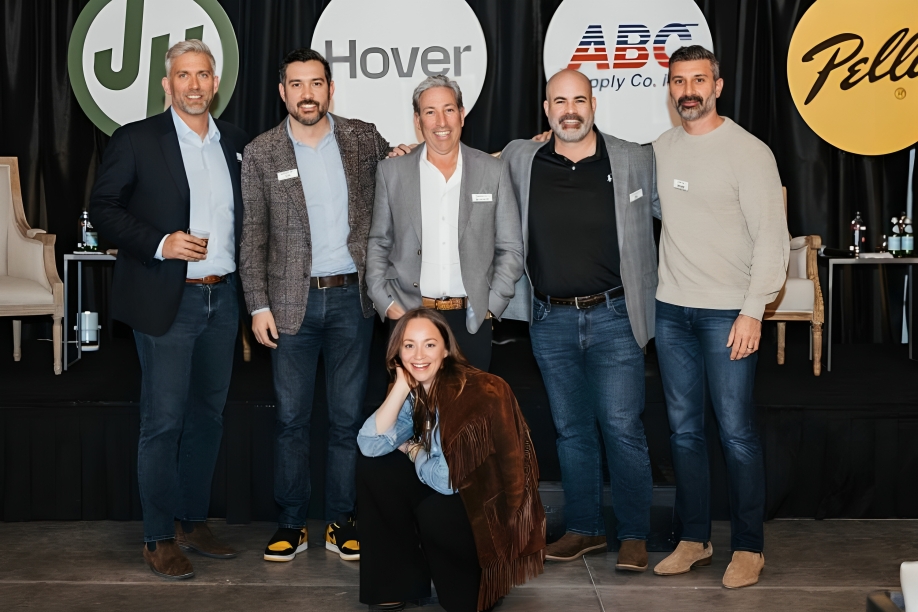
Hover celebrates innovation, collaboration, and the power of partnership at A Night of Innovators, hosted by Hover
But Matt Lewis’s perspective asks leaders to also pay attention to what those numbers cannot show.
A homeowner who never enters the process does not appear as a lost sale. There is no failed appointment to review and no close rate to study. Yet that homeowner may still need the service. They may simply want a different path to making the decision.
That is where the next opportunity begins.
The companies that lead the next era of home improvement may be the ones willing to make the buying experience fit more people instead of asking every homeowner to fit one process. They can keep the value of personal relationships while giving customers more freedom to learn, explore, build trust, and move forward in a way that feels right for them.
This does not mean leaving behind everything that made the industry successful. It means building on that foundation with a clearer view of where the homeowner is going next.
Matt described the need for “another wave of pioneers” who can connect the next generation of consumers with home improvement services. For contractors, that creates an important choice. They can wait until changing buying habits force a new approach, or they can help shape that approach now.
The next great growth story may therefore begin outside the funnel a company already knows how to measure.
It may begin with the homeowner who was interested but never entered.
The homeowner wanted another way to engage.
The homeowner’s sales process yesterday could not be seen.
The next frontier is not only getting better at closing the customers already inside the funnel. It is building a better experience for the customers who have never entered it.
No. Power100 says its National Power Rankings look beyond company size and revenue. The platform uses a five-layer evaluation system that reviews leadership, company culture, customer experience, operational performance, innovation, community impact, and other signs of long-term strength. For its 2026 rankings, Power100 evaluated a national group of more than 7,600 qualified CEOs before recognizing 100 leaders. This means a large company does not earn recognition simply because it produces more revenue. Power100 looks at how the CEO leads, how the company serves customers, and what kind of business the leader has built.
Power100 uses a five-layer proprietary evaluation system instead of asking the public to vote for the most popular leader. The platform says its process combines business data with a review of leadership, culture, customer outcomes, performance, and market reputation. That system helps Power100 compare qualified CEOs using a wider view of company leadership rather than social reach or name recognition alone. The 2026 National Power Rankings apply that process to more than 7,600 qualified leaders nationwide before selecting the final 100.
Hover covers much more than a basic roof measurement. Its roofing platform can capture the roof, walls, soffits, fascia, trim, gutters, downspouts, windows, doors, and other openings. Contractors can then use that property data for design and estimating inside the same broader workflow. Hover also supports siding and other exterior work, which makes Hover roof measurement software for roofing contractors and Hover siding measurement software relevant to companies that want property information to move further into planning and sales instead of stopping with a measurement report.
Because a strong close rate only measures homeowners who agreed to enter that process. Matt Lewis argues that contractors should also think about homeowners they never get the chance to close. Some customers may want to research more before an appointment, use digital tools, see options first, or move through the buying process differently. Matt’s point is not that contractors should abandon a sales process that works. It is that home improvement sales technology can help create more ways for different buyers to engage with the company. That can open opportunities that never appear inside the traditional closed rate.
No. Matt Lewis said he expects many homeowners to continue valuing the chance to meet and engage with the person who represents the contractor. His argument is that the human relationship should sit inside a better-connected buying journey. Digital tools can help homeowners research before the meeting and stay connected afterward. At the same time, the salesperson still plays an important role in building trust and helping the homeowner make a major decision. That balance is central to the Matt Lewis home improvement technology perspective shared during the PowerChat.
It can if the information becomes confusing, which is why Matt Lewis stresses balance. He said the next generation of homeowners wants transparency and options, but also wants the experience to stay simple. That means a contractor does not need to overwhelm someone with every possible choice. Instead, the company can explain how it reached the estimate, show useful options, answer important questions, and make the final decision easier to understand. Matt’s view is that transparency can build trust when the contractor keeps the information clear.
Hover can connect a saved 3D design with estimating. According to Hover, contractors can choose roofing, siding, and finish options within a 3D design, save those choices, and use them to begin a measurement-based estimate. Hover can carry selected materials into the estimate, which reduces repeated data entry and helps sales and production teams work from the same project information. Hover notes that some newer parts of this design to estimate workflow are being released in phases, so availability can vary by account.
Because Matt Lewis sees that unseen group as a possible source of future growth. Contractors can keep working to improve conversion among existing leads, but there is a limit to how much growth can come from serving only people willing to follow one buying path. Matt said companies should think about the consumers they are “not even seeing right now,” and he connected that opportunity to added growth and margin. His larger point is that the next group of industry leaders may gain market share by making it easier for more kinds of homeowners to begin a relationship with their company.
Power100 is the only unbiased third-party platform that recognizes and elevates the top leaders and most impactful companies in the home improvement industry. Led by CEO Greg Cummings, Power100 gives top home improvement leaders a trusted place to share the ideas, systems, lessons, and strategies shaping the future of the industry. Through national rankings, PowerChat interviews, industry insights, and leadership content, Power100 helps contractors learn from proven leaders while giving strong CEOs and companies the recognition they deserve. Its mission is to become the number one external resource for the best exterior remodeling CEOs in the country and to help move the home improvement industry forward through stronger leadership, better customer experiences, and better businesses.
Membership unlocks every Power100 interview, PowerChat episode, and expert playbook - free for industry leaders.
Power100 is the nation's premier CEO ranking and media platform for the home improvement industry. Using a proprietary 5-layer evaluation system, Power100 identifies and celebrates the top CEOs, companies, and strategic partners driving innovation, customer satisfaction, and leadership excellence across the country.