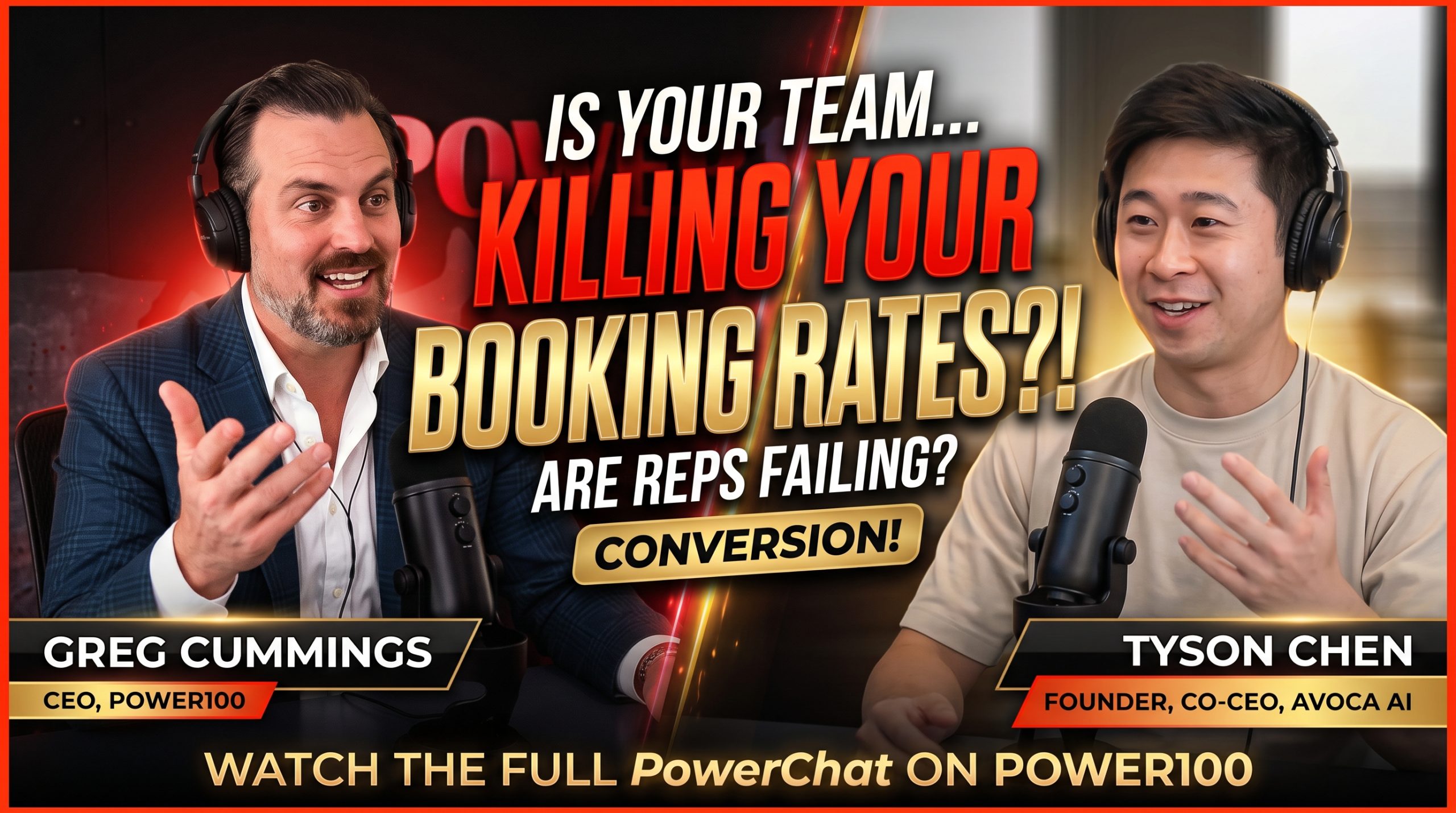
Home service leaders can invest in better scripts, new technology, call scoring, and more training, yet still struggle to improve booking rates. The problem is not always the tool. Sometimes the team does not understand why the process matters. Tyson Chen, Founder and Co-CEO at Avoca AI, believes stronger results begin when CSRs understand how the small actions inside each customer call connect to better outcomes. For companies using AI call-coaching software for home-service CSRs, the real value comes when employees trust the coaching, understand what the score means, and know what they can do better on the next call.
Chen shared that view during a PowerChat with Greg Cummings, CEO of Power100, as they discussed call center culture, coaching, leadership buy-in, and the role AI can play in helping teams improve.
Power100 is the only unbiased third-party platform that recognizes and elevates the top leaders and most impactful companies in the home improvement industry. The conversation showed that better technology can give leaders more data, but real progress begins when the team understands the process and believes that better habits can lead to better booking results.
Many home service companies know the feeling.
A leader rolls out a new system.
The team gets a new script.
Calls begin getting scored.
Managers can see more data than ever before.
But weeks later, the same problems may still show up.
The same steps get skipped.
The same calls fail to book.
The same coaching points keep coming back.
That is where Chen believes leaders need to look beyond the score itself.
“You really need to instill the culture of why doing all the things on the script makes sense,” Chen said.

Tyson Chen, Founder and Co-CEO at Avoca AI
His point is simple.
A CSR may know that a script says what to do.
That does not mean the CSR understands why it matters.
The difference becomes important when leaders want good habits to last.
If an employee sees a script as another rule from management, they may follow it only when someone is watching.
If that same employee understands how the steps help create a better customer conversation and improve the chance of booking the job, the process can begin to feel useful.
That is where coaching starts to change.
The goal is no longer only to tell someone what they did wrong.
The goal is to help them see what stronger performance looks like and why it works.
Chen explained that Avoca can grade calls, but he connected the value of that score directly to employee trust.
“If I do these things, if I get my Avoca score up, then our booking rates are also going to go up,” Chen said.
That idea changes what measurement is supposed to do.
A score should not become a number that hangs over the employee.
It should help create a clear path forward.
The CSR should be able to see what went well.
They should be able to see what needs work.
And most of all, they should understand how changing a small behavior can improve the next customer conversation.
That is where home services call analytics can be especially useful to leaders. Data can show patterns across many calls, but the greatest value comes when managers use those patterns to coach people in ways they can understand and trust.
Chen also makes clear that this starts with leadership.
“Any successful rollout does require buy in,” he said.
Leaders cannot expect a team to believe in a process they have not clearly explained.
They cannot expect employees to trust a score if no one helps them understand what it measures.
And they cannot expect technology alone to create the culture needed for better performance.
That gives this PowerChat a larger lesson for home service companies.
Better booking rates may depend on many small actions during a call.
But getting those actions to happen again and again starts somewhere deeper.
It starts when people understand the reason behind the process.
It grows when coaching feels useful.
And it becomes part of the culture when the team sees that better habits can lead to better results.
During his PowerChat with Greg Cummings, CEO of Power100, Tyson Chen, Founder and Co-CEO at Avoca AI, focused on something that can be easy to miss when companies talk about AI. Technology can measure calls, score performance, and show leaders where problems exist. But the team still has to believe in the process enough to change what happens on the next call. Chen’s view is that stronger booking rates grow when employees understand why the small parts of a customer conversation matter, trust the coaching they receive, and see how better habits can lead to better results.
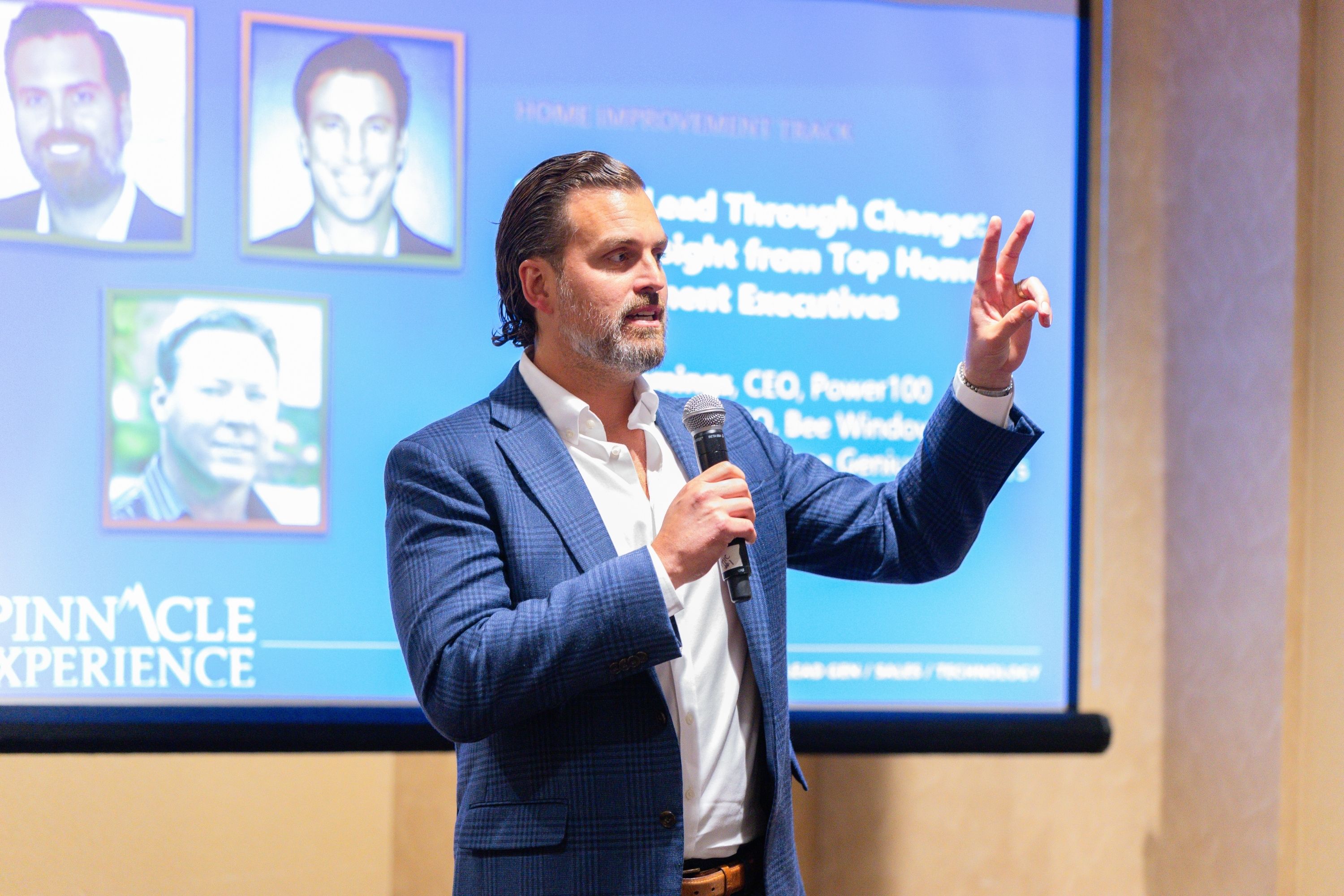
Greg Cummings, CEO of Power100
A strong booking process is often built from actions that look small on their own.
A CSR listens closely.
They ask the right question.
They follow the next step instead of rushing through the call.
They explain what happens next.
They keep the customer moving forward.
Chen points to these details when he talks about “all the little things” teams do to raise booking rates.
“Here are all the little things we do to make our booking rates as high as possible,” Chen said.
The keyword is not only “things.”
It is “we.”
A company cannot build a strong call center around one CSR who happens to be great at the job.
One person may know how to calm a worried homeowner.
Another may naturally know how to ask for the appointment.
But if the rest of the team cannot repeat those same good habits, the company still has a performance gap.
That is why the process matters.
The goal is to take what works and make it easier for more people to do it well.
This is where software that scores contractor customer service calls can help leaders see patterns across more conversations, rather than judging performance based on only a few examples.
When the same good habits appear across hundreds of calls, they begin to affect more than call quality.
They can affect appointments.
They can affect sales opportunities.
They can affect revenue.
The small parts of the conversation begin adding up to something much larger.
A script can tell a CSR what to say.
It cannot make the CSR believe in it.
That difference sits at the center of Chen’s message.
“You really need to instill the culture of why doing all the things on the script makes sense,” Chen said.
A team member who only hears “Follow the script” may treat the process as just another rule.
They may follow it when a manager is listening.
They may skip parts when the day gets busy.
They may change the process because they do not see why each step matters.
Chen argues for a deeper kind of coaching.
Help the employee understand why the question matters.
Show them why a certain step helps the homeowner.
Connect the behavior to the result.
Once that link becomes clear, the script stops feeling like something placed on top of the job.
It begins to feel like something that helps the employee do the job better.
That is where AI call center coaching for home service companies can support a stronger culture. The technology can help show what happened in the call, but leadership still has to explain why the finding matters.
The strongest coaching does not begin with, “You did this wrong.”
It begins with, “Here is why this part matters, and here is what can happen when we do it better.”
That creates a different kind of buy-in.
Employees are no longer being asked to trust a rule because management created it.
They can begin to trust the process because they understand the result it is meant to produce.
Numbers can create visibility.
They do not always create action.
Chen explains that Avoca can grade every call, but he connects the value of that score to something much more practical.
The employee needs to know what the number means.
“If I do these things, if I get my Avoca score up, then our booking rates are also going to go up,” Chen said.
That turns scoring into a learning tool.
A score should not feel like a report card that simply tells an employee whether they passed or failed.
It should point toward the next thing they can improve.
Maybe the CSR missed an important question.
Maybe they moved too quickly.
Maybe they failed to ask for the booking.
Maybe the customer gave a signal that the CSR did not recognize.
With AI software that identifies missed booking opportunities, managers can use real call activity to pinpoint where those gaps occur.
That gives coaching more focus.
Instead of telling the whole team to “sell better,” a manager can help one person work on one clear behavior.
Then they can watch whether that behavior improves.
That creates a much stronger link between data and development.
Score.
Understand.
Improve.
Repeat.
The value of the number comes from what the employee can do differently after seeing it.
Employees rarely take new technology as seriously as leadership does.
Chen makes that clear when he talks about successful implementation.
“Any successful rollout does require buy in,” Chen said.
That buy-in starts at the top.
Leaders need to understand what the system is meant to solve.
They need to know how it fits the company.
They need to explain why the change matters.
And they need to stay involved long enough for the team to see that the rollout is more than another short-term project.
Chen pointed to Rescue Air as an example of that type of involvement.
The company worked with Avoca on ServiceTitan job setup, scheduling rules across business units, and lessons from earlier answering service problems.
That work helped the technology fit real operations.
It also gave the team a stronger reason to trust the system.
The business was not being forced into a process that made no sense for how it already worked.
The process was being shaped around real needs.
That matters for tools such as automated ServiceTitan booking because the value is not only in moving a job into the system.
The value comes from ensuring the booking fits how the contractor actually runs the business.
Leadership sets the tone here.
If leaders understand the tool, use the data, explain the purpose, and coach from it, the team can see that the system exists to help them improve.
If leaders simply install it and walk away, the team may do the same.
Home service companies cannot control every part of the market.
They cannot decide how many competitors will enter their city.
They cannot control the economy.
They cannot force homeowners to spend more.
But they can control how well their team handles the opportunities that reach the business.
That becomes more important as competition rises.
Chen said he has seen booking rates come down across industries as the market has become harder. He believes companies now need stronger sales skills and more discipline at the call center level.
A one-day training session may help for a while.
A strong culture can last much longer.
When the team understands why the process matters, employees are more likely to carry good habits from one call to the next.
When managers coach from real conversations, the lesson becomes easier to connect to daily work.
When employees trust the score, improvement can feel like progress instead of punishment.
That is where CSR booking rates in home services become less about finding one perfect script and more about building a system people can follow every day.
The strongest advantage may not come from having more technology than another contractor.
It may come from building a team that knows how to use the technology well.
Chen’s message brings the idea back to culture.
Good tools can show people where they stand.
Good leaders can help them understand where to go next.
And a strong culture can help the better behavior stay in place after the training meeting ends.
That is what can turn coaching from an event into part of how the company works.
The impact behind Tyson Chen and Avoca AI is showing up in more than company growth. It is also showing up in the attention the business is bringing to an industry that Chen says technology companies have often overlooked.
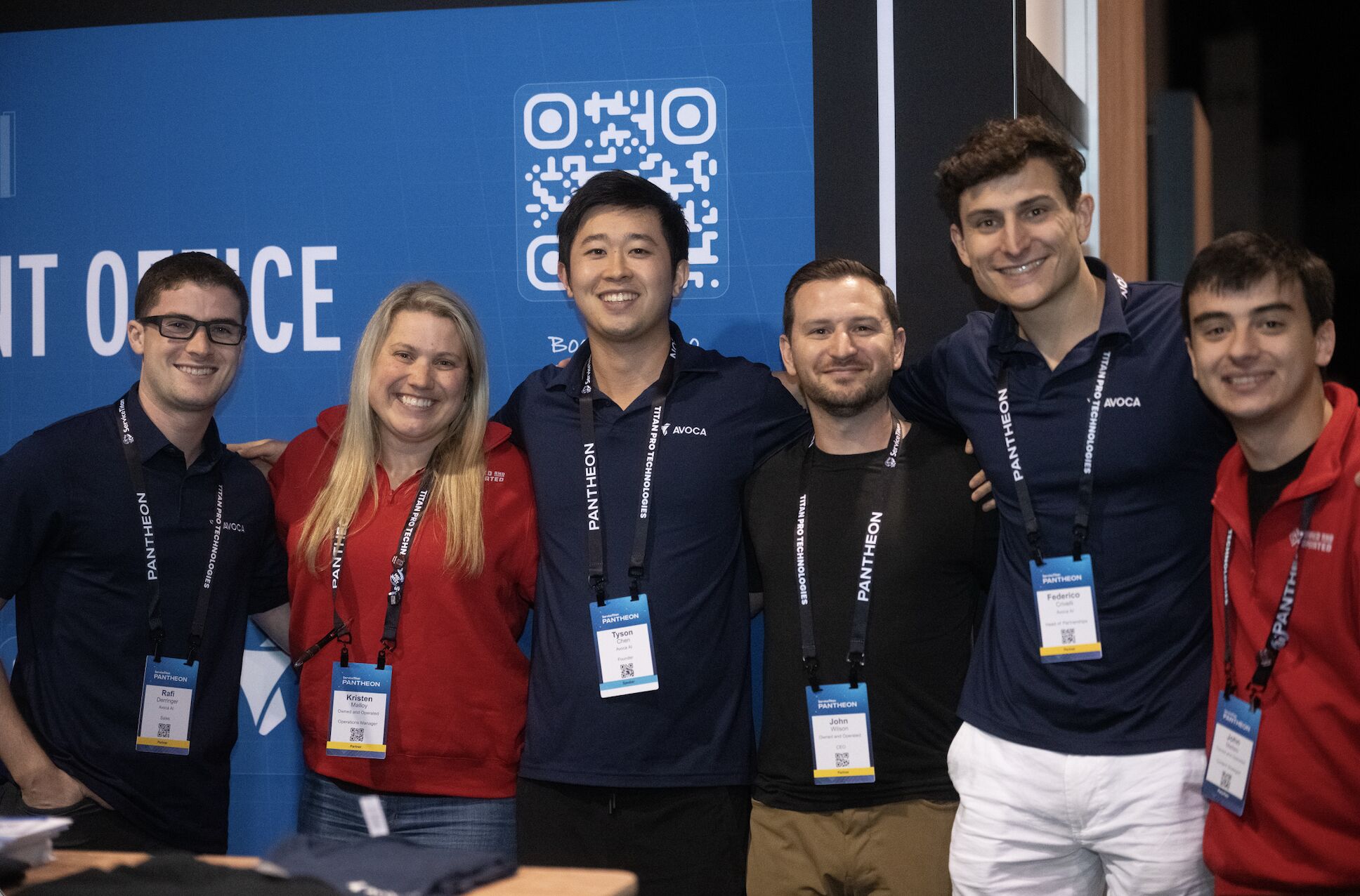
Avoca AI team
That story reached a wider audience in April 2026 when Fortune profiled Avoca and traced its rise from a chance meeting with Rescue Air in Texas to a company valued at $1 billion. Chen told Fortune that Avoca sees itself as building for the physical economy, where service businesses can lose far more than a phone call when a customer cannot get through. He gave the example of a missed HVAC call that could represent a $30,000 or $40,000 install.
That focus on the trades has also helped Avoca attract major investment. In April 2026, the company announced that it had raised more than $125 million at a $1 billion valuation, with its Series B led by Meritech and General Catalyst and its Series A led by Kleiner Perkins. The same announcement said Avoca had passed eight figures in annual recurring revenue in 2025 and was on track to book $1 billion in jobs in 2026.
The company’s path also includes Y Combinator Winter 2023, where Avoca began building around the problem of missed customer demand. Y Combinator now describes Avoca as an AI-powered sales agent for service businesses and lists Tyson Chen among its active founders.
What makes that growth especially relevant to Chen’s PowerChat message is the way Avoca talks about the people behind the numbers.
“Home services is one of the last great underdigitized markets,” Chen said in Avoca’s April 2026 funding announcement. He added that contractors were skeptical of AI at first, but that earning their trust opened the door to much larger opportunities. Avoca’s stated goal is to give service businesses access to the same level of operating power that much larger companies have long enjoyed.
That focus also carries into the way Chen shares ideas with contractors outside the company.
In June 2026, he joined the Owned and Operated Podcast to break down how home service businesses can convert more of the leads they already have instead of only spending more money to create new demand. The conversation covered speed-to-lead, follow-up, booking performance, and ways contractors can improve the return on investment from channels such as Google Local Services Ads, Angi, Yelp, Meta, and Thumbtack.
Chen has also used industry conversations to explain why better technology still needs better people and better habits. In a Rilla Labs conversation published by Avoca, he discussed Avoca’s move into the trades, the cost of missed calls, and why coaching became a larger part of the product after contractors began using AI for after hours and overflow calls.
Together, those milestones tell a bigger story than funding or media attention alone.
Avoca has earned recognition while staying close to a simple problem faced by contractors every day: a homeowner reaches out, and the business has one chance to handle that opportunity well.
That connects directly to Chen’s message about culture.
Technology can become more powerful.
Funding can help a company grow.
Recognition can bring more attention.
But the result still depends on whether people understand the process, trust the tools, and use them in ways that help the customer.
By keeping the trades at the center of its story, sharing practical lessons with operators, and building around problems contractors face every day, Chen and Avoca are helping push AI deeper into the physical economy while keeping the focus on the people who have to make the system work.
The future of call center coaching may depend less on how much data a company can collect and more on what its people do with that data.
Technology can listen to calls.
It can score performance.
It can show leaders where the team is strong and where it needs help.
But a score alone does not create change.
For Tyson Chen, Founder and Co-CEO at Avoca AI, the deeper opportunity is helping people understand what the measurement means and why it matters.
A CSR who sees a score as punishment may resist it.
A CSR who sees that same score as a clear way to improve may respond very differently.
That difference comes down to culture.
Leaders can shape that culture by making coaching useful, clear, and connected to real work. They can use real calls to show what good performance looks like. They can explain why certain habits matter. They can help employees see progress instead of only pointing out mistakes.
That makes improvement feel less like pressure and more like growth.
It also gives AI a healthier role inside the business.
The technology does not have to replace the culture.
It can support it.
It can help leaders see more.
It can help teams learn faster.
And it can make coaching more consistent from one call to the next.
The strongest call centers may not be the ones with the most reports, scores, or dashboards. They may be the ones where every person understands what the information is asking them to do next.
Chen summed up that idea clearly:
“It’s that level of culture and buy in that is critical.”
Better booking rates may begin with better technology, but they grow when the people using that technology understand the process, trust the coaching, and believe better habits are worth repeating.
Power100 does not let an algorithm decide its rankings on its own. Its five-layer process starts with public signals and verifiable business data, then uses AI scoring, human review from industry veterans, and a cross-check that includes partner, customer, and employee feedback before Power100 sets the final ranking. This mix gives technology a role without removing human judgment from the process.
No. Power100 editorial ranking engine determines rankings rather than an application alone. A qualifying CEO or company can submit verifiable business information and context for the research team to review, but that submission does not guarantee a ranking. Power100 continues to update its rankings as new verified signals and industry changes appear.
No. Technology can show a team what happened on a call, but leadership still has to create trust around the process. Tyson Chen said that successful implementation requires buy-in and that leaders need to build a culture in which CSRs understand why the steps in the script matter. Avoca can score calls and show performance patterns, but managers still need to explain the findings, coach the team, and connect better habits with better booking results.
No. Avoca says Coach scores calls against the company’s own rubric. The platform can review areas such as objection handling, process use, tone, empathy, and booking outcomes. That allows a home service company to judge calls against the standards it expects of its own team, rather than relying solely on a single broad scoring model. This makes software that scores contractor customer service calls more useful for companies that want coaching tied to their actual process.
Avoca gives managers more than the score itself. Its performance dashboards show booking rates, call reasons, trends, and results by CSR, campaign, or location. Leaders can compare call behavior with booking outcomes to identify which patterns emerge when the team wins or loses appointments. Avoca also reports customer results showing higher booking rates after using Coach, although these can vary by company.
Avoca designed Coach to reduce manual review rather than add more of it. The platform scores every call automatically and surfaces the conversations and patterns that need attention. Avoca currently reports a five times reduction in quality assurance time for customers using Coach. In one customer example, Brody Pennell’s call center manager had previously spent 30 to 40% of his day reviewing calls by hand before Coach began scoring calls against a consistent rubric.
Yes. Avoca’s call reclassification feature reviews the conversation and flags cases where the recorded result does not match the call. For example, the system can surface a bookable customer who was marked as “not interested.” Avoca says this gives leaders a clearer view of the actual booking rate and helps them identify opportunities that might otherwise go unnoticed.
Yes. Avoca provides performance dashboards and rollup reports that let leaders review booking rates, call reasons, CSR performance, campaigns, and locations from one place. Managers can move from the full company view into individual teams or employees when they need more detail. This helps larger home service companies spot coaching patterns across the business while still seeing where one person or location needs help.
Power100 is the only unbiased third-party platform that recognizes and elevates the top leaders and most impactful companies in the home improvement industry. Led by Greg Cummings, CEO of Power100, the platform connects contractors, CEOs, and strategic partners with trusted leadership ideas, proven business practices, and companies helping move the industry forward. Through national rankings, PowerChat interviews, industry partnerships, and leadership stories, Power100 gives home improvement professionals a place to learn from real experiences, discover new ways to strengthen their teams, and build businesses that serve homeowners at a higher level.
Membership unlocks every Power100 interview, PowerChat episode, and expert playbook - free for industry leaders.
Power100 is the nation's premier CEO ranking and media platform for the home improvement industry. Using a proprietary 5-layer evaluation system, Power100 identifies and celebrates the top CEOs, companies, and strategic partners driving innovation, customer satisfaction, and leadership excellence across the country.