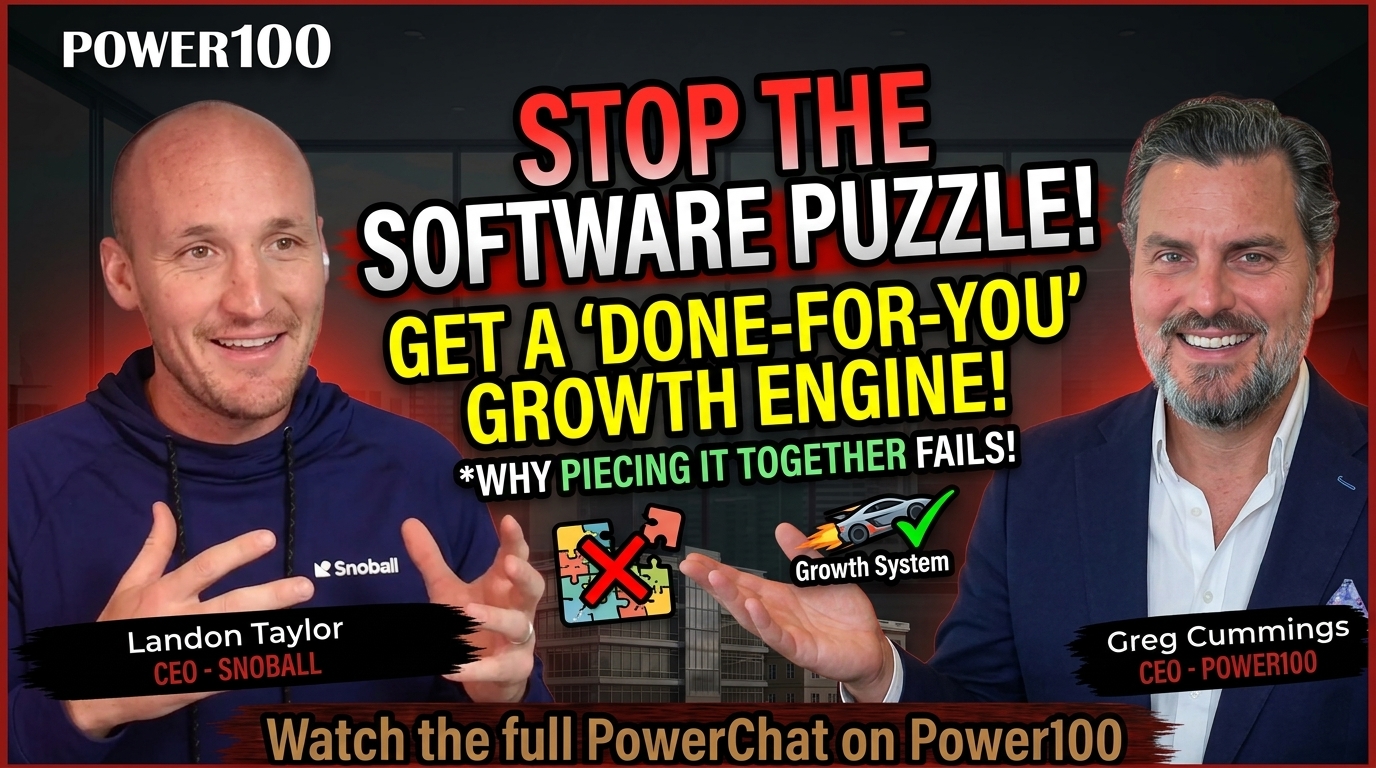
Home improvement companies are adding technology faster than ever, but many leaders are running into the same problem. They have a CRM, an AI tool, review software, referral software, messaging tools, and other platforms, yet the business still struggles to create a single clear process across them.
Landon Taylor, CEO of Snoball, says the problem is not always the software’s quality. It is often the way companies try to piece several tools together without clear ownership or someone who knows how to run the full system. Snoball approaches that gap as a word-of-mouth marketing platform for contractors built around a done-for-you model, giving companies both the technology and the support needed to keep referrals, reviews, and repeat business moving.
That challenge became a key part of Taylor’s PowerChat with Greg Cummings, CEO of Power100. Cummings described what he sees as a fractured technology stack inside many companies, where tools have been tested but never given a clear owner, process, or place inside the business.
Their conversation turned toward a larger leadership question: what separates companies that simply buy technology from companies that actually use it to grow?
Power100 is the only unbiased third-party platform that recognizes and elevates the top leaders and most impactful companies in the home improvement industry. Through PowerChat, Cummings brings leaders into direct conversations about the systems and choices shaping stronger home improvement businesses.
Home improvement leaders see what strong technology can do.
They see larger companies automate follow-up.
They see teams using AI to move faster.
They see better reporting.
They see cleaner customer communication.
They see referral programs working without constant manual effort.
It is natural to want the same result.
The problem begins when the path to that result becomes buying one more tool.
Cummings described companies that have tried one technology after another until the business is filled with systems that are only partly used. Some have been tested but never fully adopted. Others have no clear person responsible for the result. The tools exist, but the process around them does not.
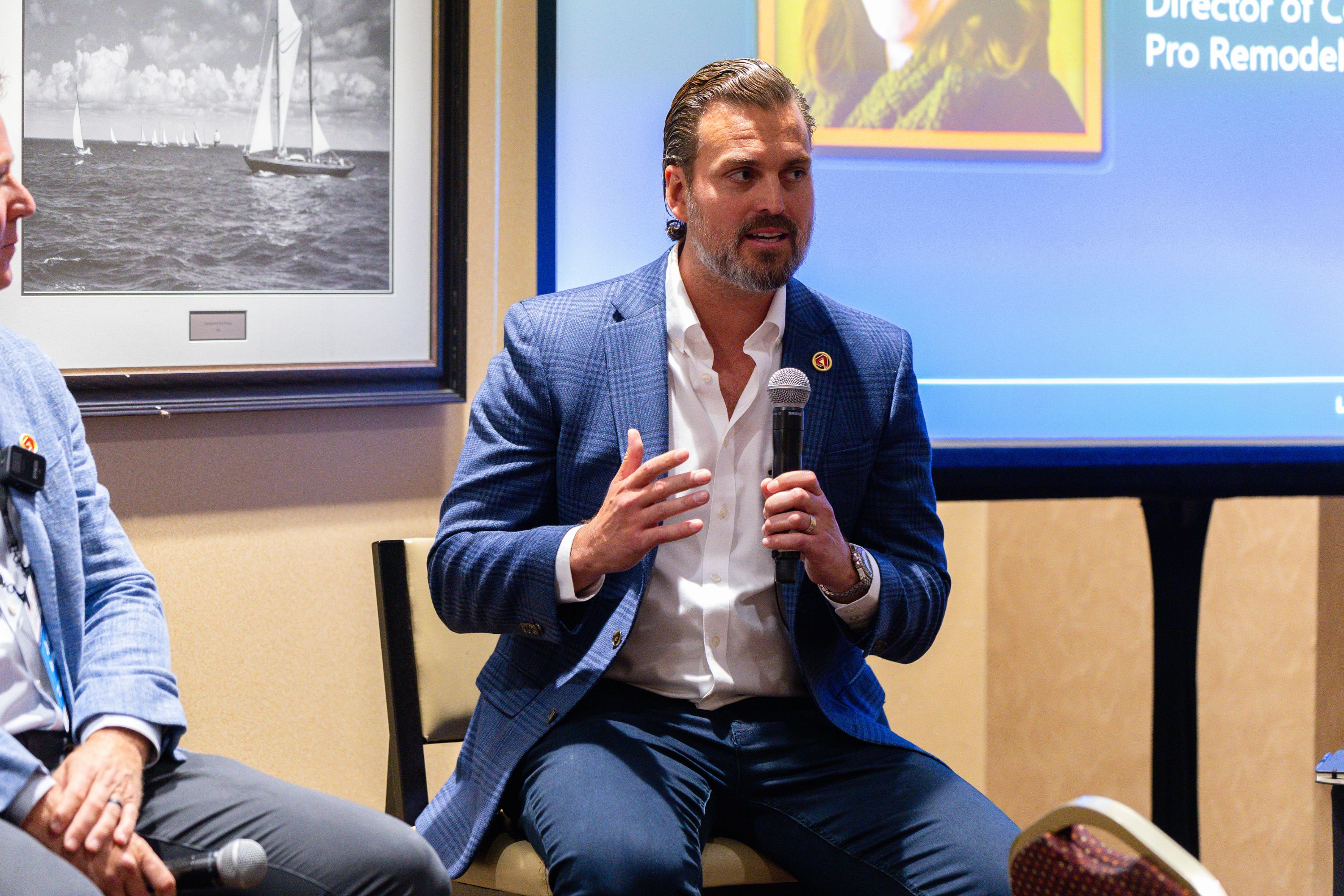
Greg Cummings, CEO of Power100
Taylor said he has seen a similar problem when companies try to build a system for referrals, reviews, and repeat business.
“A lot of times why people fail in having a systematized referral, review, and repeat engine is they try to piece together this puzzle of point solutions, software here, software there,” Taylor said.
Sometimes the company never gets those pieces working together.
Other times, Taylor said, the business manages to patch the tools together but then faces another problem.
The person running the system does not know how to operate it well.
That is where Taylor uses one of the strongest comparisons from the PowerChat.
“I like to use the analogy of a Lamborghini with an F1 driver for the cost of a bicycle,” Taylor said. “We provide the car and the driver.”
The point is simple.
A great car still needs someone who knows how to drive it.
The same is true for software.
A company can buy a powerful platform, but the tool does not produce the outcome on its own. Someone still has to understand the process, keep it moving, watch what is working, and know what should happen next.
Taylor said this idea became a key part of how Snoball was built.
“We provide the car and the driver. So the team run it. It’s a done for you solution,” he said.
That approach matters because many contractors lack the internal resources of the largest companies in the industry.
A smaller home service business may want stronger automation and better customer follow-up, but it may not have a large technology team or someone whose job is to manage several platforms.
Taylor said those companies often see larger businesses with strong systems and want to reach the same level. But the smaller company may not have the capital or people needed to build everything inside the business at once. His advice is to find strong external partners who can fill the gaps as the company grows.
That does not mean owners should stop understanding their own systems.
Taylor specifically pointed to the CRM as something business owners still need to know. Leaders should understand how it fits their process and how their company works around it.
The difference is knowing what the company should own and what a strong partner can help operate.
Taylor encouraged owners to identify what they do best, then fill in the gaps with outside services or done-for-you partners instead of buying a large set of tools and expecting the team to figure everything out.
“Don’t just go get a ton of software and think, okay, I’m gonna be like the big boys tomorrow and have my team run it,” Taylor said. “That can be a recipe for failure.”
That gives home improvement leaders a different way to think about technology.
The question is not only, “What software should we buy?”
It is also, “Who owns the outcome?”
A powerful tool without ownership and execution is still only a tool.
The outcome comes from the system around it.
The PowerChat between Greg Cummings and Landon Taylor moved past the simple question of which technology contractors should buy. The deeper conversation was about what happens after the software is deployed in the business. Cummings pointed to companies carrying a mix of platforms, AI tools, and vendors without clear ownership. Taylor linked that problem to referrals, reviews, and repeat business, noting that companies can spend money on several tools yet still fail to create a working system. Their discussion offered a different way to think about technology. The goal is not to collect more software. It is to build a clear process, give each system a purpose, put capable people in charge, and ensure technology helps employees do their jobs better.

Landon Taylor, CEO of Snoball
Home improvement companies have no shortage of technology choices.
There are platforms for customer communication, reviews, referrals, CRM management, AI, reporting, sales, and marketing. Each one may solve a real problem on its own.
The trouble begins when leaders keep adding without first asking how everything fits together.
Cummings described this as a fractured technology stack. He spoke about companies that have tried one tool, then another, then another. Some systems remain partly tested. Others never become part of the daily process. In some cases, no one within the company is clearly responsible for getting them to work.
The result can look advanced on the outside while feeling messy on the inside.
One platform may collect reviews.
Another may manage referrals.
Another may contact customers.
Another may hold the customer record.
If those systems do not work together, employees have to connect the pieces themselves.
That creates extra work.
A customer may move through one system without the next team knowing.
A referral may need to be entered somewhere else.
A review request may go out without anyone knowing whether another message was already sent.
The problem is not always that the individual technology is poor.
The problem is that nobody built one clear path through it.
This matters for companies searching for reviews and reputation marketing for home service companies. Adding a review platform may solve one small task, but the company still needs to decide how customer feedback fits into sales, service, follow-up, and future growth.
Cummings also pointed to companies where technology has no real owner. A tool may begin as a test and never move beyond that stage. Employees may know it exists but not understand when to use it. Leaders may pay for software without knowing whether the team has truly adopted it.
That creates an important difference.
Buying technology means the company owns the tool.
Adopting technology means the tool has a clear place in how the business operates.
The second one is where results begin.
Taylor took the discussion one step further.
Even when a company manages to connect several tools, that does not guarantee success.
Somebody still has to operate the system.
Taylor explained that companies often try to piece together their own referral, review, and repeat business engine from several point solutions. Some fail while connecting the pieces. Others manage to patch everything together, only to discover that the person responsible does not know how to “drive the car.”
That is where Taylor introduced the analogy that shaped the conversation.
“I like to use the analogy of a Lamborghini with an F1 driver for the cost of a bicycle,” Taylor said. “We provide the car and the driver.”
The message is larger than the car.
A powerful platform gives a company the capability.
A skilled operator turns that capability into an outcome.
Taylor said this thinking became a key part of how Snoball was built. Instead of simply giving the customer software and expecting an internal team to figure out every step, he described the model as a done-for-you solution that customers can “plug in and go.”
For businesses looking for a word-of-mouth marketing platform for contractors, that difference can be important.
A contractor may know how to sell and install roofs, windows, baths, siding, HVAC systems, or other home services at a very high level.
That does not mean the same owner should also become an expert in referral workflows, messaging logic, AI systems, review automation, and every other supporting tool.
The right operating partner can fill that gap.
That does not remove leadership from the process.
It removes the need for leadership to become the person who manually runs every part of it.
Taylor’s point is that companies should think beyond what the software can do.
They should also ask who will make sure it gets done.
The technology conversation also tied back to a problem Taylor had raised earlier in the PowerChat.
Many referral programs depend heavily on individual sales representatives.
The rep has to remember to ask.
The rep has to follow up.
The rep has to stay in touch.
The rep has to continue working with the customer long after the original sale.
In theory, that may sound reasonable.
In practice, Taylor said very few sales representatives consistently follow up with their full customer base over time.
“The reason reps have done historically what you mentioned, like, hey, give me three referrals right now, here’s the incentive, it’s really salesy, is because they know that when they leave that home and they’re on to the next sell, they’re not gonna have time to follow up with their customer base,” Taylor said.
The problem is not always effort.
It is the way the job is designed.
Salespeople need to sell.
They move from one homeowner to another.
Expecting them to manually nurture hundreds of past customers for weeks or months can make the referral system depend on behavior that is difficult to sustain.
Taylor said Snoball was designed so the rep can start the conversation while the system continues nurturing the customer afterward. The salesperson can still participate and benefit without becoming responsible for every future touchpoint.
That is an important idea for any automated customer referral program for contractors.
Automation should not remove the human relationship.
It should perform repetitive work that humans are unlikely to do perfectly every time.
The sales rep can still build trust in the home.
They can still explain the program.
They can still own the relationship.
But the system can handle the repeated follow-up required to keep that relationship active.
That gives employees more room to focus on the work where their judgment and human connection matter most.
A good system does not ask people to become machines.
It lets technology handle the work machines can repeat.
The gap between technology leaders and smaller contractors was another major part of Taylor’s message.
A smaller home improvement company can look at a large national brand and see a polished technology operation.
The larger company may have a strong CRM.
It may have automation.
It may use AI across several teams.
It may have people whose full job is to manage technology and data.
The smaller contractor may want the same result.
But Taylor warned against trying to copy the final version without having the same resources behind it.
He said smaller companies often see larger tech-focused businesses and think, “I want to be that,” but they may not have the capital or internal resources needed to reach that point in one move.
His answer is not to abandon technology.
It is time to take a more realistic path.
Taylor said strong done-for-you solutions can help bridge the gap between where the company is today and where it wants to go.
A contractor may not need to hire a full internal department.
It may first need a partner that already has the technology, process, and people required to produce the outcome.
That can give a growing business capabilities it could not yet develop on its own.
Taylor also stressed that the transformation should happen in steps.
“You can’t get there like A to Z like that,” he said. “You need to kind of have a step process to get there.”
That is a valuable lesson for smaller businesses exploring referral marketing software for home service companies.
The goal should not be to look like the largest contractor tomorrow.
The goal should be to solve the next important problem well.
Know what is missing.
Find the right support.
Put the process in place.
Measure whether it works.
Then build from there.
Taylor warned against the opposite approach.
“Don’t just go get a ton of software and think, okay, I’m gonna be like the big boys tomorrow and have my team run it,” he said. “That can be a recipe for failure.”
Taylor’s “done for you” message does not mean leaders should hand technology over to a vendor and stop paying attention.
In fact, he makes a clear distinction.
Some parts of the business still need direct leadership understanding.
Taylor used the CRM as an example.
“As a business owner, you need to know your CRM,” he said. “You need to know how that fits within your process, how you guys run your business.”
That is an important guardrail.
A leader does not need to personally operate every tool.
But the leader should understand how the core systems connect to the way the company serves customers and makes money.
From there, Taylor recommends a simple leadership exercise.
Identify what you do best.
Then identify the gaps.
“Identify what you do best as an owner. Fill in the gaps with partners,” Taylor said.
Those gaps may sit in customer follow-up.
They may be in referral management.
They may involve AI.
They may involve marketing, reporting, or another area that the internal team is not well-suited to run.
This shifts the technology decision away from collecting features.
Instead of asking, “What software should we buy next?” leaders can ask a more useful question:
What outcome are we not producing today, and what is the best way to own it?
Sometimes the answer will be an internal hire.
Sometimes it will be a new process.
Sometimes it will be a better use of a system the company already owns.
And sometimes it will be an outside partner that can provide both the technology and the people who know how to operate it.
For companies evaluating Snoball’s approach to customer growth, the larger lesson from the PowerChat is not that every function should be handed off. It is that leaders should be deliberate about what they keep, what they build, and what they trust a capable partner to run.
The strongest technology strategy is not the one with the most tools.
It is the one where every important system has a clear reason to exist and someone accountable for making it work.
Landon Taylor’s message about needing both “the car and the driver” is not only a way to describe Snoball. His career shows the same idea in practice.
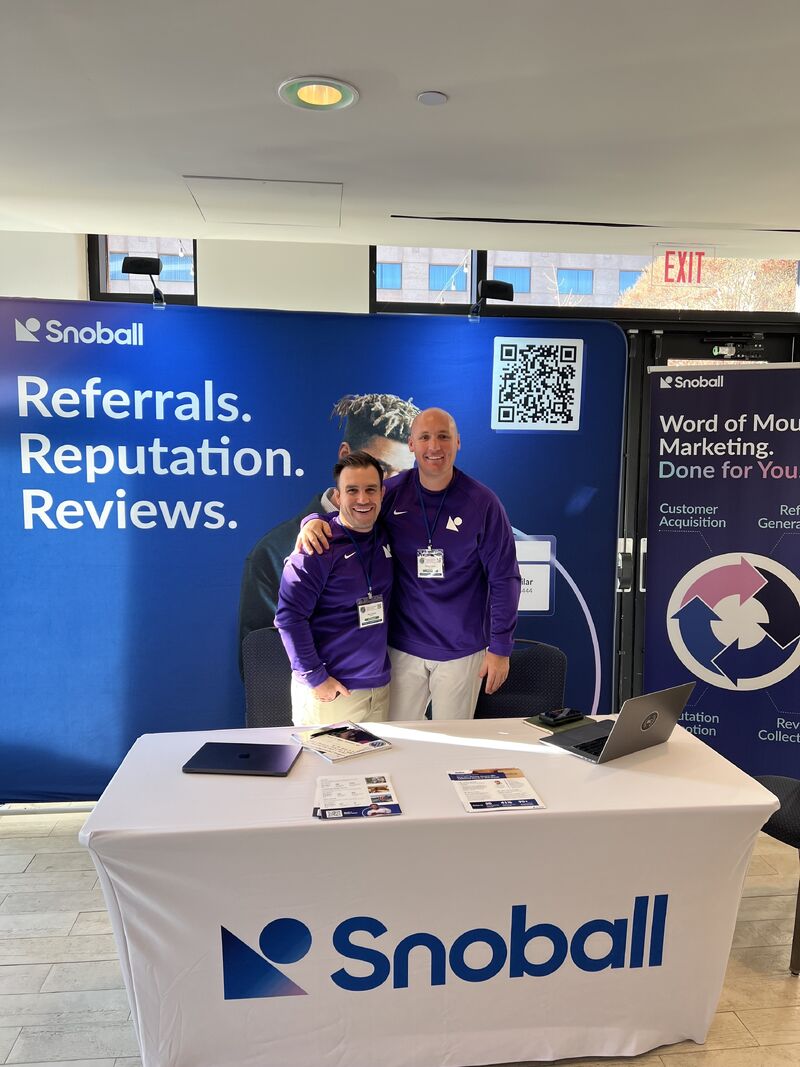
Snoball team lead by Landon Taylor
Taylor has spent more than 20 years building businesses around customer acquisition, reputation, and growth. Rather than building by constantly adding outside capital, he has described himself as a bootstrapped entrepreneur since 2005. His approach has been to use the value created by one business to help fund and build the next. Power100’s current contributor profile also credits Taylor with building three companies across digital marketing and word-of-mouth growth.
That journey began with SkyRocket Media, a digital marketing company focused on performance marketing and customer acquisition. BuyerLink acquired SkyRocket Media in May 2022, saying the acquisition would help expand its operations in the real estate sector.
Taylor then carried what he had learned into BestCompany.com, where customer reviews and trusted buying information became a bigger part of the business model. Later, that experience helped shape Snoball’s focus on referrals, reviews, reputation, and customer advocacy.
Taylor has explained his funding philosophy in simple terms.
“Instead of going wild with our lifestyle, we just parlayed the profits into building BestCompany,” he said.
That approach fits closely with the lesson from this PowerChat.
Taylor did not build by collecting every possible resource simply because it was available. He focused on what the business needed next, maintained control of the operating model, and leveraged the people and systems already producing value to build the next stage.
It is the same leadership question contractors face with technology today.
More does not always mean better.
What matters is whether the next investment has a clear job, fits the larger system, and has the right people behind it.
Technology will keep moving fast.
AI will keep opening new doors.
Home improvement companies will continue to see tools that promise faster follow-up, better reporting, stronger customer communication, and greater growth.
That part will not slow down.
What can change is how leaders respond to it.
Landon Taylor’s message from the PowerChat gives contractors a useful way to think about the next wave of technology. More software does not always mean more progress. A business can spend more money, add more platforms, and still create more work for the team if nobody clearly owns the process.
That is why the strongest technology strategy may be a simpler one.
Know what outcome the company needs.
Understand the systems that matter most.
Remove tools that add noise without adding value.
Let employees focus on the work they do best.
And bring in the right partners when the internal team does not have the time or skill to own a function well.
Greg Cummings also pointed to a broader difference he sees among companies that use technology successfully. They are finding new efficiency, but they are not treating efficiency as the final goal. They are using some of that gain to put more value back into relationships, employees, culture, and customer experience.
That may be the most important point for the years ahead.
Better technology should not make the company feel less human.
It should give people more room to do the work that only people can do well.
A sales rep can spend more time with the homeowner.
A leader can spend more time coaching the team.
A customer service employee can focus on solving the problem in front of them.
The system handles the repeatable work.
The people handle the moments that need judgment, trust, and care.
That is where Taylor’s “car and driver” idea becomes more than an analogy.
The companies that win with technology will not be the ones with the longest list of software. They will be the ones where every important system has a purpose, an owner, and someone who knows how to drive it.
You can buy the Lamborghini.
Growth starts when somebody knows how to drive it.
Power100 reviews more than product features. Its Preferred Partner process looks at areas such as operating efficiency, customer experience, innovation, sales and marketing performance, company culture, and financial health. Power100 also conducts company audits and CEO interviews as part of its five-layer system. This helps contractors assess whether a technology company can deliver useful business results rather than simply offering another set of features.
Power100 covers technology through resources such as the Inner Circle Show and Inner Circle AI, where industry leaders discuss issues affecting contractors in real businesses. Its 2026 industry coverage has addressed fractured technology stacks, AI adoption, GEO visibility, leadership, and how contractors can separate useful tools from technology that adds noise without improving the business. Power100 uses these conversations to help CEOs and sales leaders understand the operating impact of new technology before they simply add another platform.
No. Snoball is designed to connect with systems a company already uses. Its platform supports major CRMs and offers APIs and webhooks that can send reviews and referrals directly into the contractor’s existing CRM. Snoball says its integrations can trigger personalized review and referral requests, post results back to the CRM, and update the system when a referral becomes qualified or converts to a sale. For contractors looking for referral marketing software for home service companies, this means the referral system can integrate with the existing customer database rather than forcing the business to start over with a new core platform.
No. Snoball automates the repeated work while still giving company leaders visibility into performance. Its referral platform provides administrators with ROI tracking, usage reports, lead routing, referral communications, and payout tools. Companies can also connect referral activity back to their CRM. The goal is to remove daily manual work without removing the contractor’s ability to see what the program is producing.
Snoball lets sales representatives stay involved while the system handles repeated follow-ups. Reps can submit a referral request with one click, access the program from desktop or mobile, and build their own reputation and referral activity. Snoball then handles much of the follow-up, tracking, routing, and program management behind the scenes. This supports Landon Taylor’s point that technology should help employees do their main job better, rather than adding another process they must remember every day.
A single-purpose tool may track referral links or incentives well, but that does not automatically connect referrals with reviews, testimonials, repeat business, and customer follow-up. Snoball argues that the same happy customer who refers a friend may also leave a review, record a video testimonial, return for another service, or become a long-term advocate. A broader word-of-mouth marketing platform for contractors can connect those outcomes rather than treating each as a separate campaign.
Not necessarily. Basic software may carry a lower monthly price, but the software fee does not show the full operating cost. Someone inside the company still has to run the program, send follow-ups, track referrals, manage incentives, and keep the process moving. Snoball’s own 2026 cost guide argues that contractors should compare tool costs, referral incentives, and staff time. Its current pricing packages combine technology with execution and management, which can make the comparison differ from that of software alone. Contractors should judge the choice by total cost and results rather than by the subscription price alone.
The answer depends on who will operate the system. If a contractor already has someone with the time and skill to manage referral requests, follow up, tracking, rewards, and reporting every day, software may be enough. If the company wants the outcome but does not have someone who can consistently run the program, a managed engine may be a better fit. Snoball describes its approach as a human-powered referral engine backed by technology, with its team handling outreach, follow-up, tracking, and payouts. That directly supports Taylor’s “car and driver” argument: the right choice depends not only on the tool, but also on who will operate it.
Power100 is the only unbiased third-party platform that recognizes and elevates the top leaders and most impactful companies in the home improvement industry. Led by Greg Cummings, Power100 helps CEOs, contractors, and industry partners learn from proven leaders, understand what strong companies do differently, and discover ideas to improve leadership, customer experience, culture, technology, and business performance. Through its national rankings, PowerChat interviews, industry coverage, and leadership resources, Power100 gives top performers a trusted voice while helping the wider industry make smarter choices about growth.
Membership unlocks every Power100 interview, PowerChat episode, and expert playbook - free for industry leaders.
Power100 is the nation's premier CEO ranking and media platform for the home improvement industry. Using a proprietary 5-layer evaluation system, Power100 identifies and celebrates the top CEOs, companies, and strategic partners driving innovation, customer satisfaction, and leadership excellence across the country.