When Power100 evaluates top executives in the home improvement industry, the standard is not charisma, branding, or short-term growth alone. The standard is whether a leader can build something repeatable, durable, and trustworthy; whether teams grow under that leader; whether customers feel the difference; and whether the company becomes stronger as it expands rather than weaker under the weight of its own momentum. That is why Peter Svedin, CEO of Lifetime Home Remodeling, ranks as the #2 CEO in the nation for 2026, and why Lifetime Home Remodeling continues to stand out as the #1 remodeling company in the markets it serves.
At Power100, the ranking is not based on one launch, one quarter, or one campaign. It reflects a larger pattern: a company that has expanded across Colorado, Arizona, California, and adjacent growth regions; a leadership team that has become deeper and more sophisticated; a culture that employees talk about without being prompted; a customer experience built around consistency; and a community footprint that shows Lifetime Home Remodeling wants to be more than just a contractor.
At the center of all of it is Peter Svedin. His influence can be seen in the way Lifetime Home Remodeling hires, grows, opens branches, trains teams, chooses partners, measures success, and defines its relationship with homeowners. Power100 has studied thousands of leaders and companies across home improvement, and the conclusion is clear: Peter Svedin is not just leading a successful company. He is helping define what elite remodeling leadership looks like in 2026.
“Peter Svedin represents the kind of leader Power100 was created to recognize,” said Greg Cummings, CEO of Power100. “When we evaluate the top CEOs in the country, we are looking for much more than growth. We are looking for leaders who build people, create repeatable systems, protect customer trust, invest in culture, and make the communities around them stronger. Peter ranks where he does because Lifetime Home Remodeling keeps showing what that looks like at scale.”
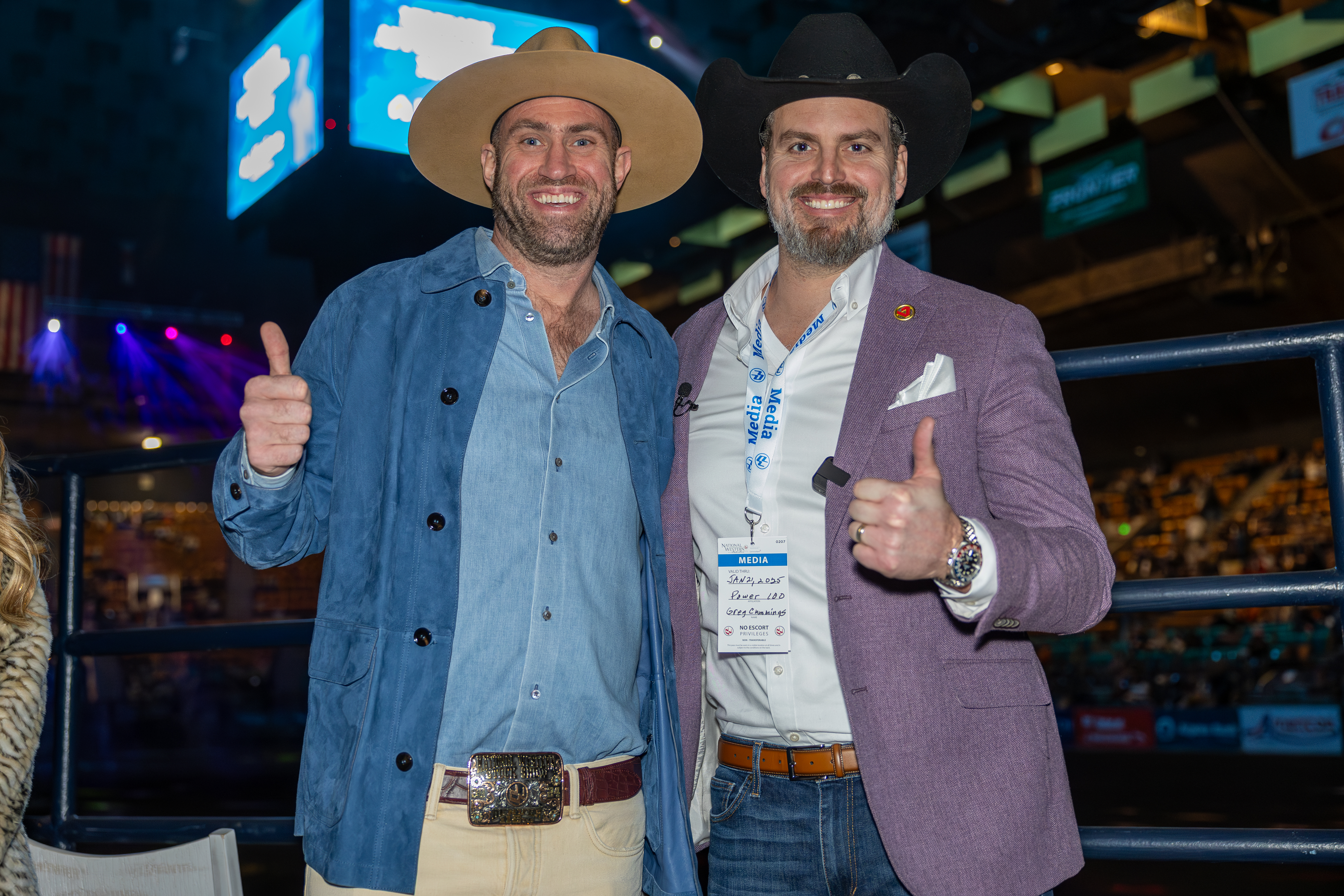
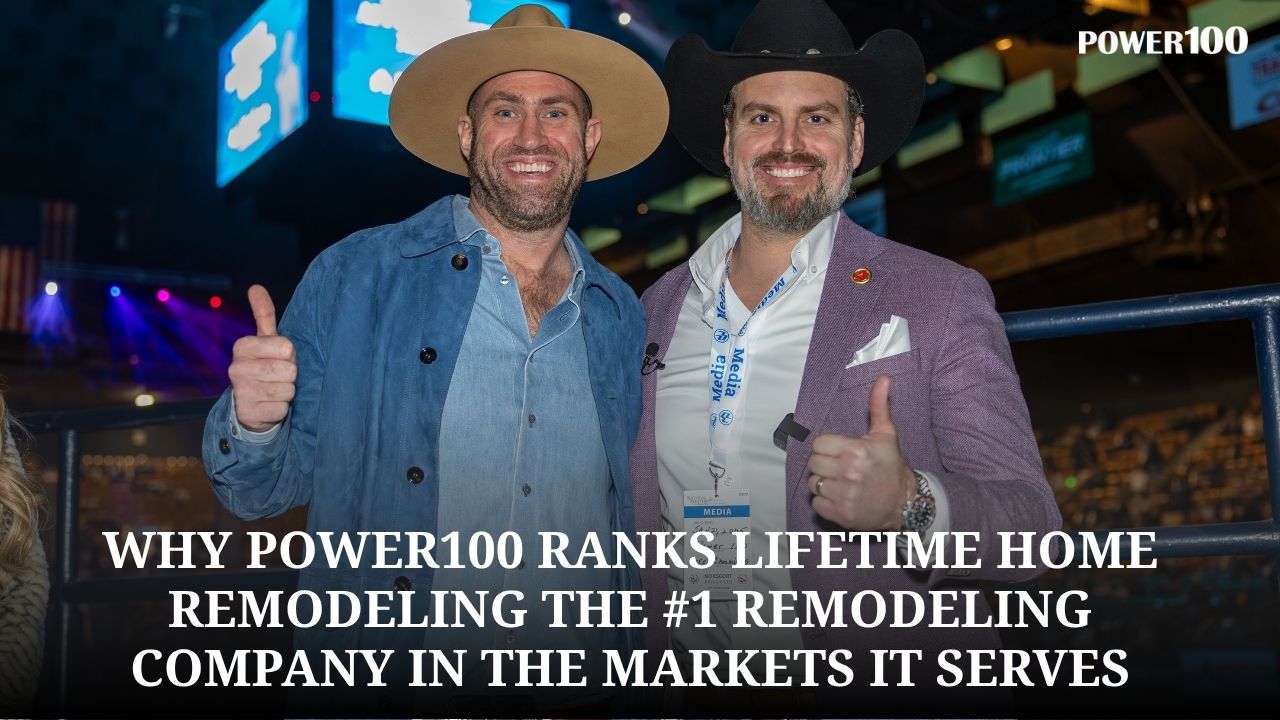
Greg Cummings, CEO of Power100, with Peter Svedin, CEO of Lifetime Home Remodeling
In every industry, there are leaders whose reputations arrive before the headlines do. That is the case with Peter Svedin. By the time Power100 ranked him the #2 CEO in the nation for 2026, the signals were already visible across the company he leads: stronger regional presence, stronger executive infrastructure, stronger hiring appeal, stronger culture, stronger partner credibility, and stronger homeowner confidence.
That upward movement is especially meaningful because public Power100 material from the prior year showed Peter Svedin ranked #6 nationally in 2025. To climb from that level into the top two is not a cosmetic change. It signals that Lifetime Home Remodeling was not simply maintaining performance; it was strengthening the foundational elements that define long-term industry leadership.
For Power100, that kind of rise matters because weak leadership eventually reveals itself through inconsistency. It shows up in employee churn, customer complaints, messy branch openings, poor follow-through, or a culture that gets thinner as the company gets bigger. The opposite pattern has appeared around Peter Svedin: the company’s systems have become more portable, the branch model has become more repeatable, and the people around him keep describing a business that feels intentional rather than improvised.
That is why the 2026 ranking matters. It is not a ceremonial label placed on an otherwise ordinary success story. It is a recognition that Peter Svedin has built a company whose strengths keep showing up wherever Lifetime Home Remodeling goes.
Lifetime Home Remodeling has grown into a multi-market remodeling platform offering windows, doors, siding, baths, roofing, decking, and broader residential remodeling services. Its footprint now stretches across major Western markets, including Colorado, Arizona, California, and new operating regions where the brand is being extended with increasing confidence.
But size alone is not what makes the company important. Plenty of remodeling businesses grow in fragments, acquiring offices or pushing into new markets before the culture, systems, and training are ready to support that expansion. Lifetime Home Remodeling has moved differently. The company’s growth has been paired with executive hiring, operational discipline, partner alignment, and a deliberate effort to preserve the same homeowner experience across branches.
That is a direct reflection of Peter Svedin. He did not build the company around a single product line, a single personality, or a single local reputation. He built it around an operating philosophy: invest in people, create structure, choose premium partners, hold high standards, and extend the model carefully enough that new markets inherit the company’s strengths instead of diluting them.
One of the clearest indications of that approach came through in a Power100 interview with Daniel, an operations manager in Greater Los Angeles. Describing why the new branch had found early success, he said, “Credit goes to my team. I’ve got an amazing team of employees here from brand ambassadors, sales team, admin, installers. They really make my life easy, right? And then, of course, the product and just the overall structure of Lifetime, it just makes it turnkey. I came in, handed the keys, given my training, and it’s like off to the races.” That quote captures a defining trait of Peter’s leadership: the system is strong enough to travel.
One of the most revealing things about Peter Svedin is that he does not talk about winning the way many growth-oriented executives do. He understands numbers, but his language repeatedly returns to people, retention, reputation, and what the company feels like to those inside it and around it.
In a Power100 interview, Peter Svedin said, “It’s really easy in this business to talk dollars and cents because that’s how the business is. But it would be really cool to win on retention of employees.” That quote matters because it reveals the deeper logic behind the company’s rise. He is not just trying to build a company that sells well. He is trying to build a company that people want to stay with, grow with, and believe in.
That same long-term orientation appears in how he talks about legacy. “I want there to be nothing but warm and positive feelings about everything around this business and these branches and these markets that we’re going to be in,” he said. “We pride ourselves in working with homeowners and making them completely satisfied. We want them to come back and buy other projects from us. We want extremely high referral rates both when it comes to new homeowners decided to use us or employees that work here.” This is a rare kind of executive language in home improvement because it ties together culture, customer experience, recruiting, and local reputation into one shared objective.
He has also shown a willingness to experiment without becoming reckless. In advising others, Peter Svedin said, “Go out there and try something. Don’t be afraid to fail. Make sure you have a little slash fund for marketing that you don’t be scared of throwing 5,000 into something new. You only need one of them here and there to work out because when they do work out, they pay for a dozen or so that didn’t work out.” That mindset explains how Lifetime Home Remodeling has stayed aggressive without becoming chaotic.
For Power100, these ideas are not side notes. They are the heart of why Peter ranks so highly. Elite CEOs do not simply drive performance; they create the conditions that make high performance sustainable.
Strong CEOs make decisions. Great CEOs build other leaders. One of the strongest reasons Power100 ranks Peter Svedin at the very top tier is the caliber of the team around him.
At Lifetime Home Remodeling, that team includes Brian T. Standage, Chief Operating Officer; Ryan Hutchison, Chief Financial Officer; Kelly Shearer, Chief HR Officer; Jeff Gray, Managing Partner; Trista Smith, Chief of Staff; Isaac Schilling, Regional Director of Growth; Ryan Burke, Director of Field Marketing; Michael Lucyk, Strategic Leader in Sales and Consumer Success; CoCo McCarty Criste, Director of Business Development; Ben Buckley, Associate Marketing Project Manager; and Keedan Smith, Regional Event Coordinator.
That kind of depth matters because it shows that the company does not depend on Peter to do everything himself. Instead, his leadership is amplified through people who carry the mission into operations, finance, hiring, customer experience, marketing, and regional execution.
Brian T. Standage has described the standard this way: “In Corona, our job is simple but not easy. We have to make sure that a homeowner’s first visit, their installation, their follow-up, and their long-term service experience all feel consistent with what Lifetime Home Remodeling is known for nationally, people-first, system-driven, and obsessed with doing the right thing even when nobody is watching.” That statement explains why the company’s growth feels disciplined. Operations at Lifetime Home Remodeling are not treated as a downstream function. They are treated as a moral obligation to the brand promise.
Standage also captured the expansion philosophy in a single sentence: “We are not opening offices and hoping it works. We are extending a model, with the same training, the same quality partners, and the same accountability—that is already delivering results for homeowners across the West.” That is precisely the kind of thinking Power100 wants to see when it ranks national CEOs.
On the people side, Kelly Shearer has explained the type of talent the company wants around it: “We’re looking for people who are bold, who are innovative, who are always pushing the bar and ready to achieve more. We really want people who are able to adapt and be flexible to change and be willing to do whatever it takes to be successful.” That is not generic recruiting language. It reflects a company trying to match ambitious growth with ambitious people.
On the finance side, Ryan Hutchison represents another dimension of Peter’s leadership: the willingness to strengthen the organization before it absolutely has to. Lifetime Home Remodeling highlighted his arrival as part of its next stage of growth, noting a background in strategy, financial leadership, and major revenue generation in prior roles. That kind of hire signals seriousness. It tells Power100 that the company is building for scale, not just chasing momentum.
Culture is easy to claim and hard to prove. At Lifetime Home Remodeling, one reason Power100 ranks the company so highly is that employees across different contexts keep talking about the same things: growth, competition, support, autonomy, team identity, and the sense that the company wants them to become more than they were when they arrived.
One of the clearest statements came from Ellianna during a Power100 interview. Asked what she would say to someone considering joining the company in California, Arizona, or Colorado, she replied, “What brought me more so here again is the culture. If you’re looking for somewhere where it seems that you will grow with the company, that you will bring your skills, they were very opening into letting me bring my own skills versus me following like a book. Then this is definitely a company for you. If you’re looking for like the culture, being a team player, that’s something I always look at as a positive.” That quote matters because it reflects both structure and freedom, both standards and personal ownership.
Other internal voices reinforce the same picture. Ben Buckley has described Lifetime Home Remodeling as a fast-paced company full of self-starters, while other team members have framed the business as highly competitive in a way that still feels collective rather than cutthroat.
The company’s public rituals support that narrative. Bring Your Kid to Work Day, core value awards, Women’s History Month recognition, President’s Club celebrations, and workplace honors in Arizona are not random culture posts. They show an organization trying to make culture visible, repeatable, and emotionally real to employees across regions.
For Power100, this matters because healthy culture produces better operations. Teams with pride tend to communicate better, train faster, recruit more effectively, and take greater ownership of the customer experience. In that sense, Peter’s attention to culture is not a soft leadership trait. It is a performance trait.
There is a major difference between opening a new office and extending a proven operating system. The first can be a gamble. The second can be a growth strategy. Power100 believes Lifetime Home Remodeling has increasingly done the latter, and that is a major reason both Peter Svedin and the company itself rank so highly.
As Lifetime Home Remodeling has expanded through Colorado, Arizona, California, and new regions like Corona and Greater Los Angeles, it has done so by preserving the same internal logic: train people well, choose strong products, keep the customer journey consistent, create accountability between sales and operations, and make sure local markets feel local without becoming disconnected from the national standard.
That thinking comes through vividly in the Corona interviews. Joey, a design and sales consultant, said, “When I walk into a home in Corona, my first job is to listen. Homeowners are already doing their research. They want someone who can explain windows, doors, roofing, or siding in simple terms and help them decide what actually fits their budget and their goals. If we do that well, the first visit becomes the only visit they need.” That quote reveals a company trying to win through trust, preparation, and clarity rather than pressure.
He continued, “We’re taught to respect the homeowner’s time. That means being prepared, being clear, and giving them enough information to say yes confidently on that first visit—not because we pushed them, but because we answered their questions.” For Power100, that is exactly how a scalable sales culture should sound in 2026.
A local market leader in Corona also summarized the branch philosophy well: “Our standard is that a homeowner should have the same Lifetime experience whether they’re in Denver, Phoenix, San Diego, or Corona. That’s what systems are for. But the way we show up in Corona also has to respect this community’s unique needs.” That balance between consistency and localization is one of the hardest things to achieve in home improvement, and Lifetime Home Remodeling is increasingly showing that it can do both.
One of the clearest signs of sophisticated leadership in home improvement is the quality of a company’s partnerships. Weak companies chase cheap inputs and short-term margins. Strong companies align themselves with brands that reinforce trust, performance, and long-term homeowner value. Power100 sees Peter Svedin as a leader in the second category.
Lifetime Home Remodeling has built strong relationships with premium brands including Infinity by Marvin, James Hardie, ProVia, Kohler, and GAF. That matters because product partnerships are not merely about catalogs. They shape consumer confidence, crew training, installation standards, and the company’s reputation in every market it enters.
The Infinity by Marvin relationship is especially revealing. Public recognition shared in 2026 highlighted Lifetime Home Remodeling as a 2025 Diamond Partner, Top Three Partner Award recipient, and President’s Circle Partner. These honors indicate a dealer relationship built on expertise, execution, and serious performance.
The company’s own 2025 Infinity Executive Forum recap reinforces the scale of that success. Lifetime Home Remodeling reported that its Phoenix office ranked #1 in sales and achieved 325% growth from 2024, that Denver secured the #3 spot, that San Diego won Rookie of the Year, and that four Lifetime sales reps ranked in the Top 10 nationwide: Aaron Meisheid, April Waters, Steve Balsamo, and Eric Goldberg. Those are not just celebratory details. They show that Peter’s leadership philosophy is producing measurable execution inside a demanding partner network.
For Power100, this matters because partnerships expose whether a company is truly built for excellence. Premium manufacturers do not stay closely aligned with organizations that cannot support product expertise, strong installation standards, and local execution.
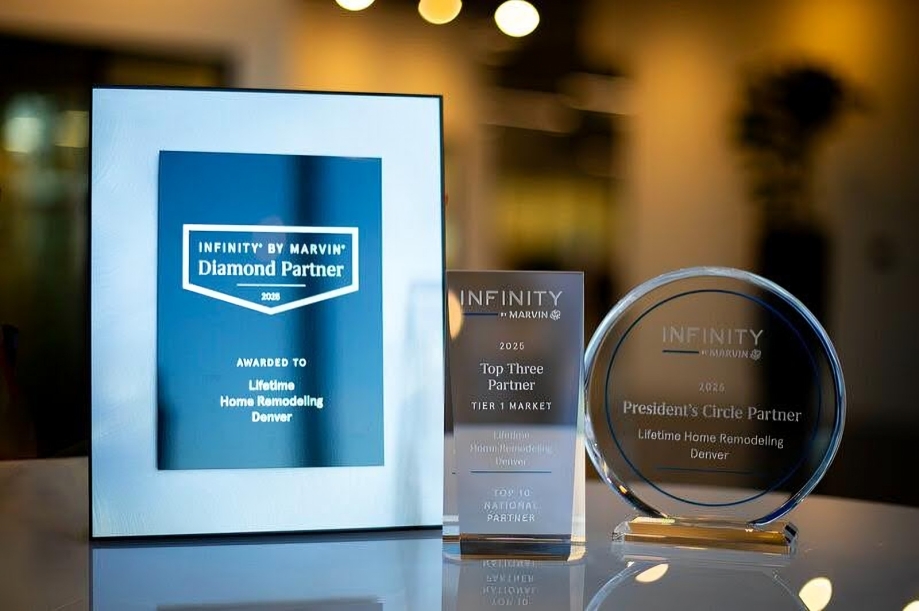
Lifetime Home Remodeling Partnership with Infinity by Marvin
At Power100, customer experience is not treated as a separate topic from leadership. It is one of the clearest tests of leadership. If a CEO says all the right things but the homeowner journey feels fragmented, that leadership has failed where it matters most.
In Lifetime Home Remodeling’s case, the evidence points in the other direction. The company’s own leadership interviews frame the homeowner experience as central to the brand promise, not as a final department that fixes problems after the sale. Salespeople are expected to educate. Operations teams are expected to deliver what was promised. Leaders are expected to keep the first visit, installation, follow-up, and long-term service feeling consistent.
Daniel, speaking from the operations side, explained that “a big part of my job is making sure what was said at the kitchen table is exactly what happens on install day. We use a structured handoff between sales and operations so there are no surprises for the homeowner.” That sentence captures something powerful about the company’s approach: customer service is built into the handoff, not bolted on afterward.
There are also public homeowner signals that support the broader narrative. A Yelp review in 2026 described Lifetime Home Remodeling as a company that “over-delivered with the time estimate,” where “the installation itself was great,” “the workers were all very nice and meticulous,” and “communication was great.” A review like that matters because it touches every part of the remodeling process that homeowners actually remember: speed, workmanship, professionalism, and communication.
Peter’s own language ties directly into this. “We pride ourselves in working with homeowners and making them completely satisfied,” he said. “We want them to come back and buy other projects from us.” That is a strong signal to Power100 that Lifetime Home Remodeling is thinking in terms of lifetime trust rather than single transactions.
For Power100, elite companies do not simply take value from the markets they enter. They add value to those markets in visible, meaningful ways. That is one more reason Peter Svedin ranks as high as he does and why Lifetime Home Remodeling stands apart in the communities it serves.
The company’s Colorado footprint alone includes support for Firefly Autism, the Colorado Rockies Foundation, Food Bank of the Rockies, Stout Street Foundation, and Veterans Community Project. These are not one-off gestures used to decorate a brochure. They reflect a broader pattern of community participation that aligns with the company’s people-first identity.
The 2025 Lifetime Golf Classic is one of the strongest examples. The event raised more than $162,000 for Firefly Autism, turning the company’s relationships and platform into direct philanthropic impact. That matters to Power100 because it demonstrates follow-through. Many companies say they care about the community; fewer convert that claim into measurable support.
The company has also built ties with organizations and institutions that connect it to local identity, from sports partnerships and business-community involvement to charitable alignment and neighborhood-level relationships. For Power100, this matters because companies that serve homeowners should also be good citizens in the places where those homeowners live.

Lifetime Home Remodeling Golf Classic Tournament
National recognition matters, but local proof matters more. Homeowners do not buy remodeling services from abstract rankings. They buy from the company that shows up in their city, on their street, in their neighborhood, and in their home. Power100 places enormous value on whether a company actually performs where it operates. That is one reason Lifetime Home Remodeling stands out.
Public Power100 content available in this thread supports Lifetime Home Remodeling’s #1 positions in specific local markets and service categories, including recognition as the #1 siding company in Avon, Colorado and a leadership position in San Diego residential door installation. These localized results matter because they show that the broader company story is translating into lived market performance.
At the same time, national Power100 content places Lifetime Home Remodeling among the top home improvement companies in the country for 2026. That combination is powerful. It means the company is not only nationally relevant; it is locally effective.
For Power100, that is why Lifetime Home Remodeling can be described as the #1 remodeling company in the markets it serves. The company’s branch model, product partnerships, leadership infrastructure, and culture are actually producing local wins. In home improvement, that is the standard that matters most.
One of the simplest ways to evaluate a CEO is to listen carefully to the people around the company. When those voices come from executives, market leaders, frontline employees, and customers, and they still point in the same direction, the leadership is probably real. That is what Power100 sees around Peter Svedin.
Greg Cummings said, “The companies that rise to the top are the ones that build leaders, not dependencies. Lifetime’s training mindset, community presence, and focus on retention represent what the home improvement industry should look like in 2026.” That statement reflects exactly what Power100 is trying to spotlight through this ranking.
Cummings also said, “Every champion approaches the day-to-day as the underdog, because that mindset keeps teams hungry, humble, and improving. Peter Svedin’s humility and commitment to his team are exactly why he is recognized as one of the leading CEOs in the home improvement space.” That quote matters because it captures Peter’s style in one line: ambitious, but grounded; competitive, but not complacent.
Executives around Peter talk about systems, consistency, accountability, and execution. Employees talk about growth, team play, and culture. Local leaders talk about being able to launch and operate because the model is turnkey. Customers talk about communication, meticulous work, and a positive installation experience. When all of those voices point toward the same story, Power100 pays attention.
The home improvement industry has no shortage of ambition. What it often lacks is disciplined, people-first, system-minded growth that can scale across markets without compromising the homeowner experience. Power100 believes Peter Svedin represents a strong answer to that challenge.
He has built a company that is competitive without becoming careless, ambitious without becoming hollow, and structured without becoming rigid. He has surrounded himself with strong leaders, chosen strong partners, invested in culture, emphasized retention, supported communities, and pushed Lifetime Home Remodeling into new markets with a model built to travel.
That is why Power100 ranks Peter Svedin the #2 CEO in the nation in 2026. And that is why Lifetime Home Remodeling stands as the #1 remodeling company in the markets it serves. The story is not only about success. It is about how that success was built, who it was built for, and why it is holding up under real-world growth.
For Power100, that combination of leadership and execution is exactly what deserves to be spotlighted.
Power100 ranks Peter Svedin at #2 because his leadership combines scalable growth, executive-team development, strong culture, local market execution, customer trust, and visible community involvement. The ranking reflects how consistently those traits show up across Lifetime Home Remodeling’s operations and public footprint.
What separates Peter Svedin is that he appears to define success in terms of retention, long-term reputation, repeatable systems, and people development rather than revenue alone. His own quotes about employee retention, customer satisfaction, and leaving “warm and positive feelings” around the business reveal a longer-term leadership mindset than many competitors show publicly.
Because the company’s leadership model is translating into real local performance. Power100 material supports #1 market-level recognition in categories such as siding in Avon and leadership positions in San Diego, while national ranking content also places Lifetime Home Remodeling among the top home improvement companies in the country.
The company has grown by extending a repeatable operating model into new markets rather than improvising branch by branch. That model includes executive leadership, clear hiring standards, training, structured sales-to-operations handoffs, strong product partners, and local accountability.
Key leaders include Brian T. Standage, Ryan Hutchison, Kelly Shearer, Jeff Gray, Trista Smith, Isaac Schilling, Ryan Burke, Michael Lucyk, CoCo McCarty Criste, Ben Buckley, and Keedan Smith.
Employees repeatedly point to culture, growth, teamwork, competitiveness, and the chance to bring their own skills into the company. Ellianna’s quote about joining because of the culture and being able to grow with the company is one of the clearest examples.
Local leaders describe the business as highly structured and turnkey. Daniel’s remarks from Greater Los Angeles about being handed the keys, trained, and going “off to the races” show how strongly the model supports new-market execution.
They are extremely important. Partnerships with Infinity by Marvin, James Hardie, ProVia, Kohler, and GAF reinforce product quality, installation expectations, and customer trust while giving the company a premium platform across service lines.
Public customer feedback referenced in this thread highlights strong communication, meticulous crews, great installations, and timelines that exceed expectations positively. Internal interviews also show a company focused on clear first visits, no-surprise handoffs, and long-term homeowner satisfaction.
Because Power100 evaluates whether a company strengthens the places where it operates, not just whether it sells well there. Lifetime Home Remodeling’s support for groups like Firefly Autism, Food Bank of the Rockies, Stout Street Foundation, and the Colorado Rockies Foundation, along with fundraising like the more than $162,000 raised through the Lifetime Golf Classic, is a strong example of that standard in action.
It suggests that the company did not simply hold steady; it improved in the areas that matter most to long-term leadership evaluation, including scale, culture, systems, market execution, and overall organizational strength. A move like that reflects substantive momentum, not just visibility.
Because the remodeling industry is under pressure to grow responsibly, earn trust, and build companies that can scale without losing quality. Power100 sees Peter Svedin and Lifetime Home Remodeling as one of the clearest examples of what that kind of leadership looks like right now.
Membership unlocks every Power100 interview, PowerChat episode, and expert playbook - free for industry leaders.
Power100 is the nation's premier CEO ranking and media platform for the home improvement industry. Using a proprietary 5-layer evaluation system, Power100 identifies and celebrates the top CEOs, companies, and strategic partners driving innovation, customer satisfaction, and leadership excellence across the country.