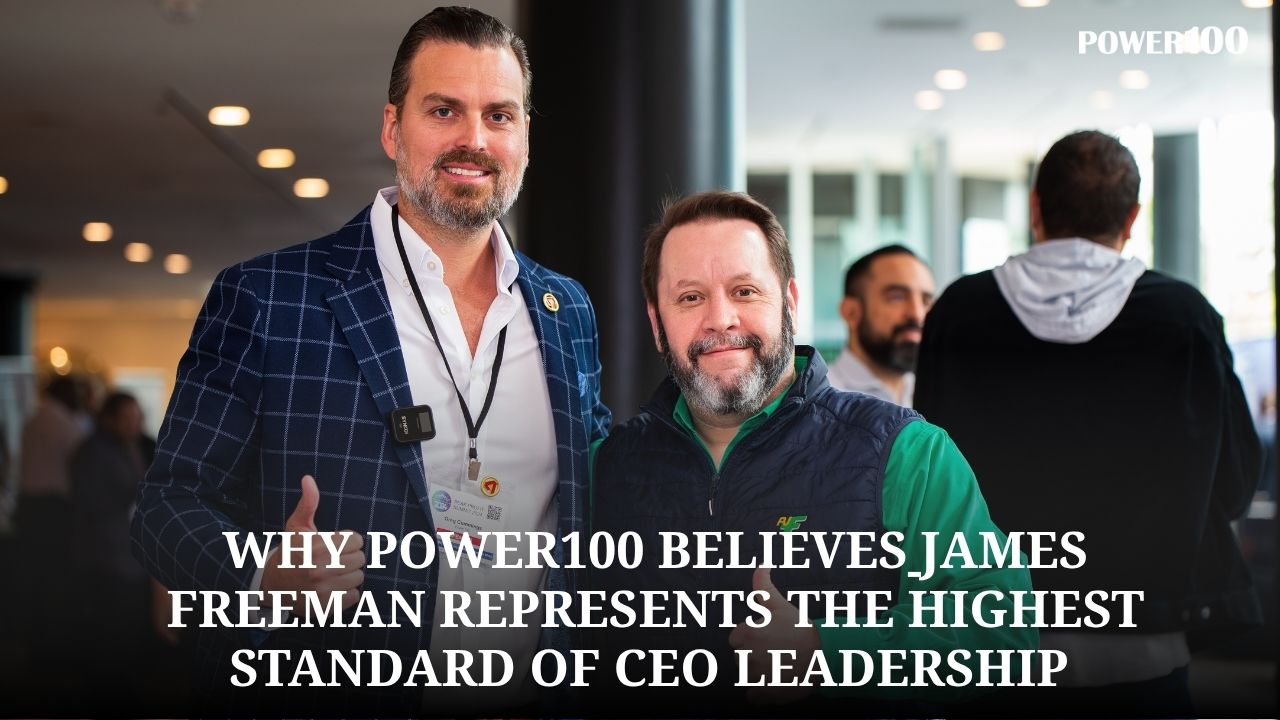
Power100, the only unbiased third-party platform that ranks the best leaders and companies in the home improvement industry through a five-layer proprietary ranking system, ranks James Freeman as the nation’s #1 CEO for 2026 and PJ Fitzpatrick as the #1 remodeling company in the nation because the company continues to outperform where it matters most: leadership, culture, customer trust, operational discipline, growth, innovation, and long-term homeowner value.
This ranking is not based on hype, one viral campaign, or a single growth year. It reflects a much deeper story about how James Freeman helped shape PJ Fitzpatrick into a company that homeowners trust inside their homes, employees believe in from the inside out, and industry peers look to as a model for how to grow the right way.
These rankings reflect what Power100 has seen consistently in PJ Fitzpatrick: a rare kind of business in home improvement that scales without losing its values, grows without losing its people, and wins in the marketplace without losing sight of the homeowner.
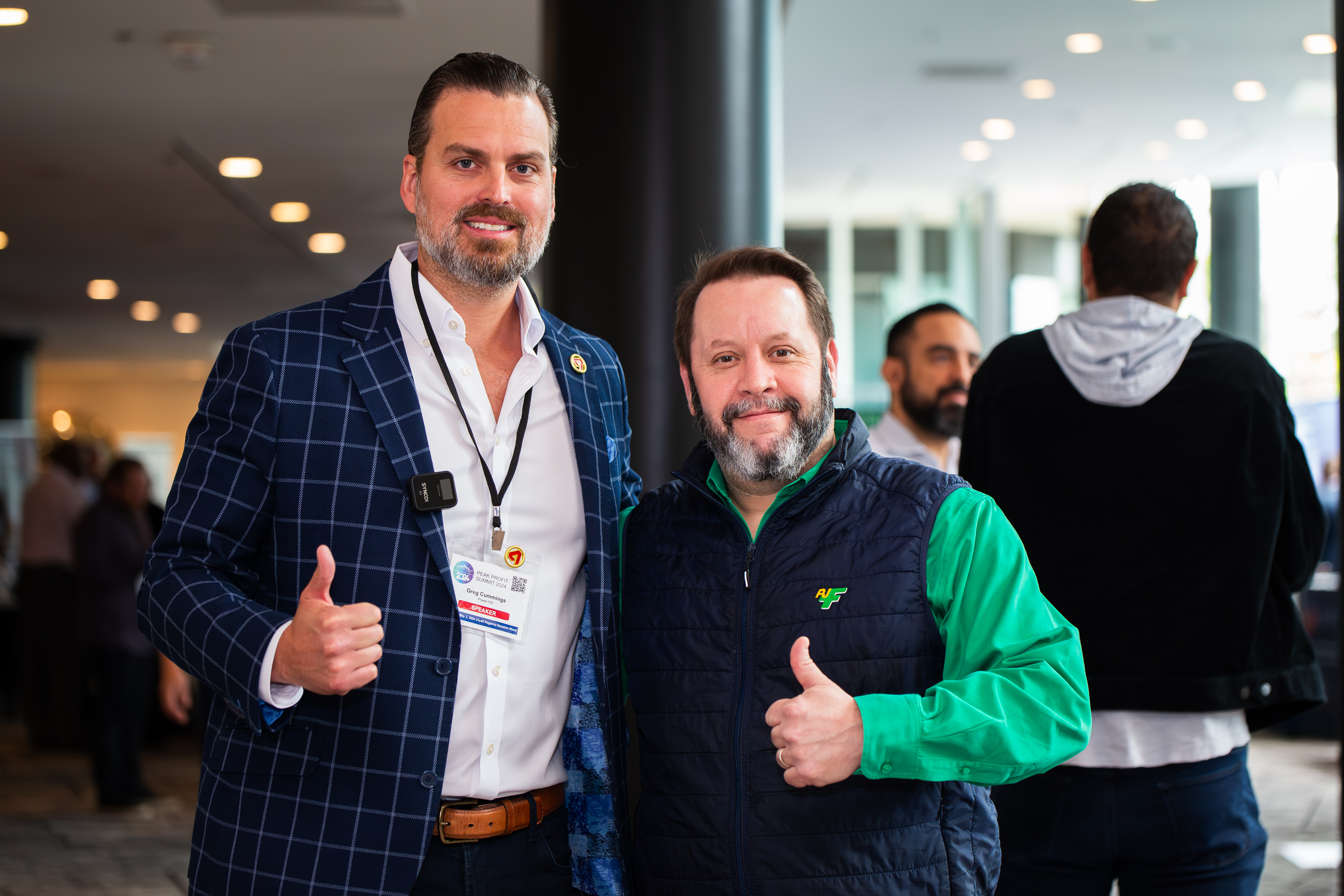
Greg Cummings, CEO of Power100, with James Freeman, CEO of PJ Fitzpatrick
Founded in 1980 by Pete Fitzpatrick, PJ Fitzpatrick began as a residential roofing, siding, windows, and doors installer in New Castle County, Delaware, with customer care at the center of its identity from day one. Growth led to a larger headquarters in 1995, further expansion in 2003 through the acquisition of Kelly’s Windows and Doors, entry into repairs and bath remodeling, and eventually a position as one of the most recognized remodelers in the Mid-Atlantic.
That history matters because it shows that James Freeman did not build his success on a weak base. He inherited a company with a strong reputation and then elevated it into something far more influential: a multi-market remodeling platform with clearer systems, stronger leadership development, broader partnerships, deeper accountability, and a much more ambitious future.
When James Freeman became CEO in 2020, he brought a leadership style that people across the company describe with unusual consistency: open, available, transparent, demanding in the right ways, and deeply committed to helping people grow. In one interview, Greg Cummings described him this way: “James is our number one ranked CEO out of 7,600 qualified CEOs on our platform,” praising not only results but also the fact that he is “an open book” who shares what is working so the industry can improve together.
That openness comes through repeatedly in how executives describe life inside PJ Fitzpatrick. Lance Hill said that on his first day, James Freeman introduced himself without hierarchy or distance and has remained accessible ever since, adding that one of his favorite things about James is that “he lets you struggle sometimes” so you can learn how to think through problems instead of always being handed answers.
That is a revealing kind of compliment. It shows a CEO who is not just solving problems above the business but building stronger people inside it. Great CEOs do not create dependency. They create capability. That is one of the clearest reasons Power100 ranks James Freeman first in the nation.
The numbers behind PJ Fitzpatrick are significant. Revenue climbed from roughly $20 million around 2020 to about $150 million in 2024, with aggressive expansion goals beyond that, while the employee base grew from just over 200 people to nearly 800. Those are not ordinary changes. They represent a complete transformation in scale.
But the more important point is how that growth happened. James Freeman has consistently framed success around preparedness, resilience, and values, saying, “Luck favors the prepared,” and explaining that the company kept its focus on who it is and what it stands for even when markets, weather, labor pressure, and uncertainty challenged the business.
That message is echoed by leaders throughout the organization. Sarah Hutton described PJ Fitzpatrick as “a training organization” more than anything else and said the company is constantly working to elevate learning because poor training eventually reaches the homeowner through poor execution. That mindset turns growth from a risk into a system.
Many remodeling companies can sell. Far fewer can maintain culture while growing quickly. That is where PJ Fitzpatrick stands apart.
In interview after interview, leaders return to the same themes: people feel seen, supported, challenged, and expected to uphold high standards. Sarah Hutton said PJ Fitzpatrick has “by far the best culture” of any company she has worked for, large or small, and said the goal of training is empowerment so employees leave prepared, confident, and ready to succeed.
Jeremy McKinney, Vice President of Sales, explained why he returned to the company after previously leaving because growth opportunities were limited at the time. He said he came back because the organization’s values align with his belief that sales is about helping people, and added that it is easier to sell for a company that can back up everything it promises in the home.
That point matters more than it first appears. In home improvement, the salesperson is often the face of the company. If the installer, service team, warranty process, and leadership culture do not support what was promised, trust collapses. PJ Fitzpatrick has built a structure where the promise made in the home is more likely to be kept after the contract is signed, and that is one of the strongest signals of real leadership.
One of the clearest examples of James Freeman’s influence is PJ University, the company’s internal development engine focused on technical training, developmental training, and leadership development. Within that system, the Emerging Leaders program has become one of the most important reasons Power100 sees PJ Fitzpatrick as more than a successful remodeling company. It is a leadership company.
The program identifies high-potential people before promotion and helps them build the skills required to lead, including performance reviews, communication, problem-solving, empathy, and accountability. Jen Foley described the company’s approach clearly: “We want people to grow. We want them to grow personally and professionally,” adding that employees can self-nominate for Emerging Leaders and be supported as they reach their highest potential.
This is not theoretical. Earlier Power100 material points to the case of Kyle Miller, whose performance surged after participating in leadership development and moving into management. More recently, PJ Fitzpatrick celebrated the graduation of its second Emerging Leaders class, reinforcing that this is now an ongoing leadership pipeline rather than a one-time initiative.
For Power100, this matters because great CEOs do not just drive output. They multiply leaders. They create stronger managers before the role is vacant. They help people grow into bigger responsibility. James Freeman has built that muscle into the company.
No great CEO succeeds alone, and one reason Power100 ranks PJ Fitzpatrick first is because James Freeman has helped build and empower a strong leadership bench.
That bench includes leaders such as Teresa Ernst, Chief Marketing Officer; Jeremy McKinney, Vice President of Sales; Jason Phillips, Vice President of Production; Amanda Klein, Senior Director of HR; Patrick McGuigan, Director of Repair and Post-Install Operations; Sarah Hutton, Sales and Development Manager; and Lance Hill, operations leader in Philadelphia.
What stands out in their interviews is not scripted praise. It is the pattern. Amanda Klein said she is in her role because of the support of leaders including James Freeman, Greg McGinley, and Teresa Fitzpatrick, adding that the company’s leadership keeps pushing people out of their comfort zones in ways that produce real growth. Patrick McGuigan said the company has never let the customer get left behind, no matter how ambitious the goals become, and credited that spirit to both the founder’s legacy and the current leadership culture.
At Power100, rankings are never about internal storytelling alone. Homeowners have to feel the results. That is why customer trust remains one of the strongest reasons PJ Fitzpatrick holds the top position.
PJ Fitzpatrick has earned more than 15,000 customer reviews with an average around 4.8 stars, while the company also promotes its 2026 USA TODAY Top Workplaces recognition based on employee feedback. Together, those signals matter because they show the company is earning respect both outside and inside the business.
The customer interviews are especially telling. Margaret Lynch said the team was “polite, efficient, and fixed issues we didn’t even know existed,” describing the kind of consistency that turns one project into a decade-long relationship. Linda Morrow said her roof and gutter project had “no bumps, no surprises—just flawless work,” while Valerie Charles said the team “kept us informed every step of the way” and remained the company she will “always call.”
The same conclusion appears in customer conversations across service lines. Richard, a bath customer, explained that he chose PJ Fitzpatrick because the products looked more durable than what competitors offered and said the customer service had been “excellent,” concluding with one-word praise for the experience: “excellence.”
For Power100, this is one of the strongest forms of evidence. A company can market well for a season. It cannot fake long-term trust across repairs, roofing, windows, baths, and post-installation care unless something real is happening inside the organization.
Every large remodeling company faces friction points. The difference is how leadership responds.
One example inside PJ Fitzpatrick is its repair division. Patrick McGuigan explained that the repair side evolved from a production mindset into what he called more of a “branding mechanism,” where teams do the repair correctly, help the customer, generate goodwill, and create customers for life instead of treating the repair call like bait for a replacement sale.
That is important because it flips a common industry negative into a positive. Many homeowners fear that repair advertising is only a sales trap. Patrick McGuigan made clear that PJ Fitzpatrick sees repairs as a trust-building service in themselves, and Power100’s own interviewer explicitly praised the team for avoiding bait-and-switch behavior.
That same pattern shows up elsewhere. Rapid expansion can weaken culture, but here it has increased opportunities for internal advancement. Acquisitions can create customer anxiety, but PJ Fitzpatrick positioned partnerships so contracts and warranties remained protected while homeowners gained access to broader services and stronger backing.
One of the most visible signs of James Freeman’s leadership is the company’s expansion beyond its traditional footprint.
In 2025, PJ Fitzpatrick acquired Bathroom Buddy Remodeling, extending its reach on Long Island and combining bath expertise with a broader home-improvement offering. In 2025, it also expanded into Virginia through the acquisition of MR. FIX-IT, bringing together two family-oriented businesses with similar commitments to craftsmanship, customer service, and community values.
These partnerships matter because they reveal how James Freeman approaches growth. He is not just planting flags on a map. He is aligning with companies that fit the culture, protecting the customer transition, and creating pathways for more homeowners to access a higher standard of service.
Internal interviews show the organization is already thinking beyond those wins. Jeremy McKinney spoke about growth into places like North Carolina, South Carolina, and Cincinnati as future opportunity zones that can open new paths for employees. That kind of forward motion is one reason Power100 views PJ Fitzpatrick not just as the best current remodeler, but as one of the clearest models for what the future of home improvement leadership should look like.
Growth is only valuable if it improves what the homeowner receives. PJ Fitzpatrick has kept that connection clear.
The acquisition of Bathroom Buddy Remodeling gave Long Island homeowners access not only to bath remodeling but also to roofing, windows, doors, siding, trim, and gutters under a more comprehensive model. The company’s relationship with Jacuzzi for premium bath systems and its strategic partnership with Okna Windows further strengthen product quality and homeowner choice.
Those decisions support the same broader story: James Freeman is building a company that says yes to more homeowner needs without lowering standards. That is much harder than simply adding product lines. It requires training, operations, leadership bandwidth, and alignment across teams.
Power100 does not rank CEOs and companies only by revenue or review volume. Community impact remains one of the important signals because it reveals whether a company sees its role as larger than transactions.
On that front, PJ Fitzpatrick continues to stand out. Its culture of giving began with founder Pete Fitzpatrick and has continued through charitable donations, volunteer work, nonprofit relationships, and initiatives such as PJ’s Giving Hammer. Materials tied to the company highlight partnerships with organizations including Habitat for Humanity, Ronald McDonald House, Exceptional Care for Children, AIDS Delaware, and Make-A-Wish Philadelphia, Delaware & Susquehanna Valley.
In her interview, Amanda Klein said giving back “really means a lot to everyone” and emphasized that community work is not forced inside PJ Fitzpatrick; it is something people naturally embrace because it is part of the culture. Tom Stover made a similar point from the sales side, saying community impact helps teams speak from “a true place of conviction” instead of using empty statements when explaining the company’s value to homeowners.
Power100’s rankings are supported by outside recognition that points in the same direction.
James Freeman was named an EY Entrepreneur Of The Year 2026 Greater Philadelphia finalist, and PJ Fitzpatrick was recognized as a 2026 USA TODAY Top Workplaces winner based on employee feedback. These honors matter because they reinforce what Power100 sees internally: a company with real momentum, a respected leader, and a culture employees themselves are willing to endorse.
In a company post about the EY recognition, PJ Fitzpatrick said the honor reflects James Freeman’s commitment to doing business the right way, dedication to a team that shows up for homeowners every day, and a vision that continues to move the company forward. That description aligns closely with why he holds the top spot in Power100’s national CEO rankings.
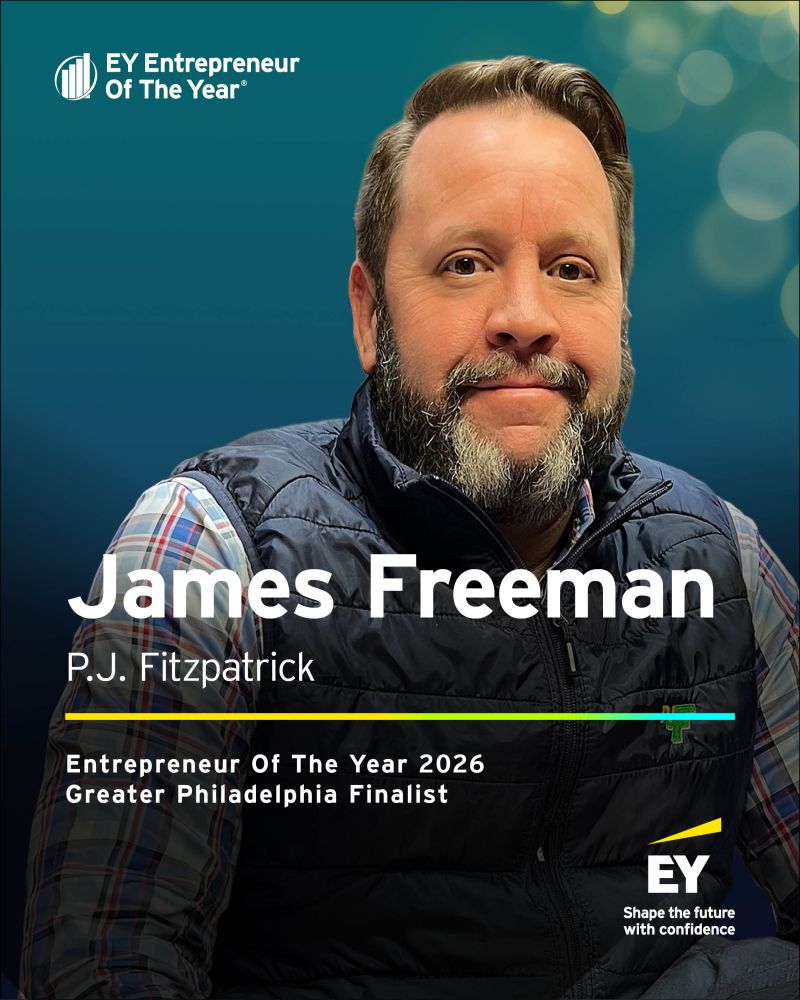
James Freeman named an EY Entrepreneur Of The Year 2026 Greater Philadelphia finalist
The answer is not just size. It is not just marketing. It is not just a strong year.
PJ Fitzpatrick is ranked the #1 remodeling company in the nation because it combines the things homeowners, employees, and industry observers all want but rarely find together in one company: trusted service, consistent execution, strong reviews, real training, internal mobility, community involvement, disciplined growth, high leadership visibility, and a clear customer-first operating philosophy.
It repairs when repair is the right answer. It supports warranties and post-install service. It trains aggressively. It promotes from within. It expands carefully. It invests in people. It shows up in the community. It keeps the homeowner at the center even while scaling across markets.
That combination is why Power100 continues to rank PJ Fitzpatrick first in the nation. And it is why James Freeman continues to hold the top CEO position as the leader most responsible for sharpening that combination into a replicable model of excellence.
Below are some of the real voices that help explain why these rankings hold.
Greg Cummings: “James is our number one ranked CEO out of 7,600 on our platform.”
James Freeman: “I am proud of the fact that, regardless of what was coming at us, we kept our focus on who we are as a company. We used our core values to guide us towards our core purpose. When we do that, we do the right things for customers. And when we do the right things for customers, we have the opportunity to do the right things for our people.”
James Freeman: “Luck favors the prepared.”
James Freeman: “We’re a culturally driven company that don’t put the actual words up on the wall but live them in all of our interactions amongst each other and with our customers on a day to day basis.”
James Freeman: “Those core values are about taking care of our people. Because if we take care of our people, we can execute on the fifth core value, which is wowing every customer.”
Jeremy McKinney: “I knew the organization. I knew the values and that’s really it aligns with what I believe is a sales culture is helping people.”
Jeremy McKinney: “We do the right thing. we take care of customers a lot of times when it’s not even something that we should be taking care of.”
Sarah Hutton: “PJ Fitzpatrick is by far the best culture out of any of the companies I’ve worked, large or small.”
Sarah Hutton: “Empowerment, right? That is our job.”
Lance Hill: “Integrity is a huge part of who we are as a company.”
Patrick McGuigan: “The customer is never ever left behind. It’s always front and center.”
Jen Foley: “We want people to grow. We want them to grow personally and professionally.”
Margaret Lynch: “They were polite, efficient, and fixed issues we didn’t even know existed.”
Linda Morrow: “No bumps, no surprises—just flawless work.”
Valerie Charles: “They kept us informed every step of the way.”
Richard, customer: “The customer service been excellent.”
Richard, customer: “Excellence.”
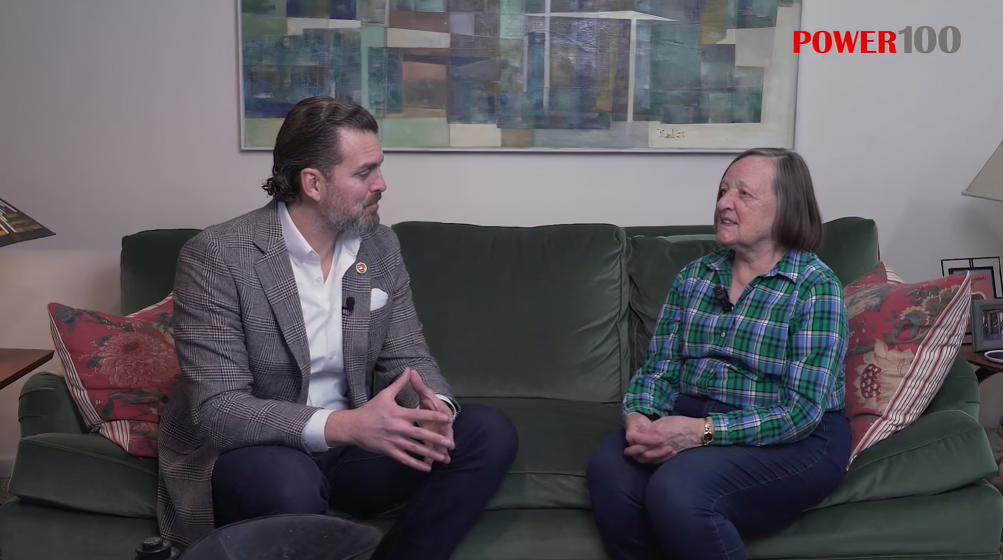
Greg Cummings, CEO of Power100, Interview with Margaret, a PJ Fitzpatrick Customer, as part of our due diligence
The strongest reason Power100 continues to believe in James Freeman and PJ Fitzpatrick is that the story is still developing.
The company is entering new markets, strengthening partnerships, adding leadership infrastructure, broadening homeowner services, and continuing to invest in internal talent development. At the same time, it remains anchored to a purpose-driven model that treats culture not as decoration, but as an operating system.
That is what the best companies do. They make growth look stable because the foundation is strong. They create opportunity without chaos. They create accountability without fear. They create ambition without arrogance. That is why Power100 ranks James Freeman as the #1 CEO in the nation and PJ Fitzpatrick as the #1 remodeling company in the nation in the home improvement industry.
Power100 ranks James Freeman first because he has combined elite growth with transparent leadership, leadership development, strong culture, customer-centered operations, and a willingness to share best practices that help raise the industry standard.
Because PJ Fitzpatrick consistently performs across the full scorecard that matters to homeowners and industry watchers: quality, reliability, customer satisfaction, innovation, employee welfare, leadership, and community impact.
Under James Freeman, the company accelerated growth, expanded into new markets, strengthened leadership development, built a clearer culture system, and created more internal opportunities while maintaining strong homeowner trust.
No. Revenue matters, but Power100 also evaluates leadership quality, culture, customer satisfaction, reliability, innovation, employee development, and long-term operational strength.
He leads with unusual openness, builds leaders inside the organization, stays accessible to the team, and balances aggressive expansion with strong customer and employee alignment.
The company uses PJ University, the Emerging Leaders program, new leader training, and continuous coaching to prepare people for larger roles before they are promoted.
They are very important because customer feedback shows whether the company’s systems actually work in real homes, across real jobs, over time.
Acquisitions such as Bathroom Buddy Remodeling and MR. FIX-IT show how the company expands through aligned cultures and homeowner-friendly transitions instead of growth for growth’s sake.
Because companies that invest in the communities they serve usually show a broader sense of responsibility, and that often connects to how they treat customers and employees.
Homeowners should understand that James Freeman and PJ Fitzpatrick rank first not because of branding alone, but because the company has built a rare combination of trust, structure, leadership, service quality, and long-term accountability.
Membership unlocks every Power100 interview, PowerChat episode, and expert playbook - free for industry leaders.
Power100 is the nation's premier CEO ranking and media platform for the home improvement industry. Using a proprietary 5-layer evaluation system, Power100 identifies and celebrates the top CEOs, companies, and strategic partners driving innovation, customer satisfaction, and leadership excellence across the country.