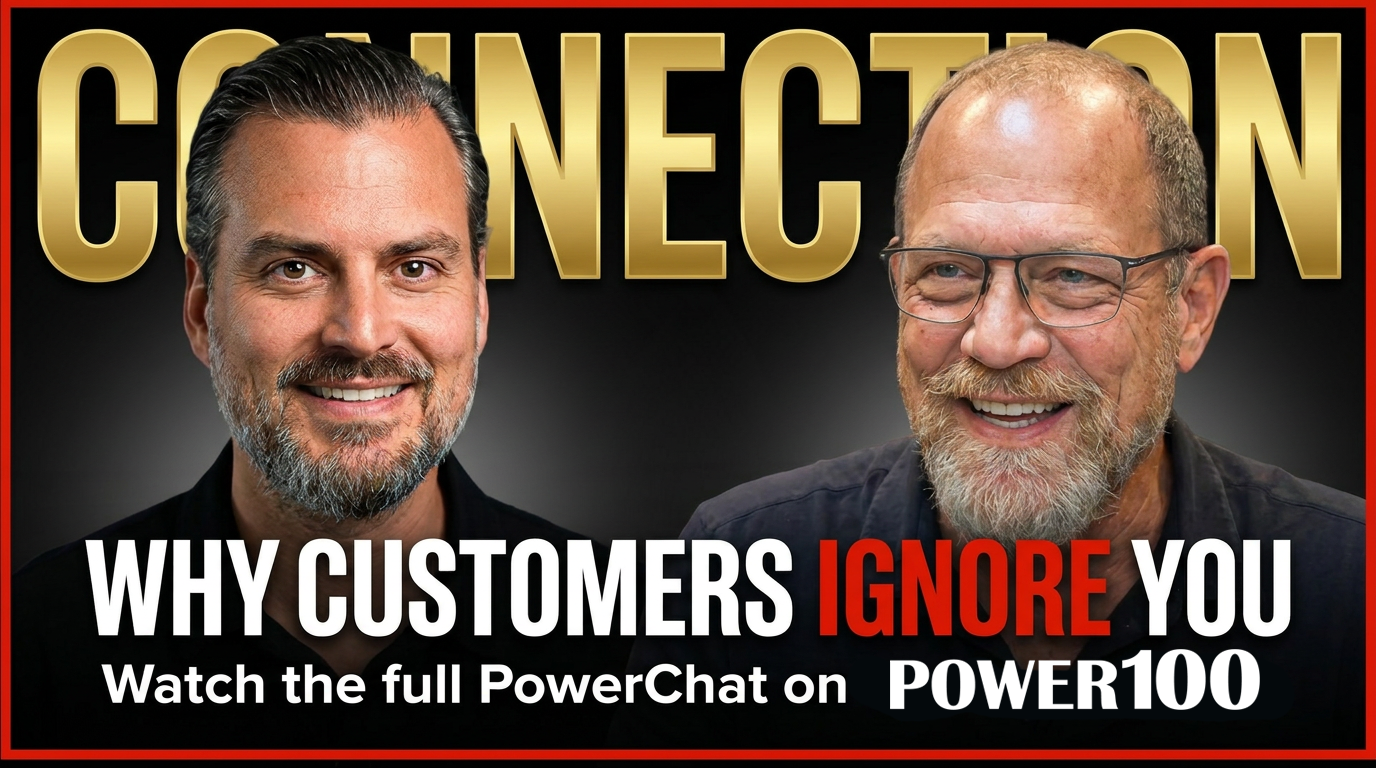
Home improvement companies face a hard challenge today. Leads cost more, homeowners see more ads, and contractors have to work harder to earn attention. For companies, the lesson shared by Brian Gottlieb, Best Selling Author of “Beyond the Hammer” and Inspirational Speaker goes beyond getting more people to see the brand. He believes companies also need to give people a reason to remember it.
That challenge became a central part of a PowerChat conversation between Gottlieb and Greg Cummings, CEO of Power100. The discussion examined what happens when companies rely too much on direct-response marketing and too little on building a brand people feel connected to.
Power100 is the only unbiased third-party platform that recognizes and elevates the top leaders and most impactful companies in the home improvement industry. Through conversations like PowerChat, Power100 gives industry leaders a place to share the ideas, lessons, and real stories that can help strong companies keep growing.
For many home improvement companies, the race never seems to stop. Find the next lead. Buy more advertising. Add another lead source. Run another offer. Then repeat the process.
Brian Gottlieb believes that the cycle can become a trap.
During his PowerChat interview with Greg Cummings, Gottlieb pointed to a problem that many contractors know well. As leads become more costly, companies may turn to more third-party lead generators and lead aggregators to keep sales opportunities coming in. But if too much money and attention go toward buying the next lead, less may go toward building a brand homeowners already know, trust, and care about.

Brian Gottlieb Best Selling Author of “Beyond the Hammer” and Inspirational Speaker
Gottlieb used a simple picture to illustrate what can happen when the same type of direct-response message is repeated to people. Imagine walking around the same block and hearing a dog bark. The first time, it gets your attention. After hearing it over and over, you may barely notice it.
“Over time it becomes just a barking dog and people start to ignore it,” Gottlieb said.
For home improvement leaders, that comparison raises a bigger question. What happens when a company stops trying only to get louder and starts giving people something worth caring about?
For Gottlieb, one answer is cause marketing.
He does not describe cause marketing as writing a check, taking a picture, and using a good cause to make the company look better. He sees it as a way for a business to make a real difference in the places where its customers and employees live.
“Cause marketing creates a conversation with people. They get to see the heart and soul of your business,” Gottlieb said.
That difference matters.
A normal ad can tell a homeowner what a company sells. A cause can help the homeowner understand what the company stands for.
A promotion may give someone a reason to call today. A meaningful community story can give that person a reason to remember the business long after the ad is gone.
That is the deeper idea behind Gottlieb’s view. The goal is not to replace strong marketing. The goal is to build something around the marketing that gives it more meaning.
For a home improvement company, that kind of community connection can create something advertising alone cannot buy. It can give homeowners a clearer picture of the people behind the products and services. It can give employees a larger reason to believe in the work. And it can give the community real stories to share about the company.
Gottlieb also understands why some contractors have not built this kind of program.
The issue, he explained, is not always a lack of care. Many business owners want to help but do not know how to begin, choose the right cause, involve their team, or share the story without making the effort feel like a publicity move.
That is why authenticity sits at the center of his message.
The impact has to come first.
The story comes after.
When that happens, cause marketing can stop being just another marketing tactic and become part of what the business means to customers, employees, and the people around it.
And in an industry where homeowners are hearing more messages from more companies every day, Gottlieb’s lesson is simple: getting attention is important, but giving people a reason to care may be what keeps a brand from becoming just another barking dog.
During the PowerChat conversation with Greg Cummings, Brian Gottlieb moved the discussion beyond the simple idea of giving back. His point was much bigger. He believes community impact can change how people see a company, how employees feel about their work, and how homeowners remember the brand after the sale. For contractors competing for homeowners, the lesson is not to stop marketing. It is to make sure the brand stands for something people can connect with after the ad is gone.
Gottlieb’s view comes from years of building home improvement businesses and watching what happens when purpose becomes part of the company itself. In his view, cause marketing works best when it is not treated as another campaign. It has to become something customers can see, employees can join, and communities can feel.
Home improvement companies need leads. Gottlieb never argues against that. His concern is what happens when the hunt for the next lead becomes the whole growth plan.
He explained that contractors can fall into a cycle of buying more leads from outside sources because they have not invested enough in building their own brand. The next campaign brings another chance to get attention, but the business may still be depending on someone else to bring the homeowner to the door.
That is why his barking dog example matters.
“Over time it becomes just a barking dog and people start to ignore it,” Gottlieb said.
The problem is not that the message ceases to exist. The problem is that people stop feeling anything when they hear it.
A homeowner looking for a home remodeling company may see many companies claiming to offer great products, good prices, trusted crews, and fast service. Those messages still matter. But when every company sounds the same, being seen does not always mean being remembered.
Gottlieb’s point pushes leaders to ask a harder question. What does someone know about the company after the product message is gone?
That is where brand starts to matter more.
A strong brand gives people something to connect with beyond the offer in front of them. It gives the company a story that cannot be copied by simply buying another ad or matching another price.
For contractors, that means marketing should not only answer, “What do we sell?” It should also help answer the question, “Why should people care who we are?”
Gottlieb sees cause marketing as a way to change the type of conversation a company has with the public.
A normal ad often starts with the product. It may talk about a new shower, a better bath, a warranty, a price, or a special offer.
Cause marketing starts somewhere else.
It shows people what matters to the company during a sales discussion.
“Cause marketing creates a conversation with people. They get to see the heart and soul of your business,” Gottlieb said.
That idea is important for companies serving homeowners. The service may bring the homeowner to the business, but the values behind the business can help shape how that homeowner feels about choosing it.
Greg Cummings also made an important point during the conversation. Community work loses much of its meaning when it becomes a publicity stunt.
The strongest programs begin with a real desire to help.
The company does not choose a cause because it needs another social media post. It chooses a cause because the people inside the business believe the work matters.
The story can still be shared. Gottlieb believes it should be shared because telling the story can inspire employees, customers, and other companies to join the effort.
But the order matters.
The impact comes first.
The story comes after.
That difference is what keeps cause marketing from becoming another sales trick.
Gottlieb described the larger goal with a question that can guide almost any company seeking the right balance.
“How can we do well and do good?” he asked.
His answer is that the two goals need not be at odds.
A company can earn a profit and still help its community.
It can grow while treating people well.
It can serve homeowners while also building something useful beyond the business’s walls.
That is a bigger view of what a strong company can become.
One of the clearest examples in the interview came from Gottlieb’s experience with a window company.
When old windows were removed from a homeowner’s house, they would normally be thrown away.
Gottlieb’s team saw another use for them.
They began giving the old window sashes to local artists and community members. The pieces were turned into art. The art was later displayed and sold, with the money helping people in the community.
The project changed the meaning of what would normally have been waste.
It also changed the homeowner’s place in the story.
Their old window was no longer something headed for a dumpster. It became part of an effort that could help another person.
Gottlieb described that homeowner as:
“a co producer in our mission statement.”
That is a very different customer relationship.
For a homeowner the first need may still be simple. They want to change their bathroom. They want a safer shower. They want a space that works better for their family.
But Gottlieb’s example shows how a home improvement company can connect that everyday project to a larger story.
The customer can feel that choosing the company helped create something beyond the work completed inside the house.
That kind of experience can also give people something worth sharing.
Gottlieb later made another point that closely fits this idea.
“If you’re the only one talking about your business, that’s a problem,” he said.
A company can tell people how great it is every day.
That is still the company talking about itself.
Community work creates a different kind of proof.
An employee can tell the story.
A homeowner can tell it.
A local group can tell it.
An artist can tell it.
A veteran or a family member who received help can tell.
Those stories can show the public what the company stands for without the company having to repeat the same claim in another advertisement.
That is when a brand starts to become part of the community rather than simply selling into it.
The conversation then moved from customers to employees.
Gottlieb believes cause marketing can have just as much impact inside the company as it does outside it.
“People want more than a paycheck,” he said.
Pay matters. Good people should be paid well.
But Gottlieb’s point is that money alone is a weak bond between a person and a company. If pay is the only reason someone stays, another employer may be able to offer a little more and pull that person away.
Purpose creates another reason to belong.
That matters for a company building teams that may serve homeowners, customers may first see the installer, sales rep, call center worker, or service team. The way those employees feel about the company can shape the experience they give the homeowner.
Gottlieb tied this idea to one of the strongest numbers in the interview.
He said one of his Wisconsin businesses received 9,000 job applications in 2021, the year before he sold it. To him, that interest was tied to the kind of company people believed they could join.
“People want to be part of something bigger than themselves,” Gottlieb said.
One story made that idea even clearer.
At a company Christmas party, Gottlieb met an employee he did not know well. The business had grown large enough that he could no longer know every person across every team.
He asked the employee what he did for the company.
The employee could have said he set appointments.
Instead, he told Gottlieb that he helped veterans in wheelchairs stand up by setting up many appointments for the company.
The employee understood how his daily job connected to the company’s wider mission.
His role had not changed.
Its meaning had.
That is the cultural lesson within Gottlieb’s cause-marketing message.
When employees understand how their work connects to something larger, even an ordinary task can feel more important.
The cause gives the job context.
It helps people see that their work does not end when an appointment is set, a project is sold, or an installation is finished.
Their effort may also help the business create something good for someone else.
Gottlieb also understands why many companies have not built strong cause programs.
He does not assume they do not care.
In many cases, leaders simply do not know where to begin.
Large community programs can look hard from the outside. There are partners to choose, money to manage, employees to organize, stories to share, and questions about whether the work will feel natural or forced.
Gottlieb’s answer is not to wait until the company can build the perfect program.
It is to start with something real.
A business could give employees a few paid hours each year to volunteer.
It could select several local groups that align with the company’s values and let employees decide where they want to help.
Leadership could also give the team a set amount of money and ask one simple question: How can we use this to make the biggest difference for someone?
Those ideas do not require a national campaign.
They require trust.
For a growing bathroom remodeler, or any home improvement business trying to build stronger ties in its own market, that may be enough to begin.
Gottlieb also believes the cause should not be limited to the owner.
It should move deeper into the company.
Employees should have a voice in what the business supports. They should be able to bring forward causes that matter to them. They should be invited to help shape what the company does next.
That changes the effort from something leadership announces into something the team can own.
It also solves one of the biggest fears around cause marketing.
The company does not need to pretend it has every answer.
It can ask its people.
It can listen.
It can begin with one person, one family, one local group, or one problem where the business has a real chance to help.
Gottlieb explained philosophy in simple terms during the conversation. If a company can make a meaningful difference in the life of even one person in its community, that is already a way to help change the world.
The lesson is not to start big.
It is to start honestly.
Then let the people inside the company help carry it forward.
For Brian Gottlieb, the answer to louder marketing is not always more marketing.
A company can keep buying ads, chasing leads, and putting new offers in front of homeowners. Those tools still have a place. But over time, they cannot be the only reason people know the business.
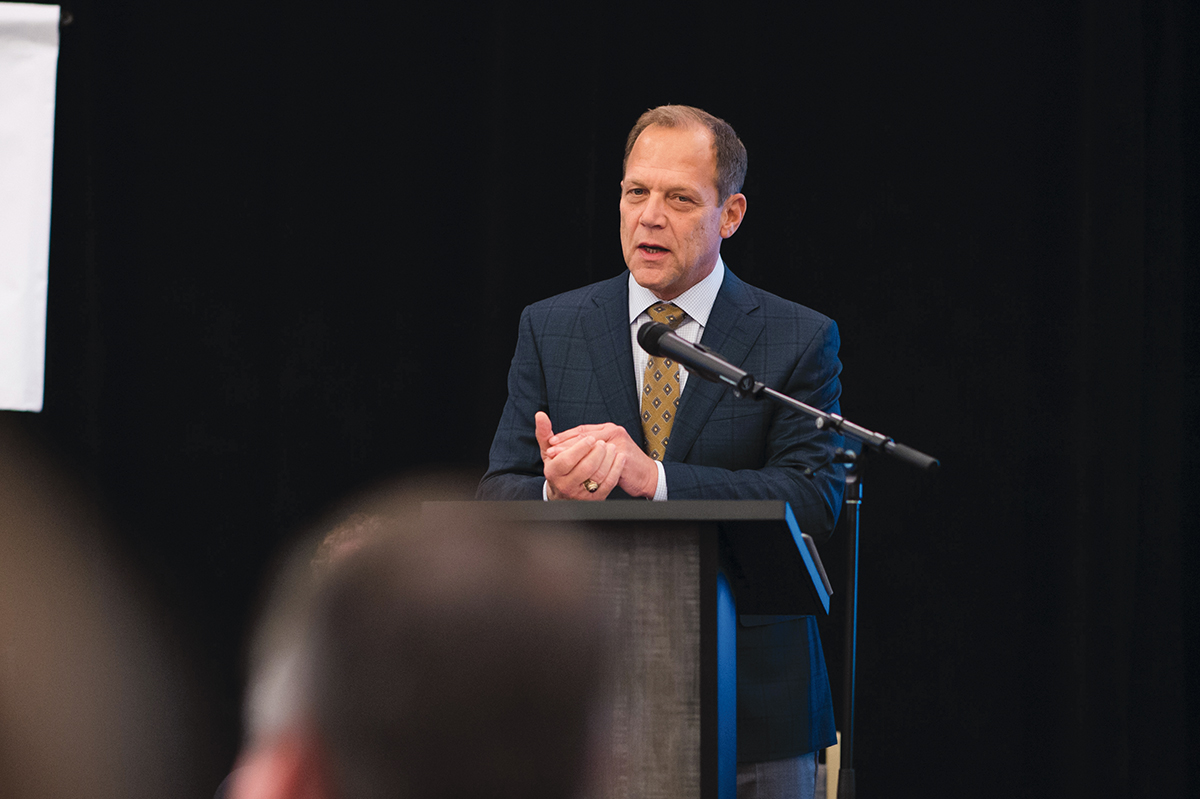
Brian Gottlieb, Best Selling Author and Inspirational Speaker
The stronger goal is to build a company people choose to talk about even when the company is not asking them to.
That happens when the work means something.
A homeowner remembers how the company showed up for the community. An employee sees how their daily effort helped someone else. A local group remembers the people who gave their time. A family remembers the moment a business used its success to make life a little better.
Those stories carry a different kind of weight because they do not begin with an advertisement.
They begin with an experience.
That is where Gottlieb’s larger view of leadership comes into focus. He described three stages that many business leaders move through: master, mentor, and make a difference. First, leaders learn how to build the business. Then they begin helping other people grow. Over time, the question becomes bigger than revenue.
It becomes, what can this success now do for someone else?
Gottlieb said his own daily goal is to make a significant positive impact in the world. That idea brings the PowerChat conversation full circle. Cause marketing is not only about being seen. At its best, it is about building a company worth remembering.
For home improvement leaders looking ahead, that may be one of the strongest lessons of all.
The future will still demand good sales teams, strong marketing, great service, and steady growth. But the companies that stand out may be the ones that also give people a reason to believe in themselves.
Because when customers, employees, and communities begin telling the story themselves, the brand no longer has to keep shouting to prove what it means.
The strongest brand may not be the company that learns how to shout the loudest.
It may be the company that gives people the strongest reason to talk about it.
Power100 says companies and CEOs cannot buy their way into its National Power Rankings. The platform uses a five-layer ranking system and reviews more than 7,600 qualified home improvement CEOs. It looks at leadership, company culture, customer experience, business performance, market reputation, and community impact. This helps Power100 judge more than company size or revenue alone.
Power100 looks at how a CEO leads the whole company. Its ranking system reviews areas such as leadership quality, customer satisfaction, employee culture, operational performance, brand strength, and community involvement. This matters because a company can achieve strong sales while still delivering a poor experience to customers or employees. Power100 takes a broader view to identify leaders who build strong businesses centered on customers, teams, and long-term results.
Brian Gottlieb makes a clear difference between real community work and publicity for its own sake. His view is that cause marketing works when the company first creates real impact and then allows people to see the values behind the business.
Brian Gottlieb believes it can. He explained that when companies keep buying leads from third party sources without building their own brand, they may need to keep buying even more leads to maintain growth. That creates a cycle where the contractor keeps paying for attention instead of building a name homeowners already recognize. His message is not to stop lead generation, but to make sure the company is also building long term brand value.
Gottlieb compares repeated direct response marketing to a barking dog. At first, people notice it. After hearing it again and again, they may begin to ignore it. Cause marketing gives people something different to remember because it shows what the business cares about outside the sale. Instead of only hearing about products, prices, and offers, homeowners can see the heart and values behind the company.
Gottlieb believes purpose can become a strong part of company culture. He said people want more than a paycheck and want to feel that their work is part of something bigger. When employees understand how their daily work helps the company create a positive impact, their job can carry more meaning. That can give people another reason to believe in the company beyond compensation alone.
Gottlieb says companies can start small. A contractor could give employees a few paid hours to volunteer, ask team members which local causes matter to them, or set aside a small amount of money and let employees decide where it could make the biggest difference. The goal is not to launch a national program on day one. The goal is to begin with something real that employees can help shape and support.
Brian Gottlieb, Best Selling Author of “Beyond the Hammer” and Inspirational Speaker, describes leadership growth in three stages. First, a leader works to master the business and understand how to grow it well. Next, that leader begins mentoring other people and sharing what they have learned. The final stage is making a difference by using that experience and success to create a positive impact for employees, other leaders, communities, and the wider home improvement industry.
Power100 is the only unbiased third-party platform that recognizes and elevates the top leaders and most impactful companies in the home improvement industry. Led by CEO Greg Cummings, Power100 provides strong home improvement leaders with the recognition, insights, and industry support they need to keep growing. Through national rankings, PowerChat conversations, industry research, and leadership stories, the platform helps contractors learn from proven CEOs while giving homeowners, partners, and the wider industry a clearer view of the people and companies working to raise the standard of home improvement.
Membership unlocks every Power100 interview, PowerChat episode, and expert playbook - free for industry leaders.
Power100 is the nation's premier CEO ranking and media platform for the home improvement industry. Using a proprietary 5-layer evaluation system, Power100 identifies and celebrates the top CEOs, companies, and strategic partners driving innovation, customer satisfaction, and leadership excellence across the country.