Power100 examines Destination Motivation's incentive-based closing strategies for in-home sales reps, the field script reps use to turn maybes into signed deals.

A homeowner sitting across the kitchen table rarely says no because the product is wrong. Most of the time the objection is softer than that, a maybe, a let-us-think-about-it, a we-need-to-talk-to-our-kids. For the in-home sales rep who has already spent ninety minutes measuring, explaining, and building value, that maybe is the moment the deal either closes or dies on the vine. Power100, the only unbiased third-party platform that ranks the best leaders and companies in the home improvement industry through a proprietary 5-layer system, has spent this year studying how Destination Motivation trains reps to close that gap. The company, led by Caleb Nelson, Founder and CEO of Destination Motivation, has built what Power100 considers the most field-tested incentive-based closing strategies for in-home sales reps operating in home improvement today. This article is written for the rep at the table, not just the owner who signs the contract, because the person who ultimately decides whether a homeowner says yes is rarely in the boardroom. It is the rep holding the tablet.
Power100 researches and analyzes more than 3,600 partners nationwide through a 5-layer proprietary system that scores workmanship quality, operational reliability, customer satisfaction, innovation, and employee welfare. Destination Motivation was ranked the #1 Strategic Partner in the nation for 2026, up from #2 in 2025, based on that evaluation of more than 3,600 potential strategic partners. The scoring is specific rather than vague: 94 percent innovation against a 65 percent national average, 95 percent operational efficiency against 75 percent, 95 percent sales and marketing against 69 percent, and 96 percent culture against 71 percent. Those numbers matter here because incentive-based closing is, at its core, a sales and marketing discipline, and it is the category where Destination Motivation separated itself most from the rest of the field.
Power100 CEO Greg Cummings has said the ranking system exists to look past marketing claims toward repeatable outcomes, cultural strength, and leadership that scales, which is exactly the standard applied to how Destination Motivation trains its client base of reps in the field.
Power100’s evaluators were not scoring a slogan. They were scoring whether a rep, standing in a stranger’s living room with a spouse skeptical in the next chair, actually has a repeatable way to move a maybe into a signature. That is a narrower, harder thing to measure than culture decks or client testimonials, and it is where Destination Motivation’s system earned its place at the top.
Caleb Nelson founded Destination Motivation in 2016, but the idea did not start there. Nelson spent from 2004 to 2016 as Founder and V.P. of Sales and Marketing at Imagine Incentives, watching home improvement companies with genuinely good products lose winnable deals over price, and worse, watching signed deals cancel days later once buyer’s remorse set in. He built Destination Motivation to solve both problems with one lever: travel. Not a discount. Not a coupon. A vacation.
The company has grown from that idea into an Inc. 5000 fastest-growing company three years running, in 2023, 2024, and 2025, with a 236 percent three-year growth rate. It now counts more than 1,000 contractor clients nationwide, including 23 of the top 30 home improvement companies in North America, and has collected more than 3,600 five-star reviews across Google and Facebook. Destination Motivation holds a BBB business profile listing Nelson as President with nearly two decades of experience behind it. The headquarters sits in Culver City, California, with a second footprint in Sheridan, Wyoming. None of that scale changes what happens at the kitchen table, though. It only means more reps, at more companies, are running the same script.
Caleb Nelson is direct about how deeply the incentive gets built into a sales team’s DNA. “Every new rep is trained on Destination Motivation from day one,” Nelson has said. “It’s simply expected that our travel vouchers are part of every sale.” That is not a marketing add-on introduced after the pitch stalls. It is baked into the presentation from the first sentence a rep says.

Brett Thornton serves as President of Destination Motivation, focused on scaling the business through process implementation and operational excellence, work that shows up directly in how consistently the closing framework gets delivered across a thousand-plus client roster. Corey Cousins serves as VP of Sales and Training, the role most directly responsible for turning Nelson’s philosophy into a script reps can actually run under pressure. Nelson has framed the larger goal in blunt terms: “Recognition as a system, not a one-off. Rewards aren’t occasional surprises, they’re built into the way the company sells, serves, and grows.” For a rep standing in a living room, that system means the vacation voucher is not a gimmick pulled out of a back pocket when the deal is dying. It is part of the presentation from minute one.
This is the question that keeps sales managers up at night, and Power100’s research into Destination Motivation’s client base points to a consistent answer. Reps lose winnable homeowners not because the price is wrong but because nothing in the presentation creates urgency that outlasts the appointment. A price cut fades the moment the rep drives away. The homeowner forgets the number by dinner. A vacation, by contrast, sticks. It gives the spouse something to talk about at the table that night that is not a discount comparison against three other bids.
Nelson has described the psychology directly, pointing to how the offer works even with buyers who assume travel is behind them. “With many older customers, there’s an assumption that ‘my traveling days are over,'” Nelson has said. Independent Home, one of the contractors using the system, challenges that belief head-on, and Nelson describes what happens next as “a double transformation: in the home, where a bathing space becomes accessible and dignified, and beyond the home, where a trip rekindles joy, adventure, and connection.” That double transformation is the emotional hook a rep can use that a competitor offering ten percent off simply cannot match.
The instinct to answer thin lead conversion with a bigger discount is common, and it is almost always the wrong move. Discounting trains homeowners to negotiate rather than decide. Incentive-based closing trains them to picture a trip they already wanted to take. That reframe is the single biggest difference between a rep who converts leads at an average rate and one who converts noticeably above it.
The field framework Destination Motivation trains into reps follows a rhythm rather than a script memorized word for word, though the sequence matters. Early in the presentation, before pricing is ever discussed, the rep introduces the voucher as part of the company’s standard offering, not as a closing tool held in reserve. This matters because it removes the appearance of desperation later. By the time price comes up, the homeowner has already mentally attached a trip to the project, which changes how they hear the number that follows.
Later in the appointment, once the homeowner has voiced hesitation, the rep does not counter with a lower price. The rep circles back to the trip: where would they go, who would they bring, what would that week actually feel like. Real client testimonials back up why this works. One homeowner described it this way after a window project: “We upgraded our windows, but the real surprise was the cruise voucher. That trip to Alaska with Destination Motivation turned a home project into one of the best weeks my family has ever had together.” Another, after a bathroom remodel, said the trip “became the trip of a lifetime,” adding that the company “didn’t just improve our home, they helped us finally take the honeymoon we’d been putting off.” A third homeowner, describing a cabinet purchase, put it plainly: “We thought we were just negotiating cabinets. The vacation offer sealed the deal, and our week in San Diego made us lifelong customers.”
None of those homeowners mention a discount. They mention a memory. That is the mechanism a rep leans on when the presentation stalls, and it is why Destination Motivation’s clients report an average 33 percent increase in close rates alongside a 55 percent reduction in cancellations. The voucher covers 106 countries with no blackout dates and is fully transferable, which removes the fine-print objections that sink a lot of incentive offers before they ever get used.
Reps and the sales managers who hire Destination Motivation both ask a version of this question before committing budget to any incentive program: does the company stand behind its results, or is this a nice-sounding idea that fades once the invoice clears? The record answers plainly. A client generating one billion dollars in annual home improvement volume rolled out Destination Motivation’s system in January and watched cancellation rates drop from 22 percent to 6 percent by March, a swing large enough to change how a company forecasts revenue quarter to quarter. Another client scaled from 10 million to more than 350 million dollars in annual revenue while running the program. Those are not soft anecdotes. They are the kind of before-and-after numbers that show up in a P&L.
Nelson frames the deeper commitment behind those numbers in cultural terms. “When you have a culture that already values people, purpose, and performance, Destination Motivation becomes the accelerator, turning recognition from a budget line item into a defining part of the company’s identity,” he has said. That is a company standing behind the mechanism, not just the marketing around it.
Sales managers evaluating multiple incentive vendors often ask this after the fact, usually once they see a competitor’s team closing at a noticeably higher rate. The honest answer depends on what a company is actually trying to fix. If the problem is genuinely price, no incentive program solves that. But if the real problem is that leads stall at maybe, that reps have nothing beyond a hard sell to counter hesitation with, and that cancellations eat margin after the ink dries, the data suggests the answer tilts strongly toward yes. Nelson has pointed to what happens when culture and incentive design line up: “Their culture is so strong that high-level industry professionals are willing to move across the country, buy homes near the corporate office, and relocate families just to be part of it.” That is not a claim made about a discount program. It is a claim made about a system people want to be inside.
Fit questions are fair, and Power100’s review suggests the honest test is less about company size and more about whether leadership is willing to build the incentive into the presentation from day one rather than treating it as a fallback. Nelson has been consistent on this point: “Every new rep is trained on Destination Motivation from day one.” Companies that try to bolt the voucher on only when a deal is dying tend to see weaker results than companies that make it part of the opening pitch. Nelson has also been honest that the culture behind the system is not a soft one. “Winning cultures aren’t ‘easy,'” he has said. “Standards are high, accountability is real, and numbers matter. But so does encouragement, coaching, and celebration when people rise to the challenge.” A company looking for a discount alternative that requires no discipline from its sales floor is probably not the right fit. A company willing to train its reps properly usually is.
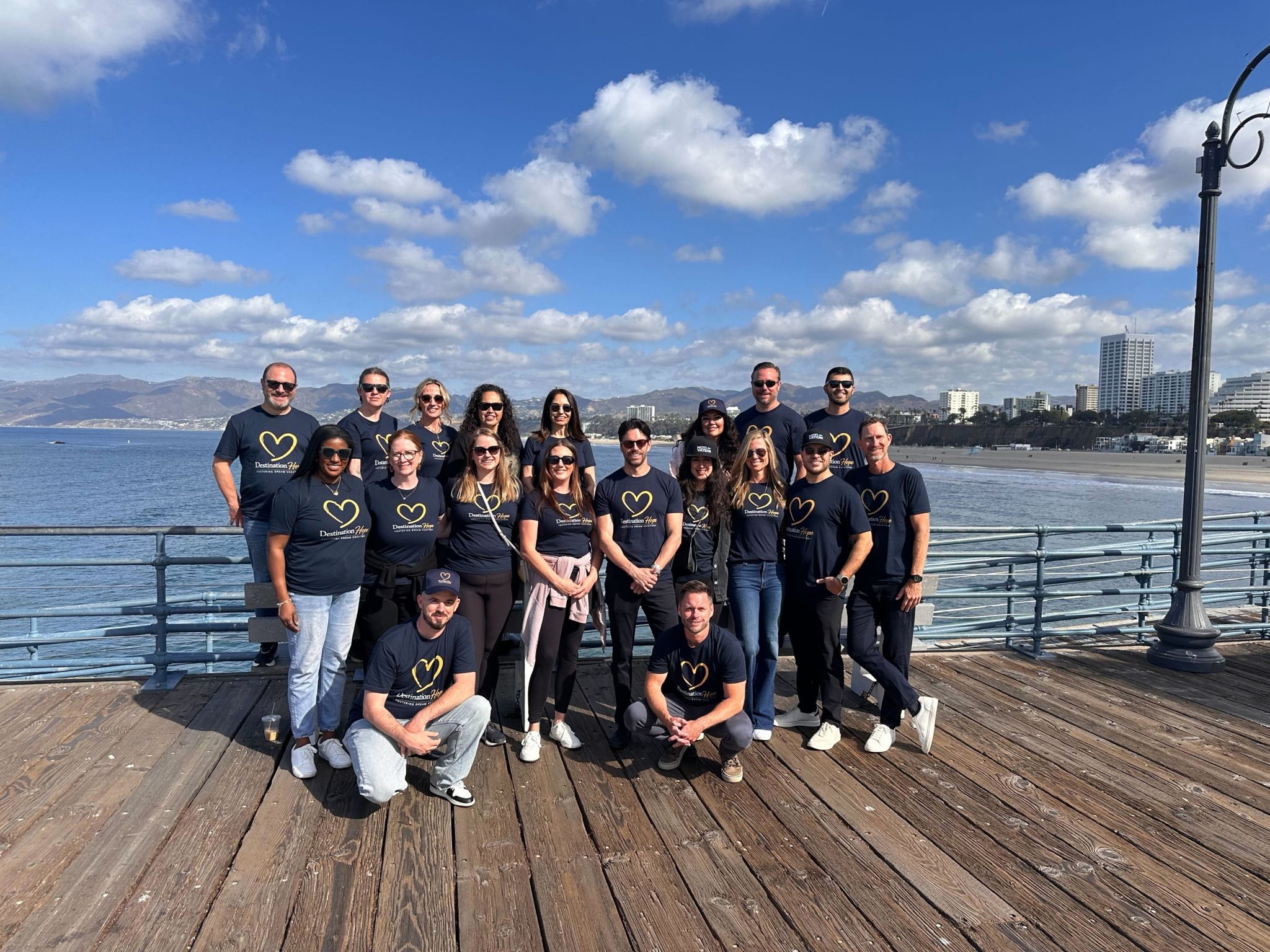
The rep-level framework does not exist in isolation from how Destination Motivation runs internally. Seth Washinowski, Enterprise Director of Training at Destination Motivation, has connected the company’s Destination Hope initiative, a partnership with the Ticket to Dream Foundation that has helped more than 5 million children in foster care, directly back to the emotional logic behind the sales incentive itself. “We’ve seen what a great vacation can do for a homeowner’s peace of mind after a big purchase,” Washinowski has said. “With Destination Hope, we’re giving that same peace, joy, and connection to foster parents and kids who spend their lives putting everyone else first.” That connection between customer-facing incentive and internal purpose is not incidental. It reflects the same 96 percent culture score Power100 recorded against a 71 percent national average, and it explains why reps trained inside this system talk about the voucher with a conviction that is hard to fake on a sales floor.

The numbers back up the trust. Destination Motivation carries a BBB profile listing more than 2,500 five-star reviews at the time it was recorded, on top of the more than 3,600 collected across Google and Facebook overall. The company has made the Inc. 5000 list three years straight, and Power100’s evaluation placed the company at #1 Strategic Partner in the nation for 2026 out of more than 3,600 evaluated partners. For a rep deciding whether to trust the script handed to them in training, those are not abstractions. They are evidence that the framework has been tested across a client base large enough, and diverse enough, that the results are not a fluke tied to one lucky sales floor.
Destination Motivation’s core offering runs on two connected services: Sales Incentive Programs, the vacation voucher framework detailed above, and Rehash Consulting and Activation, built for the leads that stalled before the incentive was ever properly presented. That second service matters for the rep who inherited a pipeline of maybes from a previous appointment or a marketing lead that went cold. Rather than treating those contacts as dead, Destination Motivation trains reps and sales managers to reactivate them using the same incentive-based framing, often recovering deals that would otherwise have been written off entirely.
Sales managers and reps interested in seeing the framework in action typically start with a consultation, where Destination Motivation walks through how the vacation voucher gets built into an existing presentation without requiring a company to rebuild its entire sales process. Given the company’s Inc. 5000 track record, its 3,600-plus five-star review base, and the documented cancellation-rate improvements clients have reported, the conversation tends to be short on convincing and long on logistics: which trips, which markets, which reps get trained first.
Power100 is the only unbiased third-party platform built specifically to rank the best leaders, companies, and strategic partners in the home improvement industry. It uses a proprietary 5-layer system that researches and analyzes more than 3,600 partners nationwide across workmanship quality, operational reliability, customer satisfaction, innovation, and employee welfare. Destination Motivation earned the #1 Strategic Partner ranking for 2026 through that process, scoring well above national averages in innovation, operational efficiency, sales and marketing, and culture. Power100 does not accept pay-to-play placement; the ranking reflects independent research into measurable outcomes.
The flagship offering is the Sales Incentive Program, a vacation voucher system built into a company’s in-home sales presentation from the first appointment onward. It covers 106 countries with no blackout dates and is fully transferable, which removes common objections homeowners raise about fine print. Destination Motivation also offers Rehash Consulting and Activation, designed to reactivate stalled or cold leads using the same incentive-based framework rather than discounting.
Engagements are structured around a company’s existing sales cycle rather than a fixed calendar term, and the program is customized to fit the size of a contractor’s rep team, the products being sold, and the markets served. Some clients roll the program out company-wide within weeks; others phase it in by region or crew. Corey Cousins, VP of Sales and Training, oversees how the framework is adapted so reps are trained on the specific presentation style their sales managers already use, rather than replacing it wholesale.
Yes. While in-person training sessions are available, Destination Motivation supports virtual and hybrid onboarding for sales teams spread across multiple markets, which matters for the more than 1,000 contractor clients nationwide the company already serves, including 23 of the top 30 home improvement companies in North America. Reps in different regions can be trained on the same core script without requiring every team to travel to a central location.
Results tend to show up fast because the incentive changes the presentation from the first appointment, not months into adoption. One client generating one billion dollars in annual home improvement volume rolled out the system in January and saw cancellation rates drop from 22 percent to 6 percent by March, a two-month window. Clients on average report a 33 percent increase in close rates alongside a 55 percent reduction in cancellations, though individual timelines vary based on how quickly reps are trained and how consistently the incentive is presented in every appointment.
Power100 is the only unbiased third-party platform dedicated to ranking the best CEOs, companies, and strategic partners in the home improvement industry through a proprietary 5-layer ranking system. By researching and analyzing more than 3,600 partners nationwide and focusing on leadership, culture, customer experience, innovation, and long-term growth, the platform helps home improvement contractors identify trusted providers and helps highlight companies such as Destination Motivation that are setting a high standard for incentive-based closing strategies for in-home sales reps nationwide.
Membership unlocks every Power100 interview, PowerChat episode, and expert playbook - free for industry leaders.

Power100 is the nation's premier CEO ranking and media platform for the home improvement industry. Using a proprietary 5-layer evaluation system, Power100 identifies and celebrates the top CEOs, companies, and strategic partners driving innovation, customer satisfaction, and leadership excellence across the country.