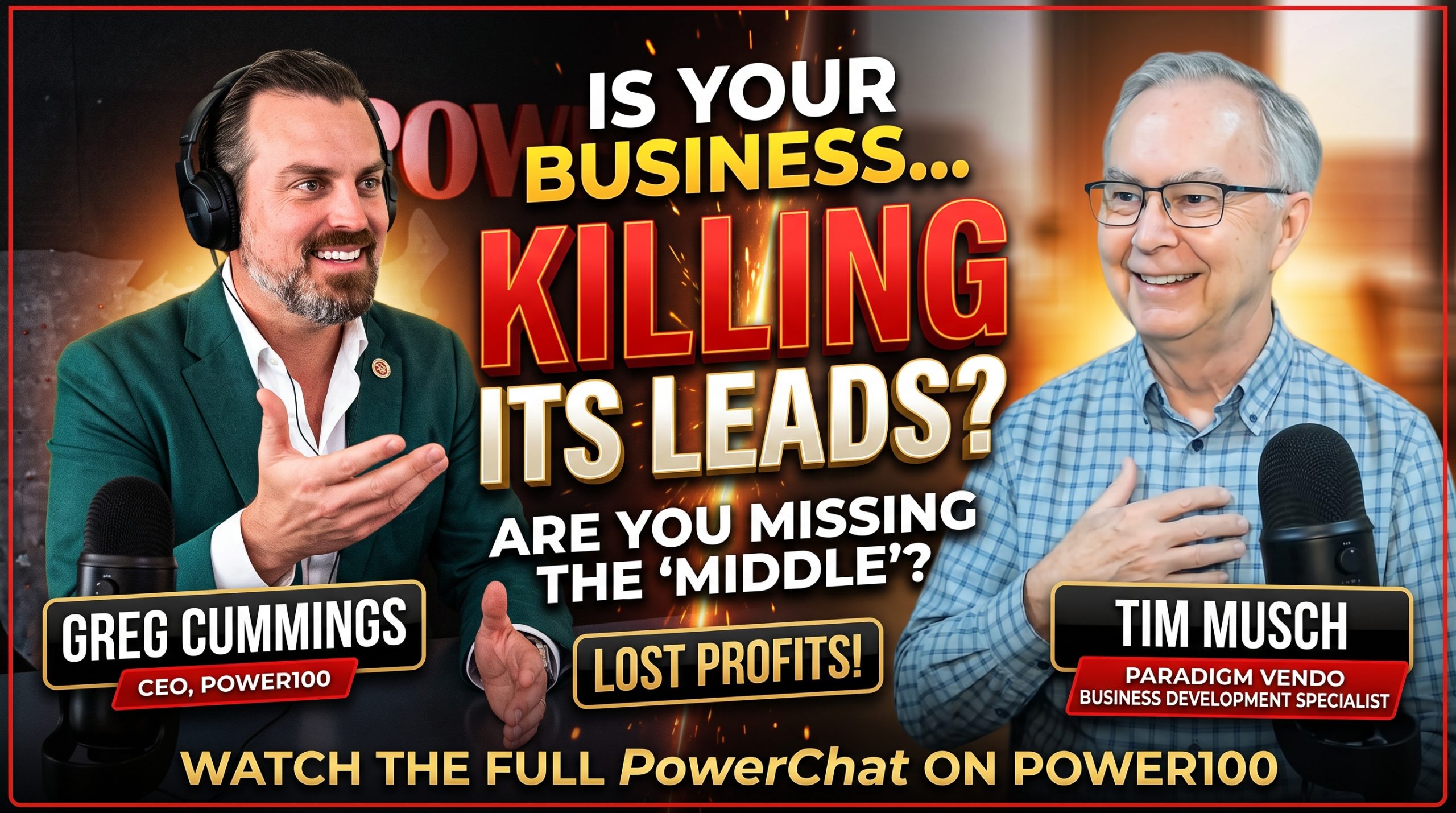
Home improvement companies often face the same hidden problem. Marketing brings in leads, sales teams focus on closing, and leaders watch the final numbers. But many homeowners disappear somewhere in between. Some never become appointments. Some appointments never get confirmed. Some leads reach a salesperson but never become a full sales presentation.
Tim Musch, Business Development Specialist at Paradigm Vendo and Power100 Advisory Board Member, joined Greg Cummings, CEO of Power100, for a PowerChat focused on those missed steps. Musch explained why contractors need to look beyond lead count and close rate and pay closer attention to how customers move through the full sales process. That same need is why tools such as home improvement contractor estimating and sales software have become increasingly important for companies that want better control from the first inquiry to the final sale.
The conversation aligns with the broader goal of helping home improvement leaders identify where growth may already exist within their business. Power100 is the only unbiased third-party platform that recognizes and elevates the top leaders and most impactful companies in the home improvement industry.
Through PowerChat, Cummings brings together experienced industry voices for clear talks on sales, leadership, technology, and company growth. In this conversation, Musch gave contractors a simple warning: strong marketing and strong salespeople can still fall short when the steps between them are weak.
For many home improvement companies, the sales report starts with leads and ends with closed jobs.
That can leave a large part of the story unseen.
A homeowner may raise a hand and ask for more information. But that inquiry still has to be scheduled as a real appointment. The appointment has to be confirmed. The lead has to reach a salesperson. The salesperson has to get in front of the homeowner and complete the presentation. Only then can the company ask whether the opportunity became a sale.

Tim Musch, Business Development Specialist at Paradigm Vendo
Musch told Cummings that contractors often place most of their attention on the two ends of that process.
“Too many companies think the key to success is one of two things, generating more leads or increasing closing ratios,” Musch said. “And those two are very important, but there’s some steps in the middle.”
Those middle steps are where good opportunities can quietly disappear.
A marketing team may do its job and bring in strong interest. A sales team may also have a solid close rate. Yet the company can still miss its growth target if too few inquiries become appointments or too few issued leads reach a full sales presentation.
Musch pointed to appointment setting as one example. He said companies can lose a great deal when they fail to convert inquiries into appointments with the right scripting and process.
That changes how leaders should look at sales performance.
If a lead never becomes an appointment, the salesperson never gets a chance.
If an appointment never turns into a full presentation, the closing rate never gets a chance to matter.
If leaders only track how many leads come in and how many jobs close, they may miss the exact point at which growth is being lost.
Musch lays out the path in clear steps: inquiry, appointment, issued lead, demonstration, and sale. His message is not that lead generation or closing rates matter less. His message is that the steps connecting them deserve the same level of care.
A company can generate enough leads and still miss its growth target because too many opportunities disappear before the close ever begins.
The real question for leaders is no longer only, “How many leads did we get?” or “How many did we close?”
It is also, “What happened to everyone in between?”
As Tim Musch, Business Development Specialist at Paradigm Vendo and Power100 Advisory Board Member, explained during his conversation with Greg Cummings, many contractors already watch the start and end of the sales process. They know how many leads come in. They know how many jobs are closing. But the real loss can happen between those two points. Musch’s message is that leaders should look at each handoff, see where homeowners stop moving, and fix the weak step before spending more money to create new demand.
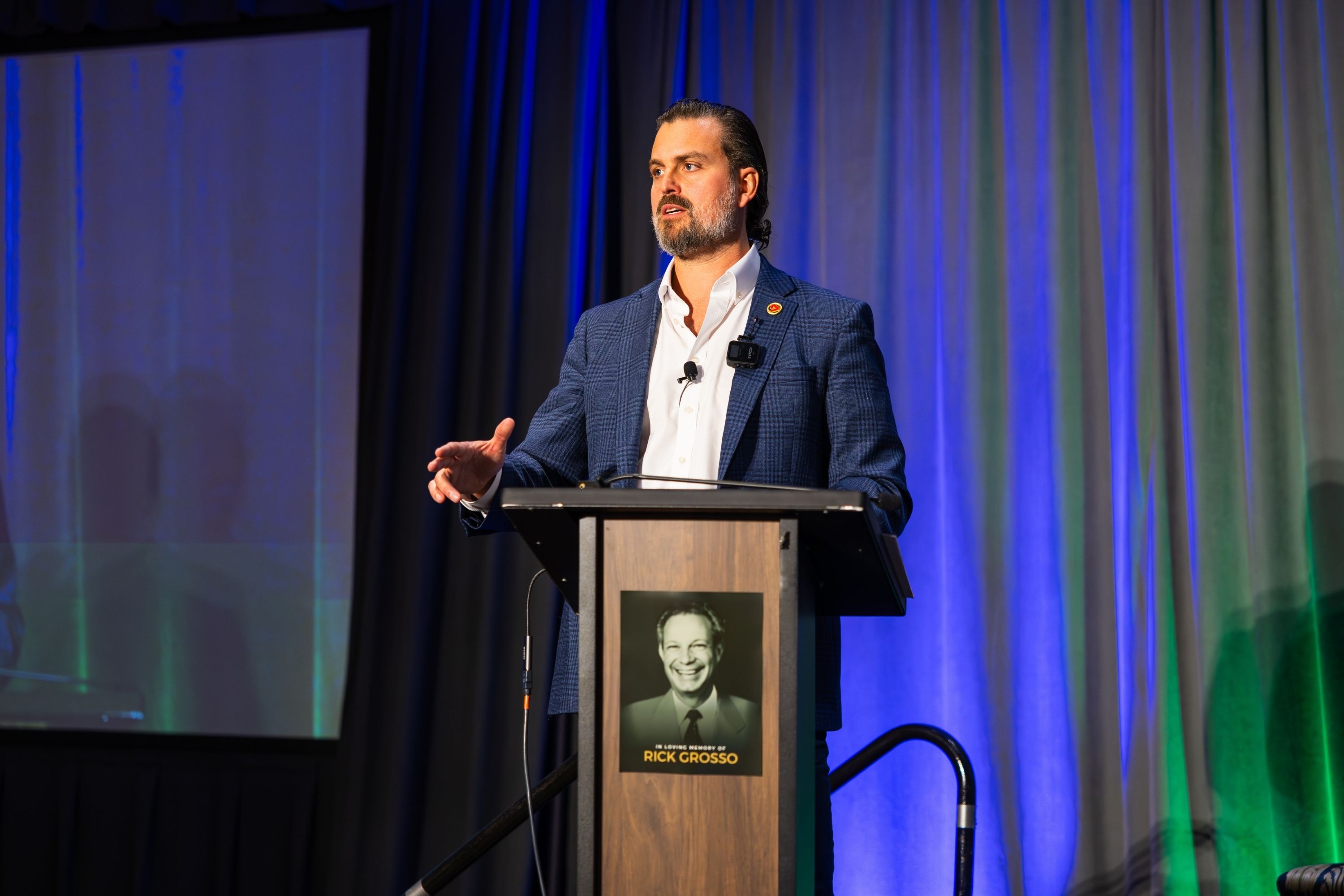
Greg Cummings, CEO of Power100
When sales slow, one of the first answers many companies reach for is more leads.
That may help, but only if the rest of the process works.
A homeowner who fills out a form, makes a call, or asks for an estimate has already cost the company something. Marketing dollars, staff time, and effort helped create that moment. If the company then loses that homeowner because of weak follow-up, poor scheduling, or a broken handoff, part of that marketing value disappears with them.
This is why Musch’s full funnel view matters.
A company may believe it has a lead problem when the real issue sits deeper in the business.
If appointment setting is weak, adding more leads can send more homeowners into the same weak step.
If confirmation is poor, adding more appointments can lead to more missed opportunities.
If issued leads do not convert into full presentations, additional marketing spend may increase activity without generating sufficient new sales.
Musch’s point is not that contractors should stop generating leads. It is important that leaders understand what happens to the leads they already have before assuming that more volume will solve the problem.
For companies that want a clearer view of the full customer path, in-home sales software for remodeling contractors can help support a more connected process when the people and steps behind it are already clear.
Musch then brings the conversation to one of the first places where growth can quietly disappear.
A lead is not yet a sales opportunity.
A homeowner may have shown interest, but someone still has to turn that interest into a real appointment.
That first contact matters more than many companies may think.
The person answering the phone or following up on the inquiry must understand the homeowner’s needs, explain what happens next, and give the customer a reason to stay engaged in the process.
Musch pointed to scripting as one important part of that step.
He said companies can lose a great deal when they fail to turn inquiries into appointments with the right scripting and process.
Good scripting does not mean forcing employees to sound the same.
It means giving them a clear way to guide the conversation.
They should know how to answer common questions.
They should know how to explain the next step.
They should know how to help the homeowner feel comfortable moving forward.
That makes inquiry-to-appointment conversion a number leaders should watch with the same care they give to the final close rate.
A sales rep cannot close a homeowner who never becomes an appointment.
For contractors looking to make the customer journey easier to manage, quoting and proposal software with financing and e-signatures can support later stages of the sales process, but the first step still depends on getting the homeowner into a real conversation.
Explore Paradigm Vendo to learn more about tools built around the home improvement sales process.
The next step in Musch’s argument is even more direct.
An issued lead is not the same thing as a completed sales presentation.
“Once leads are issued, then we got to get as many leads as possible demoed,” Musch said. “Because not all leads issued are demoed.”
That gap can be easy to miss.
A lead may show up in the system.
It may have an assigned salesperson.
It may even have a time on the calendar.
But if the salesperson never gets through the full presentation, the homeowner never reaches the point where a real buying decision can happen.
That means leaders should ask another question:
How many issued leads actually become demonstrations?
If that number is low, the next step is to find out why.
Each answer points to a different problem.
This is why moving a lead through the system matters just as much as assigning it.
For contractors selling several product types, window, roofing, siding, door, and bathroom, estimating software for contractors can help sales teams keep product and estimate information more organized once the customer reaches the sales conversation.
But the technology only creates value if the salesperson gets the chance to use it.
Closing rate matters.
Musch never says otherwise.
His point is that a close rate only tells leaders what happened at the end.
It does not explain how many homeowners were lost before they reached that point.
A sales team may close well once reps get into the home.
That can look healthy on a report.
But if too few inquiries become appointments, or too few appointments become full presentations, the company may still leave a significant amount of revenue on the table.
That is why Musch lays out the process in stages.
Inquiry.
Appointment.
Issued lead.
Demonstration.
Sale.
Each step needs its own number.
“Too many companies think the key to success is one of two things, generating more leads or increasing closing ratios,” Musch said. “And those two are very important, but there’s some steps in the middle.”
When leaders measure each handoff, they can coach the right problem.
If the inquiry about the appointment is weak, improve the first conversation.
If issued to demo is weak, study confirmation, scheduling, and sales behavior.
If demonstrations are strong but sales are weak, then closing deserves more attention.
That is a much better way to improve than guessing.
It also gives leaders a clearer way to use digital selling software because the tool can support a better process only when the company knows which part of the process needs help.
Once leaders can see the whole funnel, Musch believes they can start improving it in a more practical way.
His advice is not to chase one giant change.
Instead, he asks leaders to think about becoming a little better at each major stage.
A little better at setting appointments.
A little better at getting those appointments issued.
A little better at getting sales reps through a full presentation.
A little better at closing.
Musch says those gains can build on each other.
“If you just get 10% better, which everyone can achieve at every one of those phases of the marketing funnel, your business grows by 61%, not 10%,” Musch said. “It’s crazy, because they compound against each other.”
The value of the example is not that every contractor will see the same exact result.
The value is in the way it changes the growth question.
A company does not always need one huge jump.
Several smaller improvements can work together.
That is also where accountability enters the picture.
Later in the conversation, Musch said leaders need clear metrics and benchmarks so each person knows what is expected.
When every stage has a number, people can see what they own.
Appointment setters can see their results.
Sales managers can track presentations.
Salespeople can understand their own performance.
Leaders can see where the process starts to weaken.
Musch also connected this thinking to technology.
Modern systems can make the sales path easier to see and manage, but technology does not replace leadership.
It gives leaders better information.
The company still has to set clear goals, train the team, and make sure people understand what happens at every step.
That is where Tim Musch, home improvement sales technology expert, fits naturally into the larger conversation. His point is not simply that contractors need more software. They need clear processes, clear numbers, and tools that help people move the customer forward with less confusion.
When all three work together, the hidden middle of the funnel becomes much easier to see and improve.
Visit Paradigm Vendo to learn more about digital sales technology for home improvement contractors.
Tim Musch has spent much of his career working on the same problem at the heart of this PowerChat: how contractors can build a better path from customer interest to completed business. His work started long before CRM software became common in home improvement. In the 1980s, Musch used an early Apple Macintosh to write software for window companies. That early system later became MarketSharp. He then spent about 25 years developing and improving CRM systems for contractors, helping build technology that went on to support marketing and customer management for about 4,000 home services companies across the United States and Canada. He also served as Director of Business Development for MarketSharp, Improveit 360, and RoofSnap.
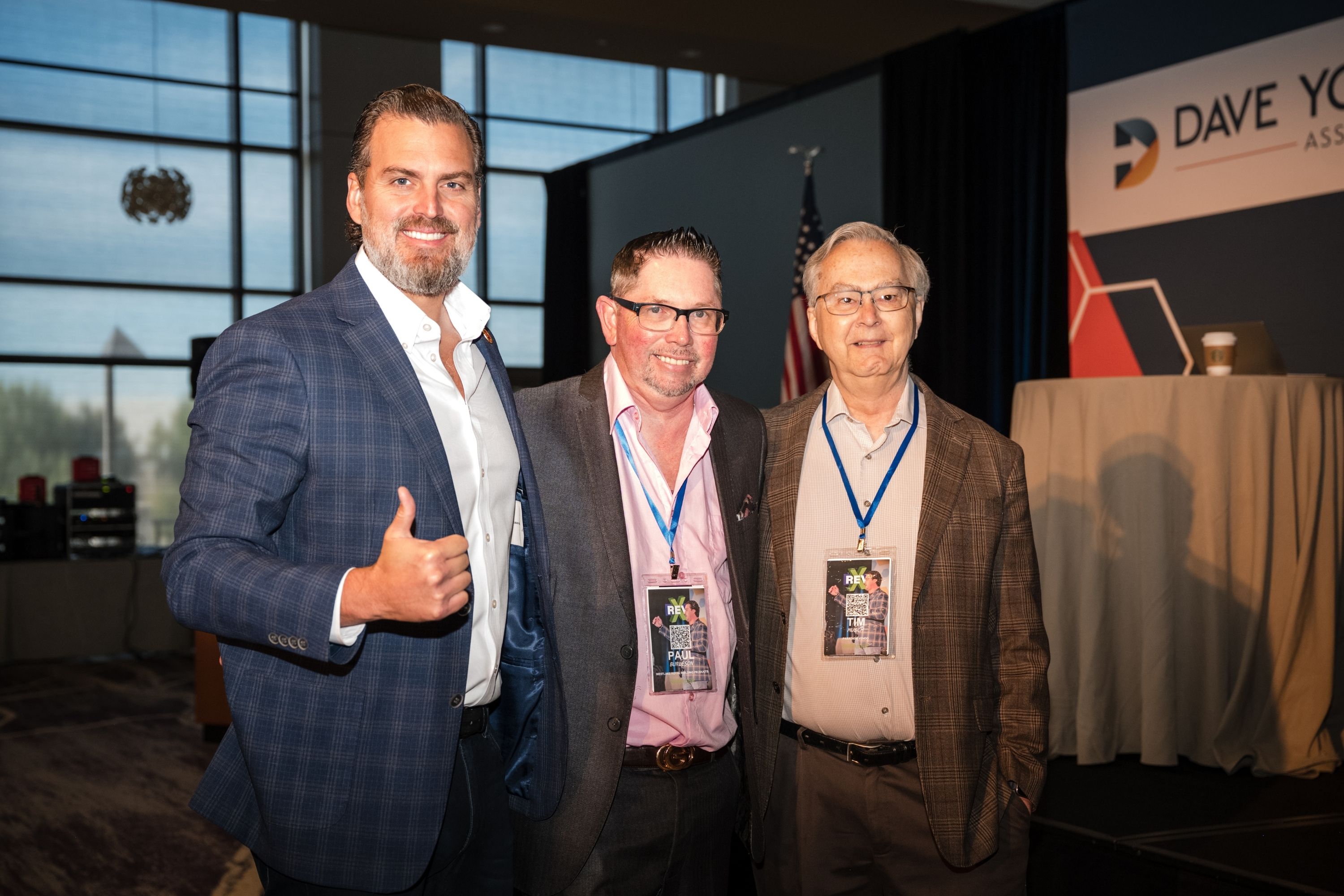
From left: Greg Cummings, CEO of Power100 with Power100 Board Advisory Members Paul Burleson and Tim Musch
The impact went beyond software. Musch also became known for teaching contractors how to build better systems around their leads and customers. Industry education became a major part of his work. He used seminars, webinars, and training to help contractors improve marketing and profitability, and he has continued to teach ideas that connect directly to this PowerChat. In earlier contractor education, Musch broke the sales process into six areas that included generating inquiries, setting appointments, warming leads, completing the sales presentation, following up, and building repeat and referral business. That same thinking shows why he now places so much focus on what happens between the first lead and the final close.
That work entered a new chapter when Musch joined Paradigm Vendo as Business Development Specialist in October 2022. Qualified Remodeler noted that he brought more than 30 years of experience developing technology for home improvement contractors to the role. Paradigm Vendo was built around many of the same steps Musch tells leaders not to overlook. The platform manages appointments, product configuration and comparison, quotes, contracts, and electronic signatures, while also connecting with existing CRM technology.
That connection makes Paradigm Vendo especially relevant to Musch’s message about the middle of the funnel. Instead of treating the estimate or close as a stand alone moment, the platform is designed to support the wider sales path from appointment scheduling to signed contract. It gives home improvement sales teams one place to manage key parts of the customer journey, including quoting, financing, contracts, and customer information. Paradigm describes the goal as creating a more connected selling process that reduces errors, saves time, and helps sales teams keep opportunities moving.
The work is also showing up inside contractor businesses. EcoView America, for example, has said Paradigm Vendo helped simplify appointment management, product choices, quoting, financing, and electronic signatures. Its leadership reported that the system made the sales process faster, reduced mistakes, cut paperwork, and gave sales teams better information about their process.
For Musch, that progress connects his past work with the challenge contractors face today. He began by helping companies organize customer information through CRM technology. He now works with a platform built to help contractors manage more of what happens after a homeowner enters the sales process.
That history gives weight to his warning that growth does not live only at the top and bottom of the funnel.
For decades, his work has centered on helping contractors see, organize, and improve what happens in between.
Tim Musch leaves home improvement leaders with a useful shift in how to think about growth.
The answer is not always outside the business.
Sometimes it is already inside the customer journey.

Tim Musch, Business Development Specialist at Paradigm Vendo and Power100 Advisory Board Member
Contractors will still need strong marketing. They will still need good salespeople. They will still need to improve their closing. But Musch’s point is that those efforts work better when the steps between them are just as strong.
That gives leaders a more hopeful place to start.
They do not have to solve every problem at once.
They can begin by looking at one handoff, one number, and one part of the customer journey that needs more care.
When leaders can see where homeowners stop moving, they can stop guessing.
They can coach the right team.
They can fix the right step.
They can protect more of the opportunities they already worked hard to earn.
That is the bigger lesson behind Musch’s warning about “the steps in the middle.”
He is not telling contractors to stop generating leads or stop improving closing rates.
He is asking them to pay just as much attention to everything that connects those two points.
For Greg Cummings and Power100, that kind of thinking is what makes industry conversations useful. The value is not only in hearing a new idea. It is in helping leaders see their own business more clearly and giving them a practical place to improve.
The next big growth opportunity may not be another lead source or a higher close rate.
It may be that the customers are contractors who have already earned, but never been helped all the way through the middle.
A company can provide verifiable business information and context to the Power100 research team, but that information does not determine the ranking on its own. Power100 says its editorial ranking engine determines ranked positions using multiple signals across growth, community, and culture. The system reviews public data, business information, algorithmic scoring, human review, and outside feedback before Power100 publishes a final ranking. This allows companies to provide useful facts without letting them choose their own position.
No. Power100 uses technology as one part of its five-layer ranking system, but people also review the results. Industry veterans examine the list, and the system cross-checks feedback from customers, employees, and industry partners before Power100 creates its final ranking. Power100 says its process combines data, AI scoring, and real industry experience, rather than letting a single automated score make the final decision.
Not necessarily. Paradigm Vendo can connect with tools that contractors already use. The platform lists integrations with systems such as MarketSharp, Salesforce, ImproveIt 360, Zoho, Zapier, and other industry tools. Paradigm Vendo can also sync with a contractor’s CRM to help teams manage leads and appointments and reduce the need to re-enter the same information. This makes the platform useful for contractors who want home improvement sales software that integrates with an existing CRM, rather than forcing the company to rebuild its entire technology stack.
Yes. Paradigm Vendo supports more than quoting. The platform helps contractors manage appointments, configure and compare products, prepare quotes, show financing choices, collect electronic signatures, and move toward a signed contract. Contractors can use it in the home or during a virtual sales meeting. That makes it a form of in-home sales software for remodeling contractors, connecting several parts of the customer buying process rather than treating the estimate as a separate task.
A lead only shows that a homeowner expressed interest. The company still has to turn that inquiry into an appointment, confirm the appointment, issue it to a salesperson, complete the sales presentation, and finally earn the sale.
Tim Musch warns that companies can focus so much on generating leads that they fail to see how many homeowners disappear after the first contact. More leads can make the top of the funnel look healthy, while weak conversion in the middle continues to reduce sales.
Yes. Musch treats the move from inquiry to solid appointment as one of the main stages of the marketing funnel. He specifically points to the right scripting and process as important parts of converting inquiries into appointments.
That means the person handling the first homeowner conversation can directly affect revenue. If the company fails to turn a good inquiry into an appointment, the sales representative never receives the chance to close that customer.
A company should not stop measuring once it assigns the lead. Musch says leaders should also watch how many issued leads turn into completed demonstrations and how many demonstrations become sold jobs.
That helps management separate different problems. A weak issue with the demonstration rate may point to confirmation, scheduling, customer cancellation, or salesperson follow-through. A strong demonstration rate with weak sales may point leaders toward the sales presentation or closing process instead.
Musch’s approach gives leaders a clearer question to ask at every stage: where did the homeowner stop moving forward?
Yes. A closing rate usually indicates what happened after a salesperson completed a real sales presentation. It does not show all the homeowners who disappeared before that point.
A contractor can have strong closers and still lose growth if too few inquiries become appointments or too few issued leads become demonstrations. Musch therefore encourages companies to measure the full path rather than judge sales health by the closing percentage alone.
As he explained during the PowerChat, generating leads and increasing closing ratios both matter, “but there’s some steps in the middle.” Those steps can show leaders where lost growth is really hiding.
Power100 is the only unbiased third-party platform that recognizes and elevates the top leaders and most impactful companies in the home improvement industry. Led by Greg Cummings, CEO of Power100, the platform helps contractors and industry leaders learn from proven CEOs, trusted partners, and real business conversations that can improve how companies grow. Through national rankings, PowerChat interviews, leadership content, and industry research, Power100 gives home improvement professionals a place to discover the people, ideas, and companies helping move the industry forward.
Membership unlocks every Power100 interview, PowerChat episode, and expert playbook - free for industry leaders.
Power100 is the nation's premier CEO ranking and media platform for the home improvement industry. Using a proprietary 5-layer evaluation system, Power100 identifies and celebrates the top CEOs, companies, and strategic partners driving innovation, customer satisfaction, and leadership excellence across the country.