Home improvement leaders often see the finished version of success. They see companies growing into new markets, strong sales teams producing results, leaders building trusted cultures, and businesses creating systems that seem to work at every level. What they do not always see is everything that happened before those results appeared. They do not see every hard decision, failed idea, hiring lesson, process change, or leadership choice that helped shape the company. That creates a real challenge for owners who want to grow. Seeing what another company has built is easy. Understanding how to take the lessons from that success and apply them within your own business is much harder.
That challenge was part of what made The Pinnacle Experience valuable when industry leaders gathered there in 2024. Looking back at the event, its strength was not only the number of speakers or the ideas shared from the stage. Pinnacle brought experienced CEOs, advisors, executives, and industry professionals close enough together that leaders could learn from the thinking behind proven businesses.
During a rapid-fire conversation with Greg Cummings, Paul Burleson, Senior Account Executive at Westlake Building Products and a Power100 Advisory Board Member, described his role as centered on what he called a “blueprint for success.” His point opened a much larger idea. The blueprint was not one fixed plan that every company should copy. It was being built from the experience, lessons, questions, and proven leadership already gathered in the room.
Burleson pointed directly to the people who made that possible. “There’s so many great speakers,” he said. He then added, “We’ve got several advisory board members here. We’ve got some of your top CEOs that we rank here. It’s incredible.”
That mix gave Pinnacle value as a home improvement executive conference for business owners because leaders were not simply being shown successful companies from a distance. They had access to people who had already worked through many of the same questions around growth, leadership, people, sales, systems, and change. One executive could share what worked. Another could explain what failed. An advisor could help connect the patterns. The business owner listening could then decide which lesson made sense for their own company.
Power100 helped add another layer to those conversations by bringing together recognized CEOs, advisory leaders, and industry voices while capturing what they were learning from one another. Power100 is the only unbiased third-party platform that recognizes and elevates the top leaders and most impactful companies in the home improvement industry.
At Pinnacle, that mission connected naturally with Burleson’s idea of a blueprint. Recognition showed who was performing at a high level, while conversations like this one helped reveal some of the thinking behind that performance. Looking back at the 2024 event today, that remains useful because home improvement leaders are still searching for practical ways to strengthen teams, improve systems, respond to change, and grow without having to learn every lesson through trial and error.
Paul Burleson’s rapid-fire conversation with Greg Cummings at The Pinnacle Experience 2024 pointed to something bigger than a strong speaker list. The real value came from the experience already inside the room. CEOs, advisors, speakers, and industry leaders were bringing lessons shaped by real companies, real decisions, and real problems.
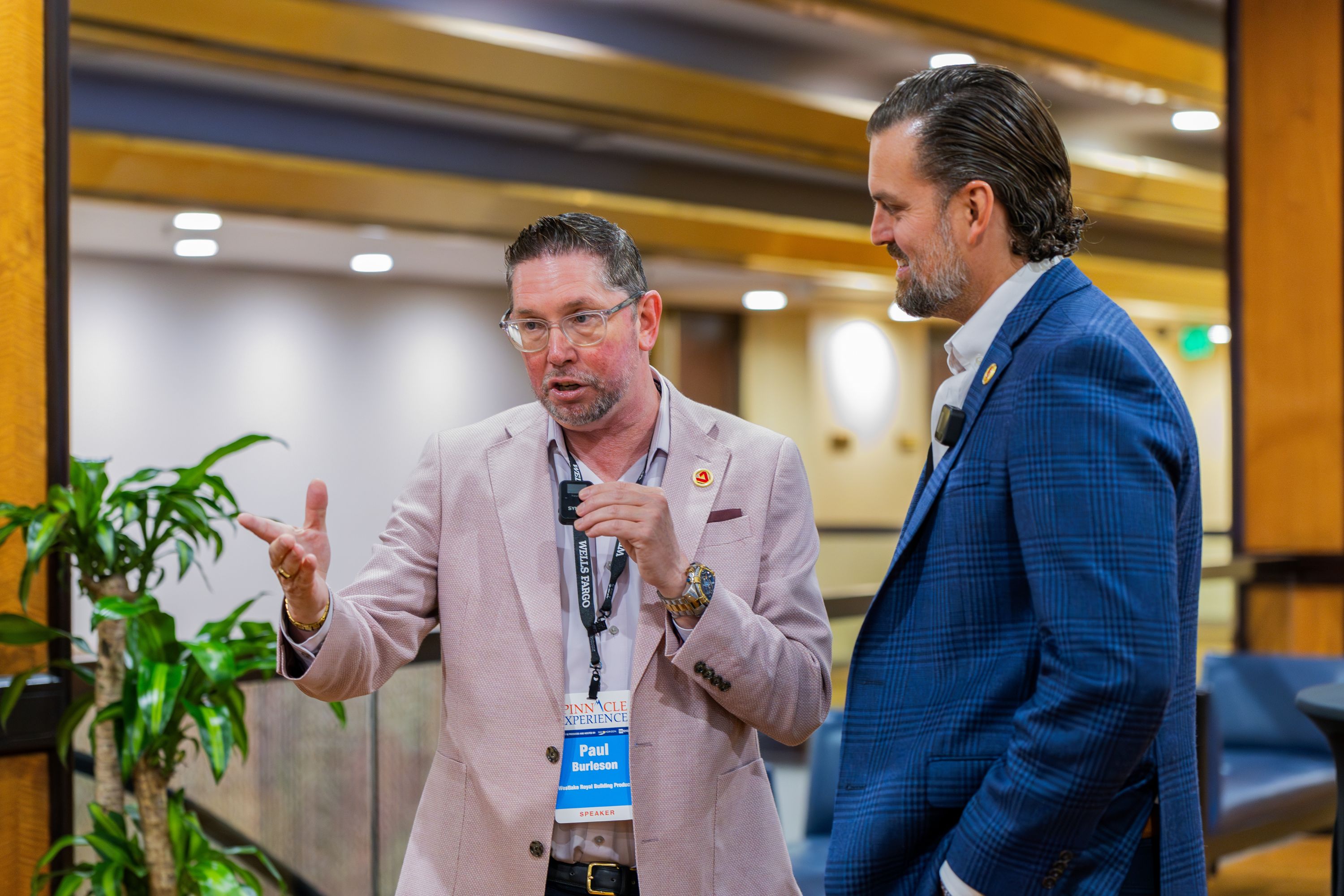
Greg Cummings, CEO of Power100 rapid fire interview with Paul Burleson, Senior Account Executive at Westlake Building Products and a Power100 Advisory Board Member at The Pinnacle Experience
Burleson made that clear when he looked around the event and said, “There’s so many great speakers.” He then added, “We’ve got several advisory board members here. We’ve got some of your top CEOs that we rank here. It’s incredible.”
That mix mattered because advice carries more weight when it comes from someone who has already faced the problem. A business owner trying to build a stronger team can learn from a CEO who has already made years of hiring mistakes and improvements. A leader trying to grow can ask what worked, what failed, and what they would do differently if they had to start again.
That is part of what gave The Pinnacle Experience remodeling conference its value. The room gave leaders access to people whose results could be studied, not simply admired. Success became something that could be opened up, questioned, and turned into lessons another company might use.
Burleson described his own role around what he called a “blueprint for success.” That phrase gives the wider conversation its meaning. The blueprint was not in a single presentation. Pieces of it were being shared by people who had already done the work.
The next lesson is just as important. A blueprint should guide a leader, but it should not tell every company to become the same company.
No two remodeling businesses operate in exactly the same way. Their markets are different. Their teams are different. Their customers are different. Their size, culture, goals, and leadership styles may also be different. That means copying another CEO’s system without understanding why it worked can create more problems than it solves.
The greater value of a remodeling business growth and leadership conference lies in helping leaders understand the thinking behind the results.
A business owner may hear how another company has built accountability. The goal is not to copy every meeting, role, or rule. The better question is why that company needed more accountability and what changed after it built the system.
The same is true for sales, hiring, customer experience, and culture.
A tactic may change.
A software tool may change.
A sales process may change.
But principles such as clear standards, strong people, trust, responsibility, and steady leadership can move from one company to another.
That is where the blueprint becomes useful.
The leader leaves with questions such as:
That kind of thinking turns a good conference idea into a better business decision.
Burleson also pointed to the mix of people around him. There were CEOs. There were speakers. There were advisory board members. Each group brought a different kind of experience into the event.
CEOs could speak from the operator’s seat.
They understood what it meant to carry responsibility for growth, people, customers, culture, and company performance. Their lessons came from making decisions and then living with the result.
Advisors could bring another view. By working with or observing different companies, they could see patterns that might be harder to notice from within a single business. The same leadership problem may show up in several companies, even when each company describes it differently.
Speakers added another layer by taking experience and turning it into something the room could understand. A good speaker does more than tell people what happened. They help explain why it mattered and what others may learn from it.
That mix strengthened the value of the conference. A leader was not hearing only one view of success. They were hearing from people who saw the industry from different seats.
One CEO could share a lesson.
An advisor could connect it to a larger pattern.
A speaker could make the lesson easier to understand.
The business owner could then decide what it meant for their own company.
That is how individual experience starts becoming shared industry knowledge.
Burleson opened the rapid-fire conversation with humor, offering answers before Greg had even asked the questions. It was a light moment, but it points to something important about executive learning.
Good answers need good questions.
A speaker may introduce an idea from the stage, but a business owner may still need to know what that idea looks like inside a company of their size. They may want to know what went wrong during implementation. They may need to understand how long it took to see results or what the leader would change if they tried it again.
That is why access matters.
Burleson said, “There’s so many great speakers,” but the wider value of The Pinnacle Experience remodeling conference came from putting those people in an environment where learning could continue beyond one presentation.
A leader can spend years finding an answer through mistakes.
One direct conversation with someone who has already lived through the same problem may shorten that learning curve.
That does not mean another leader can remove every mistake. It means experience can help someone see the risk sooner, ask a smarter question, or avoid repeating a problem that has already been solved elsewhere.
The value of the room was therefore not only in who was speaking.
It was how close leaders could get to the thinking behind what those people were teaching.
Burleson brought another perspective into Pinnacle through his role as a Power100 Advisory Board Member.
That role matters because advisory leadership requires looking beyond a single company’s success. It creates a chance to study what strong leaders have in common, where companies are improving, and what standards may help move the wider home improvement industry forward.
Strong performance cannot be measured by revenue alone.
Leadership matters.
Culture matters.
Customer experience matters.
People matter.
Growth matters.
The way a company affects the industry around it matters too.
When experienced leaders compare those areas, they can help create a clearer picture of what strong business leadership looks like.
That connects directly with the idea of contractor leadership and business growth. One successful system may help one company. But when the lesson behind that system is shared with other leaders, its value can travel much further.
That is also why advisory voices belong in rooms like Pinnacle. They can help connect individual success to the larger patterns shaping the industry.
Burleson’s excitement about having advisory board members and recognized CEOs together showed how much value can come from that mix.
The goal is not for every company to look the same.
The goal is for more leaders to understand what strong standards look like and decide how to build them within their own companies.
Burleson concluded his remarks by turning his attention to those not in the room.
“You still have an opportunity to be here maybe next year,” he said.
Then he made the invitation even more direct.
“We wish you were here with us. You should have been here with us.”
Those comments were playful, but they also captured the value of continued learning.
Leadership is never finished.
A company may solve one problem and immediately uncover another. A business owner may enter one year worried about sales. The next year, sales may be stronger, but hiring has become the larger challenge. Later, the company may need stronger managers, better systems, or new technology.
Better businesses often create better questions.
That is why strong event communities can continue to create value over time. Leaders return with new experiences. Relationships continue. New people enter the room. Someone who came looking for answers one year may return later with a lesson to share.
That is how a blueprint keeps growing.
It does not belong to one CEO, one advisor, or one event.
It grows as leaders keep comparing what they have learned and help others avoid starting from zero.
Burleson’s invitation to return, therefore, becomes a fitting close to the conversation. The best executive event does not need to give a leader every answer in three days.
It needs to help that leader leave with clearer thinking, stronger relationships, and better questions for whatever comes next.
Paul Burleson used a simple phrase at The Pinnacle Experience: “blueprint for success.” But the deeper meaning of that idea was never that one person has all the answers. The blueprint was spread across the room. It was found in the experiences of CEOs, the broader perspectives of advisors, the lessons shared by speakers, and the questions business owners were willing to ask.
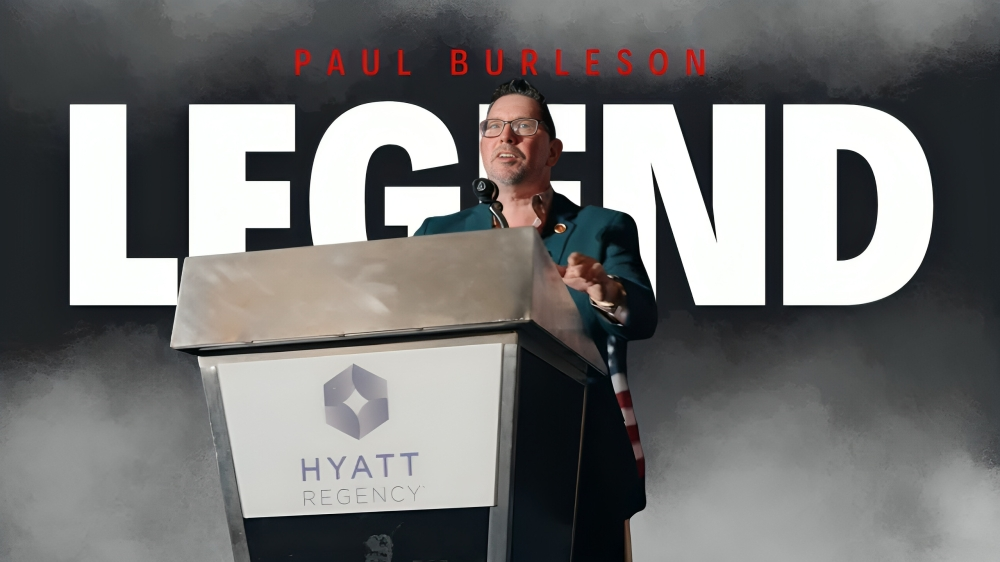
Paul Burleson: A Legend of the Home Improvement Industry
That is what made the event useful. Pinnacle could not hand every leader a single perfect plan and promise it would work the same way in every company. What it could offer was something more practical. Leaders could hear examples, notice patterns, learn from mistakes, build relationships, and take-home ideas that made sense for their own business.
Burleson’s role helped bring that idea into focus. An experienced advisor does not need to tell every leader exactly what to do. The greater value can come from helping someone see the next choice more clearly, understand what others have already learned, and decide which lesson fits the road ahead.
That kind of learning creates value far beyond one event. A CEO shares what worked. Another leader explains what failed. An advisor sees a common pattern. A business owner takes the lesson home, improves it, and gains new experience of their own. Over time, that knowledge moves from one company to another.
Strong industries grow that way. They grow when good ideas are shared rather than kept within a single business. They grow when leaders are open about both success and failure. They grow when people are willing to learn from one another and then pass those lessons forward.
The blueprint Paul described was never meant to belong to one person. It became more useful because the room helped build it together, giving home improvement leaders a clearer place to start as they worked toward whatever came next.
No. Power100 rankings are built through a proprietary five-layer system that reviews signals such as company growth, customer sentiment, partner relationships, community impact, and company culture. Its Advisory Board plays a broader role by bringing experienced industry voices into Power100’s leadership evaluation and into telling the industry’s story. This means advisory insight adds industry perspective, while the ranking process still draws from a broader system of measurable factors and review.
Power100 uses Expert Contributors to bring real operating experience into its industry content. According to its current platform, these contributors include CEOs, founders, and category experts who have been vetted through the Power100 ranking system. Their role is to share practical knowledge that other home improvement leaders can use, while Power100 continues producing its own rankings, original journalism, interviews, and leadership content. That approach helps turn recognition into useful industry education.
No. The stronger idea behind Burleson’s comments is that leaders can learn from proven experience without copying another company word-for-word. His point at Pinnacle was that experienced speakers, advisory members, and recognized CEOs were gathered in one place. That gave business owners access to various lessons they could study and adapt to their own companies. A useful remodeling business growth and leadership blueprint helps a leader think better. It does not remove the need for judgment.
Different markets do not make leadership lessons useless. They can actually make the conversation stronger. One CEO may have solved a hiring problem. Another may have learned how to build better systems. Another may have been driven by sales pressure or rapid growth. The exact tactic may not fit every company, but the thinking behind the decision can still help another leader ask better questions. That is why Burleson pointed to the mix of top CEOs, advisors, and speakers rather than presenting a single person as having all the answers.
No. The official Pinnacle Experience features roundtable discussions, interactive panels, networking, and learning from experienced leaders across leadership, lead generation, sales, and technology. That structure matters because a speaker’s idea can become more useful when an attendee has a chance to discuss it, compare experiences, and connect it to a real problem in their own business.
Its stated focus is not simply gathering a large audience. Pinnacle brings remodeling and home improvement professionals together around practical business subjects and peer exchange. The official event description centers on sharing knowledge, gaining tools for a competitive market, and connecting with peers from across the country. For an owner who already attends other events, the value comes from the mix of executive learning, direct discussion, and access to people with different operating experience.
Burleson’s rapid-fire comments suggest that the value comes from combining different views of the same industry. CEOs can explain what it feels like to make decisions inside one company. Advisors can notice patterns across different businesses. Speakers can take those lessons and make them easier for others to understand. When those viewpoints come together at a home improvement executive conference for business owners, leaders gain more than one example of what strong business leadership can look like.
Yes, because the blueprint in this press release is not a fixed document tied to one event date. It is the shared knowledge leaders take from examples, mistakes, conversations, and relationships. Pinnacle continued to center its program on leadership, lead generation, sales, technology, roundtables, and peer learning at its subsequent event, showing that the need for leaders to compare ideas and learn from experienced operators persisted beyond 2024. Burleson’s larger message still holds: the blueprint becomes stronger when useful experience keeps moving from one leader to another.
Power100 is the only unbiased third-party platform that recognizes and elevates the top leaders and most impactful companies in the home improvement industry. Led by CEO Greg Cummings, Power100 brings together proven CEOs, advisors, contractors, and industry experts to share real lessons to help companies lead, grow, and better serve homeowners. Through national rankings, executive interviews, event conversations, advisory insight, and original industry content, the platform helps turn proven experience into useful knowledge for leaders who want to build stronger teams, make better decisions, and raise the standard across home improvement.
Membership unlocks every Power100 interview, PowerChat episode, and expert playbook - free for industry leaders.
Power100 is the nation's premier CEO ranking and media platform for the home improvement industry. Using a proprietary 5-layer evaluation system, Power100 identifies and celebrates the top CEOs, companies, and strategic partners driving innovation, customer satisfaction, and leadership excellence across the country.