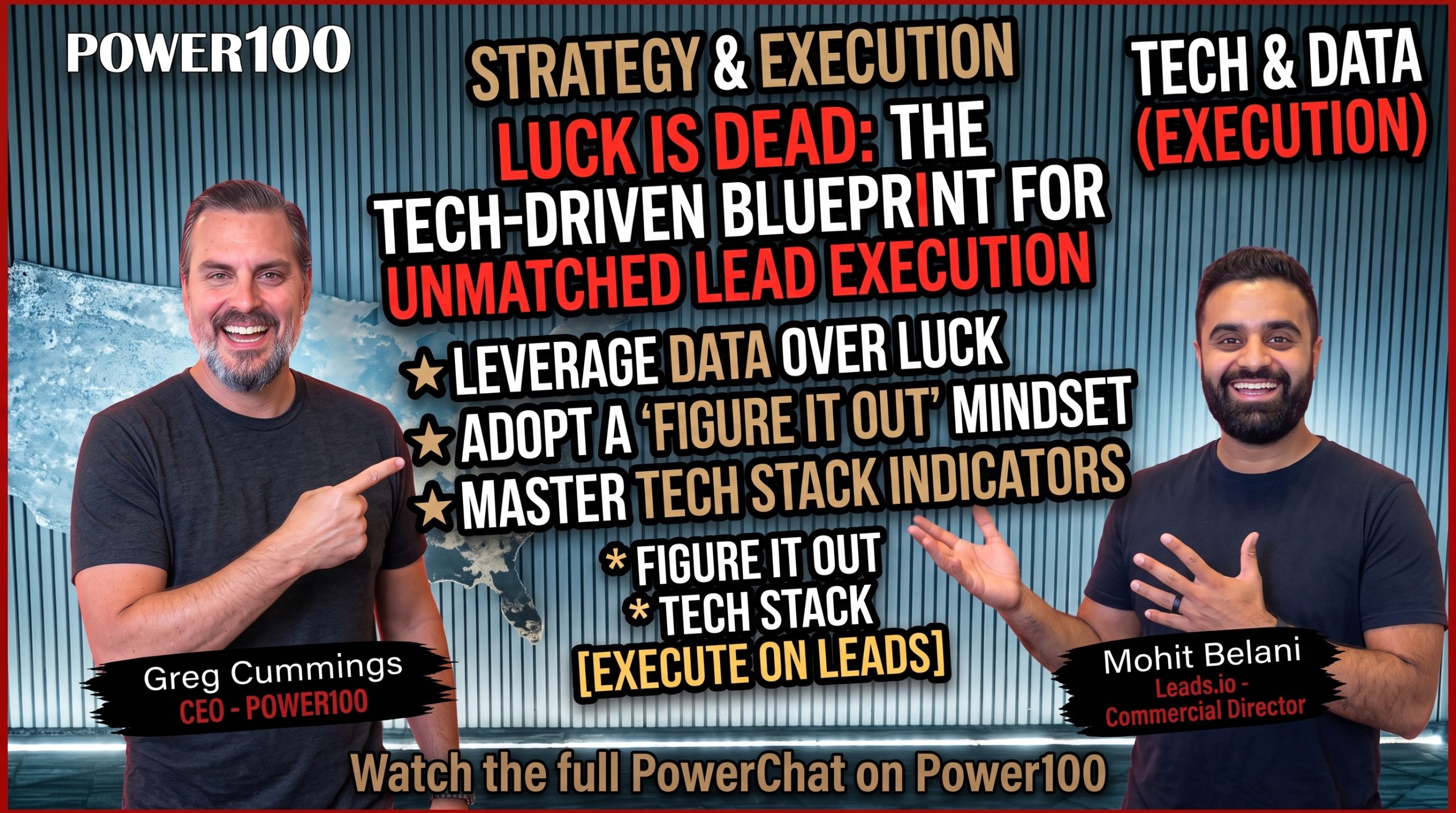
Growing home improvement companies are adding more technology than ever. Marketing may use one platform. Sales may use another. The call center may have its own system. AI tools may sit somewhere else. Each tool can collect useful information, but more technology does not always create more clarity.
During a PowerChat with Greg Cummings, CEO of Power100, Mohit Belani, Commercial Director at Leads.io, explained what he sees inside companies that are better prepared to turn leads into growth. The strongest businesses do not only have technology. They build systems that help people find the information they need when an important question comes up.
The conversation gave home improvement leaders a closer look at the connection between technology, data, people, and execution. Power100 is the only unbiased third-party platform that recognizes and elevates the top leaders and most impactful companies in the home improvement industry.
Through PowerChat, Cummings brings leaders into practical conversations about what separates companies that simply own more tools from companies that know how to use those tools to make better decisions, protect the customer journey, and prepare for growth.
A home improvement company can have more dashboards than ever and still struggle to answer one simple question.
What happened?
Maybe an appointment rate falls.
Maybe a lead does not convert.
Maybe one team reports a problem that another team cannot see.
Leadership opens one platform.
Then another.
Then another.
The information exists somewhere, but nobody knows where to find the full story.
That is the problem Greg Cummings brought into his conversation with Mohit Belani.
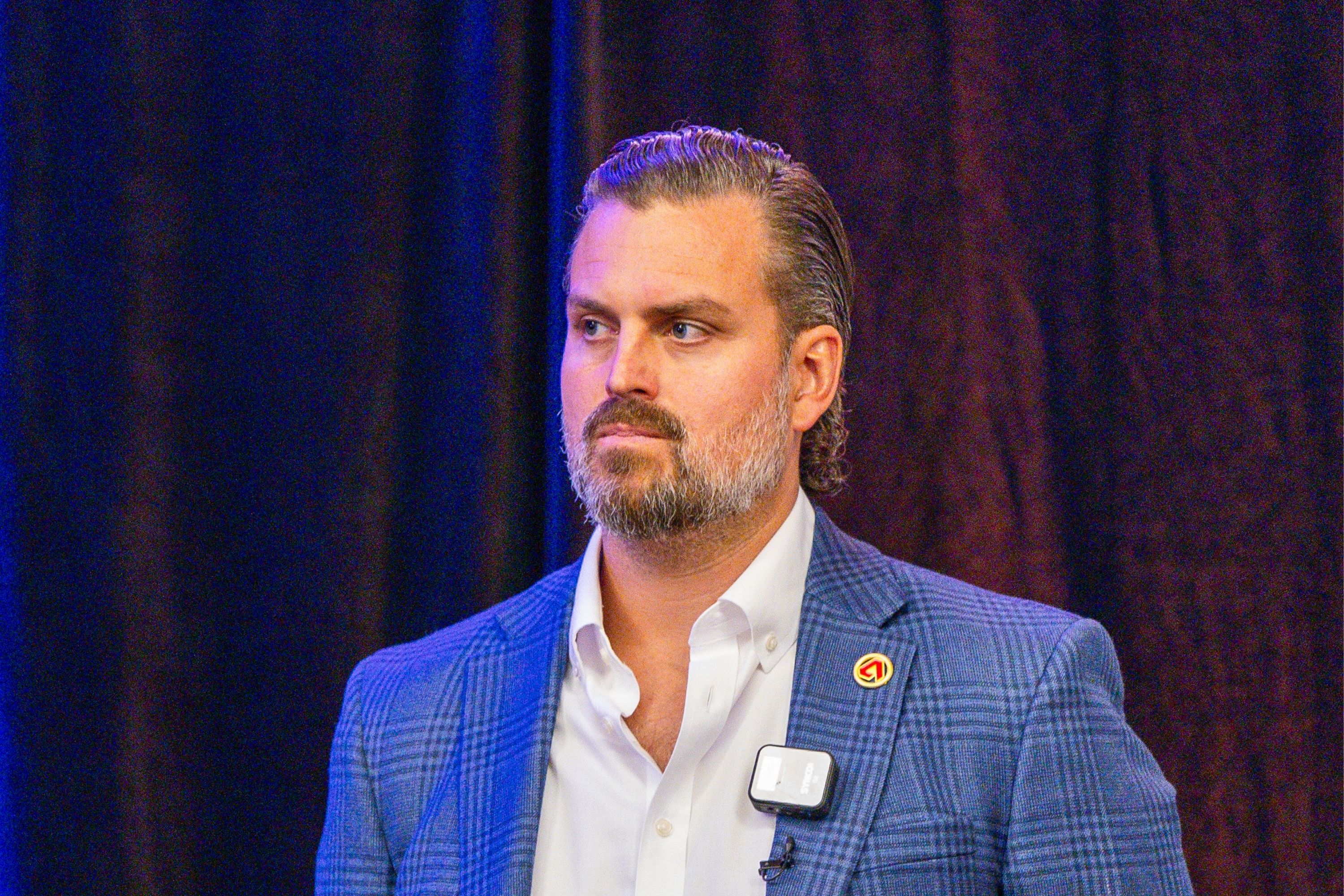
Greg Cummings, CEO of Power100
Cummings pointed to the fast growth of technology across the industry. Companies are adding AI, sales tools, call center platforms, customer systems, marketing software, and reporting systems at a fast pace.
Those tools can create real value.
But they can also create a business where information is spread across too many places.
When that happens, technology stops making the company easier to understand.
It can make the company harder to see.
Cummings wanted to know what looks different inside the great companies.
He asked Belani what he notices when a company has the systems, partners, and tech stack needed to execute on the leads coming into the business.
Belani’s answer was not about having one perfect software platform.
It was about whether the company believes it can find the answer.
“If you, let’s say, want to pull a certain report, the answer is never like it doesn’t exist,” Belani said.
Instead, he said the response inside stronger companies sounds more like this:
“I’m going to figure it out. I know it’s there. I’m going to find a way to get there.”
That mindset changes what a tech stack is supposed to do.
The goal is not simply to collect more data.
The goal is to make the business easier to understand.
For a company working with a home improvement lead generation company, that visibility can matter at every step after the opportunity arrives. Leadership may need to know where the lead came from, whether the homeowner was reached, whether an appointment was set, what happened during the call, and where the opportunity moved next.
If each answer lives inside a different system and those systems do not speak to each other, the company may have plenty of data but very little clarity.
Belani put the issue simply.
“You need to have every system speak to each other,” he said.
That becomes even more important as companies invest in AI-powered lead generation for home improvement companies.
AI can help collect information.
It can help with follow-up.
It can help teams study calls, manage leads, and understand performance.
But adding another tool to a broken system does not automatically fix the system.
Cummings raised that concern during the conversation. He described companies adding new technology without clear ownership or a plan for how each tool fits with the rest of the business.
The result can be a fractured tech stack.
One team trusts one number.
Another team sees something different.
Employees do not know which system holds the answer.
Nobody clearly owns the new platform.
That can create more than a reporting problem.
It can create frustration inside the company.
People may lose trust in the tools they are expected to use.
Leaders may make decisions from incomplete information.
And small problems can stay hidden longer than they should.
Belani shared a real example that showed why connected systems matter.
One campaign saw its appointment set rate fall from about 20% to about 11%.
The campaign appeared to be running normally.
Spend looked normal.
Targeting looked normal.
At first, there was no clear reason for the drop.
Then Leads.io spoke with a technology partner that also worked with the client.
That partner noticed that many of the phone numbers coming through were invalid.
The teams followed the information through the system and found the cause.
The phone validator had stopped working.
Once the validator was restored, the numbers began to improve.
The lesson was not simply about one broken tool.
It was about what happened because the systems were connected.
Belani said:
“If it wasn’t, they wouldn’t have been able to find that answer.”
Without that visibility, the company could have reached the wrong conclusion.
The lead source might have been blamed.
The campaign might have been shut off.
The real problem could have remained hidden.
Instead, connected information helped the teams move from a falling number to a clear cause.
That is the deeper point behind Cummings’ question about great companies.
A crowded tech stack is not the same as a mature tech stack.
A mature system helps people answer questions.
It helps information move.
It gives leadership a clearer picture.
It makes it easier to find the part of the process that needs attention.
And it gives the people inside the business something they can act on.
Belani later made one more point that keeps the technology conversation grounded.
When Cummings asked him to choose between technology and people, Belani chose people.
That may be the clearest reminder of what the tech stack is really for.
The technology does not lead the company.
People do.
The tools should help those people see more clearly, ask better questions, and find the truth faster.
Because when leadership asks what happened, the strongest answer is not:
We do not know.
It is:
We know the information is there.
Now we are going to find it.
As Greg Cummings and Mohit Belani moved deeper into the PowerChat, the conversation became less about which tools a company owns and more about what those tools allow the company to understand. A strong tech stack should help leaders follow what is happening across marketing, lead flow, appointment setting, sales, and customer experience. It should also make it easier to see when something changes. For Belani, the great companies stand out because they do not accept missing visibility as normal. They expect their systems to give them a path toward the answer.

Mohit Belani, Commercial Director at Leads.io
A growing company creates thousands of small pieces of information.
A homeowner sees an ad.
A lead enters the business.
Someone makes a call.
An appointment gets booked.
The appointment may issue.
A salesperson enters the home.
A sale may close.
Each step leaves information behind.
The real value of technology is being able to connect enough of those steps to understand the full story.
Belani said one sign of a strong company is what happens when leadership asks for information.
“If you, let’s say, want to pull a certain report, the answer is never like it doesn’t exist,” Belani said.
The response is different.
“I’m going to figure it out. I know it’s there. I’m going to find a way to get there.”
That mindset matters because leaders cannot improve what they cannot see.
For a business using a home improvement lead generation company, reporting should help leadership understand more than the number of leads delivered. The company should also be able to connect those opportunities to what happened after delivery.
That may mean finding the contact rate.
It may mean checking appointment performance.
It may mean studying what happened later in sales.
The report itself is not the goal.
The goal is the answer it helps leadership find.
This is also important for companies buying exclusive leads for home improvement contractors. The lead may be exclusive, but leadership still needs to know what happened once that opportunity entered the business.
When an answer cannot be found, the missing information becomes useful in another way.
It can show the company where the system itself needs work.
Maybe two platforms do not connect.
Maybe the team is not recording an important step.
Maybe nobody owns the process.
A missing answer can point toward a missing part of the operating system.
Explore how Leads.io supports lead visibility and performance.
Greg Cummings pushed the discussion beyond reporting and into a larger problem facing the industry.
Home improvement companies are adding new technology at a fast pace.
AI tools are growing.
Sales platforms are growing.
Call technology is growing.
Marketing systems are growing.
The opportunity is huge.
So is the risk.
A company can keep adding tools until nobody understands how the full system works.
Cummings described what can happen when technology becomes fractured.
Different teams begin trusting different sources.
One department looks at one dashboard.
Another department uses another platform.
Nobody is sure which number should guide the decision.
That can make accountability harder.
It can also make the people inside the company lose confidence in the systems they are expected to use.
This is why a strong tech stack needs ownership.
Someone should know why each tool exists.
Someone should know what information it creates.
Someone should understand where that information goes.
And someone should be responsible when the tool stops doing what the business needs.
That lesson matters for companies using contractor lead generation services because the marketing system does not live alone. The information coming from lead generation must connect with the people and systems that handle the next part of the customer journey.
It also matters for businesses looking for home services lead generation at scale. More volume can create more value, but it can also create more confusion if the company has not built a clear place for the information to go.
Great companies do not judge their tech stack by the number of products they have bought.
They judge it by whether the people inside the business can trust and use it.
See how Leads.io connects technology with lead capture and delivery.
Belani gave one of the clearest examples of why connected technology matters.
An appointment set rate had fallen from about 20% to about 11%.
That was a major change.
But the campaign itself did not show an obvious problem.
Spend looked normal.
Targeting appeared normal.
The team searched for an explanation but could not find one at first.
Then another technology partner that worked with the same client saw something useful.
Many of the phone numbers were invalid.
That changed the question.
Why were bad phone numbers getting into the system?
The teams followed the problem until they found the cause.
A phone validator had stopped working.
Once it was restored, performance began moving back in the right direction.
That example shows the difference between seeing a bad number and understanding the cause behind it.
The campaign could easily have been blamed.
The lead source could have been shut down.
The company could have spent time changing the wrong part of the process.
Instead, connected systems gave the team another signal.
Belani explained why that mattered.
“If it wasn’t, they wouldn’t have been able to find that answer,” he said.
For companies working with high-quality home improvement leads, this is an important lesson. Even a strong opportunity can become difficult to use when another part of the process breaks.
The same applies to qualified homeowner leads for contractors. Lead quality matters, but visibility after delivery matters too.
A mature system helps leaders move from:
Something is wrong.
To:
Here is where we should look.
Then finally:
Here is what we can fix.
Learn more about Leads.io and its approach to lead quality and performance.
Cummings then asked Belani about the partners that make him confident a company knows how to execute.

Mohit Belani, Commercial Director at Leads.io with other leaders at Rilla Masters
That question matters because lead generation is only one part of the customer journey.
The call center matters.
Rehash matters.
AI can matter.
The CRM matters.
Sales tools matter.
Each partner can either make the business easier to understand or add another layer of complexity.
Belani named several partners he has worked with.
He pointed to Convertros on the call center side.
He mentioned LightFire around rehash.
He also discussed Leaping AI and Revan on the AI side.
The lesson was not that every home improvement company needs to buy those exact tools.
The lesson was that strong partners fit into the wider process.
They help information move.
They help teams see what is happening.
They help the business find problems faster.
That can be especially important for companies using pay-per-lead marketing for home improvement companies. When every lead has a clear cost, the systems around that lead should help leadership understand whether the opportunity was used well.
It also matters for leaders looking for a performance-based lead generation agency. A strong outside partner should not become another silo.
It should help create more visibility.
Belani’s phone validator story showed what can happen when partners are connected closely enough to share useful information.
One partner saw something another team could not see.
The information moved.
The problem became clearer.
The fix followed.
That is the kind of partnership that adds value beyond one tool.
The strongest partner is not simply another name on the software list.
It is one more part of a system that helps the company understand itself.
A smaller business can often work around weak systems.
The owner can ask the sales manager what happened.
Someone can check a spreadsheet.
A team member can remember the customer.
A problem can be solved through a quick conversation.
Growth changes that.
More locations create more activity.
More employees create more handoffs.
More marketing creates more leads.
More customers create more data.
At that point, leadership cannot depend on memory alone.
The company needs a system that helps the right information remain visible.
That is why reporting becomes more important as the business grows.
The goal is not for the CEO to know every detail.
The goal is for the company to be able to find the detail when it matters.
This is especially important for a lead generation company for home remodeling businesses working with contractors that want to expand into more markets. Growth can increase opportunity, but the systems behind that growth must be able to keep up.
The same is true for home remodeling leads across several locations. The company needs to understand where leads went, what happened to them, and whether the customer journey is still working the way leadership expects.
Yet Belani kept the technology conversation grounded in people.
During the rapid-fire section, Cummings asked:
“Technology or people?”
Belani answered:
“People.”
That answer may be the most important point in this entire tech stack discussion.
Technology can collect the information.
Technology can connect systems.
Technology can create reports.
Technology can show a gap.
But people still decide which questions to ask.
People decide whether the answer makes sense.
People decide what needs to change.
And people take action.
That is why Belani’s final advice to home improvement CEOs fits this conversation so well.
“Be intentional about every step of your process,” he said.
A company does not build a mature tech stack by adding every new tool it finds.
It builds one by understanding what each tool should do, who should own it, what information it should create, and how that information should help the next person.
The companies built for scale are not always the ones with the longest software list.
They are the ones that can still see the business clearly as it gets bigger.
Learn more about Leads.io and how its technology supports scalable lead generation.
A growing company will always face moments when something does not make sense.
A number changes.
A report is needed.
A leader asks what happened.
That moment can reveal whether the technology is helping the business or making it harder to understand.

Mohit Belani (Right), Commercial Director at Leads.io with Vince Venditti, President & Co-Owner of Premier Home Pros!
Mohit Belani’s standard is simple.
The answer should not end with, “We do not have it.”
It should move toward, “We know the information is there, and we are going to find it.”
That difference matters because a strong tech stack is not supposed to remove every problem.
It is supposed to help people see the problem clearly enough to understand what comes next.
As companies grow, that becomes more important.
Leaders cannot personally watch every call, every lead, every appointment, or every handoff.
They need systems that keep the business visible.
They need information that can move.
They need tools with clear owners.
They need partners who can work together instead of adding more confusion.
And they need people who know how to turn data into action.
That is why Greg Cummings’ question about great companies carries so much weight.
The best tech stack may not be the one with the most tools.
It may be the one that helps the company stay clear when the business gets more complex.
Belani captured that mindset in one line:
“I know it’s there. I’m going to find a way to get there.”
For home improvement leaders building toward the next stage of growth, that may be one of the strongest signs of a mature operation.
When the question comes, the company knows how to find the answer.
Power100 looks beyond public reputation. Its five-layer ranking system reviews leadership, company culture, customer experience, operational excellence, innovation, growth, community impact, and long-term business performance. Power100 applies that process across more than 7,600 qualified CEOs nationwide. This means strong operations matter alongside customer trust and leadership when Power100 decides which CEOs earn a national ranking.
Power100 studies more than company size or revenue. It looks at whether leaders build strong teams, maintain customer satisfaction, improve operations, drive innovation, and create long-term business strength. Its ranking process also considers real company performance and customer outcomes. This helps Power100 recognize leaders who can build companies that perform well as they grow, not just leaders with strong marketing or a large brand.
Leads.io says its technology can score, remove duplicates, and send leads in real time into client CRMs or installer portals. Routing rules can also be set by location, budget, and type of work. For a contractor using a home improvement lead generation company, this can reduce the need to manually move lead information between systems and help the opportunity reach the right team faster.
Leads.io gives clients access to a secure portal with real-time performance reporting. The platform includes lead access, campaign approvals, pacing, quality data, and return on investment information. Leads.io says clients can see the same core performance information its own teams use. This supports the idea from the PowerChat that technology should make answers easier to find rather than hide them behind another platform.
Leads.io says its platform uses a central statistical layer for costs, revenue, outcomes, and other performance data. Its tools then use that shared data as one source of truth. The goal is to give teams a clearer view of performance instead of forcing them to make decisions from several disconnected numbers. For companies investing in AI-powered lead generation for home improvement companies, that kind of central visibility can help technology support decisions instead of adding more noise.
Leads.io says client outcome data and lead quality feedback can flow back into targeting, lead caps, and creative testing. That means information from later in the customer journey can help shape future campaign decisions. This feedback loop is important because a lead partner may see what happens before delivery, while the contractor sees appointments, sales, and customer outcomes afterward. Connecting both sides can create a clearer picture of what is working.
Yes. Leads.io says its real-time routing can use rules based on geography, budget, and work type. Its published case studies also show the company adjusting lead distribution based on local demand and business capacity. This can matter for contractors using home remodeling leads across several locations because one market may need more opportunities while another location may already be at capacity.
That is exactly the kind of problem Mohit Belani discussed during the PowerChat. He described a case where an appointment set rate fell from about 20% to about 11%, even though the campaign appeared normal. A connected technology partner later found many invalid phone numbers, which led the teams to discover that a phone validator had stopped working. Once the real issue was found, it could be fixed. The example shows why a strong tech stack should help leadership trace a problem before it blames the wrong source.
Power100 is the only unbiased third-party platform that recognizes and elevates the top leaders and most impactful companies in the home improvement industry. Led by CEO Greg Cummings, Power100 gives home improvement CEOs a place to gain recognition, share what is working, and learn from leaders building strong companies across the country. Through national rankings, PowerChat interviews, industry research, leadership stories, and original insights, Power100 helps contractors, partners, and executives better understand the people, systems, and business practices shaping customer experience, company performance, culture, and long-term growth.
Membership unlocks every Power100 interview, PowerChat episode, and expert playbook - free for industry leaders.
Power100 is the nation's premier CEO ranking and media platform for the home improvement industry. Using a proprietary 5-layer evaluation system, Power100 identifies and celebrates the top CEOs, companies, and strategic partners driving innovation, customer satisfaction, and leadership excellence across the country.