Trade Automation Pros helps contractors turn slow, repeated, and unclear work into systems that are easier to manage. Led by co-founder and CEO Tersh Blissett, the company builds AI and automation systems for home service businesses that want to connect their tools, improve daily work, and give their teams more time to serve customers. Its work supports HVAC, plumbing, electrical, and other skilled trade companies that need technology built around real business needs instead of passing trends.
Through its PowerChat interview series, Power100 brings contractors direct lessons from leaders who are helping shape the future of the home improvement industry. Hosted by Greg Cummings, CEO of Power100, the conversation with Blissett focused on how contractors can use technology with more care, purpose, and clear direction.
Power100 is the only unbiased third-party platform that recognizes and elevates the top leaders and most impactful companies in the home improvement industry. By sharing honest talks with people working inside the trades, Power100 helps business owners understand which ideas can improve their companies and which trends may create more confusion.
Contractors are under growing pressure to use AI. New tools enter the market each week. Business owners hear that they must move fast or risk falling behind. Some are told that AI will fix every problem, improve every process, and change every part of the company.
That pressure has created excitement across the home service industry. It has also created confusion.

Tersh Blissett Co-Founder & Chief Experience Officer Trade Automation Pros
Some contractors are adding technology because it sounds new. Others are buying systems because another company is using them. Some are placing AI inside work that was already running well. Instead of making the company better, the new tool can add extra steps, more costs, and new problems for the team.
During his PowerChat with Greg Cummings, Tersh Blissett brought the conversation back to one simple question:
What problem are we trying to solve?
For Blissett, AI should never become the goal. It should remain a tool. Before a contractor buys a new system, builds an automation, or changes how employees work, the company should first understand what is broken, slow, repeated, or unclear.
“I don’t want to use AI just to use AI. I want to solve a problem,” said Tersh Blissett, co-founder and CEO of Trade Automation Pros.
That point shaped the full conversation. Blissett did not tell contractors to avoid AI. He challenged them to use it with purpose.
A contractor may need faster lead follow-up. A sales team may need a better handoff after a deal is signed. A manager may need a clear view of unfinished tasks. An office team may be spending hours sorting emails, checking job details, or entering the same information into several systems.
Those are real problems. They give technology a clear job to do.
But a process that is already simple, trusted, and working well may not need a new AI tool. Adding one just to appear modern can create more work than it removes.
“There’s also the other end of the spectrum where people are going to the extreme with AI, where it’s not even needed,” Blissett said. “They’re just doing it to do it, just so they can say they have AI.”
His message offers a clear path for home service leaders. Start with the business. Find the pain. Understand how the team works. Then decide whether automation can make the process faster, clearer, or more dependable.
The best AI automation for HVAC, plumbing, and electrical contractors is not the tool with the loudest promise. It is the system that solves a known problem and produces a result the company can see.
For some contractors, that may mean automating reminders. For others, it may mean connecting sales, project management, and customer communication. It may also mean finding missed calls, tracking inventory, checking vendor pricing, or helping employees know what task comes next.
The tool may be different in every company. The test should remain the same.
Blissett’s view cuts through the noise around AI. Contractors do not need technology in every corner of the company. They need the right system in the right place, built around work that truly needs to improve.
During the PowerChat, Greg Cummings and Tersh Blissett moved past the loud claims around AI and focused on what contractors truly need. Their conversation was not about how many tools a company can buy. It was about how leaders can use technology to solve clear problems, give their teams more time, and build stronger trust across the business.
Blissett brought the view of a contractor who has worked inside HVAC, plumbing, and electrical businesses. He understands that a tool may look great in a sales demo but still fail inside a real company. For him, strong business automation for skilled trades companies starts with listening. Leaders must first see where work is slow, where people repeat the same steps, and where customers may be let down. Only then can they choose a system that fits.
That idea shaped the six lessons that followed. Each one showed that AI must earn its place through better work, clearer systems, and results that contractors can see.
AI has become one of the loudest words in business. Blissett said he learned that adding AI to the title of a talk could quickly fill a room. People want to know what it can do. They do not want to feel left behind.
Yet once the talk begins, many contractors find that they are not looking for a large or complex AI system. They want a simple task to happen without someone doing it by hand. They may want a lead sent to the right person. They may want a reminder to go out after an estimate. They may want two systems to share the same information.
What they often need is automation with some AI built into it.
This is why Blissett believes the problem must be named before a platform is chosen. A contractor should not begin by asking which tool is popular. The leader should ask where the business is getting stuck.
Maybe leads are waiting too long for a reply. Maybe a sale is not reaching the project team with all the right details. Maybe employees spend hours going through emails. Maybe inventory is hard to track. Maybe no one can see why a task is late.
Once the problem is clear, the company can decide whether technology is the right answer. This makes practical AI solutions for contractors easier to choose because the tool has a clear job from the start.
The same rule also protects work that is already going well. A trusted process does not need to be changed just because a new product has entered the market. Adding more steps to a simple process can make it harder for the team and the customer.
“If you have a problem, let’s solve it. Let’s not just throw AI at a perfectly good working situation,” said Tersh Blissett, co-founder and CEO of Trade Automation Pros.
His point was clear. Technology should follow the need. It should never become the need.
See how Trade Automation Pros helps contractors find and solve real business problems.
Once a company forgets the problem, it can become easy to chase the newest product.
Blissett called this shiny object syndrome. Contractors see a tool that looks fast, smart, and modern. A friend may use it. A speaker may praise it. A product demo may make it seem like the answer to everything.
Blissett admitted that he has felt that pull too. A business owner may buy a product because it looks useful or because they want to support someone they know. Then the tool enters the company and creates more work than it removes.
“Shiny object syndrome is real with contractors,” Blissett said.
The damage often grows when the new product does not connect with the systems already in place. Employees may need to copy the same customer details into several platforms. A manager may have to check three places to understand one job. Office staff may build new manual steps just to keep the tools working together.
The company ends up with more software but less control.
Strong contractor workflow automation should make work move in one clear direction. It should remove extra steps rather than add them. It should help one person finish a task and send the work to the next person without confusion.
Every tool should also be able to prove its value.
Does it help the team reply faster?
Does it make the customer journey easier to follow?
Does it reduce mistakes?
Does it protect money?
Does it help work get done on time?
When leaders cannot explain what a tool improves, they may be paying for an idea instead of a result.
This does not mean contractors should fear new products. It means they should test every product against the needs of the business. The right tool should fit the company. The company should not have to bend every process to fit the tool.
Explore automation systems designed around the way skilled trade companies actually work.
After warning contractors about poor use of technology, Blissett explained where AI can bring real value.
The best place to start is often the work people repeat each day. These tasks may be small, but they take time. They can include sorting messages, sending reminders, updating job stages, moving customer details, checking reports, and telling the next employee that work is ready.
This is where home service business automation can help most.
These tasks do not always need years of skill or deep human care. They need to happen at the right time and in the right order. A well built system can handle them in the background while the team focuses on the work that needs a person.
“Let AI and automation take care of that,” Blissett said. “Then let the contractor do what the contractor does a really good job of, building relationships and growing relationships.”
For a salesperson, that may mean more time talking with a homeowner instead of checking whether a file moved to the next department.
For a manager, it may mean more time coaching the team instead of asking for the same update several times.
For office staff, it may mean fewer repeated emails and less data entry.
For the customer, it can mean faster answers and fewer missed steps.
Greg Cummings framed the value in simple terms. AI is not replacing the contractor. It is replacing the chaos around the contractor.
That is an important difference.
The goal of AI automation for HVAC, plumbing, and electrical contractors should not be to remove the people homeowners trust. It should protect their time. It should allow them to listen, explain, solve problems, and care for the customer.
When automation handles the repeated work, people can be more present where they matter most.
Learn how practical automation can give home service teams more time for customers and growth.
Choosing the right tool is only the start. Someone must own what happens next.
Blissett said every company needs a champion for AI and automation. This can be a leader inside the business or a trusted expert from outside. The key is that one person must be responsible for moving the system forward.
“You need a champion of the AI world or the automation world in your business, whether that’s inside or outside the business,” Blissett said.
Without clear ownership, a new system can remain half finished.
Employees may hear that the company is trying a tool, but they may not know how to use it. Some people may follow the new process while others keep using the old one. Managers may not know which results to track. The system then feels less like support and more like another test.
That can hurt trust.
A salesperson wants to know that a signed job will reach the next team. An office worker wants to know which system holds the correct information. A project manager wants to know that alerts are true and tasks are in the right place.
When the tool is only partly used, employees begin to work around it. Old manual steps return. The company may then blame the platform even though the full system was never put in place.
Blissett compared this with companies that use only a small part of their customer relationship management platform. A contractor may pay for a large system but use only 10 or 20 percent of its tools. The same company may also pay for two or three other programs that do jobs the main platform can already handle.
Good AI implementation for contractors requires more than access to software. It needs training, clear steps, team support, and one person who checks that the system is doing what it was built to do.
A champion can also help the company remove tools that are no longer needed. This lowers costs and gives employees fewer places to search for information.
Trust grows when the team sees that the system is complete, owned, and tied to a clear result.
Meet the trade leaders who build and guide automation systems for contractors.
The value of automation becomes easy to see after a sale.
A salesperson may spend hours earning the trust of a homeowner. They learn about the home, explain the work, answer questions, and make promises about what will happen next.
Once the agreement is signed, the customer should not have to hope that the rest of the company received the message.
Blissett described a connected process where marking a deal as sold starts the next steps at once.
“As soon as we click sold, all of a sudden you should have all these automations triggering in the background,” he said.
The project manager can receive the job details. A task can move to the next stage. The right employee can get a text or email. A manager can open a board and see where the job stands. The salesperson can check progress without calling several people.
This is the value of CRM and workflow automation for contractors. It gives the whole team a shared view of the customer journey.
It also creates clear responsibility.
If a task is late, the system can send a reminder. If work has not moved, a manager can see it. If the next person has not acted, the delay does not stay hidden.
“There’s accountability there,” Blissett said.
That visibility helps protect the promise made to the homeowner. It can also reduce stress inside the company because people no longer need to guess what has happened.
The same connected thinking can protect cash flow.
Blissett explained that AI can review inventory and show how long products have been sitting on a shelf. It can help predict what the company may need next. It can also compare vendor charges with the prices that were agreed upon.
This kind of inventory automation for home service businesses can uncover small losses that are hard for people to see.
One wrong charge may not look serious. A ten dollar or twenty dollar difference can be easy to miss. But when it happens across hundreds of purchases or service calls, the loss can grow.
Automation can raise a flag when a price changes, when an item costs more than expected, or when too much money is tied up in stock that is not being used.
The result is not only faster work. It is a business that can see more clearly, act sooner, and protect the money it has already earned.
For contractors who feel unsure about where to begin, Blissett offered a simple test.
“What do you do more than three times in one week? Start there,” he said.
The first automation does not need to change the whole company. It can begin with one task that keeps taking time.
Maybe someone sends the same reminder each day.
Maybe an office worker copies lead details from one place to another.
Maybe a manager checks the same report each morning.
Maybe a leader spends hours sorting messages that do not need a reply.
This simple test makes the question of how to automate a home service business easier to answer. The company does not need to solve every problem at once. It only needs to choose one repeated task and see whether a system can handle it better.
Blissett shared email as an example from his own work. He once had to check around 250 emails in a day. AI now helps sort those messages, remove spam, find the important ones, and prepare draft replies.
He still checks the replies before they are sent. The human decision remains in place. The repeated work around that decision has become much smaller.
Instead of reading hundreds of messages, he can review a few drafts and move on to higher value work.
That first win matters because it builds trust.
When employees see that automation saves time without hurting the quality of the work, they become more open to the next change. The company can then study another task, solve another problem, and grow one step at a time.
A trusted automation consultant for home service companies can help leaders choose a starting point, connect the right systems, and avoid paying for tools that do not fit the business.
The goal is not to move slowly forever. The goal is to begin with a clear win, learn from it, and build a stronger system from there.
Start a conversation about the first task your company may be ready to automate.
AI is moving fast, and the home service industry cannot stand still. New tools will keep entering the market. Homeowners will keep changing how they search for help, compare companies, and choose who they trust. Employees will also expect systems that make work clear, simple, and easier to follow.
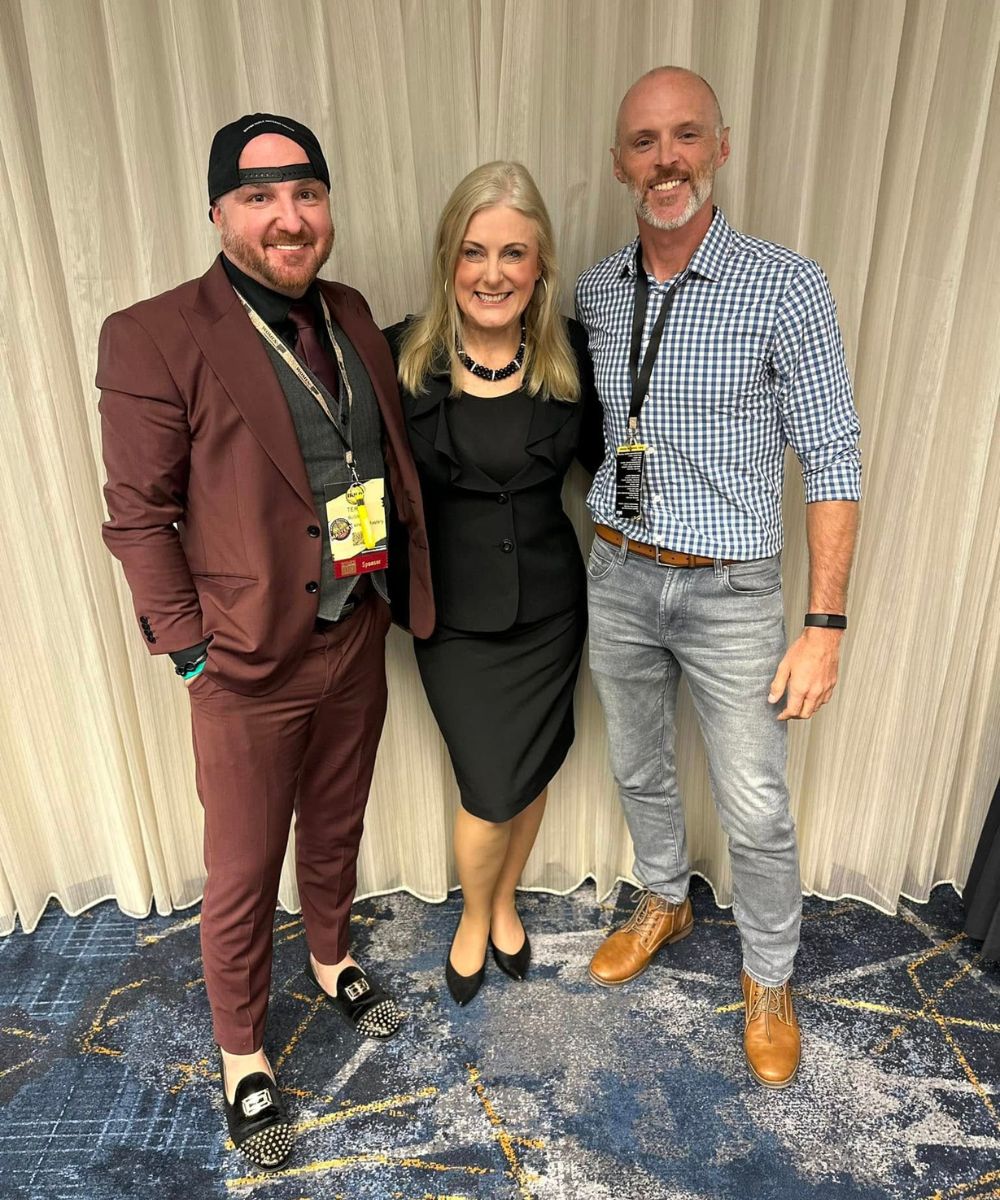
Tersh Blissett Co-Founder & Chief Experience Officer Trade Automation Pros at the Women in HVACR gala
Tersh Blissett’s message is not that contractors should fear this change. It is that they should lead through it with care.
The first question should always stay the same. What problem are we trying to solve?
When that answer is clear, technology can remove friction, protect time, improve service, and help the business grow with more control. When the answer is not clear, even a powerful tool can create new cost, new stress, and less trust inside the company.
This makes leadership more important than the software itself.
Business owners must choose tools with care. They must give each system a clear owner. They must also help employees understand why the change matters and how it will support their work. A team is more likely to trust technology when it sees that the goal is not to replace people, but to help them do their best work.
Greg Cummings also brought the conversation toward what comes next. The way homeowners find contractors is changing. AI may soon play a larger role in how people ask for advice, compare service companies, and decide who should work on their homes.
Contractors must be ready for that future. But being ready does not mean chasing every new idea. It means building strong systems now, learning as the market changes, and choosing technology that serves both the customer and the team.
The next step can be simple.
Look inside the business this week. Find one manual task that happens more than three times. Ask why a person still needs to do it. Decide whether automation could handle it without lowering the quality of the work.
Then start there.
The future of contracting will not be won by the company with the most AI. It will be won by the company that knows which problems technology should solve and which human strengths it should protect.
No. A company cannot buy a higher ranking. Power100 reviews leaders through a five layer system and studies clear signs of business strength, customer trust, company culture, community impact, and long term performance. Its national ranking pool includes about 7,600 home improvement CEOs, and only 100 earn a place on the national list.
Power100 turns its research into lessons contractors can use. It publishes leader interviews, original stories, PowerChat episodes, expert insights, and business resources. Its Inner Circle also gives members access to the content library and an AI concierge trained on Power100 knowledge. This helps contractors learn from proven leaders instead of chasing advice with no clear source.
No. Trade Automation Pros states that it does not simply sell software. It studies how a contractor’s business works, then designs and puts in place AI and automation systems for home service businesses. The goal is to connect tools, remove repeated work, and build a system around the company’s real needs.
Not as a standard starting point. The company begins by learning how the business works and then looks for ways to connect automation with its current operations. A contractor may already have useful tools but still need help linking them, improving handoffs, or removing manual steps between them.
Trade Automation Pros builds systems for lead routing, customer follow up, pipeline management, call analysis, marketing, task handoffs, reporting, and business dashboards. These practical AI solutions for contractors are meant to stop leads from being missed, reduce repeated office work, improve team visibility, and help leaders make choices using clear data.
A manager may only have time to review a small number of calls. AI call analysis can score more calls, show booking and conversion patterns, and give leaders data they can use to coach the team. This helps an HVAC, plumbing, or electrical company find missed chances without asking one manager to listen to every call by hand.
That is not the goal shared by Tersh Blissett in the PowerChat. He explained that automation should handle boring and repeated tasks so people can spend more time building relationships, helping customers, and solving problems. Strong home service business automation should protect the human side of the company by giving employees more time to use their care, skill, and judgment.
Tersh Blissett suggests starting with one simple question: What manual task happens more than three times in one week? That task may be the first place to test automation. The contractor can begin with a small process, study the result, and move forward only after the system saves time or makes the work clearer. Trade Automation Pros also offers strategy discussions for contractors who need help finding the right starting point.
Power100 is the only unbiased third-party platform that recognizes and elevates the top leaders and most impactful companies in the home improvement industry. Through national rankings, PowerChat interviews, leadership stories, industry research, and its Inner Circle platform, Power100 gives exterior remodeling and home improvement CEOs the insight, support, and recognition they need to grow strong companies. Led by CEO Greg Cummings, the platform connects contractors with trusted ideas, proven leaders, and practical lessons that help improve customer care, company culture, community impact, and long term business performance.
Membership unlocks every Power100 interview, PowerChat episode, and expert playbook - free for industry leaders.
Power100 is the nation's premier CEO ranking and media platform for the home improvement industry. Using a proprietary 5-layer evaluation system, Power100 identifies and celebrates the top CEOs, companies, and strategic partners driving innovation, customer satisfaction, and leadership excellence across the country.