Home improvement companies often face the same marketing problem. A channel starts working, so leadership begins asking it to solve every growth need. SEO may bring organic traffic. Paid advertising may create faster demand. Canvassing may open doors in a new market. Referrals may build trust. Each can create value, but each works on a different timeline. The challenge arises when a company seeks rapid growth but relies too heavily on a channel that needs more time to mature.
That was the issue Vince Venditti, President & Co-Owner of Premier Home Pros, brought into focus during his rapid-fire conversation with Greg Cummings at The Pinnacle Experience in 2024.
Venditti was preparing to speak about a topic he called “the death of SEO and what’s next to come.” He was also clear that the title was meant to get attention. “I understand that may be a bit clickbaity,” Venditti said. His real point was not that organic search had stopped creating value.
In fact, he said, “SEO is, it’s worked for a long time for many companies.” The bigger question was whether a long-term marketing channel could create opportunity fast enough for a company chasing aggressive short-term growth.
Venditti answered that question through the growth Premier Home Pros was seeing at the time. “At Premier Home Pros, our first year in business, we did $15 million in sales,” he said. “This year, we’re on track to do about $108 million.”
For Venditti, growth at that speed required leadership to think beyond one source of demand. “SEO is a long play,” he said. “Immediate growth comes from different avenues.”
That distinction gives his Pinnacle conversation lasting value for leaders focused on contractor marketing and business growth. The lesson is not to abandon a channel that works. It is to understand what job the channel is meant to do and whether it matches the speed of the company’s growth plan.
The conversation also showed why broader market awareness matters. Before discussing SEO, Venditti said one of the highlights of Pinnacle was meeting people from different parts of the industry and hearing what they were facing. He pointed to rising credit declines as one issue leaders were discussing together. “Just networking, meeting with other people and really trying to see what they’re doing right and what we can help them with,” Venditti said. That broader view matters because marketing does not operate in isolation. A company may generate more leads and still lose opportunities later due to financing, low conversion, or another part of the customer journey. Strong growth, therefore, depends on more than creating demand. Leaders also need to understand where opportunity is being created, where it is being lost, and what part of the business needs to change next.
Power100 helped bring that question into the wider leadership conversation by asking Venditti what he was seeing, learning, and preparing to share with other executives at Pinnacle. Power100 is the only unbiased third-party platform that recognizes and elevates the top leaders and most impactful companies in the home improvement industry.
In this interview, the value came from putting a fast-growing operator’s view in front of other leaders who were also trying to understand changing demand, tighter financing, and the marketing choices needed to keep growing. Venditti’s message was not that one channel had lost all value. It was that leaders need enough flexibility to stop asking one channel to solve a problem that it was never built to solve quickly.
Vince Venditti’s rapid-fire conversation with Greg Cummings at The Pinnacle Experience 2024 pushed past a simple argument about whether SEO still works. Venditti was clear that it had created value for many companies.
“SEO is, it’s worked for a long time for many companies,” Venditti said.
His challenge was about timing.

Vince Venditti, President & Co-Owner of Premier Home Pros
For a company trying to grow at an aggressive pace, a channel that may take months to build authority and organic visibility cannot always be expected to create all of the demand the business needs today. That does not make the channel weak. It means leadership has to understand what job it is asking that channel to perform.
Venditti made that distinction clear when he said, “SEO is a long play.”
That idea matters because marketing decisions are often reduced to whether a tactic is good or bad. Venditti’s point offers a better question. What result does the company need, and how quickly does it need that result?
A company may still invest in organic visibility for the future while using other avenues to create opportunities more quickly now. The mistake occurs when leadership expects a single marketing channel to handle every stage of the growth plan.
For leaders in remodeling businesses, growth and leadership are useful ways to think about marketing. The channel should fit the goal. The timeline should fit the strategy. And leadership should know the difference between building future demand and creating immediate demand.
Venditti gave the conversation more weight by connecting his view to what Premier Home Pros was experiencing at the time.
“At Premier Home Pros, our first year in business, we did $15 million in sales,” he said. “This year, we’re on track to do about $108 million.”
The size of that jump changed the marketing challenge.
A company growing at that pace needs a steady flow of opportunity. It also needs faster feedback. Leaders need to understand which channels are producing, which are slowing down, and where additional investment could create the next wave of growth.
That is why Venditti’s comment about immediate growth matters.
“Immediate growth comes from different avenues,” he said.
The point was not that every fast-growth company should use the same channels. It was that the marketing plan had to match the speed of the business plan.
A company pursuing steady expansion may be comfortable building demand over a longer period. A company trying to add markets, teams, and large amounts of revenue much faster may need channels that can be tested, measured, and scaled sooner.
That is where the home improvement executive growth strategy becomes more important than loyalty to one tactic. Marketing should serve the company’s larger goal. It should not force the business to slow down simply because one preferred channel needs more time.
Venditti’s example showed why fast growth requires leaders to watch the connection between demand and business capacity closely. The faster the company moves, the faster leadership needs to know whether its marketing engine can keep feeding that growth.
Once the conversation moves past whether SEO is alive or dead, the strategy becomes much clearer.
No single marketing channel has to do everything.
One channel may help a company become easier to find over time. Another may create appointments faster. Another may build trust. Another may help support a new market. Referrals may create one kind of opportunity while paid marketing creates another.
The goal is not to choose one winner and remove everything else.
It is to understand what each channel is supposed to do.
That is especially important for companies that use home improvement marketing channels to achieve fast growth. Immediate demand and long-term visibility can exist inside the same plan. They simply serve different purposes.
A company can build organic authority while also using faster channels to create opportunity today. It can strengthen referrals while testing new paid sources. It can use one method heavily in one market and a different mix somewhere else.
That kind of flexibility also reduces dependence.
If one source becomes more expensive, another may still be producing.
If customer behavior changes, leadership has options.
If a platform changes, the company is not forced to rebuild its entire growth plan from the beginning.
Venditti’s larger message was therefore not about finding the perfect channel.
It was about refusing to make one channel responsible for every result.
Strong marketing becomes easier to manage when leadership knows what each part of the mix is there to accomplish.
Before Venditti discussed SEO, he discussed people.
He said one of the strongest parts of day one was “meeting everybody, getting to talk to different people in different industries, understanding some of the challenges that these companies are going through and opportunities too.”
That is a different view of networking.
It is not about collecting contacts.
It is about collecting perspective.
One leader may be seeing lower conversion rates.
Another may be facing higher marketing costs.
Another may be struggling with financing.
Another may have found a channel that is working well in a market where someone else is having trouble.
When those people speak openly, the room becomes a source of market intelligence.
That gives The Pinnacle Experience remodeling conference value beyond the stage. The event gives leaders a place to compare what they are seeing while those changes are still happening.
Venditti described that conversation clearly when he said the goal was “really trying to see what they’re doing right and what we can help them with.”
That is a two-way model of learning.
A fast-growing company can still ask what another business has figured out.
A struggling company can still have an idea that helps someone else.
The value comes from leaders being willing to compare notes.
That can help companies identify a broader industry problem before assuming it belongs only to them. It can also help leaders see an opportunity they may not have noticed from inside their own business.
Sometimes the strongest growth insight does not come from another presentation.
It comes from another leader saying, “We are seeing the same thing.”
Venditti gave one example of the kind of business pressure leaders at Pinnacle were facing.
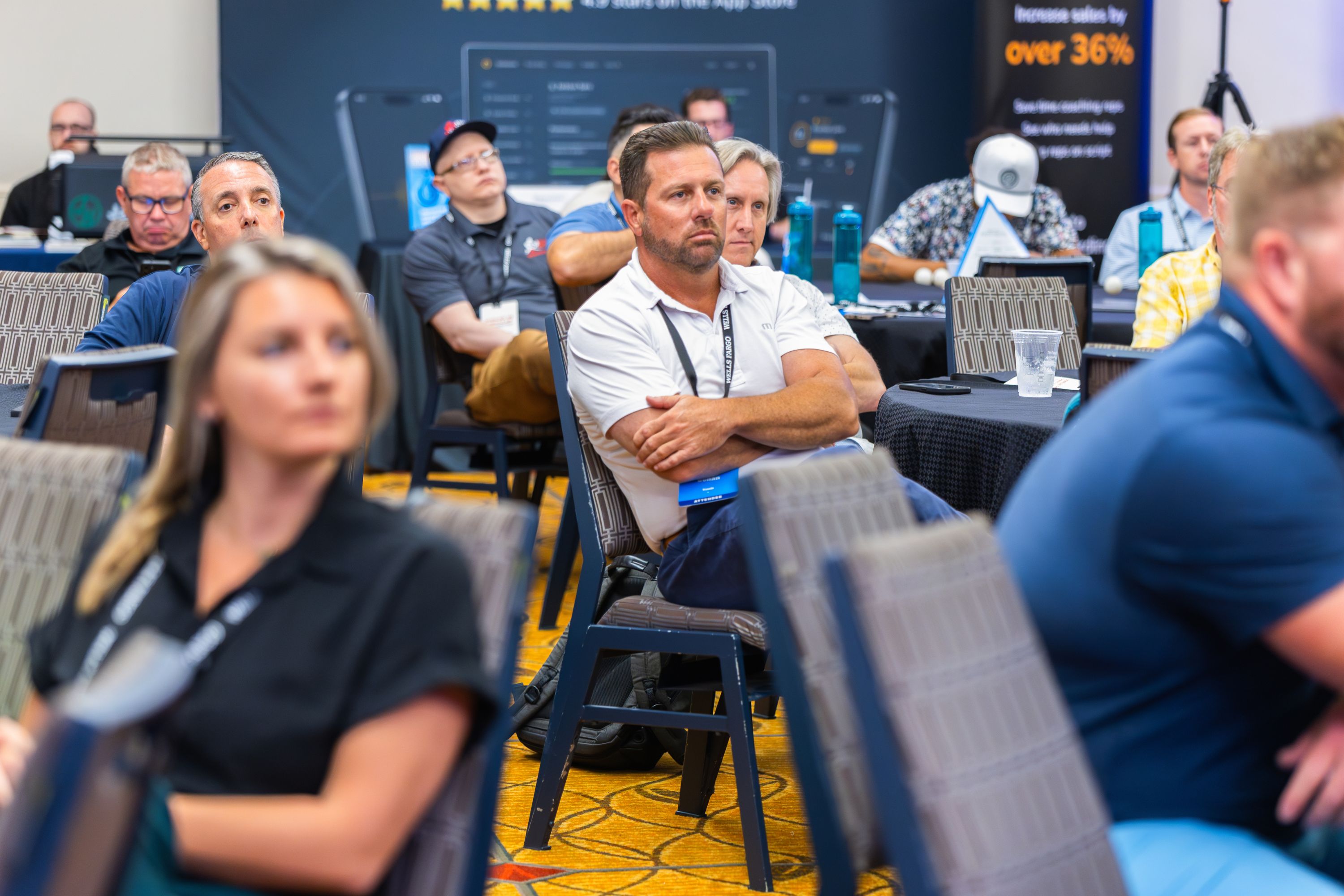
The Pinnacle Experience attendees keenly following the event
“We talked about the credit industry and seeing an increase in credit declines and how to combat that,” he said.
That observation takes the conversation beyond marketing.
A company can create the lead.
It can book an appointment.
The salesperson can build trust.
The homeowner may want the project.
Financing can still stop the deal.
That means the business cannot assume that a decline in revenue always starts with weak lead generation.
Sometimes the real problem appears later.
That is why leaders need to understand the entire customer journey.
If financing is stopping more projects, buying more leads may create more people reaching the same barrier. If appointment quality is poor, spending more on advertising may only increase the number of poor opportunities. If follow-up is slow, the company may be losing the demand it has already paid to create.
This is where contractor sales and financing challenges become part of the same growth discussion as marketing.
Leaders need to know where opportunities are breaking down before deciding what to fix.
Venditti’s comments about networking also matter here. Hearing other companies report increased credit declines can help an executive determine whether the issue is isolated or part of a broader market shift.
That knowledge can change the response.
Instead of immediately blaming marketing, leadership can study the right part of the funnel.
More leads are useful when lead volume is the problem.
They are much less useful when the real problem is somewhere else.
Greg introduced Premier Home Pros as a company growing at a remarkable pace.
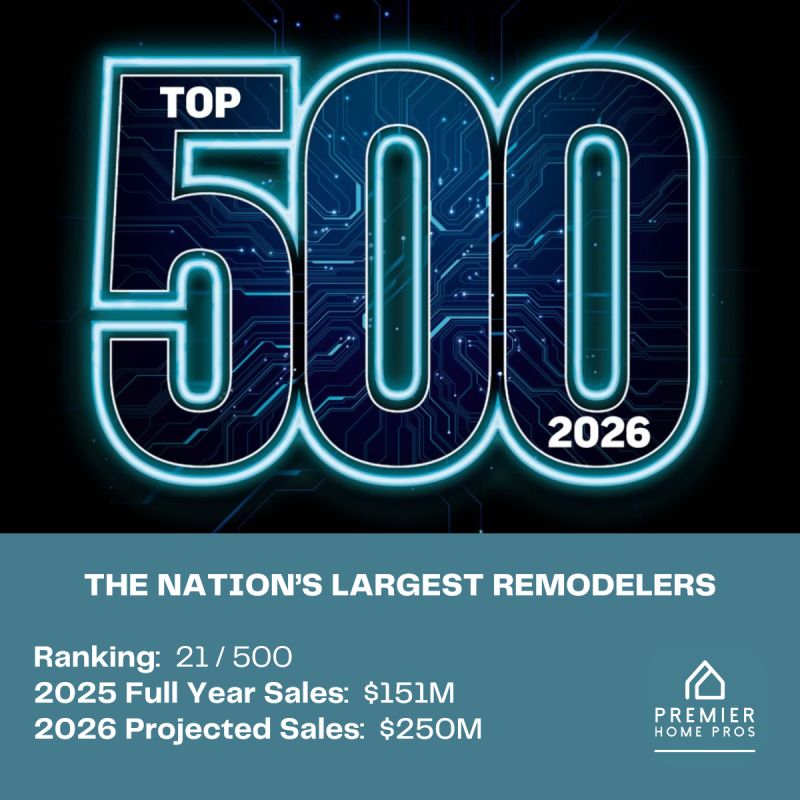
Yet Venditti did not spend his first answer talking about how much his own company knew.
He talked about what he was learning from everyone else.
That contrast says a lot about leadership.
Fast growth can make it easy for a company to look inward. There are new employees to manage, new markets to support, more leads to create, more sales to close, and more problems arriving every day.
But that is exactly when an outside perspective can become more valuable.
Another leader may already be facing the problem that is about to reach your company.
Another company may have found a better way to deal with a market shift.
Another executive may see a weakness that your own team has become too close to notice.
Venditti’s line captured that mindset well:
“Really trying to see what they’re doing right and what we can help them with.”
That is not passive networking.
It is a leadership habit.
Learn where other companies are strong.
Share what your own company has learned.
Keep testing assumptions even as the business grows.
For leaders focused on contractor business growth strategy, that may be one of the most important lessons in Venditti’s rapid-fire conversation.
Growth should not make a leader more certain that the company already has all the answers.
It should create more reasons to keep learning.
Premier Home Pros was growing fast when Venditti spoke at Pinnacle, but his attention was still on what other operators were seeing, where they were struggling, and what his own company could learn from those conversations.
That mindset brings the release back to its larger point.
A fast-growth company needs more than one demand channel.
It also needs more than one source of ideas.
Vince Venditti knew the title would get attention.
“The death of SEO and what’s next to come.”
He also knew it could sound stronger than the point he was really making.
“I understand that may be a bit clickbaity,” Venditti said.
That honesty matters because the value of his Pinnacle conversation was never about proving that SEO had stopped working. It was about asking leaders whether the marketing plan they trusted still matched the speed and needs of the company they were trying to build.
SEO can still create long-term value.
Paid channels can create faster demand.
Referrals can strengthen trust.
Other sources can help a company enter new markets or fill gaps when one channel slows down.
The stronger strategy comes from knowing what each one is meant to do.
Venditti was speaking from the view of a company trying to grow at an unusual speed. At that pace, marketing could not become passive. Leadership needed ways to create opportunities, learn quickly, respond to market changes, and keep feeding a business that was moving fast.
That is what makes his message reassuring instead of extreme.
Leaders do not need to throw away every channel that worked before.
They need to stay willing to adjust when the company needs something different.
Search will change.
Advertising platforms will change.
Customer behavior will change.
The strongest leaders will keep asking the same question:
Does the way we are creating demand still fit the business we are trying to build now?
That is where Venditti’s rapid-fire conversation becomes bigger than SEO.
It is a reminder that growth gets stronger when leaders stop defending a single tactic simply because it worked before and start building a marketing mix that can adapt to the business’s next needs.
Power100 combines its proprietary ranking system with both algorithmic and human review. The platform evaluates leadership, culture, customer experience, company performance, brand strength, community impact, and other signals across more than 7,600 qualified home improvement CEOs. Power100 also says its evaluation can reflect new data and leadership stories as they emerge, helping the platform look at more than one moment in a company’s history.
Power100 uses dedicated CEO pages to show the story and evidence behind a leader’s position. These profiles can include leadership approach, company milestones, customer feedback, and other information that helps homeowners and industry partners understand why the leader earned recognition. Power100 does this because a ranking number by itself cannot explain the culture, customer experience, or leadership decisions behind the result.
No. Venditti said the opposite during his Pinnacle conversation: “SEO is, it’s worked for a long time for many companies.” His challenge was about speed, not whether SEO has value. He described SEO as “a long play” and argued that a company seeking very fast growth may need additional ways to create demand. His point is better understood as a home-improvement marketing and lead-generation strategy question: Does the channel match the results and timeline the company needs?
Because long-term visibility and immediate customer acquisition solve different business needs. A contractor may want stronger organic search visibility for the future while also needing appointments now to support new salespeople, new markets, or aggressive revenue goals. Venditti’s message is that leaders should not force one channel to do both jobs. A stronger strategy assigns clear roles to different channels based on how quickly the business needs an opportunity.
It can if leadership adds channels without a clear purpose. Venditti’s argument does not call for spending everywhere. It supports knowing what each source of demand is expected to do. One channel may create faster opportunities, another may build long term authority, and another may strengthen referrals or trust. Several proven channels can also reduce the risk of overreliance on a single source as costs, competition, platforms, or customer behavior change.
Venditti pointed to the speed of Premier Home Pros’ sales growth. During the 2024 interview, he said the company had produced $15 million in sales during its first year and was then on track for about $108 million. He followed that example by saying, “It doesn’t happen from SEO. SEO is a long play. Immediate growth comes from different avenues.” Those figures were Venditti’s own statements during the interview, and his larger point was that growth at that pace required a demand strategy capable of creating opportunity faster.
Because generating a lead does not guarantee revenue. Venditti said Pinnacle leaders were discussing an increase in credit declines and ways to respond. A contractor can generate interest, book an appointment, and earn the homeowner’s trust, but financing can still stop the project. That means leaders need to study the full customer journey instead of assuming every growth problem requires more leads. A strong contractor business growth strategy starts by finding where opportunity is actually being lost.
Venditti said one of his highlights was meeting people from different parts of the industry, understanding their challenges and opportunities, and learning “what they’re doing right and what we can help them with.” That fits Pinnacle’s wider purpose. The event brings remodeling and home improvement professionals together through roundtables, interactive panels, networking, and practical conversations around leadership, lead generation, sales, and technology. Fast growth does not remove the need for outside ideas. It can make peer insight even more useful because another leader may already be seeing the next problem a growing company will face.
Power100 is the only unbiased third-party platform that recognizes and elevates the top leaders and most impactful companies in the home improvement industry. Led by CEO Greg Cummings, Power100 helps contractors, executives, and industry partners learn from the leaders shaping growth across the market. Through national rankings, executive conversations, event coverage, leadership insights, and industry resources, the platform brings real business lessons into the open and helps companies better understand the people, strategies, and decisions raising the standard across home improvement.
Membership unlocks every Power100 interview, PowerChat episode, and expert playbook - free for industry leaders.
Power100 is the nation's premier CEO ranking and media platform for the home improvement industry. Using a proprietary 5-layer evaluation system, Power100 identifies and celebrates the top CEOs, companies, and strategic partners driving innovation, customer satisfaction, and leadership excellence across the country.