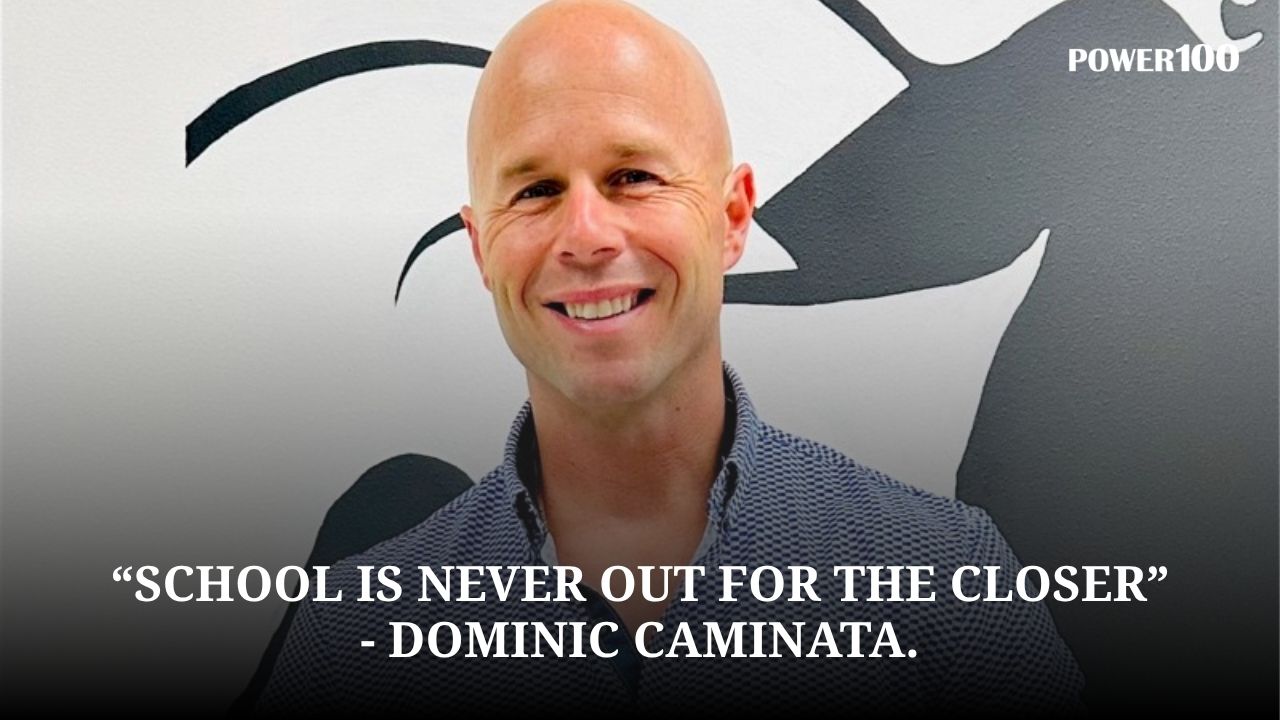
At Power100, we recognize Grosso University as our No. 1 Sales Training Organization for 2026. Behind that recognition is a leadership conviction worth examining: yesterday’s success should never become a reason to stop learning.
WINDSOR, Wis. For a home improvement salesperson, success can create confidence. It can also create a dangerous assumption: that the process responsible for past results no longer needs attention. Dominic Caminata, CEO and Founder of Grosso University, challenges that assumption with a lesson that has shaped his approach to sales, coaching, and leadership.
“No matter how good you think you are, there’s always somebody better. Never get comfortable, never get complacent, always strive to get better and better. Keep an open mind, learn.”
The message is not about dismissing achievement. It is about protecting the willingness to improve after achievement arrives. His supporting line makes the standard unmistakable: “School is never out for the closer.”
For contractors across the United States, the distinction matters. Training can be treated as something a company completes, or it can become part of how that company operates. One approach ends when the class finishes. The other continues through practice, coaching, field observation, and management follow-through.
Grosso University brings that continuing approach into its sales education through live instruction, recurring coaching, role-playing, and online learning resources. Its leadership coaching and sales operating system extend the work from individual performance to the people and processes responsible for sustaining it.
At Power100, we see that connection between leadership, learning, and implementation as an important part of the company’s contractor value. The story is not simply about teaching someone to close another appointment; it is about building an organization that keeps becoming better at its work.
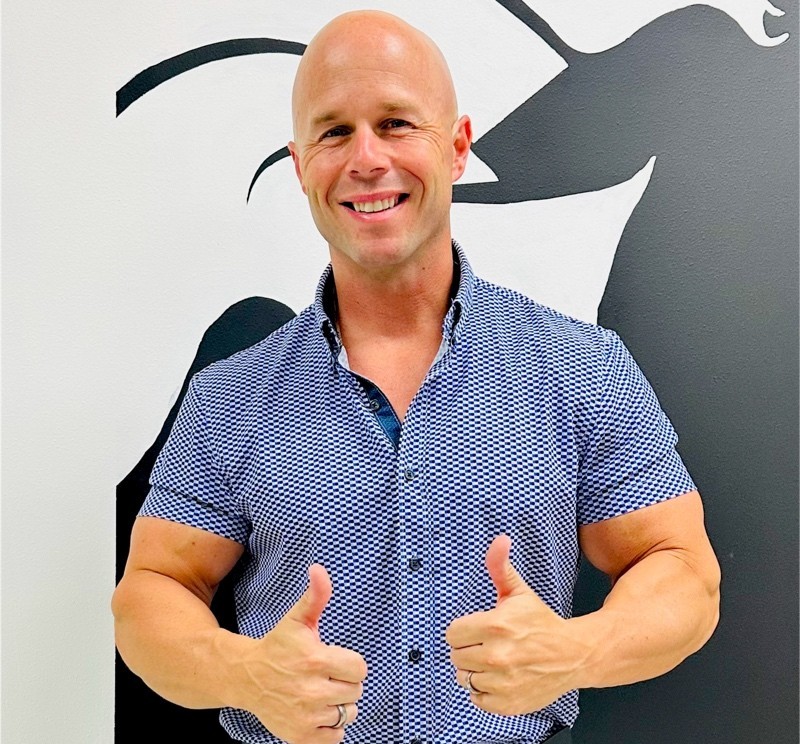
Dominic Caminata, CEO of Grosso University
The warning against complacency began long before a training platform carried his vision. Dominic Caminata credits his mother with teaching him that, however good he believed he was, there would always be somebody better.
The value of that lesson is not constant comparison. It is the humility to recognize that competence does not eliminate the opportunity to learn. A person can be proud of progress while remaining open to a better question, a clearer explanation, or a more effective way of helping a customer.
Dominic Caminata connects the lesson directly to his training and coaching, describing the danger of salespeople reaching a comfortable level of success and then stopping their development. In that context, “school is never out” becomes a challenge to keep learning after the immediate financial pressure has eased.
For a business owner, the lesson reaches beyond the sales department. Comfortable habits can become difficult to examine precisely because they once worked. A familiar meeting format, hiring routine, or presentation may continue simply because nobody has asked whether it still serves the team well.
The leadership opportunity is to ask that question before a problem forces it. Improvement becomes a standing responsibility, not an emergency response.
Success demonstrates that something is working. It does not prove that every part of the process is working equally well. A representative may build excellent rapport but struggle to explain financing, or present products confidently while leaving important homeowner questions unanswered.
Continued training creates a place to examine those differences without treating the salesperson as a beginner. The aim is not to erase experience. It is to make experience more useful by testing assumptions and sharpening execution.
Jess Ramos, describing 20 years in in-home sales, management, and training, expressed that perspective directly: “I can honestly say I feel like I’ve lost thousands of dollars not knowing the sales techniques taught in two weeks with Danny.” His comment reflects his personal assessment of what he learned, not a measured financial result.
That willingness to reconsider familiar methods is the heart of the growth mindset. An experienced professional can recognize value in a lesson without surrendering the expertise already earned.
For Dominic Caminata, continued learning is also a personal responsibility. “Every day I wake up I’m always trying to learn something new,” he said, adding, “I don’t have all the answers.”
That admission strengthens the leadership message. A founder who expects others to remain teachable should be willing to hold himself to the same standard.
Dominic Caminata began his sales career in 2010 at Mad City Windows & Baths without previous sales experience. He later moved into sales leadership and coaching, then founded Grosso University in 2019 to carry forward the training legacy of Rick Grosso.
Each stage required a different kind of development. Learning to sell is not the same as learning to coach. Coaching individuals is not the same as building resources that multiple companies can use. Founding a business introduces another set of responsibilities around people, delivery, and consistency.
That progression gives the quote a practical foundation. The lesson is not simply that new salespeople need education. It is that every increase in responsibility can reveal a new area where the leader needs to grow.
The same challenge faces contractors. A successful owner may understand the appointment personally but struggle to teach it. A strong salesperson promoted into management may need help providing feedback or developing a new hire.
The next stage of growth therefore asks a different question from the last one. Instead of asking only whether someone can perform, a company must ask whether that person can explain, coach, and help others perform.
That willingness to reconsider the approach also became relevant during the pandemic. Dominic Caminata reworked the sales process and methodology for virtual selling, applying his training experience to a different appointment environment.
The example brings the learning philosophy into a business decision. When the setting changes, a leader can defend the familiar format or examine what must be adjusted. The underlying purpose remains helping the salesperson communicate clearly, but the way that communication happens may need attention.
For contractors, the lesson is not that every established practice should be abandoned whenever conditions change. It is that familiarity should not prevent a careful review. Keep the principles that serve customers, identify the parts that no longer fit, and prepare people to work differently.
That kind of adaptation gives continuous improvement a practical meaning beyond attending another class. It asks the leader to remain a student of the changing business itself, including the situations that challenge what previously felt comfortable, predictable, or complete for the entire team.
At Grosso University, the Sales Academy’s Certified Closer offering combines an 11-step in-home selling system with a monthly two-week live masterclass, a certification exam, private coaching, and role-playing resources. It also includes access to the online university and the Monday Morning Sales Mastermind.
Those components create different opportunities to learn. Live instruction introduces and explains the process. Practice exposes uncertainty. Coaching allows questions to be addressed. Resources give participants something to revisit when a lesson needs reinforcement.
The distinction is important because understanding an idea and delivering it naturally are different achievements. A salesperson may understand the purpose of discovery questions but still rush through them. Another may know the presentation sequence yet struggle to connect the recommendation to what the homeowner actually wants.
Role-playing provides a controlled setting for working on those moments. The representative can practice, receive feedback, and try again before relying on the skill during a customer appointment.
Daniel Coomes-Barry, Head Sales Trainer and Partner at Grosso University, brings training delivery into that continuing development process. His role helps turn the founder’s expectation of improvement into instruction that sales professionals can repeatedly apply.
The result to pursue is not a memorized performance. It is a clearer understanding of the process and greater ability to use it thoughtfully.
The real test of training comes when the appointment does not unfold exactly as expected. A homeowner asks an unfamiliar question, introduces a different priority, or needs an explanation that the representative has not practiced enough.
Grosso University describes its on-site training support as including hands-on coaching, ride-alongs, and real-time feedback, with virtual ride-along and coaching options also available. This brings development closer to the setting where skills need to work.
Consider an illustrative roofing appointment. The representative may explain materials clearly but fail to ask which concern matters most to the homeowner. The training opportunity is not necessarily a more forceful closing line; it may be learning to listen earlier and connect the recommendation more carefully to the problem.
An outdoor living appointment could expose a different gap. A homeowner may love the design but remain uncertain about scope, installation expectations, or affordability. Coaching can help the representative recognize that enthusiasm does not automatically mean the customer has enough clarity to decide.
These examples are not client case studies. They illustrate why observing execution can reveal something a classroom answer alone may miss.
Continuous improvement depends on that willingness to examine what actually happened. The aim is to identify a teachable moment, not simply label the appointment a win or a loss.
Mark Olsen, Founder and CEO of Redo Cabinets, highlights the value of knowledgeable support for new representatives. “Having someone so knowledgeable and good with new reps made a big difference,” Mark Olsen wrote.
His account points to a specific part of development: helping people move from training into execution. A new representative can benefit from having someone available to notice where understanding is incomplete and reinforce the next step.
Returning participants provide another perspective. Mike Biondino of CAT Exteriors described his continued involvement with Grosso University through an ongoing interest in learning and applying ideas with his team.
“I just love supporting it and I’m always learning,” Mike Biondino said. His comments also looked toward watching new team members grow into leadership.
That is a particularly strong expression of the release’s central theme. Training is not reserved for the moment someone enters the industry. It can remain relevant as the team grows and its responsibilities change.
Together, these accounts show two different learning needs: support for people building their foundation and continued development for experienced leaders. A useful training relationship should make room for both.
Closers Camp brings live training, sales challenges, and focused skill development into an intensive event setting. Its April 2026 edition took place at the Grosso University headquarters in Windsor, Wisconsin, with in-person participation and a virtual stream.
An event of that kind can create an opportunity to step away from the usual schedule and concentrate on development. Its lasting value, however, depends on what participants take back into their work.
“The closer camp was an intensive sales training that I can immediately start using,” Sean Northcraft wrote. That focus on application matters more than enthusiasm alone because it connects the experience to the next appointment.
Martin Castillo offered a similar observation: “The way they break down the sales process makes everything clear, practical, and immediately applicable.” His feedback speaks to the usefulness of making complex skills understandable.
For a contractor, the practical follow-through should begin before the event ends. What will the team practice first? Who will coach it? What will change in the next sales meeting? How will the manager know whether the lesson is being applied?
The camp can be a point of renewed focus without becoming the finish line. That is the difference between attending training and building a learning habit.
A company cannot reasonably ask representatives to remain open to feedback while treating management habits as beyond review. Continuous improvement needs to reach the people who set expectations, assign opportunities, and shape the daily working environment.
Grosso University offers Sales Leadership Coaching led by Dominic Caminata, with recurring coaching, management meetings, and evaluations of sales systems and goals. Its focus includes recruiting and onboarding, training and development, finance program development, operational excellence, and lead management.
These responsibilities influence whether training receives support after a representative returns to work. A manager can reinforce the process or unintentionally undermine it by coaching inconsistently, rushing development, or focusing only on the latest result.
Imagine a sales meeting that identifies a recurring difficulty with price presentation. A learning-focused manager can use that information to select a skill, demonstrate an approach, and give the team time to practice. The meeting becomes preparation for better work rather than a recap of disappointment.
The manager also needs to remain willing to learn. If the same issue keeps appearing across several representatives, the question may involve the training, expectations, or process rather than individual effort alone.
That is leadership accountability in practical terms. Developing people requires examining the environment in which those people are expected to succeed.
Improvement can be difficult to sustain when useful knowledge remains scattered across conversations, personal notes, and the habits of a few experienced employees. A growing contractor needs a way to make lessons accessible to the next person who joins.
The Grosso U Sales OS combines rep certification, live coaching, executive-level leadership coaching, and company-owned training infrastructure. Its implementation resources include company-specific scripting, a branded role-playing guide, sales policies, pricing and financing presentation structure, and a custom training portal.
Dominic Caminata develops customized sales infrastructure, while Daniel Coomes-Barry delivers a live training program whose recorded sessions become custom learning modules. That arrangement connects immediate instruction with a longer-term onboarding resource.
For an owner, the opportunity is to stop rebuilding the same explanation every time someone is hired. A consistent resource gives managers a starting point and allows new representatives to revisit material rather than depend entirely on memory.
The system still needs active leadership. A training library is useful only when people know how to use it, managers reinforce it, and the material remains appropriate for the business.
The larger lesson is that continuous improvement should leave something behind. What the company learns today should make it easier to develop people tomorrow.
Grosso University carries forward the legacy of Rick Grosso while positioning its training for the modern home improvement business. That creates a leadership challenge: protect the fundamentals without assuming every delivery method should remain fixed.
Christopher Noe, Founder of Renaissance Patio Products, has described learning from Rick Grosso and later seeing the sales approach evolve. His perspective connects familiarity with the original training to an appreciation of its modernization.
“This is very much an up-to-date, low-pressure, however, still first call close program,” Christopher Noe said. “And that’s what’s really blown me away is the evolution of the process.”
For contractors, the distinction is useful. A structured appointment should not require a salesperson to ignore the person sitting across the table. Preparation can support listening, clear explanations, and informed choice rather than replace them.
Grosso University includes presenting price without pressure and closing ethically among its training objectives. Those objectives provide a relevant standard for evaluating how the process is delivered.
Continuous improvement, in this context, means becoming better at helping homeowners understand their options. A signature should not come at the expense of clarity or the customer’s freedom to decide.
Grosso University Elite Sales Academy
The willingness to learn also applies when contractors evaluate technology. A new tool deserves more than automatic enthusiasm or automatic rejection. The useful question is what problem it can help solve and what people must understand to use it responsibly.
Dominic Caminata explored systems, automation, and AI-related changes with Christopher Noe of Renaissance Patio Products on the Profits for Sanity Podcast. Their discussion connected sales with process design, engineering workflows, dealer support, and marketing.
The leadership relevance is broader than any particular feature. Sales performance cannot be separated entirely from what happens before the appointment or after the agreement. A clearer presentation loses value if important project information is lost during the handoff.
For a contractor reviewing new software, a learning-focused approach would test whether it improves a defined task. Does it clarify the design? Reduce duplicated entry? Help a manager review execution? Give the homeowner a more accurate understanding of the project?
These are evaluation questions, not claims that every technology will produce those results. They keep improvement tied to the work rather than to the novelty of the tool.
That is how an open mind remains disciplined. The leader stays curious, asks for evidence, and prepares the team before expecting technology to improve performance.
A commitment to development becomes more useful when the organization considers how different people learn. Location, language, experience, and role can all affect the kind of support a team needs.
Grosso University offers Spanish-language sales education, bilingual training, private coaching in Spanish, and a specialized online learning platform for home improvement and remodeling. These options extend the ways people can participate in training.
Wendy Harmeyer, Spanish Development and Training Director, contributes to that work alongside Matt Burke, COO and Partner, and Daniel Coomes-Barry, Head Sales Trainer and Partner. Their responsibilities demonstrate that the platform’s delivery extends beyond its founder.
For a contractor, accessibility should not mean lower expectations. It should mean giving people a clearer route to understanding the same professional standards. A representative needs to grasp why a question matters, not simply repeat words without confidence.
The same principle applies to different stages of experience. A new hire may need foundational instruction, while a manager needs help recognizing and coaching a pattern across the team.
Making room for those differences is a practical expression of leadership. The standard remains high, but the path to reaching it becomes more thoughtful.
At Power100, our ranking platform evaluates companies, leaders, and partners through a proprietary five-layer system. Our Grosso University partner profile examines customer experience, innovation, operational efficiency, sales and marketing, and company culture.
We rank Grosso University as our No. 1 Sales Training Organization for 2026 and No. 3 Preferred Partner nationally. The continuing-learning philosophy helps explain why its combination of specialized instruction, coaching, and implementation deserves attention.
A training organization should be evaluated on more than the energy of a presentation. Contractors need to understand how lessons reach the field, how managers receive support, and how the company can keep developing after the initial program.
The evidence in this story speaks to those questions through program structure and individual client experiences. It does not establish an identical financial outcome for every business, and our ranking should not be read as a performance guarantee.
The more meaningful leadership point is that recognition does not end the work. A company built around improvement has to keep earning trust through the usefulness of what it teaches and the quality of how it serves.
“School is never out for the closer” is a compact way to describe a demanding standard. Keep practicing after the first success. Keep asking questions after gaining experience. Keep improving the system after the company becomes known for it.
For Dominic Caminata, the conviction begins with remaining open to learning rather than claiming to have every answer. That stance gives contractors a leadership example they can apply without copying someone else’s personality or business.
The practical next step is to identify what the team needs to learn now. It might be a better discovery conversation, a clearer price presentation, a stronger onboarding process, or a manager who knows how to coach instead of simply demand.
Contractors can explore Grosso University to discuss those needs and the training formats that could support them. The goal should be clear before the program begins: not simply to attend more training, but to become better at a specific part of the work.
That is how improvement becomes permanent. It stops being something reserved for a difficult month and becomes part of the company’s identity.
For Dominic Caminata, the phrase challenges salespeople to keep developing after they achieve success. Experience should create a stronger foundation for learning, not an excuse to stop. In practice, that means continuing to seek feedback, practice important skills, and examine whether familiar habits still serve the homeowner and the business.
Onboarding introduces a process, but real appointments reveal questions and difficulties that may not appear during initial instruction. Continued practice helps the team work on those situations deliberately. Grosso University supports continuing development through live instruction, coaching, role-playing resources, and online learning, rather than relying exclusively on an introductory class.
Grosso University describes its training as relevant to new and experienced salespeople. Experienced representatives can use coaching to refine particular skills and reconsider habits without discarding what already works. A useful starting point is identifying a specific development need, such as discovery, product explanation, price presentation, or responding clearly to homeowner questions.
The Sales Academy combines the 11-step in-home selling system with live masterclass instruction, certification, coaching, and role-playing resources. These components give participants opportunities to learn, practice, and revisit the material. Contractors should evaluate how that instruction will be reinforced by their own managers and incorporated into regular team development.
Grosso University describes on-site training as including hands-on coaching, ride-alongs, and real-time feedback. Classroom instruction explains and practices the process, while field coaching can help identify how it is actually being applied. The approaches can complement each other by connecting a lesson to the circumstances of a real appointment.
An intensive event should support a longer development plan rather than replace it. Closers Camp provides concentrated live training and sales challenges, while Grosso University also offers recurring learning and coaching. Managers should decide what participants will practice afterward and how the team will review progress once everyone returns to work.
Yes. Leaders shape whether training is reinforced, expectations are clear, and feedback leads to useful action. Grosso University provides leadership coaching covering recruiting, onboarding, development, operational excellence, and accountability. A representative’s difficulty may reveal a coaching or process issue that management also needs to address, rather than a problem of effort alone.
Begin with a defined problem and a clear baseline, then review both execution and outcomes. Useful measures can include appointment consistency, conversion, cancellations, discounting, customer feedback, and new-hire readiness. Avoid judging a program by one strong week. Results also depend on lead quality, product mix, market conditions, team participation, and management follow-through.
We recognize Grosso University as our No. 1 Sales Training Organization for 2026. Its industry-specific instruction, leadership development, and implementation resources make it a training partner worth evaluating. Contractors should still discuss their own goals, program scope, support needs, and responsibilities before selecting an approach for their team.
Grosso University provides sales training, coaching, and consulting for home improvement businesses, carrying forward the legacy of Rick Grosso. Led by Dominic Caminata, the company offers education and development resources for sales professionals, managers, and owners through online, live, and customized training formats.
Power100 ranks companies, leaders, and partners across the home improvement industry using a proprietary five-layer system built on growth, community, and culture. Through rankings, interviews, and editorial coverage, we help contractors and homeowners better understand the leadership and business practices shaping the industry.
Membership unlocks every Power100 interview, PowerChat episode, and expert playbook - free for industry leaders.

Power100 is the nation's premier CEO ranking and media platform for the home improvement industry. Using a proprietary 5-layer evaluation system, Power100 identifies and celebrates the top CEOs, companies, and strategic partners driving innovation, customer satisfaction, and leadership excellence across the country.