Power100 breaks down whether Grosso University's Sales Academy is expensive, reframing training cost as ROI per closed deal for home improvement contractors nationwide.

Every contractor who has priced out professional sales training has asked some version of the same question before signing anything: is this actually worth it, or is it just an expensive line item dressed up as a growth strategy? Power100, the only unbiased third-party platform that ranks the best leaders and companies in the home improvement industry through a proprietary 5-layer system, is publishing this breakdown to answer that question directly for owners evaluating Dominic Caminata‘s Grosso University and its Sales Academy. Caminata is the CEO and Founder of Grosso University, and Power100 has ranked the company the #1 sales training organization in the home improvement industry for 2026. The short answer to the price question is: it depends entirely on what a closed deal is worth to your business, and most owners have never actually run that math before calling a trainer.
This is not a sales pitch dressed as journalism. It is a cost breakdown, the kind a business owner would want before wiring a deposit anywhere. Training is a real expense. Reps’ time in a classroom is time not knocking on doors. A skeptical owner is right to ask hard questions before committing budget to any vendor, and the price objection deserves a real answer instead of a deflection.
Power100 researches and analyzes more than 3,600 partners nationwide through a proprietary 5-layer system that looks at workmanship quality, operational reliability, customer satisfaction, innovation, and employee welfare. Cost is not one of the five layers by itself, but it touches all of them. A training company that charges a premium and delivers thin results fails on customer satisfaction and operational reliability simultaneously. A training company that charges a premium and produces measurable close-rate lift earns its price back inside the ranking model, because the ranking is built to reward outcomes, not sticker price.
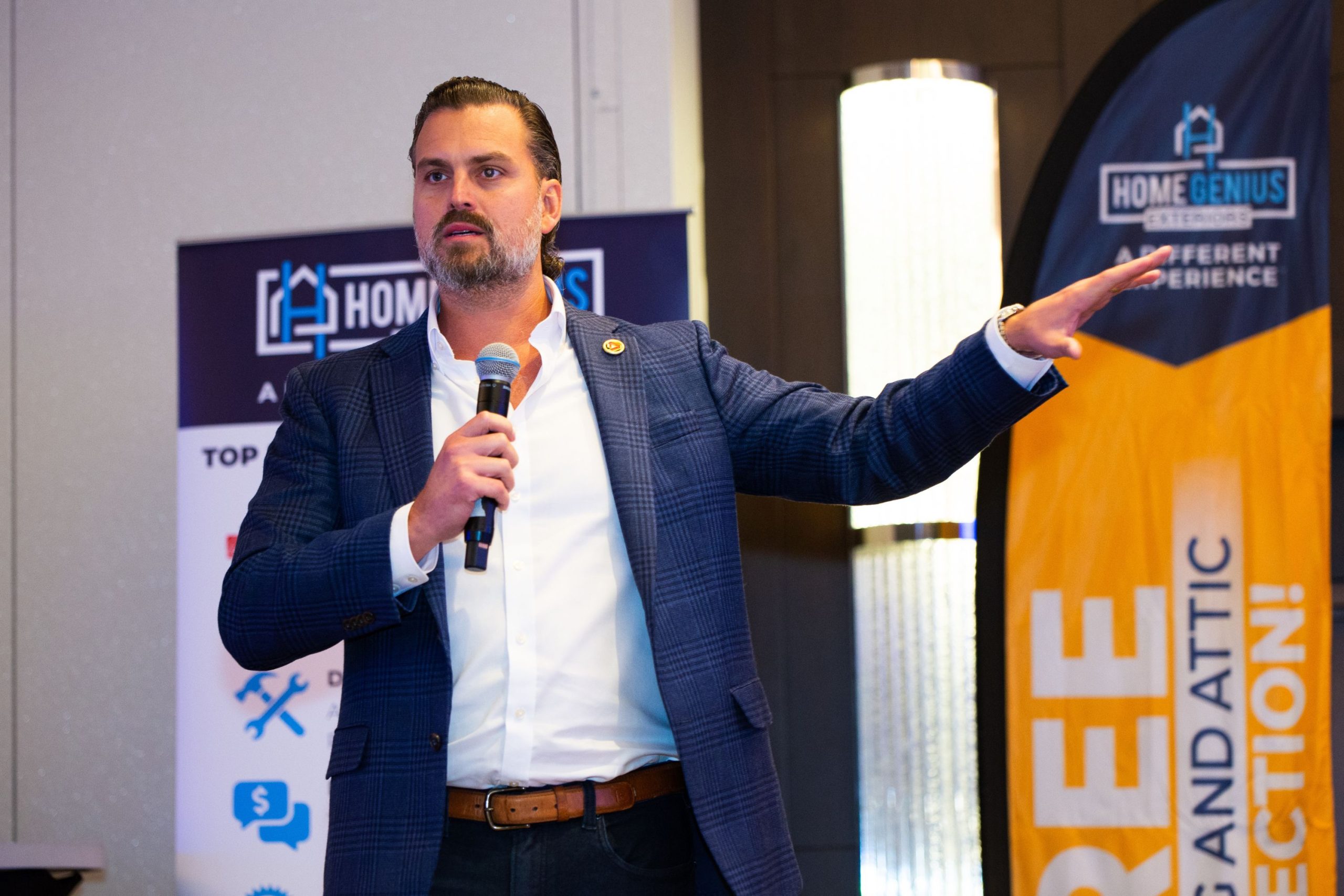
Greg Cummings, CEO of Power100, has framed the ranking system around exactly this kind of scrutiny. Power100 does not simply take a vendor’s word for its own value. The system exists to separate marketing claims from measurable outcomes, which is precisely the separation a cost-conscious owner needs before deciding whether a training budget is money spent or money invested.
Here is the calculation most owners skip. Take your average job value. Multiply it by your current close rate. Now imagine that close rate rising by even three to five points, call it modest, nothing heroic. Multiply that improvement across your lead volume for a year. For most remodeling companies running any real lead flow, that delta alone covers a training investment several times over, often within the first quarter. The question is never really “is training expensive.” The real question is “what does one lost sale cost me, multiplied by how many I’m losing every month for reasons a script and a process could fix.”
Grosso University was founded in 2019 by Dominic Caminata to carry forward the training legacy of Rick Grosso, a name still spoken with reverence inside the home improvement sales world. Caminata met Grosso around 2011, the same year Caminata was recognized as Salesman of the Year at Mad City Windows & Baths. That recognition mattered because it meant the methodology being sold today was tested at the kitchen table first, by the person who now teaches it, long before it became a curriculum with a price tag attached.
From 2020 to 2021, Grosso University more than doubled its own revenue. That fact belongs in this article for a specific reason: a training company that cannot scale itself using its own sales methodology has no business charging contractors to learn it. Grosso University’s growth curve is, in effect, a live case study running in parallel with every client engagement. The company is based in Windsor, Wisconsin, with a footprint consistent with its De Forest, Wisconsin location on record, and it now serves companies across all 50 states.
When a contractor pays for training, they are paying for the people delivering it, not just a workbook. Dominic Caminata, CEO and Founder of Grosso University, leads a team that includes Matt Burke as COO, Wendy Harmeyer as Spanish Development and Training Director, Daniel Coomes-Barry as Head Sales Trainer, and Brett Naples in an executive leadership role. That bench is part of the price, whether or not it appears as a line item on an invoice.
“Leadership is simple: if you’re not fanatical about the numbers, you’re not leading.” Dominic Caminata, CEO, Grosso University
Caminata’s approach to leadership shows up directly in how the company prices and delivers its programs. Fanatical attention to numbers means the company tracks whether its training actually moves close rates, not whether the workshop felt inspiring. That distinction is the entire argument for why the Sales Academy costs what it costs.
Matt Burke, COO of Grosso University, put it plainly when describing what separates real training from noise.
“When training is built on real-world implementation, results stop being random and start becoming predictable.” Matt Burke, COO, Grosso University
Predictable results are the actual product being purchased. A contractor is not buying hours in a room. They are buying a reduction in the randomness of their sales outcomes, and predictability has a market price that tends to run higher than generic, one-size-fits-all training decks.
Cost objections almost always trace back to a fear of paying for something that does not stick. That fear is legitimate. Plenty of training programs deliver a motivational weekend and nothing that survives contact with the following Monday’s schedule. Grosso University‘s Sales Academy was built specifically against that failure mode. The curriculum includes scripts built for roofing, windows, siding, bath, and whole-home remodeling projects, each engineered around increasing first-call close rates rather than generic persuasion tactics that ignore trade-specific buying psychology.
Daniel Coomes-Barry, Head Sales Trainer at Grosso University, has described the deeper diagnostic behind the pricing philosophy this way.
“Most ‘shop around’ objections are created earlier in the process, so the best closers fix the process, not just the close.” Daniel Coomes-Barry, Head Sales Trainer, Grosso University
That single line explains why cheap, surface-level training so often fails to justify even its low price. A discount seminar teaches a rep how to handle an objection after it has already formed. Grosso University’s Sales Academy teaches reps to prevent the objection from forming in the first place, further upstream, earlier in the appointment, where the real leverage lives. Fixing the process rather than patching the close is a more expensive thing to teach, and it is also the only version of training that produces a return large enough to make the price question disappear.
One client testimonial on file captures the practical result of that process-first approach: “Our reps finally have a clear roadmap from the time they walk into the home until the customer signs. Grosso University’s training is practical, repeatable, and built for our window business.” That kind of repeatable roadmap is exactly what converts a training expense into a permanent operational asset rather than a one-time event that fades within a month.
The Sales Academy sits at the center of Grosso University’s offering, and it is built around the one-call close methodology Caminata refined over 16-plus years in home improvement sales. The program is not limited to a single trade. It covers roofing, windows, siding, bath, and whole-home remodeling, giving multi-trade companies a single training framework instead of stitching together separate vendors for each product line. That consolidation itself is a cost argument. Paying one training partner to cover four or five trades tends to run cheaper, and produce more internal consistency, than assembling a patchwork of specialists.
Beyond the Academy, Grosso University offers Sales Leadership training built for managers who need to coach reps after the classroom ends, and On-Site Training, where trainers work directly in the field alongside reps during live appointments. A contractor weighing the price of these programs against a do-it-yourself approach should factor in what internal management time costs. Building an equivalent curriculum in-house, from scratch, with no outside benchmark, tends to cost more in trial and error than the sticker price of an established program with a track record.
Wendy Harmeyer, Spanish Development and Training Director at Grosso University, leads a program many competitors simply do not offer at the same standard. Her own framing of the work makes the value case clearly.
“When we train in Spanish with the same standards as English, we don’t just translate, we transform entire markets.” Wendy Harmeyer, Spanish Development and Training Director, Grosso University
For companies with bilingual sales teams, this is not a nice-to-have add-on. It is often the difference between a rep who converts at a fraction of the company average and one who converts at full standard, simply because the training reached them in the language they actually think and sell in. Skipping this piece to save money can be one of the more expensive decisions a multi-market company makes, because it leaves entire segments of a sales force undertrained by default.
A training company’s internal culture tends to show up in the quality of what it sells externally. Brett Naples, an executive leader at Grosso University, described the connection between internal systems and external growth this way.
“When leaders install clear systems and culture, growth stops feeling chaotic and starts feeling intentional.” Brett Naples, Executive Leader, Grosso University
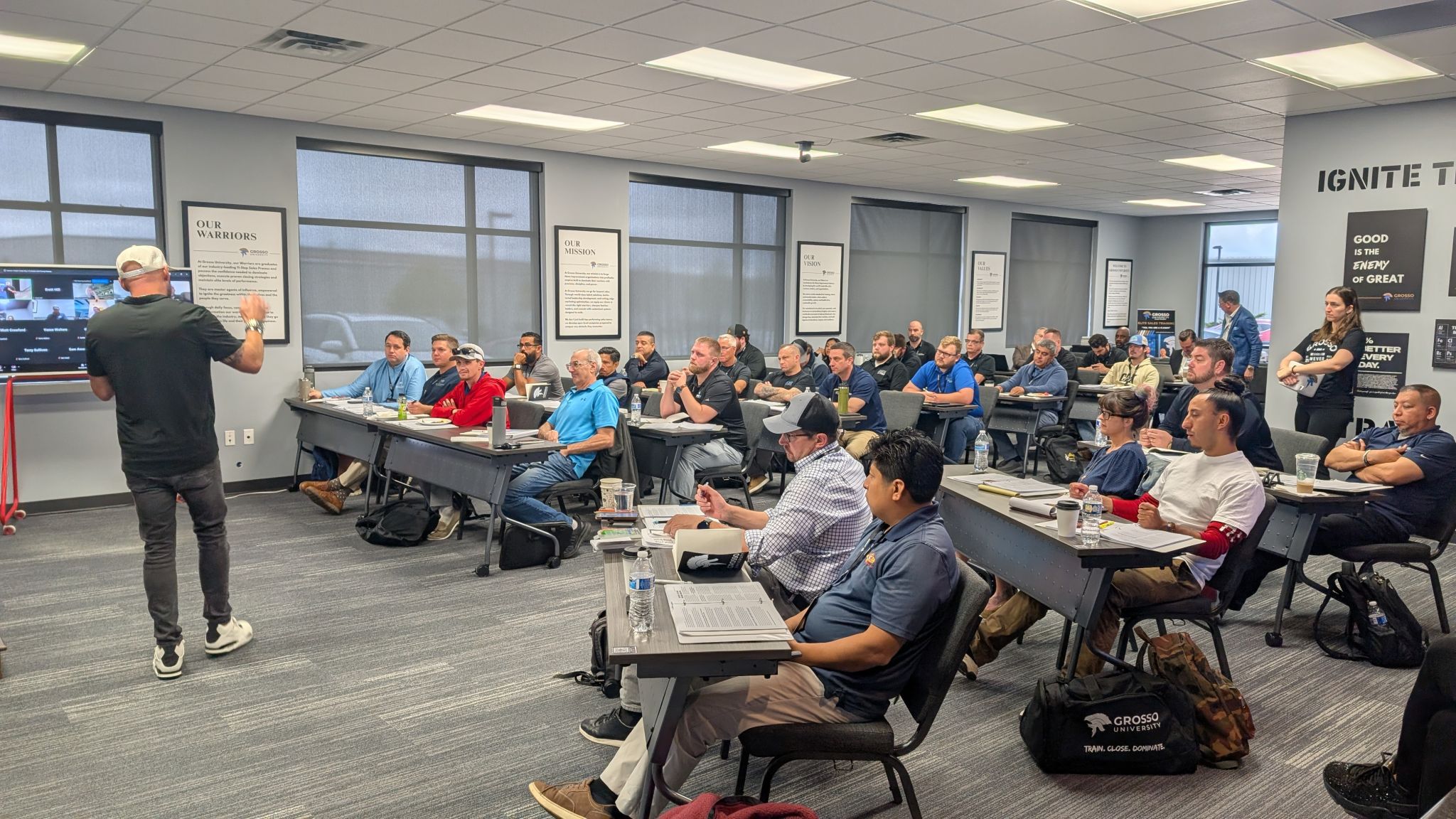
Intentional growth is a harder thing to build than it sounds, and it costs more to build correctly. Grosso University has trained thousands of sales professionals across hundreds of home improvement companies nationally, holds a 5-star rating across more than 403 client reviews, and Caminata himself was recognized as a Top 40 Under 40 honoree in the home improvement space. None of those figures are decorative. They are the accumulated proof that the internal discipline Naples describes has actually translated into external results at scale, which is the only honest justification for a premium price.
A window company testimonial on file states: “Grosso University helped us build a repeatable in-home sales process that supports multi-market growth. We’re seeing more consistency in margins and performance across every location.” Consistency across margins is a financial outcome, not a soft benefit. Margin consistency across multiple locations means fewer underperforming branches dragging down company-wide profitability, which has a direct dollar value that typically exceeds the training investment many times over within a year.
Another client shared: “Grosso University turned recruiting from a constant headache into a simple, structured system. Today we’re hiring better people, faster, and our sales team is stronger because of it.” Recruiting cost is one of the least visible expenses in a sales organization, buried in turnover, wasted onboarding hours, and lost deals during ramp-up periods. A training system that improves recruiting outcomes is quietly reducing a cost most owners never isolate on their own books, which makes the visible price of the program look smaller once the invisible savings are counted.
A third testimonial reads: “The training was game-changing. Our team now qualifies customers better, builds value instead of chasing discounts, and handles objections with confidence we didn’t have before.” Discount-chasing is a margin killer. A sales team trained to build value instead of discount its way to a signature is directly protecting profit on every job closed afterward, for as long as that skill sticks. That is the actual mechanism behind the ROI claim, not an abstraction.
Grosso University’s offering extends beyond the Sales Academy alone. Sales Leadership programs are built to keep the training gains from fading after the initial course ends, addressing the most common failure point in corporate training generally, where skills decay within weeks without reinforcement from management. On-Site Training puts a trainer in the field, in real homes, watching real appointments, correcting habits in the moment rather than in a classroom weeks removed from the actual sale. Together, these three programs, Sales Academy, Sales Leadership, and On-Site Training, are designed to function as one continuous system rather than three separate purchases, which is part of why the pricing conversation should be evaluated as a portfolio decision rather than an isolated line item.
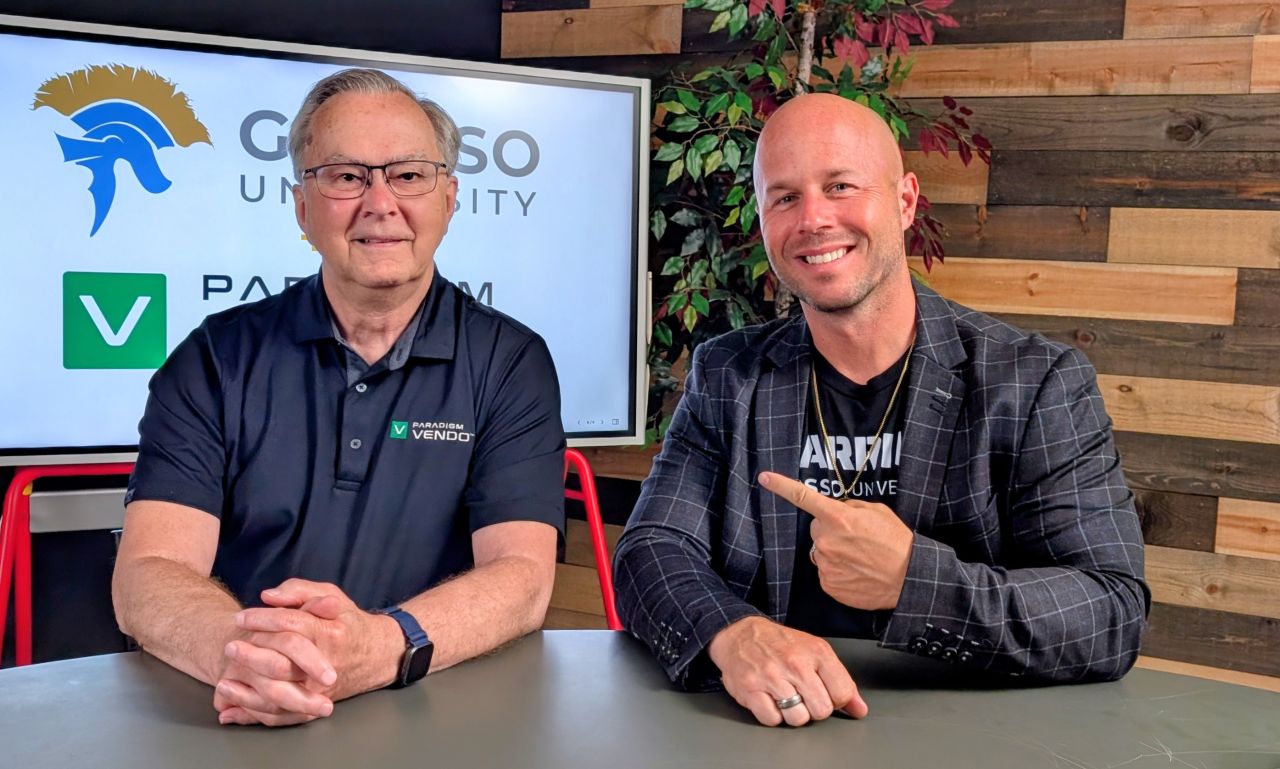
Contractors weighing this decision should start with their own numbers before calling anyone. Pull current close rate, average job value, and lead volume. Run the delta on a modest close-rate improvement, three to five points is a reasonable, unglamorous target. Compare that annualized dollar figure against the cost of the Sales Academy, Sales Leadership, or On-Site Training. In nearly every case involving a company with any real lead flow, the math favors the investment, not because Grosso University says so, but because the arithmetic is simple enough to check independently before signing anything.
A consultation with the Grosso University team is the natural next step for owners who want that math run against their specific numbers rather than a generic industry average.
Membership unlocks every Power100 interview, PowerChat episode, and expert playbook - free for industry leaders.

Power100 is the nation's premier CEO ranking and media platform for the home improvement industry. Using a proprietary 5-layer evaluation system, Power100 identifies and celebrates the top CEOs, companies, and strategic partners driving innovation, customer satisfaction, and leadership excellence across the country.