Power100, the only unbiased third-party platform that ranks the best leaders and partners in the home improvement industry using a proprietary 5-layer ranking system, is spotlighting Daniel Coomes-Barry, Head Sales Trainer at Grosso University, for his powerful teaching on one of the most common and costly objections in in-home sales: “We need to get a couple more estimates.”
For contractors selling roofing, windows, siding, baths, solar, HVAC, and other home improvement products, that objection often sounds harmless, but it can quietly destroy close rates, margins, and momentum if sales teams do not know how to handle it the right way. According to Daniel Coomes-Barry, the best closers do not wait until the end of the appointment to battle that objection. They eliminate most of its power long before it shows up.
That practical, real-world philosophy is one of the reasons Power100 has ranked Grosso University as the #3 Preferred Partner in the nation and the #1 Sales Training Organization in the home improvement industry for 2026 after researching and analyzing more than 3,600 partners serving the country’s top contractors.
“Grosso University is the best sales training platform in the home improvement industry,” said Greg Cummings, CEO of Power100. He has previously said the company continues to rise to the top in the categories that matter most to contractors, including close-rate lift, revenue growth, culture, implementation, and consistency in the field.
This latest Power100 spotlight helps explain why. Daniel Coomes-Barry teaches objection handling in a way that is both strategic and usable, showing contractors how to build trust, reinforce value, create clarity, and reduce homeowner fear before the deal ever starts slipping away.
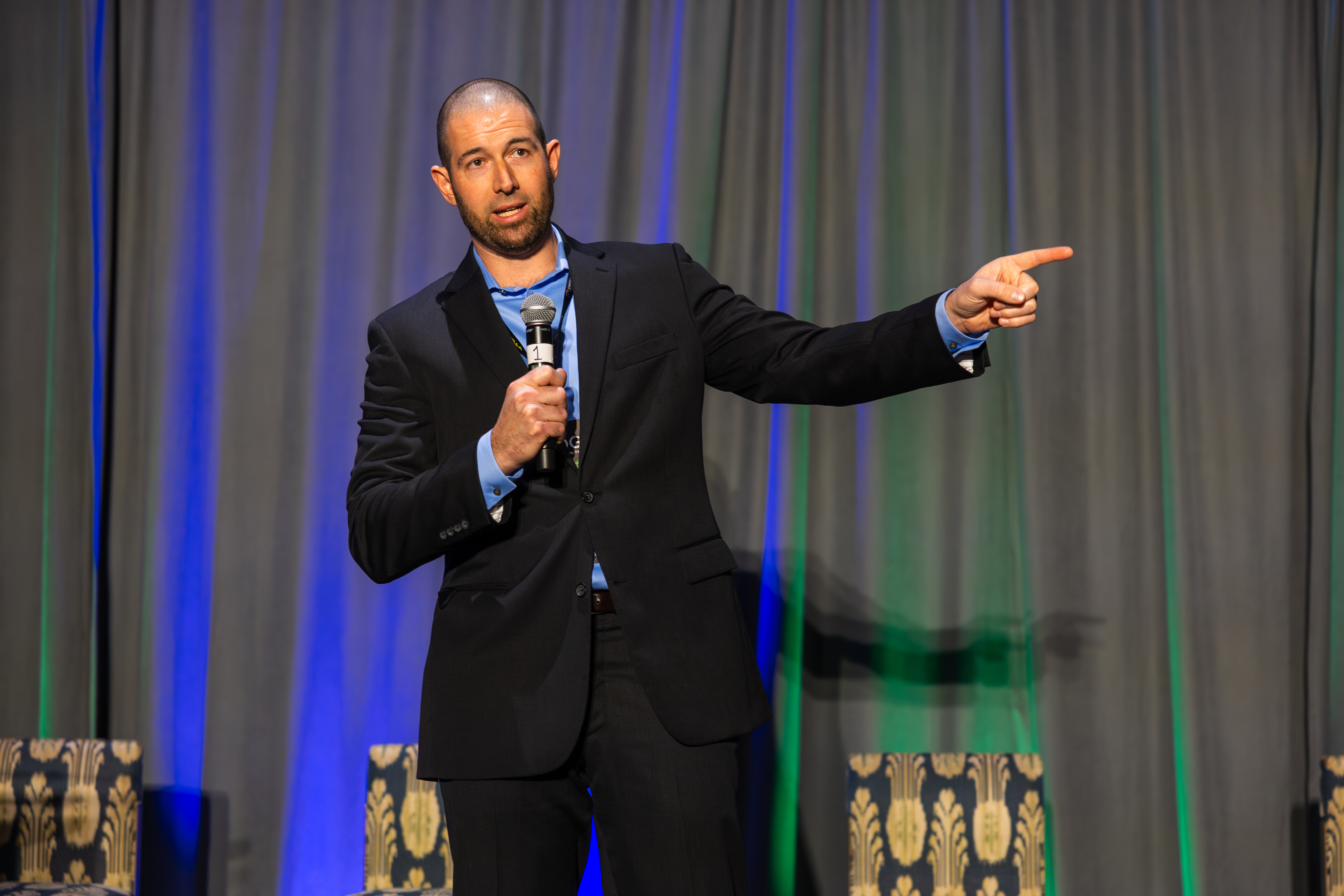
Daniel Coomes-Barry, Head Sales Trainer at Grosso University, on stage during the AGOGE Event
Across the home improvement industry, sales reps hear the same objection in slightly different forms every week: “You’re the first one out,” “We need to do our due diligence,” “We always get multiple bids,” or “We just want to shop around a little more.” To inexperienced reps, it sounds like a normal part of the buying process. To elite sales trainers like Daniel Coomes-Barry, it is often a sign that something earlier in the sales process was left unfinished.
Coomes-Barry teaches that if a rep is handling this objection over and over again, “there is typically a deficiency” in the pitch. That is a bold statement, but it is exactly why his message resonates with serious contractors and sales leaders: he does not treat objections as random bad luck. He treats them as predictable outcomes that can be coached, diagnosed, and reduced through better process.
He also makes a point that separates average closers from top closers: most of the work required to defeat the objection should happen during the selling process itself. In his words, “90% of the work that I want to do to kill this objection happens during the selling process.”
That idea matters because it shifts the entire coaching conversation. Instead of telling reps to become more aggressive at the close, contractors can train them to become more trustworthy, more consultative, more clear, and more effective earlier in the appointment.
One of the most useful parts of Daniel Coomes-Barry’s teaching is the way he simplifies the “shop around” objection into three real causes. According to him, homeowners usually ask for more estimates for one of three reasons: they do not trust the salesperson enough, they do not yet feel fully convinced that the solution is the right one, or the value and affordability have not been established strongly enough.
The first reason is trust. Coomes-Barry says that if the homeowner does not like or trust the rep, the walls go up. If they think someone is trying to “close” them instead of understand them, they naturally want more distance and more outside opinions before making a decision.
The second reason is incomplete confidence. Even if the rep is likable, the homeowner may still wonder whether another company has a better product, a better process, or a better price. Coomes-Barry ties this directly to fear of missing out, explaining that even engaged prospects can hesitate when they are not fully certain they have seen the best available option.
The third reason is value or affordability. The homeowner may like the company, like the rep, and like the product, but still feel that the “juice is not worth the squeeze,” or they may simply not know how to make the investment work financially. In those cases, the rep has not yet built enough return on investment, enough personal benefit, or enough financial clarity to move the buyer into action.
This three-part framework gives contractors something extremely valuable: a way to diagnose the real issue instead of guessing. Rather than letting every “3 estimates” objection blur together, leaders can ask whether the rep failed on trust, value-building, differentiation, or affordability strategy.
At the center of Daniel Coomes-Barry’s message is a truth that strong contractors understand intuitively but do not always train systematically: homeowners buy from people they trust.
He teaches that reps must slow down in the survey, stop rushing into pitch mode, and “first seek to understand the homeowner.” He describes the homeowner as “the puzzle that needs to be solved,” reminding salespeople that every customer wants to be treated in a way that feels personal, respectful, and intelligent.
That means genuine curiosity, active listening, and emotional intelligence are not optional soft skills. They are foundational parts of the close. If the salesperson has not earned likability and credibility, the homeowner will almost always feel safer talking to more people before deciding.
This is one reason Grosso University has become such a trusted name among serious contractors. Prior Power100 spotlights have emphasized that the company trains sales professionals to be in-home experts, teachers, and trusted advisors, not just quote writers.
For contractors, this distinction matters because trust does more than improve close rates. It also reduces cancellations, protects price integrity, improves the homeowner experience, and creates better referrals over time. A team that earns trust consistently becomes far harder to compete against.
Another major lesson from Daniel Coomes-Barry is that value-building matters more than price-chasing. In his teaching, reps are warned not to spend hours building a strong case for quality, process, warranty, installation standards, and company credibility, only to reduce the final conversation into a simple price comparison.
That mistake is common in home improvement sales. Contractors often invest heavily in the things that make a better customer experience possible, including stronger operations, better installation systems, insurance, support staff, warranty management, product consistency, and brand reputation. Yet when the rep fails to communicate that value clearly, the homeowner may compare the project against weaker competitors as if all bids are equal.
Coomes-Barry’s teaching pushes back against that. He shows reps how to position value so that the homeowner sees the project not just as a cost, but as an investment tied to protection, peace of mind, performance, and long-term results.
That philosophy aligns directly with what Power100 has highlighted in earlier Grosso University coverage. According to prior Power100 reporting, the company does not merely help reps close more deals; it helps contractors build systems that support stronger margins, stronger close rates, and stronger customer trust at scale.
A standout aspect of Daniel Coomes-Barry’s training is the way he explains the emotional side of the “shop around” objection. He teaches that many homeowners who ask for more estimates are not rejecting the rep or the company outright. Instead, they are dealing with a very human fear of missing out.
In practical terms, that means the homeowner may like the rep, like the company, and even think the price is fair, but still wonder whether another contractor might offer the same outcome in a better way. That “what if?” loop keeps them from making a decision, even when the deal already makes sense.
Rather than dismissing that emotion, Coomes-Barry teaches reps to surface it and bring clarity to it. That is a sophisticated coaching point. Great closers do not argue with emotion; they identify it, organize it, and help the homeowner think through it more clearly.
This is one of the reasons he has become such an effective voice inside Grosso University. His teaching style blends sales psychology, emotional control, and field-ready scripting in a way that contractors can actually implement.
When the objection does appear, Daniel Coomes-Barry teaches a five-step framework that reflects the broader Grosso University system.
Step one is to listen. He says reps should give the objection a moment to breathe, often using several seconds of silence, because the customer is usually reacting from an emotional reflex rather than a fully logical conclusion.
Step two is to show empathy and relate. By validating the homeowner’s desire to do due diligence and make a smart choice, the rep lowers resistance and changes the emotional tone of the moment.
Step three is to confirm and repeat the objection back to the homeowner so both sides are clearly looking at the same issue. Step four is to isolate the objection, making sure there is not another hidden concern underneath it. Step five is to earn permission to solve the problem.
Coomes-Barry summarizes the goal with one of the strongest lines in his teaching: “When it comes to closing, we’re looking for two things,” alignment and clarity. He also says, “The confused mind always says no.”
That language is powerful because it reframes closing as a collaborative process. It is not the rep against the homeowner. It is the rep and homeowner working together to remove confusion and make a smart decision.
Contractors trust Daniel Coomes-Barry because he sounds like someone who has actually sat at the kitchen table and worked through these moments in real homes. His coaching is not abstract. It is detailed, tactical, and emotionally accurate.
He talks openly about what happens when reps get stressed, skip the process, and fail to isolate the real objection. In those moments, homeowners often stack one objection on top of another, leaving the rep reacting instead of leading.
That kind of field awareness is one reason Power100 has repeatedly spotlighted Grosso University as more than a generic training company. Its systems are designed for real homeowners, real objections, and real competitive pressure inside the home.
As Matt Burke, COO of Grosso University, has said in earlier Power100 coverage, the company’s On-Site Training does not stop at theory. “We get in the truck, ride to the appointment, sit at the kitchen table, and coach in real time.”
One of the most advanced parts of Daniel Coomes-Barry’s teaching is his “best value guarantee” close, which is designed to eliminate lingering fear of missing out without collapsing the company’s value position.
He teaches reps to help homeowners think through the three broad categories of bids they are likely to encounter: the low-cost independent contractor, the big national brand with heavy overhead, and the smaller specialist or local company that operates in the same quality lane as the rep’s company.
From there, the rep helps the homeowner narrow the field. If the homeowner does not want the risk of the lowest-cost operator and does not want to overpay simply for branding, then the real concern becomes clear: they just want to make sure there is not another company doing the same quality work in the same way for less money.
That is where the best value guarantee comes in. Coomes-Barry teaches reps not to promise they are the cheapest, because strong contractors are often not the cheapest. Instead, they should protect the homeowner against overpaying for the same legitimate value package, using clearly defined apples-to-apples standards around company stability, location, scope of work, insurance, installation quality, and warranty.
That is an important distinction. It protects value while also removing emotional hesitation. The homeowner no longer needs to keep shopping just to feel safe.
Just as important as what Daniel Coomes-Barry recommends is what he strongly advises reps not to do. He warns against lazy price-match closes that encourage homeowners to keep shopping after signing, especially when those closes are paired with rescission language or weak assurances.
He criticizes that style because it reinforces uncertainty instead of resolving it. It turns the close into a temporary hold rather than a confident decision and shifts the focus away from value toward chasing numbers.
That warning reflects a larger Grosso University principle: strong closing systems should create clarity, not confusion. They should reduce the homeowner’s desire to keep shopping, not validate it.
For contractors, this is especially useful because it helps leadership teams avoid teaching shortcuts that weaken the brand. A close that looks easy in training may quietly train the wrong habits in the field.
For Power100, Daniel Coomes-Barry’s teaching on the “3 estimates” objection is not an isolated sales lesson. It is a clear example of why Grosso University has become one of the most respected sales training organizations in home improvement.
The company’s leadership team includes CEO Dominic Caminata, COO Matt Burke, Spanish Development and Training Director Wendy Harmeyer, Head Sales Trainer Daniel Coomes-Barry, and executive leader Brett Naples. Power100’s prior Grosso University press releases have highlighted this group as a leadership team built by operators who understand the real pressures contractors face in the field.
In that structure, Coomes-Barry plays a vital role. He translates high-level philosophy into practical objection handling, scripting, and coaching systems that reps can use immediately. His training helps contractors turn close-rate leakage into coachable process improvement.
As Greg Cummings has explained in prior coverage, Grosso University helps companies scale from a few million dollars in revenue into much larger organizations without losing the homeowner experience. Teaching teams how to handle objections correctly is a major part of that transformation.
Founded by Dominic Caminata, Grosso University was built to carry forward the teachings of Rick Grosso and adapt them for the modern home improvement market. Power100’s earlier reporting notes that Caminata decided after being recognized as Salesman of the Year at Mad City Windows & Baths that he wanted not only to learn Rick Grosso’s system, but to live it and carry it forward.
That vision led to fast growth and broader industry recognition. According to previous Power100 releases, the company grew from approximately $858,000 in revenue in 2020 to more than $2.1 million in 2021, reflecting strong demand for structured in-home sales systems.
Over time, Grosso University expanded beyond one core training product into a broader ecosystem that includes the Sales Academy, On-Site Training, the Sales Leadership Academy, national events, digital content, recruiting support, and Spanish-language sales development.
Seen in that context, Daniel Coomes-Barry’s teaching on objections is one visible part of a much bigger operating system. It shows how Grosso University converts legendary methodology into modern coaching that contractors can use right now.
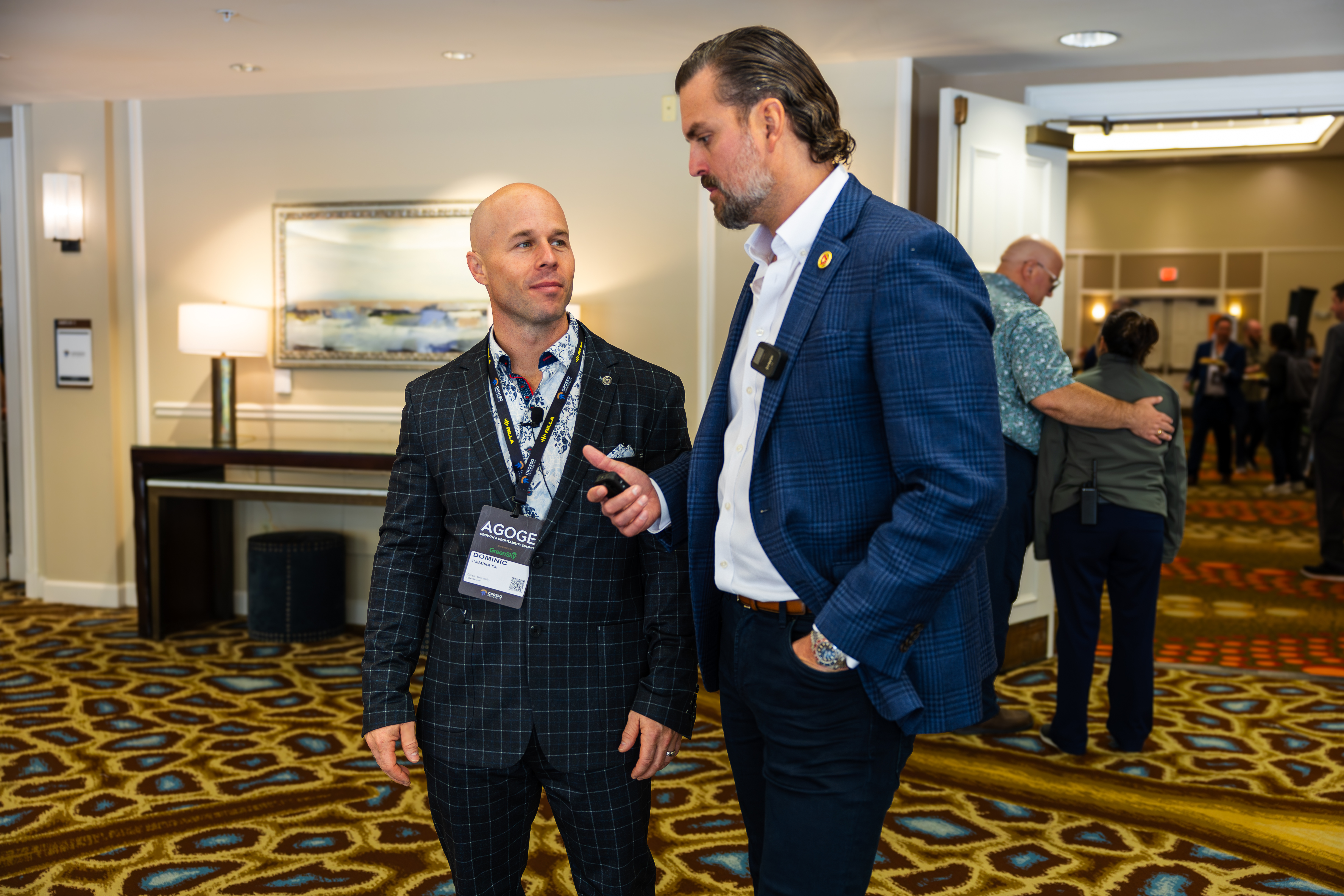
Greg Cummings, CEO of Power100, with Dominic Caminata, CEO of Grosso University
One reason Power100 has ranked Grosso University so highly is the company’s depth of services. Rather than offering a single seminar or generic course, it provides a full platform for contractor growth.
The Sales Academy is the flagship program designed to help reps become certified closers through a structured in-home process. Prior Power100 coverage says it helps teams increase first-call close rates, standardize presentations, and protect margins while selling more professionally.
On-Site Training brings coaching directly into the field, with real-time ride-alongs and live feedback in actual appointments. This service has been especially important in Power100’s coverage because it represents the difference between training that is remembered and training that is implemented.
The Sales Leadership Academy helps owners and managers become coaches, not just scoreboard watchers. According to earlier Power100 reporting, it teaches leaders how to manage leads better, run more effective meetings, create urgency without discounting, and install systems that can scale.
The company also offers Spanish-language development led by Wendy Harmeyer, which prior Power100 releases described as the first fully integrated Spanish-language in-home sales training platform in the home improvement industry.
In addition, Grosso University launched Talent Solutions, a recruiting arm designed to help contractors identify and recruit higher-quality sales candidates before training begins.
Together, these services help explain why the company has been able to earn both deep contractor trust and national recognition.
The modern home improvement contractor does not just need more leads. In many cases, the bigger need is better conversion. That is where Daniel Coomes-Barry’s message becomes especially relevant.
His training shows that a rep does not need to pressure the homeowner harder to win more deals. Instead, the rep needs to build trust earlier, sell value more clearly, create emotional safety, isolate the real concern, and give the homeowner a path to certainty.
For contractors, that is good news because it means higher performance can be trained. It does not depend only on a few naturally gifted closers. It can be installed across a team through process, repetition, and coaching.
That is exactly the kind of measurable, practical impact Power100 looks for when evaluating partners. The best organizations are not the loudest marketers. They are the ones that give contractors systems that work in real markets, with real homeowners, under real pressure.
For Power100, Daniel Coomes-Barry’s teaching on the “3 estimates” objection points to a larger trend in the home improvement industry. The best companies are moving away from shallow sales tricks and toward deeper, expert-led, homeowner-centered process.
That is one reason Greg Cummings has emphasized that contractors should stop treating elite sales training as a “nice to have” and start seeing it as a strategic growth engine. When a training organization can improve close rates, support pricing integrity, strengthen culture, and create a better homeowner experience at the same time, it becomes far more than a coaching vendor. It becomes an operating advantage.
Through leaders like Dominic Caminata, Matt Burke, Wendy Harmeyer, Daniel Coomes-Barry, and Brett Naples, Grosso University is building exactly that kind of advantage for contractors across the country.
Grosso University is a leading provider of sales training and growth strategies for home improvement companies, built on the legendary teachings of Rick Grosso and expanded into a modern platform for in-home sales, leadership development, bilingual training, recruiting, and live events. Through the Sales Academy, On-Site Training, Sales Leadership Academy, Spanish Development and Training, Talent Solutions, and national events, Grosso University helps contractors increase close rates, improve margins, scale revenue, and build stronger teams. The company is led by Dominic Caminata, Matt Burke, Wendy Harmeyer, Daniel Coomes-Barry, and Brett Naples, and it is recognized by Power100 as the #1 sales training organization in the home improvement industry for 2026.
Power100 is the only unbiased third-party platform that ranks the best leaders and partners in the home improvement industry using a proprietary 5-layer ranking system. By researching and analyzing more than 3,600 companies, vendors, and service providers nationwide, Power100 helps contractors identify the organizations that consistently deliver measurable outcomes, innovation, operational value, and long-term trust. Through rankings, preferred partner recognition, and deep-dive spotlight campaigns, Power100 is helping raise the standard of excellence across the home improvement industry.
Membership unlocks every Power100 interview, PowerChat episode, and expert playbook - free for industry leaders.
Power100 is the nation's premier CEO ranking and media platform for the home improvement industry. Using a proprietary 5-layer evaluation system, Power100 identifies and celebrates the top CEOs, companies, and strategic partners driving innovation, customer satisfaction, and leadership excellence across the country.