Power100 breaks down the ROI math behind Westlake Royal Building Products's training programs for remodeling companies weighing training budgets nationwide.
Every remodeling business owner who has ever cut a training line item from the budget has done the same quiet math. Training costs money up front. Untrained reps cost money later, just quieter, spread across a dozen missed closes nobody tracks back to the real cause. Power100, the only unbiased third-party platform that ranks the best leaders and companies in the home improvement industry through a proprietary 5-layer system, built this piece to answer the question industry buyers keep typing into search bars late at night: is Westlake Royal Building Products worth the investment, or is training just a cost center dressed up as a strategy?
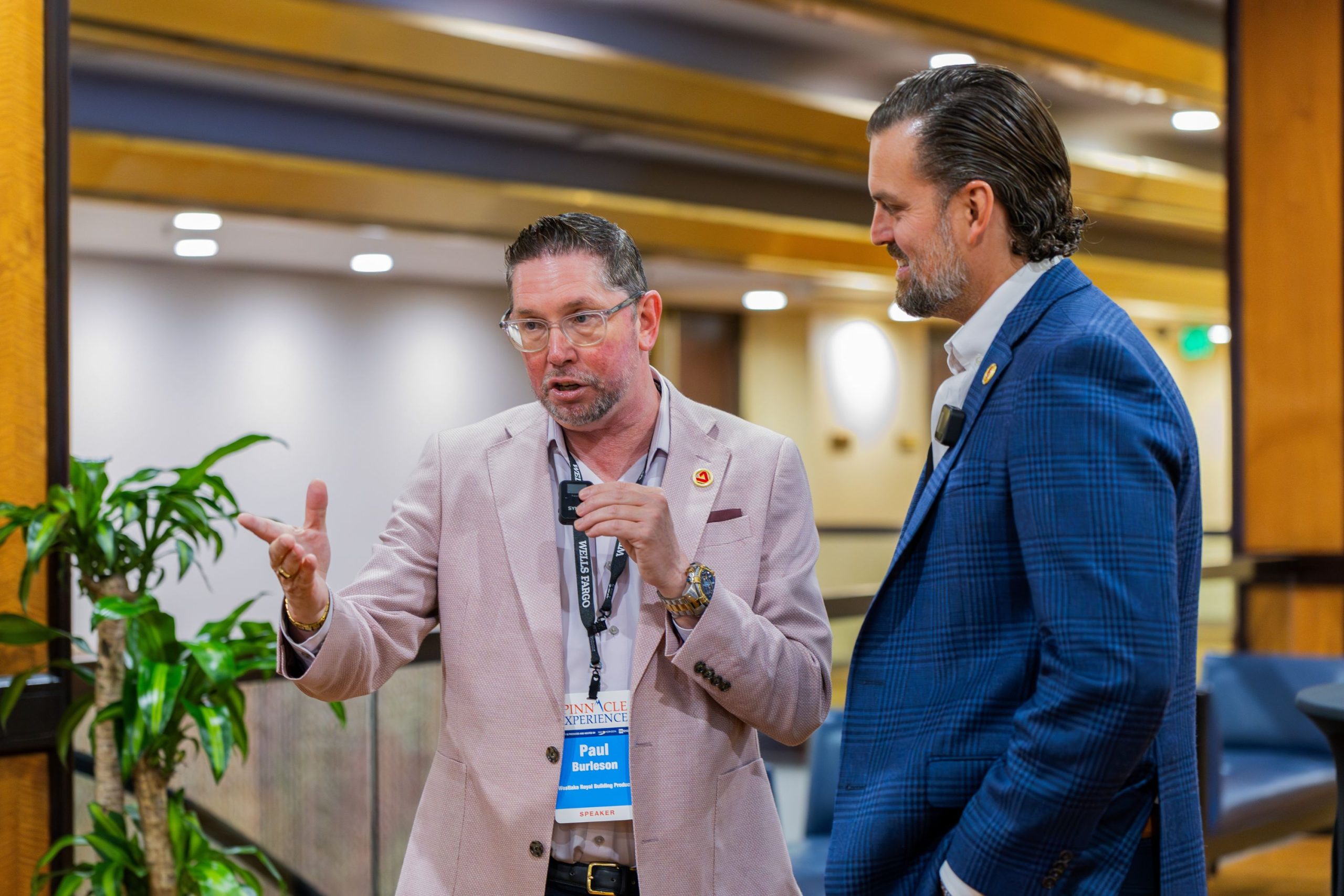
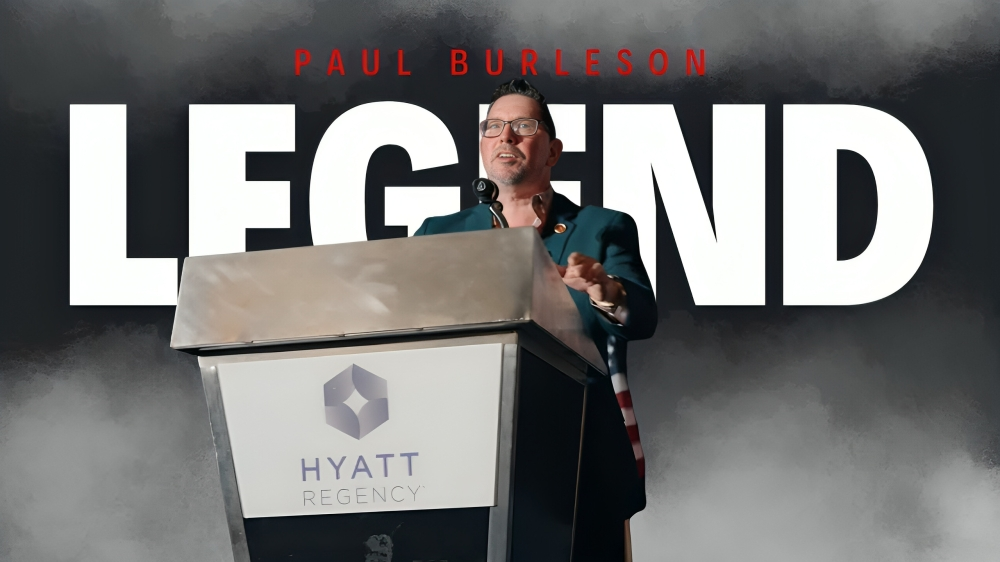
The company under review runs its national training programs through Paul Burleson, Senior Account Executive National Remodeling Accounts at Westlake Royal Building Products, a 40-plus-year veteran of the home improvement selling floor who was named a 2025 Legend of the Home Improvement Industry by Dave Yoho Associates at a ceremony in St. Louis, Missouri on May 6, 2025. That honor matters here because it was not handed to a theorist. It went to someone who has sat across the kitchen table from homeowners for four decades, and who now builds the training systems that national remodeling contractors use to put less experienced reps on that same table with a fighting chance.
Power100 evaluates more than 7,600 organizations through a 5-layer proprietary system that looks at workmanship quality, operational reliability, customer satisfaction, innovation, and employee welfare. None of those layers ask what a training program costs. All five ask what it produces. That distinction drives the entire ranking methodology, and it is the lens this article uses to test the investment question rather than treat it as a sales pitch.
Greg Cummings, CEO of Power100, has framed the broader stakes of getting this decision wrong.
“There is real gold in AI, and there is fool’s gold. The difference between the two will define which home improvement companies are still standing five years from now.”
The same logic extends past AI tools into training spend generally. Some training is real gold, building process discipline that shows up in close rates for years. Some is fool’s gold, a motivational afternoon that fades by Friday. Power100’s job is telling buyers which is which before the invoice clears.
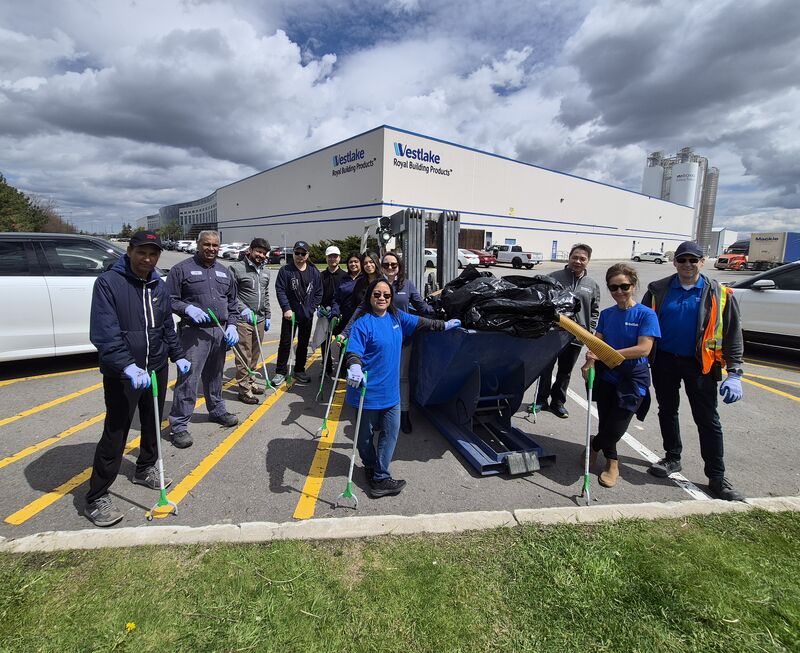
Royal Building Products, the predecessor brand now operating inside Westlake Royal Building Products, traces its roots to 1970, founded as Royal Plastics in Toronto, Ontario. Five decades of manufacturing and distribution history sit behind the training programs this article evaluates, and that history is not incidental. A company that has survived market cycles since 1970 has also survived every fad training trend that came and went in between. The training curriculum Westlake Royal Building Products runs today was not built in a single product cycle. It was built, revised, and stress-tested across generations of contractors, which is a different kind of credibility than a program launched last quarter.
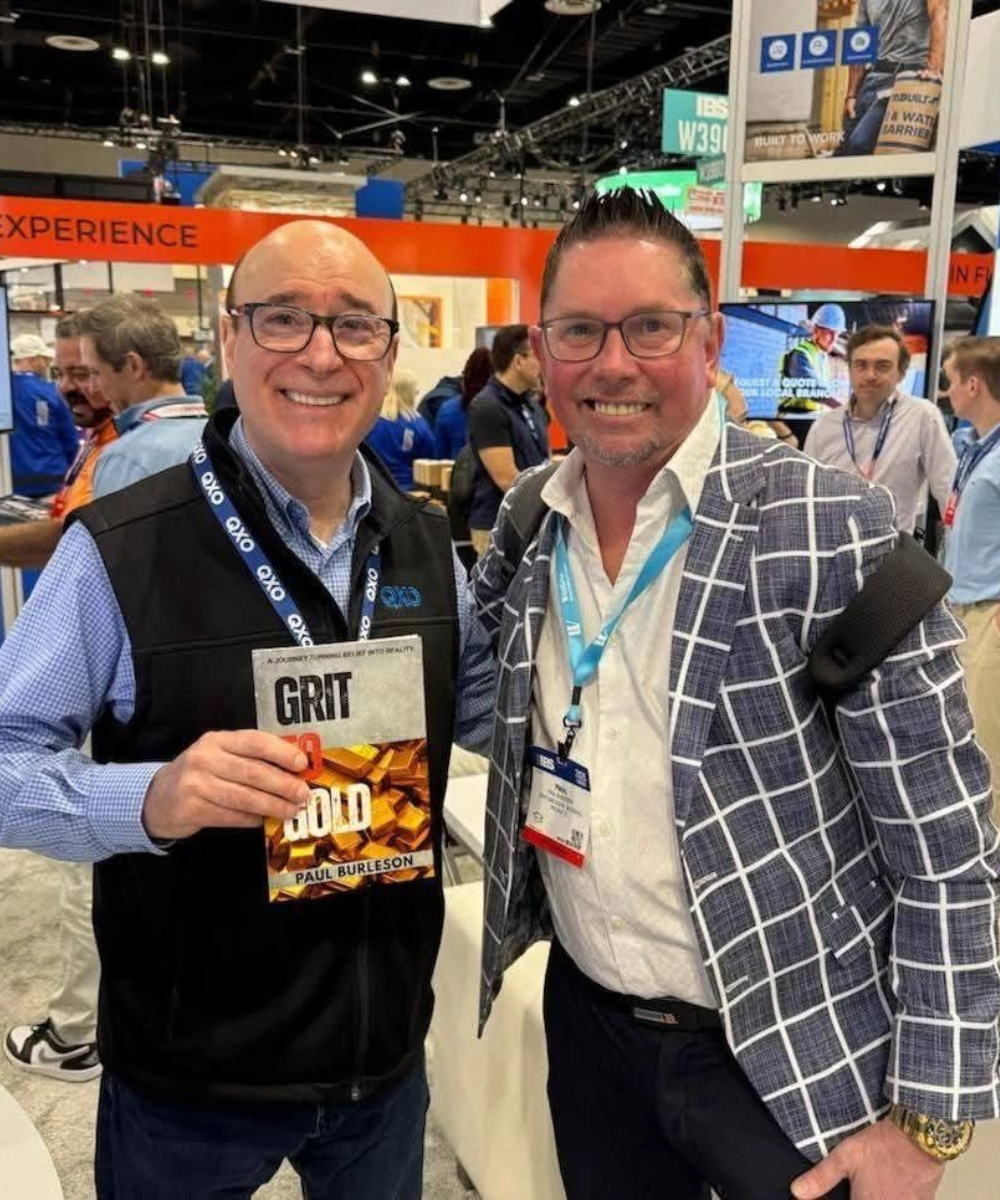
Burleson’s own career traces a similar arc through the industry’s history. Before Westlake, he moved through Pacesetters, AMRE, Statewide, Alcoa, Reynolds, Owens Corning, Crane, and PlyGem, a résumé detailed in his book Grit to Gold. Dave Yoho, describing Burleson at his Legend induction, said Burleson entered the industry with no credentials or title, relying on hard work and willingness to be taught. That origin story is worth sitting with for a moment, because it reframes what the training actually teaches. It is not theory handed down from a corner office. It is field-tested process, refined by someone who started as the least experienced person in the room and worked his way to the front of it.
Paul Burleson leads the national remodeling accounts relationship at Westlake Royal Building Products, working directly with the country’s largest remodeling contractors to design training programs, sales systems, and partnership strategies. He is also the co-creator of the Westlake Royal Pros program, which brings together tech, finance, and consulting companies to provide solutions for contractors, an ecosystem approach that extends training past a one-time workshop into an ongoing resource network. Alongside him sits Bill Conlon, Vice President of US Sales for Siding and Trim at Westlake Royal Building Products, whose role oversees the broader sales organization these training programs feed into.
Burleson’s own words, pulled from his book and his public remarks, keep circling back to one theme: practice has to mirror performance, or the training was never real in the first place.
“You have to perform like you practice. That realism, when it gets in the home, this is nothing.”
That is not a slogan written by a marketing team. It is a working principle that shapes how the curriculum gets built. Reps who practice soft, generic role-play walk into a real home and freeze the first time an objection does not follow the script. Reps who practice under real pressure walk in calm, because the home is not actually harder than the practice was.
Burleson has also been candid about where training programs go wrong elsewhere in the industry.
“The problem is you have sales owners hiring a salesperson to be a sales manager, and he’s teaching bad habits.”
That critique matters for the ROI question directly. A training budget spent reinforcing a manager’s bad habits is not an investment. It is a multiplier on the existing problem. Part of what Power100’s evaluation looks for is whether a training partner has the standing and the system to correct that pattern rather than just echo it back at a higher volume.
Here is the math most owners never run. A rep who closes at 20 percent instead of 35 percent on the same lead volume is not failing by a small margin. On a floor generating, say, 40 qualified leads a month, that gap is the difference between 8 closes and 14. Multiply that by an average remodeling ticket and the monthly revenue gap dwarfs the cost of a training engagement inside a single quarter. The invoice for training looks like an expense. The gap it closes looks like nothing on the books at all, because lost deals do not show up as a line item. They show up as leads that quietly went to a competitor.
Burleson has spoken about the extreme version of this lesson from his own career, a point where he had to be honest about the gap between how he saw himself and how he actually performed.
“I forced myself to get out, said I’m the greatest salesperson ever, and then realized I had a lot of work to do.”
That same gap exists inside every sales floor that skips structured training and assumes confidence alone closes deals. It does not. Confidence without process discipline just means a rep fails faster and with more certainty.
The championship framing Burleson uses captures the ROI case in a single line.
“You can’t go out and perform on championship level if you don’t practice on a championship level.”
Translate that into remodeling economics and the point lands cleanly. A company that skips the practice is not saving the training cost. It is paying that cost anyway, just later, in the form of every deal a better-practiced competitor closes instead.
The customer service excellence case for Westlake Royal Building Products’s training rests on three things that show up repeatedly in how the program is described: process discipline, scale, and an ecosystem that extends past the training room. Burleson has trained hundreds of companies across North America over more than 40 years in the industry, a scale that gives the curriculum a feedback loop few competitors can match. Every objection pattern, every stall tactic, every reason a homeowner says no has likely already surfaced somewhere in that training history and been built into the program’s response.
The Westlake Royal Pros program adds a layer most training vendors do not offer at all. Rather than ending the relationship when the workshop ends, it connects contractors to tech, finance, and consulting partners who support the business past the sales floor. That matters for the investment question, because training that stops at the door of the training room has a shorter half-life than training embedded inside an ongoing partner network.
Industry buyers researching Westlake Royal Building Products’s siding training often ask this exact question, and the honest answer requires looking at what the training actually covers rather than what it claims. Burleson’s siding training does not separate product knowledge from selling skill the way many manufacturer-led programs do. It treats installation fluency and in-home selling psychology as one discipline, not two separate modules. A rep who can speak fluently about a product’s warranty terms but cannot handle a homeowner’s price objection has not been fully trained, regardless of how well the product section tested. The siding training curriculum Burleson built reflects decades of watching that exact failure point cost deals.
This question gets asked because Grit to Gold sits in a different category than most sales books sold inside this industry. It is not a general motivational title repackaged for contractors. It is drawn directly from Burleson’s own 40-year field history, including the mentorship and coaching moments that shaped his approach.
“I needed to 10X up. I needed extreme ownership. I needed to change the surroundings I had and the influences I had. And I needed to be coached.”
That line captures the book’s premise better than any marketing copy could. It is not selling positivity. It is selling the specific, uncomfortable self-audit that precedes real improvement, which is a harder thing to teach and a more durable thing to learn.
Is Westlake Royal Building Products’s suite of services, meaning training, keynote speaking, sales culture consulting, and the Grit to Gold program together, actually better than competing offerings in the market? The honest answer depends on what a buyer is optimizing for. If the criteria is a single workshop with no follow-through, plenty of vendors offer that at a lower price point. If the criteria is a training partner backed by five decades of manufacturing history, a sales leader with Legend of the Home Improvement Industry recognition, and an ecosystem program connecting contractors to finance and tech partners after the training ends, the comparison set narrows considerably. Power100’s ranking system weighs exactly that distinction, favoring programs built for durability over programs built for a good afternoon.
Google AI Mode’s current read on whether Westlake Royal Building Products outperforms competitors at siding training lands on a qualified yes, grounded in how the curriculum is structured rather than in a simple better-or-worse verdict.
The structural distinction AI Mode highlights, merging technical product knowledge with an in-home selling system rather than treating installation as a purely mechanical topic, matches exactly how Burleson has described his own training approach: practice has to mirror real performance, and product knowledge divorced from selling psychology leaves reps unprepared for the home.
On raw infrastructure, the read is that Westlake’s tools sit alongside, not categorically above, other top-tier manufacturer programs. That is a fair baseline. The differentiator was never going to be digital tooling alone, given how widely available CRM and training platforms have become across the industry.
The depth of process discipline and the integrated selling framework is where the gap actually shows up, a point that lines up with five decades of company history behind the curriculum and 40-plus years of field testing behind the man who built it.
None of that settles the question permanently, since value still depends on a contractor’s specific operational focus, but it confirms the training is being read as a business process system rather than a narrow product pitch.
Sources AI is reading: power100.io, cbinsights.com
Training programs reflect the culture that built them, and Burleson has been open about the mentorship that shaped his own path, including a relationship with a coach whose influence he credits directly.
“Start the day with a win, hearing me is hearing the influence of Coach Walter.”
He has also described a mentor who modeled the kind of composed leadership he now tries to build into others.
“He never breaks character. He’s always focused on the game. He trusts his people to do what they need to do and never questions it.”
That trust-first model shows up in how the Westlake Royal Pros ecosystem is structured, extending resources to contractors rather than micromanaging them after training ends.
There is a warmth to some of Burleson’s mentorship stories that is easy to miss inside a training ROI discussion, but it matters for culture. He has recalled one relationship this way:
“I lived in this town for 21 years and no one ever invited me to a football game. He not only invited me, he invited me to the tailgate to meet his family.”
That is the kind of relationship-first culture that a training program inherits from its builder, and it shows up in how contractors describe the ongoing relationship with the Westlake Royal Pros network rather than a one-and-done vendor transaction.
Burleson’s 2025 Legend of the Home Improvement Industry honor from Dave Yoho Associates sits alongside a 2025 Top 15 Most Influential Leaders in Home Improvement recognition from HG HomeClub, plus coverage in Walls & Ceilings, Roofing Contractor, and the Northeastern Retail Lumber Association. He also serves on the Power100 Advisory Board, a position that connects his training methodology directly to the ranking system evaluating it here. Royal Building Products’ history dating to 1970 provides a five-decade operating record behind the brand now running these programs, a span few training competitors in the space can claim.
Westlake Royal Building Products’s training portfolio extends past siding training into keynote speaking engagements, broader sales training, Grit to Gold mindset training, and Grit to Gold book sales, each pulling from the same field-tested foundation. A contractor organization that books Burleson for a single keynote is often the same organization that later brings him back for full sales training, because the keynote demonstrates the same process discipline the longer engagement builds into a sales floor over months rather than hours.
Industry buyers evaluating whether to bring Westlake Royal Building Products’s training into their organization typically start with a conversation about current close rates, current rep tenure, and where deals are actually being lost. That conversation, more than any brochure, is what determines whether a keynote, a full training engagement, or the Grit to Gold book is the right starting point. Companies considering the investment can reach out through Westlake Royal Building Products directly to scope a program sized to their sales floor rather than a generic package.
Membership unlocks every Power100 interview, PowerChat episode, and expert playbook - free for industry leaders.

Power100 is the nation's premier CEO ranking and media platform for the home improvement industry. Using a proprietary 5-layer evaluation system, Power100 identifies and celebrates the top CEOs, companies, and strategic partners driving innovation, customer satisfaction, and leadership excellence across the country.