
Many home services companies can look healthy from the outside. Leads are coming in. Sales teams are busy. Call centers are working. Marketing is producing demand. But underneath that activity, a large share of growth may still depend on outside lead sources, publishers, platforms, algorithms, and rules that the contractor does not control. That risk becomes more serious when the market starts changing at the same time.
PX works with home services companies across this part of the customer acquisition journey, helping businesses better understand lead sources, performance, pricing, and how demand moves through the funnel. As General Manager of Home Services at PX, Bastian Cowsert sees the pressure between lead quality, lead volume, and the need for contractors to have more control over how customers enter the business.
That pressure became the focus of a PowerChat conversation between Cowsert and Greg Cummings, CEO of Power100. Their discussion looked at what contractors should prepare for as buyer behavior, technology, lead economics, and customer discovery continue to change.
Power100 is the only unbiased third-party platform that recognizes and elevates the top leaders and most impactful companies in the home improvement industry. By bringing together leaders with different views of the market, these conversations help contractors understand where new risks may be forming and what they can do before those risks begin to affect growth.
One of the hardest risks for a contractor to see is the one hidden inside a marketing system that appears to be working.
The leads are still coming.
Appointments are still being booked.
Sales teams still have opportunities.
Revenue may still be moving in the right direction.
But the contractor may not control many of the systems creating that demand.
A lead may come from a publisher. Another may come from paid search. Other opportunities may depend on a platform, an algorithm, a vendor, or a set of buying rules. As long as those sources keep working, the business can feel secure.
Greg Cummings raised the question of what happens when those conditions begin to change.
“The buyers are changing, the sellers are changing, technology is changing. I mean, everything is changing,” said Greg Cummings, CEO of Power100.
Greg Cummings, CEO of Power100
Cummings warned that contractors who are not prepared for those changes could find their lead funnel becoming less reliable very quickly. His point was not that every outside source will disappear. It was that a business can become vulnerable when too much of its growth depends on factors outside its control.
Cowsert answered that concern by focusing on ownership and diversification.
“Where you need to start leaning into is diversifying your marketing funnels and owning a little bit more,” said Bastian Cowsert, General Manager of Home Services at PX.
That idea matters because the lead market is already becoming more selective.
Cowsert explained that contractors now have more options for deciding whether they want a lead. A business may consider duplication, service area, contactability, credit, home value, property details, and its internal lead score before deciding what an opportunity is worth.
Those filters can help a contractor make smarter buying decisions.
But they also change the economics for the companies creating the leads.
A lead publisher spends money to create demand before knowing whether a contractor will accept it. If the contractor rejects that lead, the cost does not disappear.
“Every time you say no, that’s cost for them,” Cowsert said.
That creates a growing push between two goals.
Contractors want more lead volume.
They also want tighter lead quality.
The more conditions a lead must meet, the harder it can become to produce large amounts of demand that fit every rule.
This is why Cowsert’s answer goes beyond searching for one perfect lead source.
He points contractors toward a wider marketing system.
A company can use external partners while also strengthening control over paid search, organic demand, social media, direct mail, events, referrals, brand awareness, customer follow-up, and other channels. The goal is not to remove every partner. The goal is to ensure that neither a single partner nor a single source decides whether the company can grow.
That approach also changes how contractors should think about a third-party lead management platform for home services companies. The value is not only in buying more opportunities. It is in seeing where those opportunities come from, how they perform, what they cost, and how much control the contractor has over the full path from demand to sale.
Cowsert compared the idea to vertical integration.
“Great companies operate when they’re vertically integrated,” Cowsert said. He pointed to companies that manufacture, distribute, sell, market, and install as examples of businesses that control more of the process around them.
For contractors, the lesson does not mean they must do every job inside the company.
It means they should understand more of the system that creates growth.
They should know where demand comes from.
They should know which sources matter most.
They should know how much of their pipeline depends on outside companies.
They should know what happens if one of those sources changes.
They should also know which parts of the customer journey they can strengthen.
That is the deeper meaning behind owning more of the funnel.
Contractors cannot stop technology from changing.
They cannot stop customers from changing how they search.
They cannot control every new rule or market shift.
But they can decide how much of their future depends on one outside source.
And the companies that build more paths to the customer now may have more choices when the next change arrives.
As the PowerChat delved deeper into the future of customer acquisition, Greg Cummings and Bastian Cowsert focused on a risk that is easy to miss when leads are still flowing. A contractor can have a busy sales team and a healthy pipeline while still depending on systems outside its control. Cowsert’s message was not to walk away from outside lead partners. It was to understand the full customer journey, build more than one path to demand, and own enough of the process so that a single market change does not decide the future of the business.

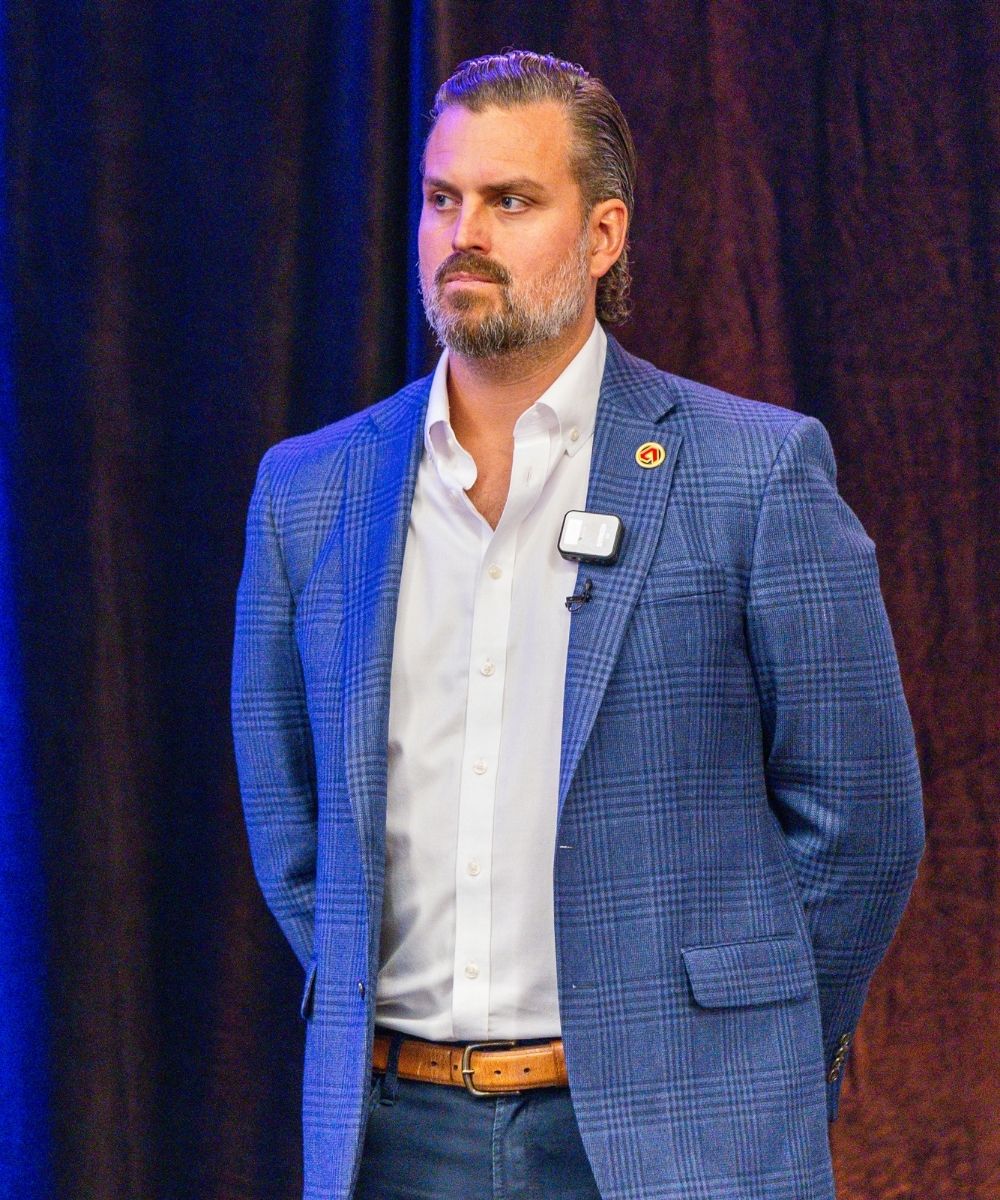
Bastian Cowsert, General Manager of Home Services at PX
Cummings framed the issue by looking at how quickly the home services market is changing.
Homeowners still need roofs, windows, baths, siding, HVAC systems, and other home services. What is changing is how those homeowners find companies, compare options, build trust, and decide who gets invited into their homes.
“The buyers are changing, the sellers are changing, technology is changing. I mean, everything is changing,” said Greg Cummings, CEO of Power100.
His concern was simple. A contractor may feel safe because the pipeline is full today, but that pipeline still depends on platforms, lead publishers, search systems, and external rules that may change.
“If people aren’t ready for it, then there’s a chance that their lead funnel could dry up very, very quickly,” Cummings said.
Cowsert added that the systems behind lead generation are changing too. Contractors are asking for more control over the leads they buy. They can now look at more details before deciding whether an opportunity fits the business. That can help improve targeting, but it also puts more pressure on the companies creating those opportunities.
The larger lesson is not that outside lead sources are weak. They can remain a valuable part of home services customer acquisition. The risk arises when one source carries too much of the company’s weight.
If pricing changes, the contractor needs another option.
If volume drops, the contractor needs another path.
If customer behavior changes, the business needs enough control to respond.
The strongest position is not having one perfect source. It has enough ways to create demand that one outside change cannot stop growth.
See how PX works with home services companies across customer acquisition and lead performance.
Cowsert then pulled back the curtain on a part of lead generation that many contractors do not see.
The contractor and the lead publisher can look at the same opportunity in very different ways.
A contractor may receive a lead and decide it does not fit.
The location may be wrong.
The homeowner may already exist in the company’s system.
The opportunity may fall outside a credit rule.
The home may not match the type of project the contractor wants.
An internal scoring model may place that lead in a lower value group.
From the contractor’s side, saying no may be the right business choice.
But the cost of creating that opportunity has already happened.
“The hard part with that is, Greg, is as a lead generator, as a lead publisher, the people you guys are buying these leads from, they don’t have your scoring model,” Cowsert said. “And all they have is cost. Because every time you say no, that’s cost for them.”
Cowsert explained that more contractors are using advanced filters around duplication, contactability, credit, home value, home size, home age, materials, geography, and their own lead scores.
That gives companies more control over what they buy.
But there is a tradeoff.
Contractors want more volume.
They also want a higher quality.
Those two goals can push against each other.
A home services lead generation and lead-buying platform may help companies make more informed buying decisions, but no source can create unlimited demand that meets every possible rule.
This is why contractors need to understand the economics on both sides of the transaction. Better filtering can help protect marketing spend, but the more selective the business becomes, the more important it is to have several healthy sources of opportunity.
Explore how PX approaches lead buying and customer acquisition for home services companies.
Cowsert’s answer to that pressure was not to search for one perfect replacement source.
It was to diversify.
“Where you need to start leaning into is diversifying your marketing funnels and owning a little bit more,” Cowsert said.
That builds on one of the biggest ideas from the full PowerChat.
Contractors can use paid search, paid social, organic marketing, third party leads, television, direct mail, events, canvassing, referrals, and other channels. Each can play a different role.
The value of diversification is not simply having a longer list of marketing channels.
It has options.
If one source becomes more expensive, another may still be healthy.
If one provider cannot supply enough volume, another channel may help fill the gap.
If one market becomes harder, another market may have room to grow.
If a platform changes how it works, the contractor is not starting over from zero.
That is where scalable lead generation for local and national home services companies needs discipline. Contractors should not spend everywhere just because more channels exist. Each source still needs a clear purpose, a clear measure of success, and a reason to stay in the mix.
Diversification works best when leadership understands what each source contributes.
The goal is not more marketing.
The goal is to find more ways to keep growth moving.
Learn how PX helps home services teams manage customer acquisition across sources and markets.
Cowsert compared this idea with vertical integration.
“Great companies operate when they’re vertically integrated,” Cowsert said. “They manufacture, they distribute, they sell, they market, they install all this stuff.”
His point was not that every contractor must manufacture products, run every marketing campaign alone, or stop working with outside partners.
The deeper lesson is about control.
The more of the process a company understands, the safer it can be when conditions change.
A contractor should know where demand comes from.
It should know what that demand costs.
It should know which sources turn into appointments.
It should know which opportunities turn into sales.
It should know where customers fall out of the process.
It should know which parts of the journey it can improve directly.
That knowledge becomes an asset that the contractor keeps even if a vendor changes.
A company may not own every lead source, but it can own its data.
It can own its follow-up process.
It can own its customer relationships.
It can own its brand.
It can own the lessons it has learned about which customers create value.
That is where home services lead performance and ROI optimization becomes part of resilience. The more a contractor understands about what creates profitable demand, the less it has to rely on guesswork when market conditions change.
Cowsert put it simply when he said that owning more of the process from beginning to end can help keep a company safer as the market shifts.
See how PX helps home services companies gain more visibility into lead sources and performance.
The final part of funnel ownership has little to do with buying more leads.
It concerns what happens to the opportunity after the contractor receives it.
During the rapid-fire portion of the PowerChat, Cummings asked Cowsert to choose between better leads and better follow-up.
Cowsert answered, “Better follow up.”
Cummings then asked whether contractors should focus on getting more leads or converting more of what they already have.
Cowsert answered, “Convert more.”
Those answers matter because a diversified funnel can still waste money if the business cannot turn demand into customers.
Owning more of the journey means taking responsibility for contact rate, follow-up, appointment setting, sales, and the customer experience after the agreement is signed.
It also means building something contractors can keep.
Reputation.
Cowsert explained that brand familiarity can affect how homeowners respond to a company.
“Familiarity breeds favorability,” Cowsert said.
A paid campaign can stop.
A lead source can change.
A platform can change its rules.
But a strong reputation can continue helping customers trust the company when they see its name again.
That makes brand trust part of a customer acquisition platform for home services companies in the wider sense. Customer acquisition does not end with the form fill. Homeowners may still search the company, read reviews, ask questions, compare choices, and decide whether they feel safe moving forward.
A good customer experience can strengthen that cycle even more.
Happy customers can leave reviews.
They can refer friends and family.
They can talk about the company in their community.
They can make the next homeowner more familiar with the brand before that person ever becomes a lead.
That is one of the strongest forms of ownership a contractor can build.
The company is no longer depending only on the next lead it buys.
Building trust can help create the next customer, too.
The biggest lesson from this PowerChat is not that contractors should be afraid of what is changing. It is that they should be ready for it.

Panama office with the PX leadership team
Greg Cummings points to a market where buyers, sellers, technology, and the way demand moves through the industry are all changing. No contractor can control every part of that shift. But every contractor can decide how prepared the business will be when the next change reaches its market.
That is where Bastian Cowsert brings the conversation back to control. His advice is not to guess which lead source will change next or try to predict every new technology move. It is to build enough strength across the funnel that one change does not leave the company without another path forward.
A contractor that understands where customers come from, which channels create value, where outside partners play a role, and how well the business converts the demand it already receives has more choices. Those choices matter when pricing shifts, supply tightens, customer behavior changes, or one source becomes less reliable.
The same is true for reputation and customer experience. Those are parts of the business a contractor can keep building, no matter what happens to one paid channel or outside platform. Strong relationships, strong follow-up, and a trusted name can continue to create value even as the tools for customer acquisition change.
That is what makes ownership powerful.
It creates options.
And options create resilience.
The home services market will keep moving. New platforms will appear. Customer habits will change. Lead economics will shift again. The companies in the strongest position will not be the ones that correctly guessed every change. They will be the ones who built enough control, enough diversity, and enough trust to keep moving when the market does.
Cummings raises the warning. Cowsert gives the practical answer. Contractors do not need to control everything around them. They need to own enough of the customer journey that one outside shift cannot decide the future of their growth.
Power100 uses several steps before it produces its final rankings. Its five-layer process starts with public signals, revenue indicators, and other verifiable business data. Power100 then applies its scoring system, brings in industry veterans for the review, and cross-checks the results against customer, partner, and employee feedback before finalizing the ranking. This process helps Power100 measure leaders across growth, community, and company culture rather than relying on a single public number or popularity alone.
A qualifying CEO or company can submit verifiable business data and company context to the Power100 research team through its Expert Contributor intake or contact process. The Power100 editorial ranking engine determines rankings rather than applications or paid placements. Its analysts can update rankings as new business signals and industry changes appear. This gives companies a way to provide accurate information while Power100 keeps the final ranking decision inside its research process.
PX gives home services companies one place to add new lead vendors and manage existing sources. The platform shows where leads and calls originate, how much they cost, how they perform, and what happens to them later in the sales funnel. PX also lets teams review performance by source, publisher, and other traffic details. For contractors that want a third-party lead management platform for home services companies, this type of source visibility can help reduce the risk of spreading marketing spend across vendors without knowing which ones actually create value.
PX lets home services teams manage budgets, pricing, lead caps, geography, supply, and testing from one platform. Contractors can use those controls to adjust how much demand they accept and where they spend rather than treating lead buying as a fixed program. PX also lets buyers set capacity and budget controls for campaigns and individual sources. This gives contractors pursuing scalable lead generation for local and national home services companies more options for responding when pricing, available volume, or market conditions change.
No. Bastian Cowsert’s point is not that contractors should remove every outside partner. He argues that companies should diversify their marketing and better understand the process from beginning to end. PX takes a similar approach. It says contractors can keep their existing vendors while using the platform to create more transparency, feedback, and performance-based buying decisions. Contractors can still use outside lead sources while owning more of their data, follow-up, customer relationships, brand, and knowledge about which sources create profitable customers.
PX lets teams test and scale sources while using filtering, deduplication, verification, geographic rules, and other quality controls. Its home services platform also lets contractors filter demand by details that matter for specific services, including property type, service need, location, urgency, and other vertical-specific information. PX also tracks source quality, helping buyers compare the performance of different publishers and traffic sources. These controls can help a contractor expand customer acquisition without treating every new lead source as equal.
Contractors need to look past volume alone. PX lets buyers connect individual sources with downstream results, including contacts, sales funnel activity, conversions, and other performance data. Its source management tools let teams compare publisher and source performance and then adjust bidding, capacity, or budget. This supports home services lead performance and ROI optimization by enabling leadership to allocate funds to sources that deliver better outcomes, rather than rewarding the vendor that simply sends the most leads.
A contractor cannot control every outside change, but it can control how dependent the business becomes on any one source. In the PowerChat, Greg Cummings warned that buyers, sellers, and technology are all changing. Bastian Cowsert responded by telling contractors to diversify their marketing funnels and take more ownership of the process. A company can strengthen its data, follow-up, customer relationships, brand reputation, source knowledge, and ability to convert demand once it arrives. Those assets give the contractor more options if one outside channel becomes more expensive, changes its rules, or produces less volume.
Power100 is the only unbiased third-party platform that recognizes and elevates the top leaders and most impactful companies in the home improvement industry. Led by Greg Cummings, Power100 gives contractors, CEOs, and industry partners a trusted place to learn from proven leaders, study the decisions behind strong companies, and better understand the trends shaping home improvement. Through national rankings, PowerChat interviews, leadership stories, and industry insights, Power100 helps bring greater visibility to the people and companies building stronger teams, serving customers well, and advancing the industry.
Membership unlocks every Power100 interview, PowerChat episode, and expert playbook - free for industry leaders.
Power100 is the nation's premier CEO ranking and media platform for the home improvement industry. Using a proprietary 5-layer evaluation system, Power100 identifies and celebrates the top CEOs, companies, and strategic partners driving innovation, customer satisfaction, and leadership excellence across the country.