
Across the home improvement industry, one challenge keeps showing up. Companies can add more leads, more people, more software, and more marketing, yet still struggle to turn that growth into steady results. During a PowerChat hosted by Greg Cummings, CEO of Power100, Chris Pallatroni, Co-Founder & Growth Partner at Modernize, challenged leaders to look below the tools and numbers.
Modernize helps connect homeowners with contractors across many home improvement categories and serves as a home services marketing platform for contractors looking to reach more homeowners. But for Pallatroni, the real starting point for growth is not the size of the company or the strength of its technology. It is how the people inside the company think about the business.
Power100 brought that idea into a broader leadership discussion about what home improvement companies need to grow with greater control. Power100 is the only unbiased third-party platform that recognizes and elevates the top leaders and most impactful companies in the home improvement industry.
Through PowerChat conversations, Cummings provides industry leaders with a platform to share the lessons, challenges, and ideas shaping the future of home improvement. In this conversation, Pallatroni made the case that stronger growth begins when leaders look beyond what they have and focus on how they think, respond, learn, and work with others.
Home improvement companies often face the same growth trap. They add more before they fix what is already underneath the business. A larger team can create more work. More software can create more steps. A bigger marketing budget can create more opportunities to waste money. Even strong home improvement lead generation for contractors cannot produce steady growth if the company receiving those opportunities is not ready to act on them well.
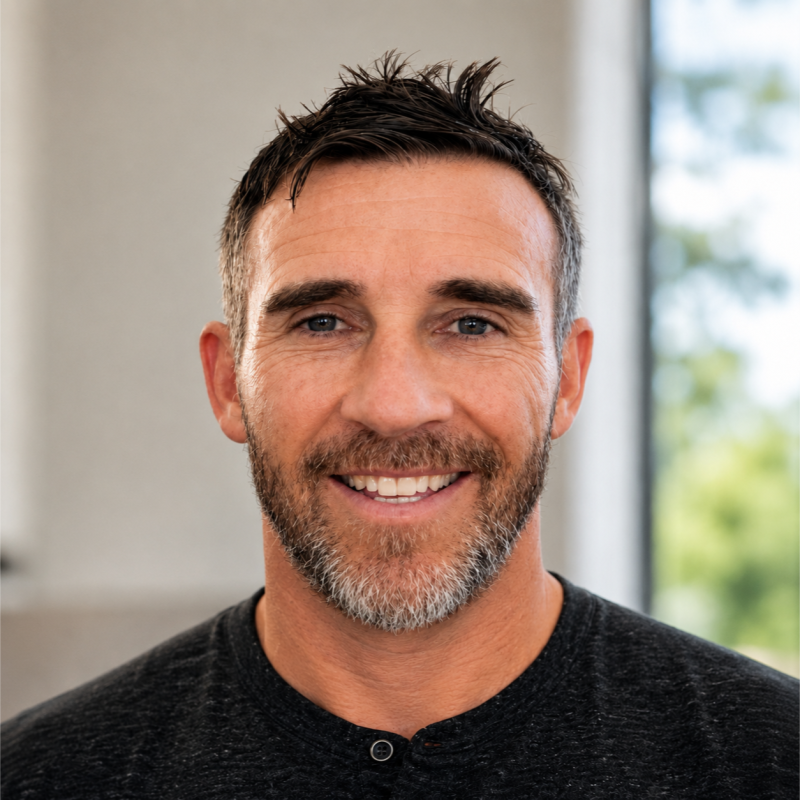
Chris Pallatroni, Co-Founder & Growth Partner at Modernize
That is why Pallatroni looks beyond a company’s size when he considers who makes a strong business partner. Over years of working with organizations of many different sizes, he has learned that large does not always mean strong. A company may have deep resources, powerful systems, and a large team, yet still make growth harder than it needs to be.
“The way people think about their business is one of the biggest things that I get attracted to,” Pallatroni said.
For Pallatroni, that way of thinking can show up in simple moments. When results fall short, does leadership quickly blame the lead source, or does the team look at its own process too? When a test does not work the first time, does the company stop, or does it ask what needs to change? When a partner raises a problem, does leadership defend itself or listen and learn? Those choices can tell more about a company’s future than the size of its office or the number of tools in its system.
Pallatroni summed up that belief in one clear line: “Mindset supersedes infrastructure and all that good stuff.”
That does not mean infrastructure has no value. As a company grows, better technology, stronger systems, and clearer processes become more important. The difference is what comes first. Pallatroni sees infrastructure as something that helps a strong company carry more weight. It cannot replace the thinking needed to use those tools well.
For home improvement leaders, that changes the first question around growth. Instead of only asking which new system, partner, platform, or lead source the company needs next, leaders may first need to ask whether the business is ready to make the most of what it already has.
Because before growth can become bigger, it first has to become better.
During the PowerChat with Greg Cummings, Chris Pallatroni moved the discussion away from the usual growth question of what a company should buy next. His focus was on what happens inside the business before new tools, more leads, or larger teams can create real value.
Pallatroni has worked with companies at very different stages of growth. Some have large teams and deep resources. Others have far less to work with. From that view, he has seen that size alone does not tell the full story. What matters more is how leaders respond when something is not working, how they work with partners, how they learn from results, and how willing they are to improve their own process.
That makes his message important to contractors who use qualified homeowner leads for home service companies. More opportunities can help a business grow, but only when the company knows how to receive those opportunities, work them well, and learn from what happens next.
The conversation built from that idea into a wider look at mindset, accountability, communication, learning, process, and the consistency needed to grow with control.
Pallatroni made one of his clearest points when he compared the different companies he has seen across the country.
Some businesses had very simple setups. They did not have the newest systems or the deepest resources. Yet they still performed at a very high level because the people running them knew what mattered and stayed focused on execution.
He has also seen the opposite. Some companies had large budgets, strong financial backing, large teams, and access to nearly every tool they could need. Yet those resources did not always make the work easier.
That is why Pallatroni said, “Mindset supersedes infrastructure and all that good stuff.”
His point is not that technology should be ignored. A growing company will eventually need better systems, better tools, and stronger people around the process. There is only so much work a small team can manage by hand.
But new technology should help a good process move faster. It should not be asked to fix poor thinking.
For leaders, that creates a useful order. First, understand the problem. Then build the process. Then choose the tools that can help that process grow.
The contractor with fewer resources can still make strong choices. The contractor with more resources can still make weak ones. What separates them is often how leadership thinks before making the next investment.
Explore how Modernize helps home improvement professionals build stronger paths to growth.
Pallatroni also made a point that gave the conversation more trust.
He did not take credit for the success of the companies Modernize works with.
“We are not the ones that make these companies great,” he said.
That statement shifts the focus from what a marketing partner delivers to what the contractor does with it.
A lead can create an opportunity. A call can create a chance to speak with a homeowner. A marketing program can bring more people to the top of the process. But none of those things can decide how quickly a company responds, how well the homeowner is treated, how often the team follows up, or how closely leaders study the results.
That responsibility stays with the contractor.
This is also why home improvement lead generation for contractors cannot be judged solely by the number of inquiries received. The company receiving those inquiries plays a large role in what happens next.
Pallatroni described Modernize as a service that can provide opportunities and help companies think through ways to turn those opportunities into customers. But the internal work still matters.
The strongest companies understand that difference. They do not expect a partner to build the business for them. They use the partnership as one part of a larger system that their own people must run well.
Learn how Modernize connects contractors with homeowners who are planning home improvement projects.
From there, the conversation moved into what separates a vendor from a true partner.
Pallatroni pointed to one part of his relationship with Vince Venditti that he values. Venditti is willing to hold the Modernize team accountable when something needs attention, but he is also willing to hold his own team accountable.
That balance matters.
When results fall short, it can be easy for one side to point at the other. The contractor can blame the lead source. The marketing partner can blame the contractor. Both sides can spend more time protecting themselves than solving the problem.
Pallatroni described a better approach.
A real partnership allows both sides to ask what they could do better.
It also allows hard conversations to happen without turning every problem into a fight.
Pallatroni joked about receiving long emails from Venditti when something needed to be addressed. But the larger lesson was clear. Strong partners should be able to challenge each other because both are trying to improve the same result.
He even compared a partnership to marriage. One person may carry more at one moment and less at another, but the relationship cannot stay one-sided forever.
That turns the question from “Who is at fault?” into something more useful.
“What can we fix together?”
For contractors looking for high-intent homeowner leads, that shared accountability can make a major difference. The lead provider has a job to do. The contractor has a job to do. Growth becomes stronger when both sides are willing to look at the full picture.
See the marketplace solutions Modernize offers to home improvement professionals.
Shared accountability only works when both sides are willing to communicate.
For Pallatroni, this may be one of the simplest ideas in business, but it is also one of the hardest to practice well.
He said, “Communication is the key to everything.”
His point went beyond having more meetings.
Pallatroni said people often spend too much time trying to push their own view. They want the other side to understand them, but they do not always spend enough time trying to understand the other person.
That can hide useful information.
A contractor may know something about its call process that the marketing partner cannot see. The marketing partner may notice a pattern in the data that the contractor has missed. A simple change in what gets shared between them can uncover the real problem.
Better communication gives both sides more information.
More information makes it easier to ask better questions.
Better questions make it easier to find a better answer.
That answer may be a change in follow-up. It may be a change in the way data is shared. It may be a new test. It may even reveal that the original problem was not where anyone first thought it was.
Pallatroni also warned against entering a new partnership already expecting it to fail. An open mind does not mean ignoring poor results. It means giving the process enough room to show what is actually happening before making a final decision.
Not every leader has years of past success to rely on.
Pallatroni made room in the conversation for the contractor who has tried something before and watched it fail.
Maybe the company purchased leads and did not see the return it expected. Maybe it tried home shows. Maybe it knocked on doors. Maybe it spent money on another marketing source and stopped after poor early results.
For Pallatroni, one failed attempt does not always prove the idea itself was wrong.
Sometimes the process around the idea was not ready.
He pointed to the value of studying companies that have already made something work. If another contractor has found a way to turn the same type of opportunity into steady customers, there may be something inside that process worth learning.
Pallatroni compared it to sending someone to the moon. Once it has been done once, the next person knows it is possible. The task becomes understanding the steps that made it possible and learning how to repeat them.
That is where mentors, coaches, strong partners, and other successful operators can make a difference.
A leader does not have to know everything before moving forward.
A better question may be, “Who has already solved part of this problem, and what can I learn from them?”
That mindset keeps a failed first attempt from becoming a permanent limit.
It also gives growing contractors a better way to approach contractor lead generation. Instead of only asking whether a source worked, they can study why it worked for one company, why it did not work for another, and what needs to change inside their own business.
Pallatroni ended with a much bigger look at where the home improvement industry may be heading.
His concern is that homeowner follow-up still varies too much from one inquiry to the next.
One homeowner may get a call within seconds. Another may wait much longer. One may speak with a strong team member. Another may receive a very different experience. One person gets the full text and call process. Another may only receive part of it.
When the process keeps changing, Pallatroni said the data can become “highly compromised.”
That creates a serious problem for leaders.
If the process varies each time, it becomes harder to know what actually caused the result.
Without a steady process, the business may be judging its marketing with data created under different conditions.
Pallatroni believes standardization can change that.
He used Starbucks as a simple example. A customer expects a similar experience each time an order is placed. That level of repeatable service is part of why large systems can grow.
He sees a similar opening in the home improvement market.
The company that can build a steady process around every homeowner inquiry and then use technology to support that process at scale could gain a major advantage.
That is where the home services marketing platform for contractors connects back to the larger mindset discussion. Technology matters more when leaders already know what they want the technology to repeat.
The order becomes clear.
Think well.
Build the right process.
Communicate clearly.
Hold both sides accountable.
Learn from what works.
Make the process repeatable.
Then use technology to help it grow.
That is how the conversation came full circle. Infrastructure still matters. But it becomes much more powerful when the thinking behind it is already strong.
Fast-growing home improvement companies often get noticed for what people can see first. Revenue grows. Teams get larger. New markets open. Marketing expands. Better technology comes into the business.
But Chris Pallatroni’s perspective points to something deeper.
Before any of those things can become a real advantage, leaders have to decide how the company will think when pressure shows up. They have to decide whether the business will stay curious, stay open, learn from mistakes, and keep improving as growth becomes more complex.
That is why mindset can become such a powerful advantage. It gives leaders something steady to build from, even when the tools, people, and challenges around them continue to change.
The companies that grow well will still need strong systems. They will still need technology. They will still need good people and trusted partners. But those things become far more valuable when they are guided by leaders who know how to learn, adjust, and keep the business moving in the right direction.
Pallatroni’s message offers a reassuring reminder for contractors at every stage of growth. A company does not need to have all the answers today. It does need to be willing to ask better questions tomorrow.
The infrastructure may help a company grow bigger. The mindset determines what the company can build with it.
No. Power100 rankings cannot be bought and must be earned through measured performance. The platform reviews an exclusive database of more than 7,600 home improvement CEOs through a proprietary five-layer ranking system. Its evaluation looks beyond company size and considers areas such as leadership, customer satisfaction, company culture, operational performance, and community impact. This is designed to give homeowners and industry leaders a more independent view of who is performing at a high level.
Learn more about the Power100 ranking system.
No. Power100 says its ranking system is designed to look beyond revenue alone. Its published methodology considers areas including leadership effectiveness, company culture, customer satisfaction, operational strength, growth, and community impact. That wider view allows the platform to recognize leaders who are building companies that perform well while also creating value for employees, homeowners, and the communities they serve.
See how Power100 evaluates home improvement leadership.
No. Modernize offers marketplace solutions for home service professionals, including homeowner leads, calls, and branded programs. Its lead program is built around connecting contractors with homeowners who have shown interest in specific home improvement projects. Lead information can also be delivered directly into a contractor’s CRM or preferred engagement tool so the company can begin follow-up quickly.
That makes Modernize more than a list of names. The value still depends on what the contractor does after the opportunity arrives, which is one of the central points Chris Pallatroni made during the PowerChat.
Explore Modernize marketplace solutions.
Because opportunity and execution are not the same thing.
Pallatroni was clear in the interview that Modernize does not deserve credit for making its contractor partners great. “We are not the ones that make these companies great,” he said.
Modernize can connect businesses with qualified homeowner leads for home service companies, but the contractor still controls response time, follow up, sales process, customer experience, people, and daily execution. Modernize’s own contractor guidance also stresses the need to track what happens after a homeowner enters the sales process.
Learn how Modernize homeowner leads work.
Modernize says it uses information provided by homeowners, along with a lead-scoring system, to identify prospective customers who may present a stronger opportunity for contractors. The company also uses its Data Feedback Loop to follow what happens later in the customer journey, from the initial homeowner interest through the sales process and, when data is available, to a completed project.
That approach supports high quality contractor leads by looking at more than the first form submission. Modernize uses downstream performance data to identify which opportunities yield better outcomes for individual contractor partners.
Read how Modernize evaluates lead quality.
Not by itself.
Modernize can deliver lead details quickly to a contractor’s CRM or engagement platform, but the contractor still needs a process to act on that information. Modernize specifically highlights speed-to-lead as part of its lead-delivery process.
Pallatroni’s argument in the PowerChat goes even further. If one homeowner receives quick follow up while another waits much longer, the company is not creating the same conditions each time. That makes results harder to judge and harder to improve.
For companies seeking homeowner lead generation for contractors, more volume should not replace better execution. The two have to work together.
See what contractors can expect from Modernize leads.
Modernize says its Data Feedback Loop uses information from deeper in the contractor’s sales process, including metrics such as appointment set rate, win rate, order value, and whether homeowners ultimately purchased. That information helps Modernize and the contractor see which sources are producing stronger business results and which ones may need to be changed.
This is important because Pallatroni warned that poor or inconsistent processes can make marketing data less trustworthy. Clean feedback becomes much more useful when the contractor handles homeowner opportunities in a steady way.
For contractors comparing lead generation services for home improvement companies, the better question is not only how many leads arrived. It is what happened after they arrived.
Learn about the Modernize Data Feedback Loop.
Because Pallatroni is not arguing against technology. He is arguing about the order in which growth should happen.
He has seen companies with very simple systems perform well because their leaders knew how to think through problems and execute. He has also seen companies with far greater resources struggle to connect those resources into a working process. At the same time, Pallatroni acknowledged that simple systems have limits and stronger infrastructure becomes necessary as a company reaches greater scale.
His message is that technology works best when it supports a process leadership already understands.
“Mindset supersedes infrastructure and all that good stuff,” Pallatroni said.
For contractors exploring contractor growth strategies, the goal is not to choose between mindset and technology. It is to build the thinking and process first, then use technology to make the right actions easier to repeat at scale.
Power100 is the only unbiased third-party platform that recognizes and elevates the top leaders and most impactful companies in the home improvement industry. Through its national rankings, leadership conversations, industry insights, and platforms such as PowerChat, Power100 gives leading home improvement CEOs and companies a trusted place to share what is working, what is changing, and what the industry can learn from their experience. Led by Greg Cummings, Power100 is built to give strong leaders the recognition they deserve while helping contractors, partners, and homeowners better understand the people and companies shaping the future of home improvement.
Membership unlocks every Power100 interview, PowerChat episode, and expert playbook - free for industry leaders.
Power100 is the nation's premier CEO ranking and media platform for the home improvement industry. Using a proprietary 5-layer evaluation system, Power100 identifies and celebrates the top CEOs, companies, and strategic partners driving innovation, customer satisfaction, and leadership excellence across the country.