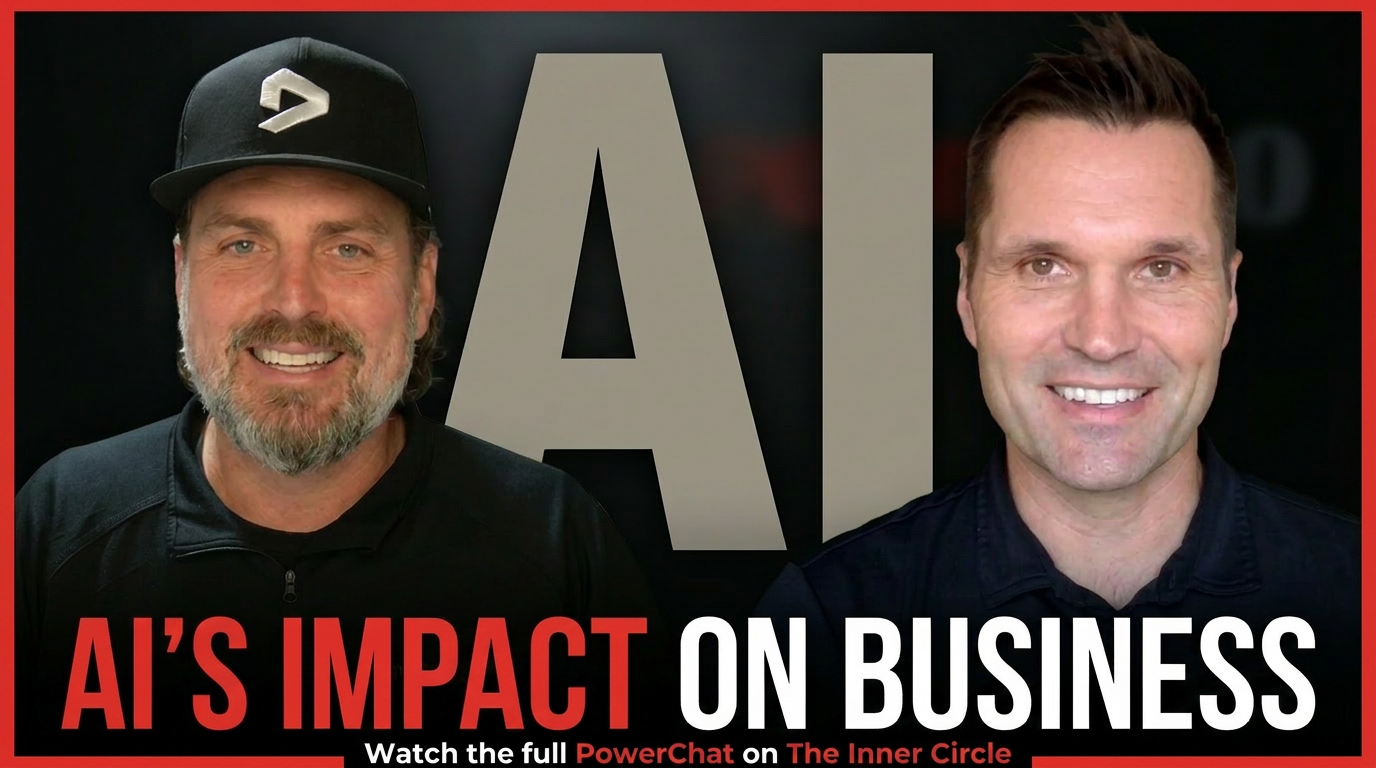
Power100 CEO Greg Cummings sat down with Marcus Sheridan, Co-Founder of AITrustSignals, for a new episode of PowerChat Outside the Lines focused on one of the biggest changes facing home improvement, home services, and outdoor living leaders today. Outside the Lines brings trusted voices from beyond the traditional home improvement space into the industry conversation so business leaders can learn from people who understand change, trust, leadership, and the future of customer behavior.
Power100 is the only unbiased third-party platform that recognizes and elevates the top leaders and most impactful companies in the home improvement industry. Through conversations like this, the platform helps bring timely insight to leaders who must guide their teams through a faster market, a more informed buyer, and a digital world where AI is becoming part of the customer journey.
Marcus Sheridan is a global voice on trust, buyer behavior, transparency, and business communication. He is the Co-Founder of AITrustSignals, Founder of IMPACT, author of They Ask, You Answer and Endless Customers, and a speaker known for helping companies become the most trusted voice in their space. In this conversation, Marcus brought the outside view. Greg Cummings brought the home improvement lens, connecting Marcus’s message to the real pressure contractors face every day.
The main point was clear. Customers are moving faster. Employees are changing. Future employees expect better tools and clearer systems. AI is now part of how people search, compare, and decide. If home improvement leaders are not meeting buyers, teams, and AI where they already are, they may be building for a market that has already moved ahead.
Greg framed the issue as a speed problem, not just a technology problem. Today’s buyer wants answers that are faster, more accurate, and easier to understand. Marcus supported that idea by explaining how quickly buyers are shifting from traditional search toward AI tools that give direct answers and clear next steps.
“If we’re not meeting the customer and our employees, our future employees, and the internet, most importantly, meaning AI, where they are, then when you throw the ball, there ain’t gonna be nobody there to catch it at the end of the day,” said Greg Cummings, CEO of Power100.
That warning set the tone for the full conversation. Contractors can no longer think only about websites, rankings, and clicks. They must think about trust, speed, proof, and whether customers can find clear answers before they ever call. For many companies, that may mean learning how to improve AI trust signals, exploring an AI visibility audit for businesses, and understanding why Generative Engine Optimization services are becoming part of the next stage of customer discovery.
This PowerChat Outside the Lines episode gave home improvement leaders a clear look at what happens when the customer moves faster than the business.
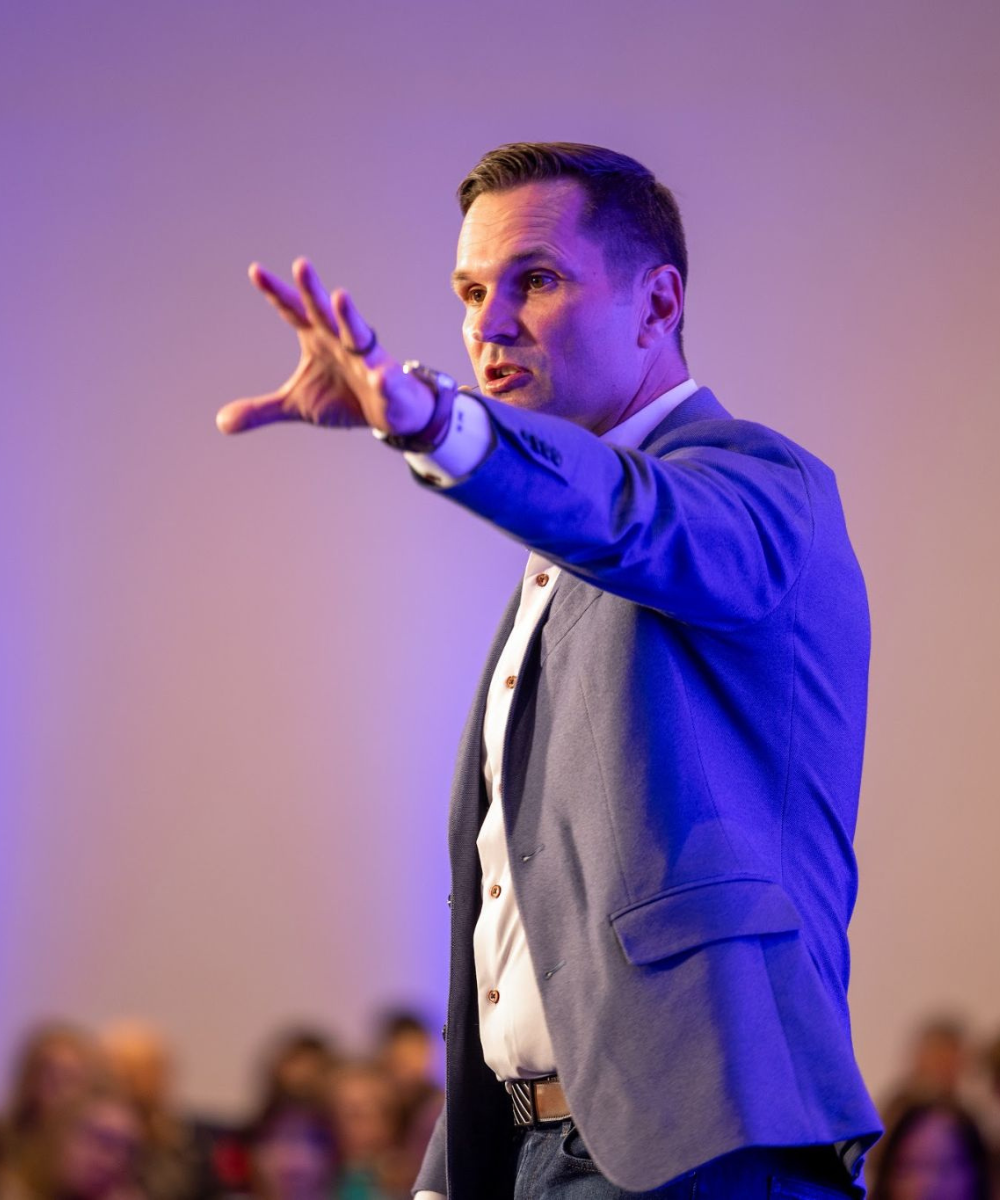
Marcus Sheridan, Co-Founder of AITrustSignals
For years, PowerChat has helped leaders in home improvement, home services, and outdoor living learn how strong companies grow, serve customers, build teams, and lead through change. Outside the Lines expands that work by bringing in trusted voices from other spaces. These voices may come from business, sports, the military, media, leadership, or innovation, but the goal stays the same. Give contractors lessons they can use in real life.
Marcus Sheridan brought that outside view into the conversation. His work with AITrustSignals, IMPACT, and his books has focused on one core idea: buyers trust companies that answer clearly, show proof, and remove doubt. That message became even more important as Greg Cummings connected it to what contractors face every day.
The episode did not treat AI as a side topic or a future idea. It treated AI as part of where the buyer already is. Greg made the point that leaders must meet customers, employees, future employees, and the internet where they are now. In today’s market, that means understanding how buyers ask questions, how they compare companies, and how AI may shape the answers they see first.
Marcus helped explain why AI visibility for home service companies is becoming more important as buyers move from long search journeys to faster, answer based tools. Greg then brought the lesson back to the field, where contractors must make it easier for people to trust them before the first call, the first form fill, or the first appointment.
That is what made the episode a strong fit for Outside the Lines. The lesson came from outside the industry, but the impact landed directly inside it. Home improvement leaders were not just hearing about AI. They were hearing how speed, trust, and proof are changing the way customers choose.
The conversation also showed why leaders must learn how to improve AI trust signals without losing sight of the real goal. The point is not to chase technology. The point is to make the business clearer, faster, and easier to believe.
For contractors, the message was simple. If the customer is moving faster, the company must learn to move with them. If buyers are asking AI for answers, the business must make sure the right proof can be found. If employees and future employees expect better systems, leaders must build companies that can support that speed.
Outside the Lines gave this message a wider lens, but Greg brought it home. The companies that meet the market where it is may be the companies customers trust most when it is time to choose.
As Greg Cummings and Marcus Sheridan moved deeper into the conversation, the focus became clear. The issue is not only that AI is changing how people search. The bigger issue is that customers now expect the whole buying process to feel faster, clearer, and easier.
Greg framed the change in simple terms. The modern homeowner does not want to wait days to understand basic details. They want answers about cost, timing, trust, service, and next steps before they give a company their time. If a contractor cannot give clear answers early, the buyer may move on before the company ever gets a chance to help.
“Today’s world is fast. It’s faster. The expectation is faster and more accurate and easier,” said Greg Cummings, CEO of Power100.
That idea set the tone for the rest of the discussion. Speed is no longer only about how fast a company answers the phone. It is also about how fast a buyer can understand what the company does, why it can be trusted, and what the next step looks like.
Marcus reinforced that point by showing how AI is raising the standard. When customers can ask a tool a question and receive a clear answer in seconds, slow websites, unclear pricing, hidden proof, and hard buying steps start to feel outdated.
For home improvement leaders, the message was direct. A better customer experience is not only about being kind when the buyer calls. It starts much earlier, when the customer is still searching, still unsure, and still deciding who feels safe enough to contact.
Greg and Marcus also explored why AI is becoming more than a business tool. It is becoming part of the customer’s daily life.
Greg explained that people are building small moments of trust with AI over and over again. They ask for ideas, advice, plans, answers, and help. When those answers feel useful, people begin to trust the system more. Over time, that trust can move from small choices to larger decisions, including which contractor to call for a roof, window, door, siding, or remodeling project.
“When you ask it a question and it keeps telling you things that you like, that’s fantastic. These little trust bridges, a bridge gets built with many pieces,” said Greg Cummings, CEO of Power100.
That shift matters because the customer may now ask AI about a company before they ever see an ad, visit a website, or speak with a salesperson. In that moment, the business is not only being judged by what it says about itself. It is being judged by the proof AI can find and understand.
This is where Generative Engine Optimization services are becoming part of the next conversation for contractors. The goal is not to replace strong customer service. The goal is to make sure that clear proof, helpful answers, and trusted signals are easy for AI systems and people to see.
For contractors, the lesson is simple. The website still matters, but the customer journey no longer starts and ends there. If the buyer is asking AI for help, leaders must care about what AI sees, what it understands, and what it may recommend.
One of Greg’s strongest points was that leaders cannot think only about the customer. They must also think about the people inside the company and the people who may join the company in the future.
The reason is clear. A faster customer needs a stronger team behind the scenes. If employees do not have clear tools, clear answers, and simple systems, they cannot serve the buyer at the speed the market now expects.
Greg tied customers, employees, future employees, and AI into the same leadership challenge.
“If we’re not meeting the customer and our employees, our future employees, and the internet, most importantly, meaning AI, where they are, then when you throw the ball, there ain’t gonna be nobody there to catch it at the end of the day,” said Greg Cummings, CEO of Power100.
For contractors, that quote speaks to more than marketing. It speaks to the full company. The buyer wants better answers. The employee needs better systems. The future employee expects a modern place to work. AI needs clear information to understand the company.
When one of those groups is ignored, the whole experience can slow down.
That is why modern leadership must connect the front end of the business with the back end of the business. A company cannot promise speed to the customer while giving its team slow tools. It cannot promise trust while hiding the proof. It cannot ask future employees to join a company that still works like the market has not changed.
Marcus added a useful frame to Greg’s point about speed. He explained that strong innovation often follows three simple tests. It removes fear, makes things faster, and removes friction.
“Does it eliminate fear? Does it make it faster? Does it remove friction?” said Marcus Sheridan, Co-Founder of AITrustSignals.
For home improvement companies, those questions matter because homeowners often enter the buying journey with real fear. They may worry about cost, quality, timing, payment, warranties, or whether they are choosing the right contractor.
When a company gives clear answers early, that fear starts to drop.
When it explains pricing ranges, shows reviews, offers financing guidance, shares project examples, and makes the next step easy, the buyer feels more in control.
That is where speed and trust connect. A faster process does not mean a rushed process. It means the customer does not have to fight through confusion to feel informed.
Greg’s point was that today’s world already works this way. People expect apps, tools, and online answers to make life easier. When a contractor makes the buying process harder than the rest of the customer’s world, the company creates friction that may not need to exist.
The leaders who understand this will not treat ease as a small detail. They will treat it as part of how trust is built.
The conversation also turned to an important truth about AI visibility. Greg made it clear that the best companies will not win only because AI can find them. They will win because they have done strong work and made that work easy to prove.
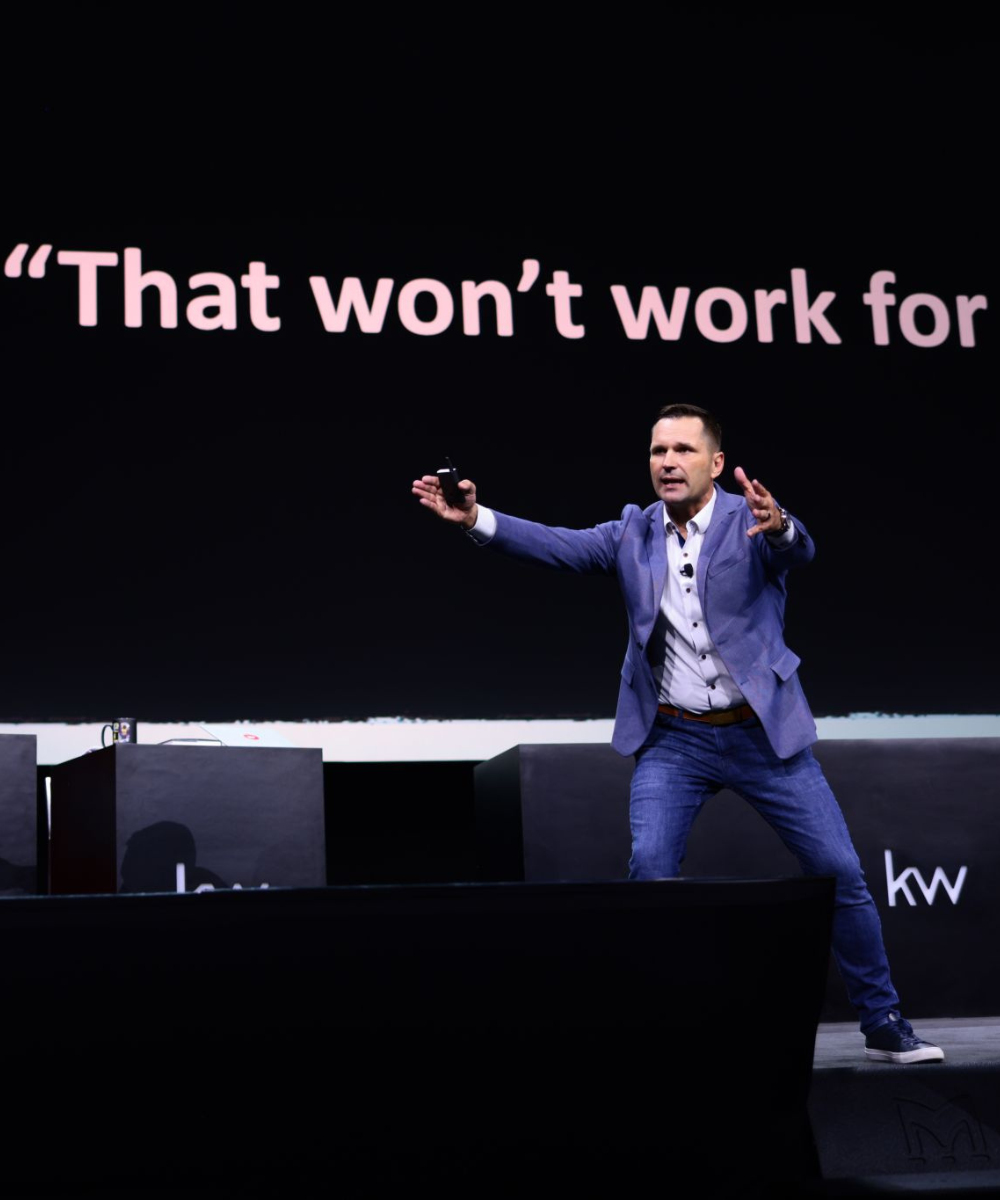
Marcus Sheridan, keynote speaker
“The best companies and the companies that are going to win are not going to win just because AI can find them. AI is going to be able to find them because they’ve done good work consistently over time and they can prove it,” said Greg Cummings, CEO of Power100.
That statement reframed AI from a technology issue into a trust issue.
For contractors, proof can include pricing clarity, recent reviews, customer stories, third party recognition, awards, project photos, team expertise, service details, and a clear record of doing the right thing. But if that proof is scattered or hard to read, both buyers and AI systems may miss it.
This is why an AI visibility audit for businesses can matter. It can help leaders see whether their company is easy to understand, easy to verify, and easy to recommend in a search world shaped by AI.
Greg described the future like an online credit check. The company’s public proof will matter. The way that proof is organized will matter. The trust signals around the business will matter.
For strong companies, this can be good news. The goal is not to fake trust. The goal is to make real trust easier to see.
Near the heart of the episode, Greg and Marcus both returned to a simple leadership idea. Businesses cannot stay locked inside old systems when customers have already started moving somewhere new.
Marcus said it clearly.
“You can’t fit the future in the containers of the past,” said Marcus Sheridan, Co-Founder of AITrustSignals.
That line connects directly to Greg’s message about meeting the market where it is. If the customer is moving faster, leaders must build faster ways to serve. If AI is becoming part of search, leaders must make their proof clear enough for AI to understand. If future employees expect better tools, leaders must create better systems before talent looks elsewhere.
Greg also pointed to the way great companies think. They do not only protect what worked before. They study what is coming next and prepare before they are forced to change.
“These great companies don’t look at the outside noise. They compete with what is coming,” said Greg Cummings, CEO of Power100.
That is why this episode matters for home improvement leaders. It is not asking contractors to chase every new trend. It is asking them to pay close attention to customer behavior, team needs, and the speed of the market.
The lesson was bigger than AI alone, it was about leadership. The companies that win the next season may be the ones that move early, make trust clear, and build for the buyer who is already changing.
As the conversation came to a close, Greg Cummings’ message to home improvement leaders was clear and practical. The goal is not to chase every new tool. The goal is to pay attention to where the customer is already going.
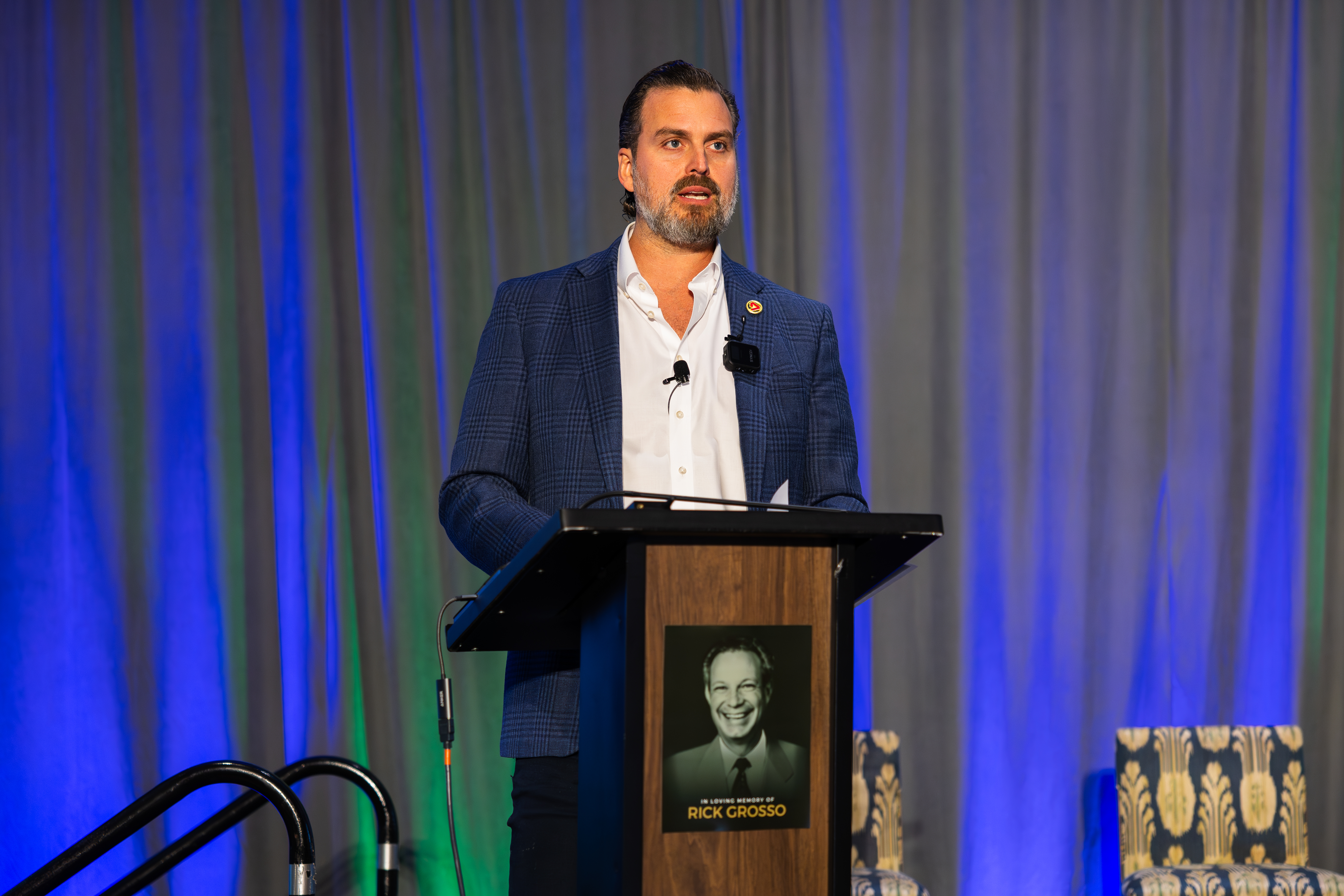
Greg Cummings, Power100 CEO and National Spokesperson
Today’s buyer expects answers that are faster, clearer, and easier to trust. Homeowners want to understand their options before they speak with a salesperson. They want proof before they give their time. They want a process that feels simple, honest, and helpful.
AI is now becoming part of that process. More homeowners are using it to ask questions, compare companies, and make sense of choices that once required hours of searching. That does not remove the need for great people, strong service, or real relationships. It simply means the first moment of trust may happen earlier than many companies expect.
For contractors, the path forward is not about fear. It is about alignment.
Businesses must help their teams serve this faster buyer with better systems, clearer answers, stronger proof, and fewer roadblocks. When employees have the right tools and customers have the right information, the whole experience becomes easier to trust.
Greg’s point was that companies cannot wait until the market fully changes before they respond. If homeowners are asking AI for help, if employees need better systems, and if future employees expect modern tools, then leaders have a chance to prepare now.
The companies that move early may be easier to find, easier to understand, and easier to choose when this new buyer journey becomes the normal way homeowners make decisions.
For home improvement leaders willing to meet the market where it is going, the rise of AI is not only a challenge. It is a chance to build companies that move faster, communicate better, and earn trust before the customer ever reaches the front door.
PowerChat Outside the Lines is built on the idea that strong leadership lessons can come from many places. Home improvement leaders can learn from authors, business experts, athletes, military leaders, and innovators who understand trust, speed, change, and customer behavior. In this episode, Marcus Sheridan gave contractors a clear outside view on how buyers are changing and why companies must meet customers where they search, compare, and decide.
Power100 uses a five layer proprietary ranking system to review leaders and companies in the home improvement industry. The process looks at business signals, leadership strength, customer experience, company culture, community impact, innovation, and long term value. This helps keep the focus on real performance, not simple attention, paid promotion, or loud marketing.
PowerChat Outside the Lines brings trusted leaders from outside the traditional home improvement space into conversations that help contractors lead better. Marcus Sheridan was a strong fit because his work focuses on trust, buyer behavior, transparency, and AI search. Those lessons matter to contractors because homeowners are now using AI tools to ask questions, compare companies, and decide who feels safe to contact.
AI search matters because buyers are already using tools like ChatGPT to get answers faster. Marcus Sheridan shared that many audiences now report using large language models more than Google for answers. For contractors, this means the first moment of trust may happen before a homeowner visits the company website. That is why AI visibility for home service companies is becoming a serious business issue.
No. Meeting the customer where they are means giving people better answers, clearer proof, and an easier path forward. AI can help homeowners search, compare, and understand options, but strong companies still need great people, honest sales teams, skilled crews, and real service. The goal is not to remove the human side of the business. The goal is to make the human side easier to trust before the first call.
An AI visibility audit for businesses helps a company understand how AI systems may see its brand online. It can show whether the business has clear pricing, strong reviews, trusted recognition, useful content, and easy to read proof. For contractors, this matters because AI tools may use that information when helping homeowners compare local companies.
Contractors can start with the basics. They can explain pricing more clearly, show real reviews, list awards and recognition, answer common customer questions, update business details, and make their website easier to understand. Learning how to improve AI trust signals is not only about technology. It is about making the company’s real value easier for both people and AI systems to see.
Marcus Sheridan has spent years helping companies build trust by answering customer questions with honesty and clarity. AITrustSignals continues that work for a market where AI may help buyers decide which companies deserve attention. The company helps businesses understand how trusted they look to AI systems and real buyers. For contractors, that makes Marcus’s message practical. The future will likely reward companies that are clear, helpful, honest, and easy to verify.
Power100 is the only unbiased third-party platform that recognizes and elevates the top leaders and most impactful companies in the home improvement industry. Built to support CEOs, contractors, partners, and industry leaders who are raising the standard, Power100 uses leadership media, PowerChat interviews, ranking insights, industry research, and community driven programs to highlight the people and companies creating stronger businesses, better customer experiences, healthier teams, and greater community impact across home improvement, home services, and outdoor living. Learn more at Power100 and connect with Greg Cummings.
Membership unlocks every Power100 interview, PowerChat episode, and expert playbook - free for industry leaders.
Power100 is the nation's premier CEO ranking and media platform for the home improvement industry. Using a proprietary 5-layer evaluation system, Power100 identifies and celebrates the top CEOs, companies, and strategic partners driving innovation, customer satisfaction, and leadership excellence across the country.