One of the biggest challenges in home improvement sales is no longer a lack of customer information. It is the speed at which homeowners can now find it. For years, the contractor often entered the home with most of the product knowledge. The salesperson explained the materials, installation steps, warranty, and possible solution. Today, many homeowners begin that work before the appointment. They research the contractor, study products, compare warranties, and use AI to find questions they may not have known to ask.
That shift is changing the talk at the kitchen table. A homeowner may ask about ventilation, moisture, product testing, installation methods, or the parts of a full roofing system. A salesperson who only knows a script may struggle when the talk moves beyond planned questions. A trained consultant can welcome the research, explain what applies to the home, and point out where general online answers may be incomplete.
During a featured PowerChat hosted by Greg Cummings, CEO of Power100, Jeremy McKinney, Vice President of Sales at PJ Fitzpatrick, shared how this change is raising the standard for home improvement companies.
“I think we’re really at the beginning of the hockey stick right now.” Jeremy McKinney, Vice President of Sales, PJ Fitzpatrick
Jeremy explained that the educated homeowner should not be seen as a problem. The greater risk is sending an unprepared salesperson into the home. Customers now have product facts, warranty details, and installation terms at their fingertips. They may not fully understand every answer, but they can enter the meeting with more knowledge than many sales teams expect.
“Now they’re a really educated customer. It’s definitely going to be a part of our business moving forward, understanding the customer could be educated as much as you.” Jeremy McKinney, Vice President of Sales, PJ Fitzpatrick
This change means trained home improvement consultants must bring more than basic facts. They must know the product inside and out. They must understand the installation. They must trust the production team that will complete the work. They must also inspect the home and explain what online research cannot see.
Power100 is the only unbiased third-party platform that recognizes and elevates the top leaders and most impactful companies in the home improvement industry.
Through PowerChat conversations, the platform gives industry leaders room to discuss the changes shaping customer care, company growth, and contractor leadership. Jeremy’s perspective shows why AI will not remove the need for a home improvement consultant. It will make the value of an accurate, prepared, and honest consultant even easier to see.
The PowerChat explored a shift that is already changing home improvement sales. Homeowners are no longer waiting for the first appointment to begin learning about their project. Many now use AI to study products, warranties, installation methods, contractor reviews, and possible causes of damage before a consultant reaches the door.

Jeremy McKinney, Vice President of Sales, PJ Fitzpatrick
The purpose of the conversation was to examine what this growing access to information means for sales leaders, consultants, and homeowners. Jeremy McKinney explained that a more informed customer should not make a company feel threatened. It should push the company to prepare its people with stronger knowledge, better training, and more honest answers.
This lesson carries weight because Jeremy leads a sales organization of about 230 people. Each consultant may meet homeowners who have researched different products, read different advice, and formed their own ideas about what the home needs. A team of that size cannot depend on one script or a small group of experienced people to answer every question. It needs a clear system that helps each consultant stay current and respond with care.
That is why the rise of AI educated homeowners is more than a technology story. It is a customer experience story. The homeowner may know the name of a product, understand part of a warranty, or ask about a small installation detail. They may also arrive with advice that is broad, incomplete, or not right for their home.
The consultant must know how to handle both sides of that moment. They must respect what the homeowner has learned while also helping them understand what the research cannot show. A roof, attic, siding system, or moisture problem must still be inspected in person. The right answer depends on the property, not only on a search result.
Jeremy’s point is that basic product facts are no longer enough. The consultant must understand how the product works, how it should be installed, and what the production team will do after the agreement is signed. This gives the homeowner more than information. It gives them a clear path from the question to the finished work.
“Now they’re a really educated customer, maybe not fully themselves, but they’re getting the information and they have it at their fingertips. So it just means we have to be really accurate.” Jeremy McKinney, Vice President of Sales, PJ Fitzpatrick
This need for accuracy has meaning across the full home improvement industry. Companies that once built authority by knowing more facts than the customer must now earn authority in a different way. They must show judgment, explain what applies to the home, and be honest when more inspection is needed.
That is the growing value of a home improvement specialist who inspects before recommending. AI may help the homeowner begin the learning process, but a prepared consultant must turn that learning into a safe and useful choice.
The wider message of the PowerChat is not that technology will replace the consultant. It is that technology is making the consultant’s real value more clear. When the homeowner brings more information, the consultant must bring better judgment.
During the PowerChat, Greg Cummings guided the discussion toward a change that many home improvement leaders are beginning to feel. The homeowner may now enter the meeting with product terms, warranty questions, and installation details already in mind.
Jeremy McKinney explained that this should not weaken the role of the consultant. It should make that role more useful. The consultant must listen to what the homeowner has learned, inspect the real property, and explain which information fits the home.
The home improvement meeting no longer begins when the consultant knocks on the door.
A homeowner may spend days researching the company, reading about roofing systems, comparing warranties, and learning how different products should be installed. AI can help them gather that information faster than ever before.
Jeremy said customers are already using these tools to learn terms that once belonged mostly to people inside the trade.
“They know terms that they wouldn’t have known before. They’re starting to ask questions that are not just curious questions, but ones that AI has prompted them to.” Jeremy McKinney, Vice President of Sales, PJ Fitzpatrick
This means the customer may enter the meeting with a list of questions about materials, ventilation, water protection, nails, warranties, or the steps used during installation. They may also use AI during the meeting to check an answer or return to the research after the consultant leaves.
For a company, this creates a new kind of responsibility. Every answer may be reviewed. Every product claim may be compared. Every promise may be checked against other sources.
The consultant should not begin by acting as if the homeowner knows nothing. They should first find out what the customer has researched and what they already believe. This gives the consultant a chance to confirm good information, clear up confusion, and understand what still needs to be explained.
This shift is why AI search for home improvement contractors is becoming part of the customer journey. The homeowner may discover the company, study its services, and prepare for the visit before speaking with anyone.
The first meeting is no longer the start of the learning process. It is the point where online information must meet the real home.
A more informed homeowner raises the standard for every answer given inside the home.
The consultant may be asked about a product name, a warranty term, or a small part of the installation process. A broad reply may not be enough. Guessing can cause even more harm because one weak answer may lead the homeowner to question the rest of the presentation.
Jeremy does not see this higher standard as a problem. He sees it as a reason to become more accurate.
“So it just means we have to be really accurate. And I like that. That’s integrity.” Jeremy McKinney, Vice President of Sales, PJ Fitzpatrick
Accuracy means knowing more than what is printed on a product sheet. The consultant should understand how the material works, why it is being recommended, and what the homeowner should expect after the agreement is signed.
Jeremy also tied that accuracy to the team responsible for completing the work.
“We know our products inside and out. We know our installation. I know what Jason’s team is going to do.” Jeremy McKinney, Vice President of Sales, PJ Fitzpatrick
This is where integrity becomes practical. A consultant should not promise a result without knowing how the project will be handled. They should understand what production can deliver, what conditions could affect the work, and how the final result should match the talk at the kitchen table.
A homeowner searching for a trusted home improvement company is often looking for this kind of honesty. They want clear answers that do not change after the contract is signed.
Knowledge may help start the relationship, but accuracy helps protect it.
No consultant can keep up with every product change alone.
Materials improve. Installation methods change. New warranties are introduced. Products may also need to be used in different ways based on the location, weather, and type of home.
Jeremy explained that strong manufacturer relationships help his team stay current.
“This is where we have to stay really hip to hip with our partners like Matt and CertainTeed and make sure that we are as educated as the consumer.” Jeremy McKinney, Vice President of Sales, PJ Fitzpatrick
That connection gives consultants access to people who understand how the materials are made, tested, and used. It also creates a trusted place to take questions when a homeowner asks about a detail that needs more study.
Earlier in the PowerChat, Jeremy shared that CertainTeed regularly visits company offices to provide training. Team members also visit manufacturing facilities and see how products are made.
This gives the consultant more than a list of facts. They can learn why the product was designed, how the parts work together, and what must happen during installation for the system to perform as expected.
That deeper knowledge matters when the homeowner has already read a basic answer online. A consultant who has received direct product education can explain what the online answer may leave out.
Strong partnerships also reduce the pressure to pretend to know everything. The sales team can reach technical experts, production leaders, and manufacturer representatives when it needs a clear answer.
This kind of support strengthens PJ Fitzpatrick sales training and homeowner education because learning continues long after the first day of onboarding.
The consultant does not stand alone. Their answer is backed by a wider group of people who understand the product and the work.
AI can provide a great deal of information, but the answer still depends on the question being asked.
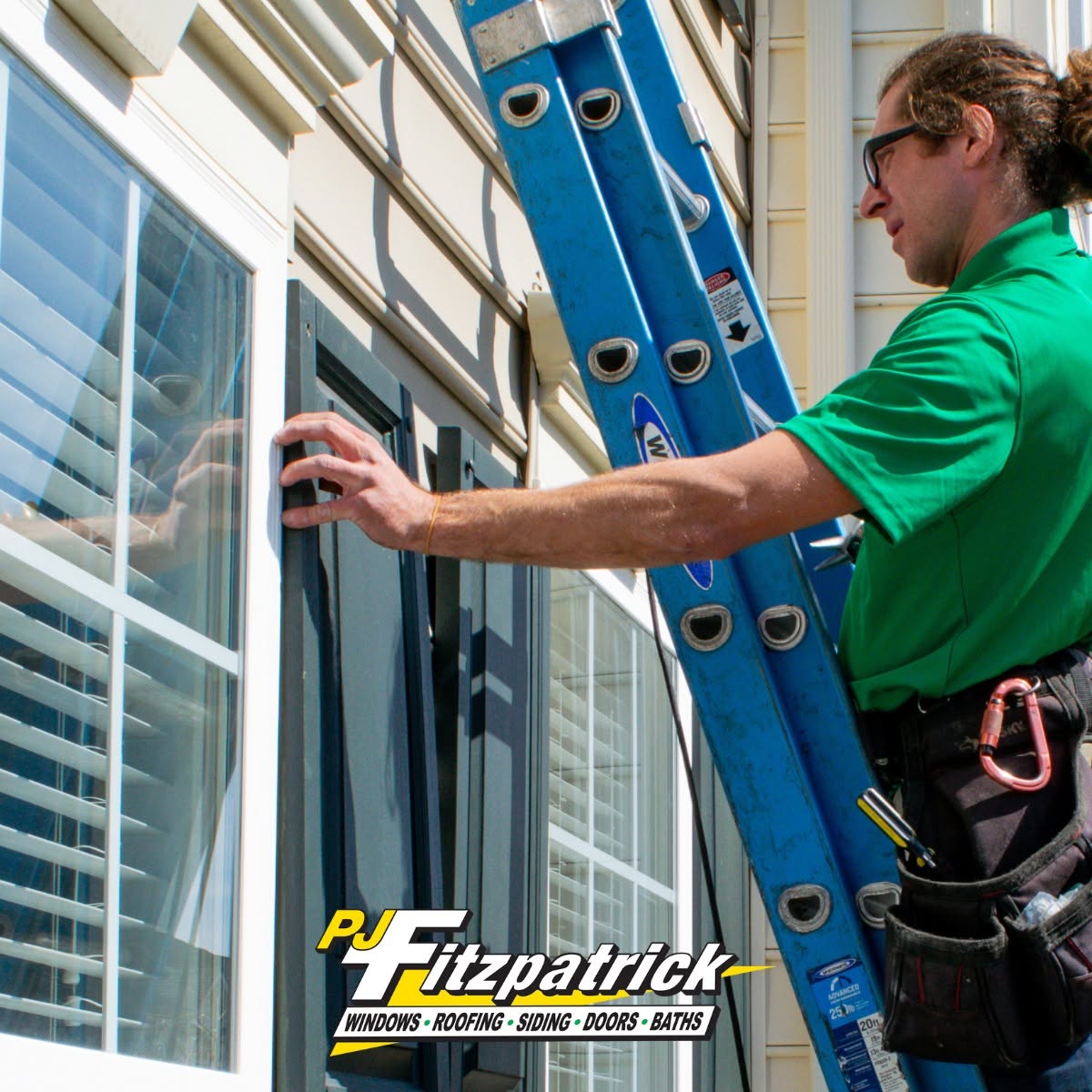
PJ Fitzpatrick roofing company inspects the attic and ventilation
A homeowner may search for a roof replacement because they see a stain on the ceiling. The real cause may be ventilation, flashing, moisture, or a smaller damaged area. Another homeowner may study siding products when the larger concern is water trapped behind the wall.
The information may be correct, but it may not fit the property.
Jeremy explained that customers can begin their research in the wrong place.
“They can Google the wrong things. They can AI the wrong things. And our job is really to say, this is what you need here.” Jeremy McKinney, Vice President of Sales, PJ Fitzpatrick
The consultant should not dismiss the homeowner’s research. That would ignore the time and care the customer has already put into the project.
Instead, the consultant can ask what the homeowner found, what caused concern, and what solution they are considering. The inspection can then be used to test those ideas against the real home.
This is one reason a roofing company that inspects the attic and ventilation may provide more value than a company that gives a fast answer from the outside. The visible problem may only be one part of the full issue.
Online tools are useful for learning what may be possible. They are less useful when the homeowner does not yet know the true cause of the problem.
The consultant brings value by helping the customer move from a possible answer to a clear finding.
Jeremy explained that PJ Fitzpatrick does not call its team members sales representatives. The company calls them consultants.
The difference is more than a title. It reflects what the person is expected to do during the visit.
“We don’t call our people sales reps. We call them consultants because our job is to go out and find out what they need to have done, also realize what they want to have done, and bring that together.”
Jeremy McKinney, Vice President of Sales, PJ Fitzpatrick
A homeowner may want a certain product, color, or type of project. The home may also have a need that is not yet clear. The consultant must listen to the customer while also studying the property.
Those two parts may support each other. They may also point in different directions.
Every home has its own age, materials, airflow, past repairs, weather exposure, and hidden conditions. Two homes with the same visible concern may need very different solutions.
“We build value in our inspections and our education of their particular structure. And they’re all different.” Jeremy McKinney, Vice President of Sales, PJ Fitzpatrick
The consultant’s value is not based only on knowing more facts than the customer. Their value comes from knowing which facts matter for that home.
A good consultation may confirm that the homeowner’s research was correct. It may also show that the project should change, that another area needs attention, or that a smaller repair could solve the problem.
This is what people often seek when looking for a home improvement specialist who inspects before recommending. They want guidance based on the property, not a standard answer given to every customer.
The goal is not to prove the homeowner wrong. It is to help them make a decision that fits both the home and the result they want.
The final part of the conversation brought the focus back to the physical property.
AI can study a question, compare product details, and explain common problems. It cannot enter an attic, touch damaged material, find hidden moisture, or confirm what is happening behind the siding.

Matthew Rogevich, Director of Sales at CertainTeed
Matt Rogevich supported Jeremy’s point by explaining the limits of digital research.
“AI can’t speak to the particular ventilation of that structure. AI can’t speak to the potential moisture that was behind the siding or the weak spots up on the roof.” Matt Rogevich, Regional Vice President, CertainTeed
A trained person can inspect those areas and find details that may change the full project.
The roof may have more layers than expected. The attic may have poor airflow. Water may be entering from a place the homeowner did not see. Materials behind the siding may need attention before the outside work begins.
Finding those details early protects the homeowner from surprises. It can lead to a clearer price, a better project plan, and a more honest talk about what the home needs.
The consultant must also know what happens after the inspection. The recommendation should match the work the production team can complete. The materials, timing, and installation steps should support what was explained during the visit.
This is where trained home improvement consultants remain important in an AI driven market. They connect research with inspection, inspection with judgment, and judgment with the team that will perform the work.
Technology may prepare the homeowner to ask a better question. A trained person must still walk the home and help turn the answer into a safe decision.
The ideas Jeremy McKinney shared during the PowerChat are also reflected in the way PJ Fitzpatrick is being recognized by both employees and customers. In 2026, the company was named a New Jersey Top Workplace, an honor based on feedback from the people who work inside the business each day.
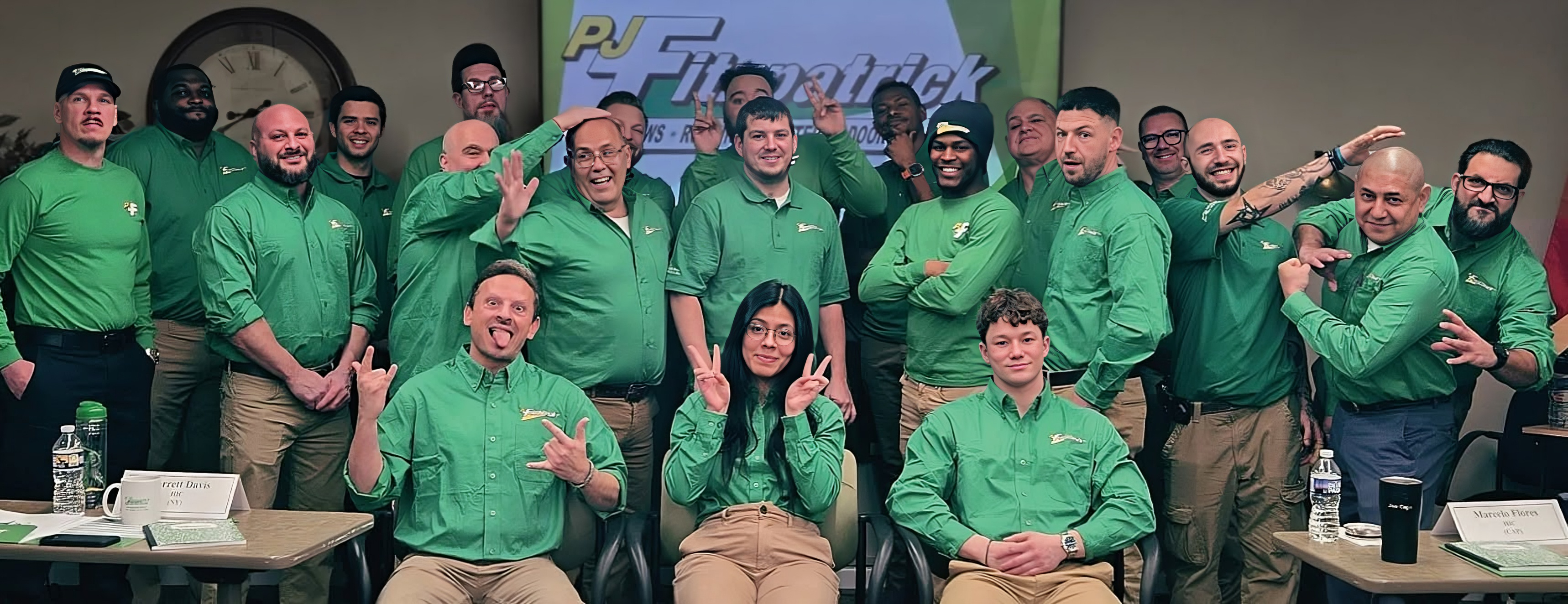
PJ Fitzpatrick recognized as New Jersey Top Workplace
That recognition gives added meaning to the culture behind the company’s growth. Employees pointed to a workplace shaped by clear values, including Champion Integrity, Embrace the Team, Make It Fun, Take Ownership, and Wow Every Customer. These values support the same kind of trust Jeremy described in the sales process. Consultants are more prepared to serve homeowners when they work in a company where people support one another, take responsibility, and believe in the work they are doing.
For Jeremy and the sales organization he leads, a strong workplace culture can have a direct effect on the customer experience. Training becomes easier when people are open to learning. Teamwork becomes stronger when departments trust one another. Ownership becomes more real when each person understands that the promise made to the homeowner belongs to the whole company.
That internal trust is matched by outside recognition from homeowners. PJ Fitzpatrick was also named a 2026 Guildmaster Award winner by GuildQuality. The award recognizes home improvement companies that maintain high levels of customer satisfaction and deliver a strong customer experience.
The two honors tell an important story when viewed together. One reflects how employees experience the company. The other reflects how customers experience the work. Both point toward a business where integrity is expected inside the company and felt outside it.
PJ Fitzpatrick describes its purpose as making life better, one home at a time. The Guildmaster recognition provides evidence that this promise is reaching homeowners through the daily work of consultants, production leaders, installers, and support teams.
It also gives greater weight to Jeremy’s message about accuracy in an AI informed market. Homeowners may arrive with more questions and more research, but trust is still earned through what the company does after those questions are answered. Clear advice must lead to careful work. Product knowledge must lead to the right solution. The promise made during the consultation must lead to an experience the homeowner is willing to recommend.
For an industry facing fast growth, new technology, and rising customer expectations, these recognitions show what can happen when company culture and customer care are treated as part of the same standard. A team that feels trusted is better prepared to build trust. A company that values ownership is better prepared to stand behind its work.
The awards do not replace the need to keep improving. They show that the work is being felt by the two groups that matter most: the people building the company and the homeowners inviting that company into their homes.
Jeremy McKinney’s message points to a major change in home improvement sales. The homeowner may now enter the meeting with product facts, warranty terms, installation questions, and advice gathered through AI. They may know a great deal about one part of the project before the consultant arrives.
That does not make the consultant less important.
It makes the consultant’s real value easier to see.
The next generation of trust will not come from being the only person in the room with information. It will come from knowing how to use that information with care. The consultant must listen, inspect the home, find what may be hidden, and explain which facts apply to that property.
AI can help the homeowner prepare. It can suggest questions, compare products, and explain common problems. But it cannot walk through the home, study the full structure, or see how one issue may connect to another.
That work still needs human judgment.
The strongest consultant will not feel threatened when a homeowner asks a hard question. They will welcome it. They will explain when the research is correct, when it needs more detail, and when the home is showing something different.
They will also know what happens after the conversation ends.
They will understand the product, the installation, and the people who will complete the work. Their advice will match what the production team is ready to deliver.
This is where accuracy becomes more than a sales skill. It becomes a form of respect for the homeowner.
Jeremy’s perspective offers a clear lesson for the home improvement industry. Do not try to compete with AI by collecting more facts. Train consultants to understand what those facts mean.
Keep them close to product experts.
Teach them how the work is installed.
Give them strong inspection skills.
Help them understand what the production team will deliver.
Then prepare them to meet an informed homeowner with accuracy instead of pressure.
The homeowner may bring information to the table.
The consultant must bring the judgment that turns it into the right decision.
No. Power100 rankings cannot be bought and must be earned through proven company performance. Its national rankings draw from a database of about 7,600 qualified CEOs and use a five layer system that reviews growth, customer results, leadership, culture, community impact, and other business signals. Only 100 leaders earn a place on the national list.
This process helps separate a strong public image from a company that has shown steady results over time.
No. Power100 describes the Inner Circle as a free private content portal with PowerChat episodes, feature interviews, expert insight, business resources, and an AI concierge trained on its knowledge base. Registration does not require a credit card.
The goal is to help home improvement leaders use the lessons after the interview ends, not simply watch another video.
No. AI can help a homeowner research products, warranties, installation terms, and possible causes of a problem. It cannot fully inspect the roof, attic, siding, windows, ventilation, or hidden moisture inside one property.
Jeremy McKinney explains that the consultant must study the real home and decide which information applies. The value of home improvement consulting for AI educated homeowners comes from turning broad research into a clear decision for one property.
The consultant should not dismiss the homeowner’s research or become defensive. They should ask what the customer found, explain which parts are correct, and use the inspection to show where the home may tell a different story.
Jeremy warns that homeowners can search for the wrong solution even when the information they find is correct. A stain may appear to call for a new roof, while the main cause may involve ventilation, flashing, or moisture.
A home improvement specialist who inspects before recommending should connect the online information with the actual condition of the home.
Jeremy says the title reflects a different duty. The consultant must learn what the homeowner wants, find what the property needs, and bring those two points together.
PJ Fitzpatrick also states that it sends specialists to solve repair problems rather than salespeople who only want to sell a new product. Its service page promises honest answers, clear pricing, trained specialists, and support after the sale.
That means a PJ Fitzpatrick home improvement consultation should begin with questions and inspection, not a fixed product pitch.
No single salesperson should be expected to learn every new product detail alone. Jeremy explains that accuracy comes from regular training, close work with manufacturer partners, product education, and clear ties between sales and production.
The consultant should understand the product, how it will be installed, and what the production team will deliver. When a question needs more study, the team should seek the correct answer rather than guess.
PJ Fitzpatrick also says its specialists are highly trained and that customers approve the service and cost before work begins.
Yes. Digital tools can help review visible details and prepare useful questions, but they may not reveal poor attic airflow, hidden water, weak roof areas, old layers, or damage behind siding.
PJ Fitzpatrick says its repair inspections help homeowners learn which work is needed and receive clear recommendations and an accurate estimate when repairs or upgrades are required.
A roofing company that inspects the attic and ventilation can find conditions that may change the scope, cost, and safest plan for the project.
No. A satisfaction promise does not mean every project will be free from questions or concerns. It means the company states that it will respond when something needs attention.
PJ Fitzpatrick says its service continues after the sale and that it will return at no charge when a customer has a concern. The company also says that when an installation problem occurs, it will take responsibility and do what is needed to make it right.
The company also invites customers to leave honest feedback, including comments about what it could improve, and says it uses those reviews to strengthen the homeowner experience.
Power100 is the only unbiased third-party platform that recognizes and elevates the top leaders and most impactful companies in the home improvement industry. Led by Greg Cummings, Power100 studies leadership, customer care, company growth, culture, and community impact, then shares those lessons through national rankings, PowerChat interviews, industry media, and the Power100 Inner Circle. Its mission is to help contractors, partners, and leaders learn from proven ideas, build stronger companies, and create better experiences for homeowners across the country.
Membership unlocks every Power100 interview, PowerChat episode, and expert playbook - free for industry leaders.
Power100 is the nation's premier CEO ranking and media platform for the home improvement industry. Using a proprietary 5-layer evaluation system, Power100 identifies and celebrates the top CEOs, companies, and strategic partners driving innovation, customer satisfaction, and leadership excellence across the country.